Home Blog Page 105

E-commerce platform promotional events seen boosting small-business growth

STOCK PHOTO | Image by andrespradagarcia from Pixabay

By Justine Irish D. Tabile, Reporter

E-COMMERCE platform special sales, especially those held late in the year, are expected to drive growth for smaller businesses, US-listed global commerce media company Criteo said.

“Double-day sale events are expected to remain a major growth engine in the Philippines heading into next year,” Criteo Managing Director for Southeast Asia Sukesh Singh told BusinessWorld.

“Filipino consumers have embraced events like 10.10, 11.11, and 12.12 not only as opportunities for substantial savings but also as part of their broader year-end shopping rituals,” he added.

He said he expects health and beauty to remain one of the strongest-performing segments, amid a sustained interest in self-care and personal wellness across Southeast Asia.

“Apparel and travel-related categories, including luggage, are also expected to continue driving sales given the country’s highly festive culture and consistent appetite for domestic and international travel,” he said.

“Another category worth watching is home and garden. While it traditionally performs more strongly at the regional level, we may see spillover effects influence Filipino shoppers to renew and update their living spaces,” he added.

He said double-day events, the signature promotional activity of the e-commerce industry, are opportunities for micro, small, and medium enterprises (MSMEs) to tap shoppers who are more willing to explore unfamiliar brands during such periods.

“In 2024, Southeast Asia saw significant gains in first-time buyers during the major double-day events. This openness is particularly advantageous for small businesses that rely on discovery and differentiation,” he added.

However, he said that MSMEs will have to prepare prior to the events to be able to service the expected surge in demand.

He said that shoppers begin their discovery journey anywhere from 1-2 weeks to a few days before the actual sale event.

“This means brands can maximize impact by planning in advance — ensuring that the right creative assets, product visibility, and retail media placements are in place during the high-intent phase,” he added.

The company also observed higher basket sizes and stronger sales volumes during these events, indicating customer readiness to spend.

“Brands can capitalize on this by curating bundles, introducing complementary add-ons, and activating limited-time flash sales to encourage customers to increase their cart size,” he said.

He said MSMEs are naturally agile, which allows them to adapt to market conditions faster than their larger competitors through tweaking messaging, pivoting categories, or updating promotions in real time.

“To harness this advantage, MSMEs must stay up to date with market-specific trends and festive behaviors, especially in the Philippines, where purchasing patterns shift noticeably between 11.11 and 12.12,” he said.

“Localizing campaigns by market and category and personalizing them to the individual allows smaller sellers to align their offerings with seasonal activities and established purchase habits. When executed well, this combination of agility, early planning, and localization will allow them to maximize returns across every major sales event,” he added.

In the Philippines, demand during double-day events is seasonally driven, as demand shifts across the categories every month.

“In 2024, Singles’ Day (11.11) was the biggest double-day event, with demand increasing sharply across various categories focused on self-care and leisure at home,” he said.

“When compared to the beginning of October, peaks in demand were observed across Health & Beauty (+234%) and Arts & Entertainment (+223%) on Singles’ Day. These preferences align with Filipinos preparing early for holiday gatherings and year-end downtime,” he added.

Meanwhile, he said demand gravitated towards fashion and travel essentials during 12.12.

“These category movements indicate thoughtful, purpose-driven purchasing rather than impulse-driven spikes,” he added.

He also said that the fourth quarter stands out as the most powerful acquisition period not only in the Philippines but also in Southeast Asia, as double-day events in October to December align with the year-end holiday season.

“As Filipino shoppers begin their gift-buying journeys, they naturally encounter new brands and products along the way, making this a time when discovery and trial are at their peak,” he said.

“With three fourth-quarter double days, Philippine sellers have multiple touchpoints to drive first-time and repeat purchases. When brands activate their strategies deliberately and consistently throughout the fourth quarter, they can extend the impact of these events well beyond the shopping season,” he added.
ASEAN chairmanship to boost 2026 growth prospects, biz chamber says

REUTERS

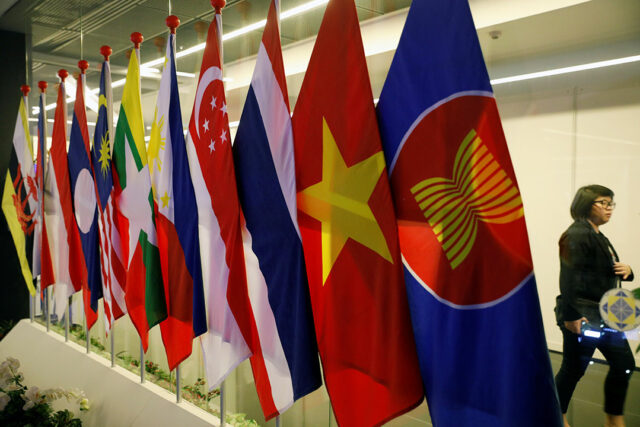
THE Federation of Filipino Chinese Chambers of Commerce and Industry, Inc. (FFCCCII) said it expects economic growth to pick up in 2026 as the Philippines takes up the rotating chairmanship of the Association of Southeast Asian Nations (ASEAN), promising a boost to investment, trade, and tourism.

In a statement, FFCCCII President Victor Lim said the chamber remains cautiously optimistic despite geopolitical risks, inflationary pressures, and supply-chain adjustments.

“Given this environment, we are still hopeful that the Philippines is uniquely positioned at a strategic inflection point, poised to convert substantial domestic and regional opportunities into tangible, inclusive growth, as long as reforms are continued,” Mr. Lim said.

The FFCCCII said chairmanship of ASEAN presents an opportunity to improve the Philippines’ economic standing and visibility among global investors, with the potential to improve investor perception and encouraging foreign direct investment (FDI).

According to the chamber, chairing ASEAN could highlight the Philippines’ macroeconomic fundamentals, young labor force, and public-private partnership pipeline to attract job-generating investments.

However, the chamber said growth prospects are contingent on sustained policy reforms.

“The FFCCCII emphasizes that sustained growth requires an unwavering commitment from all sectors to implement systemic reforms—enhancing regulatory efficiency, investing in critical infrastructure, enhancing good governance and fortifying human capital,” Mr. Lim said.

He said the FFCCCII is prepared to support government and private-sector initiatives tied to the ASEAN chairmanship.

“We stand ready to engage in dialogue, facilitate partnerships, and contribute to projects that will maximize the dividends of our ASEAN hosting and solidify our economic trajectory,” he said. — Vonn Andrei E. Villamiel

Parañaque, Laguna, Misamis Oriental ecozones seen creating over 7,000 jobs

FINANCE SECRETARY RALPH G. RECTO — PHOTO FROM DEPARTMENT OF FINANCE FACEBOOK PAGE

NEW economic zones (ecozones) in Parañaque, Laguna, and Misamis Oriental reflect investor confidence in their strategic location and skilled labor pools, Executive Secretary Ralph G. Recto said.

President Ferdinand R. Marcos, Jr. approved proclamations granting economic zone status to the three sites, Mr. Recto said in a statement Sunday, which combined are expected to attract about P3.03 billion in investment and create as many as 7,200 jobs.

Proclamation No. 1111 designates a property along ASEAN Avenue in Aseana City, Parañaque an information technology hub.

Proclamation No. 1112 establishes an agro-industrial economic zone in Medina, Misamis Oriental, covering parcels of land in barangays Cabug and Maanas. It will be known as the Alloco Development Corp. Industrial Estate.

Proclamation No. 1113, meanwhile, covers Filinvest Innovation Park in the Calamba barangays of Bubuyan and Punta. The park is targeted at advanced manufacturing locators.

Mr. Recto signed the proclamations on Dec. 16, but they were posted on the Official Gazette Dec. 18.

Special economic zones offer firms a mix of fiscal and non-fiscal incentives, depending on their location and industry, and may include industrial estates, export processing zones, IT parks and tourism-related developments.

The newly proclaimed zones will operate under Republic Act No. 7916, or the Special Economic Zone Act of 1995, as amended, and are subject to regulations set by the Philippine Economic Zone Authority. — Chloe Mari A. Hufana

Refrigerated van maker sees growth in PHL driven by food, pharma industries

COOLTECHREFVAN.COM

JAPANESE refrigerated van brand Cooltech said the outlook for the Philippine cold chain industry remains strong due to growing demand from food and pharmaceuticals producers.

“Cooltech is optimistic about its long-term outlook in the Philippine market, driven by the country’s growing demand for reliable cold chain logistics, expanding food and pharmaceutical sectors, and increasing awareness of quality transport solutions,” according to Centro Nippon Fruehauf Cooltech, Inc. (CFCI), which distributes Cooltech products.

CFCI General Manager Benigno V. Dumlao, Jr. said more companies now recognize the importance of maintaining product quality from origin to destination.

“The Philippines is experiencing steady growth in industries that depend heavily on cold chain reliability — food distribution, dairy, pharmaceuticals, and retail,” he said.

“We see a clear shift toward professional-grade refrigerated transport, and that aligns perfectly with what Cooltech offers,” he added.

The company recently participated in the VDS Golf Tournament, where it showcased its flagship Fuso F-resh Refrigerated Van.

“The strong interest generated by the Fuso F-resh Van during the tournament reflects this trend… The vehicle attracted logistics professionals, entrepreneurs, and executives who were keen to learn more about its advanced cooling technology, durable build quality, and seamless integration with the trusted Fuso commercial vehicle platform,” the company said.

“These interactions provided valuable insights into customer needs and reaffirmed Cooltech’s confidence in the market,” it added.

Meanwhile, Mr. Dumlao said that the company plans to expand its footprint by supporting businesses of varying sizes.

“We believe the next phase of growth will come from helping more Filipino enterprises professionalize their cold chain operations,” he said.

“As demand rises, so does the need for solutions that are efficient, compliant, and built to last,” he added.

“The outlook for Cooltech in the Philippines is very positive. We are committed to growing with the market and supporting industries that keep the country moving — fresh, safe, and efficient,” he said. — Justine Irish D. Tabile

The role of blockchain in promoting trust and transparency in the national budget

IN BRIEF:

• Blockchain technology has gained prominence in public and policy discussions for its potential to enhance security, transparency, and operational efficiency.

• Legislative measures proposing the use of blockchain in managing the Philippine national budget have been filed in both chambers of Congress, led by Senator Paolo Benigno A. Aquino IV in the Senate and Representative Javier Miguel L. Benitez of Negros Occidental’s Third District in the House of Representatives. On Dec. 15, the Senate approved Senate Bill No. 1506 or the Cadena Bill.

• Aligned with the theme of Trust, Transformation, and Transparency, the 4th SGV Tax Symposium held in October featured a presentation on blockchain, highlighting recent developments and practical government use cases aimed at improving transparency and efficiency in public-sector operations.

Blockchain technology, a decentralized digital ledger that enables secure, immutable record-keeping, has gained global prominence across multiple industries. By allowing transactions and data to be recorded transparently and verified by network participants without intermediaries, blockchain improves efficiency, streamlines processes, and reduces fraud risk. Industries such as finance, supply chain management, healthcare and public administration increasingly rely on blockchain to automate operations, ensure data integrity, and strengthen trust.

In the Philippines, blockchain adoption is steadily advancing as both the private sector and government explore its potential. Financial institutions and startups have begun integrating blockchain into payment and remittance systems, while the government is studying its use as a mechanism to combat corruption and promote transparency in public transactions. Pilot initiatives and consultations are underway to assess how blockchain technology can enhance government services, ensure accountability, and build public trust through tamper-resistant digital records.

BLOCKCHAIN AND THE NATIONAL BUDGET
These developments were highlighted during SGV’s 4th Tax Symposium, where Armand N. Cajayon, SGV Principal under Technology Consulting, discussed the role of blockchain in public financial management, particularly in relation to the national budget. His discussion covered blockchain fundamentals, public-sector-use cases, and global examples demonstrating its impact.

Blockchain has also entered the legislative arena. Senate Bill No. 1330, written by Senator Paolo Benigno A. Aquino IV, and known as the “Blockchain the Budget Bill,” proposes placing the entire Philippine national budget on a blockchain-based system. The measure seeks to enhance transparency, accountability, and public trust by making government spending traceable and auditable in near real time through a public portal.

Under the proposal, the Department of Information and Communications Technology (DICT), the Department of Budget and Management (DBM) and the Commission on Audit (CoA) will jointly implement the National Budget Blockchain System. Access would be extended to citizens, journalists, and watchdog organizations. If the bill passes, the Philippines could become the first country to fully integrate its national budget into blockchain technology.

The Bill has since evolved and been substituted by Senate Bill No. 1506, otherwise known as the Citizen Access and Disclosure of Expenditures for National Accountability or CADENA Bill. The revised bill calls for the creation of a digital budget portal to serve as the official and publicly accessible portal for all public budget data, which should be in an open-source, interoperable, tamper-resistant and structured digital format. This substitute bill was introduced on Nov. 12 and was approved on its third and final reading on Dec. 12.

A counterpart measure, House Bill No. 4380, has also been filed by Representative Javier Miguel L. Benitez of Negros Occidental’s Third District.

At the Tax Symposium, Mr. Cajayon framed the discussion with a central question: Is blockchain a silver bullet for the Philippines’ governance challenge?

Blockchain is a distributed ledger technology in which all participants maintain synchronized copies of transaction records. Transactions are encrypted and validated through consensus mechanisms, making alterations extremely difficult. Unlike centralized systems, no single entity controls the ledger. Smart contracts, such as self-executing code embedded in the blockchain, enable automated, rules-based transactions that further reduce human intervention and operational risk.

Why use blockchain in public finance?

Applied to public financial management, and as discussed during the Tax Symposium, blockchain offers several advantages:

• Trust: Multiple validation points reduce reliance on single authorities.

• Transparency: Immutable records allow transactions to be traced end to end.

• Efficiency: Automation lowers administrative costs and minimizes fraud.

• Modernization: Integration with digital payment systems improves fund disbursement and control.

However, Mr. Cajayon pointed out that blockchain is not universally applicable as it does not always operate in real time, particularly in large networks where validation may take longer. Implementing blockchain also requires substantial investment, making careful evaluation essential.

As a framework for evaluating suitability, he outlined a five-point test focused on key conditions: the involvement of multiple parties; the importance of trust among participants; the management of finite resources; reliance on shared and complex business logic; and processes that operate across an extended business network.

Blockchain delivers clear value only when all these conditions are present.

IMPLEMENTATION CONSIDERATIONS
Even if enabling legislation is passed, nationwide implementation would be gradual. Mr. Cajayon outlined a phased roadmap beginning with a feasibility and alignment stage during which high-value cases would be identified and key stakeholders aligned, followed by a pilot development phase focused on building permissioned pilots with key agencies. The initiative would then move into expanding participation and adding smart contract pilots. The final phase would concentrate on governance and operations, with the formalization of governance structures and supporting legal frameworks.

A proposed governance model includes a National Budget Blockchain Governance council to oversee policy, compliance, and validation authority. An inter-agency working committee led by the DICT would manage technical standards, security protocols and overall project execution.

A REAL-WORLD EXAMPLE: TORONTO
To illustrate blockchain’s practical benefits, Mr. Cajayon cited the case of Toronto, which processed over two million interdivisional transactions in 2018, requiring extensive manual reconciliation, and delaying financial reporting.

The city implemented a pilot blockchain proof of concept, which consolidated data from multiple systems, digitized asset tracking, classified expenditures and automated reporting. The pilot focused on the Fleet Services division, which has the highest transaction volume.

The results were significant. Manual reconciliation time dropped from approximately 160 hours to nearly zero. Improved expenditure tracking increased forecast accuracy, enhanced transparency, and provided timely insights into asset utilization. By shifting from nominal to actual budget allocation, the city strengthened accountability and enabled staff to focus on higher-value activities.

While Mr. Cajayon concluded that blockchain is not a silver bullet that cannot, by itself, guarantee good governance, its effectiveness ultimately depends on how it is implemented and how citizens engage with it.

Technology can enable transparency, but accountability requires informed and vigilant stakeholders. For blockchain to meaningfully improve public financial management in the Philippines, it must be paired with active citizen participation, institutional discipline and sustained political will.

This article is for general information only and is not a substitute for professional advice where the facts and circumstances warrant. The views and opinions expressed above are those of the authors and do not necessarily represent the views of SGV & Co.


Earvin Darren Lee and Hazel Valerie Sy are global compliance and reporting (GCR) senior managers of SGV & Co.

Increasing unprogrammed funds not in line with reform push, analysts say

PRESIDENT FERDINAND R. MARCOS, JR. — PHILIPPINE STAR/KJ ROSALES

By Chloe Mari A. Hufana, Reporter

THE bicameral conference committee’s move to increase unprogrammed appropriations (UA) to over P243 billion is inconsistent with Philippine President Ferdinand R. Marcos, Jr.’s push for transparency, analysts said over the weekend, amid a widening corruption scandal.

The renewed reliance on unprogrammed funds sits uneasily with the government’s reform narrative, even if such allocations are legal and long embedded in the budget process, Ederson DT. Tapia, a political science professor at the University of Makati, said.

“Transparency is not only about reporting after the fact,” he said via Facebook Messenger. “It also involves predictability, traceability, and clarity at the moment funds are authorized.”

“From this perspective [or the] expansion of unprogrammed appropriations, particularly after repeated public assurances of reform, weakens the credibility of a governance agenda that claims to move away from opaque fiscal practices,” he added.

The proposed General Appropriations Act (GAA) for 2026 has been the subject of more scrutiny following allegations that billions of pesos of UA were inserted into this year’s national budget.

The debate places Mr. Marcos at strategic crossroads as he weighs whether to assert a stricter interpretation of the GAA or tolerate discretionary mechanisms in the interest of administrative flexibility.

A tougher stance could help the President recapture public trust in state financing after a year of fiscal controversy and distinguish his administration from rivals in the Duterte political camp, where discretionary spending has also drawn criticism, said Hansley A. Juliano, political science lecturer at the Ateneo de Manila University.

The Budget department defined UA as “those that provide standby authority to incur additional agency obligations for priority programs or projects when revenue collection exceeds targets and when additional grants or foreign funds are generated.”

Unprogrammed appropriations are typically justified as contingency mechanisms, activated only when revenue targets are exceeded, or financing becomes available. But their lump-sum and conditional nature limits public visibility at the stage when scrutiny is most critical, Mr. Tapia said.

Despite earlier assurances from lawmakers that UA would be eliminated, the bicameral conference committee agreed to reinstate the standby funds on Dec. 17, largely in line with the House’s proposal.

The Senate-approved General Appropriations Bill had trimmed UA to P174.55 billion, about P68.66 billion lower than the P243.22 billion allocation approved by the House, a move that initially appeared to curb the controversial funding mechanism.

The Senate’s position was later reversed as budget talks reached final stages. The bicameral panel restored UA to the House level and approved a slightly higher allocation, undoing the earlier reduction.

POLITICAL COMPROMISES
The development underscores the political compromises shaping the budget process, particularly in Congress, where longstanding preferences for flexibility and discretion continue to outweigh reform commitments.

Mr. Tapia said the decision reflected the persistence of institutional habits that have survived successive administrations.

“Yes, it reflects political compromise, and that compromise has implications,” he said. “Coming after corruption controversies linked to discretionary and weakly scrutinized funds, the restoration of a sizable unprogrammed allocation sends a mixed signal.”

He warned that anti-corruption messaging risks losing force if institutional practices remain largely unchanged.

“If certain expenditures are genuinely urgent or strategic, they should be clearly programmed, debated, and itemized in the regular budget,” he said. “Placing them under unprogrammed appropriations may be expedient, but it reinforces the perception that fiscal discretion remains negotiable behind closed doors.”

Mr. Juliano said the bicameral panel’s move showed “visible inconsistency” with the administration’s transparency claims.

“As much as our finance and budget managers insist on ‘needing’ leeway, this tends to smack of the faulty tendency of many of them to say that private discretionary financial structures (like in companies) should be employed in public financing in the name of flexibility (when flexibility can be achieved within structures, not outside),” he said via Facebook Messenger.

He compared it to the Disbursement Acceleration Program, which compromised the credibility of the Aquino administration.

“It’s functionally the same mistake,” he added.

Congress targets ratifying the reconciled version of the 2026 budget on Dec. 29, giving President Marcos a short window to review the spending plan before its planned signing by yearend.

Mr. Marcos earlier ordered Congress to livestream the bicameral conference committee proceedings, which was widely seen as an attempt to restore confidence in the budget process and address longstanding complaints about opaque dealmaking.

This followed accusations that billions of pesos in UA were inserted during the bicameral panel discussions last year.

Ex-DPWH Usec Cabral’s death a major setback to corruption crackdown

Maria Catalina E. Cabral — DepARTMENT OF PUBLIC WORKS AND HIGHWAYS FACEBOOK PAGE

By Erika Mae P. Sinaking

THE death of former Department of Public Works and Highways (DPWH) Undersecretary Maria Catalina E. Cabral is seen as a major setback to the government’s crackdown on widespread corruption in flood control projects, analysts said.

“The government has not progressed significantly in the flood control plunder in terms of pinning down the most powerful in the machinery chain and now they lost a possible source of key information,” Joy G. Aceron, convenor-director of transparency group G-Watch told BusinessWorld in a Facebook Messenger chat.

Based on congressional testimonies, she said, Ms. Cabral could have identified senators and other high-ranking officials who benefited from alleged insertions and budget irregularities.

“She was an insider and a key piece in the flood control plunder machinery. She was in it since the past administration and I will not be surprised if she even had a hand in laying down the design of and/or making the plunder machinery work,” Ms. Aceron added.

Two days after Ms. Cabral’s body was discovered, an autopsy revealed that the cause of death was blunt force trauma to the right side of her face, the back of her head, and internal injuries, following a fall from a height of approximately 30 meters — roughly equivalent to a 10-story building. Her body was found last Thursday night.

Authorities have named her driver as a person of interest, as he was the only person accompanying her while traveling to a hotel in Baguio.

Interior and Local Government Secretary Juanito Victor C. Remulla, Jr. said that based on the autopsy results, there were no signs of foul play.

“The first thing we did was inspect the scene of the incident. We did not find any indications of foul play. Her vehicle also showed no signs of interference,” he said in a statement, adding that initial findings point to suicide as a probable cause of her death.

Gerard Voltaire Bohol, president of the August Twenty-One Movement, said Ms. Cabral’s passing deprives investigators of a key figure who could have explained the distinction between allocable and non-allocable under the national budget — allocations she had supposedly signed together with former DPWH Secretary Manuel M. Bonoan.

“It’s definitely a big loss,” Mr. Bohol told BusinessWorld via teleconferencing. “But this should not halt the actual investigation. Ms. Cabral may have already provided initial information when she was summoned in previous weeks.”

Attention has also turned to Mr. Bonoan, who has yet to return to the Philippines after traveling to the United States, despite having indicated he would be back by mid-December.

Mr. Bonoan is implicated in multiple referrals by the Independent Commission for Infrastructure to the Office of the Ombudsman, involving alleged malversation, violations of the code of conduct, and potentially criminal cases for allegedly allowing payments for fictitious infrastructure projects — charges similar to those facing Ms. Cabral.

Ms. Aceron noted that his absence raises concerns over accountability. “He is clearly evading responsibility by remaining overseas. The government should do everything it can to bring him back to testify and be held to account. Hope the government can do better in handling the other sources of evidence,” she said.

Mr. Bohol said that with Ms. Cabral deceased and other officials seeking witness protection, Mr. Bonoan could become the next key figure whose testimony is critical to the investigation.

He warned that without proper protection and follow-through, the investigation could fail to produce meaningful results.

“The government should exert more effort in securing witnesses and key resource persons. Otherwise, accountability will be impossible,” Mr. Bohol added.

Antipolo Rep. Acop passes away at 78

ROMEO M. ACOP — CONGRESS.GOV.PH

A CONGRESSMAN who led congressional investigations into widespread vigilante-style killings during the term of former President Rodrigo R. Duterte died on Saturday, a House of Representatives deputy speaker said on Sunday. He was 78 years old.

Antipolo Rep. Romeo M. Acop died of a heart attack while recovering from a kidney transplant he underwent on Nov. 28, Deputy Speaker Ronaldo V. Puno said in a text message.

“He was a model of integrity in public service,” Speaker Faustino “Bojie” Dy III said in a statement in Filipino. “In every role he fulfilled, he stood firm in the belief that the law exists for the welfare of the people, and that power is a responsibility, not a privilege.”

Mr. Acop was senior vice chairman of the House “quad” committee that investigated alleged state-sponsored killings during the 2016-2022 administration of Mr. Duterte, who is now detained at The Hague under the custody of the International Criminal Court for alleged crimes against humanity linked to his drug war.

“He was firm but fair. He asked the hard questions, but always within the bounds of decency and institutional respect,” former House Speaker Ferdinand Martin G. Romualdez said in a separate statement.

Senator Panfilo M. Lacson, Sr. Also remembered his days with Mr. Acop, whom he called his “dear friend, cavalier, upperclassman and adviser.”

“We started working closely together in our earnest, sincere efforts to cleanse the police organization of scalawags and misfits when I was Chief, PNP (Philippine National Police) and he was my Director for Comptrollership,” he said in a statement on Sunday.

“It was his original recommendation to download 85% of the PNP’s financial and logistical resources to our frontline units, while leaving only 15% to the headquarters as an integral part of the PNP reformation program.”

Party-list Rep. Terry L. Ridon also expressed condolences to Mr. Acop’s family, describing his death as a loss to Congress and to ongoing reform efforts in government.

Mr. Ridon, chairperson of the House Committee on Public Accounts, cited Mr. Acop’s years of public service, and key role in the 19th Congress as one of the chairpersons of the House Quad Committee, which conducted investigations into the alleged links between criminal syndicates and corruption and complicity within government institutions.

He emphasized that Mr. Acop’s work helped bring national attention to issues affecting law enforcement integrity and public accountability, contributing to legislative efforts aimed at curbing abuse of power.

Mr. Acop was a graduate of the Philippine Military Academy class of 1970 and a decorated police officer before becoming a distinguished legislator at the House of Representatives. — Kenneth Christiane L. Basilio and Artemio A. Dumlao

Moderate to heavy rains expected

DOST-PAGASA FB PAGE

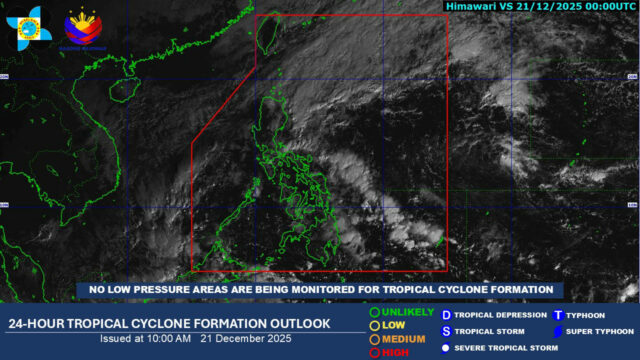
THE Philippines is bracing for several more days of rain across its eastern seaboard, even as weather forecasters on Sunday see a low chance of a tropical cyclone forming before Christmas, offering tentative relief for travel and holiday plans.

The Philippine Atmospheric, Geophysical and Astronomical Services Administration (PAGASA) said the easterlies and shear line will continue to bring moderate to heavy rainfall to parts of Eastern Luzon, the Visayas and Eastern Mindanao early this week, raising the risk of flooding and landslides in vulnerable areas such as Cagayan, Isabela, Bicol, Negros and Eastern Mindanao.

Authorities are also monitoring the expected strengthening of the northeast monsoon, or amihan, which could prompt gale warnings over northern Luzon waters, particularly around Batanes and the Babuyan Islands.

Rough seas may disrupt fishing activities and inter-island travel, a recurring concern during the peak holiday season.

Looking ahead, PAGASA said weather conditions are likely to gradually improve by midweek, with rainfall expected to ease by Christmas Day.

“From [Monday] until Tuesday, rainfall is still expected over the eastern parts of the country due to the effects of the shear line and the easterlies,” PAGASA weather specialist Robert E. Badrina said in Filipino during a 5 a.m. briefing on Sunday. “As a result, wet conditions are likely to persist across the eastern sections of the Philippines.”

By Wednesday, Christmas Eve, through Christmas Day, the effects of the northeast monsoon, as well as the shear line and easterlies, are expected to weaken, he noted.

While isolated thunderstorms may persist, forecasters said the probability of a storm entering the Philippine area of responsibility in the next three to five days remains low. — Chloe Mari A. Hufana

Hotel lawyer quits in Cabral probe

BAGUIO CITY — Lawyer Perlita Chan-Rondez, the legal counsel of the hotel where resigned Public Works official Maria Catalina E. Cabral and her driver checked in, has formally resigned.

In her “irrevocable” resignation, which took effect on Saturday, Ms. Rondez cited the need to focus on her overall well-being.

No additional reasons or circumstances surrounding the resignation were disclosed. “I will not be making further statements on the matter,” Ms. Rondez said, asking for public understanding as she steps away from the role.

Ms. Rondez is the founding partner of her law firm and has been associated with the hotel in a legal capacity for several years.

On Saturday evening, the National Bureau of Investigation (NBI)-Cordillera agents armed with a search warrant obtained from a Court in Baguio City sifted through hotel records and other documents to aid in the probe into Ms. Cabral’s death.

No official statement has been released by the NBI-Cordillera on the result of their search.

As of this writing, the hotel has not released a statement regarding the resignation or announced who will assume the role of legal counsel. — Artemio A. Dumlao

Bill requires WPS education

PHILSTAR FILE PHOTO

A SENATOR has filed a bill seeking to integrate an educational and awareness program in local schools on the portion of the South China Sea that lies within the Philippines’ exclusive economic zone, locally called the West Philippine Sea (WPS).

Senator Erwin T. Tulfo said that Senate Bill No. 1625, WPS Education Act, seeks to institutionalize a comprehensive education and awareness program on the WPS and equip Filipinos with accurate and evidence-based information on the disputed waterway.

“By ensuring accurate, and evidence-based information about the WPS, this empowers Filipino citizens to actively participate in the protection of our maritime rights and contributes to national unity,” the senator said in the explanatory note.

The South China Sea has become a hotbed of clashes between China and the Philippines, who both have claims in the area. Both sides have continually accused each other of raising tensions.

“We cannot be idle while our fellowmen guarding the WPS, especially our fisherfolk, continue to be hurt. We have to be informed about our rights and the policies that must be complied with,” Mr. Tulfo added.

The measure seeks to integrate the education program within basic and higher education curricula through the Department of Education (DepEd) and the Commission on Higher Education (CHED). 

The agencies will also be tasked with developing a standardized and updated materials on the South China Sea conduct capacity-building programs for teachers, and ensure accessible digital and printed community-based learning resources.

DepEd and CHED will also coordinate with the National Mapping and Resource Information Authority, the National Security Council, the Department of Foreign Affairs to create educational materials.

The proposed measure also seeks to create a national information campaign to promote awareness on the Philippines’ maritime rights to the disputed waterways.

The proposed awareness campaign included media productions, documentaries, community fora, and youth-oriented programs.

“Despite the West Philippine Sea being a critical area, there remains limited public awareness and understanding of the WPS. This has to stop,” the senator said.

“We have legal rights over it, and we have to ramp up our efforts so every Filipino will be able to defend our rights over the WPS,” he added.

China claims over 80% of the South China Sea. The disputed waterway sees more than $3 trillion of annual ship-borne commerce.

A United Nations-backed tribunal based in the Hague in 2016 voided China’s claim for being illegal, but Beijing does not recognize the ruling, putting it at odds with Brunei, Indonesia, Malaysia, and Vietnam, who also have claims. — Adrian H. Halili

Team Philippines dominates ball games in 33rd SEA Games

GILAS PILIPINAS men’s and women’s teams — FACEBOOK.COM/OLYMPICPHI

BANGKOK — From the country’s most beloved to the less familiar ones, ball games served as a gold mine for Team Philippines in the 33rd Southeast Asian (SEA) Games, scooping up seven of the delegation’s total 50 mints.

Gilas Pilipinas men, overcoming a series of lineup tweaks and training disruptions amid never-ending eligibility changes by the organizers and more on-site and in-game shenanigans, extended its reign in basketball at the expense of ambitious host Thailand.

And as coach Norman Black’s gritty charges produced the gold that Filipinos would hate losing, their female counterparts took their coronation in the distaff side, beating the Thais, as well. The Gilas women redeemed themselves after relinquishing the throne in 2023.

It was a sweet sweep of 5-on-5 hoops for Gilas, giving the hoops-crazy nation its 24th and 25th gold overall in the biennial meet.

The big-swinging softball teams brought out the broom in their backyard, too.

The Blu Girls stayed unbeatable in the SEAG, seizing their 11th tiara in women’s softball 11th appearance.

The Blu Boys returned to the top six years after losing the men’s crown to Singapore in Clark, doing so in a vengeful win over the Singaporeans in the finals. They ruled for the ninth time in 11 tournaments.

Pinoy batters similarly strengthened their status as the top dog in SEAG baseball, snaring their fourth straight title at Thailand’s expense for fifth overall out of six stagings.

With dramatic David-over-Goliath triumphs over reigning champs, the gritty women’s football team and women’s beach volleyball crew joined the gold rush for the first time ever.

The Filipinas toppled eight-time winner Vietnam to meet their date with destiny and the Alas Pilipinas sandbelles Sisi Rondina, Bernadeth Pons, Sunny Villapando and Dij Rodriguez duplicated the feat over the mighty Thais, ruler of the first eight competitions.

Bets in floorball, a fast, court game similar to ice hockey using a hollow plastic ball with holes, produced a silver in men’s play and a bronze in the women’s.

Alas Men made podium in indoor volleyball, as did the Philippine lady warriors in handball and netball.

Handball is a fast-paced indoor game where opposing teams try to score by throwing a ball into a football-style goal with posts and a crossbar.

Netball features two teams of seven players trying to outshoot each other in a goal ring. — Olmin Leyba