Home Blog Page 1033

GCash still keen on expanding services abroad

PHILSTAR FILE PHOTO

GCASH is still keen on expanding its services outside the Philippines, an official said, although the electronic wallet platform is still identifying its target territory.

“I think GCash is planning to expand its presence,” GCash Senior Manager and Partnerships and Business Development Head for GInsure Jay Young said on the sidelines of BusinessWorld Economic Forum on Thursday.

“In terms of expansion, let us talk about how you are able to apply for a GCash account. First requirement is you have to have a Philippine issued ID, and a Philippine-registered number. So long as they can prove they are Filipino, I think in terms of expansion and offering our services, we are limited by these requirements.”

To recall, the e-wallet giant is planning to expand its services in the Middle East, Asia-Pacific and Europe.

To date, GCash has a total of 94 million registered users.

In January, GCash also partnered with Ria Money Transfer for international remittance services for Filipinos abroad.

GCash has been pushing to expand its presence overseas by also seeking to boost the country’s remittances.

GCash services are currently available in 16 markets, including the US, the United Kingdom, the United Arab Emirates, Australia, Canada, Germany, Hong Kong, Italy, Japan, Saudi Arabia, Kuwait, Qatar, Singapore, South Korea, Spain, and Taiwan. — Ashley Erika O. Jose

Binay to tackle ‘Embo’ issue

PHILSTAR FILE PHOTO

OUTGOING PHILIPPINE Senator and Makati Mayor-elect Maria Lourdes Nancy S. Binay on Thursday said that she is planning to meet with the Taguig City mayor to discuss issues regarding the “Embo” villages.

“It’s easy for the two of us to talk. Makati still has assets in Taguig, so that’s one of the things we’ll talk about,” Ms. Binay said at a news briefing.

Last year, the Supreme Court had ruled with finality on a case upholding Taguig’s ownership of the 729-hectare Bonifacio City Complex and several adjoining neighborhoods. This included 10 enlisted men’s barrios or “Embo” villages, which Makati had delisted after the resolution of a territorial dispute with Taguig.

Ms. Binay said that she will ask for the courtesy resignation of all department heads of the Makati City government once she is in office.

“At some point, we will also ask for the courtesy resignation of department heads of Makati,” she added.

Local government officials are set to take office in their elected positions by June 30. — Adrian H. Halili

DBM OKs 10,000 non-teaching posts

PHILIPPINE STAR/EDD GUMBAN

THE creation of an additional 10,000 non-teaching positions has been approved by the Department of Budget and Management (DBM), it said on Thursday.

In a statement, the DBM said among the approved posts is Administrative Officer II with Salary Grade 11 for elementary, junior high school, and senior high school in all regions.

“I am happy to confirm that we’ve approved a total of 10,000 non-teaching positions to provide our teachers with necessary support. This is on top of the 16,000 newly created teaching positions in public schools that we have recently approved for school year 2025 to 2026,” Budget Secretary Amenah F. Pangandaman said.

The DBM Chief said this aims to lessen the administrative burden of teachers, which affects their mental health and overall well-being.

“When we opened these positions, we also spoke with our Secretary of the Department of Education, Secretary Sonny Angara. Our request was to hopefully fill the teaching and non-teaching positions we opened, especially since the start of classes is approaching. There are many of these positions, so we understand that it won’t be easy,” Ms. Pangandaman said in mix of English and Filipino. — Aubrey Rose A. Inosante

South Cotabato posts 10 monkeypox cases

AN ILLUSTRATION of mpox virus particles. — FRED HUTCH CANCER CENTER/HANDOUT VIA REUTERS

COTABATO CITY — Ten residents of five towns in South Cotabato and in its capital, Koronadal City, had tested positive for monkeypox, officials announced on Thursday.

Local executives and the physician Conrado M. Braña, Jr., chief of the Integrated Provincial Health Office-South Cotabato, separately confirmed to reporters on Thursday morning that all ten patients are now in isolation facilities, under close watch by medical teams.

Mr. Braña and municipal officials reported that there is one monkeypox patient in Banga, one in Tantangan, one in Lake Sebu, two in Surallah and four in T’boli.

All five towns are close to the provincial capital, Koronadal City, where a villager had also tested positive for monkeypox.

“We have ten patients now. Everything is being done to prevent the spread of the disease to other areas in the province,” Mr. Braña said.

Gov. Reynaldo S. Tamayo, Jr., chairperson of the multi-sector South Cotabato Provincial Disaster Risk Reduction and Management Council, said the Department of Health 12 is helping them address the problem.

Tamayo said personnel of their Provincial Health Office are cooperating with Mr. Braña and his subordinates in preventing the spread of the disease in other parts of South Cotabato. — John Felix M. Unson

Clarity sought on ‘green’ energy project economics

ACENRENEWABLES.COM

By Sheldeen Joy Talavera, Reporter

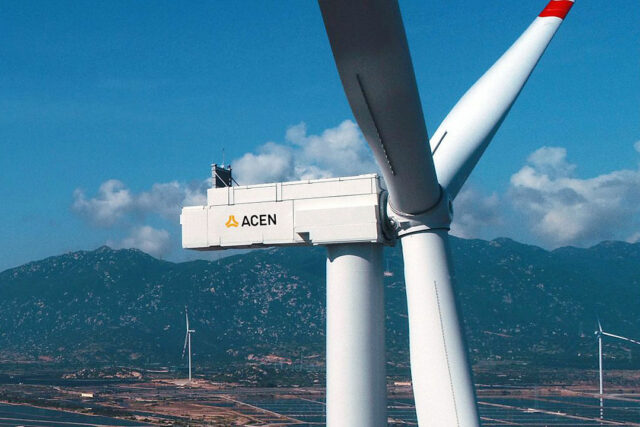
WHILE financing is readily available for green energy projects in the Philippines, the industry requires a clearer pathway to profitability to strengthen the investment argument, according to ACEN Corp.

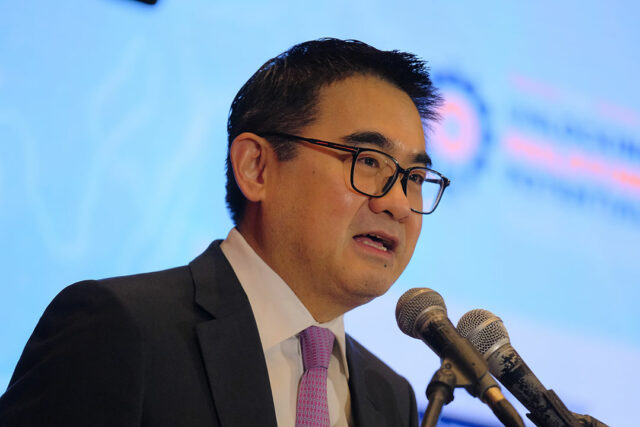
“I’m a little surprised by the assumption that climate financing in general is not available, right? Because there is a lot, certainly,” Miguel de Jesus, ACEN managing director and chief operations officer, said at the BusinessWorld Economic Forum: Unlocking Philippines’ Potential.

“I think a lot… has to do with getting the economics right on how to enable these energy transition opportunities,” he added.

Mr. De Jesus said developers and their financial backers have yet to see clarity on the revenue streams to be generated by energy-transition projects.

“At the end of the day, the banks want certainty of payment, right? And what’s important therefore is to ensure that (these projects have robust) revenue stream,” he said.

ACEN, the listed energy platform of the Ayala group, has initiated the early retirement of the 246-megawatt (MW) South Luzon Thermal Energy Corp., a coal-fired power complex.

The company has a target of scaling up its renewable energy capacity to 20 gigawatts  (GW) by 2030.

Vincent Martin C. Villegas, senior vice-president and chief revenue officer of First Gen Corp., said the liberalization of foreign ownership rules will help accelerate the development of renewables.

“We can now have 100% foreign investors, which is a big thing,” he said.

Mr. Villegas noted the high levels of risk in geothermal exploration, where First Gen, through its subsidiary Energy Development Corp., is the industry leader.

Mr. Villegas said customers and generation companies are gravitating towards clean energy, adding: “It will take some time. It’s going to be a journey. But it’s a collaboration… That’s going to be an effort from across the entire country. But we’re quite hopeful. If you look at the targets, we think they are achievable,” he said.

First Gen, the power generation arm of the Lopez group, controls 3,668 MW in capacity from its portfolio of geothermal, wind, hydro, solar energy, and natural gas plants.

The company has set a capacity target of 13 GW by 2030.

Monalisa C. Dimalanta, chairperson and chief executive officer of the Energy Regulatory Commission (ERC), said the industry is moving on from the old model where projects were deemed bankable if they signed up one major offtaker.

“This is where government agencies like ourselves and the DoE (Department of Energy) are helping out, in recalibrating the narrative for the financing sector,” Ms. Dimalanta said.

She said various cash flows can now be tapped by the developer, and not necessarily the traditional streams provided by a distribution utility.

Ms. Dimalanta said other potential revenue streams have been liberalized, such as selling to contestable customers under the Retail Competition and Open Access scheme, and participating in the Green Energy Auction Program.

Energy Undersecretary Rowena Cristina L. Guevara said the DoE is pursuing discussions with the Department of Finance (DoF) on initiatives like geothermal de-risking, total electrification, energy efficiency and conservation, and the hybridization program of the National Power Corp.

She said the DoE is in “advanced discussions” with the Asian Development Bank (ADB) to obtain support for these programs next year.

Ms. Guevara said the energy transition should be “calculated and calibrated,” adding: “We don’t want to miss out on economic growth by suddenly turning off our coal-fired power plants.”

Ms. Guevara said that the DoE is coming up with a coal transition policy, having received a presidential directive to ensure the Philippines can deliver on its Nationally Determined Contribution under the Paris agreement.

The Philippines hopes to increase the share of renewable energy in its power generation mix to 35% by 2030 and 50% by 2040.

RoW, 99-year lease bills named PHL legislative priorities

FREDERICK D. GO — PHILIPPINE STAR/RYAN BALDEMOR

By Luisa Maria Jacinta C. Jocson, Senior Reporter

THE GOVERNMENT has designated as priority measures bills on right-of-way (RoW), extended investor leases, and the mining fiscal regime, according to Secretary Frederick D. Go, the Special Assistant to the President for Investment and Economic Affairs.

“What are the future priorities of this administration, at least those that fall under my space? One is the right-of-way bill,” Mr. Go said in his keynote address at the BusinessWorld Economic Forum on Thursday.

He said infrastructure projects are often delayed because of right-of-way issues.

“Thankfully, the Transportation Secretary is now prioritizing the acquisition of right-of-way before starting the projects. I think that’s really the right sequence, the right way to undertake an infrastructure project.”

The proposed Accelerated and Reformed Right-of-Way (ARROW) Act is currently awaiting second reading at the Senate.

It seeks to amend Republic Act No. 10752 or the Right-of-Way Act to “facilitate the easier acquisition of right-of-way sites or locations for private infrastructure projects for public use to ensure a more efficient delivery of public services,” according to the bill.

“We have assurances from the legislature that the right-of-way bill is a priority bill and it will be passed in this 19th Congress,” Mr. Go added.

“It’s a very important bill for us to really push infrastructure projects forward. Infrastructure is not just roads, not just rails. It also includes necessary infrastructure like power, water, etc.”

The government is planning to allocate 5-6% of gross domestic product (GDP) to infrastructure spending.

President Ferdinand R. Marcos, Jr. has said that right-of-way issues have hindered flagship infrastructure projects.

There are currently 212 flagship projects on the list worth P9.8 trillion, according to Mr. Go.

Last year, the government completed seven flagship infrastructure projects. It is targeting the completion of 13 such projects this year and another four by 2026.

Mr. Go said the proposed amendments to the Investors’ Lease Act are also priorities.

“For some reason in the private sector…every time you sign a lease contract with the government, it’s usually 25 years. If you’re lucky, it’s renewable for another 25.”

“I’ve been puzzled why people just stop at 25 years. Our Senate is now looking at the Investors’ Lease law that extends this to 99 years,” he added.

In December, the House of Representatives and Senate approved separate bills allowing foreigners to lease land up to 99 years from 75 years. Both bills allow foreign investors to sublet properties, unless barred by contract.

The 1987 Constitution does not allow foreigners to own land, but the 31-year-old Investors’ Lease Act allows foreign investors to lease private land for 50 years, renewable for another 25 years.

Mr. Go said the amendments would allow the Philippines to “benchmark with the best practices in the world.”

“If you go to Hong Kong and Singapore, you lease land for 99 years,” he said. “If you want big investments, you want big infrastructure projects to be built, you cannot give them a 25-year lease.”

“An Investors’ Lease Act that provides investors with nearly a century of lease period (makes the Philippines) globally competitive, or at least regionally competitive,” he added.

The bill rationalizing the mining fiscal regime is also a legislative priority, Mr. Go said.

“The laws that govern the mining industry are decades old. The mining stakeholders, the Chamber of Mines of the Philippines, are all looking forward to this bill because it again brings back predictability in the rules and regulations governing the mining industry.”

“This is why we have set the Mining Fiscal Regime Bill as a priority bill.”

In February, the Senate approved on third and final reading a bill that sets a five-tier margin-based royalty and windfall profit tax system for the mining sector.

Regarding the US tariffs, Mr. Go said negotiations with the US Office of the Trade Representative (USTR) have been positive.

“What I can tell you is that the meeting went very well. The reactions were that our meeting was very well-received, and the discussions were very comprehensive,” he said.

The technical working group of the foreign trade office at the Department of Trade and Industry (DTI) will continue discussions with their counterparts at the USTR, he said.

Mr. Go said the negotiating team signed a confidentiality agreement and cannot disclose specific details of the negotiations.

“But I just want to point out that the Philippines is in a really good space. As you saw, the reciprocal tariffs set for the Philippines were at 17% and this is actually the second best in our region… which puts us in a very good spot.”

“You can ask businessmen who do business with our Southeast Asian neighbors. They have been getting calls from companies based in these countries asking if they can expand, open or build new factories, new facilities in the Philippines because of this.”

He said the government is working to get the best possible deal with the US.

“We cannot rest as all these countries are also negotiating with the US to reduce their tariffs which is why we had to go and keep ourselves on our toes so that if anything changes in their tariffs, we have to ensure ours also get lowered,” he added.


NAIA passenger volume tops 13 million in Q1

NINOY AQUINO INTERNATIONAL AIRPORT (NAIA) Terminal 3 — PHILIPPINE STAR/MIGUEL DE GUZMAN

PASSENGER VOLUME at the Ninoy Aquino International Airport (NAIA) rose 15.82% to 13.03 million in the first quarter, driven mainly by growth in domestic travel.

The Manila International Airport Authority (MIAA) reported that domestic passenger volume rose 8.32% year on year to 6.90 million in the three months to March. International passenger traffic rose 4.07% to 6.13 million.

In the first three months, MIAA logged 73,098 flights, up 0.84% from a year earlier. 

The passenger traffic tally for the quarter exceeds the pre-pandemic total of 11.62 million in the three months to March 2019.

MIAA said it is expecting passenger volume at the main gateway to grow by up to 30% this year due to booming travel demand.

In 2024, the NAIA logged passenger volume of 50.26 million, up 10.9% and 4.9% higher than the total booked in the last full pre-pandemic year.

A private operator took over operations at NAIA in September, and announced plans for road expansion and curbside enhancements, terminal upgrades, and terminal reassignments.

The NAIA upgrades are expected to boost its capacity to about 62 million passengers per annum from the current 35 million. — Ashley Erika O. Jose

Hog production down 3.7% in Q1

STOCK PHOTO | Image by Barbara Barbosa from Pexels

HOG PRODUCTION in the first quarter fell 3.7% year on year to 403.79 thousand metric tons (MT) on a liveweight basis, the Philippine Statistics Authority (PSA) reported.

The contraction in hog production narrowed from the 4.3% decline posted a year earlier, the PSA said.

Northern Mindanao was the top hog producer with 57.99 thousand MT liveweight, accounting for 14.4% of the national total.

It was followed by Calabarzon with 57.36 thousand MT, Central Luzon (50.66 thousand MT), the Central Visayas (40.86 thousand MT), and Davao region (31.72 thousand MT).

Calabarzon swine production fell by 6.14 thousand MT, the steepest decline of the 11 regions where production retreated.

As of March 31, the Philippines’ swine inventory fell by 11.3% year on year to 8.84 million heads, from the previous year’s same period count of 9.96 million heads.

About 71.1% of swine population was by smallhold farms, and the remaining 26.1% and 2.8% by commercial and semi-commercial farms, respectively.

Pork prices have remained high even with a maximum suggested retail price (MSRP) in effect during the period. The average retail price of fresh pork shoulder (kasim) was P369.64 per kilo in the PSA’s May 1-5 monitoring period.

The government discontinued the MSRP scheme on May 15 at the request of the pork industry, which claimed that participants in the pork value chain were setting prices too high to allow retailers to comply.

Meanwhile, the PSA said chicken production in the first quarter rose 8.7% year on year to 550.50 thousand MT on a liveweight basis.

Central Luzon was the top producer of chicken with 187.92 thousand MT on a liveweight basis, accounting for 34.1% of national production, followed by Calabarzon with 104.91 thousand MT, Northern Mindanao (46.57 thousand MT), the Central Visayas (27.70 thousand MT), and Soccksargen (24.52 thousand MT).

Fourteen regions reported year-on-year increases in chicken production during the first quarter, with Central Luzon adding the most output with an increment of 17 thousand MT liveweight.

Broiler chicken accounted for 86.1% of the total, followed by native/improved chicken with 12%, culled layer chicken (1.5%), and gamefowl for breeding (0.4%). — Kyle Aristophere T. Atienza

PHL cannot remain ‘passive’ as tariffs roil trade

DTI PHOTO

THE PHILIPPINES must work fast to seize the opportunities presented by shifting trade patterns in the face of the disruption caused by the new US tariffs regime, a former Bangko Sentral official said.

“The Philippines has a chance of doing a quick and proactive adaptation to the new trade environment,” GlobalSource Country Analyst for the Philippines Diwa C. Guinigundo said in a panel discussion at the BusinessWorld Economic Forum on Thursday.

“Otherwise, it risks being a passive bystander in the unfolding international trade regime,” Mr. Guinigundo, a former central bank deputy governor, added.

“The US will not wait for us to take full advantage of the lower reciprocal tariffs or the substantial exemption of certain product lines. Our competitors are just too busy shaping up and enhancing their competitiveness,” Mr. Guinigundo added.

Last month, US President Donald J. Trump imposed reciprocal tariffs on nearly all its trading partners, but paused enforcement of these rates for 90 days while charging most countries a 10% “baseline” tariff.

The Philippines was originally assigned a 17% tariff before the pause, the second lowest in Southeast Asia. Singapore had been charged the baseline rate of 10% when the reciprocal tariffs were originally announced in early April.

Mr. Guinigundo said there is a need to “sustain the pace of structural and policy reforms and broaden our regional engagement.”

Also speaking at the panel, Semiconductor and Electronics Industries in the Philippines Foundation, Inc. (SEIPI) President Danilo C. Lachica said the Philippines is not a recipient of Artificial Intelligence (AI) chips from the United States.

The US issued a Framework for Artificial Intelligence Diffusion, which divides the world into three tiers that categorize countries based on whether they can receive chips or not.

The first tier grants countries unlimited chips while the second has a cap. A third tier completely blocks countries from receiving chips, such as China.

“The Philippines doesn’t appear in tier one or tier two. I don’t know if it was an omission, but we need to bring this to the attention of the Strategic Trade Management Office,” he said, referring to the arm of the Department of Trade and Industry (DTI).

“As much as we’re using AI in our daily lives, we need to be able to get on that list, at least tier two. Those are the challenges that we’re looking at,” Mr. Lachica added.

Mr. Guinigundo added: “We may have all of the agreements…, but if we are not on that list or if we’re not in that tier, I don’t think people will pay attention to our case. The point is, as we were saying earlier, we have to strengthen our industrial base.”

“We have to improve our logistics. We have to improve our human capital,” he added.

“In most, if not all economies, I think it’s imperative that you invest in human capital because human capital fuels innovation and creativity,” Allan B. Gepty, undersecretary of the DTI’s International Trade Group, said.

Mr. Lachica also flagged the skills gap in the current workforce.

“Our workforce… doesn’t have the skills required by the industry. It’ll take another year or two before you can equip them with the foundational and technical skills.”

He also noted high power, logistics, water, and labor costs.

Mr. Gepty also noted the need to strengthen the industrial base.

“To do that, we have to align our industrial policy with our trade policy. Because at the end of the day, our dream, our vision is, of course, to have a robust industrial sector so that we can export more to other countries.”

“We have to bear in mind that because of the global supply chain, there is no such thing as made in one country.” — Luisa Maria Jacinta C. Jocson

Mobile-first strategy deemed key to engaging top APAC consumers

STOCK PHOTO | Image by Pongsawat Pasom from Unsplash

BUSINESSES need to build around a mobile-first strategy in engaging the most influential consumers in key Asia-Pacific markets, including the Philippines, global market research firm Ipsos said.

The Ipsos Global Influentials survey, which studied the media usage habits of the top 20% of the world’s population in terms of wealth, showed a major shift to digital among the Asia-Pacific’s biggest earners and top executives.

Ipsos calls this category of consumer the “influentials,” a cluster that controls over 90% of global wealth.

“There are several markets in the APAC, including Malaysia, the Philippines, Thailand, and particularly Indonesia, who demonstrate high engagement with mobile for activities like reading news or magazine content and watching video on devices other than TV sets,” Matthias Gitschel, director for audience measurement at Ipsos UK, said during the virtual launch of the survey late Tuesday.

“This reinforces the importance of mobile-first strategies for reaching consumers in these markets.”

The Asia-Pacific influentials market spend an average of three hours surfing the web, Mr. Gitschel said.

In particular, they spend 89 minutes on average  visiting websites on a mobile device, 87 minutes visiting websites on a computer, and 86 minutes using social media.

“In terms of social media engagement, we see the Philippines, Thailand and Indonesia standing out with significant higher usage compared to the other upper APAC markets and even the global average. This highlights the importance of social media marketing for reaching consumers in these markets.”

According to the survey, 28% of APAC influentials rely on social media to stay updated on lifestyle and fashion, followed by magazines and newspapers (15%), and websites (15%).

APAC influentials also use social media for entertainment news (28%), travel and tourism (25%), sports (17%), news and current affairs (15%), and business, finance, and economy information (12%), Ipsos said.

Meanwhile, TV remains the top news source for sports (30%) and news & current affairs (24%) in the region.

The most used mobile applications by APAC influentials are for shopping (58%), social networking (55%), music (52%), and mobile wallets/payments (52%).

Instagram and Facebook were the top social networking apps used by APAC influentials when the survey was conducted, at 50% and 43%, respectively.

“Facebook’s dominance in social media has seemingly come to an end, as the younger generations choose Instagram over Facebook,” Mr. Gitschel said.

Filipino influentials spend about $19,938 on travel annually, according to Ipsos.

Outside the region, the top destinations that APAC influentials are expected to visit were the US (11%), UK (10%), Germany (9%), Switzerland (9%), and Canada (7%).’

APAC influentials were most interested in vacations centered on shopping (49%), theme parks (44%), beach activities (40%), or escapes from the city (40%).

With 45% of APAC influentials booking their travels on a smartphone, Booking.com (32%) and Agoda (29%) were the top sites used for travel, Ipsos said.

The Ipsos Global Influentials survey aims to “provide a total understanding of the most powerful people in terms of wealth, demographics, aspirations and attitudes… and how [we can] engage them with an abundant information on their media behaviors,” Annie Chan, managing director at Ipsos Hong Kong, said.

Of the 90,000 individuals surveyed between June to October 2024, 16,000 were senior company officials. — Beatriz Marie D. Cruz

OSAPIEA’s Go sees uncertainty from US tariffs clearing up soon

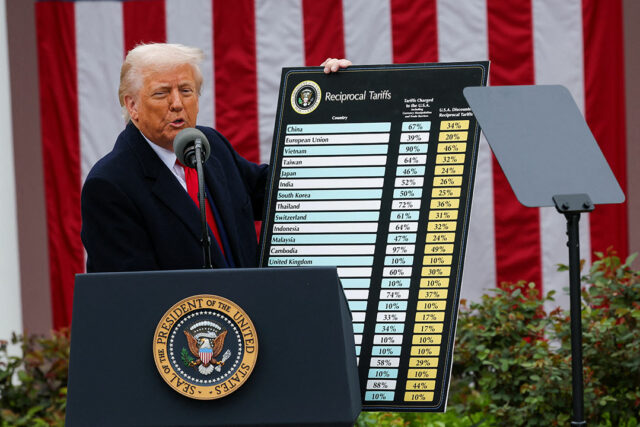
US PRESIDENT Donald Trump delivers remarks on tariffs in the Rose Garden at the White House in Washington, DC, April 2, 2025. — REUTERS

SECRETARY Frederick D. Go said he expects the uncertainty arising from the tariff disruptions being resolved soon, citing the progress made in resetting the US tariff rates for Chinese goods.

While the US tariffs on its trading partners  “definitely put a damper on our investors’ big moves,” Mr. Go, who heads the Office of the Special Assistant to the President for Investment and Economic Affairs (OSAPIEA), said the uncertainty “cannot last forever… At some point, it becomes clearer and clearer. And you can see there are announcements already coming out of the US that they lowered the tariffs on China from 145% to 30%, so you can see the uncertainty is clearing.”

Mr. Go was speaking on the sidelines of the BusinessWorld Economic Forum in Taguig City on Thursday.

US President Donald J. Trump early last month imposed reciprocal tariffs on its trading partners. The Philippines was assigned a 17% tariffs, the second-lowest rate in Southeast Asia.

These rates were subsequently put on hold until July, as individual countries sent delegations to Washington to negotiate lower tariffs.

Mr. Go added that he expects roadshows to pitch incentives under the Corporate Recovery and Tax Incentives for Enterprises to Maximize Opportunities for Reinvigorating the Economy (CREATE MORE) law to attract more investors.

“Definitely, that is the idea. But the US reciprocal tariffs created an environment where the timing was not great to go on the road. The best time, I think, is when there’s more clarity on these reciprocal tariffs,” he added.

Late next month, the roadshow will take the Philippine delegation to Europe, the US, Japan, China, and the Middle East.

“We were supposed to do the US (first). But because of the US tariffs, we had to revisit the schedule,” he added.

Meanwhile, he said that he is not worried about business sentiment in the wake of the cabinet resignations sought by President Ferdinand R. Marcos, Jr.

“I think the business sector will welcome this. In the private sector, what do you do with non-performing executives? You let them go. You ask them to resign. So, I think the private sector should understand that this is a good move,” he said.

On Thursday, Mr. Marcos called for the courtesy resignations of his cabinet following the midterm polls.

Alfredo S. Panlilio, president of the Management Association of the Philippines, said that just like in any corporation, the chief executive officer (CEO) has to make very difficult decisions.

“The CEO has to make very difficult decisions on what he thinks should happen… in this case, obviously, the President is running a country, so he’s the CEO of the country,” he said.

“It’s really more (a decision based on) performance, meritocracy… and who can implement his vision for the country. I guess we leave the decision to him. We understand the process; we are not surprised by it, because it happens in the real world,” he added.

BDO Capital & Investment Corp. President Eduardo V. Francisco said that the president’s willingness to overhaul the cabinet is a “good sign.”

“We will see (whose resignations) will be accepted. But the fact that he’s doing that is a good sign. I just hope that the replacements will be better and we will want to move fast … Because they really need to, in the next three years, see significant developments,” he said.

“If he is going for the secretaries, it should also include all political appointees … so that the president will have a clean slate,” he added.

Philippine Chamber of Commerce and Industry Secretary General Ruben J. Pascual said that he hopes that Mr. Marcos will decide quickly.

“Again, this is a source of uncertainty for foreign and domestic businessmen. I hope this is going to be very quick, that he will be able to make a decision immediately, especially on the key economic positions,” he said.

“We hope… there will be clear direction after this reshuffle… on what’s going to happen in the next three years,” he added. — Justine Irish D. Tabile

Clark Dev’t Corp. remits P2.49-B dividend

FACEBOOK.COM/CLARKDEVELOPMENTCORP

THE Department of Finance (DoF) said on Thursday that it received a P2.49-billion dividend from the Clark Development Corp. (CDC), up 38%.

CDC operates, administers, manages, and develops the Clark Freeport Zone (CFZ) and Clark Special Economic Zone (CSEZ).

Meanwhile, Land Bank of the Philippines (LANDBANK) said it declared a dividend of P33.53 billion, exceeding the P26 billion reported by the DoF on Wednesday. LANDBANK said the balance will follow within the year.

The DoF also said P76 billion worth of dividends was remitted to the Bureau of the Treasury as of May.

Over the full year, government-owned or -controlled corporations (GOCC) are expected to remit dividends exceeding the 2024 level of P138.46 billion, it said.

GOCCs have been ordered to remit 75% of their earnings, far exceeding the 50% minimum required by Republic Act No. 7656 or the Dividend Law.

In March, nontax revenue generated by the government declined 69.36% to P19.6 billion, bringing the total to P66.7 billion in the first quarter. — Aubrey Rose A. Inosante