Home Blog Page 1030

Marcos open to truce with Dutertes

PHILSTAR FILE PHOTO

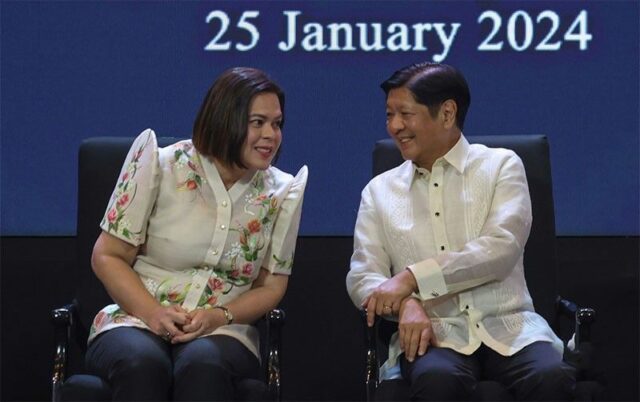
PRESIDENT Ferdinand R. Marcos, Jr., on Monday conveyed his willingness to reconcile with the Duterte family, signaling a potential thaw in relations between two influential political clans amid ongoing efforts to promote unity within the country’s leadership.

“I don’t want trouble. I want to get along with everyone. That’s better. I already have many enemies. I don’t want enemies; I need friends,” Mr. Marcos said in Filipino in a video posted on his social media platforms.

“As much as possible, what I’m aiming for is stability and peace so we can do our work. I’m always open to that. I’m always open to any approach,” he added.

Mr. Marcos and former President Rodrigo R. Duterte’s daughter, Sara, delivered a landslide victory in the 2022 polls under the banner of unity, but their relationship deteriorated following a series of events prompted by Ms. Duterte’s resignation as Education Secretary under Mr. Marcos’ cabinet.

Ms. Duterte was impeached by the House of Representatives in early February over alleged misuse of secret funds, unexplained wealth, and acts of destabilization and plotting the assassination of President Marcos and his family. Ms. Duterte has denied any wrongdoing

The Philippine government last March also paved the way for the arrest of Mr. Duterte, who is now detained in The Hague for alleged crimes against humanity. — Chloe Mari A. Hufana

PHL, Mongolia to deepen trade ties

DEPARTMENT OF FOREIGN AFFAIRS FACEBOOK PAGE

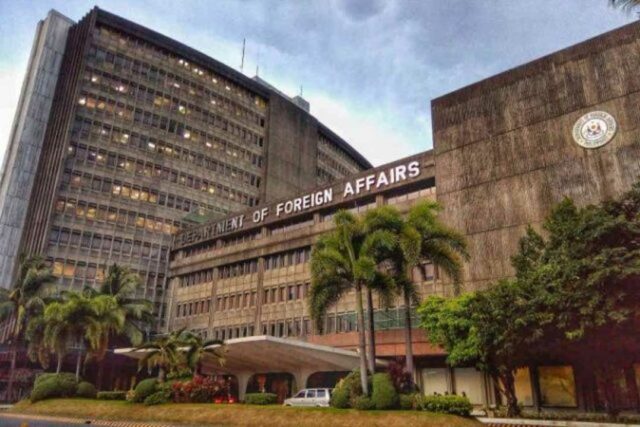
THE Philippines and Mongolia pledged to strengthen their trade and investment ties on Monday, reaffirming their need to expand economic cooperation to harness their resource-rich economies.

In a joint statement, Manila and Ulaanbaatar said they reaffirmed their commitments to improve private sector collaboration between their nations while also advancing their trade cooperation by expanding trade volume and promoting market access.

Philippine Foreign Affairs Secretary Enrique A. Manalo met with Mongolian Foreign Minister Battsetseg Batmunk in Manila, during which they exchanged diplomatic notes, including talks for a pilot program allowing Mongolians to study English in the Philippines.

“Noting that the Philippines and Mongolia are two of the world’s fastest growing economies, the Secretary and the Minister noted that the two resource-rich economies would further benefit from pursuing trade and investment synergies for expanded economic cooperation.

Ms. Battsetseg’s visit to the Philippines marks the first official visit by a Mongolian foreign minister to the country since 1984.

In a separate statement, Mr. Manalo said that he and Mongolia’s top envoy reaffirmed a “shared interest” in upholding a rules-based international order amid “evolving” developments in the Indo-Pacific region.

“As indicated in our joint statement, Foreign Minister Battsetseg and I emphasized the importance of adherence to the United Nations Charter and reaffirmed our commitment to the 1982 Manila Declaration on the Peaceful Settlement of Disputes,” he said.

“We also reaffirmed our commitment to the 1982 UN Convention on the Law of the Sea, or UNCLOS, and to our shared vision of a world free of nuclear weapons,” he added. — Kenneth Christiane L. Basilio

Poll workers to get P1,000 bonus

PHILIPPINE STAR/WALTER BOLLOZOS

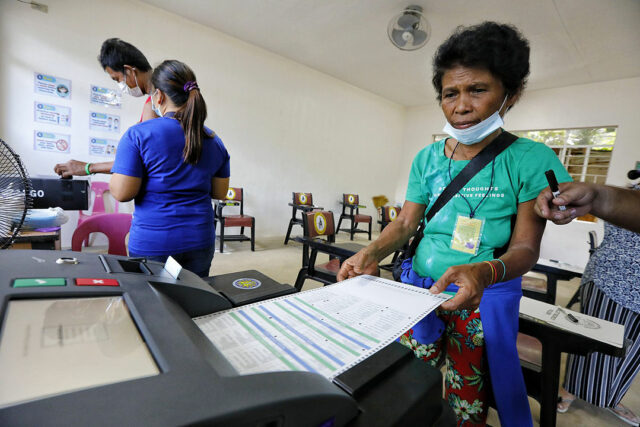
THE Department of Budget and Management (DBM) approved the additional P1,000 across-the-board election allowance for teachers and poll workers.

“The DBM has approved the release of P758.459 million to cover the budgetary requirement for the additional P1,000 election honoraria of our teachers and poll workers,” Budget Secretary Amenah F. Pangandaman said in a statement on Monday.

This was separate from the initially announced P2,000 increase last May 9, funded under the 2025 General Appropriations Act, she said.

Poll workers should receive their election allowance, including the announced increases, within 10 days after the National and Local Elections, according to the Commission on Elections (Comelec).

Comelec said it estimated 758,549 poll workers for the 2025 national and local elections.

Ms. Pangandaman said the increase was in compliance with President Ferdinand R. Marcos Jr.’s orders to recognize the role of poll workers and teachers as frontliners during the May 13 polls. — Aubrey Rose A. Inosante

Gov’t to open 20,000 teaching posts

PHILSTAR FILE PHOTO

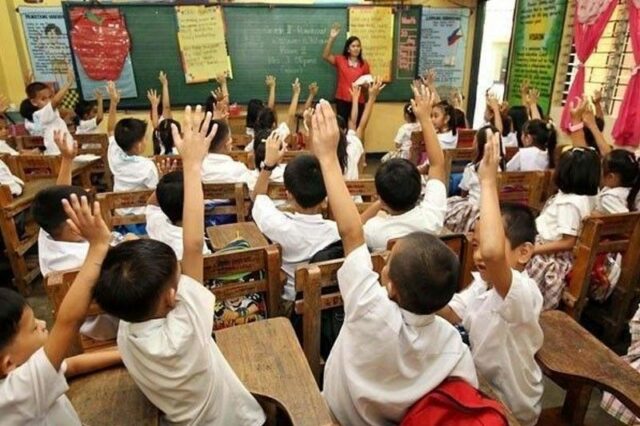
THE Philippine government will open a total of 20,000 teaching positions this year as part of the country’s efforts to strengthen the Philippine education system, the Presidential Palace said on Monday.

“This move is in line with the president’s directive to strengthen the education system,” Palace Press Office Clarissa A. Castro said in Filipino during a briefing in Malacañang. “The 16,000 teaching positions [earlier announced] are only the first part.”

She noted that President Ferdinand R. Marcos, Jr., heeded the suggestion of Education Secretary Juan Edgardo M. Angara to build child development centers.

“The President immediately asked that the funds be released for that purpose,” Ms. Castro said.

According to Ms. Castro, the budget has been allocated, amounting to P4.19 billion, included in the Department of Education’s built-in appropriation under the 2025 General Appropriations Act.

“We’ll have to see what additional projects will be implemented under this funding, but we are also hoping to see the construction of more classrooms in time for the upcoming school year.”

The school year 2025-2026 in the Philippines will officially begin on June 16, and end on March 31, 2026. — Chloe Mari A. Hufana

Aid deployed for San Juanico rehab

OFFICE OF THE PRESS SECRETARY

THE Philippine government heightened its emergency readiness and deployed additional support services as it accelerated the rehabilitation of the San Juanico Bridge in Eastern Visayas.

Acknowledging the inconvenience the project may cause to nearby communities, Palace Press Officer Clarissa A. Castro on Monday emphasized the long-term benefits of the rehabilitation, citing public safety as a top priority.

“Let’s look at this from a more positive perspective because this is rehabilitation. It would be better to avoid what might cause a disaster if it can’t be fixed early,” she said in Filipino during a news briefing.

The Department of Public Works and Highways (DPWH) and other key agencies raised a blue alert, she added.

The 2.16-kilometer bridge connecting the islands of Samar and Leyte is now off-limits to heavy vehicles, following a May 8 directive from the DPWH. Under the new guidelines, only vehicles with a gross weight of up to 3 tons are permitted to pass.

A multi-agency task force has also been activated, alongside the establishment of public assistance desks on both ends of the bridge and 24-hour patrol units to monitor safety conditions.

To manage vehicle access, a weighing station will be installed to ensure only light vehicles are permitted to cross during rehabilitation.

Meanwhile, the DPWH has committed to deploying 13 shuttle buses offering round-the-clock service to assist affected commuters.

Coordination is also underway with local government units and the Philippine Ports Authority to facilitate the movement of buses and passengers as traffic is rerouted. — Chloe Mari A. Hufana

Isuzu relocates shop in Dumaguete

Isuzu Philippines held a groundbreaking ceremony in Dumaguete, where it will relocate as part of its expansion plans.

ISUZU Philippine Corp. (IPC) has started the construction for its store in Dumaguete as part of its commitment to upgrade its nationwide dealer network with modern facilities.

“This relocation brings the Isuzu brand even closer to our valued customers in Dumaguete, making our products and services more accessible while raising the bar in customer experience,” said IPC President Mikio Tsukui in a statement on Monday.

To span 3,144 square meters (sqm), the new dealership will feature a 251-sqm showroom that can showcase up to four vehicles, allowing for a wider selection of vehicles on display.

The new Isuzu Dumaguete store will also have four bays that can handle light commercial vehicles and commercial vehicle repairs.

“The relocation and modernization of Isuzu Dumaguete come at an opportune time. Dumaguete continues to experience economic growth, with increasing demand for mobility and transport solutions,” IPC said.

“This expansion is part of IPC’s broader, aggressive strategy to modernize and expand its dealership footprint nationwide, ensuring that its products and services remain within easy reach of customers across the country,” it added.

IPC partnered with dealer group Southern Auto Mart for the new Isuzu Dumaguete dealership.

“With this new and improved facility, we are confident that we can further increase Isuzu’s visibility and grow our sales in Negros,” said Mark Espino, vice president for sales and aftersales at Southern Auto Mart. — Justine Irish D. Tabile

3 dead, 2 hurt in Maguindanao del Sur gun attacks

STOCK PHOTO | Shooting gun photo created by senivpetro - www.freepik.com

COTABATO CITY — Three individuals, including a volunteer community watchman, were killed while two others were wounded in gun attacks in three towns in Maguindanao del Sur province within just three days.

A Barangay Peacekeeping Action Team (BPAT) member, Jordan D. Balayman, died from multiple bullet wounds when gunmen in a minivan shot him and his companions while they were on duty near a gasoline station in the town center of Shariff Aguak on Sunday afternoon.

Local executives, among them Shariff Aguak Mayor Akmad B. Ampatuan, and officials of the Police Regional Office-Bangsamoro Autonomous Region told reporters on Monday that the incident left two other BPAT members wounded.

The attackers, who immediately escaped, are now subject of a joint manhunt by operatives from the Shariff Aguak Municipal Police Station and troops from units of the Army’s 601st Infantry Brigade.

Three BPAT members were killed in a spate of gun attacks in different areas in Shariff Aguak in a span of just three weeks prior to the May 12 elections.

Local executives and officials of the Shariff Aguak municipal police force are convinced that the atrocities were related. They are cooperating in identifying the culprits for prosecution.

The deadly incident in Shariff Aguak on Monday was preceded by the fatal ambush on Friday in Pandag, Maguindanao del Sur of a Moro villager, Lakmudin T. Uga, by gunmen whom police investigators and local officials are still trying to identify.

Mr. Uga and his wife were riding a motorcycle together, when they were attacked by gunmen in Barangay Kayaga in Pandag. His wife was wounded in the incident, now recuperating in a hospital.

Two residents were killed, while an old woman was badly wounded in the crossfire between two rival partisan groups, armed with assault rifles and grenade launchers, that clashed in two adjoining barangays in Pandag a week before the May 12 elections.

Mr. Uga’s cousin, Allan, was killed in another ambush on Saturday, near the town center of Buluan, Maguindanao del Sur, which is not too distant from Pandag.

The victim, also a resident of Pandag, was riding a tricycle, bound for the town proper of Buluan, when he was attacked by gunmen, killing him instantly.

Local executives and police officials in Pandag and in Buluan said there is a possibility that the ambush incidents that left the Uga cousins dead were related, possibly triggered by a grudge between them and their killers. — John Felix M. Unson

China-US trade truce prompts nations to eye tougher tactics

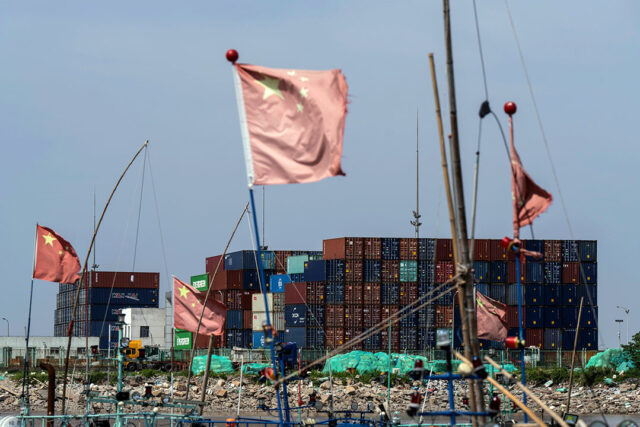
SHIPPING CONTAINERS at the Yangshan Deepwater Port in Shanghai, China, on Wednesday, May 14. China and the US agreed to temporarily lower tariffs levied against each other’s products — the first major de-escalation in the trade row that was touted by US President Donald J. Trump as a “total reset” of bilateral ties. — QILAI SHEN/BLOOMBERG

CHINA’s defiant stance in negotiating a tariff truce with the US has convinced some countries they need to take a tougher position in their own trade talks with the Trump administration.

The pause reached a week ago gave structure to what promised to be prolonged and difficult rounds of talks between Washington and Beijing, which still faces average US import taxes near 50% when past levies are factored into the 30% rate agreed to in Geneva, Switzerland.

Yet US President Donald J. Trump’s willingness to retreat so much from the earlier 145% duty on China surprised governments from Seoul to Brussels that have so far stuck with the US’s request to negotiate rather than retaliate against its tariffs.

After China’s tough negotiating tactics earned it a favorable — albeit temporary — deal, nations taking a more diplomatic and expedited approach are questioning whether that’s the right path.

“This shifts the negotiating dynamic,” said Stephen Olson, a former US trade negotiator who’s now a visiting senior fellow with ISEAS — Yusof Ishak Institute in Singapore. “Many countries will look at the outcome of the Geneva negotiations and conclude that Trump has begun to realize that he has overplayed his hand.”

Left for now at 10%, the higher bespoke rates will kick in unless deals are signed or postponements are granted before a 90-day suspension ends in July.

While officials are loathe to signal publicly any hardening of their approach, there are signs particularly from larger nations that they’re realizing they hold more cards than previously thought and can afford to slow the pace of negotiations.

South Korea’s leading presidential candidate Lee Jae-myung said there’s no need to rush for an early agreement in trade negotiations with the US, criticizing the interim government for what he called a hasty engagement with the Trump administration.

Mr. Trump himself indicated last week — near the halfway point of the 90-day reprieve — that there isn’t time to do deals with about 150 countries lining up for them. So the US may assign the higher tariff rates unilaterally in the next two to three weeks.

While Mr. Trump also said that India was prepared to lower all tariffs on US goods, the nation’s External Affairs Minister Subrahmanyam Jaishankar told reporters that trade talks are ongoing and “any judgment on it would be premature.”

India’s Commerce Minister Piyush Goyal was scheduled to arrive in the US over the weekend for further negotiations.

“There are many countries that may learn from China that the correct way to negotiate with President Trump is to stand firm, remain calm and force him to capitulate,” said Marko Papic, chief strategist of GeoMacro at BCA Research.

JAPAN’S RETHINK
Japanese trade officials are scheduled to visit Washington this week. Japan’s Trade Minister Yoji Muto skipped a regional meeting last week in nearby South Korea that US Trade Representative Jamieson Greer attended.

Top negotiator Ryosei Akazawa, who leads Japan’s tariff task force, said earlier this month that he is hoping to reach an accord with the US in June, but recent local media reports indicate an agreement is more likely be reached in July, ahead of an upper house election.

Policymakers in Tokyo may be starting to think that it’s preferable to take time rather than make major concessions to wrap up things up quickly.

“Everyone in the queue is wondering, ‘Well, why have I been lining up?’” said Alicia Garcia Herrero, chief economist for Asia Pacific at Natixis. “This deal let China jump the queue and also doesn’t have clear benefits for the US so it’s doubly painful for other countries watching.”

Even US officials are signaling that negotiations will take longer. Commerce Secretary Howard Lutnick told Bloomberg TV that talks with Japan and South Korea will take time. Treasury Secretary Scott Bessent last week said the European Union (EU) suffered from a lack of unity that was impeding talks.

“I think the US and Europe may be a bit slower,” Mr. Bessent said on Tuesday at a Saudi-US Investment Forum in Riyadh.

On Sunday, the Treasury secretary sounded optimistic about talks more broadly, adding that “we didn’t get here overnight.”

“With a few exceptions, the countries are coming with very good proposals for us,” Mr. Bessent said in an interview on CNN’s State of the Union. “They want to lower their tariffs, they want to lower their non-tariff barriers, some of them have been manipulating their currency, they’ve been subsidizing industry and labor.”

EU SKEPTICISM
Officials in Brussels viewed the US-China tariff announcement as leaving high tariffs in place and limited on several fronts, according to people familiar with EU discussions.

The meager negotiating gains for the US and the lack of a clear end game during the 90-day reprieve show how limited is Mr. Trump’s appetite to keep ratcheting up the pressure on Beijing, the people said on condition of anonymity to discuss private deliberations.

Valdis Dombrovskis during a news conference following the Economic and Financial Affairs Council meeting in Brussels on May 13.

“The trade landscape is becoming more fragmented” and “the deals achieved so far are not completely addressing the situation,” the European Commission’s top economic official Dombrovkis said in an interview in London on Thursday, referring to the China tariff truce and a UK-US outline of a deal announced days earlier.

The US-China arrangement may also show nations that the Trump administration isn’t immune to the pressures of domestic economic headwinds caused by tariffs.

“The economic pain is more immediate and broad-based in the US and this deal can be seen as the Trump administration acknowledging that,” said Robert Subbaraman, head of global markets research at Nomura Holdings Inc.

But only nations with economic heft and limited reliance on trade with the US may be able to act on that, according to Bert Hofman, professor at the National University of Singapore and a former World Bank country director for China. “It’s pretty risky for most countries to be tough on the US,” Mr. Hofman said by phone.

A prime example of that is Canada, which Oxford Economics said last week had effectively suspended almost all of its tariffs on US products.

Over the weekend, Canada’s Finance Minister Francois-Philippe Champagne disputed that, saying the government kept 25% retaliatory tariffs on tens of billions of dollars in US goods.

He said 70% of the counter-tariffs implemented by Canada in March are still in place, according to a social media post on Saturday. The government “temporarily and publicly paused tariffs” on some items for health and public safety reasons, he said.

Still, because China’s clout remains substantial as the world’s factory floor, other countries may have “to use more creative pieces of leverage,” according to Mr. Papic.

LACKING LEVERAGE
For Vietnam, one-third of its economy depends on trade with the US, and that lack of leverage means there isn’t scope to do much more than talk tough.

Vietnam, which was among the first nations to offer purchasing additional US goods such as Boeing Co. aircraft to close the trade surplus, slammed Mr. Trump’s tariffs earlier this month as “unreasonable.”

If larger nations do want to get confrontational, one area where they may have room is on services trade, said Katrina Ell, Moody’s Analytics head of Asia Pacific economics.

The EU, Singapore, South Korea and Japan are among nations that have the biggest services trade deficits with the US, Moody’s Analytics data show.

“China has too much leverage over the US for the US to continue with its hardline stance whereas that’s not the case for many other economies,” Ms. Ell said by phone. “That’s what we need to keep in mind is leverage and who has that leverage.” — Bloomberg


Thailand GDP grows by 3.1% in 1st quarter, beats expectation

REUTERS

BANGKOK — Thailand’s economy grew more than expected in the first quarter of 2025, data showed on Monday, but the state planning agency cut its full-year growth forecasts as US tariffs threaten to hit the country’s export engine.

Southeast Asia’s second-largest economy grew 3.1% in the January-March quarter from a year earlier, slowing slightly from a revised 3.3% pace in the previous quarter, the National Economic and Social Development Council (NESDC) said.

The growth rate was above a median forecast of 2.9% growth in a Reuters poll.

On a quarterly basis, the economy grew a seasonally adjusted 0.7% in the March quarter, above the poll forecast of 0.6% growth and 0.4% growth in the prior quarter.

The gross domestic product (GDP) at the start of 2025 was helped by private consumption and government expenditure, but high consumer and corporate debt burdens and the global trade war are expected to weigh on activity later in the year, the NESDC said in a statement.

The agency cut its 2025 economic growth forecast to 1.3% to 2.3% from a range of 2.3% to 3.3% seen earlier, and also lowered its forecast for export growth to 1.8% from 3.5%.

Foreign tourist arrivals are now seen at 37 million this year, down from an earlier projection of 38 million, the NESDC said. Tourist arrivals hit a record of nearly 40 million in 2019, the year before the COVID-19 pandemic. — Reuters

Centrist Nicusor Dan wins Romanian presidency

Romanian and European Union flags flutter, with a rainbow in the background, outside the Parliament in Bucharest, Romania, May 18, 2025. — REUTERS

BUCHAREST — Romania’s centrist Bucharest mayor, Nicusor Dan, won the country’s presidential election on Sunday in a shock upset over a hard-right, nationalist rival who had pledged to put Romania on a path inspired by US President Donald J. Trump’s politics.

Official results from nearly all voting stations showed Mr. Dan garnering about 54% of ballots cast by voters in the European Union (EU) and North Atlantic Treaty Organization (NATO) member country of about 19 million people, while Trump supporter George Simion was at 46%.

Mr. Dan, 55, a soft-spoken mathematician, made a last-minute dash to the top in recent days after weeks of trailing Mr. Simion, a eurosceptic wanting to end military aid for Ukraine in its war with Russia. The election drew the highest percentage of voter turnout in a Romanian election in 25 years.

Mr. Simion, who was the top vote-getter in the first round of the election two weeks ago with 41% of ballots cast, conceded after earlier saying he won the election.

Mr. Dan had campaigned on a pledge to fight rampant corruption, to maintain support for Ukraine — where Romania has played an important logistic role — and to keep the country firmly within the European mainstream.

On Sunday evening in the capital Bucharest, Mr. Dan supporters chanted “Russia, don’t forget, Romania isn’t yours.” Staunchly pro-EU and NATO, Mr. Dan said in the run-up to the election that Romania’s support for Ukraine was crucial for its own security against a growing Russian threat.

Ukraine’s President Volodymyr Zelensky congratulated Mr. Dan on his “historic victory,” writing on social media: “For Ukraine — as a neighbor and friend — it is important to have Romania as a reliable partner.”

The voting in Romania took place on the same day as the first round of a Polish election in which a liberal frontrunner, Rafal Trzaskowski edged ahead of Karol Nawrocki, the candidate backed by the opposition nationalist Law and Justice (PiS) party.

Both elections are being closely watched across Europe amid concern that popular anger with mainstream elites over migration and cost of living pressures could bolster support for Mr. Trump and erode unity on the continent over how to deal with Russia.

In Romania, however, the election showed backlash against politicians taking inspiration from right-wing populist Trump’s Make American Great Again (MAGA) movement, according to Mujtaba Rahman, managing director for Europe at consultancy Eurasia Group.

“This is a really strong result for the pro-European candidate,” Mr. Rahman said.

“It’s another example of the positive Trump effect on European election cycles where concerns about the political and policy direction moving in a MAGA-like way have mobilized voters.”

‘A DIFFICULT PERIOD AHEAD’
Mr. Dan acknowledged that he faces a tough challenge in finding a prime minister to negotiate a majority in parliament to reduce Romania’s budget deficit — the largest in the EU — as well as to reassure investors and try to avoid a credit rating downgrade.

“There will be a difficult period ahead, necessary for economic rebalancing to lay the foundations of a healthy society. Please have hope and patience,” Mr. Dan told supporters after exit polls were published showing him ahead.

Mr. Dan later said talks could take a few weeks.

The election took place nearly six months after the initial ballot was cancelled because of alleged Russian interference — denied by Moscow — in favor of far-right frontrunner Calin Georgescu, who was banned from standing again.

Romania looked poised to swing towards Russia had Mr. Georgescu won, and Mr. Simion built a campaign to benefit from his support, signalling he would nominate him as prime minister if he emerged victorious.

Speaking shortly after voting ended, Mr. Simion said his election was “clear.”

“I won!!! I am the new President of Romania and I am giving back the power to the Romanians!” Mr. Simion said on Facebook. But Simion conceded the election later in the evening.

A crowd of Mr. Dan’s supporters celebrated his victory outside his campaign headquarters in downtown Bucharest.

“These elections are really important for the European future,” said Ilinca Sipoteanu, 19. “This is very good for democracy and for the younger generations… and also for our parents and grandparents that fought the system in 1989.”

Romania’s communist dictator Nicolae Ceausescu was overthrown in 1989.

The president of Romania has considerable powers, including being in charge of the defense council that decides on military aid. The president will also have oversight of foreign policy, with the power to veto EU votes that require unanimity.

Political analysts had said victory for Mr. Simion would have risked isolating Romania abroad, eroding private investment and destabilizing NATO’s eastern flank.

It also would have meant that Hungary’s fiercely anti-immigrant leader Viktor Orban, a long-time Mr. Trump ally, and Slovakia’s Robert Fico — who both oppose military aid for Ukraine — would gain a new ally in the European Council in decisions on aid for Ukraine, energy, sanctions against Russia or the EU’s budget.

In the first round of Poland’s presidential election, admirers of Mr. Trump’s politics won about 45% of votes cast, according to exit polls, including Mr. Nawrocki’s result combined with that of far-right candidate Slawomir Mentzen. — Reuters

Taiwan is not ruling out ‘political warfare’ by China, coast guard says

TAIWAN President-elect Lai Ching-te, of Democratic Progressive Party (DPP), holds a press conference, following his victory in the presidential elections, in Taipei, Taiwan, Jan. 13, 2023. — REUTERS

TAIPEI — Taiwan’s coast guard said on Monday China could try to disrupt public morale on the island ahead of President Lai Ching-te’s one-year anniversary this week, after images surfaced on social media of a person planting a Chinese flag on a Taiwan beach.

China calls Lai, who completes a year in office on Tuesday, a “separatist,” and has rebuffed his offers for talks.

Mr. Lai rejects China’s sovereignty claims over the democratic and entirely separately governed island, saying only Taiwan’s people can decide their future.

Last week, Taiwan’s China-policy making Mainland Affairs Council said Beijing could hold more military drills to “stir up trouble” around the anniversary.

On Sunday, images posted on Chinese social media showed a man who claimed to have sailed across the Taiwan Strait on a small boat landing on a remote beach and planting a Chinese flag, before returning to China. The video was later deleted.

On Friday, Taiwan’s coast guard said it had arrested two Chinese nationals after they sailed into Taiwan illegally on a rubber boat and landed on a beach on the island’s northwest coast.

Asked about the two incidents, Hsieh Ching-chin, deputy head of Taiwan’s coast guard, said China has been taking the opportunity for a while now to carry out drills and use other pressure tactics.

“It cannot be ruled out that on the anniversary of President Lai’s inauguration, the Chinese communists will again use similar tactics and videos to engage in political warfare to disrupt the morale of our people,” he told reporters.

Mr. Hsieh said the video of the flag planting was indeed taken on the beach in Taiwan’s Taoyuan, but whether by someone who crossed over from China, or was helped by someone in Taiwan to film it, was still being investigated.

China’s Taiwan Affairs Office did not immediately respond to a request for comment. — Reuters

JPMorgan upgrades emerging market equities as Sino-US trade war eases

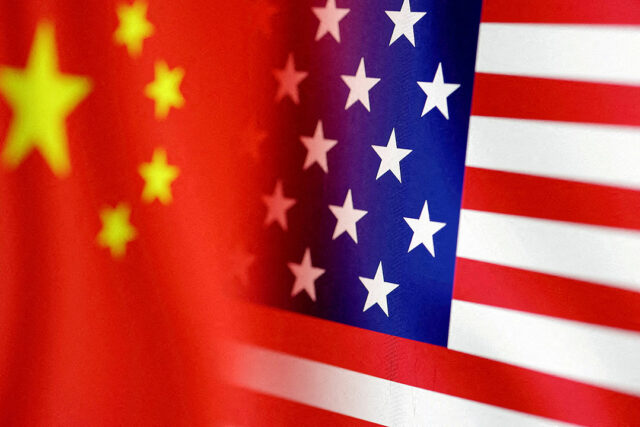
US and Chinese flags are seen in this illustration. — REUTERS

J.P.Morgan upgraded its rating on emerging market equities to “overweight” from “neutral” on Monday, citing easing US-China trade tensions and a softer dollar.

Last week, the US and China agreed to a 90-day tariff reduction, with the US cutting duties on Chinese goods to 30% from 145% and China lowering tariffs on US imports to 10% from 125%, fuelling hopes of easing global trade tensions.

“De-escalation on US-China trade front reduces one significant headwind for EM equities,” JPM analysts said in a note, adding that the stocks would be further helped by a weakening of the greenback in the second half of this year.

J.P.Morgan remains positive on India, Brazil, the Philippines, Chile, the UAE, Greece, and Poland within emerging markets, and sees a promising opportunity in China, particularly in technology stocks.

“While this is unlikely to be the end of trade noise, we think that the worst of it is likely behind us,” the Wall-Street brokerage added.

The MSCI emerging markets stock index is up 9% so far this year, as confidence in U.S. assets, including the safe-haven dollar, has weakened amid concerns over President Donald Trump’s erratic and aggressive policies.

The dollar index is down 7.5% so far this year.

EM equities have lagged developed markets by a cumulative 40% since 2021, according to the brokerage.

Stock valuations now look attractive as they trade at 12.4 times its 12-month forward earnings compared to developed markets’ 19.1, JPM said. — Reuters