Home Blog Page 1029

Filinvest City’s lily-inspired chapel recognized for design excellence

Filinvest representatives, namely (from second from left) Sr. Project Development Manager-Filinvest City Tracey San Pablo and Sr. Project Development Manager-Priming and Innovation Bonna Crisostomo, receive the ULI Asia Pacific Award for Excellence at the ULI Summit in Hong Kong. They are joined in the photo by award co-chairs Belinda Bentley (left), managing director of 9Springs; and Chris Law (right), founding director of Oval Partnership.

ULI Asia Pacific Awards 2025: Filinvest City’s chapel stands as sole Philippine winner

Filinvest City’s Our Lady of Lourdes Chapel was honored at the 2025 Urban Land Institute (ULI) Asia Pacific Awards for Excellence, bringing home one of the most prestigious accolades in the real estate and development industry.

Selected as one of only 14 winners out of 43 entries across the region, and notably the only Philippine project to be recognized this year, the award marks a significant milestone for both Filinvest and the country.

This awards program is a regional extension of the ULI Global Awards for Excellence, which has been recognizing excellence in land development since 1979. It celebrates outstanding projects across the Asia Pacific in the private, public, and nonprofit sectors.

World-class architecture

Surrounded by verdant greens, the Our Lady of Lourdes Chapel has received multiple international accolades for its innovation in architecture, structural engineering, and landscape design.

Nestled on a hill, the biophilic and minimalist structure is a breath of fresh air, where one can easily reflect in the fast-paced rhythm of urban life. The chapel is integrated into the Green System of Filinvest City, which features several interconnected parks, allowing people to easily access the chapel grounds. This provides an inclusive and open atmosphere that promotes the oneness of faith and community.

The chapel stands out as a striking contrast amidst the sharp lines of the surrounding office and commercial buildings. Inspired by an inverted white lily, a symbol of the Lady in Lourdes’ purity, its soaring, curved structure gently reaches to the sky, bringing with it a sense of calm, grace, and spiritual uplift.

Its roof and ceiling unfold like petals, each segment delicately adorned with stained glass windows. These vibrant panels filter natural light into the space, casting gentle hues across the interior. The effect enhances the chapel’s serene atmosphere, inviting reflection and offering a quiet, luminous sanctuary in the middle of Filinvest City’s urban district.

The project was designed by Japan’s Hiroshi Nakamura & NAP Architects, well-known for their work in religious structures integrated with nature. The chapel’s eaves are designed by Helen Whittaker, Creative Director of Barley Studios in the UK, and manufactured by Kraut Art Glass, the oldest stained-glass manufacturer in the country. The chairs are manufactured by Cebu-based furniture company Pacific Traders, while the cross and religious sculptures at the altar were designed by Filipino artist Daniel Dela Cruz.

Anchored in faith and community

A quiet sanctuary in the heart of Filinvest City, Our Lady of Lourdes Chapel stands as the city’s spiritual anchor.

Our Lady of Lourdes Chapel is rooted in Filinvest’s vision of creating a spiritual anchor that unites and uplifts the community as they live their lives and pursue their dreams. Since its opening in 2023, the chapel has experienced increased attendance. It has also partnered and participated in charitable causes and advocacies, including its support for Elsie Gaches Village, the country’s largest residential care facility for children with developmental disorders.

Our Lady of Lourdes Chapel amplifies Filinvest City’s philosophy of building inclusive, sustainable, and resonant urban spaces. It is a reflection of how the city is thoughtfully designed, integrating into its developments a Live-Work-Play philosophy, so that it complements and betters its communities, while maintaining functionality and sustainability.

As the sole Philippine winner in this year’s ULI Asia Pacific Awards for Excellence, Our Lady of Lourdes Chapel stands as a powerful symbol of architectural and civic excellence in the country. This recognition reaffirms Filinvest City’s position as a forward-thinking urban district that champions meaningful placemaking and civic pride at the heart of development.

“This recognition from ULI Asia Pacific means so much to us–not just for the beauty of the Our Lady of Lourdes Chapel, but for what it represents,” shares Filinvest Head of Townships Don Ubaldo. “More than a landmark, it stands as a space of service and community. It affirms that we’re on the right path-creating places that bring people together and serve a greater purpose. We proudly share this honor with everyone who helped bring this vision to life.”

To discover more of Filinvest City, visit https://filinvest.com/about-us. For chapel inquiries, follow the Our Lady of Lourdes Chapel on Facebook @lourdeschapel.alabang.


Spotlight is BusinessWorld’s sponsored section that allows advertisers to amplify their brand and connect with BusinessWorld’s audience by publishing their stories on the BusinessWorld Web site. For more information, send an email to online@bworldonline.com.

Join us on Viber at https://bit.ly/3hv6bLA to get more updates and subscribe to BusinessWorld’s titles and get exclusive content through www.bworld-x.com.

Philippines tempers growth goals

Workers lay out steel frames for the building foundation at a construction site in Pasig City, June 20. 2025. — PHILIPPINE STAR/MIGUEL DE GUZMAN

ECONOMIC MANAGERS cut its gross domestic product (GDP) growth target for this year amid “heightened global uncertainties” arising from the Middle East conflict and US tariffs.

The Philippine economy is now expected to grow by 5.5-6.5% this year from the previous target of 6-8%, the Development Budget Coordination Committee (DBCC) said on Thursday.

It also narrowed the GDP growth target range to 6-7% for 2026 to 2028 from 6-8% previously, “reflecting a more measured and resilient outlook amid global headwinds.”

“The revisions take into account heightened global uncertainties, such as the unforeseen escalation of tensions in the Middle East and the imposition of US tariffs,” Budget Secretary Amenah F. Pangandaman, chair of the DBCC, said during a briefing.

“Despite these headwinds, the DBCC remains vigilant and ready to deploy timely and targeted measures to mitigate their potential impact on the Philippine economy,” she added.

The Philippine economy grew by a weaker-than-expected 5.4% in the first quarter from the 5.9% expansion a year ago.

Department of Economy, Planning, and Development Secretary Arsenio M. Balisacan said GDP has to grow by 5.5-6.5% to reach the low end of the target this year.

The DBCC also tweaked some macroeconomic assumptions on inflation, trade, crude oil and foreign exchange rate.

The inflation assumption for 2025 was narrowed to 2%-3% from a previous outlook of 2%-4%. It kept the 2-4% inflation assumption for 2026 to 2028.

In the first five months, inflation has averaged 1.9%, slightly below the Bangko Sentral ng Pilipinas’ (BSP) 2-4% target range.

“Inflation will continue to be manageable, benign over the near term. Growth may moderate, but remain firm,” BSP Deputy Governor Zeno R. Abenoja said during the briefing.

OIL PRICES
The DBCC expects Dubai crude oil prices to average $60-$70 for this year until 2028 from $60-$80 previously, due to “easing global demand and expected increases in global oil inventories.”

However, Mr. Balisacan warned about the potential impact of a prolonged war in the Middle East.

“If those (oil price) increases persisted for the rest of the year, of course the economy would be badly hit as would be the economies of the rest of the world,” he told reporters.

Oil prices rose on Thursday after a sharp slump after the Israel-Iran ceasefire was announced. Reuters reported Brent crude futures rose 0.37% to $67.93 a barrel, while US West Texas Intermediate crude  gained 0.45% to $65.21.

On the other hand, the foreign exchange is assumed to “remain stable” and average to P56-P58 per dollar from this year until 2028.

“This is supported by lower domestic inflation and will continue to be shaped by global financial conditions and external trade performance,” the DBCC said.

SLUGGISH TRADE
Trade is expected to be sluggish, reflecting the impact of the Trump administration’s tariff policy.

“Goods exports are projected to contract by 2% in 2025 (from a previous projection of 6% growth), largely due to slower global demand and heightened trade policy uncertainties, before recovering to a modest growth of 2% from 2026 to 2028,” DBCC said.

The DBCC also lowered the goods imports growth projection to 3.5% this year from 5% previously. Imports are projected to expand by 4% from 2026 to 2028 from 8% previously, “supported by stable domestic consumption and sustained infrastructure spending.”

US President Donald J. Trump announced higher reciprocal tariffs on most of the country’s trading partners, with Philippine goods facing the second-lowest rate in Southeast Asia at 17%. However, the reciprocal tariffs have been paused for 90 days until July 9. A baseline 10% tariff remains in place.

Special Assistant to the President for Investment and Economic Affairs Frederick D. Go said the Philippines continues to negotiate with the US on the tariffs, without giving details.

DEFICIT CEILING
Meanwhile, the DBCC now expects the budget deficit as a share of GDP to balloon to 5.5% this year from 5.3% previously. It also sees the deficit as a share of GDP to widen to 5.3% in 2026 from 4.7% previously. 

The projected budget gap as a percentage of GDP for 2027 was raised to 4.8% from 4.1% previously, while for 2028, it was revised to 4.3% from 3.7% previously. 

“We revised the medium-term fiscal program (MTFP) because when we originally first crafted the MTFP, these external factors were not yet taken into account. Like for instance, we already had a war in Ukraine and Russia. We already had another war in the Middle East and so many global uncertainties,” Finance Assistant Secretary Karlo Fermin S. Adriano said. 

Economic managers also proposed a P6.793-trillion national budget for 2026, up 7.4% from 2025.

“The 2026 National Budget prioritizes human capital development by prioritizing investments in quality education, healthcare, and workforce upskilling,” the DBCC said. — with inputs from ARAI

Budget gap narrows in May 

Workers of the Department of Public Works and Highways put temporary asphalt on the potholes along Roxas Blvd. in Manila. — PHILIPPINE STAR/EDD GUMBAN

By Aubrey Rose A. Inosante, Reporter

THE NATIONAL GOVERNMENT’S (NG) budget deficit narrowed in May as faster revenue collection offset a slowdown in spending due to the election ban, the Bureau of the Treasury (BTr) said.

Data from the Treasury showed the Philippines’ budget deficit shrank by 17.01% to P145.2 billion in May from P174.9 billion in the same month a year ago.

National Government fiscal performance“This lower deficit was primarily driven by a robust 13.35% growth in revenue collections, alongside a moderation in expenditure growth to 3.81% during the national elections month,” the Treasury said.

The Commission on Elections’ 45-day ban on public works spending ended after the May 12 elections.

Month on month, the budget balance swung to a deficit from the P67.3-billion surplus in April.

In May, revenue collections jumped by 13.35% to P433.1 billion from P382.1 billion a year earlier.

Tax revenues increased by 6.25% to P322.9 billion in May from P303.9 billion in the same month in 2024, as Customs collections declined.

The Bureau of Internal Revenue (BIR) collected P242.7 billion in May, up 10.71% year on year.

“This increase was primarily driven by corporate income tax (CIT), followed by personal income tax (PIT), excise tax on tobacco products, taxes on government securities, and taxes on banks and financial institutions,” it said.

The intensified collection effort, ongoing digital transformation, and campaign to curb fake transactions and illicit tobacco trade also helped drive BIR collections.

However, the Bureau of Customs (BoC) saw collections fall by 6.94% to P75.7 billion in May, reflecting the impact of Executive Order No. 62 which lowered tariffs on rice, electric vehicles, and other commodities.

Other collections surged by 34.7% to P4.5 billion annually from P3.4 billion.

Nontax revenues jumped by 40.93% to P110.2 billion in May from P78.2 billion in the same period last year.

Treasury income more than quadrupled to P83 billion in May from P20.2 billion a year ago, mainly due to the higher dividend remittances from government-owned and -controlled corporations (GOCCs). Most GOCCs sent their dividend remittances in May this year.

Revenues from other offices — which consisted of other nontax revenue, privatization proceeds fees, charges and grants — slid by 53.18% to P27.2 billion.

Meanwhile, NG expenditure grew by 3.81% to P578.2 billion in May from P557 billion a year ago.

BTr attributed this increase to higher interest payments, National Tax Allotment releases to local government units and Annual Block Grant to the Bangsamoro Autonomous Region in Muslim Mindanao.

“The implementation of the 2nd tranche of salary adjustments of qualified civilian government employees pursuant to Executive Order No. 642 also contributed to the growth of spending in May,” it added.

Primary spending — which refers to total expenditures minus interest payments — inched up by 2.5% to P508.3 billion in May from P495.9 billion a year earlier. This also accounted for 87.9% of total May disbursements, BTr said.

Interest payments increased by 14.5% to P70 billion in May this year from P61.1 billion in the same month in 2024, due to higher coupon payments for domestic and external debt.

NG’s primary deficit stood at P75.2 billion, down 33.93% from P113.8 billion in the same month last year.

FIVE-MONTH GAP
In the January-to-May period, the NG budget deficit widened by 29.41% to P523.9 billion from the P404.8-billion gap last year, as the government accelerated spending on infrastructure and social programs.

“NG remains on track to meet its deficit target for the year through prudent fiscal management and efficient use of resources, in line with its Medium-Term Fiscal Program,” the BTr said

During the period, state spending rose by 9.71% to P2.48 trillion from P2.26 trillion a year ago.

Primary expenditures rose by 9.48% to P2.12 trillion as of end-May while interest payments increased by 11.14% to P357.4 billion.

Total revenue collection during the five-month period increased by 5.41% to P1.95 trillion from P1.85 trillion in the same period in 2024.

Tax revenues jumped by 10.49% to P1.75 trillion, “highlighting the sustained strength of the government’s revenue-generating efforts.”

BIR collection rose by 13.8% to P1.35 trillion as of end-May, while Customs collection was up by 0.22% to P381.7 billion.

Meanwhile, nontax revenues slumped by 24.75% to P200.9 billion in the January-to-May period, “due to several one-off remittances last year.”

Treasury income slipped by 17.44% to P129.2 billion due to the impact of the high base effect last year, which included the one-off gain from the Casecnan Hydroelectric Power Plant privatization proceeds.

Revenues from other offices also slid by 35.1% to P71.7 billion as of end-May.

During the period, the NG’s primary deficit doubled to P166.5 billion, “reflecting the government’s sustained investments in critical programs to support economic growth.”

“The widened budget deficit reflects sustained spending pressures amid slower revenue growth. While the narrower May deficit is a positive sign, it is inadequate to offset the cumulative shortfall from earlier months,” John Paolo R. Rivera, a senior research fellow at the Philippine Institute for Development Studies said. “This underscores the need for improved revenue collection, better tax administration, and more targeted spending.”

For this year, the NG’s deficit ceiling is capped at P1.54 trillion or 5.3% of gross domestic product.

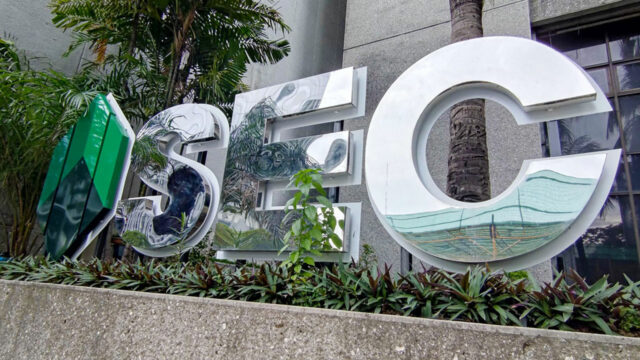
SEC cuts fees for corporate document requests by 50%

BW FILE PHOTO

By Revin Mikhael D. Ochave, Reporter

THE SECURITIES and Exchange Commission (SEC) is reducing the fees and charges for requests for corporate documents by 50% starting July 1, allowing for greater access to data and boosting investor protection.

SEC Memorandum Circular No. 6 set lower fees and charges for the requests of physical and digital copies of documents filed by registered entities with the commission.

“The commission is committed to implementing a fair and sustainable pricing mechanism to allow for greater access to corporate data, while avoiding undue financial burden to the corporate sector and the general public,” SEC Chairperson Francisco Ed. Lim said in the circular.

“The commission recognizes that equitable access to essential corporate information is supportive of economic growth and the protection of the interests of investors, creditors, and stakeholders,” he added.

Starting July 1, the SEC will charge P1,000 each for the physical and authenticated copies of company filings, 50% lower than the previous rate of P2,000.

These documents include articles of incorporation (AOI) and by-laws, AOI or amended AOI, bylaws or amended by-laws, general information sheet, increase in capital stock, resolution, secretary’s certificate, board resolution, registration data sheet, and deed of assignment.

Authenticated copies of other documents will cost P50 per page, down from the old rate of P100 per page.

For plain copies of the same documents, the SEC will charge P750, half the previous rate of P1,500.

The rate for other documents is set at P25 per page from P50 per page.

The SEC will also slash the standard rate for digital copies of the same types of documents to P625 for each authenticated copy from P1,250 previously, and to P375 for each plain copy from P750 previously.

“This is good because it will be cheaper for the public to do their audit regarding companies they are dealing with,” COL Financial Group, Inc. First Vice-President April Lynn C. Lee-Tan said in a Viber message.

China Bank Capital Corp. Managing Director Juan Paolo E. Colet said the SEC is becoming “more people-friendly” with the decision to lower the rates on corporate data.

“This is a very sensible move as it makes access to corporate information more cost-efficient for the public,” he said in a Viber message.

“One of the major benefits of this initiative is to lower the financial cost of conducting due diligence on companies,” he added.

SM Investments Corp. economist Robert Dan J. Roces said in a Viber message that the lower rates will help improve transparency and ease of doing business.

“Lower costs for accessing vital company information will benefit micro, small, and medium enterprises, researchers, and investors alike — promoting data-driven decisions and a more inclusive corporate environment,” he said.

DragonFi Securities, Inc. Equity Research Analyst Jarrod Leighton M. Tin said in a Viber message that this will drive down the cost of doing business “but should only have a small effect on the corporation level.”

Meanwhile, the SEC said the standard rates for the use of the SEC Application Program Interface (API) Marketplace will remain in effect. The marketplace allows the direct sending and ingestion of corporate data from one application to another.

The corporate regulator currently offers two packages for SEC API Services priced at P10,000 for 100 API calls and P50,000 for 1,000 API calls.

Trump bill may cost OFWs $100M

An employee holds US dollar bank notes at a money changer in Jakarta, Indonesia, April 9, 2025. — REUTERS/WILLY KURNIAWAN

By Chloe Mari A. Hufana, Reporter

THE PHILIPPINES is expected to receive $100 million (P5.66 billion) less in remittances next year if US President Donald J. Trump’s “One, Big, Beautiful Bill Act,” which imposes a 3.5% tax on remittances sent by noncitizens, gets congressional nod, according to the presidential palace on Thursday.

The cut is 0.3% of the $36.5 billion that overseas Filipino workers (OFWs) are projected to send to their families back home and 0.003% of economic output in 2026, Palace Press Officer Clarissa A. Castro told a news briefing on Thursday, citing estimates by Department of Finance Chief Economist Domini SD. Velasquez.

“Although 41% of the remittances are routed to the US, not all of these are from Filipinos in the US because remittances are routed to the US via correspondent banks,” she added.

Mr. Trump’s controversial bill, which was approved by the US House of Representatives in May, includes a provision imposing an excise tax of 3.5% on money sent abroad by foreign workers in the US. The US Senate is now deliberating on the measure.

Finance Secretary Ralph G. Recto earlier said the legislation, if passed into law in the US, is “a concern” for the Philippines.

Deutsche Bank earlier noted that North and South America account for only 9.8% of OFWs, while the Middle East accounts for around half or 46% of all OFWs.

The Philippines, a labor-exporting country, relies heavily on remittances from millions of OFWs to support domestic consumption and sustain economic growth. These remittances serve as a lifeline for many households and a buffer for the country’s balance of payments.

Cash remittances from OFWs coursed through banks rose by 4% to $2.66 billion in April from $2.56 billion in the same month a year ago.

In the first four months of 2025, cash remittances went up by 3% to $11.11 billion from $10.78 billion a year ago.

Reinielle Matt M. Erece, an economist at Oikonomia Advisory and Research, Inc., said the One, Big, Beautiful Bill Act, if passed into law, could reduce Filipino households’ incomes by $100 million, leading to lower consumer spending.

Mr. Erece said the decline in dollar inflows would shrink the country’s foreign reserves, limiting the central bank’s ability to intervene in currency markets, especially as it diverges from the US Federal Reserve’s policy path, potentially causing further peso depreciation.

“Less reserves mean less power for foreign exchange interventions and buffer for trade and foreign payment,” he said in a Viber chat.

“Now that the Bangko Sentral ng Pilipinas deviates its monetary policy path from the Fed, the dollar may continue to appreciate against the peso, and having [fewer] reserves means [fewer] resources to manage exchange rates.”

However, Rizal Commercial Banking Corp. Chief Economist Michael L. Ricafort said $100 million is “relatively negligible” or “minimal,” in the potential effect on the Philippines’ current account, balance of payments, local foreign exchange market, and on the overall economy of the 3.5% proposed tax.

When asked about the bill’s impact on the Philippines’ dollar reserves, Mr. Ricafort said it will be “all the more negligible or minimal.”

Broader fintech, literacy urged as SEC acts on lending firms

PEOPLE are seen using their mobile phones along Claro M. Recto Avenue in Divisoria, Manila, Dec. 27, 2022. — PHILIPPINE STAR/EDD GUMBAN

By Revin Mikhael D. Ochave, Reporter

THE PUBLIC and private sectors must intensify efforts on financial literacy and financial technology (fintech) innovation to offer safer, more inclusive lending alternatives, as the Securities and Exchange Commission (SEC) cracks down on erring lending companies, according to economists.

Following the SEC’s tighter monitoring of financial and lending firms, SM Investments Corp. Economist Robert Dan J. Roces said the government and the private sector should encourage fintech solutions to enhance financial inclusion.

“The real opportunity lies in using this regulatory cleanup to foster innovation — encouraging fintech solutions that combine accessibility with transparency, while banks develop more inclusive products,” he said in a Viber message.

Mr. Roces said the SEC’s recent directive also creates opportunities for legitimate players to serve the underbanked Filipino market.

“Rather than just removing bad actors, this moment allows both regulators and industry to build a healthier lending ecosystem that serves Filipinos’ credit needs without exploitation,” he said.

Rizal Commercial Banking Corp. Chief Economist Michael L. Ricafort said in a Viber message that there should be stronger efforts from both the public and private sectors to raise public awareness and financial literacy.

“Greater public awareness and financial literacy may still be needed so that borrowers know the better options available for them. This will help them choose the best terms such as lower interest rates and better overall service quality by lenders,” he said.

Diosdado C. Salang, Jr., president and chief executive officer of Discovery Credit Solutions Corp., said the revocations will have a ripple effect across the lending and financing industry.

“It prompts other firms to reassess their compliance strategies and ensures that robust compliance frameworks are prioritized. For existing companies, this can lead to a renewed focus on governance, risk management, and transparency,” he said in a Viber message.

“Lending fraud poses a significant risk to consumers, often leading to financial distress and long-term repercussions,” he added.

Mr. Salang, also a financial literacy expert, said the SEC could implement a more rigorous vetting process for companies seeking lending and financing licenses.

“This could involve comprehensive background checks on the company’s management, financial health assessments, and an evaluation of business practices to ensure compliance with existing regulations,” he said.

“As consumers seek accessible financial products, the regulatory landscape must evolve to ensure protection against potential fraud and mismanagement in the sector,” he added.

In an order dated May 30, the SEC Financing and Lending Companies Department (FinLend) revoked the corporate registration and secondary licenses of 401 lending corporations due to noncompliance with reportorial requirements.

The companies, tagged as delinquent, failed to submit their audited financial statements, general information sheets, directors’ or trustees’ compensation reports, and performance evaluations, as well as the standards or criteria used for assessment.

In a separate order dated May 27, the SEC FinLend also revoked the corporate registration of 47 financing companies for failure to comply with reportorial requirements. These companies were likewise declared delinquent.

On May 19, the commission issued separate orders revoking the corporate registration of nine other companies for continuing noncompliance.

The SEC FinLend said in a statement to BusinessWorld that the intensified monitoring aims to remove noncompliant companies and prevent illegal activity.

“The SEC aims to clean up companies that violate the law to separate the compliant from the noncompliant,” it said.

“It is also appropriate to remove inoperative or inactive corporations because they are often used for illegal activities by scammers,” it added.

According to the SEC FinLend, financing and lending companies were given about one year — until Dec. 31 last year — to avail of the commission’s amnesty program and enhanced compliance incentive plan. The program allowed companies to settle fines and penalties for late or non-submission of reportorial requirements at reduced rates.

“Despite the show cause letters sent to them, they still did not submit the said reports, resulting in their registration and license being revoked,” the SEC FinLend said.

Under Republic Act No. 11232 or the Revised Corporation Code, companies are deemed delinquent if they fail to submit their reportorial requirements three times — either consecutively or intermittently — within a five-year period.

Delinquent corporations are given six months from receipt of the order of delinquency to comply, according to SEC Memorandum Circular No. 19, series of 2023. Failure to do so will lead to the revocation of their corporate registration.

Consumer group Samahan at Ugnayan ng mga Konsyumer para sa Ikauunlad ng Bayan (SUKI) Network said in a statement that the SEC’s action highlights the need to generate more sustainable and decent-paying jobs.

“Revoking the license of hundreds of lending companies has its pros and cons but in the end, the issue is how to ensure steadier and more sustainable incomes for consumers and their families,” it said.

“The pro is if it were scamming hubs that were declined. The con is narrowing options for consumers to seek refuge when their pockets run dry,” it added.

The SEC FinLend has also strengthened its monitoring of financing and lending companies operating through online platforms and applications.

In a June 20 order, the commission required that a company’s name and address must match those declared in its articles of incorporation. It also mandated that both principal offices and branches must have landline numbers.

Bangko Sentral ng Pilipinas data showed that bank lending rose by 11.12% year on year to P13.25 trillion in April from P11.91 trillion a year earlier. This marked the slowest growth in five months or since the 11.1% expansion in November 2024.

AboitizPower starts P30-B bond offer

ABOITIZPOWER.COM

ABOITIZ POWER CORP. (AboitizPower) has begun offering up to P30 billion in fixed-rate retail bonds, with proceeds intended to refinance existing obligations.

In a regulatory filing on Thursday, the company said it had secured a permit to offer securities for sale from the Securities and Exchange Commission (SEC).

The offering comprises P20 billion worth of retail bonds, with an oversubscription option of up to P10 billion. The offer period runs from June 23 to July 4.

The P30-billion offering is the first tranche of AboitizPower’s proposed P100-billion fixed-rate retail bond program. The first tranche is expected to be issued on July 4 and will be listed with the Philippine Dealing & Exchange Corp.

“The remaining balance of Bonds shall be lodged under AboitizPower’s shelf registration program and may be issued in future tranches,” the company said.

AboitizPower engaged BDO Capital & Investment Corp., First Metro Investment Corp., and Union Bank of the Philippines as joint issue managers for the first tranche.

BDO Capital, FMIC, UnionBank, China Bank Capital Corp., Land Bank of the Philippines, PNB Capital and Investment Corp., and Security Bank Capital Investment Corp. were also tapped as joint lead underwriters and joint bookrunners.

BDO Unibank, Inc. – Trust and Investments Group was designated as the trustee, while Philippine Depository & Trust Corp. serves as the registrar.

The first tranche previously received a PRS Aaa credit rating with a stable outlook from the Philippine Rating Services Corp. (PhilRatings).

PRS Aaa is the highest rating assigned by PhilRatings, indicating minimal credit risk. A stable outlook means the rating is likely to be maintained over the next 12 months.

PhilRatings cited AboitizPower’s diversified portfolio with strong growth prospects, experienced management team, healthy liquidity and coverage ratios, and sound capital structure.

AboitizPower is the Aboitiz Group’s investment arm for power generation, distribution, and retail electricity, as well as related energy solutions.

The company is targeting to expand its total attributable net sellable capacity to 9,200 megawatts by 2030, with a 50:50 balance between renewable and thermal energy sources.

At the local bourse on Thursday, AboitizPower shares rose by 1.01% to close at P39.90 apiece. — Sheldeen Joy Talavera

AI-powered tools to improve financial firms’ cybersecurity

STOCK PHOTO | Image by Jcomp from Freepik

PHILIPPINE financial institutions should consider leveraging artificial intelligence (AI)-powered tools to ramp up their cyber resilience as threats targeting online payments are on the rise, enterprise IT management software provider ManageEngine said.

“I think the first thing that comes to mind is deploy AI at the defense because your attackers are not coming to you with your traditional deterministic rules,” Ramprakash Ramamoorthy, ManageEngine Director of Research Ramprakash Ramamoorthy said in an online interview with BusinessWorld.

This can help institutions protect themselves against cyberattacks that are now becoming more sophisticated due to AI, Mr. Ramamoorthy said.

“Advanced machine learning techniques and artificial intelligence techniques can look at the behavior of the user and prompt if there is an anomaly. So broadly, AI-based thresholding, AI-based setting of rules can go a long way. These are very simple steps to involve AI into your fintech (financial technology) workflows.”

He said the digitization infrastructure in Philippines is “booming,” with fintechs leading the race. This has led to an increase in online transactions, which are common targets of cyberthreats.

Digital payments made up 52.8% of the volume of retail transactions in 2023, higher than the 42.1% share in 2022, according to the latest Bangko Sentral ng Pilipinas (BSP) data.

In terms of value, 55.3% of retail transactions in 2023 were done online, higher than the 40.1% the year prior.

The BSP said the increase in digital payments was driven by wider use of online transaction channels among people and businesses, with the coronavirus pandemic accelerating the shift.

Meanwhile, Philippine banks lost P5.82 billion due to cyberattacks in 2024, 2.6% higher than the previous year, the central bank earlier said, adding that phishing, “card-not-present” fraud, account takeover or identity fraud, and hacking are the top cybersecurity risks faced by financial institutions.

“The financial services industry is constantly under the threat of cybercrime. You just assume yourself that you are being attacked all the time. In the Philippines, more than 50% of all retail payments have been done digitally. Merchant payments, peer-to-peer transfers and business-to-business payments are also being top contributors. So, that means the volume of transactions has been growing,” Mr. Ramamoorthy said.

“The central bank is also proactively enhancing cybersecurity frameworks, looking at the need for financial institutions to adopt robust cyber-resilient measures to protect consumers and maintain trust in the digital financial system… Given how emerging economies like the Philippines are having more and more people using digital tools to do their finance, the cybersecurity part becomes super important, especially things like educating your end users.”

He noted the prevalence of attacks using text messages with links that aim to steal users’ banking credentials.

“Given that there are a lot of newer users that are doing their first online transactions, their first digital payment, their first peer-to-peer payments, it is easy to lure them into it… Whatever the banks are doing right now is good, but there is still a lot of room for improvement.”

Deepfakes and phishing e-mails are also a concern for financial institutions, as the rise of AI has also allowed cyberattackers to improve the quality of the tools they use to steal data, Mr. Ramamoorthy said.

“Your digital safety in terms of finance starts from your digital safety in your personal life. How much data are you sharing with who? Having software that is subsidized by ads means you’re selling your personal information — and that means you could easily be defrauded and you could easily be a victim of a cyberattack, especially when you’re doing payments. Because finance is more important, right? An attacker [wants] to steal your money. So, whatever you do, exercise the right privacy controls,” he said.

“Despite what governments can do, despite what fintech institutions can do, it boils down to the individual level. Understanding privacy, understanding security, this whole digital learning, this whole digital understanding of how these technologies work, has become super important in this day in which attackers are heavily using AI to impersonate people, to create fake links, to divert funds that you’re sending to another person. There’s a lot of AI in the attacking end, so we have to be all the more careful.”

Mr. Ramamoorthy added that the government should also help enable the distribution of cybersecurity technology across banks to ensure that the entire sector becomes resilient against evolving cyberthreats.

At the organization level, banks should address the lack of employee cybersecurity awareness, implement cybersecurity training programs to educate employees about potential threats and safe practices, and encourage a culture of security awareness and vigilance across all levels, he said. 

“Because bankers know banking, but technology could be a different ballgame. The richer banks could afford a lot of technology, but it’s the bankers that are lagging behind,” he said. “The second thing is identity and access management weakness… And also, tightening your endpoints. Digital adoption has technically expanded the attack surface with endpoints often lacking adequate protection, making them susceptible to ransomware and other attacks. So, it’s important to deploy endpoint security solutions that include antivirus firewall, intrusion detection systems, and so on.”

“Also, regularly patching these systems is going to be important. And finally, set up guidelines on incident response planning. Organizations often lack a well-defined incident response plan, leading to delayed reactions and increased damage during cyber incidents,” Mr. Ramamoorthy added. — A.R.A. Inosante

ACEN infuses P875M into unit for land acquisition

ACENRENEWABLES.COM

AYALA-LED ACEN Corp. is infusing P875 million into its subsidiary, Buendia Christiana Holdings Corp. (BCHC), to support the acquisition of land parcels intended for future power projects.

In a stock exchange disclosure on Thursday, ACEN said it had subscribed to an additional 875,000 common shares and 7.88 million redeemable preferred shares, both priced at P100 apiece.

“The proceeds of ACEN’s subscription will be used by BCHC to acquire additional parcels of land for the ACEN group’s various potential power projects,” the company said.

The shares, representing 15% of the total outstanding shares of ACEN, are subject to the approval of the Securities and Exchange Commission for the increase in BCHC’s authorized capital stock to up to P8.5 billion.

BCHC, a subsidiary of ACEN, is a special-purpose vehicle established to hold land for the energy firm’s development pipeline.

In March, ACEN subscribed to P660 million worth of common and redeemable preferred shares to fund the purchase of real property needed for various potential power projects.

ACEN is currently developing multiple energy projects within and outside the Philippines as part of its goal to reach 20 gigawatts (GW) of attributable renewable capacity by 2030.

To date, ACEN has 7 GW of attributable renewable energy capacity across operational, under-construction, and committed projects. Its geographic footprint spans the Philippines, Australia, Vietnam, India, Indonesia, Laos, and the United States.

On Thursday, shares in the company rose by 0.79% to close at P2.55 apiece. — Sheldeen Joy Talavera

True to life or not, F1 movie draws on decades of drama

A SCENE from F1: The Movie.

LONDON — The racing scenes in Brad Pitt’s new F1 movie are impressively authentic but the filmmakers have also made much of how the sport’s past is woven into the plot — with a hefty slice of Hollywood artistic license.

“We just drew from history. A little this, a little that, then we had Lewis Hamilton keep us straight,” commented Mr. Pitt at a New York premiere ahead of this week’s general release in cinemas.

F1: The Movie opened in Philippine theaters on June 25. It has an MTRCB rating of PG.

Apple’s Senior Vice-President of Services Eddy Cue, a lifelong Formula One fan and Ferrari board member, told reporters after a media screening that “there’s not a single event in here… that hasn’t happened in a real race.”

That does not mean, of course, that such events could still happen now or that they served as anything more than inspiration.

The Apple Original Films blockbuster — with scenes shot during grand prix weekends — is a redemption story, with Mr. Pitt playing aging driver Sonny Hayes on an unlikely comeback alongside a young hotshot at a struggling team.

Seven-time world champion Mr. Hamilton provided advice and is credited as a co-producer on a movie scripted for audiences unfamiliar with the sport.

Mr. Pitt’s age — 61 in real life — has been called out as unrealistic for a driver in the modern era but as Mr. Hamilton, 40, said when filming started in 2023: “Brad looks like he’s aging backwards.”

The oldest current F1 driver is Spaniard Fernando Alonso who will be 44 next month but in the 1950s, when physical demands were less but dangers greater, Philippe Etancelin and Louis Chiron raced at 55. Luigi Fagioli was a winner at 53.

F1 comebacks also tend to follow short absences nowadays, one or two years at most, but it was not ever thus.

Dutch driver Jan Lammers raced from 1979-82 and was out for more than a decade — when he won Le Mans and raced at Daytona — before returning in 1992. Italian Luca Badoer also had 10 years between races before a short-lived comeback in 2009.

LAST TO FIRST
Drivers have indeed gone from last to first in barely believable circumstances, made winning strategy calls and taken triumphs with unsung teams that would not normally be considered contenders.

The 2011 Canadian Grand Prix lasted more than four hours, featured six safety car deployments and was won by Jenson Button who at one point was at the back of the field and had two collisions including one with McLaren teammate Mr. Hamilton.

Mr. Button made five pitstops, plus a drive-through penalty, and picked up a puncture in a race halted for two hours.

Hayes’ backstory is of racing Ayrton Senna before suffering a crash so violent he was flung from the car still attached to his seat.

That is modelled on Northern Ireland’s Martin Donnelly who crashed at Jerez in practice for the 1990 Spanish Grand Prix and was left inert in the middle of the track.

He survived, miraculously, but there was to be no F1 comeback.

Drivers have escaped blazing crashes, Frenchman Romain Grosjean after his car erupted in a fireball at the 2020 Bahrain Grand Prix while Niki Lauda suffered serious burns in a 1976 Nuerburgring crash.

The Austrian returned to racing six weeks later.

There are nods to the Crashgate scandal, when Brazilian Nelson Piquet, Jr. crashed deliberately at the 2008 Singapore Grand Prix and triggered a safety car that helped teammate Alonso win.

A female technical director? Not yet, but women have run teams and work as strategists, race engineers, and pitlane mechanics — although the movie is far from realistic in that regard.

For F1 fans of a certain age there is the “Easter egg” of a glimpse of the Monza banking in homage to the 1966 movie Grand Prix. F1 director Joseph Kosinski said that classic, and Steve McQueen’s 1971 movie Le Mans, were his touchstones.

“Those movies are now almost 60 years old but you can still watch them and still marvel at the cinematography and the feeling of being there,” he said.

“The whole practical nature of this film was inspired by those classics.” — Reuters

PhilHealth set for restructuring to address operational challenges

PHILSTAR FILE PHOTO

THE PHILIPPINE Health Insurance Corp. (PhilHealth) will undergo a “major revamp” to improve its efficiency and address operational challenges, the Governance Commission for Government-Owned or -Controlled Corporations (GCG) said.

The GCG approved the restructuring of PhilHealth at its en banc meeting held on June 25 (Wednesday), it said in a statement.

“The restructuring includes a revamped organizational structure with 503 units and a total of 7,149 positions designed to improve service delivery and strengthen the agency’s capability to fulfill its expanded mandate under the Republic Act No. 11223 or the Universal Health Care Act,” it said.

“The reform aims to address several long-standing issues including outdated workforce, fragmented data and strategy execution, and issues related to benefit claims.”

The GCG said part of the restructuring will involve the centralization of five critical services of the state health insurer: finance, legal, information technology, procurement, human resources, and general administration services.

“The centralization of these administrative functions is seen to address the inconsistencies and conflicts in the current operational framework of PhilHealth, maintain responsiveness to the public, and enhance healthcare delivery.”

PhilHealth was also ordered to strengthen its internal audit office. “To foster independence and ensure checks and balances, the internal audit office shall functionally report to the Audit Committee of the Board of Directors and shall administratively report to the president and chief executive officer of the corporation.”

The creation of units like the Benefit Payment Appeals Office (BPAO) is also part of the revamp. The BPAO aims to improve the processing of appeals cases.

PhilHealth has one year to implement the services and centralization outlined in the GCG’s order and is required to submit quarterly reports to allow the GCG to monitor its progress.

The state health insurer booked a net loss of P192.96 billion in 2024, narrower than the P708.72-billion loss it posted in 2023, its latest financial statement showed. Its retained earnings stood at P149.58 billion at end-2024, while its reserve fund was at P280.57 billion.

PhilHealth Senior Vice-President Renato L. Limsiaco, Jr. told Congress in January that the state health insurer owed hospitals about P21 billion as of end-2024.

The Supreme Court last year issued a temporary restraining order, halting the transfer of P29.9 billion from PhilHealth to the National Government after the initial transfer of P60 billion. The case is still pending resolution. — ARAI

ABS-CBN expects return to profitability on stronger ad revenues, digital growth

PHILIPPINE STAR/MIGUEL DE GUZMAN

LISTED media company ABS-CBN Corp. said it expects to return to profitability within 18 months, citing higher advertising revenue and contributions from its digital, film, and music operations.

“I believe we are finally well-positioned for a turnaround this 2025. The advertising market is recovering from last year and we will get an extraordinary bump from election-related advertising,” ABS-CBN President and Chief Executive Officer Carlo L. Katigbak said during the company’s online annual stockholders’ meeting on Thursday.

Mr. Katigbak said the company is poised to achieve profitability on the back of expanding partnerships, sustained gains from its digital businesses, and revenue contributions from film and music, despite the absence of a congressional franchise.

“At this time, even if the franchise were granted by Congress to ABS-CBN, we would not be able to rebuild our former national network because all the frequencies we used to transmit have already been granted to other broadcasters,” he said, adding that the company will instead focus on content production and a digital-first model.

For the first quarter, ABS-CBN trimmed its attributable net loss to P425.65 million from P841.54 million a year earlier, as revenues improved during the period.

Gross revenue for the January-to-March period rose by 3.68% to P4.23 billion from P4.08 billion in the same period last year.

Advertising and consumer revenues totaled P3.18 billion, up by 20.91% from P2.63 billion a year ago. However, revenues from cable television and broadband declined by 26.9% to P1.06 billion from P1.45 billion.

“We have finally completed all our efforts to reduce expenses and believe we are now operating at maximum efficiency… With reduced debt levels, we expect financing costs to decline, improving our cash flow and profitability,” Mr. Katigbak said.

On digital platforms, the company’s YouTube channel continues to expand, with around 51 million subscribers and 68.5 billion lifetime views, he said.

The company is also banking on the sale of its land to Ayala Land, Inc., which is expected to help fund debt reduction.

In February, Ayala Land signed a memorandum of agreement to acquire a portion of ABS-CBN’s property in Quezon City for P6.24 billion.

The transaction covers up to 30,000 square meters, or 68.14% of ABS-CBN’s 44,027.30-square-meter property. The agreement is subject to conditions, including clearance from the Philippine Competition Commission.

“We will be consolidating all our operations and studios inside the ELJ Communications Center and plan to complete this move by July 2026. We are scheduled to turn over the property to Ayala Land by December 2026,” Mr. Katigbak said.

At the stock exchange on Thursday, shares in the company rose by 16 centavos or 3.86% to close at P4.31 apiece. — Ashley Erika O. Jose