Building ASEAN resilience in an age of global shocks
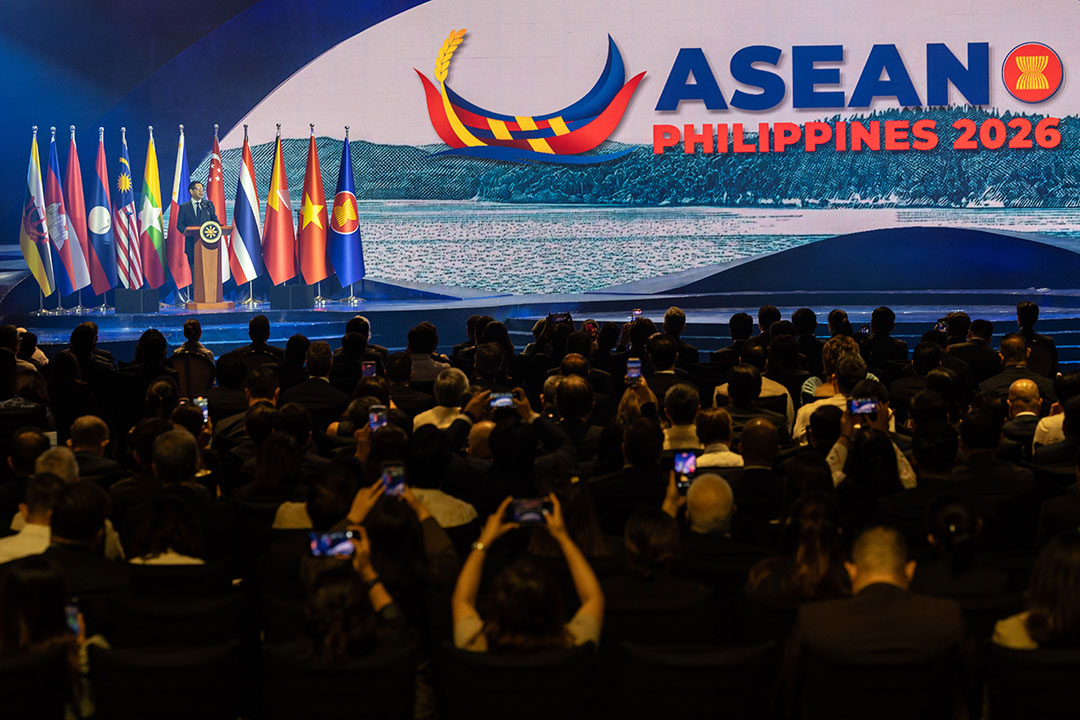
At last week’s gathering of leaders and decision makers from member-nations of the Association of Southeast Asian Nations (ASEAN), discussions centered not only on climate resilience, but also on the broader geopolitical and economic disruptions reshaping the region.
During the ASEAN-EU Sustainability Summit 2026, Special Assistant to the President for Investment and Economic Affairs Secretary Frederick Go reaffirmed the Philippine government’s commitment to fiscal discipline, prudent spending, and maintaining macroeconomic stability amid global uncertainty. His remarks reflected how resilience today extends beyond environmental policy to include energy security, economic competitiveness, investment stability, and governments’ capacity to respond to external shocks.
Secretary Go also emphasized the administration’s calibrated response to geopolitical tensions and oil price volatility, including efforts to diversify energy sources, strengthen long-term energy security, and provide targeted support for vulnerable sectors while maintaining fiscal and monetary discipline. Amid persistent inflationary pressures and slowing growth globally, this sends an important signal of policy stability and investor confidence.
The latest disruption, brought about by the war in Iran and constraints in the Strait of Hormuz, has only magnified these vulnerabilities. Even if the Philippines is geographically distant from the conflict, its effects are immediately felt through higher oil prices and the rising cost of goods and services.
These pressures have already been reflected in economic indicators. Gross Domestic Product for the first quarter of the year grew by a sluggish 2.8%, while inflation rose to 7.2% in April from 4.1% in March.
Despite these headwinds, Mr. Go noted that the country’s macroeconomic fundamentals remain stable, supported by sustained growth, manageable inflation, a robust labor market, and prudent fiscal management.
Natural disasters continue to threaten whatever gains economies manage to build over time. Typhoons and flooding bring destruction to lives, livelihoods, and infrastructure, while also discouraging investments needed for jobs and long-term development.
It is therefore imperative that countries find ways to shield themselves from external shocks and secure a resilient and sustainable future.
As this year’s chair of the ASEAN, the Philippines is in a strong position to lead by example in balancing economic growth, investment competitiveness, and long-term resilience. The administration’s continued push for policy reforms and strategic investments, as aptly articulated by Mr. Go, reflects an understanding that resilience today must be both economic and environmental.
Under President Ferdinand Marcos, Jr.’s administration, policies such as Executive Order No. 18, or the “Green Lanes for Strategic Investments,” have helped strengthen the country’s investment environment for renewable energy and energy security.
These reforms complement broader efforts to improve the ease and predictability of doing business in the Philippines. Mr. Go likewise highlighted the government’s push to deepen economic partnerships and attract investments in renewable energy, semiconductor manufacturing, digital infrastructure, smart agro-industries, electric vehicle components, and critical minerals processing.
The Philippines’ strategic advantages also position it well within the evolving regional economy. A young workforce, strong English proficiency, and an expanding consumer market support industries driven by digital adoption and technological innovation. The country’s reserves of nickel, copper, gold, and chromite also place it in an important position within the emerging green metals and energy transition value chain.
Climate resilience and energy security can no longer be treated as separate policy conversations. They are deeply interconnected challenges requiring coordinated, systems-based solutions across governments and industries.
During the fireside chat, Climate Change Commission Secretary Robert Borje emphasized that despite the temptation to revert to cheaper traditional energy sources during periods of volatility, “there should be no other way to go but to work towards a green future.”
His point is particularly important for ASEAN economies navigating both energy insecurity and climate vulnerability. In the long run, resilience cannot be built through short-term fixes alone. It requires sustained investments in renewable energy, climate adaptation, and resilient infrastructure.
For his part, Ambassador of the European Union Delegation to the Philippines Massimo Santoro highlighted two critical gaps in the ASEAN setting: the need to connect high-level ambition with financing, and the challenge of equipping local governments with the tools needed to turn policy into concrete action.
A cornerstone of this effort is the ASEAN Power Grid, which Mr. Santoro described as a “fundamental project” that the European Union remains keen to support in reducing the systemic impact of energy shocks.
The discussions also underscored the importance of science-based and data-driven policymaking. Technologies such as satellite monitoring, climate analytics, and integrated data systems can significantly improve disaster preparedness and climate adaptation strategies across the region.
At the same time, sustainability cannot be achieved through state-to-state agreements alone. Mr. Santoro described the private sector as the “only one able to guarantee the sustainability” of climate action. Beyond capital, the private sector contributes technical expertise in resilient infrastructure and disaster risk reduction.
The two regional blocs possess strengths that complement one another in responding to today’s challenges. ASEAN-EU-Philippines cooperation is particularly valuable because it combines financing, technology, expertise, and institutional partnerships that can scale resilience efforts beyond pilot projects into long-term regional solutions.
The ASEAN must move beyond being viewed merely as a production base or consumer market. The region has the opportunity to become a global hub for resilience, sustainable investments, and climate innovation.
Ultimately, resilience must remain people-centered. Climate and energy resilience are not only about protecting economies or infrastructure. They are about safeguarding livelihoods, ensuring energy and food security, creating sustainable jobs, and improving quality of life across the Philippines and the broader ASEAN region.
Victor Andres “Dindo” C. Manhit is the president of the Stratbase ADR Institute.