
Home Editors' Picks Philippines-Japan at 70: Advancing a strategic partnership in an evolving Indo-Pacific region
Philippines-Japan at 70: Advancing a strategic partnership in an evolving Indo-Pacific region
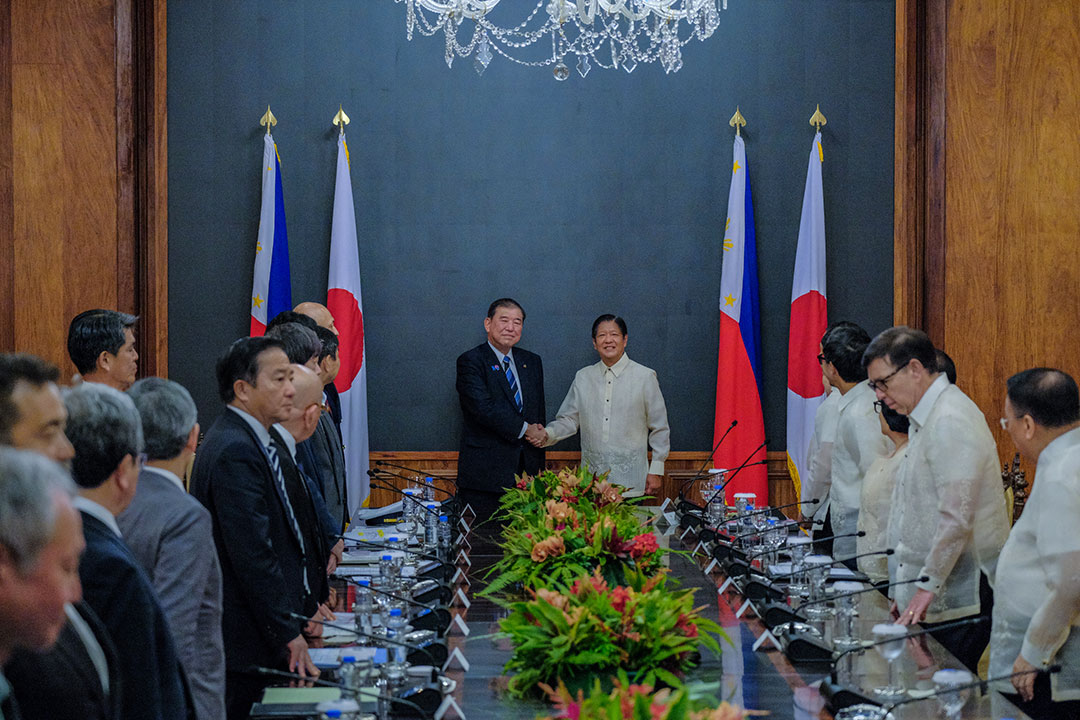
The Philippines and Japan mark 70 years of diplomatic relations at a time of growing uncertainty in the Indo-Pacific region. What began as a process of rebuilding trust has matured into a partnership of real consequence. Today, as regional pressures intensify, this relationship is not only a testament to history — it is a strategic anchor for stability, cooperation, and shared purpose moving forward.
Across the Indo-Pacific region, long-standing assumptions about stability are being tested. The rules that have long kept our region stable are under pressure. Tensions are rising, and supply chains are becoming more vulnerable.
This is not a normal moment. It demands stronger partnerships — ones that translate into investments that create jobs, security cooperation that protects our seas, and tangible gains for the future of our people. In this environment, resilience is no longer optional; it is a shared imperative.
This is why the Philippine–Japan partnership matters now more than ever.
This year, we mark 70 years of diplomatic relations between our two countries. What began in 1956 as a process of rebuilding trust after World War II has evolved into one of the most trusted and strategically significant partnerships in the Indo-Pacific region.
This relationship is no longer just historical — it is strategic and future-facing.
The economic foundation of our partnership remains strong and deeply consequential.
For decades, Japan has been the Philippines’ largest source of Official Development Assistance (ODA), helping build the infrastructure that drives our growth — from transport systems to disaster resilience. Japanese investments have generated hundreds of thousands of jobs and supported the development of key industries across the country.
Japan has not only invested in our economy — it has helped build its foundations.
More recently, initiatives such as the Luzon Economic Corridor reflect a shared commitment to the future — strengthening connectivity, improving logistics, and positioning the Philippines as a key player in resilient regional supply chains. These efforts also support broader regional goals of diversification and risk reduction, ensuring that growth remains stable even amid external shocks.
These contributions are visible in roads, railways, industries — and in the everyday lives of Filipinos.
Second, our partnership has entered a new and more strategic phase — one defined by shared security responsibilities.
What was once an economic partnership has evolved into one that now plays a critical role in addressing today’s security challenges.
Japan is no longer just a development partner — it is now a key security partner of the Philippines. This reflects a clear reality: our maritime domain is becoming more contested, and the need to uphold international law has never been more urgent. The challenges we face are not isolated — they are part of a broader shift in the regional security environment that requires coordination among like-minded partners.
The Philippines’ designation as Japan’s first and only multi-year recipient of Official Security Assistance is not symbolic — it is strategic. Since 2023, this support has strengthened our maritime domain awareness and defense capabilities. Most recently, an additional ¥900 million, or approximately P341 million, has been committed to further support our modernization efforts.
At the same time, the Reciprocal Access Agreement marks a historic milestone. It turns alignment into action — enabling joint exercises, improving interoperability, and institutionalizing cooperation between our forces.
In today’s security environment, cooperation is no longer a choice — it is a requirement.
Third, and perhaps most important, is the foundation of trust and shared values that underpins this partnership.
Surveys consistently show that Filipinos regard Japan as one of the countries they trust the most. This trust has been built over decades of consistent engagement, mutual respect, and a shared commitment to peace, stability, and the rule of law.
Trust is the most strategic asset in any partnership — and this is where Japan stands out.
It is this trust that allows our partnership to expand into new domains — from economic cooperation to security, and increasingly into areas such as digital infrastructure and emerging technologies. As both countries navigate rapid technological change, this cooperation will become even more important in shaping inclusive and secure growth.
The Philippines and Japan stand as like-minded partners in advancing a free and open Indo-Pacific region.
But a rules-based order is not self-sustaining. It must be defended, reinforced, and practiced. The real question we must confront is this: will our region be governed by rules — or by force?
As we commemorate 70 years of diplomatic relations, we are not only celebrating a shared history. We are recognizing a partnership that continues to evolve — and one that must rise to meet the challenges of our time. Because the next 70 years will not be defined by history but by how we act today.
In a region where the stakes continue to rise, the Philippines and Japan have both the opportunity and the responsibility to work together — to strengthen economic resilience, enhance security cooperation, and uphold the principles that keep our region stable and open.
I extend my congratulations to the governments of the Philippines and Japan on this important milestone. In Stratbase, we reaffirm our commitment to strengthening partnerships that keep the Indo-Pacific region free, open, and rules-based.
Seventy years ago, we rebuilt a relationship. Today, we are shaping a shared future.
Victor Andres “Dindo” C. Manhit is the president of the Stratbase ADR Institute.