I am not yet a senior, but I am getting there. I have a heart condition and bad legs, but I am not legally classified as a person with disability or PWD. As far as our mobility laws are concerned, I fall into a donut hole. I am invisible. I do not exist. I am treated like any able-bodied adult.
After a doctor’s appointment last week at Makati Medical Center on Amorsolo Street, I decided to “enjoy” the simple pleasure of walking over to Salcedo Village, just across Ayala Avenue, to meet friends for lunch near Velasquez Park.
For someone who occasionally walks with a cane, the stroll was difficult but still doable. But for someone using a wheelchair, I believe it would have been impossible. And public transportation, just to cross Ayala Avenue, would not have been a real option.
Ayala Avenue, the central business district’s main road, has wide enough sidewalks. But once you leave this major thoroughfare, the pedestrian route from the hospital into Salcedo Village quickly becomes unmanageable for anyone “on wheels.”
Between Salcedo and Rufino streets, there is only one road-level crossing on Ayala that people who have difficulty with stairs can safely use. The unkindest cut was that during my walk, a traffic enforcer chose to stop pedestrian movement across Ayala Avenue in favor of cars heading toward EDSA.
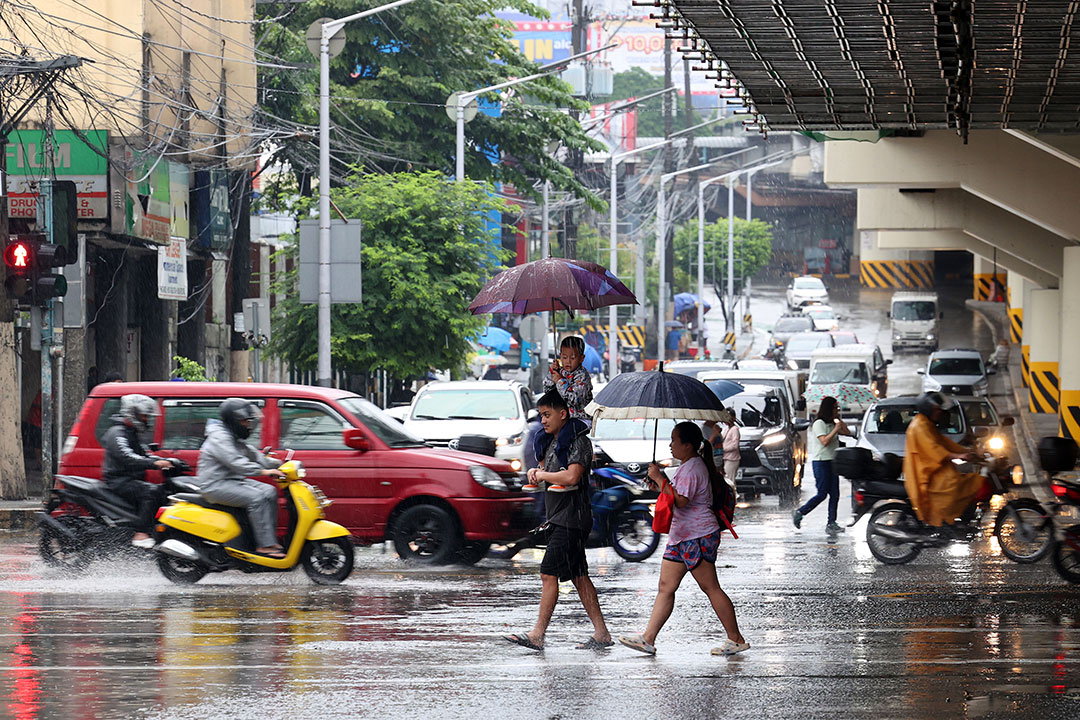
He decided to override the light and hold back pedestrians to move more cars. Then he left people with roughly 15 seconds to cross an eight-lane avenue. If you were old, in a cast, pushing someone in a stroller or a wheelchair, you could only pray that your feet would lead you to safety.
Traffic engineering math confirms how unreasonable that was. Standard practice for signal timing assumes a walking speed of a little over one meter per second, the pace of a reasonably fit adult with no health issues and no heavy bags.
Ayala Avenue has eight lanes of around three meters each, or about 24 meters across. At one meter per second, you need at least 24 seconds to cross. If you walk slower, like older adults or people with health conditions, or those pushing a wheelchair or a stroller, you will probably need closer to 30 seconds.
The reality at that intersection was 15 seconds. To clear 24 meters in that time, you need to move at 1.8 meters per second. By allowing an enforcer to shorten the effective crossing time, the city is not just being careless. It is managing the street to be exclusively for the fit and the fast.
To be fair, that incident was a one-off. Left on its own, the light would have given pedestrians around 30 seconds to cross. But why let enforcers tinker with the science? In this case, pedestrians were left standing on the center island for about 100 seconds, in the fumes from passing cars, waiting for the next light change.
On paper, pedestrians come first. We have the Accessibility Law and the Magna Carta for Disabled Persons, and government has updated rules on accessibility standards. In theory, our roads and sidewalks should already be friendly not only to wheelchair users, but also to seniors, pregnant women, children, and anyone who moves slower than two fully able feet.
In the hierarchy of road users, pedestrians are supposed to have the highest priority, since they are the most vulnerable. Government should promote active transport and make safe and accessible walking infrastructure part of every road project, not just an afterthought required by law.
On paper, pedestrians rule. On the ground, the enforcer’s whistle still blows more for cars. Traffic managers continue to think in terms of Level of Service for vehicles, where a good intersection is one where cars experience minimal delay. If vehicles stack up, the grade drops, and the incentive is clear.
This mindset means traffic enforcers protect the flow of cars, even if that means cutting pedestrian time, ignoring crossings, and sending people up to footbridges they cannot climb, or down to underpasses with long flights of stairs. When cars get priority, those lacking full mobility are most disadvantaged.
In a highly paved city like Makati, there is also the heat. Urban surfaces trap and radiate heat, so actual ground-level temperature can be several degrees higher than the air temperature. For someone with a heart condition, walking a few hundred meters in that heat is a cardiac strain. The absence of trees, shade, or properly covered walkways is a public health risk built into the pavement.
My own case is hardly unique. I am not yet a senior. I am not using a wheelchair. I am not classified as a PWD. But I walk slower. I tire more easily. My legs complain at every unnecessary detour. Long walks, standing too long, or going up or down a long flight of stairs are difficult for me.
Designers talk about permanent, temporary, and situational disability. Someone who loses a limb lives with a permanent disability. Someone in a cast is temporarily disabled. Someone pushing a stroller, carrying groceries, dragging a suitcase, holding a child by the hand, or short of breath from the heat experiences situational disability. For that period, and in that place, they cannot move as freely as a strong, unhindered adult.
This is where the “curb cut effect” comes in. When you lower a curb for a wheelchair user, you also help many others: the parent with a stroller, the delivery worker with a handcart, the commuter with luggage. A design meant to help a minority ends up helping almost everyone, and when you fail to design for permanent disability, you also fail those who are temporarily or situationally challenged.
Our infrastructure and regulations still think in terms of categories: PWD or not PWD, senior or not senior. But the street does not care about categories. It only cares about how fast you can move, how long you can stand, and how many stairs you can take in the heat or rain. The present design still caters to the able-bodied. Everyone else is in the donut hole.
Other cities offer clues on how to do better. Singapore has created “Silver Zones” in neighborhoods with many elderly residents. In these zones, speed limits are lowered, crossings are narrowed or redesigned, center islands are widened so slower walkers can stop safely in the middle, and signal timings are lengthened to match slower walking speeds. The street is adjusted to the people, not the other way around.
If Singapore can redesign certain districts as Silver Zones for seniors, a city like Makati can do something similar. The central business district and its residential areas can afford to have longer crossing times, lower speed limits, more shade, and strict enforcement in favor of pedestrians.
The measure of success should no longer be how many cars you can flush through an intersection in one cycle. It should be whether an eight-year-old, an 80-year-old, or someone with a heart condition can cross the road, reach a bus stop, or sit in a park without fear.
We should treat sidewalks as the primary network for trips on foot and in wheelchairs. They must be continuous, wide, shaded, and free of obstructions. Benches, trees, lighting, and safe paving should be part of the main plan. We should move people, not just vehicles.
Cities should also test routes using seniors, people in recovery, parents with strollers, and workers carrying loads. If they cannot complete the trip safely and comfortably, then the design has failed. It should be changed.
A city that makes every trip an ordeal for the slow, the weak, and the tired slowly pushes them out of public life. They go out less. They avoid certain streets, then certain districts, until the city shrinks to a handful of “safe” routes they can still manage. This is where “unwalkable” quietly becomes unlivable.
Marvin Tort is a former managing editor of BusinessWorld, and a former chairman of the Philippine Press Council