Farm extension services need 20,000 more agriculturists — DA
By Vonn Andrei E. Villamiel
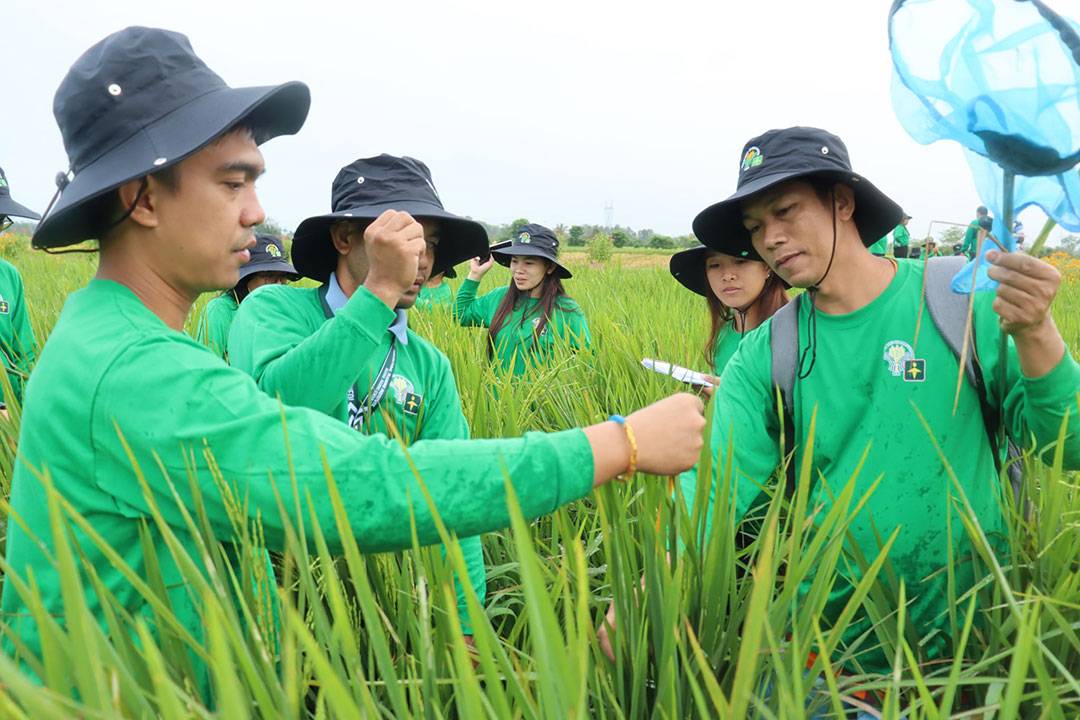
THE Department of Agriculture (DA) said it needs around 20,000 more agriculturists to adequately staff its extension system and improve support for farmers.
The DA released its assessment after the Professional Regulation Commission announced the results of the November Agriculturists Licensure Examination, which 6,678 passed out of an examinee pool of 9,742.
Agriculture Secretary Francisco P. Tiu Laurel, Jr. said the ideal ratio is one agriculturist for every 25 to 50 hectares of farmland.
Mr. Laurel said the DA is working with the Commission on Higher Education to align agriculture-related curricula with industry demand and ensure sufficient graduate output.
He added that agriculture programs in state universities and colleges should be reinstated, along with veterinary courses to support the newly signed Animal Industry Act.
“Once we have extension workers on the ground, our information will be real-time and more accurate, with the Philippine Statistics Authority (PSA) mainly validating collected data,” Mr. Laurel said.
He said a more robust extension workforce would improve feedback on field conditions, including delays in the distribution of seed and fertilizer and the monitoring of palay (unmilled rice) prices.
Mr. Laurel added that proper compensation and strong support from the administration could draw more licensed professionals to government service.
“Field work is very attractive, especially if you’re paid well and properly, helping our farmers and fisherfolk,” he said.
Under Republic Act No. 12215, or the Philippine Agriculturists Act of 2025, the minimum base pay of registered agriculturists working in the National Government may not fall below Salary Grade 13 or P34,421 per month, based on the latest salary scheme.
Local government units are also encouraged under the law to bump up the salary grade of their agriculturists, consistent with the Local Government Code and their respective financial capacity.
Agricultural workers’ share of the workforce continued to contract in 2025 as climate-related disruptions and persistent productivity challenges pushed more rural workers into the services sector, the Philippine Institute for Development Studies (PIDS) said.
In a report issued on Wednesday, the government think tank said agricultural employment fell by about 10% between 2023 and 2024. The industry’s share of total employment dropped to 18.2% in 2024 from 20.2% in 2023.
PIDS said in early 2025, the share of agricultural workers further dipped to a record low of 17.6%, equivalent to 9.9 million workers. This represents a sustained drop from around a 37% share of total employment two decades ago, according to the International Labour Organization.
PIDS reported that climate events, including typhoons and El Niño-driven drought, have disrupted rural livelihoods, accelerating the displacement of workers into informal service and construction jobs in urban and peri-urban areas.
The PIDS report also cited limited mechanization and insufficient extension services, which continue to weaken agriculture’s capacity to retain its workforce.
“The erosion of agricultural employment poses a long-term risk to food security, rural incomes, and inclusive growth, especially if not matched by productivity-enhancing interventions,” PIDS said.
PIDS said that while the services sector absorbed agricultural workers, many of the jobs gained were informal and low-value.
“The continuing decline of agricultural employment, without a commensurate rise in high-productivity industry jobs, suggests a risk of premature de-industrialization, where labor shifts to low-value services rather than high-value manufacturing,” it said.
Asked to comment, IBON Foundation Executive Director Jose Enrique A. Africa said the contraction in the share of agricultural workers “should be a major cause for concern.”
“The shift isn’t driven by productivity gains in agriculture and abundant affordable food but by climate shocks and the lack of productive investment. Agricultural workers are just making the rational choice to leave the low earnings from informal, low-value and precarious rural work,” Mr. Africa said.
He added that without genuine government action, rural impoverishment and food insecurity will worsen even as headline gross domestic product grows.
To address the contraction in agricultural workers, PIDS said agricultural productivity and infrastructure should be boosted.
“Addressing these imbalances will require targeted sectoral strategies, including enhancing rural and agri-business productivity through mechanization, climate-resilient infrastructure, and digital agriculture,” it said.
Mr. Africa concurred, saying: “A proactive response would be serious about completing free land distribution, raising farm productivity with public investment in small-scale irrigation and post-harvest facilities, more extensive agricultural research and extension services, and protecting from cheap subsidized imports,” he said.