Asia heat waves spell double trouble for economies hit by oil
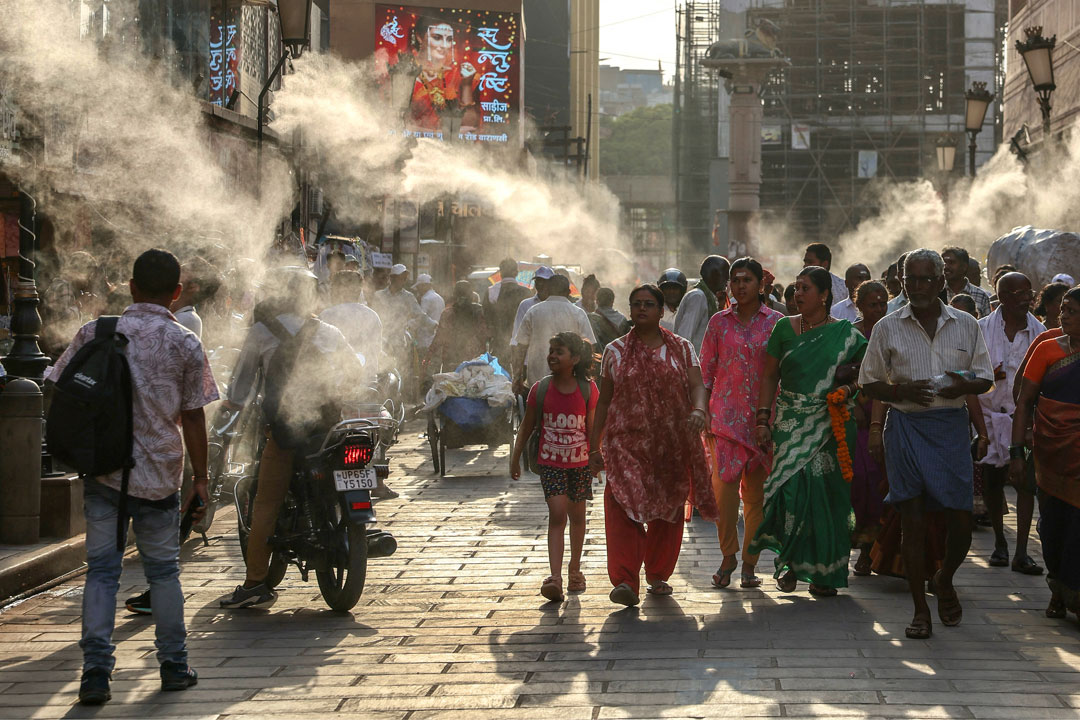
Asia is grappling with a new threat to inflation on top of an oil shock as a looming El Niño brings soaring temperatures and dry weather to countries from India to New Zealand, driving up food costs.
Inflation accelerated to multiyear highs across much of Asia, latest figures showed, led by higher transport, logistics and utility costs. The biggest spikes were in the Philippines and Pakistan, where inflation soared above 7% and to 11%, respectively.
Those pressures could intensify further as El Niño is forecast to bring drier conditions and hotter weather later this year. Food makes up about 40–50% of consumer price baskets in emerging markets in Asia, making them vulnerable to price shocks and an erosion of real incomes.
“Food inflation in Asia is set to rise in 2026,” said Adam Ahmad Samdin at Oxford Economics. “The combination of geopolitical risks, fertilizer market disruptions, and climate uncertainty suggests that overall food inflation risks are likely to remain elevated over the coming quarters.”
Those threats could be compounded, Samdin adds, if governments impose export restrictions to protect domestic food supplies, similar to 2022 and 2023 in the wake of Russia’s full-scale invasion of Ukraine and extreme weather in some countries.
Upward pressure on food prices will likely only be more visible from the second-half of the year as a recent surge in fertilizer costs driven by the Middle East conflict will take time to feed into food prices, economists warn.
“All else equal, if weather conditions deteriorate as projected, the second half of 2026 may see bigger inflationary pressures,” Bank of America economists led by Rahul Bajoria wrote in a note focused on Southeast Asia.
Concerns have already shown up in regional bond markets, with an index of 10-year yields from eight emerging-Asian economies rising by over 80 basis points since the start of the Iran war.
The International Monetary Fund expects inflation to be as much as four percentage points higher by next year, while the Asian Development Bank raised its regional CPI forecast for this year to 5.2% from 3.6%.
The Philippines is among the most vulnerable, as it’s heavily reliant on food and fuel imports. Inflation last month was far worse than economists projected and well above the central bank’s 3% target, even before the onset of El Niño. Weak consumer spending dragged down economic growth to its slowest pace in more than a decade, outside of the pandemic, data showed Thursday.
Bangko Sentral ng Pilipinas said this week it’s ready to act, while economists say this may require off-cycle and outsized interest-rate hikes just to catch up with inflation, even if it comes at the cost of stalling the economy.
In Indonesia, which saw economic growth accelerate to a three-year high in the first quarter, activity may slow ahead with potential downside risks coming from a stronger El Nino dry spell.
At the same time, weaker hydropower generation in India, Vietnam and parts of China as a result of El Nino may force greater reliance on coal and natural gas, lifting electricity tariffs.
Within emerging Asia, the Reserve Bank of India has warned that a weaker monsoon — the seasonal rains critical for the country’s farm output — could hit crop yields and push up food prices. Economists predict inflation will climb above 5% in the fiscal year starting April 1, exceeding the RBI’s 4.6% projection. Hot weather could also force farmers to use more diesel-powered irrigation, and households to crank up air-conditioning — further driving up costs.
Citigroup Inc. has cut its growth forecast for India to 6.6% from 7.1% for 2027 and expects the RBI to remain on hold. Still, a “double whammy” for inflation could be in the offing if El Nino disrupts this year’s monsoon, according to DBS Bank Ltd. economist Radhika Rao.
Pakistan is vulnerable too, where the central bank unexpectedly hiked rates in April to tame inflation that’s jumped to double digits and expected to stay elevated.
By contrast, the impact on Asia’s richer countries is likely to be relatively modest, as more diversified, services-heavy CPI baskets dilute food and energy shocks, with insurance costs providing only a smaller, secondary channel.
Still, the effects will be harder to ignore. For now, Singapore, which boasts of a strong AI-driven economic growth, is expected to see stable inflation.
In Japan, a recent surge in food prices is making inflation “more sticky,” according to Bloomberg Economics, with rice, a staple food, still up 6.8% in March despite easing from the previous month. The stronger price impulse could prompt the Bank of Japan to raise rates in June, it added, even before El Nino risks develop.
And, in neighboring South Korea, which has kept its benchmark rate at 2.5% since July last year, the central bank is probably “behind the curve” on monetary policy as inflation risks build in the country, according to Brian Quartarolo, chief investment officer at Anahata Capital Management. — Bloomberg