Peso dips to record as oil surges, fails to hit P60 as BSP intervenes
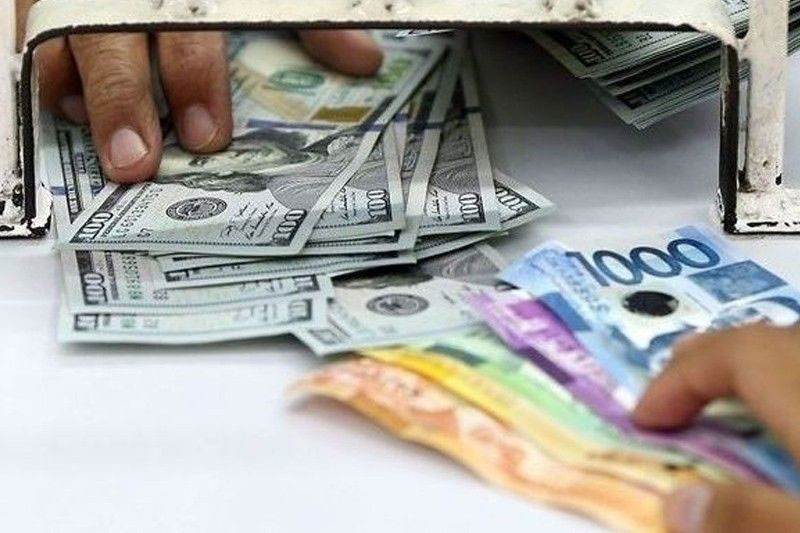
THE PHILIPPINE PESO slid to a record low against the dollar on Monday, closing at P59.87, as rising oil prices and expectations of tighter US monetary policy weighed on the currency.
Intervention by the Bangko Sentral ng Pilipinas (BSP) prevented the peso from breaching the P60-a-dollar mark.
Data from the Bankers Association of the Philippines showed the peso fell 13.5 centavos from Friday’s close of P59.735, which was previously its record low. Year to date, the local currency has weakened by P1.08 or 1.8% from P58.79 at the end of 2025.
The peso opened Monday slightly stronger at P59.71 a dollar, touching an intraday best of P59.70 and low of P59.95. Dollar turnover fell to $1.805 billion from $2.228 billion on Friday, reflecting cautious trading amid global uncertainty.
“The dollar-peso traded higher, peaking at P59.95 on persistent demand for safe-haven assets due to the ongoing Middle East conflict and rising oil prices,” a trader said. “BSP intervention limited further dollar rallies.”
BSP Governor Eli M. Remolona, Jr. told Bloomberg News the central bank had intervened to defend the peso. “Since the dollar is down, I assume some intervention can push the peso back below P60,” he said
The BSP has said it steps in only to prevent currency depreciation from becoming inflationary.
Market analysts cited multiple factors behind the peso’s weakness, including the escalating war in the Middle East, higher crude oil prices and reduced expectations for US monetary easing.
The peso was also pressured by reduced expectations of monetary easing by the US Federal Reserve because of the war, Michael L. Ricafort, chief economist at Rizal Commercial Banking Corp.
Traders anticipate continued volatility in the near term. One trader expects the peso to continue its slide on Tuesday to P59.50 to P59.95 a dollar.
Another foresees sideways trading as markets react to potential hawkish signals from the Federal Reserve, projecting a range of P59.70 to P59.95. Mr. Ricafort sees the peso trading at P59.75 to P59.95.
The peso’s decline highlights the sensitivity of the Philippine currency to global geopolitical shocks, energy prices, and shifts in US monetary policy. BSP intervention appears to have temporarily limited losses, but analysts say sustained support may be required if external pressures persist.
Investors are likely to remain cautious, particularly given the uncertainty in oil markets and the potential for further safe-haven flows toward the dollar, which could continue to pressure the peso in the coming sessions. — Aaron Michael C. Sy