Using traditional ingredients in modern ways
HOW CAN ONE use traditional Filipino ingredients when following a modern lifestyle? That was a topic tackled by James Beard awardee Erwan Heussaff* and the team behind his digital video channel in a talk at the Maya Kitchen on March 14 called “The Not-So-Modern Filipino Pantry.”
In line with FEATR’s work, which features the creation and procurement of obscure Filipino ingredients and how to use them in the kitchen, they told a story using ingredients they had made already documentaries about: gamet, podpod, and pakaskas, among others.
These came in a small market bag thoughtfully provided by Featr so guests at the talk could see, feel, and taste these ingredients — and also featured some of them in a buffet lunch later in the day.
“Filipino food begins with geography,” Mr. Heussaff said, and they conveniently provided a brochure with a map showing how far-flung these ingredients can seem from the capital. Not only do the ingredients show the different flavors one can have on a Filipino plate, but the sheer diversity of ways of living in the Philippines.
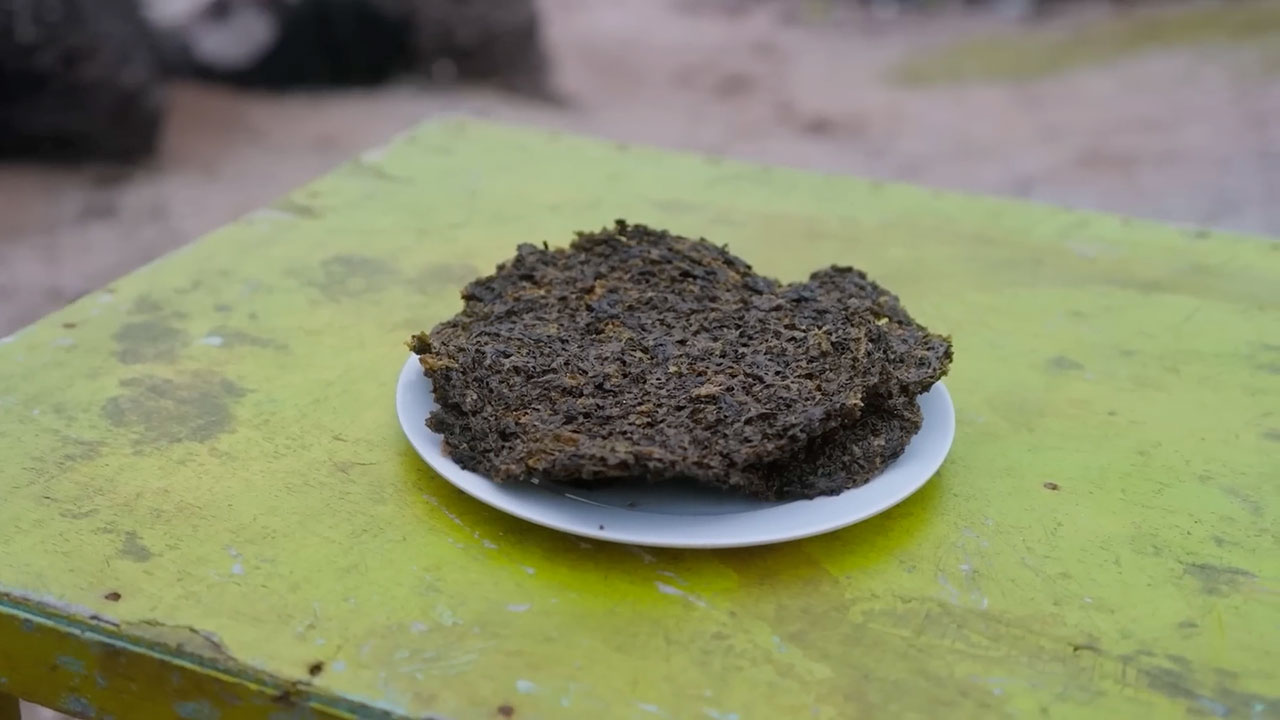
For example, there’s gamet from Ilocos Norte and Cagayan Valley. Showing clips from their documentary, Mr. Heussaff explained that it is a local species of seaweed, and quite rare — it costs about P1,000 for one square foot, giving it the name “black gold.” There isn’t much gamet to go around in the country because of the sheer difficulty of collecting it: the seaweed is collected as it is thrown closer to shore by huge waves.
Pakaskas, meanwhile, is a sweetener that comes from the buri palm (the same one whose leaves are used for hats), and typically made in Isla Verde in Batangas. Podpod, meanwhile, is a smoked fish patty made in San Vicente in Eastern Samar. It is a labor-intensive process. The fish is cooked with rice, simmered in vinegar, deboned, skinned, crushed, seasoned, pressed into molds, then smoked over coconut husks.
“If you put the pressure on having to serve Filipino ingredients in traditional ways, the spectrum is too small (in) what you’re allowed and not allowed to do,” said Mr. Heussaff. That is why they used these ingredients in myriad of ways during the lunch: they used a kiping (a thin rice wafer best known for its use in decorations in Lucban, Quezon’s fiesta) as a chip to dip into an aioli that used gamet (coloring it purple), and used the podpod to flavor roasted cabbage.
“Filipino food is not just Filipino recipes. It’s also Filipino ingredients used in international recipes. Representation happens on so many different fronts. It’s really about building that ecosystem of representation,” he said.
“A lot of things can be true at the same time. You can enjoy eating Chickenjoy next to podpod. You don’t have to be one or the other. I think if you become a little too purist with your food and your ingredients, you also run the risk of being elitist, and also the food not moving forward, because it’s so difficult [to make].
“I always tell people: be flexible on how you eat. Be flexible in how you think about Filipino food,” he said. “You don’t want food to become pieces in a museum,” he added. “Food is an artifact of culture: but at the same time, it’s continuously evolving.”
Despite the laxity this philosophy provides, Mr. Heussaff still recommends further exploration. “I recommend everyone to go home today, look in your pantry, and then try to understand the geography of that pantry.
“If it only comes from one area; one supermarket: question it.” — Joseph L. Garcia
*Erwan Heussaff won in the Social Media Category of the James Beard Broadcast Media Awards in 2023.