Mapúa University said on Wednesday that it will expand its support programs to help alleviate the financial challenges students face due to the ongoing Middle East war.
“We remain dedicated to providing a globally benchmarked education while ensuring that it remains accessible to our students,” Mapúa University President and Chief Executive Officer Dodjie S. Maestrecampo said in a news release.
“Our priority is to offer stability and continued support to our learners in an increasingly unpredictable landscape,” he added.
A study by survey firm OCTA Research found that 9.2 million Filipino households, or 25% of all households, consider themselves poor, down from 9.8 million, or 37%, in December.
However, the firm said that the survey reflects a “pre-shock baseline”, underscoring the period before the increase in transport and food prices added “broader pressure on household welfare and food access.”
To help students and families experiencing financial constraints, the university offers a 20% discount to all incoming freshmen who enroll by May 31, 2026, for the first term of School Year (S.Y.) 2026-2027.
Incoming Grade 11 students and first-year college students may also enroll for the first term with an initial payment of P8,000, with the remaining balance payable in installments. Under the program, the remaining tuition fee will be divided into seven payday-based installments throughout the term.
“These payment structures are designed to help families manage educational expenses through structured and predictable installment schemes following the initial payment,” the university said.
Apart from extended financial programs, scheduled tuition and other fee adjustments for the upcoming school year have been suspended to provide relief to students affected by the ongoing war.
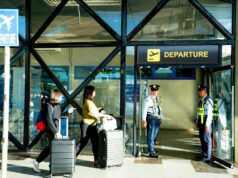
The Department of Migrant Workers (DMW) on Saturday logged 7,674 overseas Filipino workers (OFWs) and dependents who have returned to the country since the Middle East war began in February.
The agency noted that 7,015 Filipinos, including 5,669 OFWs and 1,382 dependents, were repatriated through government funding. — Almira Louise S. Martinez