Gov’t agencies told to cut spending amid oil crisis
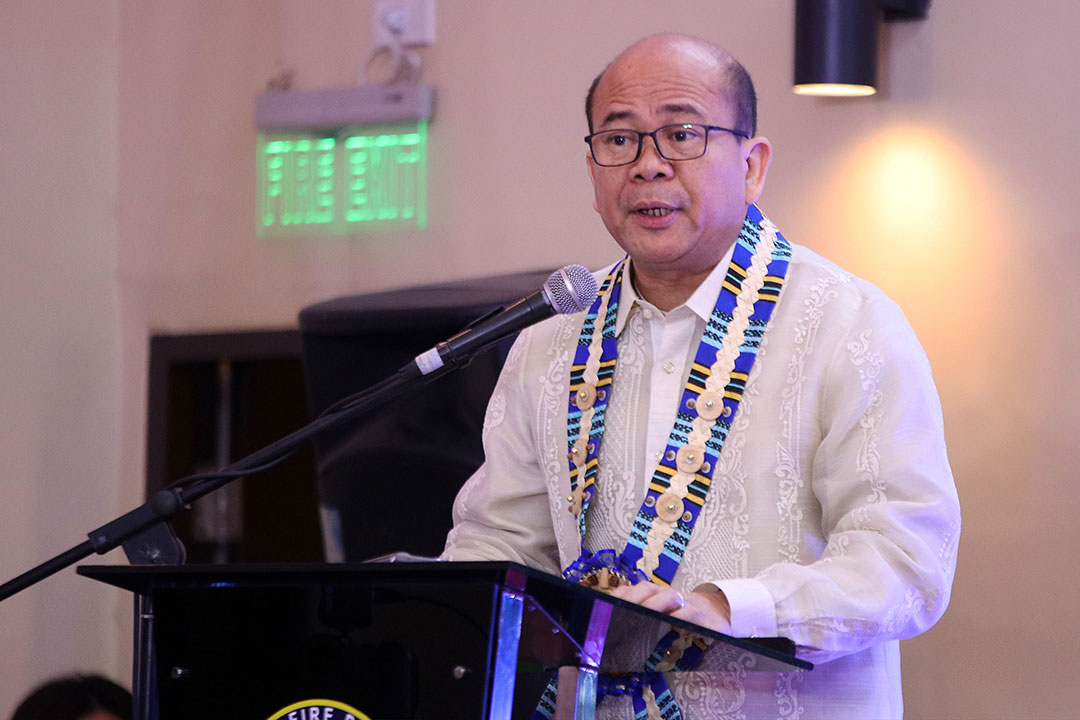
THE DEPARTMENT of Budget and Management (DBM) has ordered government agencies to cut spending and defer selected projects to free up funds to cushion the impact of the Middle East conflict.
In National Budget Circular No. 602, issued on April 23, the DBM directed state entities to adopt “economy measures” following the declaration of a national energy emergency in March.
The Philippines has been under a one-year state of national energy emergency since late March amid rising oil prices and dwindling fuel reserves.
The DBM circular covers all departments, agencies, and operating units of the National Government, including state universities and colleges, as well as government-owned and -controlled corporations receiving appropriations under the 2026 General Appropriations Act.
Offices with autonomy — including the legislative and judicial branches, the constitutional commissions, and local government units — were urged to implement similar measures.
“Through such cooperation, the collective efforts of the entire government will help ensure the efficient and effective promotion and protection of the interests of all Filipinos for the common good in this time of emergency,” the DBM said.
The circular outlines steps to generate funding sources that can be redirected to the programs, activities, and projects aimed at mitigating the economic and social impact of the crisis.
Agencies are required to cut at least 20% from selected maintenance and other operating expenses (MOOE), including travel, training and scholarships, supplies and materials, utilities and representation expenses.
“If there are some items from the foregoing enumeration that are deemed essential to the agency, the 20% cost reduction can be effected on the other non-essential or non-priority MOOE items,” it said.
The DBM also ordered the deferral of non-critical capital outlays, including the purchase of any motor vehicles that are not critical to health, uniformed services and disaster risk preparedness and response and the construction of new government facilities that are not yet ready for implementation.
Agencies were instructed to evaluate their unobligated allotments under the 2026 budget and identify programs, activities, and projects that may be offered as savings, provided these do not disrupt operations or affect service delivery.
All agencies covered by the circular should submit their proposed savings not later than May 15.
The DBM will submit a report on the programs offered as savings to fund mitigating measures related to the energy emergency.
Upon the approval of the President, the DBM will issue negative special allotment release orders (SARO) corresponding to the savings declared and SARO for memo entries to effect the use of savings and augmentation from the source to recipient agencies.
It will also issue SAROS to fund identified deficient programs related to the implementation of the Unified Package for Livelihoods, Industry, Food, and Transport framework.
Philippine Institute for Development Studies Senior Research Fellow John Paolo R. Rivera said the DBM directive is a “prudent short-term fiscal measure” designed to create space for targeted interventions without widening the budget deficit.
“It signals a shift toward spending reprioritization rather than additional borrowing, which helps preserve fiscal sustainability amid external shocks,” he said in a Viber message.
However, Mr. Rivera said that its effectiveness depends on execution, with agencies being tasked to ensure that the cuts will not affect critical services and project delivery.
“If done well, this can free up resources for more urgent needs while maintaining overall fiscal discipline,” he added.
The National Government’s budget deficit widened by almost 2% in March to P342.9 billion.
For the January-to-March period, the budget gap narrowed by 20.3% year on year to P355.5 billion amid double-digit growth in overall collections and muted spending. — Justine Irish D. Tabile