

Philippine central bank chief signals more rate hikes as needed
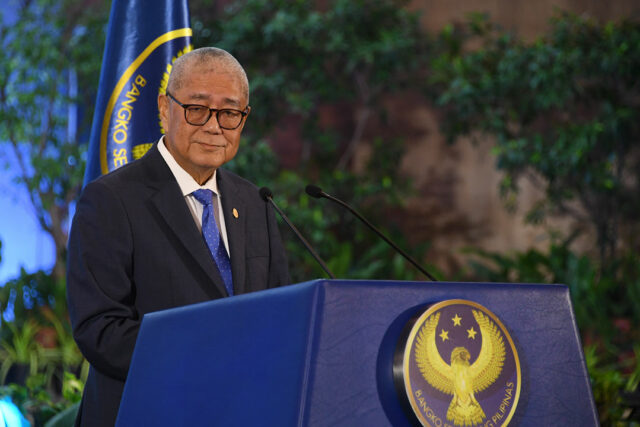
MANILA — The Philippine central bank is prepared to do whatever necessary to contain inflation, its governor said on Friday, leaving the door wide open to more interest rate hikes after the bank delivered a 25-basis-point increase a day earlier.
“The market needs to understand that we will do what is necessary to contain inflation,” Governor Eli M. Remolona, Jr. said in an interview with Bloomberg TV. “At the moment, that seems like a succession of modest rate hikes.”
The Bangko Sentral ng Pilipinas raised its key policy rate by 25 basis points to 4.50% on Thursday, ending its easing cycle.
Mr. Remolona said the economy would likely grow between 4.5% to 4.6% this year, slightly better than an earlier projection of 4.4%, but still below the government’s 5.0% to 6.0% target in 2026.
“Our potential is much higher than our forecast,” Mr. Remolona said.
Supporting the Philippines’ consumption-driven economy is the steady flow of remittances, which Mr. Remolona said remained resilient despite the conflict in the Middle East where over two million Filipinos are living and working. — Reuters
Brazil gets approval to export chilled beef to Philippines
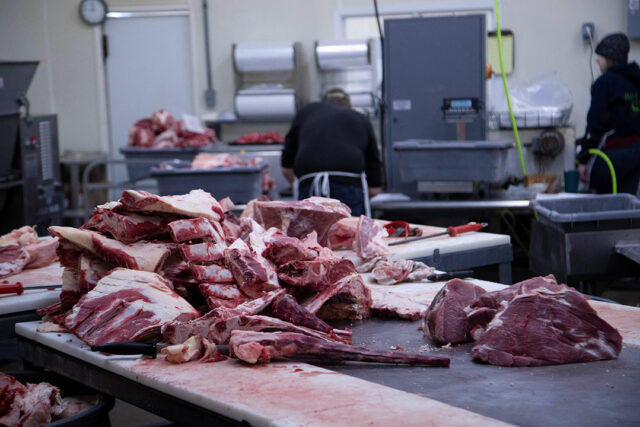
SAO PAULO — Brazil has concluded negotiations that will allow exports of chilled beef, both bone-in and boneless, to the Philippines, Brazil’s Agriculture Ministry said in statement on Thursday.
Home to about 115.8 million people, the Philippines imported more than $1.8 billion in Brazilian agricultural products in 2025, according to the statement. — Reuters
Human rights groups issue US travel advisory ahead of World Cup

WASHINGTON — Advocacy groups issued a travel advisory on Thursday, warning that visitors traveling to the US for the 2026 World Cup may face arbitrary detention or deportation, among other human rights abuses.
The warning, which came less than two months before the sporting event kicks off in Mexico, was signed by dozens of groups, including the American Civil Liberties Union and the NAACP.
The event will take place against a backdrop of widespread immigration crackdown by the Trump administration and the erosion of federal protections for racial minorities and members of the LGBTQ community.
Fans, players, journalists and other visitors may face racial profiling, searches of electronic devices, or risk of cruel or inhuman treatment if they end up in immigration detention facilities, according to the advisory.
The groups added that people from immigrant communities, racial and ethnic minority groups, and LGBTQ individuals are “most vulnerable to serious harm” when traveling to the US.
For this reason, they said, visitors should exercise caution and have an emergency contingency plan.
“FIFA has unique leverage right now to pressure the US government to respect the fundamental human rights of every person visiting and attending the games, as well as those working and living in the 11 US host cities,” the ACLU said in a statement referring to the sport’s global governing body.
“That’s why the ACLU and other members of the Dignity 2026 Coalition have been urging FIFA to act. But FIFA has yet to offer meaningful assurances.”
The US State Department did not immediately respond to requests for comment.
In a statement, the world soccer organization said: “As per article 3 of the FIFA Statutes, FIFA is committed to respecting all internationally recognized human rights and shall strive to promote the protection of these rights.”
It cited several actions and a special rights advisory group as “evidence of FIFA’s commitment to human rights across all key activities and actors connected to the tournament.”
Thursday’s warnings follow a March statement from Amnesty International that the tournament is drifting far from the “safe, free and inclusive” event originally promised by FIFA.
The World Cup is set to hold 104 matches across the United States, Mexico and Canada, starting in June. Eleven US cities will host matches for the sporting event, including East Rutherford, New Jersey, just outside New York, where the championship match will be held. — Reuters
Tiong Bahru Singapore Flavours strengthens foothold in Philippine market through continued growth
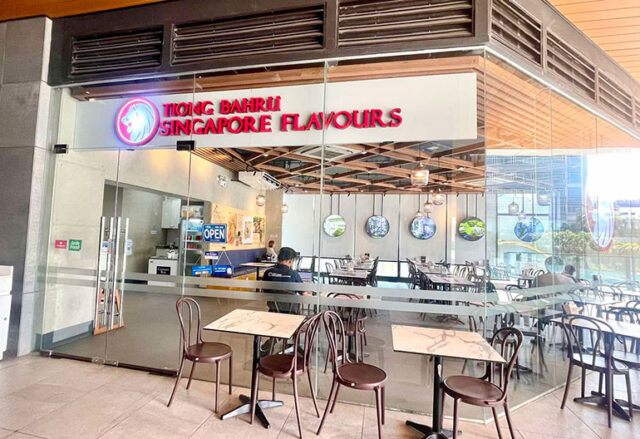
With a steadily growing presence across Metro Manila and nearby areas, Tiong Bahru Singapore Flavours continues to establish itself as a competitive player in the Philippine dining landscape driven by operational strength, evolving customer preferences, and a clear commitment to authenticity.
Since entering the Philippines in 2019 as a Singaporean franchise with its first branch at MetLive Mall in Pasay, the brand has built a network of locations in key areas, strengthening its foothold in the local market.
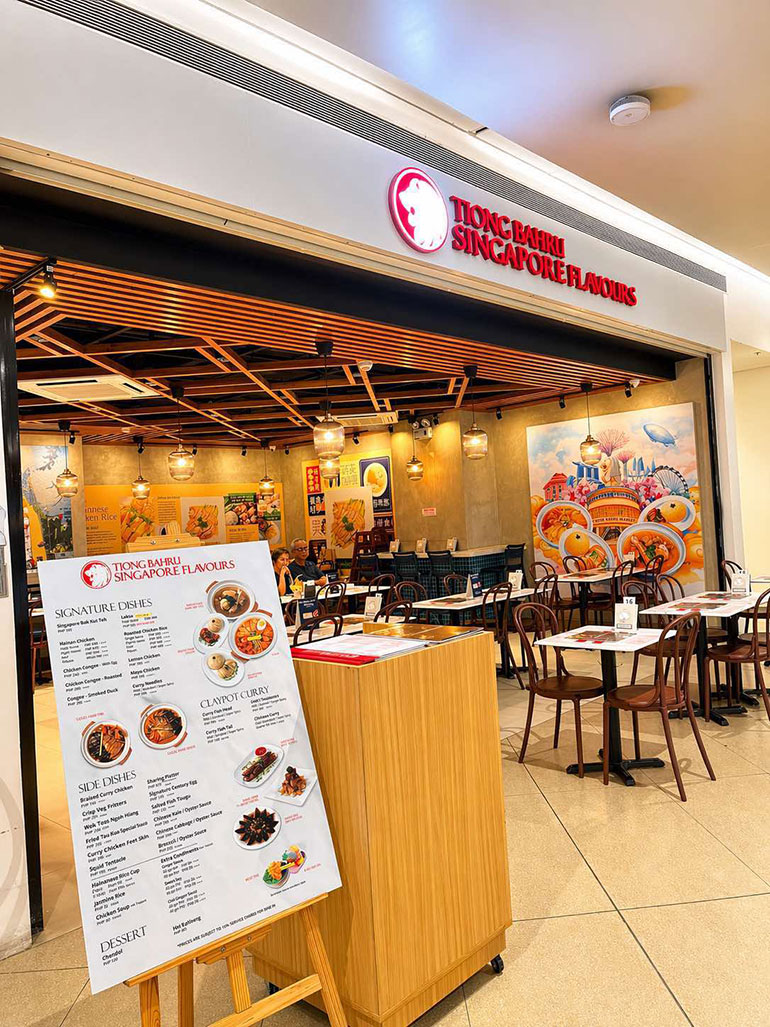
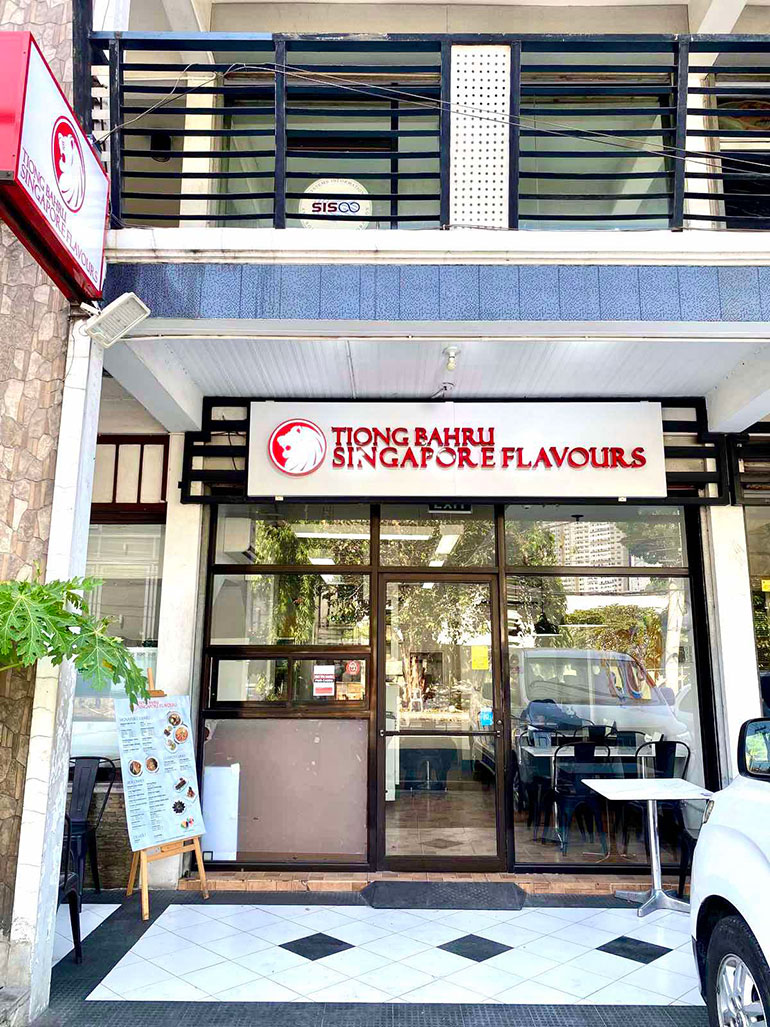
As the industry faced disruption during the pandemic, the restaurant continued to open branches in Makati and Quezon City while expanding its takeaway and delivery services. Staying visible across these platforms allowed it to sustain operations and deepen familiarity with customers.
“Our journey reflects more than expansion — it’s a testament to resilience and passion. Even during the pandemic, we never stopped serving authentic Singaporean cuisine to every Filipino,” shared Kathryna Yu-Pimentel, Co-Owner/Director of Tiong Bahru Singapore Flavours.

The brand has evolved beyond its initial concept into a familiar comfort choice for Filipinos, appealing to a wider audience while maintaining a clear identity. Beyond its signature Hainan chicken, the menu includes a range of Singaporean hawker-inspired dishes such as bak kut teh, laksa, and other well-loved classics.
Today, its network spans key commercial and lifestyle hubs, including Taguig (BGC), Estancia Capitol Commons in Pasig, Eastwood in Quezon City, Alabang Town Center in Muntinlupa, SM North EDSA — The Block, Greenhills in San Juan, One Ayala in Makati, Trinoma in Quezon City, Robinsons Antipolo, Mitsukoshi BGC, and Gateway Mall 2 in Cubao. More recent openings in U.P. Katipunan and Landmark by the Bay in Parañaque further extend their reach, improving accessibility throughout the metro.
“Filipino diners have embraced our flavors wholeheartedly. With every new branch, we bring Singapore closer to home, one plate at a time,” said Ms. Yu-Pimentel.
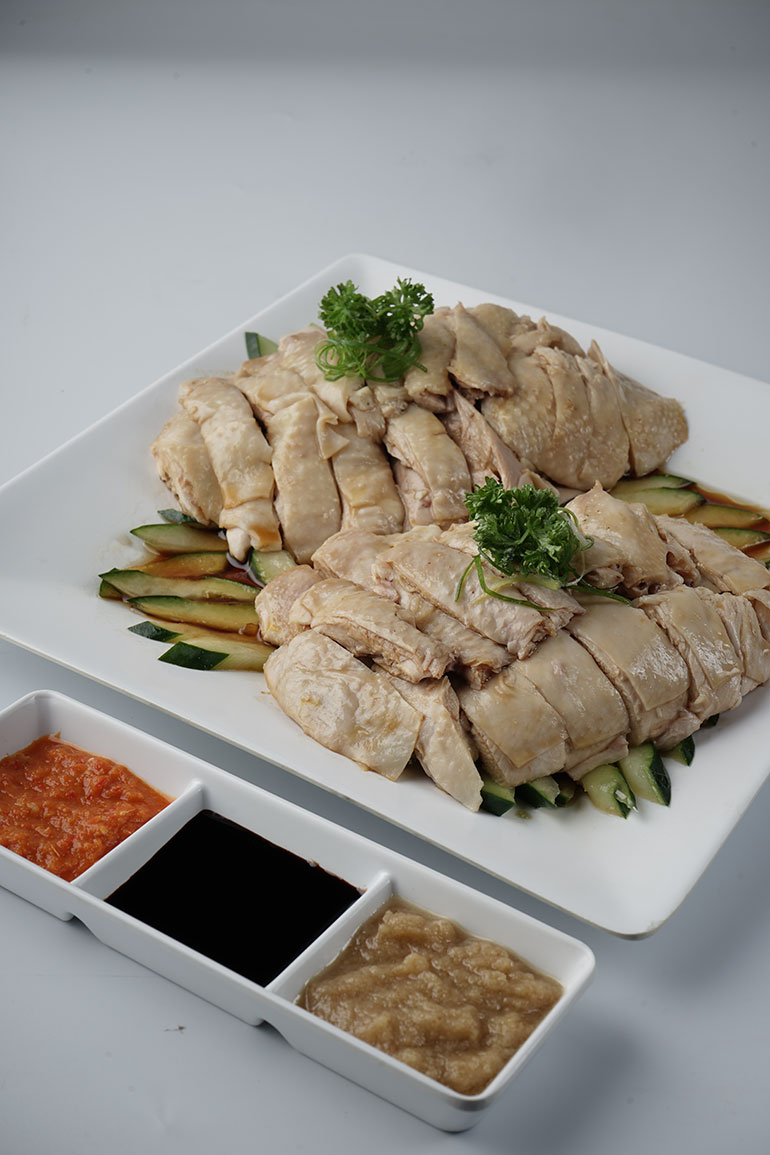
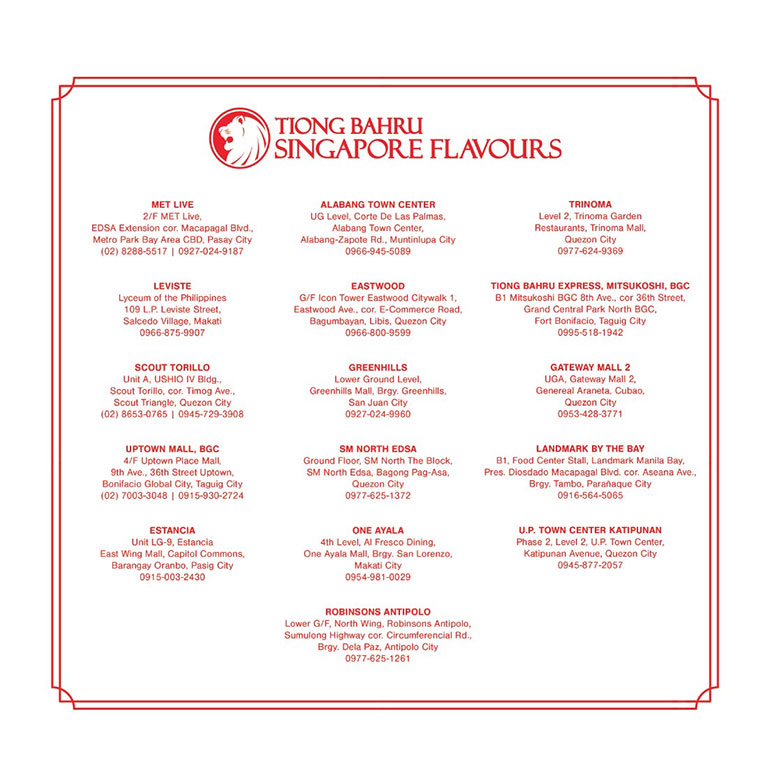
In the years since, the restaurant chain has grown to 16 locations, each delivering consistent preparation and authentic flavors.
Rooted in heritage techniques and genuine flavors, Tiong Bahru Singapore Flavours maintains a distinct edge — offering a consistent, more premium dining experience while “bringing authentic Singaporean cuisine to every Filipino table.”
For updates and more information, follow Tiong Bahru Singapore Flavours on Facebook (Tiong Bahru Singapore Flavours), Instagram (@tiongbahruph), and TikTok (@tiongbahruph).
Spotlight is BusinessWorld’s sponsored section that allows advertisers to amplify their brand and connect with BusinessWorld’s audience by publishing their stories on the BusinessWorld Web site. For more information, send an email to online@bworldonline.com.
Join us on Viber at https://bit.ly/3hv6bLA to get more updates and subscribe to BusinessWorld’s titles and get exclusive content through www.bworld-x.com.
Lebanon-Israel ceasefire extended by three weeks after Oval Office meeting

WASHINGTON/BEIRUT/JERUSALEM — The ceasefire between Lebanon and Israel was extended for three weeks after a high-level meeting at the White House, US President Donald Trump said on Thursday.
Mr. Trump hosted Israel’s ambassador to Washington Yechiel Leiter and Lebanese ambassador to the US Nada Moawad in the Oval Office for a second round of US-facilitated talks, a day after Israeli strikes killed at least five people including a journalist.
“The Meeting went very well! The United States is going to work with Lebanon in order to help it protect itself from Hezbollah,” Mr. Trump wrote on Truth Social.
Mr. Trump added that he looked forward to hosting Israeli Prime Minister Benjamin Netanyahu and Lebanese President Joseph Aoun in the near future.
The ceasefire, reached after talks between the two nations’ ambassadors to Washington last week and set to expire on Sunday, has yielded a significant reduction in violence. Attacks have continued in southern Lebanon, however, where Israeli troops have seized a self-declared buffer zone.
Iran-backed Hezbollah says it has “the right to resist” occupying forces.
Vice President JD Vance, Secretary of State Marco Rubio, US Ambassador to Israel Mike Huckabee, and US Ambassador to Lebanon Michel Issa also attended the meeting.
DEADLIEST DAY SINCE CEASEFIRE
The Israeli military said on Thursday that it killed two armed individuals in southern Lebanon after identifying them approaching soldiers and posing what it described as an immediate threat.
It was not immediately clear whether the incident was related to strikes reported earlier in nearby areas by Lebanon’s health ministry, which said an Israeli air strike had killed three people and artillery shelling wounded two others, including a child.
Wednesday was Lebanon’s deadliest day since the ceasefire took effect on April 16.
Those killed by Israeli strikes included Lebanese journalist Amal Khalil, according to a senior Lebanese military official and her employer, Al-Akhbar newspaper.
Hezbollah lawmaker Hassan Fadlallah said the group wanted the ceasefire to continue but “on the basis of full compliance by the Israeli enemy”. At a televised press conference, he reiterated Hezbollah’s objections to the face-to-face talks and urged the government to cancel all forms of direct contact with Israel.
Hostilities between Hezbollah and Israel reignited on March 2, when the group opened fire in support of Iran in the regional war. The ceasefire in Lebanon emerged separately from Washington’s efforts to resolve its conflict with Tehran, though Iran had called for Lebanon to be included in any broader truce.
Hezbollah said it carried out four operations in south Lebanon on Wednesday in response to Israeli strikes.
Nearly 2,500 people have been killed in Lebanon since Israel went on the offensive following Hezbollah’s March 2 attack, according to Lebanese authorities.
Israel is occupying a belt of the south that extends 5 to 10 kilometers (3 to 6 miles) into Lebanon, saying it aims to shield northern Israel from attacks by Hezbollah, which has fired hundreds of rockets during the war.
Israel’s military reiterated a warning to residents of south Lebanon not to cross into the area.
LEBANON TO SEEK END TO ISRAELI DEMOLITIONS
Mr. Fadlallah said full compliance with the ceasefire meant Israel must “halt assassinations, completely cease fire … halt the destruction of villages,” followed by paving the way for an Israeli withdrawal through “procedures undertaken by the Lebanese state but not via direct negotiations.”
A Lebanese official said Beirut wants a ceasefire extension as a prerequisite for talks to expand beyond the ambassadorial level to the next phase, in which Lebanon would push for an Israeli withdrawal, the return of Lebanese detained in Israel and a delineation of the land border.
Israel says its objectives in the talks with Lebanon include securing the dismantlement of Hezbollah and creating conditions for a peace deal. Israel has sought to make common cause with Lebanon’s government over Hezbollah, which Beirut has been seeking to disarm peacefully for the past year.
Mr. Rubio hosted the first meeting between Mr. Leiter and Ms. Moawad on April 14 – the highest-level contact between Lebanon and Israel in decades.
Washington has denied any link between its Lebanon mediation and diplomacy over the Iran war.
Hezbollah says the Lebanon ceasefire was the result of Iranian pressure rather than US mediation. — Reuters
Pope condemns killing of protesters in Iran, reaffirms stance against war

ABOARD THE PAPAL FLIGHT — Pope Leo on Thursday firmly condemned the killing of protesters in Iran, after US President Donald Trump criticized the Catholic leader last week for not doing so while speaking out against the US-Israel war with Iran.
Leo, the first US pope, also decried the deaths of “so many” civilians in the war and lamented the collapse of US-Iran peace talks in comments aboard his return flight to Rome after a four-nation Africa tour.
“I condemn all actions that are unjust. I condemn the taking of people’s lives,” the pope said in response to a question in a press conference about reports that Iran has killed thousands of protesters.
“When a regime, when a country takes decisions which takes away the lives of other people unjustly, then obviously that is something that should be condemned,” he said.
Leo was attacked by Mr. Trump on social media as “terrible” on April 12, after the pope emerged as an outspoken critic of the Iran war and the president’s hardline anti-immigration policies.
In a post two days later, Mr. Trump asked “will someone please tell Pope Leo” about the deaths of Iranian protesters.
Iranian authorities killed thousands of people during anti-government protests in January, Iran’s worst domestic unrest since the era of its 1979 Islamic Revolution. Rights groups say the government has continued to crack down on opponents while war rages, with Tehran carrying out another execution this week.
Leo did not mention Mr. Trump in his remarks on Thursday. He said that as leader of the 1.4-billion-member Catholic Church he does not support war.
“As a pastor, I cannot be in favor of war,” he said, adding that he carries with him a photo of a child killed by Israeli strikes targeting Hezbollah militants in Lebanon.
Leo said the child had been among the crowds that greeted him during his visit to Lebanon in November and December, as part of the pope’s first overseas trip.
“We have seen so many innocents killed,” Leo said of the war.
Referring to the recent breakdown in peace talks, the pope said: “One day Iran says yes, the United States says no and vice versa. We don’t know where it will go.”
“It has created a situation that is still chaotic … and also there is the whole population of Iran, innocent people, who are suffering because of this war,” he said.
Leo on Thursday also defended his decision to visit countries in Africa known for having authoritarian leaders. Two of the countries the pope visited, Equatorial Guinea and Cameroon, have leaders who have been in power for decades.
He said the Vatican maintains diplomatic relationships with authoritarian regimes.
“We don’t always make great proclamations … but there’s an awful lot of work that goes on behind the scenes to promote justice,” said the pope. He said the Vatican works “so that the lives of people can be improved.” — Reuters
BSP raises rates, signals more hikes
By Aaron Michael C. Sy, Reporter
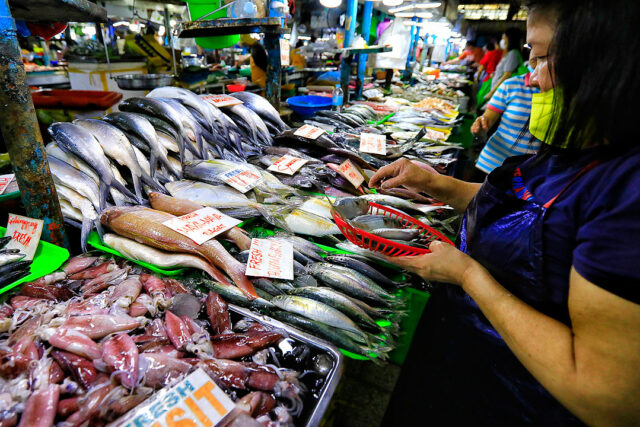
THE PHILIPPINE central bank increased its benchmark interest rate for the first time in more than two years, while signaling that more “small” interest rate hikes could follow to safeguard spiraling prices due to the Iran war.
The Monetary Board of the Bangko Sentral ng Pilipinas (BSP) raised the target reverse repurchase rate by 25 basis points (bps) to 4.5% at its policy meeting on Thursday, effectively ending an easing cycle that cut the benchmark rate by 225 bps starting in August 2024.
The central bank also adjusted the interest rates on its overnight deposit and lending facilities to 4% and 5%, respectively.
“Once we start raising the policy rate, we’re likely to raise it again,” BSP Governor Eli M. Remolona, Jr. told a news briefing after the policy decision. “That’s a better strategy than raising it just one time and making a big hike instead of a small one.”
He noted that monetary policy involves “several steps” to “minimize disruptions to the economy.”
The decision was in line with the expectations of 11 of 19 analysts in a BusinessWorld poll last week.
It followed an off-cycle meeting last month where the BSP held rates steady as it sought to calm markets amid growing uncertainties.
Mr. Remolona said the central bank raised borrowing costs to keep inflation expectations anchored and contain the buildup of spillover effects.
“Inflation expectations are rising further, increasing the risk that they will de-anchor from our target,” he said. “This can cause inflation to become persistent, hurting households as well as businesses.”
The BSP raised the policy rate based on a scenario that oil futures would remain high in the near term, with spot prices close to $100 a barrel, before gradually declining at the end of the year and further into 2027.
Mr. Remolona said supply shocks have already affected the prices of certain items in the consumer price index.
“For now, yes, it’s mainly a global supply shock,” he said. “But we’re beginning to see spillover effects into other items in the consumer basket. And the prices of those other items are affected by domestic demand.”
In March, headline inflation rose to an almost two-year high of 4.1%, faster than the BSP’s 3.1%-3.9% forecast and 2%-4% target for the year.
The decision to raise interest rates was not unanimous, Mr. Remolona said, adding that the BSP had considered a 50-bp rate increase but decided against it to avoid any large moves.
Clearer evidence of a sharp and prolonged oil price shock de-anchoring inflation expectations would warrant a bigger hike, he added.
The central bank now expects inflation to average 6.3% this year and 4.3% next year, both above its 4% ceiling, before returning to its tolerance range in 2028.
“It will remain above 5% for most of this year,” BSP Deputy Governor Zeno Ronald R. Abenoja told the same briefing. “We don’t think it will de-anchor, but if it’s possible it will de-anchor, then we would have to change our strategy.”
‘TOLERANCE RANGE’
Mr. Remolona said the BSP would have to increase borrowing costs gradually to avoid slowing economic growth.
“The idea is not to bring it back to within the tolerance range right away,” he said. “Because if we try to do that, then it’s very costly for the economy. What we want is to bring it down to within the tolerance range within a reasonable period without hurting the economy too much.”
In a separate statement, the central bank said the inflation outlook has worsened due to the war in the Middle East, which has driven up global oil and fertilizer prices.
These increases have begun feeding into domestic fuel and food costs, adding pressure on consumer prices.
At the same time, core inflation, which excludes volatile food and energy items, has continued to rise, indicating broader underlying price pressures across the economy.
The BSP said its latest projections show a higher inflation trajectory, with average headline inflation expected to exceed the 4% ceiling of its target range in both 2026 and 2027.
Inflation expectations have also increased, raising the risk that price pressures could become more entrenched if left unchecked.
“After considering its options, the Monetary Board deemed it necessary to take timely and preemptive policy action to safeguard price stability,” the central bank said.
The BSP said the rate increase aims to anchor inflation expectations and prevent second-round effects, such as higher transport fares and wages, from further fueling price increases.
“A measured increase in the policy rate will still accommodate economic recovery over the medium term,” it added.
The BSP reiterated that future policy decisions would be guided by incoming data, particularly developments in inflation and global conditions.
It added that it stands ready to take further monetary action as needed to bring inflation back to its 3% target, consistent with its mandate of maintaining price stability.
Reyes Tacandong & Co. Senior Adviser Jonathan L. Ravelas in a Viber message said the BSP’s tightening move would support market sentiment and the peso.
Some analysts said the increase could be a “one-and-done” rate hike, citing growth risks, easing global crude oil price volatility and a ceasefire between the US and Iran.
“Risks are tilted towards further hikes if inflation expectations show strong signs of de-anchoring,” Oxford Economics Assistant Economist Jun Hao Ng said in a note.
Pantheon Macroeconomics Chief Emerging Asia Economist Miguel Chanco said the medium-term outlook for global oil prices has softened, while local pump prices have also rolled back.
“The Board’s next move is likely to be a rate cut at some point this time next year, when this external price shock starts to drop out of the year-on-year inflation picture,” he added. — with Norman P. Aquino
March deficit widens as spending outpaces growth in revenues

By Justine Irish D. Tabile, Senior Reporter
THE National Government’s fiscal gap widened in March as spending growth outpaced revenue gains, even as the first quarter still ended with a narrower deficit due to stronger cumulative collections.
In a statement on Thursday, the Bureau of the Treasury said the budget deficit in March rose 2% to P349.7 billion from a year earlier, driven by faster growth in government expenditures relative to revenues.
“This outturn reflects a higher year-on-year increase in expenditures of P32.6 billion, which outpaced the P25.8 billion rise in revenues,” the Treasury said.
Government revenues for the month increased 9.3% to P305.1 billion, supported by both tax and nontax sources, while expenditures climbed 5.2% to P654.8 billion.
Spending was lifted by higher transfers to local government units, including their share in national taxes and special allocations, as well as increased support to government-owned and -controlled corporations (GOCCs).
The government also released P20 billion to the Department of Energy for its emergency energy program to help shore up fuel supply amid external supply risks linked to the war in the Middle East.
Despite the March increase, the fiscal position for the first quarter was stronger than last year as revenue growth outpaced spending over the period.
The Bureau of Internal Revenue collected P719.2 billion in January to March, up 4.2% from a year earlier, supported by improved tax administration and digital systems aimed at reducing leakages.
The Bureau of Customs generated P239.4 billion, 3.5% higher year on year, backed by enforcement reforms under its Integrity, Accountability and Modernization program.
Total revenues for the first quarter rose 13.7% to P1.14 trillion, driven in part by higher nontax income, which more than doubled to P166.1 billion on early dividend remittances from GOCCs.
Tax revenues accounted for 85.4% of total collections at P969.2 billion.
Cumulative expenditures reached P1.49 trillion as of end-March, up 3.2% from a year earlier.
Primary expenditures rose 1.2% to P1.22 trillion, while interest payments increased 13.3% to P273.1 billion, reflecting higher debt servicing costs.
The primary deficit narrowed 59.8% to P82.4 billion in the first quarter from a year earlier.
“March expenditures increased mainly due to higher transfers to local government units, additional budgetary support to GOCCs, and a one-off release to support fuel supply amid geopolitical risks,” Union Bank of the Philippines Chief Economist Ruben Carlo O. Asuncion said in a Viber message.
“While revenues posted solid growth in March, it was not enough to fully offset the pickup in disbursements, resulting in a marginally wider monthly deficit,” he added.
FUEL SUBSIDIES
Rising oil prices and tighter fuel supply have prompted the government to declare a national energy emergency, rolling out subsidies, fuel discounts and temporary tax relief on kerosene and liquefied petroleum gas.
China Banking Corp. Chief Economist Domini S. Velasquez said the March increase reflects the rollout of subsidies to cushion sectors affected by the oil shock.
“As support measures expand, the fiscal deficit is expected to widen in the near term,” she said via Viber.
She added that infrastructure disbursements remain a positive development due to their multiplier effects on growth.
“The composition of spending will ultimately depend on the duration of the conflict: a prolonged war would skew expenditures toward current subsidies and social support, while an early resolution would provide the government with more fiscal space to ramp up infrastructure,” Ms. Velasquez said.
Mr. Asuncion said oil price mitigation measures, including subsidies and tax exemptions, might place some upward pressure on the fiscal deficit.
“Part of this has already been reflected in March disbursements linked to energy-related support programs,” he said. “That said, these interventions are designed to be temporary and well-targeted, rather than a permanent expansion of government spending.”
He said stronger revenue performance, supported by improved tax administration and higher nontax inflows, would help create fiscal space to absorb short-term pressures.
“The sharp improvement in the primary balance in the first quarter also points to better underlying fiscal health,” Mr. Asuncion said.
“Overall, while the deficit could widen modestly in the coming months, any impact from oil-price mitigation measures is expected to be manageable and consistent with the government’s full-year fiscal objectives,” he added.
JPMorgan index may lift PHL bond demand

By Aaron Michael C. Sy, Reporter
THE Philippines is set to be added to JPMorgan Chase & Co.’s local currency emerging market debt index from Jan. 29 next year, a move that is expected to lift foreign participation in local bond issuances and improve pricing conditions for government borrowing.
The inclusion will cover Philippine peso-denominated government bonds, which will enter the widely tracked Government Bond Index-Emerging Markets (GBI-EM).
Finance Secretary Frederick D. Go said the inclusion signals investor confidence in the country’s fundamentals and fiscal management.
“It reflects a strong vote of confidence in our solid fundamentals and fiscal discipline,” he said in a Viber message. “This milestone will broaden our investor base, improve market liquidity and help lower borrowing costs.”
JPMorgan’s GBI-EM tracks sovereign and quasi-sovereign bonds issued by emerging markets. Philippine global peso notes were removed from the index in January 2024 due to illiquidity concerns.
Eligible securities include Philippine peso-denominated government bonds issued from 2023 with maturities of up to 20 years.
The Philippines was placed on “Index Watch Positive” seven months before the announcement.
A joint statement from the Department of Finance, Bureau of the Treasury and Bangko Sentral ng Pilipinas (BSP) said the decision reflects reforms aimed at deepening bond market liquidity, expanding the interest rate swap market, strengthening the repo market and simplifying tax treaty application rules.
BSP Governor Eli M. Remolona, Jr. said the development strengthens capital market depth and monetary policy transmission.
“This is a major step in deepening the Philippine capital markets, with significant benefits to the government, to domestic and global investors and to local banks and businesses,” he said. “As bonds gain more liquidity, this will help the BSP transmit monetary policy, benefiting borrowers and investors across the economy.”
The agencies said they would continue coordinating with regulators and market participants to align domestic trading and pricing practices with global standards.
Reyes Tacandong & Co. Senior Adviser Jonathan L. Ravelas said the inclusion boosts the country’s credibility in global debt markets and supports sustained foreign inflows.
“The Philippines’ inclusion in the JPMorgan Government Bond Index is a major credibility upgrade,” he said in a Viber message. “It effectively puts Philippine bonds on the ‘must-own’ list for global investors, driving steady, long-term foreign inflows rather than hot money.”
“That broader investor base should gradually lower borrowing costs by compressing risk premiums and improving bond market liquidity,” he added.
He said disciplined fiscal and inflation management would be key to sustaining the benefits of the index inclusion.
Philippine Institute for Development Studies Senior Research Fellow John Paolo R. Rivera said the move might improve demand and pricing for offshore issuances and support government funding plans.
“We can also expect increased foreign participation in onshore bonds, as index inclusion typically attracts passive and benchmark-driven investors,” he said via Viber.
The government raised $2.75 billion in January through a triple-tranche dollar bond issuance, consisting of $1.5 billion in 10-year bonds at 5%, $750 million in 25-year bonds at 5.75% and 5.5-year notes at 4.25%.
About $2.5 billion remains in its foreign borrowing program, with a possible issuance as early as the second quarter, according to the Treasury bureau.
No talks for price freeze for now, says Trade dep’t

THE DEPARTMENT of Trade and Industry (DTI) said it has no immediate plans to impose a price freeze on basic goods, as manufacturers continue to absorb higher production and logistics costs driven by the war in the Middle East.
The decision signals that retail prices of basic necessities are expected to remain stable in the near term despite elevated fuel costs.
“For now, there are no talks [for a price freeze],” Trade Secretary Ma. Cristina A. Roque told Money Talks with Cathy Yang on One News on Thursday. “Everybody’s cooperating. The manufacturers and retailers totally understand the situation.”
She said there is no need at this stage to invoke the Price Act, which allows government intervention in basic goods pricing during emergencies.
“There’s no need for that because in all our talks, there seems to be no problem. Everything goes very smoothly, so for now, there’s no need for that,” Ms. Roque said.
Under the law, prices of basic necessities are automatically frozen at prevailing levels for up to 60 days when a state of calamity or emergency is declared, unless the President decides otherwise. It also lets the President impose a price ceiling upon recommendation of the Price Coordinating Council.
Ms. Roque said the government does not expect price increases in basic goods until May 10, based on agreements with manufacturers and retailers. She added there have been no discussions on imposing price controls even after May 10.
Diesel prices have increased to P100.05 per liter since late February, while gasoline and kerosene have risen to P52.30 per liter and P82.40 per liter, respectively.
“We’re very much concerned with the prices of food, so we have to make sure that we monitor this very strictly,” Ms. Roque said. “We will also enforce [price stabilization measures] when the need arises.”
The DTI continues to meet manufacturers and retailers weekly to ensure compliance with suggested retail prices for basic necessities and prime commodities. Only a portion of product lines are covered by regulation even among large manufacturers with diversified portfolios.
The agency monitors more than 726 variants of essential goods, 196 of which are subject to suggested retail prices. These include canned sardines, processed meats, milk products, soy sauce, fish sauce, vinegar, instant noodles, bread, detergent, bottled water and other staples.
John Paolo R. Rivera, a senior research fellow at the Philippine Institute for Development Studies, said companies’ temporary cost absorption might not last if oil prices remain elevated.
“If elevated oil prices persist, price adjustments could follow shortly, especially for goods with high logistics and energy costs,” he said in a Viber message.
He said sustained increases in transport and input costs would eventually pressure margins and trigger repricing.
Rizal Commercial Banking Corp. Chief Economist Michael L. Ricafort said future inventories might already reflect higher input costs.
“New stocks could already reflect higher prices of inputs and passed-through effects due to higher fuel, transport and shipping costs,” he said in a Viber message.
The DTI is also encouraging long-term adjustment through electric vehicle (EV) adoption as transport operators face higher fuel costs.
“It’s good for them (drivers) to at least explore the possibility of shifting now from the regular vehicles to the EV,” Ms. Roque said.
The agency, through Small Business Corp., recently launched a P2-billion E-Transport Loan program to support electric vehicle adoption, offering loans of up to five years with a six- to 12-month grace period.
EVs accounted for 11% of total vehicle sales in the Philippines as of end-March, according to industry data. — Beatriz Marie D. Cruz
Ayala Land leans on leasing, trims spending amid global risks

AYALA LAND, Inc. (ALI) said it is scaling back capital spending and leaning more heavily on its leasing business as global uncertainties weigh on the property sector.
“There’s no doubt that the Middle East crisis is a significant disruptor, especially for the property development industry,” ALI Chairman Jaime Augusto Zobel de Ayala said during the company’s annual stockholders’ meeting on Thursday. “In times like these, our top priority is stability over aggressive growth.”
He said the company is focused on preserving liquidity and maintaining flexibility.
“We’re focused on ensuring ample liquidity and maintaining the flexibility to act swiftly when the environment improves,” he said. “We have also scaled down our capital expenditure (capex) plans as part of our balance sheet management.”
ALI had planned P70 billion to P80 billion in capital expenditures this year, about 38% for leasing. In 2025, it spent P92.9 billion, with 38% for property development, 29% for leasing expansion, 18% for estate build-out, and 15% for land acquisition.
Mr. Zobel said the company is also adjusting its development pipeline, noting it will “manage our residential launches and reduce our inventory” while strengthening recurring income streams.
“The strategy we put in place is to pivot towards leasing through expanding our leasing footprint and reinventing our malls and hotels,” he said. “Our focus on building a stronger recurring income business is precisely to help us weather disruptions and cycles with more dependable revenue streams.”
The company also cited macroeconomic pressures, including “rising inflation, elevated interest rates, and a weaker peso,” as additional headwinds.
In its latest disclosures, ALI said property development accounted for about 65% of its real estate revenues in 2025, while leasing and hospitality contributed 28% and services 7%.
EARNINGS PERFORMANCE
ALI President and Chief Executive Officer Anna Ma. Margarita B. Dy said leasing is expected to drive growth over the medium term.
“Our leasing business is expected to remain on a growth trajectory and will be the primary driver of our company’s expansion,” she said.
She added that all new leasing projects over the next three years will be located within the company’s estates.
For 2025, ALI reported consolidated net income of P39.1 billion, up 38.7% from P28.2 billion in 2024, driven by leasing and hospitality and gains from portfolio management.
Leasing and hospitality revenues rose 7% to P48.7 billion from P45.6 billion. Shopping center revenues increased 5% to P24.2 billion from P23 billion, while office leasing revenues reached P12.2 billion. Hospitality revenues climbed 9.3% to P10.6 billion from P9.7 billion, boosted by the New World Makati Hotel acquisition.
“By 2027, we expect earnings before interest, taxes, depreciation, and amortization to be roughly balanced between leasing and development,” Ms. Dy said.
Mariana Zobel de Ayala, president of Ayala Malls and head of the leasing and hospitality group, said the company plans to expand its retail footprint.
“Looking ahead to 2026, we will open over 200,000 square meters of new retail space, our largest annual addition in history,” she said.
She added reinvestments in malls and hotels are expected to deliver a “15-20% uplift in rents and room rates upon stabilization.”
ALI is also expanding into industrial real estate, including cold storage facilities.
The company maintained a disciplined approach to its residential business, reporting sales of P125 billion in 2025 despite launching 42% fewer projects, while inventory improved to 19 months.
Chief Finance Officer Jose Eduardo A. Quimpo II said ALI continues to recycle capital, including through asset infusions into AREIT, Inc.
“We are not passively holding assets. We are constantly optimizing the balance sheet to catalyze returns and maximize value,” Mr. Quimpo said.
ALI returned 65% of its prior-year income to shareholders through dividends and share buybacks.
The company said its balance sheet remains strong, with net gearing at 0.78:1 supported by predominantly long-term fixed-rate debt.
“We have always deliberately kept our balance sheets strong so we can withstand periods like this, and just as importantly, position ourselves to capture opportunities when they emerge,” Mr. Zobel said.
At the local bourse on Thursday, ALI shares fell by 0.85% to P16.34 each. — Alexandria Grace C. Magno
7-Eleven PHL plans 400 stores, up to P5-B capex for 2026
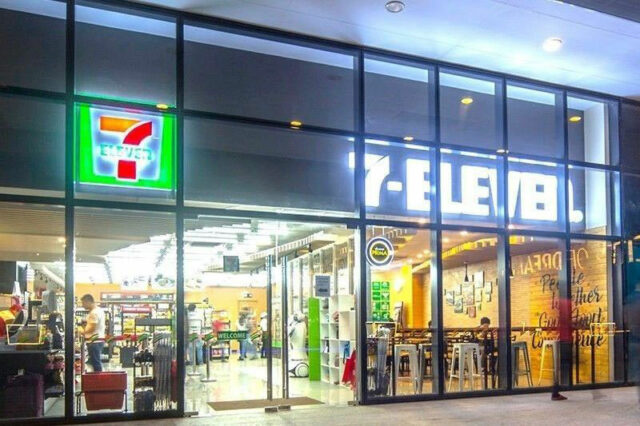
LISTED Philippine Seven Corp. (PSC) said it has set aside up to P5 billion in capital expenditures (capex) this year as it plans to open 400 additional stores by yearend, pushing ahead with expansion despite global uncertainties linked to the Middle East conflict.
“I think capex is P4 billion or P5 billion,” PSC Chairman Jose Victor P. Paterno told reporters on the sidelines of Franchise Asia Philippines’ 2026 International Franchise Conference on Thursday.
He said the company plans to open 400 new 7-Eleven stores this year despite oil price shocks from the ongoing war in the Middle East.
“We can’t really slow down. We have 400 stores opening hopefully by the end of the year, and those have already broken ground,” Mr. Paterno said.
He added that more than half of the planned store openings will be in the Visayas and Mindanao.
PSC is the exclusive licensee of the 7-Eleven convenience store brand in the Philippines and operates more than 4,500 stores nationwide.
Mr. Paterno said the company remains on track to expand its network to 5,000 stores this year.
Despite the global oil crisis weighing on retail prices, he said the company expects to perform better than during the pandemic, when mobility restrictions pushed consumers to shop more in supermarkets.
He said convenience stores near residential areas could benefit as consumers look to save on travel costs.
“We haven’t seen a decrease in sales due to the crisis,” Mr. Paterno said. “We’re trying to keep operational costs down by hedging power.”
More than half of 7-Eleven stores in the country are franchised, he said.
PSC reported a 5.51% decline in its full-year 2025 net income to P3.6 billion from P3.81 billion a year earlier, according to its latest annual report posted on April 13.
At the local bourse on Thursday, PSC shares closed unchanged at P34 apiece. — Beatriz Marie D. Cruz