Trump’s push to end Ukraine war raises fears of ‘ugly deal’ for Europe
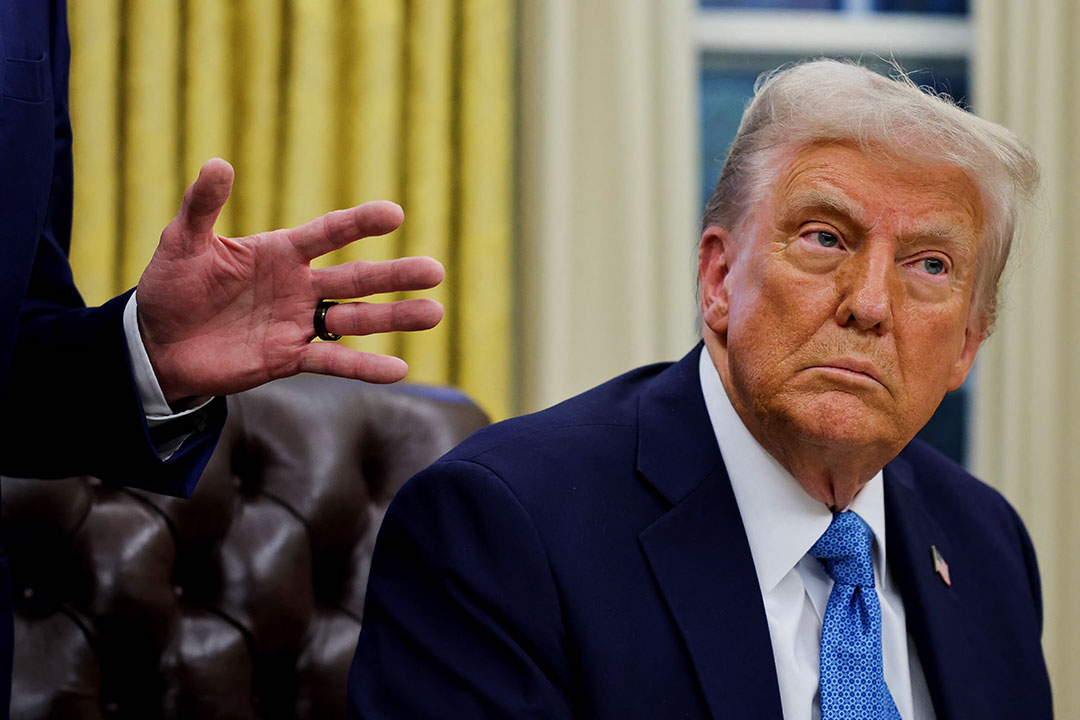
BRUSSELS — However US President Donald J. Trump’s latest push to end the war in Ukraine pans out, Europe fears the prospect of a deal — sooner or later — that will not punish or weaken Russia as its leaders had hoped, placing the continent’s security in greater jeopardy.
Europe may well even have to accept a growing economic partnership between Washington, its traditional protector in the North Atlantic Treaty Organization (NATO) alliance, and Moscow, which most European governments — and NATO itself — say is the greatest threat to European security.
Although Ukrainians and other Europeans managed to push back against parts of a 28-point US plan to end the fighting that was seen as heavily pro-Russian, any deal is still likely to carry major risks for the continent.
Yet Europe’s ability to influence a deal is limited, not least because it lacks the hard power to dictate terms.
It had no representatives at talks between US and Ukrainian officials in Florida over the weekend and will only watch from afar when US Special Envoy Steve Witkoff visits Russian President Vladimir Putin on Tuesday.
“I get the impression that, slowly, the awareness is sinking in that at some point there will be an ugly deal,” said Luuk van Middelaar, founding director of the Brussels Institute for Geopolitics think tank.
“Trump clearly wants a deal. What is very uncomfortable for the Europeans… is that he wants a deal according to great-power logic: ‘We’re the US, they are Russia, we are big powers.’”
RUBIO SEEKS TO REASSURE EUROPEANS
US Secretary of State Marco Rubio has said Europeans will be involved in discussions about the role of NATO and the European Union (EU) in any peace settlement.
But European diplomats take limited comfort from such reassurances. They say that just about every aspect of a deal would affect Europe — from potential territorial concessions to US-Russian economic cooperation.
The latest initiative has also triggered fresh European worries about the US commitment to NATO, which ranges from its nuclear umbrella through numerous weapons systems to tens of thousands of troops.
German Defense Minister Boris Pistorius said last week that Europeans no longer know “which alliances we will still be able to trust in future and which ones will be durable.”
Despite Mr. Trump’s previous criticism of NATO, he affirmed his commitment to the alliance and its Article 5 mutual defense clause in June in return for a pledge by Europeans to ramp up their defense spending.
But Mr. Rubio’s plans to skip a meeting of NATO foreign ministers in Brussels this week may only fan European jitters, amid fears that an eastern member of the alliance may be Moscow’s next target.
“Our intelligence services are telling us emphatically that Russia is at least keeping open the option of war against NATO. By 2029 at the latest,” German Foreign Minister Johann Wadephul said last week.
EUROPEANS FEAR TERRITORIAL CONCESSIONS WILL EMBOLDEN PUTIN
European officials say they see no sign that Mr. Putin wants to end his invasion of Ukraine. But if he does, they worry that any deal that does not respect Ukraine’s territorial integrity could embolden Russia to attack beyond its borders again.
Yet it now seems likely any peace accord would let Moscow at least keep control of Ukrainian land that it has taken by force, whether borders are formally changed or not.
The Trump administration has also not rejected out of hand Russian claims to the rest of the Donbas region that Moscow has been unable to capture after nearly four years of war.
Moreover, Mr. Trump and other US officials have made clear they see great opportunities for business deals with Moscow once the war is over.
European officials fear that ending Russia’s isolation from the Western economy will give Moscow billions of dollars to reconstitute its military.
“If Russia’s army is big, if their military budget is as big as it is right now, they will want to use it again,” EU Foreign Policy Chief Kaja Kallas told reporters on Monday.
EUROPE STRUGGLES TO EXERT LEVERAGE
But European leaders have struggled to exert a strong influence on any peace settlement, even though Europe has provided some €180 billion ($209.23 billion) in aid to Ukraine since Russia’s invasion in February 2022.
The EU has a big potential bargaining chip in the form of Russian assets frozen in the bloc. But EU leaders have so far failed to agree on a proposal to use the assets to fund a €140-billion loan to Ukraine that would keep Kyiv afloat and in the fight for the next two years.
To try to show they can bring hard power to bear, a “coalition of the willing” led by France and Britain has pledged to deploy a “reassurance force” as part of postwar security guarantees to Ukraine.
Russia has rejected such a force. But even if it did deploy, it would be modest in size, intended to bolster Kyiv’s forces rather than protect Ukraine on its own, and it could only work with US support.
“The Europeans now are paying the price for not having invested in military capabilities over the last years,” said Claudia Major, senior vice-president for transatlantic security at the German Marshall Fund of the United States think tank.
“The Europeans are not at the table. Because, to quote Trump, they don’t have the cards,” she said, referring to the US President’s put-down of Ukrainian President Volodymyr Zelensky in February. ($1 = 0.8603 euros). — Reuters