Surging fuel prices seen driving demand for EVs
By Sheldeen Joy Talavera, Reporter
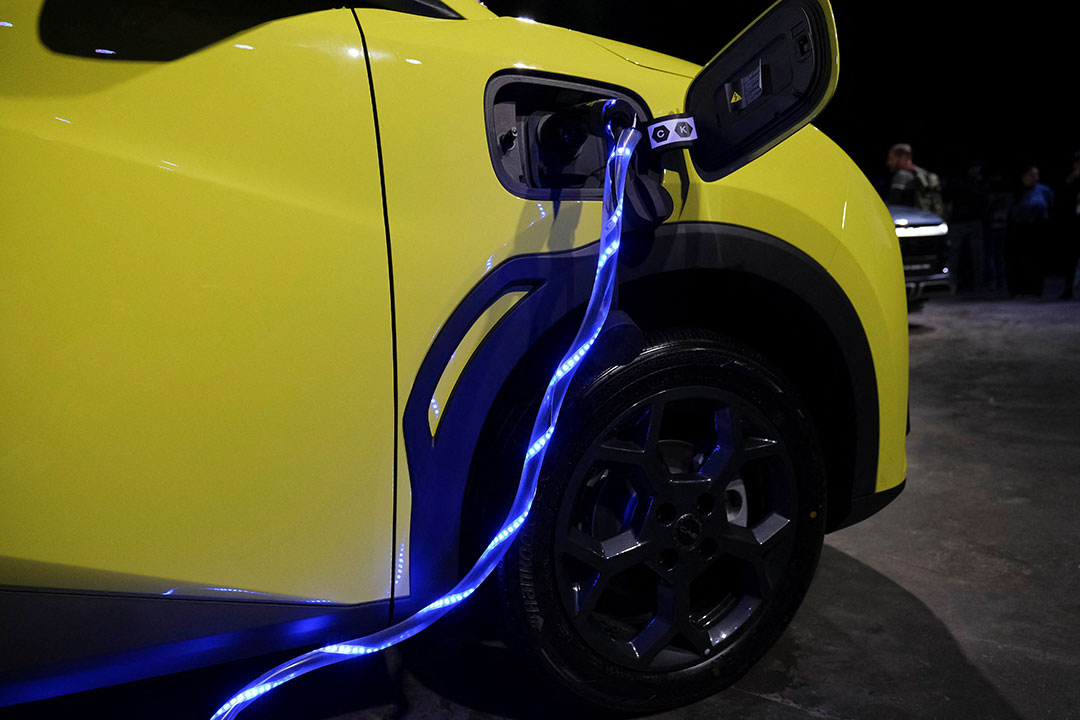
SOARING FUEL COSTS are expected to further accelerate demand for electric vehicles (EV) in the Philippines this year, with sales projected to post double-digit growth, analysts said.
Patrick T. Aquino, director of the Department of Energy’s (DoE) Energy Utilization Management Bureau, said EV sales are expected to grow by double digits to over 40,000 this year.
“Given the developments, we’re looking at it [and it will] definitely [be] higher than 40,000,” Mr. Aquino told BusinessWorld.
Citing DoE data, he said sales of EVs and light EVs reached around 40,000 last year.
According to a joint report by the Chamber of Automotive Manufacturers of the Philippines, Inc. and Truck Manufacturers Association, EV sales reached 32,489 units in 2025, which accounted for 7.01% of total auto sales.
Mr. Aquino said EV dealers are already seeing “a lot of foot traffic.”
Edmund A. Araga, president of the Asian Federation of Electric Vehicle Association and former president of the Electric Vehicle Association of the Philippines, said that EV sales are projected to exceed last year’s sales.
“We are projecting that we will surpass last year’s registered EVs of about 45,000 as reported by LTO (Land Transportation Office) by more than 10-15% as interested consumers are now being felt by our members through inquiries and reservations,” Mr. Araga told BusinessWorld.
The government is expecting the surge in EV sales this year will help achieve the national target of having 100,000 EV registrations by 2028.
Since the enactment of the Electric Vehicle Industry Development Act in 2022, the Philippines has sought to promote the development and adoption of EVs by mandating a higher share of EVs in corporate and government fleets.
Under the Comprehensive Roadmap for the Electric Vehicle Industry, the business-as-usual scenario target is a 10% EV fleet share by 2040, while it sets a clean energy scenario target of at least 50%.
Before the Iran war, the DoE had calculated that fuel costs for a conventional car averaged about P5 per kilometer (km), compared with roughly P1.75 per km for an electric vehicle.
Energy Secretary Sharon S. Garin earlier said that EVs are cheaper to operate compared with fuel-powered cars because electricity costs rise less sharply than fuel prices.
“We only use 3% of diesel on our electricity. The other fuels like coal and gas are affected because of the transportation and logistics costs, but not in proportion to the increase [in fuel prices] so it won’t increase as much,” she said.
“Actually, there should be a major campaign already in the Philippines for electric vehicles and hybrid with what we’re experiencing,” she added.
BETTER PUBLIC TRANSPORTATION
Nigel Paul C. Villarete, a senior adviser on public-private partnerships at the technical advisory group Libra Konsult, said the heightened interest in EVs is already expected since fuel is the largest component of the operational costs of running private cars.
“Electric vehicles are ‘relatively new’ so rising fuel costs would indeed stoke the interest of those who are buying new cars,” Mr. Villarete told BusinessWorld.
Since not everyone can afford to buy an electric car, analysts said the current situation highlights the need for better public transportation.
“[Public transportation] will always be the more efficient and more effective mode of mobility compared with private car use which, among mobility planners and managers, is the most wasteful, both in terms of space needed and money used,” Mr. Villarete said.
He said that private car use comes at a high economic cost compared with the far more efficient public transport system.
“But we live in a capitalistic society where the private (sector) wants to dictate over public good, so what the government has to ensure is the availability of the more efficient and cost-effective alternative in the hope of contributing more to national economic benefits,” he said.
Rene S. Santiago, an international consultant on transport development and former president of the Transportation Science Society of the Philippines, said rising fuel prices will widen the advantage of EVs and hybrids over traditional or internal combustion engine vehicles.
“Public transport is another universe altogether, weakened by bad regulation and poor execution of the PUVMP (Public Utility Vehicle Modernization Program) such that shifting to EVs is not on the table,” Mr. Santiago told BusinessWorld.