Manila urged to protest China’s ‘harassment’ of PHL boats near Scarborough
By Kenneth Christiane L. Basilio, Reporter
THE Philippine government should file a diplomatic protest against China after its maritime forces harassed Filipino fishermen near the disputed Scarborough Shoal on Monday, a civil society group said on Wednesday.
The coercive actions of Chinese navy and coast guard vessels within the Philippines’ exclusive economic zone pose the biggest threat to the lives and livelihoods of Filipino fishermen, Rafaela David, a co-convener of South China Sea interest group Atin Ito, said.
“No amount of drama and propaganda can conceal the true nature of a foreign aggressor in our own seas,” she said in a statement. “China’s latest harassment of fishers who are simply trying to make an honest living is proof of this.”
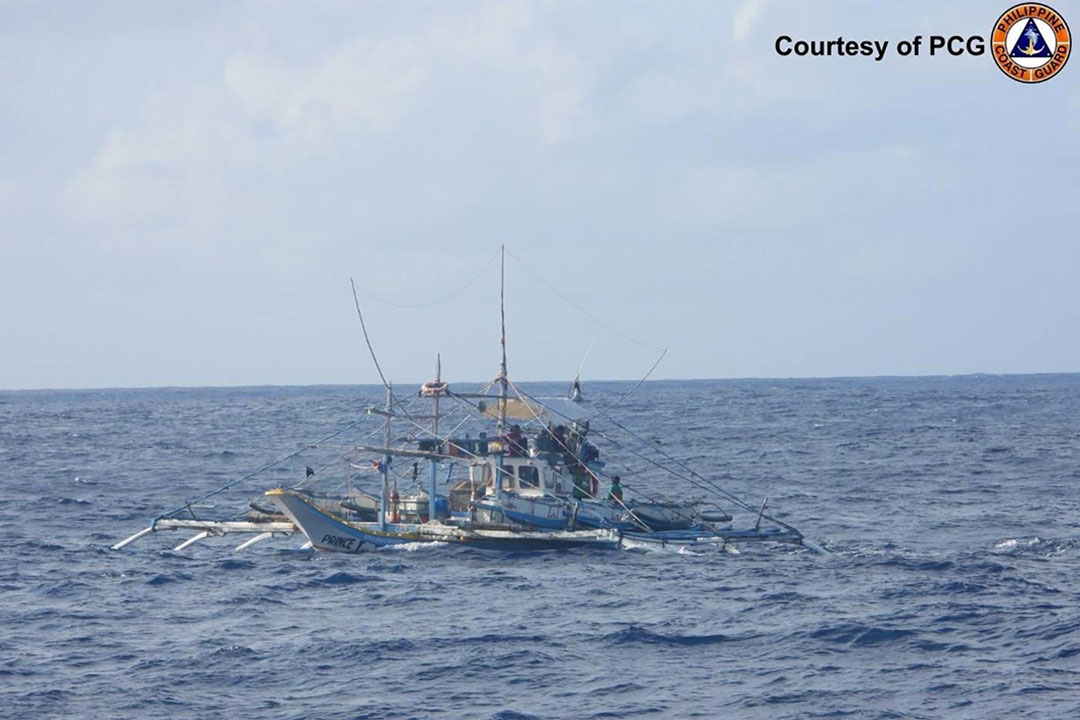
Manila’s coast guard on Tuesday said a Philippine fishing vessel was harassed by China’s navy and coast guard near the contested Scarborough Shoal, where the Chinese ships blared loud sirens and approached it closely in an apparent attempt to block its route going there.
Scarborough, known as Panatag in the Philippines and Huangyan Dao in China, is claimed by both nations. Chinese vessels have maintained control of the feature since 2012 and have barred Filipino fishermen from access. The shoal is prized for its rich marine resources and strategic position near major shipping lanes.
“We urge the Department of Foreign Affairs to lodge a strong diplomatic protest over this latest incident,” said Ms. David.
“Instead of concocting drama and propaganda, the Chinese Embassy in Manila would do better to explain why China continues to harass Filipino fishers and intrude into waters that are indisputably ours,” she added.
In response, the Chinese Embassy in Manila affirmed its commitment to resolve disputes through dialogue.
“China is determined to defend its territorial sovereignty and maritime rights and interests,” it said in a Viber message. “At the same time, China has always been committed to resolving the maritime territorial and delimitation disputes through negotiation and consultation.”
In a separate statement, Party-list Rep. Leila M. de Lima criticized the Chinese embassy for what she described as attempts to whitewash the incident and for blaming the Philippines for heightening tensions in the waterway.
“It might as well stop pretending to be a diplomatic mission and convert itself into just another Chinese troll farm,” she said.
She also said the Philippines has no overlapping maritime zones with China, noting the closest Chinese landmass is Hainan island, which lies about 900 kilometers from Palawan.
“The problem from the very start is China’s nine-dash line claim,” said Ms. De Lima. Manila is at odds with Beijing over the South China Sea, stemming from a 1940s dotted line map that claims almost the entirety of the waterway. A United Nations-backed arbitral tribunal ruled in 2016 that China’s claim is illegal.
The embassy rejected Ms. De Lima’s claims, saying that China has “never claimed” every feature within the South China Sea.
“The Chinese government has stated on many occasions that China has territorial sovereignty and maritime rights and interests in the South China Sea,” it said in a statement, citing its claims over some contested features in the waterway.
“China has historic rights in the South China Sea,” it said.
Ms. De Lima said that China has also concealed its “history of aggression” in the disputed Spratly Islands and Scarborough Shoal in its claims of provocation from the Philippines.
“China has selective amnesia about its island-building in the Spratly Islands,” she said. “China now has seven military outposts in the area which are the largest among claimant countries.”
It has also built man-made islands featuring runways, hangars, radar systems and ports on numerous submerged features in the strategic waterway to strengthen its naval presence in the resource-rich waters.
The Chinese Embassy in Manila responded that it was the Philippines that had “repeatedly intruded” in the Spratlys, saying that it was Filipino personnel that had harassed Chinese fishers.
“Philippine armed personnel often use excessive force against Chinese fishermen in utter disregard of the safety of their lives,” it said.