

Home Blog Page 9673

IdeaSpace launches Opportunity Fund for Philippine startups

Philippine start-up accelerator IdeaSpace has formally launched an Opportunity Fund to invest in startups within and outside of the IdeaSpace portfolio. The Opportunity Fund aims to cater to early stage to pre-series A startups, particularly to founders who may be looking for funding to help make key business and strategic decisions.

IdeaSpace is a non-profit organization supporting early-stage technology entrepreneurship in the Philippines. To date, IdeaSpace has mentored and supported 91 startups under its incubation and acceleration program and has invested over P200 million worth of support into the Philippine startup ecosystem.

IdeaSpace President Butch Meily sees the Opportunity Fund as a vehicle for IdeaSpace to support founders and startups as they work to build stable, scalable, and sustainable businesses.

“We started the Opportunity Fund with the support of our Chairman, Manuel V. Pangilinan, to widen our net and to find dynamic, investment-worthy startups within and beyond the IdeaSpace ecosystem and to earn additional revenues to support IdeaSpace in the future,” shares Meily.

During the early stages of its Opportunity Fund, IdeaSpace first invested in Coins.ph for P1 million, eventually netting a 5x return after the startup was acquired by Indonesian tech platform provider Go-Jek. Since that initial investment, IdeaSpace has deployed its resources to its portfolio startups, which include 1Export, Experience Philippines, Cocotel, Airship, TimeFree Innovations, and to startups outside of the IdeaSpace network such as Acudeen, and Qwikwire,

“Our initial investment in Coins.ph showed us that there is another way for us to potentially support startups in their entrepreneurial journey,” noted IdeaSpace Executive Director Diane Eustaquio. “Not all founders go into our acceleration program and there’s still a lot of talent and leadership potential in the ecosystem. The Opportunity Fund is a way for us to support those founders and through our investment, show them that they’re on the right track.”

The accelerator is now looking for startups to invest in through its Opportunity Fund, as part of its efforts to grow its own resources while supporting founders as they pursue technopreneurship.

IdeaSpace evaluates startups in areas such as business model, traction, financials, and team competencies. With the Opportunity Fund, IdeaSpace hopes to help startups secure the resources they need to grow their business.

“IdeaSpace is looking for teams that have proven their ability to execute, their commitment to building and growing their startup, their ability to secure and keep business, and their ability to manage their resources,” shared Meily. “We are hoping that with the Opportunity Fund, we can bring the attention of more corporations, financial institutions, and investors to more Philippine startups that can take on larger, more long-term investments, be it through business partnerships or through additional funding.”

Lockdown may push growth below 6%

By Luz Wendy T. Noble
Reporter

MOODY’S Investors Service slashed its economic growth outlook for the Philippines to below six percent this year, factoring in the impact of the Luzon lockdown and the rising number of coronavirus disease 2019 (COVID-19) cases.

In a report sent to reporters on Tuesday, the debt watcher further trimmed its 2020 forecast for the Philippine economy to 5.4%, from the 6.1% penciled in last February and the 6.2% estimate given last year.

If realized, Moody’s latest estimate would be slower than the 5.9% economic expansion recorded in 2019.

This would also be below the 6.5%-7.5% target set by the government, although Socioeconomic Planning Secretary Ernesto M. Pernia has said up to 1.2 percentage points could be shaved off this year’s gross domestic product (GDP) growth if the coronavirus outbreak continues until yearend.

Moody’s said rising global recession risks due to the pandemic prompted a downgrade of its growth forecast for emerging Asia to 4.7%. It also lowered growth outlook for China (4.8%), Thailand (1.8%), Malaysia (3%), and Vietnam (6%).

“Our new baseline assumes a pullback in consumption and ongoing disruption to production and supply chains in the first half of 2020, followed by a recovery in the second half,” Moody’s said in a report.

“Also, rising rates of infection would drive global sentiment even lower, heightening asset price volatility, and tightening financing conditions, which could snowball into deeper economic contraction,” it added.

Sought for comment, Christian de Guzman, senior vice-president at the Sovereign Risk Group of Moody’s said the downgraded outlook for Philippine growth factored in the lockdown of the main island of Luzon, which began on Monday.

“The main factors behind the revision of the Philippine forecast are downward shifts in our view of external demand, the rising rate of infection domestically and the imposition of measures to contain the outbreak, including the community quarantine on Metro Manila, which has since been expanded to Luzon,” Mr. De Guzman said in an e-mailed response to BusinessWorld.

The Health department on Tuesday afternoon reported 45 new confirmed cases of coronavirus, bringing the total to 187.

The government on Monday placed the entire island of Luzon under “enhanced community quarantine” until April 12. During this period, classes and public transportation are suspended, while businesses are asked to stop operations or implement work-from-home schemes. Malls in Luzon have also been shut down.

Mr. De Guzman noted that the month-long lockdown will dampen consumer spending.

“The Philippine economy, which is largely dependent on consumption, is susceptible to swings in confidence, and the outbreak and associated containment measures have thus far served to dampen the mood of Filipino consumers and their appetite to go to shopping malls or eat out, for example, thus weighing on the outlook for the retail sector,” he said.

Mr. De Guzman said limited government operations may hinder the Duterte administration’s ability to fulfill spending commitments through its “Build, Build, Build” infrastructure program.

Higher government spending is seen to help cushion the effects of the COVID-19 on the Philippine economy.

“This casts into doubt on the ability of the government to execute comprehensively its budgeted plans, which continued an emphasis on ambitious infrastructure development and which we had previously cited as a buffer against the economic fallout from the coronavirus outbreak,” he said.

Last week, Moody’s Analytics, a unit of Moody’s which focuses on non-rating activities, lowered its growth forecast for the country to 4.9% due to expected losses from service exports and lower remittances.

For 2021, Moody’s upgraded its outlook for the Philippines to 6.5% from a previous estimate of 6.4%.

“Our upward revision for 2021 assumes a normalization in economic activity next year, which should lead to a mild bump in growth due to base effects, i.e., an artificially large increase from depressed levels from the first half of this year,” Mr. De Guzman said.

PHL becomes 1st country to shut financial markets

By Denise A. Valdez
Reporter

THE Philippines on Tuesday became the first country to shut all financial markets until further notice, amid the implementation of a lockdown in Luzon aimed at curbing the spread of the coronavirus disease 2019 (COVID-19).

The Philippine Stock Exchange, Inc. (PSE) is now asking the government to allow the stock market to reopen.

PSE President and Chief Executive Officer Ramon S. Monzon said a position paper has been submitted to the Inter-Agency Task Force (IATF) to allow the resumption of trading at the local bourse.

The IATF was scheduled to hold a meeting on Tuesday afternoon.

“I think it was just an oversight that the capital markets were not included in the exemptions… That’s why we are making a presentation to them…to convince them how important it is to keep the capital markets open,” he told Bloomberg Markets on Tuesday.

Currency and bond trading were also suspended on Tuesday, but National Treasurer Rosalia V. de Leon said the suspension will be lifted once the IATF exempts fixed-income traders from the home quarantine imposed in Luzon.

“Yes, (suspended) today until IATF gives exemption to fixed income, hopefully (Tuesday),” Ms. De Leon said in a mobile phone message yesterday.

President Rodrigo R. Duterte announced a Luzon-wide enhanced community quarantine Monday night — which suspends all public transport facilities and requires a “strict home quarantine” in all households, among others.

“I think it was the most considerate and humane thing to do given the circumstances (particularly since public transportation is not available),” PNB Securities, Inc. President Manuel Antonio G. Lisbona said in a mobile message.

Mr. Lisbona said the closure of the market may intensify selling by foreign investors. “We still have foreign funds who want to exit the market and who are unable to do so because the market is closed. When the market reopens, the more they will accelerate selling because they are no longer sure how long the market will stay open,” he said.

Philstocks Financial, Inc. Senior Research Analyst Japhet Louis O. Tantiangco shared the same sentiment: “Investor confidence may take a hit which in turn could lead to more foreign selling once the market reopens.

While the trading suspension may serve as a “breather” after the recent bloodbath, Mr. Tantiangco said investors are now “forced to hold their positions for an uncertain period of time, denying the opportunity for those who want to sell stocks for cash to be utilized in other financial markets.”

PNB Securities’ Mr. Lisbona said the PSE is a good psychological barometer on the country’s economic condition, hence the value of having active trading during a crisis.

“If the market is trending up, it creates optimism that oftentimes translates into increased spending which has a positive and real effect on the economy,” he said.

As the market is on a decline, Mr. Lisbona said it is now dampening sentiment and wiping out billions in value. “This is why all markets are declining… Investors are not sure if the markets will stay open, hence they will liquidate their positions at any price.”

Meanwhile, the Bankers Association of the Philippines (BAP) said trading, clearing and settlement of foreign exchange and fixed-income transactions are also suspended until further notice. This as the services arm for trading (Philippine Dealing & Exchange Corp., PDEx), securities (Philippine Depository & Trust Corp., PDTC) and payment and transfer (Philippine Securities Settlement Corp., PSSC) were not exempted from the home quarantine.

“Due to the non-inclusion of PSSC, PDEx and PDTC in the lists of exemptions from strict home quarantine and the PSSC unable to operate the settlement functions remotely, the trading, clearing and settlement of FX and FI transactions are suspended on March 17, 2020 until further notice,” the BAP notice read.

The BTr also moved yesterday’s 7-year T-bond auction to next week, March 24, as well as postponed the first quarterly draw of Premyo bonds to April 27 from the initial schedule of March 18, Wednesday, following the lockdown announcement.

Meanwhile, Bangko Sentral ng Pilipinas (BSP) Payments and Settlements office said its Philippine Payment and Settlement System (PhilPaSS) will operate from 9 a.m. to 3 p.m.

This will include retail transactions such as transactions via “automated teller machines (ATM), automated clearing houses (PESONet and InstaPay), checks and urgent fund transfers requested by banks for corporates, as well as trading with the BSP Financial Market Operations Sub Sector, if any.” — with a report from Beatrice M. Laforga

Government unveils P27-billion stimulus, but some say it’s not enough

THE GOVERNMENT has rolled out P27.1 billion in funds to help contain the spread of coronavirus disease 2019 (COVID-19) and aid affected sectors, with $1 billion more in financing under negotiation, the Department of Finance (DoF) said.

In a statement late Monday, Finance Secretary Carlos G. Dominguez said the Economic Development Cluster (EDC), which he chairs, agreed to roll out the funds to support those in the front line of battling the disease and help ease the burden on affected people and sectors.

“As directed by President [Rodrigo R.] Duterte, the government will provide targeted and direct programs to guarantee that benefits will go to our workers and other affected sectors. We have enough but limited resources, so our job is to make sure that we have sufficient funds for programs mitigating the adverse effects of COVID-19 on our economy,” Mr. Dominguez was quoted as saying.

Mr. Dominguez said separately on Tuesday that authorities are negotiating a $1-billion loan for additional funding as the government ramps up efforts to contain the spread of the virus.

“Our negotiations for $1-billion loans for combating COVID is still in process,” he told reporters via Viber, adding that the source of funds — whether this will be a partner country or a multilateral lender — will be disclosed once negotiations concluded.

UnionBank of the Philippines, Inc. Chief Economist Ruben Carlo O. Asuncion said “doing simple math and using 2019 GDP estimates at around $350 billion (2019 estimate) or P17.5 trillion, this P27.1-billion economic stimulus package is nowhere near their (the government’s) own estimated GDP losses.”

The additional P27.1-billion funding package translates to 0.15% of the country’s gross domestic product (GDP), which compares to an initial estimate of a 0.5%-1% drop in 2020 GDP growth by the National Economic and Development Authority (NEDA), assuming that disruptions due to the outbreak will last until June.

NEDA chief Ernesto M. Pernia said they are still working on updated projections for the economic impact of the “enhanced community quarantine” imposed on Luzon that started Tuesday.

SECTORS SUPPORTED
Of the P27.1-billion package, 51.66% or P14 billion was allotted to support the tourism sector. Mr. Dominguez said so far, this was the sector “most affected” by disruptions caused by the virus, like travel bans and canceled flights.

The package also includes P3.1 billion in additional funding for efforts to slow the spread of COVID-19 and buy test kits. The funds were sourced from Philippine Amusement and Gaming Corp., Philippine Charity Sweepstakes Office and the Asian Development Bank.

Some P3 billion from Technical Education and Skills Development Authority’s Scholarship Programs will fund the “upskilling and reskilling” of temporarily displaced workers, while P2.8 billion from the Agriculture department’s Survival and Recovery Aid Program will provide zero-interest loans to small farmers and fisherfolk.

“This initiative includes a one-year moratorium without interest on payments of outstanding loan obligations of small farmers and fisherfolk borrowers under the Agriculture-Agricultural Credit Policy Council Credit Program amounting to P2.03 billion,” the statement said.

The Labor department has also allotted P2 billion for its social protection programs for “vulnerable” workers, which will be used for wage subsidy or financial support for affected workers and establishments.

The package also includes P1.2 billion from Social Security System (SSS) to cover unemployment benefits and another P1 billion for loans to affected micro, small, and medium enterprises (MSMEs).

Leonardo A. Lanzona, Jr., professor at the Department of Economics of the Ateneo de Manila University, said the majority of these funds should be used to improve the country’s health system and the government’s response to the spread of the disease.

“Now that we have lockdown, the virus will be dormant but will spring back to life as soon as this self-quarantine ends. What we are doing essentially is to prevent hospitals from being overwhelmed. This problem will be prevalent because this virus is endemic and will stay with us for years to come. But so far, I have not heard anything about enhancing our hospitals,” Mr. Lanzona said in an e-mail response.

UnionBank’s Mr. Asuncion said the funding “may not be enough” to boost the economy but “at this juncture, P27.1 billion is better than no stimulus package at all.”

He noted that the P108-billion economic rescue package proposed by Marikina Representative Stella Luz A. Quimbo could help pump-prime the economy. The proposal allots P43 billion for tourism sector, P15 billion for displaced workers and P50 billion for assistance to affected firms.

Ateneo’s Mr. Lanzona also warned that the longer the lockdown, “the deeper…the recession.”

Mr. Duterte on Monday evening placed the entire Luzon under “enhanced community quarantine” until April 12 to slow the spread of COVID-19 by implementing strict home quarantine and limiting movement to access to basic necessities and health services.

The order suspended classes, public transportation and work in government offices and allowed some to operate with a skeletal force. It also asked the private sector and establishments to halt operations or adopt work from home policies, but exempted those providing basic necessities from the quarantine, including groceries, stores, pharmacies, clinics, hospitals, restaurants with delivery service, banks, power, water and telecommunications, among others.

There were 187 confirmed COVID-19 cases in the country and 12 deaths as of Monday. — Beatrice M. Laforga

More private companies heed call for support versus virus

By Denise A. Valdez, Reporter

THE Philippines’ top companies are accepting the challenge of President Rodrigo R. Duterte to support the country in efforts to contain the coronavirus disease 2019 (COVID-19).

In his speech Monday night, Mr. Duterte called on the private sector, specifically “industry players, business leaders, foundations and the like” to “combine our efforts in fighting COVID-19 as one nation.”

He also mentioned that San Miguel Corp. had committed to provide food to public hospitals and select government centers and donate sanitizing supplies to local governments.

After his speech, the SM Group, Ayala Corp. (AC) and Dennis A. Uy’s Udenna Corp. announced they were also giving assistance to the health sector to help in fighting the spread of the virus.

The SM Group of the Sy family said Monday night it was allocating P100 million for its support program, which will be used by the Philippine General Hospital (PGH), the Research Institute for Tropical Management (RITM) and other hospitals in procuring urgent needs such as alcohol and medical supplies.

It is also talking to the Manila Healthtek, Inc. to buy and distribute for free 20,000 test kits that were locally developed by scientists from the University of the Philippines. Once approved, these will be given to local government hospitals for use.

Last week, the PGH and the University of the Philippines College of Medicine called for masks and alcohol donations to support hospital staff fighting the COVID-19.

“To ensure the safety of medical frontliners, SM is bringing in personal protective equipment (PPE) — face masks, gowns, visors, hoods, gloves, and shoe covers, as well as urgent medical supplies to help government hospitals who badly need them,” SM Prime Holdings, Inc. Executive Committee Chairman Hans T. Sy said in a statement.

SM is also coordinating with the UP Medical Foundation, Inc. to provide PPEs and medical supplies to its network of hospitals

Similarly, AC’s Ayala Healthcare Holdings, Inc. (AC Health), through the Ayala Foundation, started distributing more than 10,000 pieces of N95 masks to health institutions and various channels of the Department of Health (DoH) on Monday.

Among the hospitals that received the masks are PGH and RITM, along with San Lazaro Hospital, East Avenue Medical Center, Lung Center of the Philippines, Philippine Heart Center, National Kidney and Transplant Institute.

“Amidst the challenges of this COVID-19 pandemic, it’s important for us to support our medical professionals and frontliners,” AC Health President and Chief Executive Officer Paolo Maximo F. Borromeo said in a statement.

Udenna Corp.’s social responsibility arm Udenna Foundation also said it was working with South Korea’s MyongJi Hospital to deliver 1,000 COVID-19 diagnostic kits to the DoH last week. The company noted MyongJi is one of the first hospitals in South Korea that were able to treat confirmed cases of COVID-19.

“These are very somber times… We all have a role, and this is our small share to help,” Mr. Uy was quoted in a statement as saying. “Increasing testing capacity, training health workers, and urging people to be smart and informed can reverse the trajectory of this epidemic,” MyongJi Hospital Chairman Wang Jun Lee added.

Aside from companies, government-owned and -controlled Philippine Amusement and Gaming Corp. (Pagcor) also donated P2.5 billion to the national government for the COVID-19 containment efforts. It said the money will be used to procure PPEs for frontliners, finance additional operating expenses at the DoH’s Bureau of Quarantine and support tests conducted by the RITM.

“Containing the spread of the virus at the community level is very important as this will further curb spread of the disease. But many of our public hospitals and healthcare facilities are not fully equipped to handle a pandemic of this magnitude. Hence, the need for all of us to work together,” Pagcor Chairman and Chief Executive Officer Andrea D. Domingo said in a statement.

The latest tally of the DoH as of Monday was 148 confirmed cases of COVID-19 in the Philippines. The death toll reached 12 while one Filipino has recovered.

Airlines bracing for long-term impact of COVID-19 on business

By Arjay L. Balinbin, Reporter

BUDGET carrier Cebu Pacific said the coronavirus disease 2019 (COVID-19) pandemic will continue to impact its operations in the coming months, even after the month-long enhanced community lockdown being imposed over the entire Luzon island.

Cebu Pacific Corporate Communications Director Ma. Rosario L. Lagamon announced late Monday night that the low-cost airline was slashing “over 150” jobs as it foresees “less flights and reduced operations” in the coming months due to the pandemic.

Also on Monday, President Rodrigo R. Duterte ordered the lockdown of Luzon to contain the spread of the COVID-19, suspending work and public transportation and regulating food and health services.

Guidelines from the Transportation department said airport operation will be limited to outgoing flights carrying foreigners and tourists. Filipinos are not allowed to fly out of the Philippines.

This was followed by the announcement of Philippine Airlines (PAL) on Tuesday that all its domestic flights were canceled “immediately” until April 12, 2020. The flag carrier will resume its domestic flights on April 13, 2020.

Cebu Pacific, operated by Cebu Air, Inc., said in a statement: “Over the past several days, we have seen a rapid escalation of developments surrounding the spread of the COVID-19. Since the situation started progressing last January, the aviation industry — including Cebu Pacific — has been hurting from the impact of COVID-19. We have had to cancel flights to key international markets, and more recently, majority of our domestic operations due to community quarantines and air travel restrictions.”

“We considerably reduced capacity on other routes we are still able to fly due to the drop in passenger volume. Some passengers booked for flights that have not been affected by any restrictions since late January 2020 have opted to forego travel due to uncertainties. This unprecedented situation with COVID-19 will continue to impact Cebu Pacific for months ahead,” it added.

The budget carrier said it initially implemented austerity measures, which include delaying non-critical projects and programs, a hiring freeze, deferment of some training programs, cancellation of non-essential activities, restricting overtime, and pay cuts by its executives.

“However, as we foresee less flights and reduced operations in the coming months, we will have less requirement for flying staff,” it added.

It said the management had decided to let go of newly hired flight attendants as reduced flights entail “less opportunity for them to gain in-flight experience.”

The company assured its more than 150 new employees, whose last day of work will be on March 19, 2020, that they will be prioritized in the hiring once the business picks up.

PAL, operated by PAL Holdings, Inc., said it continues to operate international flights up to March 19, 2020.

PAL Spokesperson Cielo C. Villaluna said in a phone interview on Sunday that the flag carrier will continue to carry out cost control measures to stay afloat.

“We started with phase 1 which is business restructuring by implementing the voluntary and the involuntary retirement program,” she said.

PAL has cut about 300 jobs as a way to recover from its 2019 losses, which worsened in the first two months of 2020 due to the impact of the new virus on its operations.

The government said it would defer the collection of take-off, landing and parking fees from Philippine carriers as a form of relief from the pandemic.

In a phone message on Tuesday, Philippines AirAsia, Inc. Head of Communications David F. de Castro said: “We don’t have forecasts yet, but we are currently witnessing subdued demand for travel in some of our key markets; and as such, we are making changes to our network to reflect consumer demand.”

Entertainment in the time of COVID-19; Studios, networks release films and series online

WITH THE whole of Luzon, including Metro Manila, under quarantine — the government is asking people to stay at home to prevent the spread of COVID-19 — there’s not a lot to do while stuck at home aside from worrying. Fortunately, several studios and networks are either uploading full movies on YouTube for free or promoting their online portals to access full episodes of their series or films.

Regal Entertainment has been uploading several films from its archives starting March 11. It has so far uploaded seven movies, from Fly Me to the Moon (1988) by Mike Relon Makiling and starring Tito Sotto, Vic Sotto, and Joey de Leon, to Madonna: Ang Babaeng Ahas (1991) by Artemio O. Marquez and Mario O’Hara’s Sisa (1999). More films are set to premiere at later dates — Prinsipe Abante at Ang Lihim ng Ibong Adarna (1990) by Tony Cruz is set to premiere on March 25 while Kambal Dragon (1978) by Artemio O. Marquez is to premiere on March 22.

Other full-length films currently on the channel are My Other Woman (1990) by Maryo J. delos Reyes, Pintado (1999) by Baldo Marro, Diosa (1982) also by Maryo J. delos Reyes, Sanib (2003) by Celso ad Castillo, and Diary of Cristina Gascon (1982) by Joey Gosiengfiao.

TBA Studios has also been uploading films to YouTube since March 13 and its current “Full Movies” playlist has seven entries: Bliss (2017) by Jerrold Tarog, Matangtubig (2015) by Jet Leyco, Dormitoryo: Mga Walang Katapusang Kwarto (2017) by Emerson Reyes, Patintero: Ang Alamat ni Meng Patalo (2015) by Mihk Vergara, Water Lemon (2015) by Lemuel Lorca, Iisa (2015) by Chuck Gutierrez, and Gayuma (2015) by Cesar Hernando.

ABS-CBN’s streaming service, iWant TV, is also reiterating that it has a collection of “more than 1,000 movies” offered for free for a limited time, from “chick flicks to laugh-out-loud comedies and family dramas.”

Users can either visit iwant.ph or download the app on Google Play Store or Apple App Store.

Some of the films available on the service are comedian Vice Ganda’s films such as Gandarrapiddo: The Revenger Squad (2017), Beauty and the Bestie (2015), Super Parental Guardians (2016), Amazing Praybeyt Benjamin (2014), and Girl Boy Bakla Tomboy (2013).

Also available are Ai-Ai delas Alas’ Tanging Ina series, from 2003’s Tanging Ina to the most recent crossover film, Enteng ng Ina Mo from 2011.

Drama films such as No Other Woman (2011) by Ruel S. Bayani and One More Chance (2007) by Cathy Garcia-Molina are also on iWant.

Romantic films such as A Very Special Love (2008), also by Cathy Garcia-Molina, and Barcelona: A Love Untold (2016) by Olivia Lamasan are also available.

GMA Network is also offering catch-up episodes of its series for free on gmanetwork.com, from its currently airing series like Descendants of the Sun and Anak ni Waray, Anak ni Biday, to older series like The Millionaire’s Wife (2016), and Little Nanay (2015). — Zsarlene B. Chua

Banks ready to provide services, cash during ‘enhanced’ lockdown

Chuchi Fonacier
BSP Deputy Governor Chuchi G. Fonacier — PHOTO BY ASIA MICROFINANCE FORUM

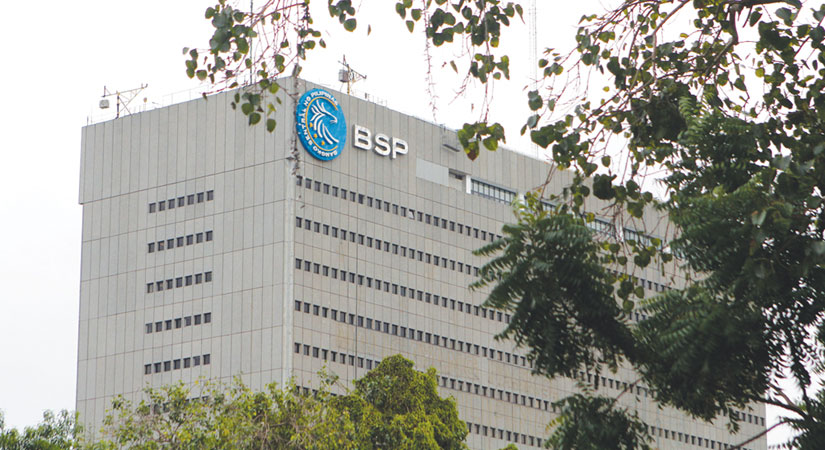
BANKS WILL CONTINUE to provide basic financial services amid the enhanced community quarantine in the whole of Luzon, a central bank official said, while assuring a bank run is unlikely even as people look to hold cash during the lockdown period.

Asked whether a bank run is possible amid a lockdown in the country’s capital, Bangko Sentral ng Pilipinas (BSP) Deputy Governor Chuchi G. Fonacier said in a text message: “Very unlikely. Banks are operating.”

“Banks are aware that basic banking services, ie., ATM (automated teller machine) services, withdrawals, deposits, should not be disrupted, mindful that they should also support the government’s enhanced community quarantine,” she said.

Banks are among the few establishments mandated to remain open during the enhanced community quarantine ordered by President Rodrigo R. Duterte effective Tuesday.

Bank runs happen when people rush to withdraw their money from lenders due to fear these financial institutions will run out of cash.

The BSP has assured over the weekend that banks have enough cash to service client requirements.

Asked when a bank run last occurred in the Philippines, Ms. Fonacier said: “Can’t recall as of now. Baka 70s pa (Maybe in the 70s).”

Sought for comment, Rizal Commercial Banking Corp. Chief Economist Michael L. Ricafort said the banking industry remains resilient, backed by strong capitalization well beyond regulatory standards.

“The local banking industry has also been resilient and robust in recent decades and performed relatively better compared to other countries in past economic cycles such as during the global recession more than a decade ago as well as in the years that followed,” Mr. Ricafort said.

The BSP has required banks to have business continuity plans (BCPs) to allow sufficient financial and human resources to address business disruptions caused by unforeseen events, including the coronavirus disease 2019 (COVID-19) pandemic.

In an earlier memorandum, Ms. Fonacier said BSP-supervised financial institutions and operators of payment systems should ensure that their employees will not be affected by COVID-19.

In response, banks have started flexible working arrangements, including skeletal work forces to address these risks while maintaining services for bank clients. ATM transactions as well as online banking is also an option for clients.

The BSP has also approved the grant of temporary regulatory and rediscounting relief measures for BSFIs due to COVID-19’s spread.

Banks may avail of these packages, which include among others, the suspension of penalties for delays in reports and for legal reserve deficiencies, staggered booking of allowance for credit losses, and the exclusion of the exposure of affected borrowers from the computation of past due loan ratios, among others. These requests by lenders will then be assessed by the BSP on a case-by-case basis.

COVID-19 cases in the country reached 142 as of March 16, with 12 deaths recorded. — L.W.T. Noble

Aboitiz group allocates P73B capex this year

ABOITIZ Equity Ventures, Inc. (AEV) is setting aside P73 billion in capital expenditures (capex) in 2020, with its power and infrastructure units getting the biggest share, the holding firm said on Tuesday.

This year’s allocation is nearly 38% higher than the P53 billion spent in 2019, it added.

“Learning from the challenges we have been experiencing in the past year, we will continue to adhere to global standards of operational excellence,” AEV President and Chief Executive Officer Sabin M. Aboitiz said in a statement.

Over half of the total capex amount, or P41 billion, is reserved to Aboitiz Power Corp., a 17% jump from the P35 billion it spent in 2019. About 80% of this allotment will be used for the completion of the power plant units of GNPower Dinginin Ltd. Co. and other new businesses.

With a P16-billion appropriation, Aboitiz InfraCapital, Inc. will set aside most of its budget for the construction of its water estates and its entry into airports and common tower businesses.

Last year, the infrastructure firm’s Davao-based project Apo Agua spent P3 billion. The project, once online, will supply 300 million liters of water per day to the Davao City Water District, servicing more than a million locals.

Meanwhile, Aboitiz Land will be using its P11-billion budget primarily for its land banking efforts to grow its property developments across the country.

Funds were also reserved for the expansion and operating expenses of Pilmico Food Group, with nearly P3 billion, and Union Bank of the Philippines, with around P2 billion.

AEV recently reported a 1% drop in net income to P22 billion in 2019, dragged down by its top contributing unit AboitizPower, which posted a 20% decrease in contribution to P13.3 billion.

The Aboitiz Group noted in its report to the Philippine Stock Exchange that it has a business continuity plan in place to stem the impact of the new coronavirus disease 2019 (COVID-19) pandemic. It has adopted travel, quarantine, and hygiene measures adhering to the guidelines set by the Department of Health and World Health Organization.

“The COVID-19 crisis created a lot of uncertainty but we believe the Philippine economy can be shielded from further disruptions if the government and private sector focus on areas of collaboration,” Mr. Aboitiz said. — Adam J. Ang

Virtual religious gatherings amidst COVID-19

RELIGIOUS groups are holding televised and online streaming worship services in response to the COVID-19 outbreak and the Luzon lockdown.

On March 16, the government placed Luzon under “enhanced community quarantine” which will run until April 12.

Four days before, Code Red Sublevel 2 was declared in Metro Manila. “Community quarantine” in the National Capital Region took effect on March 15.

In response to the government’s directives, the Catholic Bishops Conference of the Philippines (CBCP) president Romullo G. Valles issued a circular on March 13 saying that the CBCP is “obliged to cooperate and support all the precautionary measures that our health officials and government leaders offer us to keep our people safe and healthy.”

This allowed local Ordinaries to dispense the faithful from the Sunday and the Holy Days of Obligation. However, this does not excuse them from providing a platform to exercise their duties.

“Every diocese must therefore provide for the celebration of the Eucharist, other liturgical services and spiritual activities, transmitted live through the Internet, Television, or Radio. We should encourage the faithful to avail themselves of these and pray together in their homes as a family or in their small Christian communities (BECs),” Mr. Valles noted.

Sunday masses were celebrated via online streaming, radio, and television on March 14 and 15.

Eighty-six percent of the population of the Philippines is Roman Catholic according to the Asia Society.

LENT EVENTS CANCELED
In a Pastoral Statement of the Bishops of Metro Manila dated March 16, 2020, the bishops have decided on various points.

Firstly, mass celebrations are suspended until April 14. Secondly, religious activities during Holy Week — which falls on April 5 to 12 this year — are also canceled. (A list of online masses can be found on https://cbcpnews.net/cbcpnews/list-of-online-masses/)

“Since the dates for the Metro Manila Community Quarantine will coincide with the last three Sundays of Lent, and Holy Week, it would mean that the liturgical celebrations during those days, including Palm Sunday, the rest of the Holy Week and Easter Sunday will not be open to the public,” the Pastoral statement read. “There will be no public blessing of palms, Visita Iglesia, Siete Palabras, Good Friday procession and Easter Salubong.”

Lastly, the Pastoral letter called for church bells to be rung at noon and at 8 p.m. every day to call the faithful to pray the Oratio Imperata prayer to fight the virus; as well as the regular praying of the Angelus at noon and the family rosary in the evening.

INC AND JEHOVAH’S WITNESS
On March 14, Malacañang released a memorandum with guidelines on the month-long quarantine.

The memo states that “religious activities may continue so long as strict social distancing, defined as the strict maintenance of a distance of at least one meter radius between and among those attending, is maintained during the entirety of the event.”

In a phone interview with BusinessWorld, Iglesia Ni Cristo spokesman Bro. Edwil Zabala was unable to comment when asked about how the congregation will adjust to the prohibition of mass gatherings. Iglesia ni Cristo services were held as usual this past Sunday, albeit with the practice of social distancing.

Meanwhile, congregations of Jehovah’s Witness have been abiding by the directives by providing online streaming platforms.

“If it’s not possible for us to meet together as a congregation then we do have a live streaming arrangement,” Jehovah Witness spokesman Dean Jacek told BusinessWorld in a phone interview.

Each congregation is also given a schedule of the Bible material that will be discussed each week.

“[If] it’s not possible to meet as a group and they have that schedule, and then we advise families to go over the material in their own home. We also have delayed streaming [on the internet] for certain programs if somebody is not able to tune in,” Mr. Jacek said. — Michelle Anne P. Soliman

BSP to boost oversight of payment systems

THE CENTRAL BANK released an exposure draft of the circular on payment systems. — BW FILE PHOTO

THE BANGKO SENTRAL ng Pilipinas (BSP) is looking to boost its oversight of payment systems under a draft circular which will establish a framework for the sector.

“The proposed framework provides the BSP’s approach to discharging its mandate as overseer of payment systems pursuant to Republic Act (RA) No. 11127 or the National Payment Systems Act (NPSA),” the central bank said in a statement late Monday.

The draft framework now open for industry comments provides that the BSP may issue policies to boost “innovative” payment solutions while mitigating risks associated with the use of these systems.

“These policies shall include principles and requirement on various areas, such as, but not limited to governance, risk management, consumer protection, data confidentiality, information security, AML/CFT (anti-money laundering/ counter-terrorism financing), and pricing mechanism,” the draft circular said.

The draft rules also seek to establish a Payment System Management Body (PSMB) to organize, manage, and governing the participants in the payment system “to ensure that transactions are “safely and efficiently cleared and settled with finality.” These PSMBs will be accredited by the central bank.

According to the draft circular, among the central bank’s main functions as overseer is to monitor existing and incoming payment systems.

With this, operators of payment systems will be required to register with the BSP and to submit key reports, in accordance with the reporting governance framework of the central bank.

“The Bangko Sentral may accredit several PSMBs or revoke the accreditation of a PSMB as it deems necessary,” it said.

For its part, the BSP can conduct on-site inspections to verify arrangements done by payment systems and their compliance with existing policies.

Likewise, the framework, if implemented, will allow BSP to impose internationally accepted standards and practices and to categorize payment systems into large value payment systems or retail payment systems, which will include those involved in purchases of goods and services, domestic remittances, or fund transfers.

“The Bangko Sentral shall designate a payment system which poses or has the potential to pose systemic risk, or if designation is deemed necessary to preserve public interest. Designation shall conform to the criteria and the process provided in this framework,” it said. — LWTN

Pangilinan says group’s staff told to work from home

BUSINESSMAN Manuel V. Pangilinan assured President Rodrigo R. Duterte that the companies he leads under the so-called MVP Group of Companies are helping their employees cope with the coronavirus disease 2019 (COVID-19) pandemic that has forced his government to declare a Luzon-wide lockdown.

“Heeding the President’s call tonight for business — large or small — to rise to the challenge posed by Covid-19, the MVP Group is one with the President in coping with this virus. We are helping our employees by maintaining their salaries and benefits during the crisis,” Mr. Pangilinan said in a social media post late Monday night.

He added: “We have asked them to work from home. We continue to serve our customers with the service they need at this time, including the provision of relevant financing, when required.”

Mr. Duterte, in his message to the public on Monday evening, appealed to businessmen to help their workers.

“You might be able really to alleviate the situation by just understanding also the plight of the workers who are not working now and lawfully not really in a position to demand,” he said.

The President ordered that Luzon be placed under “enhanced community quarantine” to stop the outbreak that has killed at least 12 people and sickened 128 more in the Philippines.

The virus that the World Health Organization has called a pandemic has killed more than 6,500 people and sickened about 170,000 more worldwide, mostly in China.

The Trade department said supermarkets, drugstores and banks would remain open, while cargo transporting basic goods would be allowed to cross the checkpoints unhampered.

Police earlier deployed 1,600 cops and set up 56 checkpoints in Metro Manila to monitor the movement of people under the month-long metro lockdown that started on March 15. — Arjay L. Balinbin