Home Blog Page 7433

Maya Bank names fintech exec as president

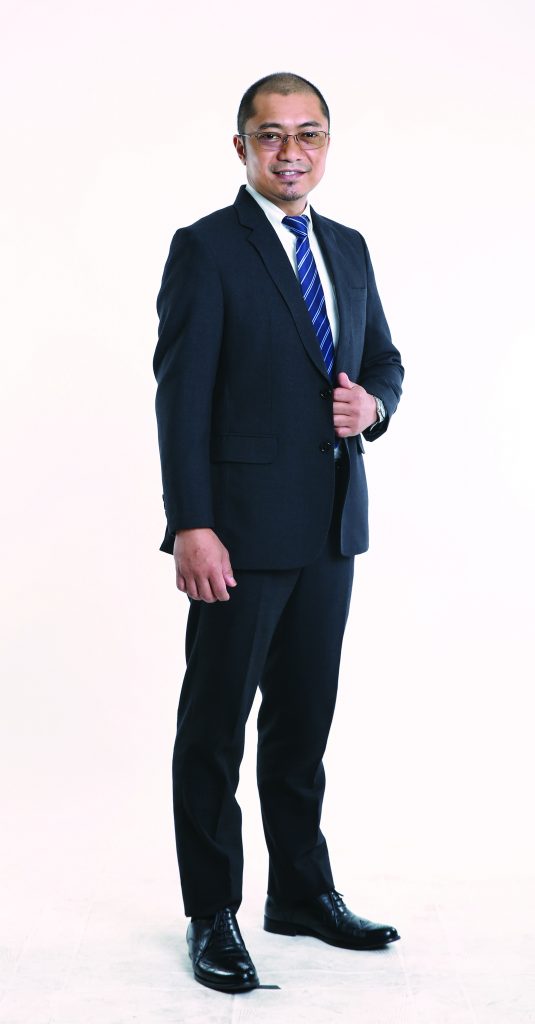
VOYAGER Innovations, Inc. has appointed seasoned fintech executive Angelo Madrid as the president of its new digital lender Maya Bank.

The central bank’s Monetary Board has confirmed Mr. Madrid’s appointment, Voyager said in a statement on Friday.

“I’m truly honored to be appointed as Maya Bank president as we blaze the trail with digital banking services. Our goal is to foster greater inclusion as we offer the best suite of digital banking products and services at scale and with trust and credibility,” Mr. Madrid was quoted as saying.

“Maya Bank will usher the next phase of our digital financial services journey. I’m confident that [Mr. Madrid]’s extensive global experience and proven track record in the Philippines will help us achieve this vision with speed and urgency,” said Shailesh Baidwan, Voyager and PayMaya Philippines president and a member of the board of directors of Maya Bank.

Mr. Madrid was previously with US-based fintech lending startup Tala as its country manager for the Philippines. He led the firm’s local unit to become a team of 200 employees catering to 1.5 million borrowers in 2020 from being a five-person operation back in 2017.

He has over 15 years of experience across banking, fintech, microfinance, and law. He has held leadership roles in Citibank New York, including co-founding a fintech startup within Citi Ventures that uses alternative data to help consumers gain access to credit.

Mr. Madrid was also previously a banking and finance lawyer at Baker & McKenzie (QT) and Sycip Law.

He completed his bachelor’s degree in Management and his law degree from the Ateneo de Manila University. He also holds a Master’s in Business Administration from Duke University – Fuqua School of Business.

The Bangko Sentral ng Pilipinas granted Maya Bank a license to operate in September.

Voyager Innovations is the digital arm of PLDT. Hastings Holdings, Inc., a unit of PLDT Beneficial Trust Fund subsidiary MediaQuest Holdings, Inc., has a majority stake in BusinessWorld through the Philippine Star Group, which it controls. — LWTN

Peso climbs on as factory activity improves

THE PESO rose versus the dollar on Friday on stronger manufacturing data and expectations of higher remittances ahead of the holidays.

The local unit closed at P50.79 per dollar on Friday, appreciating by 21 centavos from its P51 finish on Thursday, based on data from the Bankers Association of the Philippines.

However, it weakened by 14 centavos from its close of P50.65 a week earlier.

The peso opened Friday’s session slightly stronger at P50.96 a dollar. Its weakest showing was at P50.97, while its intraday best was at P50.78 versus the greenback.

Dollars exchanged dropped to $882.16 million on Friday from $1.104 billion on Thursday.

The peso rose on data showing improving factory activity in the country, Rizal Commercial Banking Corp. Chief Economist Michael L. Ricafort said.

The Philippines Manufacturing Purchasing Managers’ Index stood at 50.9 in September, beyond the 50-mark that separates expansion from contraction, IHS Markit reported on Friday. This is a turnaround from the 46.4 logged in August and is the best reading since the 52.2 in March.

IHS Markit attributed the improvement to eased restrictions last month following the strict lockdown in August.

Mr. Ricafort added that the peso appreciated due to expectations of a seasonal increase in remittance inflows ahead of the Christmas holidays.

Meanwhile, a trader said the peso strengthened on market preference for the local unit after US initial jobless claims increased for the third straight week.

Reuters reported that more Americans filed for jobless claims last week amid more people in California being enrolled to another assistance program.

Initial claims for state unemployment benefits increased by 11,000 to a seasonally adjusted 362,000 for the week ended Sept. 25, marking the third straight weekly increase. — LWTN with Reuters

PSEi declines due to extended Metro Manila lockdown

Philippine Stock Exchange index

SHARES closed the week lower after the government extended lockdown restrictions in Metro Manila and as market sentiment was clouded by expectations of faster September inflation.

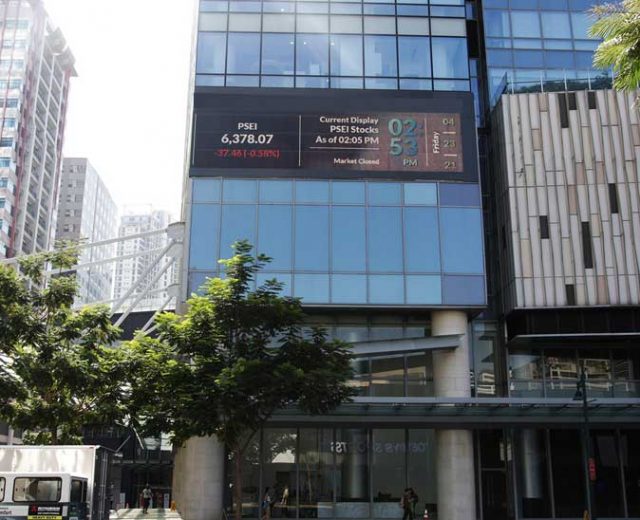
The bellwether Philippine Stock Exchange index (PSEi) shed 29.28 points or 0.42% on Friday to close at 6,923.60, while the all shares index inched up by 0.67 point or 0.01% to 4,326.51.

“Investors may have chosen to stay on the sidelines while observing the government’s implemented restrictions in the capital region,” Timson Securities, Inc. Trader Darren Blaine T. Pangan said in a Viber message. “7,000 remains the nearest resistance area, while 6,780 seems to be the immediate support level.”

Metro Manila will remain under Alert Level 4 until Oct. 15, the government announced Thursday evening, to extend the pilot implementation of the targeted lockdown system.

“The market’s sideways movement ended in the red territory due to the negative spillovers from Wall Street,” Philstocks Financial, Inc. Senior Research and Engagement Supervisor Japhet Louis O. Tantiangco said in another Viber message.

“The market today was also weighed by expectations of a higher inflation print for September compared to the preceding month,” he added.

“Offsetting positive factors include the stronger Philippine Manufacturing PMI (purchasing managers’ index) data back to expansion mode at six-month highs and also among the highest since February 2020 or shortly before the pandemic, as well as the scheduled start of the pilot vaccination of minors 12-17 years old on Oct. 15,” Rizal Commercial Banking Corp. Chief Economist Michael L. Ricafort said in a separate Viber message.

On Friday, IHS Markit reported the country’s factory output went up to 50.9 in September, climbing from its 46.4 reading the previous month.

Meanwhile, the country will also start vaccinating the general population beginning this month, including those aged 12 to 17. Parents are encouraged to register their children to get vaccinated against COVID-19.

Most sectoral indices closed the week in the green except for property, which lost 34.33 points or 1.13% to finish at 2,989.88, and holding firms, which declined by 68.77 points or 0.98% to 6,894.28.

Meanwhile, mining and oil gained 115.65 points or 1.24% to end at 9,397.55; services went up 13.62 points or 0.7% to 1,949; financials gained 7.06 points or 0.56% to 1,412.45; and industrials rose 44.34 points or 0.43% to close at 10,300.34.

Value turnover surged to P21.99 billion with 2.32 billion shares traded on Friday, more than twice the P9.88 billion with 1.54 billion issues that switched hands the previous day.

Advancers outnumbered decliners, 103 versus 86, while 53 names closed unchanged.

Foreigners turned buyers with P2.84 billion logged in net purchases on Friday, a turnaround from the P346.7 million recorded in net outflows on Thursday. Mr. Ricafort said this was an effect of MREIT, Inc.’s listing at the exchange. — Keren Concepcion G. Valmonte

Sinovac shot approved for tourists to Australia

REUTERS

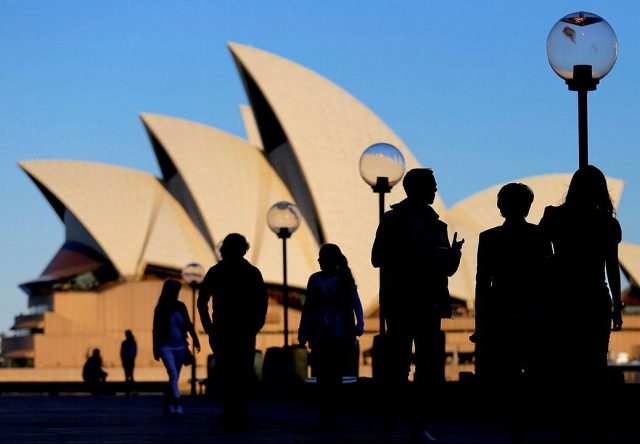
Australia recognized China’s Sinovac Biotech Ltd. COVID-19 shot and India-made AstraZeneca Plc jabs, paving the way for overseas travelers and fee-paying foreign students who have received those vaccinations to enter the country.

The nation’s top drugs regulator, the Therapeutic Goods Administration, said the shots should be “recognized vaccines” in determining incoming travelers as being inoculated, Prime Minister Scott Morrison said Friday.

Australia is starting to unwind some of the world’s most intense pandemic border restrictions as vaccination rates across the country approach as key threshold of 80%. Recognition of Beijing-based Sinovac’s shot, which has been approved by the World Health Organization for emergency use, contrasts with the U.K. and neighboring New Zealand, which are yet to endorse it.

A number of European countries have said they will accept the vaccine, known as Coronavac, as part of programs for vaccinated entry. The U.S. indicated similar when it announced plans to open entry to most vaccinated foreigners last week.

Friday’s announcement potentially opens the door to thousands of foreign students that have been shut out of Australia during the pandemic. International education is a lucrative source of revenue for the country, worth A$14.6 billion ($11 billion) to the state of New South Wales alone in 2019.

“Very soon, we’ll be able to open those international borders again,” Morrison told reporters. “This will start happening from next month.”

Vaccines made by Sinovac and the state-owned Sinopharm are among the most used in China, and have efficacy rates ranging from around 50% to 80% in preventing symptomatic COVID, lower than the mRNA vaccines developed out of the U.S. Sinovac is also one of the most-deployed COVID shots globally, used from Indonesia to Brazil and Turkey. Chile said earlier this week it would start administering it to children age six to 11.

Covishield, also recognized Friday, is the name of the AstraZeneca Plc shot made by India’s Serum Institute, the world’s biggest vaccine maker.

More than 57,000 students are estimated to be overseas, according to the government of New South Wales. Chinese nationals are Australia’s biggest source of international students followed by those in India, Nepal and Vietnam, according to the Australian Trade Department.

The decision Friday could also be seen as a potential olive branch from Australia, which has been on the receiving end of criticism and trade blockages from China since it asked for a global inquiry into the origins of the coronavirus. — Bloomberg

China gorges on American grain-fed beef amid shrinking supplies from Australia

REUTERS

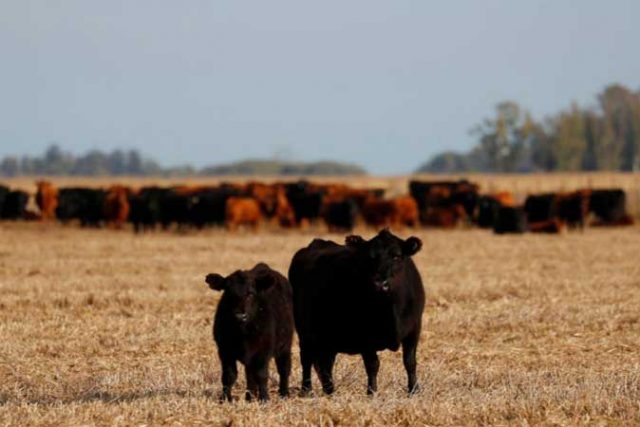
BEIJING/CHICAGO – As Australian beef exports to China wither amid diplomatic tensions, demand there for U.S. grain-fed beef has soared, fuelled by the appetites of a growing Chinese middle class.

Hotpot restaurants, Japanese barbecue chains and steakhouses, all expanding in the world’s No. 2 economy, are swapping out Australian beef for U.S. meat. Several Australian suppliers were banned last year and shipments from others take too long to clear customs.

Beef imports from the U.S. have grown to 83,000 tonnes in the first eight months of 2021, nine times the amount in the same period a year ago, according to Chinese customs data, and are set to be worth more than $1 billion this year. Australia also fell behind the United States this year as the top exporter of grain-fed beef to China.

“They don’t have a lot of other options when it comes to the well-marbled, grain-fed product,” said Joe Schuele, spokesman at the U.S. Meat Export Federation (USMEF). “That’s the product that really stands out in China.”

Deteriorating relations between Beijing and Canberra have hurt supplies from Australia. Five of its largest factories were suspended by Beijing last year for reasons such as poor labelling and contamination with a banned substance.

Though other plants are still allowed to ship to China, importers say they face long delays.

Beef imports from Australia in the first eight months fell to 96,000 tonnes, half of what they were in the same period last year, China customs data shows.

“We’ve been told it will take at least 85 days to clear,” said a Beijing-based importer who has six containers of frozen Australian beef stuck in Shanghai port and has begun offering Tyson beef to his restaurant clients.

That compares with about one week for meat from other origins. China’s General Administration of Customs did not respond to a request for comment.

Sino-Australian ties have been strained since 2018 and worsened last year when Australia called for an independent investigation into the origins of the novel coronavirus, prompting trade reprisals from China.

GRAIN-FED DEMAND

Grass-fed beef, a premium product in other markets, typically goes to cheaper channels in China, such as mass-market restaurants and supermarkets.

Last year imports accounted for 40% of China’s beef consumption, or about 2 million tonnes. Though supplies are dominated by low-cost grass-fed producers Brazil, Argentina and Uruguay, demand from mass-market consumers is slowing amid a weaker economy.

China’s mid- to high-end market – where grain-fed rules – continues to grow, however, as consumers “trade up, eat better”, said Pan Chenjun, senior analyst at Rabobank.

China’s middle class spent $7.3 trillion in 2020, more than any other country’s, according to a report by U.S. research group Brookings, and is still growing, with young people accounting for more spending than in other countries.

New York chain Wolfgang’s Steakhouse, which has two restaurants in Beijing, opened another in the southern city of Shenzhen this year and has plans for a fourth in Hangzhou.

The restaurant flies in chilled U.S. beef before ageing it. Its 800g rib-eyes cost $150 apiece.

“Young people like meat, especially 20- and 30-year-olds who come here on dates,” said Glen Feng, manager of the Beijing outlets.

TRADE TIES

Even as China’s beef demand has surged in recent years, driven by a growing middle class, politics have reshuffled the country’s top importers.

Domestic production costs, meanwhile, make local supplies of grain-fed beef erratic, said Zhong Dingming, the manager of Jingli hotpot restaurant in Beijing. He said imported beef like the Tyson short ribs he buys offers better quality for a slightly higher price.

In last year’s Phase 1 trade deal between Beijing and Washington, China agreed that U.S.-approved processing plants could access its market without Chinese inspections.

The number of facilities allowed to ship to China has jumped to more than 500.

TREX Corp, a U.S. meat exporter owned by Greater Omaha Packing Co, is buying meat from other packers to ship to China as demand climbs, said Henry Davis, chief executive of Greater Omaha.

In China, USMEF has doubled the number of training events teaching local chefs how best to cut and slice, said Joel Haggard, senior vice president for the Asia Pacific.

Shanghai-based retailer Swiss Butchery said it had stocked up on American beef as Australian supplies became less reliable. The store now sells American wagyu for 1,430 yuan ($221.87)per kilogramme, on occasion selling 10 kilogrammes at a time, said general manager Jaap Zuidervliet.

U.S. beef that meets China’s import standards is in tight supply and the European Union is competing to buy the same meat, said Omaha’s Davis.

And though Australia’s beef exporters have turned to Japan and South Korea, a well-established reputation means customers in China could quickly return if things change.

“Australian beef still has a reputation for top quality and being natural. Long-term we’re still really bullish on China,” said Andrew Cox, general manager of international markets at trade body Meat and Livestock Australia. — Reuters


Cocolife Healthcare tops Philippine healthcare providers in international award

Cocolife Healthcare has evidently fulfilled its role in giving healthcare support as Filipinos face the COVID-19 pandemic.

This year, Cocolife Healthcare was awarded as the ‘Most Outstanding Healthcare Provider’ in the Philippines by International Business Magazine, a publication based in Dubai, United Arab Emirates.

Cocolife Healthcare is the first healthcare program provider certified by ISO 9001:2008 and regulated by the Insurance Commission.

“This business line requires a lot of efforts, long years of building trust and relationships with our most extensive roster of partner hospitals, clinics, and doctors, paving the way to the accessibility of medical care for our clients anywhere in the country,” said Franz Joie D. Araque, EVP and chief of Cocolife Healthcare Division.

Franz Joie D. Araque, EVP and chief of Cocolife Healthcare Division

“We have continuously streamlined our processes to ensure that we always meet our commitments on time. We constantly train our people on the value of customer service, making us the preferred long-term partner in managed healthcare. We constantly innovate to meet the ever-changing and unique needs of our customers,” Mr. Araque adds.

Cocolife Healthcare covers an array of risk protection services that include hmo program, daily hospitalization benefit program, medical reimbursement program, and third-party administration program.

The International Business Magazine Awards reviewed, among others, the feedbacks received by Cocolife Healthcare from hospital officials, healthcare workers, policyholders, and patients on its benefits. It also checked on the detailed development process and strategy and the insurance dispatchment process of Cocolife Healthcares program.

In addition, the Awards looked over the steps taken by Cocolife Healthcare in dealing with the COVID-19 pandemic.

Cocolife Healthcare stayed true in its commitment to Filipinos by accomplishing 800 million COVID-related claims despite being an exception. Last year, the company also donated funds to the University of the Philippines Manila – National Institute of Health for the procurement of one Real Time-Polymerase Chain Reaction (RT-PCR) machine as an effort to step up the COVID-19 testing in the country.

“This recognition [from the International Business Magazine Awards] is a stamp of approval that we are a leading health insurer for the Filipinos and by Filipinos, consistent to our commitment of providing quality insurance products and services, and of having a better nation with our countrymen who are financially secure to face the daily struggles of life,” adds Cocolife President and CEO Atty. Martin Loon.

Find out more about Cocolife’s award-winning healthcare products by visiting www.cocolife.com.


Spotlight is BusinessWorld’s sponsored section that allows advertisers to amplify their brand and connect with BusinessWorld’s audience by enabling them to publish their stories directly on the BusinessWorld Web site. For more information, send an email to online@bworldonline.com.

Join us on Viber to get more updates from BusinessWorld: https://bit.ly/3hv6bLA.

BPI-Philam evolves to ‘BPI AIA’ to bring Filipinos a global insurance experience

BPI-Philam, a strategic alliance that allowed the AIA Philippine American Life and General Insurance Company (AIA Philam Life) to offer insurance through the Bank of the Philippine Islands (BPI), has unveiled its new identity as BPI AIA. As a redesigned brand, it will use its global heritage to fulfill its commitment to provide accessible, affordable, and personalized insurance for Filipinos.

Founded in 2009, the firm is among the top insurance companies in the country recognized by the Insurance Commission. Bank partner BPI is the first bank in the Philippines and Southeast Asia, with a heritage of solid trust, financial strength, and innovation over the past 170 years. Then-AIA Philam Life, meanwhile, is a market-leading insurance company for over 70 years. It is under the AIA Group, the largest independent publicly listed pan-Asian life insurance group, with a presence in 18 markets across Asia Pacific. Having recently renamed to AIA Philippines, BPI-Philam evolves to follow suit.

The change is a move to align with the bigger umbrella that is the AIA Group, a name practically synonymous with the insurance industry for over a century now. Along with the name, the rebranding entails a streamlining of systems and processes as well as development of new ones that will seamlessly elevate the service experience that the company provides its clients. After all, BPI AIA not only bears the name of two industry giants but also carries within itself their combined values, expertise, and commitment.

“We are truly excited to venture into this new chapter in our journey. The challenges we all experienced in the past year brought unprecedented changes to our customers’ lives, and as their life protection partner, we also evolve to deliver the support they need and deserve. As BPI AIA, we’d like to assure our clients that this initiative only strengthens our company’s stability and commitment to service, so they can brave the new world and face a new tomorrow,” said BPI AIA Chief Executive Officer Surendra Menon.

Policyholders can expect to continue to enjoy all the benefits and privileges of their policies bought under the BPI-Philam brand with an ever increasing range and standard of services geared to how their lifestyles are changing in the evolving environment at the speed that is comfortable for them. This includes all rewards earned and can be earned for products with AIA Vitality. Any concerns by policyholders can be easily raised with their respective points of contact for appropriate resolution.

BPI AIA ultimately aims to close the protection gap in the Philippines through its comprehensive life, health, and income protection plans, while encouraging clients to live healthier and bring their dreams to life. More information about the company and its products is available at the official Facebook page or via the virtual assistant Bessie (via Messenger). Customers can also visit the website.


Spotlight is BusinessWorld’s sponsored section that allows advertisers to amplify their brand and connect with BusinessWorld’s audience by enabling them to publish their stories directly on the BusinessWorld Web site. For more information, send an email to online@bworldonline.com.

Asian factories stagnate as China’s slowdown, supply constraints hit

China Daily via REUTERS

TOKYO – Asia’s manufacturing activity was lackluster in September as signs of slowing Chinese growth and factory shutdowns caused by the coronavirus pandemic weighed on the region’s economies, surveys showed on Friday.

Factory activity in September shrank in Malaysia and Vietnam, and grew in Japan at the slowest rate in seven months, as chip shortages and supply disruptions added to the woes of a region still struggling to shake off the pandemic’s hit.

China’s waning economic momentum dealt a fresh blow, with the official Purchasing Manager’s Index (PMI) on Thursday showing the country’s factory activity unexpectedly shrank in September due to wider curbs on electricity use.

While the private Caixin/Markit Manufacturing PMI fared better than expected after slumping in August, growing signs of weakness in the world’s second-largest economy is clouding the outlook for neighboring Asian countries.

“While coronavirus curbs on economic activity may be gradually lifted, the slow pace at which this will happen means Southeast Asian economies will stagnate for the rest of this year,” said Makoto Saito, an economist at NLI Research Institute.

The final au Jibun Bank Japan Manufacturing PMI slipped to 51.5 in September from 52.7 in the previous month, marking its slowest pace of expansion since February.

“Supply chain disruption continued to dampen activity and demand,” said Usamah Bhatti, economist at IHS Markit, of Japan’s PMI survey.

South Korea’s PMI for September rose to 52.4 from 51.2 in August, staying above the 50-mark threshold that indicates expansion in activity for a 12th straight month.

But continued supply chain disruptions dented business optimism for manufacturers.

Taiwan’s PMI eased to 54.7 in September from 58.5 in August, while Vietnam saw the index unchanged from August at 40.2.

Once seen as a driver of global growth, Asia’s emerging economies are lagging advanced economies in recovering from the pandemic’s pain as delays in vaccine rollouts and a spike in Delta variant cases hurt consumption and factory production. — Reuters

Cocolife globally recognized as outstanding life insurance company in the Philippines

Despite the challenges brought by the COVID-19 crisis, Cocolife continues to improve and excels as an insurance company. This is substantiated by its recognition as the ‘Most Outstanding Life Insurance Company’ in the Philippines this year.

Granted by Dubai-based publication International Business Magazine, the Awards surveyed the lead at the front, the quality of service, productivity, and business ethics.

“This achievement reminds us of the importance of our mission — to serve others more and find ways to be better. We hope to make Cocolife a world-class insurance company,” said Atty. Martin Loon, Cocolife’s president and chief executive officer.

Atty. Martin Loon, Cocolife president and chief executive officer

Cocolife has made several developments in its sales, services, and operations in recent years.

Under strong and stable leadership, Cocolife has generated a record-breaking income in the last two years with a 1.8 billion in profit before tax. Its company reputation and consumer confidence have also improved.

The Awards also looked over the new features or expansion activities by Cocolife. The Cocolife Protect and Protect Plus provide clients financial security in case of accidents resulting in injury, disability, or death. Meanwhile, Cocolife’s FLEXI series offers variable life insurance products that give clients the freedom to design their investment and insurance plans tailored to their needs.

Cocolife also accelerated its digitalization by launching a mobile app to make its financial solutions more accessible to clients, especially with the limited mobility nowadays due to COVID-19 restrictions.

As Cocolife focused on improving its services for clients, the insurance company simultaneously prioritized the welfare of its employees and partners. All Cocolife employees kept their jobs and benefits amid the 50%+ increased unemployment rate.

“Cocolife is very focused on its mission to serve. With that sacred mission in mind, we made sure to fulfill all aspects of the business excellently and with integrity,” Mr. Loon said. “All of our systems, process improvements, and even our constant desire to achieve excellent corporate governance is meant to serve our people better.”

The International Business Magazine Awards recognizes the achievements of various industrial talents, global leaders, corporates, and others in business and finance fields. This year, the International Business Magazine bestowed two awards to Cocolife for its successes as Most Outstanding Life Insurance company and Most Outstanding Healthcare provider.

“I consider these two awards as sources of inspiration for Cocolife to do even better as we go along,” Mr. Loon said. “It is a validation of our commitment to excellence and integrity in the service of the Filipino people.”

Learn more about Cocolife’s new and comprehensive life insurance products by visiting www.cocolife.com.


Spotlight is BusinessWorld’s sponsored section that allows advertisers to amplify their brand and connect with BusinessWorld’s audience by enabling them to publish their stories directly on the BusinessWorld Web site. For more information, send an email to online@bworldonline.com.

Join us on Viber to get more updates from BusinessWorld: https://bit.ly/3hv6bLA.

Social issues tackled by Pista ng Pelikulang Pilipino winners 

FILMS tackling women’s rights and Philippine social issues won the top prizes at the 5th Pista ng Pelikulang Pilipino (PPP) awards night, held online on Sept. 30.

The event was held online on the Film Development Council of the Philippines (FDCP) Channel with a simulcast on Facebook.   

The 5th edition of the PPP had two categories: Sine Kabataan, which had 10 five-minute short films targeted at children; and Sine Isla: LuzViMinda, which had 15  short films from the regions. This year’s festival ran from Sept. 17 to 26 on the FDCP Channel website.  

Ang Bunga sa Tiyan ni Adam, directed by Ella Louise B. Salomon, won the Sine Kabataan Best Short Film for its “impressive direction, great control over the script, and cinematography, and impeccable performance from the regional talents. Its strong distinctive and absurdist style makes for a very admirable film.” Tacking the issue of women’s rights, the film is about a teenage boy who tells his girlfriend he is pregnant after taking a pregnancy test.   

This year’s PPP jury members were film producer Pamela Reyes, cinematographer Lee Briones-Meily, directors JB Habac, Glenn Barit, and Kyle Nieva, and FDCP Chairperson and CEO Mary Liza Bautista Diño-Seguerra 

The PPP winners got cash prizes. The Audience Choice Award winner got P10,000; Special Mention films each got P20,000; Best Director got P30,000; the Special Jury Prize film got P40,000; and Best Short Film got P50,000.   

This year’s PPP introduced the first Sine Isla: LuzViMind category. The winners took home a trophy and cash prizes.   

Palabasdirected by Arjanmar H. Rebeta, was named the Sine Isla Best Short Film “for its powerful depiction of the Philippine social realities through human interaction.” The film follows a Filipina student who converses with a middle-aged foreigner about various social issues in the Philippines.  

The Sine Isla Audience Choice awardee won P10,000; Special Mention films won P20,000; Best Director won P30,000; Special Jury Prize won P40,000; and Best Short Film won P50,000.   

The Sine Isla LuzViMinda jury members were director Sigrid Andrea Bernardo, director and producer Sheron Dayoc, director and screenwriter Zig M. Dulay, producer Si En Tan, director and editor Carlo Francisco Manatad, Globe Studios Head of Creative Development Kren Yap, FDCP Lead Officer of International Relations Division Jo Andrew Torlao, and FDCP Executive Director Ria Anne Rubia.   

The Sine Kabataan and Sine Isla: LuzViMinda short films can still be viewed for free and on-demand from Oct. 1 to 8 at www.fdcpchannel.ph.  Michelle Anne P. Soliman  


The winners of the 5th Pista ng Pelikulang Pilipino are: 

Sine Kabataan  

• Best Short Film: Ang Bunga sa Tiyan ni Adam by Ella Louise B. Salomon   

• Jury Prize: Mga Ulap Tayong Nagiging Ulan by Demetrio E Celestino III  

• Best Director: Love in the Ungodly Hour by Bradley Jason Pantajo  

• Sine Kabataan Special Mention Awards: Abot Kamay ang Langit by Brian Spencer Reyes, and Jeremy Supot by James Allen Fajardo  

• Audience Choice Award: Love in the Ungodly Hour by Bradley Jason Pantajo

Sine Isla: LuzViMinda 

• Best Short Film: Palabas by Arjanmar H. Rebeta  

• Jury Prize: Halawod by Anna Katrina Velez Tejero  

• Best Director: Tarang by Arvin Belarmino  

• Sine Isla Special Mention Award: The Man Who Isn’t There and other Stories of Longing by Trishtan Perez  

• Audience Choice Award: Singil by Maria Graciella Musa

New money: Central banks lay out operating manual for digital cash

LONDON – A group of central banks sketched out a potential operating manual for digital cash on Thursday as they aim to strike a balance between keeping up with cryptocurrencies and concerns that the new technology could upend commercial lenders.

Worried that the explosion of bitcoin and its ilk could weaken their control of money, policymakers from Beijing to Washington are exploring central bank digital currencies, known as CBDCs.

And while a widely-used digital dollar or euro may still be years away, work by central banks is gathering pace as consumers increasingly ditch coins and notes in favour of digital payments on debit or credit cards and mobile phones.

The seven central banks – including those in the United States, Britain and the ECB in the euro zone, but not China – said publicly-used “retail” CBDC must harness both public and private players to mesh with existing payment systems.

The tech should be useable with existing domestic payments systems, with strategies for adoption tailored to on-the-ground economic conditions, said the central banks, working alongside the Bank for International Settlements.

The existing financial system must be given time to adjust to the introduction of CBDC, they said, flagging risks of what could amount to slow-motion bank runs if commercial bank customers suddenly shifted savings to the new tech.

“Regardless of the design, developing and running a CBDC system would be a major undertaking for a central bank,” they said, stressing the involvement of private operators must be closely monitored to ensure public trust in the tech.

STABILITY RISKS

Unlike cryptocurrencies like bitcoin that are usually run by private actors, CBDCs would be equivalent to cash, issued and backed by central banks. They differ from the electronic money used in billions of transactions daily that is mostly funnelled via commercial banks.

The People’s Bank of China is the most advanced among major economies on CBDCs, and is planning its biggest digital yuan trial at the 2022 Beijing Winter Olympics.

Meanwhile, the U.S. Federal Reserve will “soon” release research examining the costs and benefits of a CBDC, Fed Chair Jerome Powell said last week.

Commercial banks, fretting that a retail-focused CBDC could cannibalize their deposit bases, are trying to exert influence on their design.

The central banks sought to downplay the threat of retail-focused CBDC to lenders’ business models.

“Our analysis suggests the impacts on bank disintermediation and lending could be manageable for the banking sector,” they said, with any impact likely limited in “plausible” levels of adoption. — Reuters

Facebook research shows company knew of Instagram harm to teens, senators say

U.S. senators on Thursday grilled Facebook Inc on its plans to better protect young users on its apps, drawing on leaked internal research that showed the social media giant was aware of how its Instagram app harmed the mental health of teens.

The hearing in front of the Senate consumer protection subcommittee was called after the Wall Street Journal published several stories earlier this month about how Facebook knew Instagram caused some teen girls in particular to feel badly about their self-image. After growing opposition to the project, Facebook put plans for Instagram Kids, aimed at pre-teens, on hold this week.

Antigone Davis, Facebook’s global head of safety, disputed the committee and WSJ’s conclusions of the research documents throughout the hearing, and said the company was working to release additional internal studies in an effort to be more transparent about its findings.

“This research is a bombshell,” said Senator Richard Blumenthal, a Democrat, during the hearing. “It is powerful, gripping, riveting evidence that Facebook knows of the harmful effects of its site on children, and that it has concealed those facts and findings.”

“IG stands for Instagram, but it also stands for Insta-greed,” said Senator Edward Markey, a Democrat from Massachusetts.

The senators pressed Davis on several major themes, including what identifiable data Facebook collects on users under the age of 13, to what extent the company views young users as a growth area and to confirm whether it knew that Instagram led some children to consider suicide.

Davis reiterated that kids under 13 were not allowed on Facebook, adding 0.5% of teens in the company’s research connected their “suicidal ideation” to Instagram, lower than the figures the Journal had reported.

“You’ve cherry-picked part of the research that you think helps your spin right now,” said Senator Ted Cruz, a Republican from Texas, demanding Facebook commit to releasing its full research on the links between Instagram and youth suicide.

A second hearing is planned for Tuesday and will feature a Facebook whistleblower. The whistleblower is expected to reveal their identity on Sunday in a recorded interview for TV news program “60 Minutes,” which in a preview described the woman as a former Facebook employee who left with tens of thousands of pages of research.

Davis said Thursday that Facebook would not retaliate against the whistleblower for sharing confidential documents with the senators. — Reuters