Home Blog Page 7420

Parts of Manila flooded due to monsoon rains 

The Department of Public Works and Highways (DPWH) deployed crews in various parts of Manila City on July 21 to remove grabage from drainage inlets. “Trash blocked the flow of floodwater to drainage system, causing as high as 20 centimeters of floodwater along these roads in Malate, Manila,” DPWH South Manila District Engineer Mikunug D. Macud said as he appealed to the public to observe proper waste disposal. — DPWH

HEAVY RAINFALL from the southwest monsoon, enhanced by typhoon Fabian and tropical depression Cempaka which is still outside the Philippine are, triggered flooding in parts of Metro Manila that caused heavy traffic and the suspension of work in some offices and universities.   

As of 8:45 a.m. Wednesday, the Metro Manila Development Authority said knee to gutter-deep floodwater were reported in the streets of Mandaluyong, Manila, and Quezon City, making them impassable to light vehicles.   

State weather agency PAGASA said on Wednesday afternoon that orange rainfall warning was still up in Metro Manila and the provinces of Bataan and Cavite, which means there were still threats of flooding.    

Yellow warning was also raised in flood-prone areas in Laguna (San Pedro, Binan, Santa Rosa, Cabuyao, Calamba), Zambales, Batangas, and Rizal.    

“Under the influence of the Southwest Monsoon being enhanced by Fabian and Tropical Depression Cempaka… monsoon rains will be experienced in the next 24 hours over Ilocos Region, Cordillera Administrative Region, Batanes, Babuyan Islands, Zambales, Bataan, Tarlac, Pampanga, Bulacan, Metro Manila, Cavite, Batangas, Occidental Mindoro, and the northern portion of Palawan (including Calamian and Kalayaan Islands),” PAGASA said in its 5 p.m. bulletin on Wednesday.   

Typhoon Fabian, initially expected to exit by Tuesday, was moving slowly and lingering within the Philippine area but not expected to make any landfall. — Bianca Angelica D. Añago 

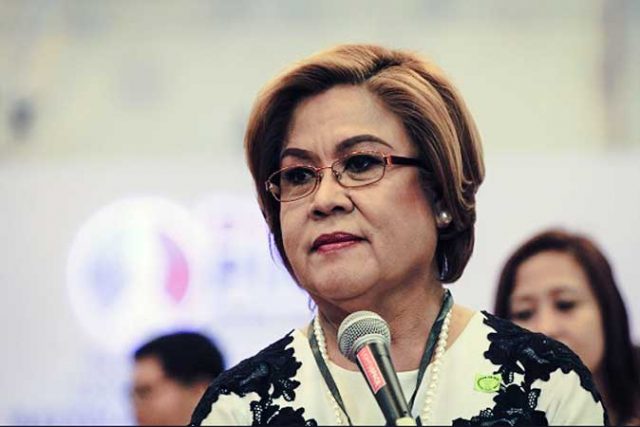
De Lima to seek reelection 

PHILSTAR

OPPOSITION Senator Leila M. De Lima on Wednesday confirmed that she would seek reelection in next year’s polls, saying that what she called the political persecution she experienced under President Rodrigo R. Duterte’s administration only strengthened her resolve to fight for her advocacies.  

In a letter addressed to Mr. Duterte ahead of his sixth and final State of the Nation Address on July 26, Ms. De Lima said her detention only pushed her to work harder to advance her fight for human rights. 

The detained senator said the nation will hold the President accountable for his violent drug war that has killed thousands and his failure to deter Chinese incursions in Philippine-claimed areas in the South China Sea.  

Ms. De Lima has the “right” to seek reelection pending final conviction on charges against her, Palace spokesman Herminio L. Roque, Jr. said when asked to comment.  

Sana hindi magkaroon ng final conviction bago ang eleksiyon (Hopefully there won’t be a final conviction before the election),” he told a televised news briefing.  

The senator, who has been jailed at the Philippine National Police Custodial Center since 2017, is on trial for allegedly allowing the illegal drug trade in the country’s jails when she was still Justice secretary.   

Witnesses against her were drug convicts serving time at the national penitentiary in Muntinlupa City. 

Ms. De Lima was arrested amid an investigation by a Senate panel into the alleged atrocities committed in Mr. Duterte’s drug war.  

In her letter, Ms. De Lima criticized the President for failing to arrest suspected drug lord Peter G. Lim.  

Mr. Lim, a friend of Mr. Duterte, was identified as a member of the drug triad in the Philippines. 

The International Criminal Court’s (ICC) Office of the Prosecutor earlier asked the Hague-based tribunal’s pre-trial chamber to probe alleged crimes against humanity committed in Mr. Duterte’s deadly war on drugs. Former ICC prosecutor Fatou Bensouda has said there is a link between the recent drug war-related killings and those in Davao City when Mr. Duterte was still mayor.  

Meanwhile, Mr. Roque said the President had realized “early in his term” that the country’s drug problem cannot be solved within three to six months.  

Despite this, the President’s campaign promise was still “successful,” he said. 

As of May 31, Mr. Roque said about 807 drug dens and clandestine laboratories had been dismantled by authorities. The government was also able to seize about P49.31 billion worth of illegal drugs. 

More than 293,000 individuals involved in the drug trade had been arrested, Mr. Roque said. Of these, 12,356 were high-value targets and 970 were government workers, he added.  

The Palace official said more than 3, 000 children were rescued in anti-illegal drug raids.   

At least 122 children were killed in the government’s deadly drug war between July 2016 and Dec. 2019, according to the World Organization Against Torture. — Kyle Aristophere T. Atienza 

Manila court orders arrest of man behind videos vs Duterte after no-show in hearing  

PHILSTAR

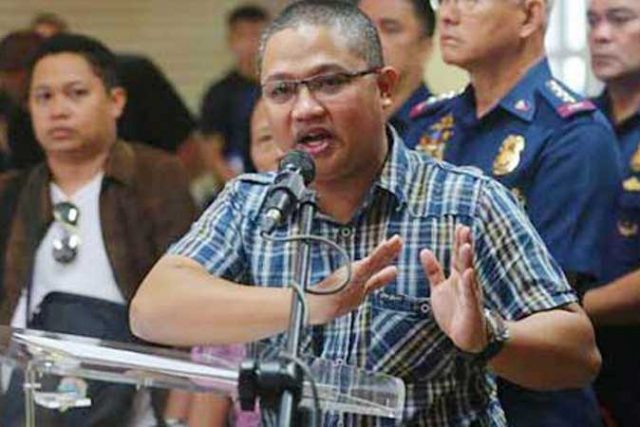
THE METROPOLITAN Trial Court has ordered the arrest of the man allegedly behind the series of videos linking President Rodrigo R. Duterte and his family to the illegal drug trade after failing to appear in court for the arraignment and preliminary conference on his case.   

The court, in an order released on Wednesday, also forfeited the cash bail posted by Peter Joemel “Bikoy” Advincula for his failure to attend the hearing despite notice and upon motions of both the private and public prosecutors.  

Mr. Advincula is facing a perjury case filed by lawyers Jose Manuel I. Diokno, Theodore O. Te, and Lorenzo R. Tañada III for his alleged false claim that the three lawyers were involved in the supposed plot to oust Mr. Duterte through the videos posted online in May 2019.   

The three lawyers denied their involvement saying that they did not meet with Mr. Advincula in March 2019, contrary to the latter’s claim.   

The three were present at the hearing with Mr. Advincula’s lawyer, Doroteo Miguel S. Carrillo, who said in open court that he is from the law firm of Lorenzo G. Gadon.   

The arraignment for Mr. Advincula’s case was reset to Aug. 26.  

Mr. Advincula also has an estafa case pending at the Department of Justice for alleged deception of organizers of a beauty pageant in Polangui, Albay in 2018. — Bianca Angelica D. Añago  

NEA urges co-ops to livestream line clearing, tree planting activities   

PHILSTAR FILE PHOTO

THE NATIONAL Electrification Administration (NEA) told electric cooperatives (ECs) to livestream their respective line clearing and tree planting activities on August 11 as the agency observes national electrification awareness month.  

“This year’s activities will be conducted differently in view of the current pandemic and the restrictions it brings. The ECs are thus enjoined to conduct both (line clearing and tree planting) simultaneously via Facebook live for wider viewership,” NEA Administrator Edgardo R. Masongsong said in a memorandum dated July 15.  

ECs must strictly comply with all standard health protocols during the tree planting programs, and ensure maximum safety during line clearing operations, he added. 

Mr. Masongsong also said that ECs are required to submit post-activity documentation of both initiatives, including photos and videos, specifics on the line clearing activities and type and number of seedlings planted.  

The tree planting and line clearing are part of the several programs which NEA has lined up to highlight milestones in the country’s rural electrification program.  

Next month, the NEA is celebrating its 52nd anniversary as well as the 12th observance of the National Electrification Awareness month.  

In May, NEA announced that it has brought electricity to 362 rural villages under its Sitio Electrification Program in the four months to April, majority of which are in Mindanao.  

As of end of February, the total number of rural villages that were energized reached 125,581 or 84.46% of areas within the coverage of 121 electric cooperatives. — Angelica Y. Yang 

Dredging metro rivers

PASIG MAYOR VICO SOTTO TWITTER PAGE

DREDGING projects for the rivers of Marikina and Pasig were launched on July 21 as part of the government’s flood mitigation efforts in the capital, which experienced flooding in some areas on the same day due to monsoon rains enhanced by two typhoons.    

DoLE asks Palace to certify new anti-‘endo’ bill as urgent 

PHILSTAR

THE DEPARTMENT of Labor and Employment (DoLE) has put in a request to President Rodrigo R. Duterte to certify as urgent a bill to end the practice known as “endo,” or employment until the end of the work contract, which denies workers a path to permanent employment.

In a televised briefing Wednesday, Labor Secretary Silvestre H. Bello III said he is “confident that (Mr. Duterte) will certify the bill this time.” Mr. Duterte had vetoed a previous version of the legislation in 2019.

In his veto message at the time, Mr. Duterte said the proposed law overly broadened the scope and definition of labor-only contracting, which in effect bans forms of contractualization “that are not particularly unfavorable to the employees involved.”

Mr. Bello said Mr. Duterte was ready to sign the Security of Tenure bill into law in 2019, but “the problem is that some labor groups opposed that bill.”

He said the new version of the bill, which is currently pending in the Senate, is “substantially the same” as the 2019 version, revising sections detailing which positions are allowed for contract work. 

The 2019 version of the bill prohibits fixed-term employment except for overseas Filipino workers, workers on probation, workers relieving absent colleagues not exceeding six months, project employees, and seasonal employees. 

A labor organization contested Mr. Bello’s claim, saying that the Duterte government must stop the “blame game.”

“It is President Duterte who vetoed the (bill) to begin with, which according to him is for the State to maintain the ‘healthy balance’ between laborers and management,” Defend Jobs Philippines said in a statement Wednesday. 

The group’s spokesman Christian Lloyd Magsoy added, “If the government is really serious in passing a law that will criminalize contractualization, then it must be independent (of the) influences and dictates of big business.” 

Ending the practice of labor contractualization was one of Mr. Duterte’s campaign promises in 2016. 

Separately, Mr. Bello said DoLE has conducted a dialogue with food delivery riders who were suspended by the Foodpanda service after they protested the company’s wage policy. He noted that of the 2,500 riders suspended, only 36 have not gone back to working with Foodpanda.

He said the DoLE regional office in Davao City, will meet with Foodpanda and the riders Thursday to further discuss matters.

He added that according to Foodpanda, the 10-year suspension policy has been discontinued. — Bianca Angelica D. Añago

P300-million agri-industrial hub to be built in Taguig City

PHILSTAR FILE PHOTO

A SECOND business corridor for agricultural industry companies is set to be built in Taguig City, the Department of Agriculture (DA) said.

On July 20, Agriculture Secretary William D. Dar signed an agreement with Taguig City Mayor Lino Edgardo S. Cayetano and Laguna Lake Development Authority (LLDA) General Manager Jaime C. Medina to signify their collaboration in the project, which has an initial budget of P300 million.

Taguig City site will be the first agri-industrial corridor dedicated to freshwater aquaculture and urban farming. It will become the country’s second agri-industrial hub overall, joining the one located in New Clark City.

“In New Clark City… the National Seed Technology Park will rise in partnership with the Bases Conversion and Development Authority (BCDA),” Mr. Dar said during the signing.

“We are privileged to partner with the LLDA and City of Taguig for this freshwater aquaculture park and urban farming project that will provide Metro Manila consumers with adequate and reasonably-priced food, particularly bangus and tilapia, (as well as) mushrooms and vegetables,” he added.

Under the joint project, the LLDA will allot two hectares of land along C-6 for the construction of several facilities, and a 15-hectare lakeshore area for the development of an aquaculture park and for the use of cooperatives and private enterprises.  

“We envision the Taguig agri-business corridor, along with the nearby Food Terminal, Inc., as part of the agri-industrial and food market hub that will serve the southeast quadrant of Metro Manila,” Mr. Dar said.

Once the facilities are completed, the city of Taguig will be in charge of managing and maintaining the site and in ensuring sustainable operations for the 10-year duration of the project.

Taguig will also provide funding, equipment, and personnel for the establishment of an access road from the highway to the site, while being also responsible for building agriculture, lake and river management, and environment and natural resources offices in the site.

DA agencies engaged in the Taguig project are the Bureau of Fisheries and Aquatic Resources (BFAR), the Philippine Fisheries Development Authority (PFDA), the Bureau of Plant Industry (BPI), and the Bureau of Soils and Water Management (BSWM).

BFAR will establish a satellite office at the site to conduct training and help organize fishing organizations.

“BFAR will also provide technical assistance and inputs, including bangus, tilapia, shrimp, and ayungin fingerlings for the floating fish cages that will be installed at the 15-hectare aquaculture park,” the DA said.

The DA said PFDA will construct a fish landing wharf with a warehouse and cold storage facility, while the BPI will implement an integrated commercial bamboo project and build a button mushroom production facility. The BSWM will establish a water hyacinth composting facility and a bamboo oxygen park.

“While we maintain a sustainable environment in the Laguna Lake, this Taguig agri-industrial hub could provide part of the food requirement of Metro Manila. Hence, for this project, we have to perform a balancing act. We need to produce enough food and see to it that fishing cages must be properly laid out so these do not contribute to the pollution of the lake,” Mr. Dar said. — Revin Mikhael D. Ochave

Terasu Energy cleared to connect Tarlac solar plant to Luzon grid

SOLENERGY.COM.PH

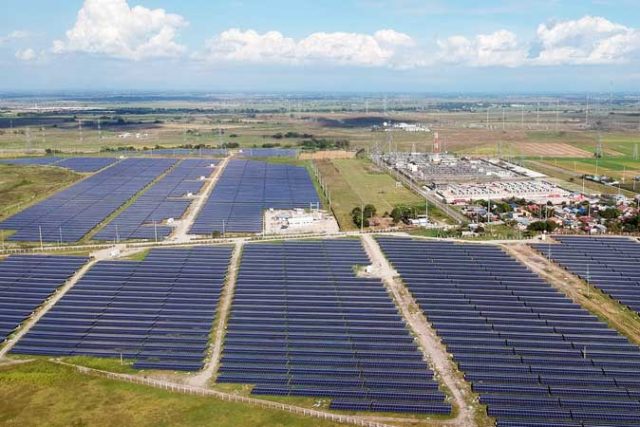
THE ENERGY Regulatory Commission (ERC) has approved renewable energy developer Terasu Energy, Inc.’s application to connect its 40-megawatt (MW) solar power plant in Tarlac to the Luzon grid.

In a decision posted on the commission’s website, the ERC said Terasu Energy may develop and own dedicated transmission facilities which will link its power plant to the grid operator’s 69 kilovolt (kV) substation in Concepcion. 

The National Grid Corp. of the Philippines (NGCP) has been designated to operate and maintain the transmission link.

Components of Terasu Energy’s approved transmission project include a 45 MVA (megavolt ampere) power transformer; a 69 kV transmission line; a 69 kV switch bay which will be built beside the NGCP substation; and protection, metering and telecommunication equipment. The company will be spending an estimated P43.57 million for these facilities.

Terasu Energy said its 40-MW Concepcion Solar Power Plant (CSPP) must be “directly connected” to the substation to fully dispatch its power.

The ERC said CSPP was identified by the Energy department as a committed power project at the end of December. Committed projects are those that have achieved financial closing with their investors or bankers.

“This committed capacity of Terasu’s CSPP will help address the power requirements of the Luzon grid, which… has an existing available capacity of 17,289 MW (as of 2019),” it said.

In its decision, the ERC also ordered the company to pay a permit fee of P326,768 as authorized by Commonwealth Act No. 146 and the commission’s revised schedule of fees and charges.

Terasu Energy is the special purpose vehicle of Sindicatum Renewable Energy Holdings Philippines, the Philippine unit of Singapore clean energy developer Sindicatum Renewable Energy Company Pte. Ltd. — Angelica Y. Yang

DTI opens steel, tile testing laboratory

PHILSTAR

THE DEPARTMENT of Trade and Industry (DTI) said Wednesday that it opened a testing laboratory in Cavite for ceramic tiles and steel to better assess the quality of goods sold in the local market.

The facility will expand the testing capacity available, currently performed mostly by third-party private-sector testing labs.

“With greater testing capabilities, we should be able to minimize substandard products in the market,” DTI Secretary Ramon M. Lopez said at the launch event.

“This should likewise encourage investment in more competitive and smart manufacturing operations using modern technologies that will guarantee high quality products at all times.”

The DTI’s Bureau of Philippine Standards partnered with the Philippine Iron and Steel Institute and Ceramic Manufacturers Association, Inc. for the project, which also aims to support standards development for steel and ceramic tiles. It will also assist small businesses with product development.

The laboratory will contribute to the government’s infrastructure program by testing construction materials, Mr. Lopez said.

The bureau will put up more testing facilities for cement, hollow blocks, and flat glass, he added.

Some steel products like deformed and rerolled steel bars and ceramic tiles are included in the list of products that must be certified before being sold in the local market. — Jenina P. Ibañez

New catastrophe insurance facility to charge separate rates for provinces deemed high-risk

PHILSTAR

THE PHILIPPINE Catastrophe Insurance Facility (PCIF) may set rates according to the local hazard profile, which will price in risk associated with disaster-prone areas, insurance industry officials said.

“The efficient management of catastrophe exposures will further result in a more risk-appropriate rating environment, that will ensure sustainable catastrophe premium rates. This will provide the public with wider access to catastrophe insurance protection,” Insurance Commissioner Dennis B. Funa said at an online forum.

“The Technical Working Group with the help of some brokers and also the World Bank is now modelling the rates for the catastrophe perils. The idea is to vary the rates by risk zones — a risk zone is almost like a province — to reflect the risks involved in the rates,” Philippine Insurers & Reinsurers Association Chairman Allan R. Santos said.

Rates are currently set for each catastrophe type instead of by zone.

Mr. Santos said the risk zone-specific rates will only be applicable for typhoon, earthquake, and flood coverage.

He said the PCIF is targeted for launch by April 2022. 

The PCIF is intended to expand the industry’s ability to take on more risk. Currently, insurance firms need to seek reinsurance coverage overseas for their natural disaster-related insurance products. 

“The PCIF was designed to heighten our country’s financial resilience against natural disasters as well as to address the catastrophe insurance gap,” Mr. Funa said. 

Apart from the PCIF, Mr. Funa said the insurance industry has also been working to develop microinsurance cover to reach members of communities that are most vulnerable to climate change and natural disasters.

The Department of Finance estimates that the Philippines may sustain P177 billion worth of losses to public and private assets due to typhoons and earthquakes each year. — Luz Wendy T. Noble

DoF acknowledges downgrade as ‘possible,’ says all economies hurting

PHILIPPINE STAR/ GEREMY PINTOLO

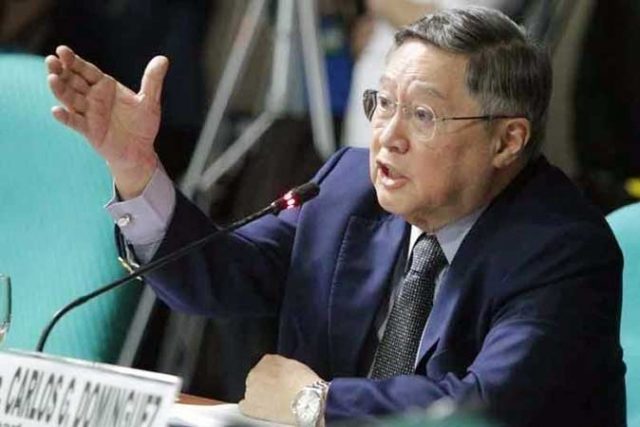
FINANCE SECRETARY Carlos G. Dominguez said a credit rating downgrade for the Philippines is possible, but noted that the ratings agencies are not accounting for the fact that nearly all economies have been beaten down by the pandemic, and called for the need to evaluate them on a new grading curve.

“Of course, there’s a possibility that our credit rating will be downgraded. But the question I have asked the rating agencies and they have not given me the answer: Have we slid down the curve or has the curve been forced downwards? If the curve has been forced downwards, is it still correct to use old standards?” he said in a speech at a Finex forum.

“I really don’t know. I’m not the credit rating guy. But if you want to use the old standards and downgrade us, fine,” he added.

Fitch Ratings maintained its investment grade “BBB” credit rating for the Philippines but revised its outlook to “negative” from “stable” due to the prolonged crisis.

Fitch also said it will continue to monitor the Philippines’ fiscal health.

Mr. Dominguez said he expects the debt-to-gross domestic product (GDP) ratio to peak at 60.8% next year with the government to remain an active borrower in order to fund measures to deal with the pandemic.

In a message to reporters Wednesday, Mr. Dominguez said economic managers expect outstanding debt to hit 59.1% of GDP by year’s end, from 54.6% in 2020.

After the peaking in 2022, the 2023 will decline to 60.7% in 2023 and 59.7% in 2024, he said in a speech delivered to the Finex forum also Wednesday.

“Lower revenue collections and a higher public health bill translate into budget deficits. To cover the budget gap, we had to borrow more. It is a necessity. This is the way the world works. Fortunately, with our high credit ratings, it was not difficult to engage in emergency financing with concessional rates,” he said in his speech.

The economic team in its latest medium-term plan capped the fiscal deficit at 9.3% of GDP in 2021, 7.5% in 2022, 5.9% in 2023 and 4.9% in 2024.

The government’s debt stock was estimated at P11.071 trillion at the end of May. Between the start of the year and May, the debt stock rose 13% following borrowing of an additional P1.276 trillion.

Government spending on the pandemic has hit P660 billion so far, including last year’s expenditures.

He reiterated that the Finance department will only support “reasonable and affordable” additional spending to stimulate the economy further to keep its budget deficit intact.

“Before we end our term, the Duterte administration will make sure that we help the next President and the next generations address fiscal and economic risks,” Mr. Dominguez said. — Beatrice M. Laforga

A much-deserved privilege: 20% discounts for national athletes and coaches

As a sports fan, I empathize with our athletes and coaches, who have spent a considerable amount of time preparing for the 2020 Summer Olympics, only for the Games to be postponed due to the pandemic. Nonetheless, these efforts do not go unnoticed. The state recognizes the invaluable contributions of athletes and coaches in bringing honor to our country by providing them with much-deserved privileges. With the Games now rescheduled to commence on July 23, it is an opportune time to recall Republic Act (RA) No. 10699 or the National Athletes, Coaches, and Trainers Benefits and Incentives Act. Signed into law on Nov. 13, 2015, RA 10699 provides a 20% discount to national athletes and coaches on their purchases of goods and services from various establishments.

While the Implementing Rules and Regulations (IRR) of this law mention the scope and qualifying conditions of the discount, some business establishments are reluctant to grant the privilege due to lack of clear-cut guidelines on their tax treatment. To address these misgivings, the Bureau of Internal Revenue (BIR) issued Revenue Regulations (RR) No. 13-2020, which comprehensively discusses the rules on granting the discount and the corresponding tax treatment from the perspective of business establishments.

Among the prerequisites for availing of the discount, the RR requires national athletes and coaches to be recognized and accredited by the Philippine Sports Commission (PSC) and the Philippine Olympic Committee (POC), including athletes with disabilities (AWD) who have represented the country in international sports competitions. They must then secure a Philippine National Sports Team Identification Card (PNST ID) and booklet from the PSC for presentation to business establishments.

Section 4 of the RR enumerates the goods and services that are entitled to the 20% discount, which are limited to those for the actual and exclusive use of the qualified national athletes and coaches. Services include transportation (i.e., land transportation including PUBs, PUJs, taxis and TNVS; domestic air and sea fares, including baggage allowance), accommodation (e.g., hotels, resorts and other lodgings), food (i.e., dine-in, take-out, and delivery, subject to conditions), as well as recreation (e.g., fees for use of sports facilities and equipment, admission fees for theaters, amusement parks, etc.). Stock, non-profit, and exclusive sports and country clubs are not required to grant the discount.

On the other hand, goods covered by the discount include medicine (including vaccines, vitamins and mineral supplements) and sports equipment such as balls, racquets, nets, footwear, protective and training equipment). The athlete/coach will need an endorsement from the appropriate National Sports Association to avail of the discount on sports equipment.

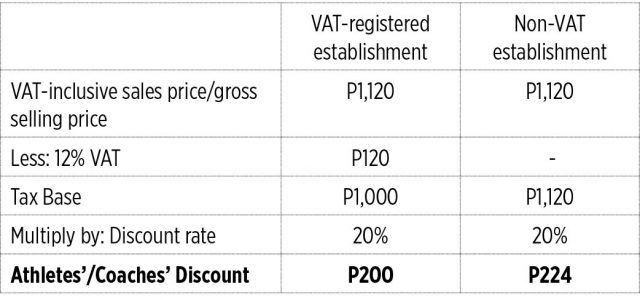
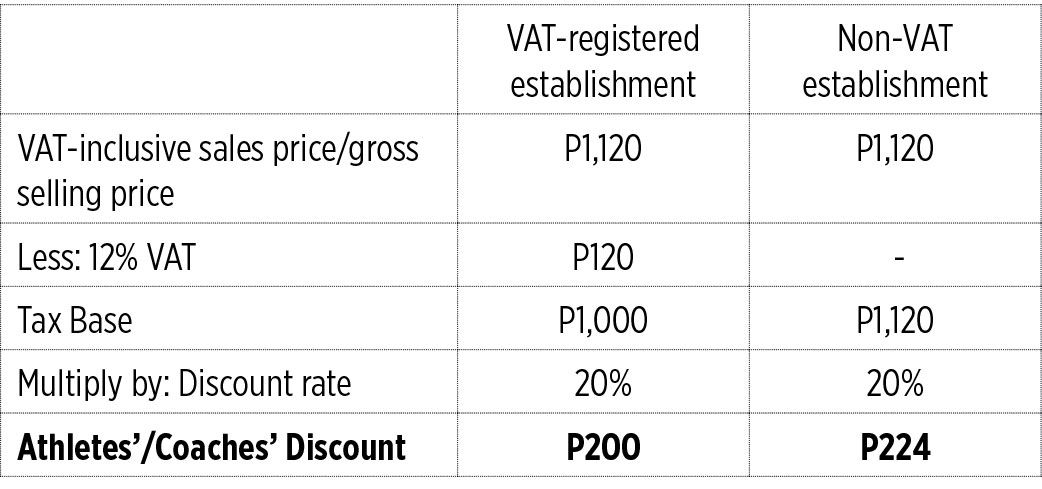
The 20% discount is computed based on the VAT-exclusive sales price, if the establishment is VAT-registered, and based on the gross selling price for non-VAT establishments. Moreover, the discount only applies to the amount of the sales attributable to the goods or services that are for the actual and exclusive use or enjoyment of the qualified athlete or coach. The illustration below provides how to compute the discounts for a VAT and non-VAT enterprise.
Business establishments granting the discounts may claim them as a deduction for income tax purposes, subject to proper substantiation requirements under the RR and the Tax Code. However, just like any other expense deduction, taxpayers who opt for the Optional Standard Deduction or the 8% income tax cannot claim it as a deduction.

Effectively, while labeled a “discount,” it is more akin to an “expense” incurred by the business establishments; thus, such discount would not be deducted from the gross selling price/gross receipts for purposes of computing VAT and the 3% percentage tax. While not expressly mentioned in the RR, the input tax arising from the purchases of the vendors related to the discounted sales should be creditable against any output tax of VAT-registered vendors since these are not VAT-exempt, unlike discounted sales to senior citizens and persons with disabilities (PWDs).

If the AWD also has a PWD ID, the AWD can use either the 20% discount under RA 10699 or under RA 10754 as a PWD. While the AWD can enjoy the privileges under both laws, they cannot avail of the 20% discounts conjunctively.

As a requirement under the RR, business establishments granting the discount must keep a record of sales to national athletes and coaches, consisting of the name, PNST ID number, date of transaction, gross sales/receipts, discount granted, and invoice number of every transaction. Failure to maintain these required records may be grounds for disallowance by the BIR of the discounts claimed as deductions for income tax purposes.

To manage potential abuse by athletes, trainers, or business establishments, the RR penalizes violators with fines and/or imprisonment upon the court’s discretion.

As the country’s torchbearers in the international arena, our national athletes and trainers deserve more than the applause, accolades, and medals they earn. They, who put their heart and soul into the games, certainly deserve more. For now, the least that business establishments can do is to recognize and implement RA 10699 effectively. Perhaps, in better days, legislation will expand the benefit further given their patriotic contributions.

The views or opinions expressed in this article are solely those of the author and do not necessarily represent those of Isla Lipana & Co. The content is for general information purposes only, and should not be used as a substitute for specific advice.


Carl Noah Luis A. Javier is an Associate at the Tax Services Department of Isla Lipana & Co., the Philippine member firm of the PwC network.

+63 (2) 8845-2728

carl.n.luis.javier@pwc.com