Home Blog Page 7197

Yuka Saso slips to 15th place at Trust Women’s Scottish Open

FILIPINO-JAPANESE Yuka Saso is tied for 15th place heading into the final round of the Trust Women’s Scottish Open. — NATIONAL GOLF ASSOCIATION OF THE PHILIPPINES FB PAGE

FILIPINO-JAPANESE golfer Yuka Saso slipped further at the Trust Women’s Scottish Open, ending tied for 15th place after the third round early on Sunday morning (Manila time).

Twenty-year-old Ms. Saso, the reigning US Women’s Open champion, carded a 2-over 74 on the third day of the tournament at the Dumbarnie Links in Fife, Scotland.

Ms. Saso, who opened with a solid 5-under 67 in the opening round for joint second, now has a total of 3-under 213 heading into the final round.

It was a struggle in the third round for the Philippine Olympian, which saw her committing four bogeys and only two birdies.

Entering the third round, Ms. Saso was at joint fifth place.

She now looks to gain ground and get back to contention on the final day of competition where she is set to tee off with A Lim Kim and Jeongeun Lee6 of South Korea.

The trio Charley Hull of England, Ariya Jutanugarn of Thailand and Ryan O’Toole of the United States lead the pack with identical cards of 9-under 207. — Michael Angelo S. Murillo

Messi departure painful but Barça can’t live in the past, says coach

FC Barcelona coach Ronald Koeman (right) with former star player Lionel Messi. — RONALD KOEMAN FB PAGE

BARCELONA — Lionel Messi is now in Barcelona’s past and the club must live in the present, coach Ronald Koeman said on Saturday, as his side prepare for a new La Liga season without their greatest-ever player — and battling through a financial crisis.

Barça is still reeling from the departure of its all-time top scorer to Paris St.-Germain (PSG) after being unable to afford to give the Argentine a new contract.

But Koeman said it was time to look to the future with Sunday’s game at home to Real Sociedad coming up fast.

“It’s painful for all Barcelona fans given what Messi has done for the club, but we cannot live in the past,” Koeman told a news conference. “I’m excited for the new season, and I hope the fans are enthusiastic, too. We have to live in the present and not the past.

“People have spoken a lot about Messi and that’s normal because of how effective he was and his quality. We won’t have him around anymore, but we still have a very strong squad. There’s no excuses now, we’ve got games to play and points to win.”

Barça did have some good news as it was able to register new signings Eric Garcia and Memphis Depay after Gerard Pique agreed to take a salary cut to help bring the club in line with the league’s financial fair play rules.

The club said in a statement Pique had agreed to take a “significant” pay cut, adding they were in talks with the other club captain Sergio Busquets, Jordi Alba and Sergi Roberto over a squad-wide reduction to help ease the club’s financial woes.

“We all know the club’s situation and that it needs help, so you have to appreciate the attitude of Gerard, of Sergi Roberto and Busquets,” added Koeman.

“It proves they are real club men.”

The Dutch coach added that Pedri and Eric Garcia would be available to face Sociedad despite playing the Olympic final for Spain last week after a grueling Euro 2020 campaign with the national team.

But he is missing some important players with goalkeeper Marc-André ter Stegen recovering from knee surgery, forward Ousmane Dembélé out with a muscle problem and new signing Sergio Agüero expected to be out until October. — Reuters

Japan PM urges travel restrictions as COVID-19 cases rise ahead of staging of Paralympic Games

TOKYO — Japanese Prime Minister (PM) Yoshihide Suga on Friday urged people to refrain from traveling as coronavirus disease 2019 (COVID-19) cases spiked to new records in Tokyo and nationwide, heaping pressure on the medical system.

His comments follow health expert recommendations to strengthen states of emergency now in place in the capital and other hot spots.

Days after the end of the Tokyo Olympics, Paralympic organizers decided to hold the event mostly without spectators to limit infection risks, local media reported.

Mr. Suga said the government will strive to restrain the flow of people in commercial areas, and he urged residents to avoid traveling during Japan’s traditional Obon holidays.

“I would like to ask citizens to avoid going back to their home towns or traveling, and to refrain from going out unnecessarily,” Mr. Suga told reporters.

Japan is experiencing a fifth wave of COVID-19, driven by the highly infectious Delta variant. A woman related to the Olympics was identified as Japan’s first case of the Lambda variant of the virus, first identified in Peru, Kyodo reported on Friday, citing government sources.

Planners of the Paralympic Games, due to start on Aug. 24, agreed on Thursday to limit spectators, following in the footsteps of their Olympics counterparts, the Yomiuri newspaper reported, citing Games sources. The organizer’s office told Reuters that no decision on spectators has been made.

The Tokyo government reported a record 5,773 new coronavirus infections on Friday, as well as an all-time high 227 patients with serious symptoms. New daily cases nationwide exceeded 20,000 for the first time, public broadcaster NHK said.

Tokyo is already under a state of emergency, the fourth so far in the pandemic, though some experts have said it should be expanded to cover the whole country.

Paralympic venues in Shizuoka, central Japan, will limit spectators to under 5,000 people, the Yomiuri said. Organizers are still considering inviting schoolchildren to events, it said. Officials previously said they planned to make a decision after the Olympics, which ended on Aug. 8.

The Paralympic competitions include swimming, table tennis, wheelchair fencing and basketball, with over 4,000 athletes with various impairments such as paraplegia. — Reuters

Kawhi’s decision

Kawhi Leonard’s decision to re-up with the Clippers was most definitely the biggest pieces of news to hit hoops circles last week. It wasn’t simply that he did so; it was that he affixed his Hancock on a four-year deal that includes a player option. That he previously declined a similar option in order to hit free agency was predictable; even as he did not seem to want to go anywhere else, he netted himself a cool $3.3 million through the upcoming season just for taking the one-step-back, two-steps-forward route. He may have let his employers sweat for a bit, but only a fool and his mother would have thought him ready to pack his bags — especially since he’s slated to use the near term convalescing from an anterior cruciate ligament tear.

Going by the same argument, however, Leonard’s final choice left not a few quarters pondering on the state of his health. After all, he could have opted for a one-plus-one arrangement that sets him up for a humongous payday next year via the Larry Bird exception. Given the five-year, $235-million windfall he would have been due, the $176.3 million he now stands to pocket pales in comparison. Logic seems to indicate that he went for the bird in the hand instead of the two in the bush because even he himself does not know what the future brings in the face of his history of injuries.

No matter the reason, this much is true: Leonard’s timeline now matches that of fellow All-Star teammate Paul George — which, from the vantage point of the Clippers, is likewise well and good. If nothing else, they at least have their window of opportunity down pat, and can make and execute plans accordingly. And, yes, they continue to have grand designs for their 2021-22 campaign; for instance, they brought back playoff revelation Reggie Jackson at the maximum-allowable $22 million for two seasons. Also on board anew are such notables as Nicolas Batum and Serge Ibaka. Their top dog may not be around, but their ambition remains.

In the face of the talent depth of acknowledged contenders, the Clippers aren’t anywhere close to keeping up. Still, they deserve major props for doing as best they can; they’re not taking any fliers, not tempting fate, not clinging to their snakebitten past. Instead, they’re hoping, perhaps even against hope, that they will be amply rewarded for their efforts — which, in the end, may yet make all the difference.


Anthony L. Cuaycong has been writing Courtside since BusinessWorld introduced a Sports section in 1994. He is a consultant on strategic planning, operations and Human Resources management, corporate communications, and business development.

Inclusive economics

FREEPIK

Action for Economic Reforms (AER) will soon commemorate its 25th year. It was incorporated as a non-stock, non-profit organization in November 1996. Since the pandemic will not go away soon, AER has opted to do away with the fanfare for its silver anniversary. Instead, it has opted to have low key but meaningful activities.

In this regard, AER fellow Bertie Lim has proposed a review of AER’s branding. He wondered whether different actors have the same perception or thinking about what AER is. This stems from the fact that AER is able to cooperate with a diversity of organizations and personalities across civil society, business, and government.

So, AER has set in motion the branding exercise, guided by Bertie’s son Laszio and Laszio’s wife Kankan. Laszio and Kankan run Invictus, an agency that helps companies or organizations develop strategic communications based on inspired learning.

The exercise begins with a review of AER’s vision and goals. We have had a series of discussions, asking fellows and staff what they think define AER. The gamut of topics includes AER’s core values, archetypes, distinct traits, audiences, and specific messages for each advocacy. The exercise, despite its length and seriousness, is refreshing and inspiring.

A most interesting segment of the exercise is going over the AER’s vision statement. This is the original statement: “A dynamic national economy characterized by sustainable development, equitable distribution of income, robust and fair trade relations, and democratic governance.”

While it says all the right things, we find the statement cluttered. And we think something is missing: Inclusion.

To elaborate, equitable distribution is about an outcome, but the model or approach to achieve this outcome can be top-down. The elite can allow instances of progressive taxation and spend for the underprivileged like what US President Joe Biden intends to do. But this alone will not change the reality that the ordinary workers and the ethnic minorities are far underrepresented from decision-making.

Democratic governance is basically majoritarian. But majoritarian rule can marginalize or disenfranchise the minority. This explains the phenomenon of illiberal democracy.

The concept of inclusion thus ties up democratic process, civil rights, and economic outcomes. Inclusion increases and strengthens the voice and representation of the poor and vulnerable. The exercise of their rights enables them to get an equitable share of the overall economic gains.

The AER’s discourse on inclusion has led me to study further what Rohini Pande, a professor of economics at Yale University, calls “inclusion economics.” Her championing of inclusion economics stems from her experience in her younger years.

She narrated her story to the International Monetary Fund’s F&D magazine (Summer 2021). Then an economics undergraduate student, Pande argued against affirmative action that guaranteed government jobs to the lower-caste Indians. Espousing the conventional economic argument, she thought that jobs should be rewarded based on merit, not through accommodation and decree.

Two years later, despite her credentials as a scholar at Oxford and a product of India’s elite education, she found herself in a similar situation faced by lower-caste citizens. At Oxford, she saw “a distinct hierarchy between those from the United States and those from Asia and Africa.” She said: “Scholars from poorer countries came to Oxford for a high-quality education not available in their home country, while for many American scholars it was just a two-year break before they returned to elite US universities.”

This experience made her re-examine fairness. Having seen the perspective of being disadvantaged, she understood and internalized the plight of India’s lower castes.

Pande, together with Charity Troyer Moore, has embarked on a program headquartered at Yale called Inclusion Economics. F&D describes this new initiative as using “data-driven approaches to work out ways for the poor to increase their influence and claim their fair share of growth.” Pande says that the work done by economists on inclusion must be “intentional.”

Inclusion economics inescapably addresses institutions. To quote Pande: “There’s a vicious circle of rising inequality and weakening institutions — particularly democratic institutions — which is going to be exacerbated by planetary limits on growth.”

Pande’s work on institutions is trailblazing. She enriches the discourse and the literature on institutional economics by doing data-driven studies on institutions at the national or local level.

She follows Douglass North, the father of new institutional economics, by answering the questions he raised by doing specific empirical studies. North’s abstraction of institutions shaping economic performance was likewise drawn from his specific studies in different settings.

Among the questions are: Under what conditions do institutions predict long-term economic performance. Under what conditions do institutions lead to reversals? In what ways do informal rules (or de facto, not de jure, institutions) shape economic development? How do the formal and informal rules interact?

But Pande also breaks from North’s neoclassical growth framework. For she makes growth constrained by inclusion. To quote her:

“Economics has a lot to say on how to have intentional policies that reach the poor and vulnerable, but I think we need to put it center stage and not assume that it will follow automatically from say, free trade or just opening up markets. It has to be something maybe intentionally recognized that we want to see the wellbeing of some of the poorest, most disadvantaged individuals improve. And that requires us to, very often, specifically put in place policies that don’t increase growth, that may not lead to less regulated freer markets, but serve the very specific purpose of ensuring inclusion.”

Further, a paper she co-authored with Christopher Udry titled “Institutions and Development: A View from Below” (2005), shows the limits of studies that depend on cross-country regression data and the attendant use of fancy instrumental variables (IV).

Specifically, relying on cross-country data does not have the ability “to disentangle the effects of specific institutional channels on growth or to understand the impact of institutional change on growth.”

They explain why this is so. First is the coarseness of the selected variables, given the wide range of variables and the large number of omitted or unobserved variables. Second is the bias for the formal and urban sectors of the variables for institution. Third is the paucity of IVs. Related to this is the domination of IVs (e.g., geography and pre-colonial and colonial history) that have persistent institutional effects. In the process, these IVs attenuate the estimates of the effect of any institutional change along the way.

To address these problems, Pande and Udry argue that the research on institutions and growth can be advanced henceforth by examining more micro-data relating to specific institutions and contexts within countries.

The implication of all this for AER is the necessity of doing data-driven work at the local or national level. It is exciting to make inclusion a new anchor of AER’s program. And it is challenging to do the advocacy where inclusion, economic institutions, and political economy intersect.


Filomeno S. Sta. Ana III coordinates the Action for Economic Reforms.

www.aer.ph

You thought this was just about Afghanistan? Think again.

ANDRE KLIMKE-UNSPLASH

THE SPILLOVER has already begun, before the Taliban have even reached Kabul. City after city is falling as the Islamist insurgents draw closer to the capital. And it will only get worse from here as the conflict expands beyond Afghanistan’s borders.

Jihadist groups based in the country, some with transnational agendas like al-Qaeda, now have a template for defeating governments backed by major powers and have been emboldened by the Taliban’s lightning-fast advance. This is happening as the jihadi ecosystem is experiencing the lowest counter-terrorism pressure in the last two decades, effectively getting free rein. Asfandyar Mir, South Asia security analyst for the US Institute for Peace, says it’s a dangerous combination when threats go up at the same time efforts to combat them go down.

“Central Asian jihadists have been flexing their muscle, anti-China jihadists have attacked Chinese personal in Pakistan, more regional violence is extremely plausible — the threat is ongoing, and we are just talking about an escalation from this point onwards,” Mir said. The collapse of the Afghan republic following the US departure would have regional significance like the post-9/11 invasion, or the withdrawal of Soviet troops and fall of the communist regime they’d backed. “This is a seismic shift that will change politics in this part of the world in ways” hard to foresee.

Expect the immediate danger to be regional — in South and Central Asia — as geography and capability limit the initial damage. Chinese interests in Pakistan have already taken a hit. In April, a car bomb exploded at a luxury hotel hosting Beijing’s ambassador in Quetta, not far from Taliban strongholds in southern Afghanistan. The attack was claimed by the Tehrik-i-Taliban Pakistan (TTP), or the Pakistani Taliban, a loosely organized terrorist group with ties to al-Qaeda, based along the vast Afghan-Pakistan border.

Last month, a bomb blast on a bus traveling to a dam and hydro-electric project in Dasu, near the Pakistan border with China, killed 12 people, including nine Chinese citizens. No one has claimed responsibility, but Beijing was so concerned that it hosted Taliban representatives for a meeting with Foreign Minister Wang Yi. At stake is $60 billion in projects in the China-Pakistan Economic Corridor, a crucial part of President Xi Jinping’s wider Belt and Road Initiative, along with significant Chinese mining interests inside Afghanistan.

While this wasn’t the Taliban’s first visit to China, the seniority of the Chinese representatives was unprecedented, as was the very public message that Beijing recognizes the group as a legitimate political force, Yun Sun, the Stimson Center think tank’s China program director, noted this week in an essay on the national security platform, War on the Rocks.  After posing for photographs with the group’s co-founder and deputy leader Mullah Abdul Ghani Baradar, Wang described the Taliban as “a crucial military and political force in Afghanistan that is expected to play an important role in the peace, reconciliation, and reconstruction process of the country.”

What Beijing wants in return is for the Taliban to live up to a commitment to sever all ties with terrorist organizations, including the TTP and the East Turkestan Islamic Movement (an outfit Beijing blames for unrest in its Xinjiang region that Washington removed from its list of terror groups in October after finding there was no credible evidence it continues to exist.) Any further attacks on Chinese nationals working in South Asia, whether claimed by the Taliban or others operating with its blessing, will no doubt impact future ties, though it’s unclear what China would do in retaliation.

With no major political or diplomatic push to blunt the Taliban’s advance or rein in the groups operating in its shadow, including al-Qaeda — much diminished 20 years after the US invaded Afghanistan to destroy them and their Taliban hosts — it’s a matter of when, not if, there’s an upsurge in terror attacks. The danger is particularly acute for the six countries bordering Afghanistan. Beyond China, they include Iran and Pakistan — as well as nearby India, which will be closely watching its only Muslim-majority province of Kashmir, the object in two of its wars with Pakistan, for resurgent violence. Russia will be concerned about the impact on Uzbekistan, Turkmenistan, and Tajikistan and any terrorist blowback onto its territory.

There’s the possibility that the major powers — the US, Russia, and China — might step in and convince their allies and friends to end hostilities. But analysts think that’s unlikely. The situation has festered since the US and the Taliban reached their agreement in February last year, and will continue to do so.

Extended international inertia is more probable. Look at Syria. After a decade of war and some significant US investment in money, military involvement, and political capital, Bashar al-Assad is still president. The country has the world’s largest population of internally displaced people (6.7 million), while 6.6 million refugees subsist mostly in Lebanon, Turkey, and Jordan. The threat posed by terror groups operating in and around Syria, as well as the use and proliferation of chemical weapons, remains a real concern. So does the conflict’s tendency to be a flashpoint for external players like Russia, Turkey, Israel, and Iran.

For Afghanistan, the next worry would be that foreign fighters again start pouring in from around the world. Insurgents from other nations are there now, but mostly from neighboring countries. Once they come from further afield, it increases the probability of attacks spreading much more widely.

Husain Haqqani, Pakistan’s former ambassador to Washington and now director for South and Central Asia at the Hudson Institute, says the Taliban remain connected to al-Qaeda and other international terror groups by ideology, shared finances and training, and even marriage. “Given that jihadists do not think much of international borders and consider the current global order un-Islamic, it is only a matter of time before they set their sights on Europe and the US again,” he said.

It’s hard to see how this ends well. Unless major powers do more than hold their collective breath and hope for the best, the fallout from their indifference will be felt well beyond Afghanistan’s borders.

BLOOMBERG

Save the restaurant industry

PCH.VECTOR-FREEPIK

The last 18 months was a “trial-by-fire” for the local restaurant industry. With government imposing the world’s longest, most stringent lockdown, restaurant operators found themselves with a mountain of obligations without the sales to back them up. Those with sufficient cash reserves were able to survive the onslaught but the thousands without ample cash runways had no option but to close permanently. Along with business closures came hundreds of thousands of lost jobs.

One of my businesses is a restaurant chain which is why I am well aware of how lockdowns affect the industry. Fortunately, our group has enough scale to survive the lockdown, but of course, not without accruing massive losses like everyone else. Still, we consider ourselves lucky to still be operating. We have seen too many of our industry colleagues succumb to insolvency over the last year.

The tragedy is that the government assumes (or would like to think) that take-out sales are enough to make restaurants survive. This is a great misnomer. Truth is, take-out sales comprise less than 10% of gross sales for most restaurant types. Hence, to prohibit or limit dine-in capacity by 50% or more automatically consigns a restaurant to losses.

This year, stringent lockdowns were hoisted over Metro Manila and Calabarzon in March and April, and again this month. The current ECQ (the strictest quarantine level, enhance community quarantine) came just as restaurants were beginning to recover. It wiped out whatever excess cash was raised in May, June, and July. Most restaurants are back to negative territory.

Government’s hit and miss and start and stop policies relating to contagion containment have caused more damage to the food and beverage industry than it may realize. Let us not forget, the Philippine economy is consumer led, one whose biggest sector is food consumption.

There is clearly a lack of balance between contagion containment and protecting the interest of the food industry and micro-, small-, and medium-sized enterprises (MSMEs), as a whole. Businessmen agree that government has been too liberal in declaring lockdowns without giving ample consideration to the plight of MSMEs. We think the IATF (Inter-Agency Task Force for the Management of Emerging Infectious Diseases) gives too much credence to the OCTA Research Group whom many agree is alarmist. It would do the IATF good to listen to business groups and give their voice the consideration it deserves.

The situation would be different if government provided direct cash subsidies to MSMEs whenever it declares a lockdown like other countries do. What actually happens is that MSMEs must survive on their own. Sure, loan facilities are available through government’s Small Business Corp., but the maximum loanable amount is only P5 million and the processing time could take up to three months, if one is lucky. This is too long to wait considering lockdowns are declared with only a one-day notice. Exacerbating matters is that portions of funds from Bayanihan II appropriated for MSMEs in highly affected industries (F&B and Tourism) have not been given out completely yet.

The plight of MSMEs is made worse by private banks. Despite government’s call for banks to be more liberal in granting new loans and re-structuring existing credit facilities to MSMEs, private banks are in fact doing the opposite. They call on loans even when they are not due, accelerate payment schedules, demand more collateral, and cancel existing credit lines. Banks are trying to hedge their risks in what is now a high-risk industry. Their actions only trigger more MSME closures. The Central Bank will do good by reviewing the MSME portfolio of banks.

There are 1.05 million business establishments operating in the Philippines, of which 996,000 are MSMEs. Of this number, the greater majority are involved in the food trade. While we understand that government must balance health concerns and business interests, we urge the authorities to put more weight on MSMEs survival. The sector is at its breaking point.

That said, we hope government will consider the following recommendations. First, if at all possible, do not extend the lockdown beyond Aug. 20. And moving forward, declare lockdowns only as a last recourse.

If lockdowns are a bitter pill we must swallow, government must at least provide a compensatory mechanism for beleaguered MSMEs. Direct cash infusions, tax holidays, and exemption from tax audits for 2020 and 2021 are relevant forms of support. Moreover, ample time must be given between the announcement and effectivity dates of lockdowns. This is to allow food establishments to consume their perishable goods.

To allow a higher dine-in capacity of 50% during MECQ and GCQ (the second and third quarantine levels) will provide food establishments with the volume they need to recover.

The restaurant industry must claw its way to survival until we reach herd immunity. This is the bleak reality. Until then, only government can provide the support the industry needs.


Andrew J. Masigan is an economist

andrew_rs6@yahoo.com

Facebook@AndrewJ. Masigan

Twitter @aj_masigan

The present is challenging, but the future offers hope born of innovation in healthcare

KATEMANGOSTAR-FREEPIK

THERE ARE CLOUDS overhead in Southeast Asia, as fresh COVID-19 infections and new variants drive rising cases and lockdowns in countries like the Philippines. But despite the current challenges, there is welcome light on the horizon as we look beyond the COVID-19 pandemic. In “The COVID-19 High-Wire Act Continues, But So Too Does Opportunity,” the Boston Consulting Group (BCG) explores the potential revealed through encouraging innovations emerging from a challenging 18 months.

Transformations in science and technology such as our COVID-19 vaccines promise an end to the pandemic. They also offer the chance to deliver better, fairer healthcare in the world that follows.

Transformation in a post-pandemic world at the time of writing our original white paper, “Detect, Develop, and Deliver: A Holistic Approach to Managing Outbreaks,” in February 2020, global case numbers sat at 78,000, and deaths at 2,500. Since then, the world has experienced over 4.3 million deaths, and more than 200 million cases. The unfortunate truth is these figures remain substantial undercounts, particularly in less-developed regions.

In our original paper, we argued the path to tackling COVID-19 was to Detect its spread, Develop healthcare and societal mitigations, and Deliver interventions that helped save lives.

Nations such as Australia, New Zealand, and South Korea showed early on that acting rapidly to tackle COVID-19 was the most effective strategy. But emerging waves driven by more infectious variants reveal how precarious that position can be. This changing situation can lead to rolling restrictions and an uncertain near-term future.

Much of 2020 was reactionary against COVID-19. Vaccines now offer us a route to sustained reduction of health impacts that ultimately chart us a path beyond the pandemic. Resurgent second and third waves in countries such as Thailand, Vietnam, and Japan that had previously done well to suppress the virus reveal the critical part vaccines play in steering beyond COVID-19. We cannot afford to be complacent about their impacts.

Ensuring equitable global vaccine access will be essential to a sustainable global solution. The Philippines itself has faced notable hurdles in delivering on this need, with supply chain pressures as vaccines were rapidly procured by more affluent nations. There are also real logistical challenges in planning a vaccine rollout in a nation which includes heavily populated major metropolitan areas like Manila alongside thousands of individual islands. The renewed nationwide vaccine drive supported by recently opened 24/7 vaccination hubs is a welcome step on this journey.

COVID-19 and its variants will never truly be eliminated — with vaccine hesitancy and healthcare access challenges — but a global commitment to vaccine provision is vital in managing the threat. It also paints a powerful picture of how innovations emerging during the pandemic could deliver a better world to follow.

Digital applications to track exposure to COVID-19 are the most obvious of these tools. Alongside them you can include the development of point-of-care diagnostics, data-driven analysis of disease outbreaks, new treatment modalities, and the vaccines which are now working to change the trajectory of this global pandemic.

These innovations did not appear in isolation but were built on existing or emerging technologies. What they have shown is how with the right policies and resourcing, such ambitions can change the long-term trajectory of global health. These innovations also built on existing relationships through public-private partnerships, allowing us to implement measures quickly and effectively, revealing how collaboration can drive forward positive societal and health impacts.

SUSTAINABLE TRANSFORMATION IS KEY
Radical transformations in the provision of healthcare during COVID-19 offer the potential for persistent positive change in a post-pandemic reality. While we are rightly focused on funding to ensure appropriate global access to vaccines now, the innovations and infrastructure designed to deliver them could promise greater opportunities for the future — if effectively sustained.

The current trajectory indicates a significant oversupply of COVID-19 vaccines into next year, offering a chance to pivot manufacturing, supply chains, and administration capacity towards traditional interventions alongside innovative new vaccines for conditions such as cancer.

Proof-of-concept for mRNA technologies — critical to several key vaccines — also offers a path to innovative treatments for indications from infectious disease to cancer. Leveraging an enhanced supply chain with 3D and flexible manufacturing technologies could amplify this opportunity.

The transition of testing capacity for COVID-19 is another encouraging area. Now imagine that testing innovation — alongside digital technologies used to track COVID-19 — rolled out to diagnose and track symptoms for infectious diseases, or major conditions such as diabetes or hypertension.

Elements such as digital telehealth services saw renewed focus during the pandemic, unlocking wider access to healthcare. Telemedicine provider Medgate reported a 170% increase in consultations after its partnership with the Department of Health during the pandemic, offering a potential positive vision of more accessible healthcare for future. This could be a particularly powerful opportunity for more rural areas of Philippines where access to trained clinicians is a major challenge.

We also saw an impressive array of additional technology-enabled solutions developed in response to the COVID-19 pandemic. These include artificial intelligence technologies and platforms with functionality to provide AI-enabled COVID-19 symptom screening and information sharing. These are just some of the remarkable innovations that hint at the potential for optimized healthcare provision for tomorrow.

Leveraging non-traditional frontline healthcare workers to deliver an expanding range of services, as we’ve seen with mass vaccination, also offers significant potential, particularly in less-developed countries with reduced access to traditional healthcare. In Manila, we’re seeing medical practitioners from doctors and nurses through to dentists and pharmacists employed to deliver 24/7 vaccination rollout.

Maintaining a spirit of clear communication and collaboration will also be fundamental to delivering on this promise. Tailored communication that targets specific communities has been an invaluable part of tackling COVID-19 around the world, and one which should be maintained in future. That offers a pathway to better engage and treat conditions from mental health to maternal health.

A RESILIENT FUTURE
It’s clear that there is no balancing act which enables countries to successfully navigate a false trade-off between health and the economy. It’s equally clear that vaccines form the foundation to a sustainable solution.

What we also wish to argue is the powerful opportunity we are now presented with — not just to build back to normal healthcare provision, but beyond it. The innovations adopted to tackle COVID-19 should be sustained and scaled if we are to ensure a more resilient healthcare system that delivers long-term benefits for Philippines and its people.

We undoubtedly face a challenging situation with the infectious Delta variant sweeping across the nation, but innovation offers us a route forward. Like any journey, we’re likely to face difficult bumps in the road, yet the remarkable power of our COVID-19 vaccines and associated innovations offer a glimmer of hope for a future of global healthcare.


Vincent Chin is the Managing Director and a Senior Partner Global Leader for BCG’s Public Sector practice.

Experts say world may never reach herd immunity against coronavirus

REUTERS

AS coronavirus disease 2019 (COVID-19) surged last year, governments worldwide touted the hope of “herd immunity,” a promised land where the virus stopped spreading exponentially because enough people were protected against it. That’s now looking like a fantasy.

The thinking was that the pandemic would ebb and then mostly fade once a chunk of the population, possibly 60% to 70%, was vaccinated or had resistance through a previous infection. But new variants like delta, which are more transmissible and been shown to evade these protections in some cases, are moving the bar for herd immunity near impossibly high levels.

Delta is spurring widening outbreaks in countries like the US and UK that have already been walloped by the virus, and presumably have some measure of natural immunity in addition to vaccination rates of more than 50%. It’s also hitting nations that have until now managed to keep the virus out almost entirely, like Australia and China.

This month, the Infectious Diseases Society of America estimated that delta had pushed the threshold for herd immunity to well over 80% and possibly close to 90%. Public health officials like Anthony Fauci have drawn controversy by shifting the goalposts over the past year, increasing the number of people who need protection before hitting herd immunity. Meanwhile, vaccine hesitancy and supply issues mean most countries won’t get close to even the original numbers.

“Will we get to herd immunity? No, very unlikely, by definition,” said Greg Poland, director of the Vaccine Research Group at the Mayo Clinic in Rochester, Minnesota.

Even a vaccination rate of as high as 95% wouldn’t achieve it, he said. “It is a neck and neck race between the development of ever more highly transmissible variants which develop the capacity to evade immunity, and immunization rates.”

NOT NATURE
Nature isn’t going to solve the problem, either. It’s unclear how long natural immunity gained by surviving COVID-19 will last, and whether it will be effective at fighting off new strains. Future variants, including some that could evade immunity even more efficiently than delta, raise questions about how — and when — this will be over.

“If it was as simple as getting the infection once means you are immune for life, that would be great, but I don’t think that’s the case,” said S.V. Mahadevan, director of South Asia Outreach at the Center for Asian Health Research and Education at Stanford University Medical Center. “That’s a troubling problem.”

Already there are signs that some people, and some places — like Brazil and other countries in South America — are being battered a second time by newer strains.

Without herd immunity, the virus could linger for decades in some form, possibly forcing the world’s most powerful nations to adjust their diverging strategies on opening borders and economies.

Countries like China that have pursued tight COVID-Zero policies by attempting to wipe out every infection, may eventually have to consider a looser stance. Others like the US and UK which have opened up despite a resurgence in the virus run the risk of wave after wave of infection.

Vaccines so far haven’t been the quick fix some had hoped for. Israel, among the most vaccinated countries in the world, has already started administering booster shots, amid evidence that the current immunizations aren’t offering the protection that was hoped.

The most powerful vaccines, including the mRNA shots from Pfizer, Inc., BioNTech SE and Moderna, Inc., would make it easier to get high levels of immunity since they are so effective. Yet breakthrough infections are possible with even these shots. The benefits of other approaches, including those made by China’s vaccine manufacturers, AstraZeneca Plc and Johnson & Johnson, may offer even less protection.  

Herd immunity is a real thing, protecting much of the world against viral threats from the measles to polio. Scientists credit it for helping eradicate smallpox. Having it as a goal likely helped the world embrace measures like wearing masks and social distancing. But it also created a false narrative.

“The focus on ‘herd immunity’ has, in my view, been quite damaging,” said William Hanage, an epidemiologist and expert in communicable disease dynamics at the Harvard T.H. Chan School of Public Health. “It presents people with an unrealistic vision of how the pandemic comes to a close and doesn’t account for the evolution of either the virus or the nature of disease in reinfections.”

Some countries learned the shortfalls of herd immunity the hard way. UK Prime Minister Boris Johnson originally planned to use it as a primary approach to COVID-19, suggesting some of his constituents could “take it on the chin” with natural infections before the magnitude of the damage became apparent.

Others are now throwing in the towel, with Indonesia most vocally leading the way. The world’s fourth-most populous nation determined that it would be impossible to stop the virus even if everyone in the country was immunized. It’s redoubling its efforts to promote mask wearing and social distancing, while continuing to boost its vaccination rate.

A member of the public gets her temperature checked at a vaccination center in Jakarta, on Aug. 4.

Meanwhile, Singapore and Australia are easing into opening, promising they will do so as they hit sufficiently high vaccination levels.

THE END
Despite evidence that it will be difficult or impossible to reach herd immunity, many public health officials aren’t willing to give up on it. Governments worldwide are focusing on widening inoculation programs.

Yet the individualistic approach by many countries, and vaccine shortages, are contributing to the global problem. The risk will remain for everyone, as long as any nation is experiencing massive outbreaks.

The world is unlikely to put the pandemic behind it until 2022 at the earliest, experts say. That target could be push back if the virus mounts another metamorphosis to become even more transmissible or even better at evading resistance.

There is hope for new vaccines and other approaches that could stop transmission more dramatically, but none of those are in human trials yet. It will be a few years before this is a real possibility.

Regardless, the end may not come via herd immunity. Instead, the virus has a high likelihood of remaining entrenched globally, causing outbreaks that are hopefully mitigated partly by vaccinations, masking and other interventions.

“Delta is not something we will be able to eradicate,” Mr. Hanage said. “Even Alpha would have been hard. However with sufficient immunity, ideally achieved by vaccination, we can expect it to become a much milder illness.”

The Spanish flu of 1918 may show how COVID may play out, the Mayo Clinic’s Poland said. It’s likely that variants will continue to emerge, forcing the use of boosters or routine immunizations, targeted to the newer strains.

“Then, if we are lucky, what is likely to happen is that this will become something more akin to influenza, where we will always have it,” Poland said. “It’ll become more seasonal, just like the coronaviruses that are already circulating, and we will just have to keep immunizing.” If things do play out like the flu, the world may have some version of COVID-19 a hundred years from now. — Bloomberg


Ivory Coast detects first Ebola virus case in 25 years

EN.WIKIPEDIA.ORG/NIAID

ABIDJAN — Ivory Coast has declared a first case of the Ebola hemorrhagic virus in 25 years, the health minister and the World Health Organization (WHO) said separately on Saturday.

Health Minister Pierre Dimba said on national television that it was an isolated case of an 18-year-old girl who travelled from neighboring Guinea.

The World Health Organization said in a statement that Ivory Coast confirmed the country’s first case of Ebola since 1994.

“This came after the Institut Pasteur in Ivory Coast confirmed the Ebola Virus Disease in samples collected from a patient, who was hospitalized in the commercial capital of Abidjan, after arriving from Guinea,” the WHO said in the statement.

The WHO said initial investigations found the patient had travelled to Ivory Coast by road and arrived in Abidjan on Aug. 12.

“The patient was admitted to a hospital after experiencing a fever and is currently receiving treatment,” it said.

Guinea — site of the 2014-2016 Ebola outbreak, the deadliest on record — experienced a four-month Ebola outbreak earlier this year that was declared over on June 19.

Guinea early this week also confirmed a first case of Marburg virus in West Africa. Marburg virus disease is highly infectious hemorrhagic fever similar to Ebola.

Transmission of both deadly diseases occurs through contact with infected bodily fluids and tissue, while symptoms include headache, vomiting blood, muscle pains and bleeding.

The WHO said there was no indication the current case in Ivory Coast is linked to the outbreak in Guinea earlier this year. It said further investigation and genomic sequencing will identify the strain and determine if there was a connection.

“It is of immense concern that this outbreak has been declared in Abidjan, a metropolis of more than 4 million people,” Matshidiso Moeti, WHO Regional Director for Africa, said in the statement.

“However, much of the world’s expertise in tackling Ebola is here on the continent and Ivory Coast can tap into this experience and bring the response to full speed,” she said. — Reuters

More than 13,000 more infected

PHILIPPINE STAR/ MICHAEL VARCAS

The Department of Health (DoH) reported 13,177 coronavirus infections on Friday — the second-highest tally since the pandemic started last year — bringing the total to 1.71 million. 

Friday’s tally was the highest since April 2, when 15,310 infections were recorded. 

The death toll rose to 29,838 after 299 more patients died, while recoveries increased by 4,322 to 1.59 million, it said in a bulletin. 

There were 96,395 active cases, 95.8% of which were mild, 1% did not show symptoms, 1.4% were severe, 0.97% were moderate and 0.8% were critical. 

DoH said 238 duplicates had been removed from the tally, 229 of which were tagged as recoveries. Ten recoveries were reclassified as active cases and 175 recoveries were tagged as deaths. Four laboratories failed to submit data on Aug. 11. 

Health Undersecretary Maria Rosario S. Vergeire told an online news briefing it was too early to say whether the enhanced community quarantine in Metro Manila would be extended after Aug. 20. 

The Financial Executives Institute of the Philippines said an extended lockdown would aggravate the hardship and suffering of people who have yet to recover from the ill effects of the pandemic. 

“The National Economic and Development Authority estimate of a P300-billion loss for the two weeks of hard lockdown is a significant amount for our economy,” it said in a statement. 

Meanwhile, the National Task Force against COVID-19 would prioritize the vaccination of people in places under a strict lockdown task force deputy chief Vivencio B. Dizon separately told a televised news briefing. 

He said the government would start using the two million doses of CoronaVac that arrived from China on Thursday and the Pfizer and Sinopharm doses donated by the United Arab Emirates that arrived on Wednesday. He added that 570,000 doses of the vaccine made by AstraZeneca Plc arrived on Friday. 

Also on Friday, the Food and Drug Administration (FDA) said the vaccine made by China’s Sinovac Biotech Ltd. has been the most administered brand in the Philippines, hence the greatest number of COVID-19 resurgence is among those who got it. 

FDA Director General Rolando Enrique D. Domingo said COVID-19 infections are not necessarily related to the effectivity of a specific vaccine brand. 

“Here in the Philippines, Sinovac and AstraZeneca have the most number of administered doses,” he told an online news briefing. — Bianca Angelica D. A؜ñago 

Pacquiao says he’s loyal to PDP-Laban

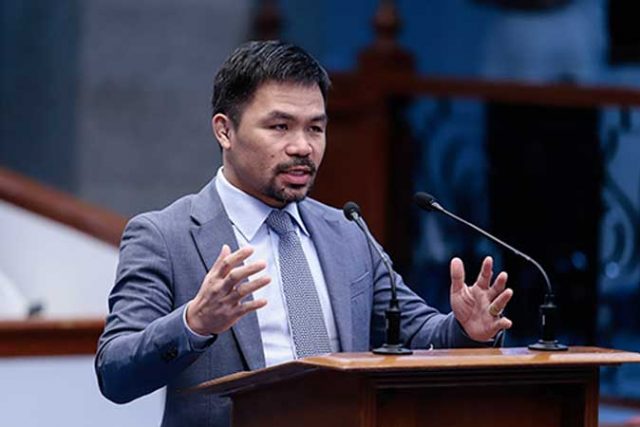
EMMANUEL D. PACQUIAO — HENZBERG AUSTRIA/SENATE PRIB

Senator Emmanuel “Manny” D. Pacquiao remains with the ruling Partido Demokratiko Pilipino – Lakas ng Bayan (PDP-Laban) and will be allowed to defend himself from allegations of disloyalty, according to its secretary general. 

Melvin Matibag, secretary general of one of PDP-Laban’s factions, said they would give the boxing champ a chance to respond to these charges. 

Mr. Pacquiao on Friday denied allegations that he was planning to convert the regional People’s Champ Movement into a national party. 

He said the movement remains a local party and his allegiance to PDP-Laban, which is headed by President Rodrigo R. Duterte, was unquestionable. — Alyssa Nicole O. Tan