Home Blog Page 7128

Job quality worsens in October despite reduced unemployment

THE LATEST labor data in October showed a mixed picture as the ranks of Filipinos who are jobless and looking for work declined, while those that are already employed but wanting more work increased compared with the previous month.  

The preliminary report of the Philippine Statistics Authority’s (PSA) October round of the labor force survey (LFS) put the unemployment rate at 7.4%, compared with 8.9% in the previous round. It was the lowest jobless rate in three months, or since July 2021’s 6.9%.  

In absolute terms, there were 3.504 million unemployed Filipinos in October, down from 4.255 million in September.  

Meanwhile, the quality of available jobs declined as the underemployed rate – the proportion of those already working but still looking for more work or longer working hours – increased to 16.1% from 14.2% in the previous month, equivalent to 7.044 million Filipinos, from 6.183 million a month ago.  

The underemployment rate in October was the highest since July’s 20.9%. 

The size of the labor force was about 47.330 million in October, down from 47.847 million in September. This brought the labor force participation rate to 62.6% of the working-age population in October from September’s 63.3%. 

The employment rate stood at 92.6% of the labor force in October, down from 91.1% in September. This is equivalent to 43.826 million employed individuals during the period from 43.592 million previously.  

In an online Q&A, the PSA attributed the slight improvements in employment to the easing of granular level lockdowns. However, they reiterated the full effects of the easing of restrictions will be reflected in the November data.  

Services and industry made up 57.6% and 17.8% of total employment in October, respectively, down from 57.8% and 18.7% in September. Meanwhile, agriculture’s share of employment increased to 24.6% from 23.5% a month earlier. — Bernadette Therese M. Gadon

INFLATION EASES TO FOUR-MONTH LOW IN NOVEMBER

Inflation eased for the third straight month in November to its lowest level in four months but continues to be above the government’s forecast for the year. 

Philippine Statistics Authority (PSA) data released earlier this morning showed headline inflation at 4.2% in November – the lowest since July’s 4%.  

The result was also down from 4.6% in October, but still higher compared with the 3.3% print in November 2020.  

The latest reading, which was higher than the median estimate of 4% in a BusinessWorld poll conducted last week, fell beyond the Bangko Sentral ng Pilipinas’ (BSP) 3.3%-4.1% forecast range for November.  

The downtrend in the overall inflation was primarily brought about by the slowdown in the inflation for the heavily weighted food and non-alcoholic beverages index which slid at 3.9% during the month, from 5.3% in October 2021. In addition, lower inflation was also recorded in the indices of alcoholic beverages and tobacco at 7.5% [from 9.8% in October], and furnishing, household equipment and routine maintenance of the house at 2.4% [from 2.5%],” the PSA said in a statement.  

Inflation has so far averaged 4.5% for the year. This was higher than the BSP’s forecast of 4.3% for 2021, as well as its 2-4% target band for the year.  

Food inflation registered at 4.1% in November compared with 5.6% in October and 4.5% last year.  

Core inflation, which excludes items such as food and energy that are prone to volatile price swings, inched down to 3.3% from 3.4% in October. This was, however, still faster than last year’s 3.2%. 

Meanwhile, inflation for the bottom 30% income households logged in at 4.2% in November. This was slower than the previous month’s 4.8%, but still faster than the 3.6% print in November 2020.  

From January to November, the bottom 30% inflation averaged 4.8%. 

The consumer price index (CPI) for the bottom 30% modifies the model basket of goods to reflect the spending patterns of the poor. This is compared with the headline CPI which measures inflation as experienced by the average household.  — Lourdes O. Pilar

A pioneering leader in car rentals

For over four decades, Diamond Rent-a-Car readily meets corporate, individual transport needs

In 1978, Diamond Rent-a-Car was founded with only one car to serve a single client. Now, after more than 40 years since being one of the industry pioneers, Diamond Rent-a-Car has expanded and kept its lead in providing a range of transportation solutions for corporate clients and short-term car rentals for individuals.

“In an industry and product where it is just thought as another form of vehicle acquisition or transportation outsourcing, we want to differentiate ourselves with other players in the market by providing top service,” the company said.

Diamond Rent-a-Car’s main business is the corporate operating lease of cars and short-term rentals.

In 2000, the company began to mainly focus on corporate transport and provide long-term leases as the core business, with more than 90% corporate clients.

Isagani G. Buenaflor, Chairman of Diamond Rent-a-Car and Teodorica S. Buenaflor, Corporate Secretary/Marketing Director

“It is not a core business activity of many corporate clients to manage all the activities that go with owning a car, especially if your fleet size is quite high,” Juan Quincy S. Buenaflor, managing director of Diamond Rent-a-Car, observed. “It can be daunting, and a lot of unnecessary and avoidable costs can be incurred if you manage your fleet ineffectively. Not to mention inefficiencies from downtime as well, which when left unnoticed, can snowball into major expenses.”

As such, Diamond Rent-a-Car offers a comprehensive transportation outsourcing tool to help corporate clients to make their costs minimized and predictable, as well as cut inefficiencies from downtime or handling non-core tasks.

Rates to avail these transport services for businesses, particularly on leasing, are tailored to the client’s requirements. The rate will mainly be determined by the type of vehicle and the length of the term. Some clients rent one car for the short term, while some companies reach up to hundreds of car leasing for as long as five years.

“If a company has a vehicle requirement, then we believe we have a solution for them,” Mr. Buenaflor assured. “We would be more than happy to have our sales division schedule a presentation for clients to understand the services we can provide them and find the best way to outsource their vehicle requirements to us.”

Meanwhile, Diamond Rent-a-Car also ensures that the level of service to individual clients is the same as that of corporate for their short-term car rental needs, which can be as short as 12 hours to monthly rentals.

The company’s cheapest car to rent daily is the Toyota Wigo MT, which clients can get for only P999 per day.

Individual clients can go to the Diamond Rent-a-Car’s physical offices or contact the company online to make a reservation. When the pandemic situation gets better, the company awaits to reactivate its outlets in SM malls.

And for the renters’ peace of mind, the cars of Diamond Rent-a-Car have comprehensive insurance and 24/7 roadside assistance.

Further, amid the rise of technological advancements, Diamond Rent-a-Car enhances its services and provides innovative solutions like predictive maintenance systems and online payments.

“We never stop developing our product to stay ahead of the competition,” Mr. Buencaflor said. “We may be the largest Filipino car rental company in the Philippines, but we act as if we are chasing a leader with how we strive to improve and be the best.”

Diamond Rent-a-Car had reached 1,500 vehicles at its peak before the pandemic. But due to the crisis effects on the industry, the company currently has over 1,200. It looks forward to the return of its growth in mid to late 2022.


Spotlight is BusinessWorld’s sponsored section that allows advertisers to amplify their brand and connect with BusinessWorld’s audience by enabling them to publish their stories directly on the BusinessWorld Web site. For more information, send an email to online@bworldonline.com.

Join us on Viber to get more updates from BusinessWorld: https://bit.ly/3hv6bLA.

A solid investment every ‘Southerner’ should have

One of the main reasons why Filipinos abroad work hard is to provide a good life for their families back home. For several years, they save up to invest for their future and at the same time explore various income-earning opportunities.

A real estate investment is highly recommended for overseas Filipino workers’ (OFW) not just as a potential source of income but also as a tangible testament of their diligent work.

RLC Residences once again sets Condo-living in the Philippines on a whole new standard as it introduces its latest nature-inspired development in the South that lets you stay connected to the people and places that matter. From modern-day furnishings to nature-inspired amenities sitting in verdant landscapes, Woodsville Crest is guaranteed to be more than your money’s worth.

A Place to Settle Down

When you’ve been working several years away from home, you start thinking of a retirement plan that ensures none of your hard work goes to waste. Buying properties for yourself is not something only you can own and benefit from. You will also have the opportunity to pass them on in the future.

Pegged as your oasis South of Metro, this property is ideal for those seeking a relaxing and quiet environment for their loved ones. Find your own breathing space around lush surroundings found just within the premises.

Woodsville Crest prides itself with its environment-conscious features and amenities that bring urban living to a whole new level. This residential sanctuary is home to open spaces that empower your leisure activities such as the jog trail, pools, grilling stations, veranda, and the resort-like clubhouse featuring a lounge area.


When the time comes that you decide to settle down, this place will give you your well-earned retreat everyday as you commune with nature in your very own refuge.

The Smart Choice

The high quality of living is no longer a dream that you see people abroad enjoy. Experience an upgraded life in the suburbs at Woodsville Crest.

Every unit is all for convenience and efficiency. Equipped with fiber-optic readiness and Smart Home features, working remotely has never been this easy. Here, you can have seamless control of your devices and appliances within your fingertips as these can easily be accessed via an exclusive homeowners’ mobile app.

In addition, you are entitled to various unit upgrades that cater to your every need, such as the must-have work-from-home nook, built-in pantry in the kitchen, shower enclosures, and even walk-in closets in the two-bedroom units.

All these and added storage solutions for whenever you need an extra room for your personal belongings and even bike parking slots to support and value your hobbies.

Stay Close to Life’s Essentials

Worry no more about jet lag or the long hours in traffic when coming home from the airport. In just minutes, you can arrive at Woodsville Crest as it is neighboring major airport NAIA.

This property is strategically located in Merville, Paranaque and within the established neighborhood of Woodsville Complex so you can be close to life’s essentials in no time. It’s also in close proximity to various health, BPO, and bank companies as well as within reach of major thoroughfares like EDSA, SLEX, C5, and C6, and two main highways. Furthermore, it’s a familiar and convenient location if you’re travelling to nearby provinces such as Tagaytay and Batangas.

With this new development, RLC Residences continues its commitment to raise the bar of living and presents you with a home that has you and your family’s future in mind.

Start a well-rounded lifestyle that is one with nature at Woodsville Crest and take advantage of the 5% launch discount offered for a limited time period. For more updates, check out www.rlcresidences.com, and follow on Facebook at facebook.com/RLCResidencesPH, and on Instagram @rlc_residences.


Spotlight is BusinessWorld’s sponsored section that allows advertisers to amplify their brand and connect with BusinessWorld’s audience by enabling them to publish their stories directly on the BusinessWorld Web site. For more information, send an email to online@bworldonline.com.

Join us on Viber to get more updates from BusinessWorld: https://bit.ly/3hv6bLA.

GDP to grow by 5.5% — GlobalSource

UNSPLASH

By Luz Wendy T. Noble, Reporter

THE PHILIPPINE ECONOMY will probably grow faster than expected this year, but elections next year and the growing inequality are risks to recovery, according to GlobalSource Partners, Inc.

The research consultant expects economic output to expand by 5.5% this year and in 2022, faster than the 3.5% estimate it gave in August. It is also better than the government’s 4-5% goal.

“We expect the unevenness in growth across income groups and industries reflecting firm and labor market scarring to continue and weigh on activity further out,” GlobalSource analysts Romeo L. Bernardo and Maria Christine Tang said in a report on Monday.

It would probably take until late 2022 for economic growth to go back to its pre-pandemic level, they added.

The latest forecasts presume that current vaccines will protect Filipinos from the Omicron coronavirus variant from South Africa, which scientists have said appeared to spread more than twice as quickly as Delta.

Elections for president and vice-president down to mayors must also be credible, the US-based consultancy said.

The high vaccination coverage in Metro Manila, the center of Philippine economic activity, would work to its advantage, it added.

More than nine million Filipinos in the capital region have been fully vaccinated against the coronavirus, according to data from the Department of Health.

“In this environment, we anticipate sustained growth in business process outsourcing, digital transformation and the resilience of remittances to support the economy’s recovery,” GlobalSource said.

But some provinces continue to have low vaccination rates. The Southeast Asian nation has one of the lowest vaccination rates, with just 41% of the population inoculated against the coronavirus.

The government seeks to fully vaccinate 54 million Filipinos by yearend.

GlobalSource expects Philippine economic growth to stay at 5.5% by 2022, which is below the state’s 7-9% target.

“There will be more uncertainty about sources of growth as poll-related spending disappears by midyear and focus shifts to questions of policy continuity under the new administration,” it added.

The economy expanded by 7.1% year on year in the third quarter, bringing the nine-month growth to 4.9%.

Gross domestic product (GDP) shrank by 9.6% last year, one of the worst in Asia and the Philippines’ deepest recession since World War II.

Meanwhile, GlobalSource expects inflation to hit 4.5% this year before easing to 3.5% next year.

It said the central bank would probably continue to support the recovery even as other central banks like the US Federal Reserve have started to reconsider their loose monetary policy.

“Comparing progress in economic recovery and health management at this time, we do not think that the Bangko Sentral ng Pilipinas (BSP) needs to follow the US lockstep, especially since the economy’s two growth engines, remittances and BPOs exports, will benefit from a weaker peso,” the consultancy said.

“However, depending on local growth outcomes and global financial market conditions at that future point, the BSP may also decide to take preemptive action and avoid what financial markets seem to fear, like belated, aggressive policy rate hikes,” it added.

Philippine office rentals likely to hit modest goal

OFFICE SPACE rented by companies is expected to exceed projections this year despite market volatility brought by a coronavirus pandemic, as demand from outsourcing companies continues to rise, according to Leechiu Property Consultants.

Office rentals had reached 539,000 square meters (sq.m.) as of end-November, 38% higher than the 389,000 sq.m. in 2020, it said in an e-mailed statement on Monday. It is still just a fraction of the 1.75 million sq.m. demand that Leechiu logged in 2019, before the world was battered by the health crisis.

“We are pleased to be seeing new brands from among the captives looking to offshore and outsource to the country,” Chief Executive Officer David T. Leechiu said.

Office space and rental prices have declined in many areas as many companies adopted work-from-home arrangements amid the pandemic. Some experts forecast a continuous shift to hybrid work mode once the global health crisis is over.

Leechiu in October said office space demand would reach 450,000 to 500,000 sq.m. by yearend due to rising demand from the IT-business process management companies.

The real estate consultancy firm’s recent study projected that IT-BPM companies would take up at least 54,000 sq.m. in the fourth quarter.

The property consultant expects the industry to rent at least 54,000 sq.m. this quarter, which should boost the full-year level to 229,000 sq.m.

It would have been higher if not for the lockdown enforced last quarter amid a fresh surge in coronavirus infections spurred by a more contagious Delta variant.

“Even at the height of the pandemic in 2020, IT-business process management companies took up space,” Mr. Leechiu said. “We foresee that they will remain a catalyst of the office segment for as long as outsourcing remains a viable solution from recovering firms in the West.”

Leechiu Commercial Leasing Director Mikail C. Barranda last month noted that while outsourcing companies continue to expand in the country, the growth is slower than before the pandemic hit.

The property consultant expects hybrid work arrangements to rise. Most companies will slowly rent more office spaces in the business districts, while some of their employees continue to work from home.

Online retail companies or the growing e-commerce market would also drive growth in leasing demand for both office and industrial spaces, it said.

Demand for industrial and warehousing space had also been rising to fulfill logistical requirements, it added. — Keren Concepcion G. Valmonte

Fitch eyes banking recovery next year; excess cash may fuel credit

STOCK PHOTO | Image from Freepik

THE PHILIPPINE BANKING INDUSTRY, which has not been spared from the global pandemic, is expected to recover moderately next year amid improving loan growth and as bad debts decline, Fitch Ratings said on Monday.

“Loan growth is likely to accelerate with the resumption of business and consumer spending, buoying revenues and offsetting the pressure on margins stemming from excess liquidity,” it said in a report. “This, along with lower — albeit still elevated — impairment charges, should lead to better net overall profitability.”

Local lenders’ net income had increased by 35% year on year to P168.213 billion as of end-September, based on central bank data. Lower losses on their financial assets have helped temper the profit decline.

Bank lending increased for the third straight month — by 3.5% — in October, mainly fueled by borrowings for productive activities, while consumer loans continued to shrink.

Lending had shrunk from December to July as banks and borrowers shied away from giving and taking credit even as the central bank infused about P2 trillion in liquidity to the financial system as part of its relief measures.

“Capitalization should remain stable, as improved profitability is offset by faster loan growth as banks ramp up lending once again,” Fitch said, noting that lending growth this year could hit 3%.

By 2022, credit growth could reach 8%, supported by a low base and economic recovery, the rating company said. It added that excess liquidity could help fuel loan growth next year.

A law that will help banks get rid of their bad loans and assets could also help ease their bad loans, Fitch said.

“We expect the largest banks to use the Financial Institutions Strategic Transfer (FIST) Act tactically in most cases, disposing of modest packages of nonperforming loans that have poor prospects of recovery so as to reduce their operational burdens,” it added.

Meanwhile, smaller and state-owned lenders would probably sell their bad assets more aggressively to improve their balance sheets and regain financing capacities.

The FIST law, which was enacted in February, allows financial institutions to sell their bad assets to asset management companies that are registered with the Securities and Exchange Commission.

Latest central bank data showed that the bad loan ratio had eased to 4.43% in September from a 13-year high of 4.51% in August. Soured loans held by banks fell by 1.3% year on year to P485.532 billion, but it rose by 30% from a month earlier.

The local banking industry’s assets had increased by 7.2% year on year to P20.079 trillion as of end-September.

Earlier, Fitch warned that the banking sector could face risks from their property exposures amid declining real estate prices.

The debt watcher has downgraded its outlook for six Philippine banks to “negative” after changing its credit rating outlook for the country to “negative” from “stable” in July.

A negative outlook means that ratings could be lowered within the next 12 to 18 months. — Luz Wendy T. Noble

PSE approves P1.77-B IPO of Figaro Coffee Group

BW FILE PHOTO

FIGARO Coffee Group, Inc. (FCG) has received the go signal from the Philippine Stock Exchange (PSE) for its P1.77-billion initial public offering (IPO), subject to post-approval conditions.

Food brands under Figaro Coffee Group include Figaro Coffee, Angel’s Pizza, Tien Ma’s Taiwanese Cuisine, TFG Express, and Café Portofino.

“The Exchange approved the application of [FCG] for the initial listing of up to 5,011,005,003 common shares, with a par value of P0.10 per share, under the Main Board of the Exchange, which includes the shares subject of the Company’s [IPO],” the PSE said in a listing notice on Monday.

Figaro will offer to the public 1.26 billion common shares for up to P1.28 apiece, with an overallotment option of 126 million shares. The company aims to price its shares on Friday, Dec. 10.

Assuming the overallotment option is exercised, its estimated public float will stand at 27.66%. Figaro’s post-IPO market capitalization may stand at P6.41 billion.

The company aims to conduct its offer period from Dec. 16 to 22, while its tentative listing date is on Dec. 31 under stock symbol “FCG.”

“The Exchange’s approval of the conduct of the IPO and listing of the Company’s shares is subject to its compliance with all of the post-approval conditions and requirements of the Exchange,” the PSE said.

Figaro plans to use net proceeds of the IPO to fund its store openings and renovations, finance the expansion of its commissaries, debt repayment, IT infrastructure developments, and for potential acquisitions.

For the offer, the company engaged Abacus Capital & Investment Corp., China Bank Capital Corp., and PNB Capital and Investment Corp. as joint issue managers, joint lead underwriters, and joint bookrunners. — Keren Concepcion G. Valmonte

Kiefer, Parks, Jr. lead B.League Asia All-Star squad

Kiefer and Thirdy Ravena — B.LEAGUE OFFICIAL FB PAGE

Six other Filipino players included with other Asians vs team of Rising Stars

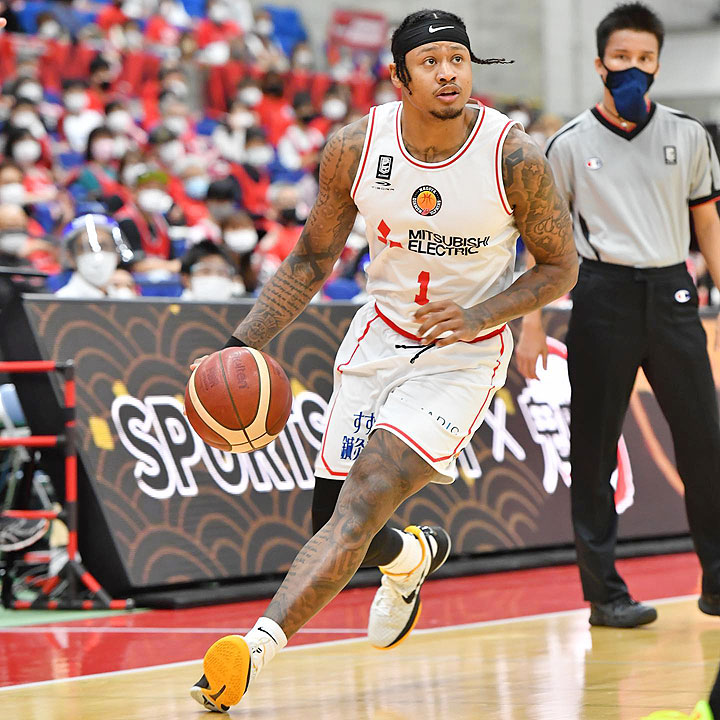
FILIPINO stalwarts bannered by Kiefer Ravena of the Shiga Lakestars and Ray Parks, Jr. of the Nagoya Diamond Dolphins will join forces in one team in the Japan B.League All-Star on Jan. 14-15 in Okinawa.

Messrs. Kiefer and Parks will lead the B.League Asia All-Star squad along with Thirdy Ravena (San-en NeoPhoenix), Kobe Paras (Niigata Albirex BB), Dwight Ramos (Toyama Grouses) and Javi Gomez de Liaño (Ibaraki Robots), who are all playing in Division I.

Though they are in Division II, Messrs. Juan Gomez de Liaño of Earthfriends Tokyo Z and Kemark Cariño of Aomori Wat’s have also been included in the squad composed of Asian standouts under the B.League’s Asian Player Quota program.

“I’m excited to play against the Rising Stars of the B.League, and of course with my Filipino brothers and from the other different countries that are being represented here,” said Mr. Ravena.

ASIAN PLAYERS
Aside from Filipino players, the Asia All-Star will parade Weijia Wang (Akita) and Liu Jin (Nishinomiya) of China, Brandon Jawato (Utsunomiya) of Indonesia, Yang Jae-Min (Shinshu) of South Korea, and Lin Chih-Wei (Fukuoka) of Chinese Taipei.

They will be up against the Japanese-laden Rising Stars, where Matthew Aquino (Shinshu) will suit up. The son of Philippine Basketball Association (PBA) legend Marlou Aquino has been playing as a local in the B.League due to his Japanese roots.

The Asia-Rising Stars Game will be on Jan. 14 at the Okinawa Arena before the main All-Star Game on Jan. 15 featuring B. White and B. Black All-Stars.

Kiefer and Thirdy will also see action in the Skills Challenge, Javi in Three-Point Contest and Mr. Paras in the Slam Dunk Contest. — John Bryan Ulanday

AC Energy signs P9-billion share purchase deal with Singapore firm

AC ENERGY and Infrastructure Corp. (ACEIC) has signed a P9.33-billion share purchase agreement with an affiliate of Singapore-based GIC Private Ltd. for a 17.5% stake in the former’s subsidiary AC Energy Corp. (ACEN).

Ayala Corp. said ACEIC will sell 2,689,521,681 secondary ACEN shares to Arran Investment Pte. Ltd. for P3.4678 apiece.

“The sale of secondary ACEN shares to Arran is meant to implement the Investment Agreement that the parties signed on Dec. 30, 2020 to enable Arran to own 17.5% of the outstanding capital stock of ACEN post completion of ACEN’s follow-on offering and the infusion by ACEIC of its international assets into ACEN,” the conglomerate said in a disclosure to the stock exchange on Monday.

Earlier this year, ACEN raised P13 billion from its follow-on offering after selling 2.01 billion common shares. It said the P3.4678 price was agreed on by the parties in their Dec. 30, 2020 Investment Agreement. Ayala said the “pricing mechanism is independent of future market price movements.”

The completion of the share sale is slated for Dec. 10 this year, subject to regulatory approvals.

On Monday, Ayala shares closed higher by 0.97% or P8 to end at P832 apiece, while listed ACEN declined 1.79% or 20 centavos to close at P11 per share. — Keren Concepcion G. Valmonte

LGBT-themed short awarded top prize at QCinema film fest

A FILM about a gay teenager who is eager for the man he met online to reveal his identity was named Best Film at the 2021 QCinema awarding ceremony for the QCShorts competition on Dec. 4 at Novotel Manila Araneta Center.

Directed by Trishtan Perez, i get so sad sometimes won Best Film “for its keen observation of a generation’s ethos expressed through an intimate and contemporary visual language, arranged in an editing style that eschews melodramatic sentimentality focusing on the immediacy of online interaction and the instant gratification or discontent that can be derived — a warning of the dangers of the internet and social media as surrogate to real life bonds,” the citation read.

Ampangabagat Nin Talakba Ha Likol (It’s Raining Frogs Outside), which follows a woman who returns to her hometown to confront a house that distressed her, won the Gender Sensitivity Award. Directed by Maria Estela Paiso, it was awarded “for its artistic and strong sense of individuality expressed in a unique work that arguably transcends any form of misplaced alibis, propagandas, battles, and victories. Letting a film be a film. Letting the work speak for itself.”

Skylab, which follows two troubled boys waiting for doomsday when a satellite falls to the earth, bagged the NETPAC Jury Prize. Directed by Chuck Escasa, it was awarded “for presenting through striking images a significant and poetic story told from the perspective of schoolboys in the ’70s, who fear the end of the world, but soon realize that the dark forces that can change their lives are much closer to home.”

Meanwhile, Miko Livelo and Mihk Vergara’s MIGHTY ROBO V, about a documentary crew’s discovery of the flaws of a government institute’s program, won Audience Choice Award.

This year’s QCShorts were produced with a production grant worth P350,000 with ownership of film rights. The other films included in this year’s lineup were Henry by Kaj Palanca, and City of Flowers directed by Xeph Suarez.

The 9th QCinema International Film Festival held a hybrid edition with theatrical screenings at Gateway Cineplex 10 and online streaming via KTX.ph from Nov. 26 to Dec. 5. — Michelle Anne P. Soliman

Worth the patience

The Caligula Effect 2 — NINTENDO.COM

Video Game Review
The Caligula Effect 2
Nintendo Switch

Grand Theft Auto: The Trilogy – The Definitive Edition
Personal Computer via Steam

Mary Skelter Finale
Nintendo Switch

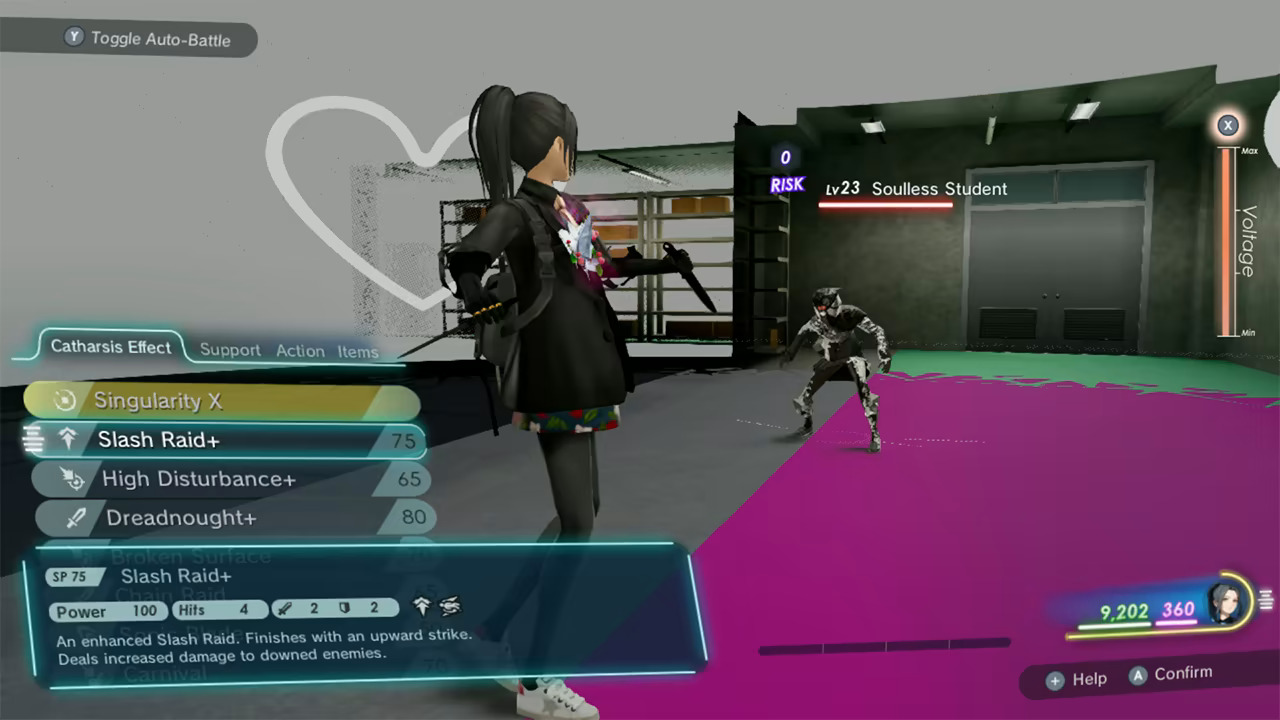
WHEN The Caligula Effect was released in 2016, it boasted of novel concepts, a not insignificant feat given the saturation in the industry. Centered around the idea of manipulating your actions during set intervals during combat, Caligula Effect was a game about push and pull. Each action you take would play alongside that of your opponent’s, and to really make the most out of your movements, you had to plan and compensate for how fast or slow they were, and how agile your opponent could be. This meant playing to your strengths as well as to your opponent’s weaknesses, opening up a surprisingly complex game of cat and mouse. You had legitimate options, like making the timing of your movements to just be slightly faster than your enemies’ so that your actions would counteract theirs. You could prepare moves that propelled you out of the range of their attacks, or launch deadly combos head-on and rely on having enough leeway to be able to dodge or run from their swings. You could even hope to interrupt the channel of their attacks and make them waste time trying to recover. It was a unique, if odd, system, but one that rewarded your patience and effort if you took the time to learn its nuances.

The Caligula Effect 2 demands much of the same patience to really get the most out of it, as it keeps similar battle systems, writing themes, and plot points to the original. However, where the original had faltered, Caligula Effect 2 seeks to pick up the slack, doubling down on its charm to keep you interested, all while slowly getting you to master its singular intricacies.

In The Caligula Effect 2, you start off in the world of Redo, run by the mysterious figure known only as Regret. During one of your school days, a crack in the sky opens up and exposes Redo as a fake virtual world. Meeting up with “X”, a supposed daughter of the antagonist in The Caligula Effect, you make up your mind to escape Redo and form the Go-Home Club, a ragtag bunch of other similar-minded students hell-bent on returning to the real world.

It’s a novel scenario, and The Caligula Effect 2 manages to leverage it well. The high school motif isn’t just for show, but also serves as a nice backdrop of you slowly learning the ropes of the unfamiliar environs you find yourself in. This is mostly done through exploration and combat. And, yes, it has all the staples of a good Japanese role-playing game, with dungeons to explore, quests to take on, characters to level up, and enemies to beat down and overcome.

At first glance, The Caligula Effect 2 might seem like standard fare, but two things really stop it from feeling like just any other cookie-cutter title. The setting of the world is its biggest plus, giving it a lot of leeway in how it is able to present itself. The supporting characters you meet are more complex than they seem, and have far more emotional baggage than their appearances imply. After all, in a virtual world, these same appearances can be deceiving, and the backstories they have make for some grim but interesting stories, often revealing details of troubled pasts and long-term trauma. It’s a bit on the nose with some of its reveals, particularly when they come from characters living in an idyllic world based around the escape of “Regret,” but for the most part, they are handled well, and give the story a surprising amount of weight behind it.

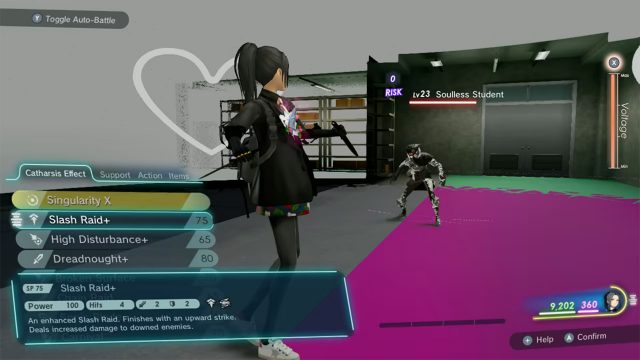
However, the plot is only half of a JRPG. Combat is another important part, and it’s one that The Caligula Effect 2 does pretty well. While it uses the timing-based combat frame of the first game, the system is now far more satisfying to engage in. Enemies can be juggled and interrupted during their attacks. The counters do wonders in allowing you to break an opponent’s guard or exploit their weaknesses, encouraging you to go all out in every battle you face. And while attacks do force you to commit, the ability of party members to cover for another’s frailties makes for a surprising amount of depth. It’s honestly a lot of fun, and with the game constantly encouraging you to push your limits, it’s an easy system to get used to, even if it’s conceptually hard to wrap your mind around sometimes.

As it is, the biggest issue The Caligula Effect 2 can run into is mostly in its optimization. Content-wise, Caligula Effect 2 has you covered with its interesting story, engaging combat, and nice atmosphere; however, it seems to be weighed down by technical issues, particularly when the Switch is undocked. Some slowdown during flashy combos do take a bit of wind off the game’s sails, particularly when it’s all about you needing to push your limits.

That said, The Caligula Effect 2 is all that it advertises itself as, and more. It’s a weird, interesting, but enjoyable JRPG, and it’s one that isn’t afraid to go into darker, more sensitive topics while still being respectful of all sides. It might not be a genre-defining game, but it’s still extremely enjoyable, and those who had a soft spot for the first game, or want a new JRPG to pour their love into, will certainly find lots to enjoy in Nippon Ichi Software and Historia Inc.’s home run.

THE GOOD:

• Enjoyable battle system that encourages experimentation and pushes you to your limits

• Grim but solid backstory, with good emotional payoffs for delving into them

• Engrossing theme and setting

THE BAD:

• Minor technical concerns

• Suffers from JRPG repetitiveness, particularly given the need for you to launch combos

• Mediocre padding in regard to extra content like side quests

RATING: 9/10

POSTSCRIPT: Few game series can lay claim to the gravitas that Rockstar Games’ Grand Theft Auto series carries. Like it or hate it, Grand Theft Auto is iconic in what it does, and brings to the table its intense stories about living the life of a criminal hand in hand with its robust, enjoyable open-world setting. With a free sandbox to explore, many side activities to enjoy, and plenty of characters to love, it’s no wonder that so many have such an affection for the franchise.  With the Grand Theft Auto releases being solid hits all around, and with plenty of remasters already lining the industry landscape, it really was only a matter of time before Rockstar Games did the same and remastered their older titles.

Grand Theft Auto: The Trilogy – The Definitive Edition is exactly that, overhauling Grand Theft Auto III, Grand Theft Auto: Vice City, and Grand Theft Auto: San Andreas with high-resolution textures, smoother frame rates, and a few new extra goodies that would have any big fan of the franchise salivating. After all, what better way to experience, or reexperience, Grand Theft Auto at its best?

To this extent, Grand Theft Auto: The Trilogy – The Definitive Edition delivers on getting its three games out. These three releases bring to the table their original content with some much-needed quality-of-life improvements to boot. The games themselves are mostly present in their original quality, and barring a few minor alterations such as a modernized control scheme, it’s the same games enjoyed via a modern system.

Unfortunately, Grand Theft Auto: The Trilogy – The Definitive Edition’s launch has been far from smooth, marred by technical issues and graphical bugs that diminish the experience greatly. The graphics for the most part have been upscaled. The resolution has been upped, and a distinct art style has been applied to make the lighting shine. Environmental effects like rain and lightning have been added, and when they work fine, they add to the charm of the game; an almost surreal feel will engulf you as you see bright neon lights reflect off concrete buildings.

However, the texture upscaling in Grand Theft Auto: The Trilogy – The Definitive Edition is far from perfect. Some character textures have been stretched even more across their models, accentuating the looks and designs that already seemed out of place in the original releases. The removal of the games’ fog effects hasn’t removed the texture pop-ins, and some areas look considerably worse when you can see vehicles and people spawn in. Worse, the rain effect at times just obscures the game screen, and can even follow you when you’re under buildings. These are all-new features with all-new bugs, and while the game is still playable, they do ruin the concept of a definitive edition if it feels undercooked.

There’s also the audio remaster in Grand Theft Auto: The Trilogy – The Definitive Edition. Characters sound muffled and distant, and while the original voices have been kept, the sound quality is far from what you’d expect of a company whose previous releases have all been of topnotch quality.

The technical missteps in Grand Theft Auto: The Trilogy – The Definitive Edition wind up hurting the gameplay. Issues like waypoint bugs, car sizes expanding when turning, and a fairly janky auto-aim system prevent it from feeling polished and ready. Instead, a lot of the time, it feels like both a step forward and a step back. Better-looking graphics, but more bugs to deal with. More QoL features, but more of the ways these same features interrupt the game flow. There’s a bizarre give and take that serves to highlight its wanting performance.

Which is just too bad, because Grand Theft Auto: The Trilogy – The Definitive Edition has a lot going for it. Rockstar Games pledges to keep working on it until it’s worthy of its legacy, not an empty promise given the publisher’s excellent track record. Until then, however, it’s a work in progress that is, at best, a sign of better things to come.

THE GOOD:

•Still-excellent storylines

•Quality-of-Life improvements

• Control updates suited for current-generation specifications

THE BAD:

• Imperfect texture upscaling

• Unbalanced audio remaster

• Technical missteps get in the way of gameplay

RATING: 6/10

THE LAST WORD: Mary Skelter Finale is an interesting experience. Its animé visuals belie a surprisingly engaging story that wraps up the series with its grit. Featuring a fairly robust customization system inside a dungeon-crawling RPG, Mary Skelter Finale is a type of game very rarely seen. At times, it can get overwhelming in its ambition, particularly with its long story segments. Underneath these flaws though, it’s still able to keep you immersed not just with its solid RPG gameplay, but also with its stories, characters, and the world you find yourself in.
And what a world it is. Mary Skelter Finale’s environs boast of fantasy and pure horror combined, featuring twisted monsters and cutesy characters in the same frame. It may feel disjointing and disjointed, but the seeming dichotomy plays perfectly into its dark fantasy. You’ll find yourself evading nightmarish ghouls that stalk you throughout colorful labyrinthine corridors. You’ll engage with the twisted denizens that lurk within the shadows, and you’ll even be playing to the whims of the dungeon. The supposedly disparate ingredients make for an experience that is, at times, hard to describe, but it tries its best to mitigate these hurdles, especially for newcomers.
For starters, Mary Skelter Finale has a “Before Story” prologue that tries to condense the plot points of the previous games into a digestible format. Numerous tutorials litter the game’s earlier stages as you play, and each of them explains the core mechanics you’ll be encountering to make sure you’re never unprepared. The interface is not perfect, especially as these concepts begin to blend in the later levels, but the attempt is no less daring in the deliberate intent to stray from the typical, and certainly a welcome change to veterans of the genre longing to go through novel experiences.
The mechanics aren’t that hard to understand, either. Things like switch puzzles and character progression are pretty standard fare for the genre, but the unique setups are where Mary Skelter Finale really stands out. The Nightmare chase for instance, adds a bit of tension to the exploration, forcing you to hurry your actions even as you’re being shadowed by an invincible boss monster. The dungeon also has a personality and set of desires, and fulfillment of the latter, usually by fighting in certain ways or exploring certain areas, gives big benefits and incentivizes risk-taking.
These are mostly minor things on the whole, but when mixed together, makes for a unique RPG experience that has a constant forward momentum. At very few points do you really feel like Mary Skelter Finale drags, and when it does, its humor and just the general feel are usually ample compensation.
That said, Mary Skelter Finale does have pacing issues that arise mostly from the story and the visual-novel-style conversations that come with it. The quality of these is a mixed bag; the writing tends to be very good on the whole, but the mere presence nonetheless kills pace and often serves as interruptions during gameplay. You’re taken away for minutes on end from your dungeon-crawling experience, not all that bad the first few times they occur, but subsequently winding up as tests of patience.
True, Mary Skelter Finale can be played and enjoyed without you going through most of the story segments. On the other hand, but it’s when the plot is threshed out that the game truly begins to shine — an unavoidable paradox. The atmosphere is already laid on thick with the world you explore and the characters you encounter. The story walks the narrow line between hope, humor, and horror. The areas you explore and the actions you perform always feel just a bit off and clashing. Which is why it’s tonally perfect for what it has on hand. The series has always pushed the boundaries of what you can expect, and Mary Skelter Finale is a culmination of all of its past ideas, combined into a solid game that has animé-style characters fighting off against three-dimensional abominations.
Mary Skelter Finale is weird, that much can be said, but it’s weird in a good — make that very, very good — way that underscores its uniqueness. If nothing else, it’s an outstanding title with an edgy personality, and if you can look past its cartoony visuals, you will find a strong dungeon crawler boiling beneath its surface. At the same time, you would do well to embrace the insanity that Mary Skelter Finale wants to push through skillful writing. Its pacing leaves much to be desired, but it’s worth the necessary tedium if you gladly invest your time and patience. Highly recommended.

THE GOOD:

• A sterling wrap-up to the series, embodying everything the previous games had in a bigger, better way

• Very solid dungeon-crawler gameplay, with lots of interesting mechanics to make it stand out

Solid writing and visuals, with strong messages underneath

THE BAD:

• A sterling wrap-up to the series, embodying everything the previous games had in a bigger, better way

• Pacing is a real issue in this type of genre, especially when some areas tend to go on and on

• Visual-Novel style cutscenes and conversations can be very off-putting

• Very easy to get lost in the story if you aren’t willing to go through the prologue

RATING: 9/10