Home Blog Page 6972

Coronavirus pandemic worsens gender balance, hurts Filipino women the most

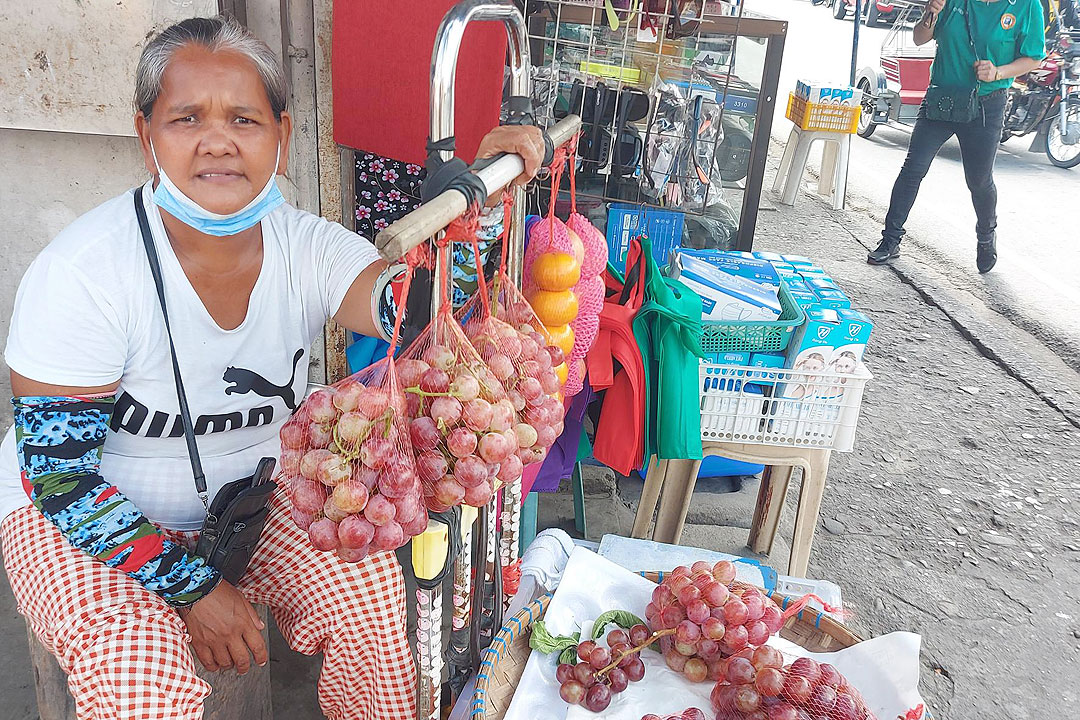
Patricia M. Marasigan, 46, sells grapes and oranges outside the Batangas City Public Market.

By Luz Wendy T. Noble, Reporter

MARY GRACE T. CANGMAONG, 48, lost her job as a saleslady at the Chinatown Gold Center in downtown Manila after it was closed in mid-March 2020 amid a coronavirus pandemic.

Her salary was below the P537 daily minimum wage when adjusted for inflation, but it did help pay the rent and in feeding their four children, she said by telephone. “I only finished high school so it’s difficult to find a good job,” Ms. Cangmaong, whose husband is a security guard, said in Filipino.

Women and girls face distinct hardships amid the pandemic that has run for almost two years now, and the fallout exposed how deeply gender inequality remained embedded in the world’s political, social and economic systems, according to the United Nations.

Nowhere is this more evident than in the Philippines, where women face challenges such as economic insecurity, access to healthcare services, gender-based violence and other human rights violations.

“If you are an employer, your instinct would be to let go of the women first because they’re not primary breadwinners,” Nathalie Lourdes A. Verceles, director of the University of the Philippines Center for Women’s and Gender Studies, said in a Zoom Cloud Meetings interview. “You assume that there will be a primary breadwinner, anyway. You feel less guilty.”

Filipino women are mostly seen as primary homemakers while men are viewed as breadwinners, she pointed out.

About 5% of women worldwide lost their jobs during the pandemic, compared with 3.9% for men, according to a study by the International Labour Organization (ILO) published in January.

The Philippine jobless rate hit 8.1% in August, but it was worse for women (8.3%) than for men (7.9%), according to data from the local statistics agency.

It didn’t help that contact-intensive sectors such as tourism, hospitality and sales, where many women are employed, were among the worst hit by the pandemic, said Eylla Laire M. Gutierrez, a research manager from the Asian Institute of Management (AIM).

Women also play a big part in the country’s informal economy, making the losses disproportionately bigger for them, she said in a Viber message.

“As a member of the informal sector, Filipino women have a lower earning capacity, hence lower savings,” Ms. Gutierrez said. “This also means that women have little to no access to labor protection such as vacation and sick leaves.”

A study by McKinsey and Co. showed that even for couples who are both employed, mothers are twice as likely as fathers to spend five extra hours a day on house chores during the global health crisis.

Aside from house chores, Ms. Cangmaong also tries to teach her children  at home lessons that she finds are becoming more difficult. She also must ensure that the family keeps its spending within the budget.

Because women have the burden of taking care of their families, they often suffer from stress and anxiety caused by the current work-from-home setup, Ms. Gutierrez said. “Women during this pandemic are forced to balance work with housework and care.”

“The mother is in charge of making sure the budget is spent wisely,” Ms. Cangmaong said. “It’s stressful when the money is simply not enough. Sometimes, you can’t buy things you want because there’s no money. And it’s difficult for people my age to find a job.”

BLEAK PROSPECT
Some women have been forced to quit their jobs so they can take care of their family better.

“It’s possible that women are voluntarily opting out of the labor force because of increased household chores,” Ms. Verceles said. This, as some women are part of the so-called sandwich generation — middle-aged people who support their aging parents and children whether financially, physically or emotionally, she added.

Some women who left their work temporarily face bleak job prospects, Ms. Gutierrez said. Many of them might have to return to lower skilled and lower paid jobs, she added.

On the bright side, the pandemic showcased women’s contribution in fighting the pandemic, particularly healthcare frontliners and workers in the retail industry, Ms. Verceles said.

“We need to recognize that women are playing significant roles in responding to the pandemic, including as frontliners and elected officials,” she said. “They are overworked and underpaid and they are still waiting for their hazard pay.”

Ms. Verceles also noted how women in the family are tapping their cooking and baking skills to help augment the family income.

On the leadership front, she noted how some economies with female leaders demonstrated good pandemic management including Taiwan and New Zealand, which are led by Tsai Ing-Wen and Jacinda Ardern.

“Societal institutions train us women to be caring, sensitive, empathetic, understanding, emotionally open, patient, intuitive, creative and organized,” Ms. Verceles said. “What is considered feminine are values that all, regardless of gender, ideally should have during a pandemic.”

The government should ensure inclusive recovery by taking into account the fact that men and women are affected differently by the pandemic, Ms. Gutierrez said. Policy makers should craft recovery plans that are gender-sensitive, including support for childcare facilities, she added.

More women in government could help address the gender gap, Marikina Rep. Stella Luz A. Quimbo said in a Viber message. The lawmaker, who is a member of the House of Representatives Committee on Women and Gender Equality, said only 28% of House lawmakers and only seven of 24 senators are women.

“Sadly, both houses of Congress still fall short of having that 30% critical mass mentioned by some scholars, much less equal, 50-50 representation,” she said.

The House is discussing a bill on gender responsive and inclusive pandemic management, which seeks to ensure mechanisms are in place to help women deal with job loss and business closures, reproductive health, economic empowerment and security against gender violence.

“It’s high time to consider subsidizing childcare facilities in ensuring women’s continued participation in the workforce and in adapting to the needs of this pandemic,” Ms. Gutierrez said.

Women should also be given wider access to capital to help them set up their own small businesses, Ms. Verceles said.

“We want to pull women out of that rut where they only do work and earn enough to meet their daily needs, and not to save,” she said.

In the end, mothers can only dream of better days ahead not just for themselves but also for their children.

“My wish is for this crisis to finally end,” Patricia M. Marasigan, a 46-year-old fruit vendor from Batangas City, said in an interview. “I can barely earn because I have fewer customers. I want our life to be normal again.”

Asia stocks hurt as profit forecasts at 12-year low versus global peers

STOCK PHOTO | Image by Yibei Geng from Unsplash

ANALYST estimates for Asia’s corporate profits have fallen to more than a decade low relative to global peers, and further downgrades are on the horizon as China’s economic growth slows and global supply constraints remain.

After soaring past pre-pandemic levels on vaccine and reopening optimism, the 12-month forward earnings-per-share forecasts for MSCI Asia Pacific Index members began to drop in mid-September, led by cuts in Australia, South Korea and some Southeast Asian countries such as Malaysia, according to data compiled by Bloomberg.

Businesses and share prices in the region have suffered as economies have remained closed for longer than in the West, with China maintaining a COVID Zero policy and also cracking down on private enterprises. As supply chain bottlenecks add to worries about monetary policy tightening and energy shortages-fueled inflation, traders see earnings projections taking a further hit before climbing back up next year.

“Several indicators suggest an earnings revision downcycle is emerging,” Goldman Sachs Group, Inc. strategists including Alvin So wrote in a report on Wednesday.

Goldman cut its projections for earnings-per share growth of MSCI Asia Pacific excluding Japan Index members to 32% for this year and 9% for the next, down from previous forecasts of 34% and 11%. Its estimates for mainland China, Hong Kong and the Philippines are below the consensus.

A key concern for Asia investors is that China’s regulatory clampdown and its property sector curbs haven’t been fully included in earnings revisions yet, and travel restrictions may be kept in place to ensure the Beijing 2022 Olympics are a success. Chinese stocks are the region’s worst performers this year, a key reason for Asia’s underperformance versus global peers.

“China will be quite closed particularly provincially until the Olympics and that could damp growth,” Sean Taylor, Asia Pacific chief investment officer at DWS told Bloomberg Television.

The MSCI Asia Pacific Index is little changed for the year, versus a gain of at least 18% for its US and European counterparts. China’s CSI 300 Index is down almost 5%.

Meanwhile, South Korean forecasts are struggling as profit growth at heavyweight chipmakers such as SK Hynix, Inc. and Samsung Electronics Ltd. is expected to slow as memory chip prices appear to be peaking. Also, the economy started reopening earlier than many others in the region, meaning that previous earnings figures start at a higher base.

Still, as regional equities fall behind, the accompanying decline in valuations is luring some investors, particularly into battered Southeast Asian markets that are seen getting a new lease on life from recent easing of movement curbs in their economies.

DWS is backing Japanese shares following the end of the state of emergency and potential for a large fiscal stimulus, while Taiwan’s tech-heavy market is among the top picks at Goldman Sachs, Invesco Ltd. and Pictet Asset Management.

But for Asia’s overall earnings outlook to improve, things need to get better in the region’s biggest market China.

A combination of raw material inflation and weak consumer spending has made the third quarter a brutal period for China’s biggest firms, with property, agriculture and power generation sectors set to show the worst plunges in profit.

While pessimistic earnings estimates may lead to positive surprises for Asia, “we may not be past the inflation heatwave just yet, especially as supply chain pressures e.g. production and shipping bottlenecks show little signs of abating,” said Marcella Chow, global market strategist at JPMorgan Asset Management. — Bloomberg

Quo vadis luxury?

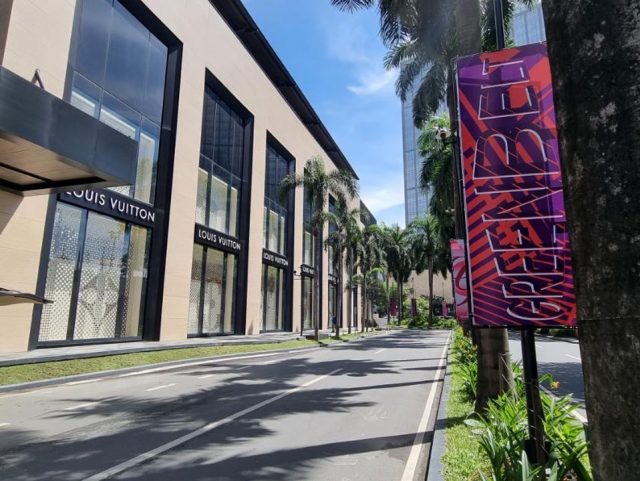
LUXURY stores are reopening in Greenbelt 3 including Louis Vuitton, Fendi, Dior, Thom Browne, Bvlgari, and Kenzo.

Things are looking up for name brands post-COVID

WHILE things might still look gloomy in the retail arena as the COVID-19 (coronavirus disease 2019) pandemic keeps stretching out, things are actually looking up, especially for luxury brands.

FAME+ Market Days, a reconfigured online version of the capital’s biggest design fair, brought over Vogue Business Head of Advisory Anusha Couttigane for a webinar called “PH Fashion: The Leap to Global.” The webinar was streamed via Hopin on Oct. 20.

Ms. Couttigane concentrated on the effects of the COVID-19 pandemic on world markets, and post-pandemic recovery strategies. “The luxury industry is expected to grow considerably, according to data by BCG (Boston Consulting Group),” said Ms. Couttigane. “In the context of COVID-19, a full recovery is expected between the end of 2021 and 2022. When we look at that on a segment level, the luxury personal goods industry, although expected to grow significantly by 2025, it is actually going to account for a smaller proportion of the overall luxury industry.”

“I don’t want this to ring any alarm bells, because that segment is going to be expanding from an estimated value of $340 billion today to around $390 billion by 2025, with the potential for that segment to grow to $440 billion by next year,” she said.

“That really depends on different economic scenarios. Of course, there are still a lot of uncertainty in the world today.”

She points that the search for experiences (a known preference by millennials and the succeeding generations) have changed how we consume: “It’s actually experiences that are driving development and expected to expand further,” she says. “That suggests that there could be opportunities to collaborate or extend into sectors such as homewares or hospitality and leisure, perhaps by collaborating with hotels, for example, to really further commercial success.”

An article from BCG titled “A New Era and a New Look for Luxury” by Sarah Willersdorf, Joël Hazan, Guia Ricci, Alexandre Prénaud, Filippo Bianchi, Javier Seara, and Veronique Yang says “Brands must create online experiences that feel exclusive and beyond what nonluxury retailers offer. Experiences should take into account not just shopping and purchase transactions but also related activities such as fashion shows, private showings, personal shoppers, white-glove delivery, and other customized services.”

KEY CITIES
Ms. Couttigane also points to the differing rates of post-pandemic recoveries in cities. “When we look at this at a regional level, it’s really important to know that the post-COVID-19 recovery is taking place at a different pace depending on the city you’re in.” She says that while London “is heading in the right direction,” its pace is slower than capitals such as Paris, Tokyo, and Amsterdam.

“There’s a much bigger recovery and progress in cities such as Rome, Stockholm… and New York. When you’re considering which cities to either expand in or grow your footprint, or where you might have physical retail stock, it’s very important to note where the faster pace of recovery is taking place,” she said.

“Be prepared [for] the perhaps slower returns on investment in these cities that are taking a slower trajectory towards recovery.”

GOING ONLINE
Ms. Couttigane acknowledges the switch to online sales during the pandemic, which arguably has made the world even smaller and more accessible.

“We know that online has had a huge moment over the course of the pandemic. It’s been the primary way in which consumers have been accessing fashion goods,” she said. “There’s a real focus on commercial performance online, especially amongst smaller brands and businesses that are currently seeing a revenue of under 100 million euros. If you are one of these businesses that are operating around a hundred million euros or less, then it’s really important to be aware that your rivals in that revenue segment are going to be investing heavily in digital, and that’s where you’re going to see more fierce competition.” — Joseph L. Garcia

Looking into the crystal (Christmas) ball

JILL WELLINGTON/PIXABAY

Predictions for the Christmas retail season, and how retailers could gear up for it

By Patricia Mirasol

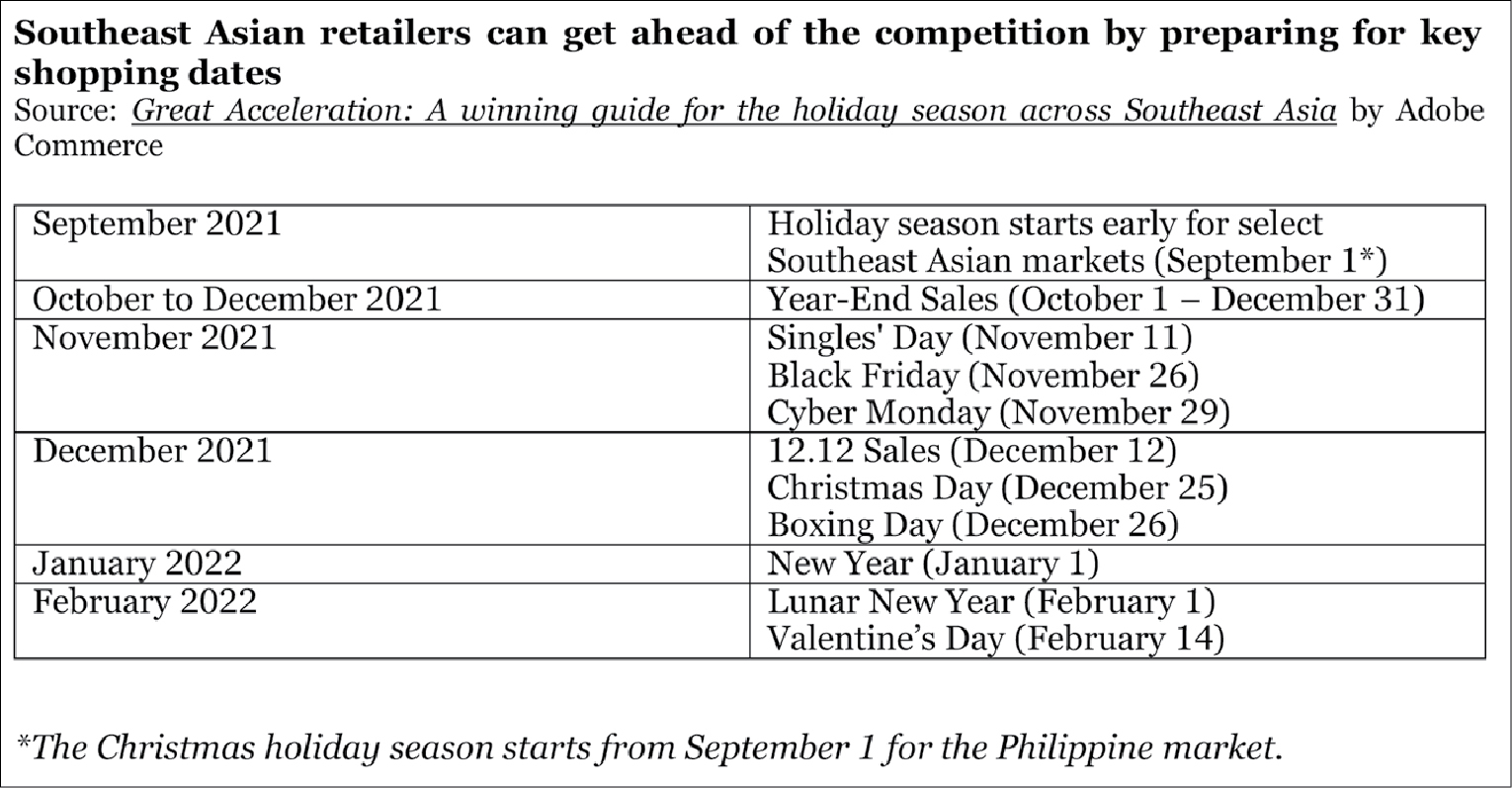
RETAILERS wishing to capitalize on the upcoming Christmas season have to ensure their holiday marketing connects with customers at every point of the shopping journey. According to digital commerce platform Adobe Commerce, this entails personalizing interactions at scale, adapting shipping strategies, increasing customer engagement touchpoints, and preparing in advance for key shopping dates.

A crucial factor in positioning a brand as relevant is by aligning its marketing campaigns with the context of a consumer’s life — whether that consumer be a working parent, or working from home. Adding a personal touch, such as when a store associate suggests an accessory for a dress, is also important. Personalized retail experiences are known to drive loyalty and growth, as per a 2017 global study by Forrester Consulting, a research and advisory company.

“Consumers crave human connections, and brands that can build digital experiences will see success during the holiday season. This can be done by hosting events, live commerce, or contests on social media,” said Tom Franey, head of e-commerce of Motorcycle Holdings, an Australian motorcyle dealership group, in Adobe Commerce’s “Eight predictions for the upcoming holiday season” report.

Further encouraging recognition and trust is the use of multiple channels — called the omnichannel approach — to reach customers, as well as ensuring frictionless shopping by offering multiple payment options.

“Payment options are becoming an increasingly important type of preference, and one that is driving loyalty, repeat purchase, and overall value for retailers,” noted Rhys Thomas, head of partner success of Klarna, a global payments and shopping service, in the aforementioned Adobe Commerce report.

A third deciding factor is shipping. With local shipment delays seen to stretch into Christmas, retailers can cope by employing strategies such as “click & collect” (wherein consumers order items online and pick them up in a physical store), or focusing on consumers within a closer geographical proximity.

Adobe Commerce further recommends having a strong returns strategy — either by outsourcing the facilitation of returns to a third-party logistics provider, or allowing consumers to return items directly to a physical store.

The holidays are a peak season for commerce, and the pandemic’s physical distancing restrictions have only accelerated the global adoption of digital shopping.

Mordor Intelligence, a market research firm, said the lengthy lockdown measures in the Philippines have compelled locals to switch to online distribution channels for their shopping needs. Its forecast report on the Philippine retail sector for 2021-2026 noted the increase in demand for essential items such as perishable goods and household care items last year.

During the second quarter of 2020, according to the retail sector report, total visits to various online shopping applications rose 24% as compared to the same time the previous year. This trend is anticipated to continue post-pandemic.

DITO CME sees revenues from 3 units ‘more than doubling’ in 2022

By Arjay L. Balinbin, Senior Reporter

DITO CME Holdings Corp. expects revenues from Unalytics, Acuity Global, and Luna Academy to more than double next year, the company’s president said.

“2022 is when we become ambitious. You’ll see more than doubling of [their] revenues,” DITO CME President and Director Ernesto R. Alberto told BusinessWorld in a virtual interview on Oct. 21.

DITO CME, which owns 54% of DITO Telecommunity Corp., handles the Udenna group’s investments in media, communications, entertainment, and information technology.

Unalytics — 100% owned by DITO CME — is a managed analytics services company that aims to enable enterprises harness their data to offer “real business values” in the areas of compliance and advanced and conversational analytics, DITO CME Chief Operating Officer Donald Patrick L. Lim said.

DITO CME’s wholly owned Acuity Global curates media properties across platforms and provides media planning and buying.

Meanwhile, Luna Academy, which is 75% owned by the listed holding company, is an online education platform aimed at equipping users with future-ready skills, credentials, and certificates.

These units are still “quite nascent,” Mr. Alberto said. “These are all startups we’ve created. We will probably close the year, for Unalytics, with about over $1 million or P15 million in revenues. That’s just the start.”

“For Acuity, about P40-P50 million. Luna Academy is very, very nascent, because it takes time for people to get wind of online learning courses, but we’re getting traction. We will close the year with a little over P1 million,” Mr. Alberto added.

As for DITO Telecommunity, Mr. Lim said: “We have achieved about 3.5 million subscribers already, surpassing the technical audit requirement (51.01% national population coverage) of the National Telecommunications Commission.”

The goal for the year is to capture 4.5 million mobile consumers.

“I think the target for break-even then to profit is a little bit more aggressive by the third year,” Mr. Alberto said.

Mr. Lim said that Unalytics is looking at opportunities in risk and fraud analytics, customer analytics, and advanced analytics, which have addressable markets of P3.8 billion, P2.4 billion, and P1.8 billion, respectively.

In terms of the acuity market, DITO CME anticipates sustained growth in media ad spend in the Philippines over the next five years.

“There is a growing list of potential advertisers for political ads,” Mr. Alberto said, when asked how the company would take advantage of the upcoming political campaign period.

“As a matter of fact, that [will] probably [be] a big source of our one-off revenues for next year,” he added.

In its initial content rollout, Luna Academy, which was launched in February, provides up to 700 short courses and 50 to 70 more advanced microcredentials, Mr. Lim said.

“The first phase of our business strategy is to load a lot of courses in, so we are not doing any marketing yet. We have 100,000 unique visitors today, and 3,000 are currently doing their courses,” he noted.

Luna Academy’s courses and certificates are offered by big technology companies such as Google and Microsoft.

“There are two markets for Luna Academy. One is individual and the other is B2B2C (business to business to consumer), which is allowing us to leverage more volumes into our programs,” Mr. Alberto said.

“We are partnering with some institutions (like San Beda) and some organizations like JobStreet,” he added.

For the first six months of 2021, DITO CME’s net income attributable to parent equity holder decreased 70.5% to P16.3 million from P55.3 million previously.

Total expenses for the period ballooned to P35.8 million from P1.6 million in the previous year.

High demand for Squid Game tracksuits cheers South Korea’s struggling garment sector

A STILL from the Netflix series Squid Game — IMDB.COM

SEOUL —  The “Made in Korea” green tracksuits and pink jumpsuits worn by characters in Netflix’s global hit Squid Game have proven a pre-Halloween bright spot for a South Korean garment industry struggling during the pandemic.

A 500-square-meter garment factory in the Seongbuk district of the capital Seoul was humming this week, green and pink thread flying off stacked spools off serger machines with loud knocking noises in a race to meet orders.

“October is usually a slow month for the sewing industry, but thanks to Squid Game and Halloween, we are scrambling to stitch,” factory owner Kim jin-ja, 54, told Reuters. “We are now sewing 6,000 teal-green tracksuits for toddlers and children.”

Ms. Kim says her annual sales of 1.5 billion won ($1.27 million) plummeted to a third of what she used to make after the coronavirus disease 2019 (COVID-19) pandemic hit. Most of her orders came from Japan but travel restrictions forced her to shut down in August and September.

She now hopes orders will last past Halloween and sees better chances of renewed exports with “Made in Korea” labels.

The South Korean garment industry had been in decline even before the pandemic with higher wage levels making it difficult to compete with China, Vietnam or Indonesia.

Of the 2,144 manufacturing businesses in Seongbuk, 70% — or 1,510 — are apparel companies, Seoul Fashion Textile Sewing Association chairman Oh Byung-yeol told Reuters.

“The two years of COVID have been a tough time for domestic fashion corporations,” said Seongbuk Mayor Lee Seung-ro. “(But) Squid Game, which has become a global sensation, has also made tracksuits popular domestically, leading to a flood of orders.”

A child’s Squid Game tracksuit was selling for 30,000 won ($25.50) in Namdaemun Market, the country’s largest traditional market where stock ranges from kitchenware to jewelry.

A garment vendor in the market said he and others did not have enough tracksuits to meet soaring demand.

Squid Game has been watched by 142 million households since its Sept. 17 debut, according to Netflix, the world’s largest streaming service, helping it add 4.38 million new subscribers.

Many small business owners in South Korea recognized themselves in the cash-strapped characters of the wildly popular thriller, who vie desperately for a chance to win $38 million, exposing a debt trap that is all too familiar. — Reuters

PAL ends Sept. with P1.5-B loss since bankruptcy filing

BW FILE PHOTO

PHILIPPINE Airlines, Inc. (PAL) ended September with a loss of $29.56 million, or P1.5 billion, since its Chapter 11 filing on Sept. 3, its chief financial officer said.

Signed by PAL Chief Financial Officer Nilo Thaddeus P. Rodriguez, the embattled airline’s end-September report to the United States Bankruptcy Court for the Southern District of New York showed it had a gross income of $91.75 million for the month.

The airline said the cost of goods sold from Sept. 3 to 30 reached $90.42 million, resulting in a gross profit of $1.33 million.

PAL filed its September operating report on Oct. 15, according to a copy of the document from the airline’s claims agent Kurtzman Carson Consultants LLC.

Selling expenses, general and administrative expenses, and other expenses were $3.83 million, $4.90 million, and $14.36 million, respectively.

The bankruptcy court has allowed PAL to access the remainder of its debtor-in-possession (DIP) financing of $505 million.

US bankruptcy court judge Shelley C. Chapman issued the “final order” authorizing PAL to obtain “post-petition financing” on Sept. 30 after the second day hearing held that day.

PAL’s DIP financing is composed of a multi-draw term loan facility of $250 million — access to $20 million of which was approved by the bankruptcy court recently — and another multi-draw term loan of $255 million.

The airline expects to exit its recovery phase by 2022, with operating activities seen to generate more consistent positive monthly cash flow.

Its listed holding company, PAL Holdings, Inc. (not included in the Chapter 11 filing), had been incurring losses even before the global health crisis. Its attributable net loss widened to P71.91 billion in 2020 from P10.31 billion in 2019. — Arjay L. Balinbin

Less is more

By Zsarlene B. Chua

SPENDING two years indoors has allowed me to re-evaluate my relationship with my skin and I have found that, sometimes, less is more when it comes to skincare.

Before, I used to subscribe to a “more is more” approach, influenced by the 10-step Korean skincare routine. It did work and has worked for me for years, but what I realized is you can achieve the same result with less product, at least indoors, as I’m sure my routine will once again change once I’m outside more because routines are ever-changing.

Here, I have listed three products that I have been using for a month or so that you can try incorporating to your skincare routine.

Please note that I have normal-to-dry skin. These are product recommendations that have worked for me and may not necessarily work for you. If you used any of these products and experienced sensitivity or irritation, please stop using them immediately.

(Prices are accurate at the time of writing.)

GOOD MOLECULES NIACINAMIDE BRIGHTENING TONER
(P875/120ml on BeautyMNL)

Good Molecules is a San Francisco-based skincare brand that claims that it’s all about ingredients that work, sans frills, and this plays a part in their competitive pricing.

It’s not the most affordable toner out there but for those who want to splurge a little, this Niacinamide toner is a great option. Niacinamide is a form of vitamin B3 that supports the skin barrier, improves skin texture by making pores look smaller, balances oil production, lightens dark areas, and is good for all skin types. It’s a very hardworking ingredient which is why it’s a constant favorite of mine.

Aside from Niacinamide, the toner also has Vitamin C and arbutin (for hyperpigmentation).

Toners are used after cleansing (both day and night) to return hydration to the skin and prepare it for the next products. It’s a crucial step in my routine because it creates a clean canvas for my next products. How I like to apply it is putting a few drops on my palm and applying it to my skin.

As a toner, Good Molecules is a very good one — it has a very mild scent and a very light, almost watery texture that is quickly absorbed into the skin. The packaging is also great because it has a really tight stopper that dispenses the product at a very controlled rate so you only use what you need without spillage.

Do note that since this product has Vitamin C, you need to apply sunscreen in the morning because the vitamin can increase sensitivity to sun damage.

Anyway, you need to wear sunscreen every day, even indoors.

NACIFIC FRESH CICA PLUS CLEAR CREAM
(P750/50g at Shopee)

Nacific is a Korean skincare brand known for its cult-favorite Herb Origin Serum, but is also home to skincare lines for different skin concerns and needs. One of those is the Fresh Cica line specifically made for acne-prone, sensitive, and irritable skin.

My skin is often normal so I’m fortunate it does not give me a lot of problems, but I do experience increased sensitivity around the time of my period — redness, and small comedones pop up because of hormonal changes. This is why I found the Nacific Clear Cream a lifesaver.

At first, knowing that it’s a gel put me off as my skin needs all the hydration it can get, but what surprised me is how it’s fast absorbing yet substantially hydrates my skin for a long time. With the Green cica complex that is mainly Centella asiatica (Asiatic pennywort), the cream helps calm weak and sensitive skin. It also has ceramide and panthenol that help rebuild and strengthen the skin barrier.

It does have dimethicone though, so for those who want a silicone-free product, this may not be for you.

I found that applying the cream over my troubled skin does calm it down overnight, and the fact that it’s not sticky yet very hydrating is a massive plus for me. The foil squeeze tube that prevents spillage is also an advantage. It’s quickly working its way up in my list of must-haves.

NACIFIC FRESH HERB ORIGIN EYE CREAM
(P790/30ml)

I love eye creams because they do help take care of my eyes, which has become necessary as I grow older. I understand that many people find that eye creams are optional, but for me, having a cream that keeps my under-eye area hydrated and sans fine lines is a non-negotiable.

Often, I use the AHC Pure Real Eye Cream for Face, but recently I discovered the Nacific Fresh Herb Origin Eye Cream through a PR package and have been in love with it since and it will certainly enter my rotation.

The Nacific eye cream has Niacinamide, Hyaluronic acid, and Adenosine. Hyaluronic acid is an ingredient that hydrates the skin by attracting water molecules from the environment into the skin while adenosine helps decrease the appearances of wrinkles.

It’s also very lightweight and a little goes a long way — but it does take time to dry down so I use this in the evening and my trusty AHC in the morning. So, I wake up with softer under eye skin.

Here’s a pro-tip to make your eye creams work harder — apply it on your smile line and any place that is prone to wrinkles to maximize the benefits.

(The author is a former BusinessWorld reporter and now works in a PR firm which has no cosmetics or skin care clients.)

Synergy Grid sets FOO share price at P12 apiece

SYNERGY Grid & Development Phils., Inc. has priced its final offer shares at the lowest end of its lowered offer price range of P12 to P17 apiece.

In Synergy Grid’s Philippine Stock Exchange (PSE) filing on Friday, it said the company’s final price for its follow-on offering (FOO) of up to 1.15 billion shares is P12.

The company had lowered the price range of its FOO to between P12 to P17 from the previous P15 to P25 apiece.

“It’s already a sought-after FOO and having this price at the lower end of the price range may further drive interest,” Regina Capital Development Corp. Head of Sales Luis A. Limlingan said in a Viber message on Sunday.

Diversified Securities, Inc. Equity Trader Aniceto K. Pangan said in a separate phone message that the offer still “has room for price appreciation dependent on the containment of the virus that will dictate restrictions as we have not yet achieved herd immunity.”

OCTA Research fellow Fredegusto Guido P. David said in a social media post on Saturday that the National Capital Region’s weekly coronavirus case average went down to 996, or lower than 1,000 “for the first time since July 22 to 28” in the week of Oct. 18 to 23.

The country’s Health department on Thursday said the capital may soon be downgraded to Alert Level 2 from Alert Level 3 with the continuous decline of coronavirus cases.

Proceeds from the sale of Synergy Grid’s shares are estimated at P13.8 billion and will be used by the company as capital for National Grid Corp. of the Philippines (NGCP) to expand its network.

Synergy Grid owns 60% of NGCP, with the State Grid Corp. of China owning 40%.

The said share price may be attractive to investors, relative to the average price-to-earnings ratio (PER) of the power sector, according to Papa Securities Corp. Equities Strategist Manny P. Cruz.

“They recently reduced the offer price between P12 to 17 that will be around 6.3x to 9x forward PER, attractive relative to [the] average PER of [the] power sector at 11.2x.”

A higher PER indicates that investors are more willing to pay a higher price for shares due to growth expectations.

The said price will be offered from Oct. 26 to Nov. 2.

Synergy Grid’s shares were last traded at the local bourse on May 28, ending at P395.80 apiece.

Trading of its shares were suspended due to the firm’s noncompliance with the required minimum public ownership, based on the PSE’s rules. — Bianca Angelica D. Añago

Cebu Landmasters eyes green certification for Mandaue tenement

CEBU Landmasters, Inc. (CLI) is hoping to obtain a green building certification for its P100-million tenement housing project in Mandaue City, the company’s chief operating officer said.

“This next one we’re doing in Mandaue will really secure a green building certification,” Jose Franco B. Soberano, CLI chief operating officer, told BusinessWorld in a virtual call last week, referring to the building for ecologically responsive design excellence (BERDE) certification.

“It’s going to go through a BERDE certification since Mandaue City is a big partner,” he added.

Cebu Landmasters pledged to donate a five-story 100-unit tenement housing project for the people of Mandaue City last month, where the company has built over four residential and mixed-use projects to date. It also recently broke ground for its Mandtra Residences project.

In a press statement, CLI said it shares the vision of the city “to provide resilient and quality public housing for its constituents in a highly accessible location.”

“What’s unique here, not all developers will say that we’re okay with an outright donation versus a normal socialized project, where you can recover because you can sell,” Mr. Soberano said.

“These kinds of tenement condos are a tripartite agreement, so Cebu Landmasters, the local government, and DHSUD (Department of Human Settlements and Urban Development),” Mr. Soberano said, adding that the housing projects are part of the BALAI (Building Adequate, Livable, Affordable and Inclusive Filipino Communities) program.

The tenement housing project in Mandaue City is said to be located near the old Cebu International Convention Center. It will be the company’s second tenement housing donation as the first donation is located in Cebu City’s Barangay Lorega-San Miguel.

Both properties were provided by Cebu City and Mandaue City.

“That one we’re doing for Cebu is already topped off, so it’s actually almost done,” Mr. Soberano said.

The P115-million 100-unit condominium in Cebu City aims to offer in-city housing for informal settlers or for those affected by living near danger zones. It will follow a “transient housing” model, which will allow those displaced to stay for five to 10 years “until they are able to get back on their feet, get a good job.” 

CLI said the construction for the Cebu City tenement housing “moved very fast.”

“We used an expensive system. I really wanted to break the mold that socialized housing is that way, the housing for our less fortunate should be just as good as market housing,” Mr. Soberano said.

Units for the tenement housing projects will span 25 square meters (sq.m.) to 30 sq.m. The project in Cebu City will feature open spaces and parking areas, among other recreational areas.

CLI said it aimed to build units where dwellers “would be proud to live in.”

“We’d love to do this as much as we can. That’s why we’re inspired to do more projects, the more projects we’re able to do successfully, the more kinds of tenement condos we’re able to do,” Mr. Soberano said.

A “nice goal” for CLI is to pledge and donate at least one tenement condominium a year, he added.

“But it would also mean there are 10 to 20 projects a year we’d have to launch and it’s a tall order, but it’s a great goal with a great charitable purpose always in mind.” — Keren Concepcion G. Valmonte

Nike Glorietta sports new look, offers expanded services

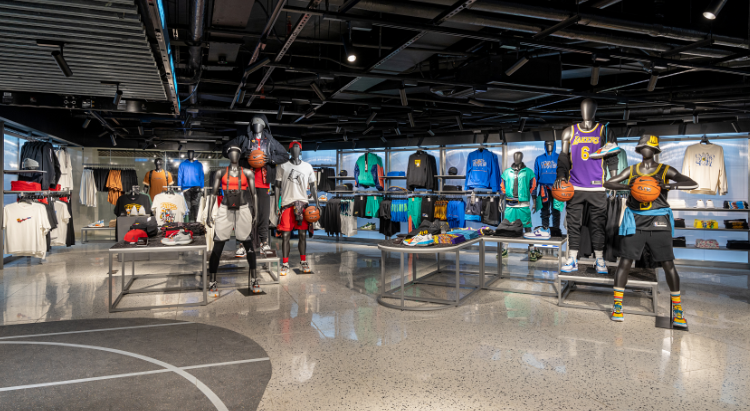
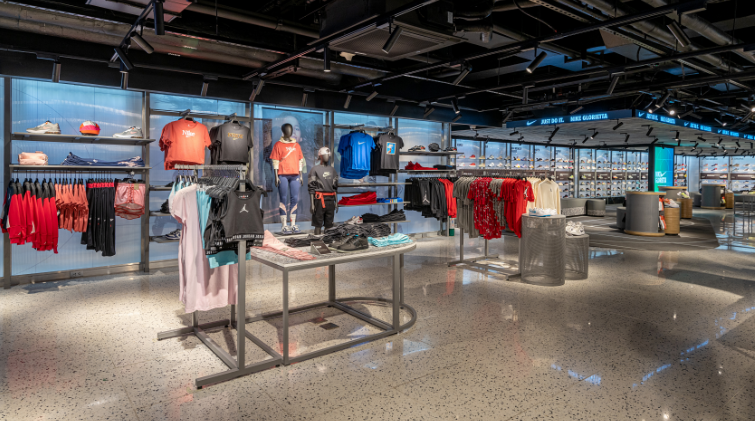
THE NIKE store at Glorietta 3 in Makati City is now sporting a new look, is twice the size it used to be, and has a wider range of services. The store houses footwear and apparel for men, women and kids while also seeking to elevate customers’ shopping experience.

The new-look Nike Glorietta, which opened to the public on Oct. 21, brings a renewed focus on member services with personalized offerings. These include Women’s First Hour, where female customers can book appointments to shop in-store; Style My Squad, for friends and family shopping; and Tights Styling for consumers’ sport and wellness needs.

The focus on female shoppers is further highlighted with bra fitting and styling services to help them find the right product.

Curbside pickup is also available where shoppers can pick up their Nike gear at designated points within the mall.

Some 65% of the products at Nike Glorietta are dedicated to performance shoes like Vaporfly and Alphafly. And to help customers be more discerning about improving their performance, treadmill trials are also offered to test shoes prior to purchase.

“The new Nike Glorietta has been designed to create experiences for our customers to be active,” said Tarundeep Singh, senior director Nike Stores, Southeast Asia & India, in a release.

“A thoughtful attention has been paid to women and children to delight them with products and services that will encourage them to express themselves through dance fitness, running, yoga collection or as sneakerheads,” he added.

RETURN TO SPORTS
For Nike Philippines Country Marketing Manager Jino Ferrer, the launch of the bigger Nike Glorietta is also in anticipation of people returning to sports as pandemic restrictions ease.

“As the country opens up, we are expecting our consumers to do more sport hence that can directly translate into buying more Nike products,” he said in Messenger chat with BusinessWorld.

He was quick to point out though that they are doing it with the safety and wellness of customers as a priority, which is why they made it a point to come up with services specifically designed to address such.

“Since we know that the expectations of our consumers now is to shop in a ‘new normal’ environment as safety and well-being is the utmost priority, our member services like women’s only first hour shopping and curbside pickups will not just be an experience that will make our consumers more comfortable to go to our stores but it will also help encourage and inspire them to gear up and move since they will have easier and safer access to products through the services,” Mr. Ferrer said.

Nike Glorietta is located at Unit 227, second floor of Glorietta 3. It is owned and operated by Green Tee, Inc. — Michael Angelo S. Murillo

The Mini grows up

PHOTO BY KAP MACEDA AGUILA

Range-spanning updates show line’s maturation while staying true to its spirit of fun

A BRAND that has always stood for carefree fun gets serious.

Well, okay, just a little more serious.

Mini Asia and local Philippine distributor British United Automobiles, Inc. have refreshed the lineup of the iconic UK marque known for its go-kart-like handling and distinct styling. But maybe “refresh” is too light a term.

In an exclusive interview with “Velocity,” Mini Philippines Sales Consultant Vic Tankeh shared that the official term for the change is “life cycle impulse” or LCI. It’s not yet quite an all-new iteration (which means it’s still part of the fourth generation), but there are enough alterations and additions to glean a new direction from the UK-headquartered brand. “Mini has always been known for being aggressive, cheeky, colorful, and fun. Now, it has matured in a way. You could say it’s probably like an adult person now. It has tamed down the bright colors, and yet it’s boasting new tech.”

Mr. Tankeh, also designated a “Mini genius,” quickly added, “It’s not being serious; it’s still more fun to drive. But you could say that the colorways are more formal.”

The new design cuts across the following models: Mini 3-Door, Mini 5-Door, Mini Convertible, plus the Mini John Cooper Works edition of the 3-Door and Convertible. In a release, Autohub Group (which controls the Mini brand here) President Willy Q. Tee Ten averred, “Mini is kicking things up a notch in the Philippines with its biggest launch to date. With seven new variants across the range, there is a Mini for everyone… These cars are premium, urban, and thrillingly playful. No matter which version you choose, you will see a great leap in modern design, technology and pure Mini-ness while staying true to its iconic, classic go-kart design.”

Mini Design Head Oliver Heilmer distilled it thus, “The new Mini design is more modern, fresher and clearer… All innovations follow a common mission: Purify Mini. Less complexity, more individuality.”

This ethos begins to find expression in the new Mini exterior. “The protection bar in front is now in body color. The hexagonal grille design is now wider, and Mini has stayed away from using chrome items and started using black gloss colors for trimmings. It brings a premium feel to the line,” said Mr. Tankeh.

The Mini decals have also been recast in black in an obvious bid to dial down the Mini’s flashiness. On the front bumper, the additional fog lamps have been supplanted by air ducts that are not merely for show but, maintained Mr. Tankeh, are part of the aerodynamic package. These ducts specifically help exert downforce when the Mini is at speed.

“On the rear apron, Mini added more body color while emphasizing the twin pipe exhaust of the Cooper S — now with a high-gloss black color, of course,” he added. The entire range also gets a fresh palette of colors, along with a unique line of light-alloy wheels. The taillight now has the Union Jack design as standard; same with the soft top of the JCW Convertible. Even the side scuttle and LED design are new.

And there are interesting changes inside as well. A Nappa-leather-wrapped steering wheel also receives black-gloss accents through its multi-button controls. More notably, Mini has swapped the analog gauges mounted on the steering wheel column with a digital instrument display. “It will show you everything you need to know, and it’s very accurate,” insisted Mr. Tankeh. “It still depicts the analog needles, and has very sharp definition.” This five-inch multifunctional display is a standard fixture across all variants.

The digital innovation complements the large circular central display which holds the infotainment touchscreen, which is much easier to control owing to big widgets. The 8.8-inch screen is complemented by a new piano black high-gloss surround, and modern graphics.

Along with its suite of safety systems, the Mini now boasts as standard a Driving Assistant with Lane Departure Warning. This camera-based system recognizes and reports speed limits. “The collision warning and pedestrian warning systems with city braking function make it easier to avoid dangerous situations, particularly in city traffic. Notable features in the Driving Assistant package include Park Distance Control with sensors at the rear and the rearview camera, as well as cruise control with braking function,” said Mini Philippines.

Meanwhile, Lane Departure Warning makes sure that the car stays on course at speeds of 70kph to 210kph. The system reads markings “at the edge of the lane and alerts the driver if there is a risk of deviation by vibrating the steering wheel.” Also included in the Driving Assistant package is a camera-predicated speed and distance control which helps keep the Mini a safe distance from the vehicle in front.

Being a premium brand, Mini offers a measure of customization options for its buyers. It will take a few months to have them ready, but it surely will be worth the wait. “Customers have already made reservations,” revealed Mr. Tankeh with a smile.

The new Minis are available at Mini Bonifacio Global City, Mini Alabang, Mini Pampanga, and Mini Cebu showrooms.