Home Blog Page 6869

Elation coverage 

VECTORJUICE-FREEPIK

Political commentaries sometimes caution believers to be a little less optimistic. Awesome turnouts in a pink motorcade? (Sure, these are the car-owners. What about those living in carts?) Rising survey standing? (It’s just temporary. Wait till the money rolls in.) Executive types sporting pink on Wednesdays? (Sure. What about the messengers, janitors, and clerks? What color are they wearing?) And these pronouncements come from supposed supporters. (Let’s not get too excited, folks.)

What is it with this failure of elation? Can’t we celebrate and embrace this growing winnability factor for the recently unwinnable choice?

Doomsday prophets are not the same as conspiracy theorists. The two groups may overlap in membership, but the latter deals with historical events like what happened to the Yamashita treasure or why the gated subdivisions are getting invaded by a particular country.

Wet blankets (those who douse the fire of enthusiasm with a “reality check”) are not true believers. They say — I really believe in her, but does she really have a chance? Then they come out with their charts on gray rhinos and black swans — can I share my screen?

What purpose do these doomsday scenarios serve? Here are some groups the wets are benefiting.

Pundits love wet-blanket scenarios as they give them more topics to write about on a slow news day. They love posting these meditations on social media, especially among the pink echo chambers.

Academics too, closely related to the above group, discourse on political dynamics and shoot down false hopes. They go through the demographics of the electorate and point to the Socio-Economic Classes, with the CDE dominating the electorate numbers (over 70%), as if this group is a separate country unaffected by what’s going on in the AB segment. They dismiss the youth vote in the demographics with the median age of the country at 25-26 years old. Aren’t the youth idealistic and starved for integrity in public service? (Sure, but do they go out and vote?)

Self-declared marketing experts treat the candidates like shampoo and talk about branding, target markets, and pain points. Is the pink brigade reaching the retail market? Too many messages like riding the bus to go home to the province is a bit passe. (What does that have to do with brand leadership?) There is a need to trim down the messages. Otherwise, you will end up with “buffet marketing.” These talking heads are favorites in the talk shows and claim to be mere observers, not involved in any campaign. (Are they applying?)

The last group to benefit from the defeatist attitude of the wet blankets are the other candidates. They’re still hopeful and see the trend as “pinking too early.” What have they got to lose when they throw their own soggy bedsheets into this pink fire?

Through all these cautionary calls and reality checks, the believers should shoulder on. They still wear pink on Wednesdays and go about their business and reserve the wet blanket scenarios for lunch with a few excitable characters rooting for another group. (It happened 50 years ago — let’s just move on.)

Still, it can be unsettling when these elation scenarios make it to corporate meetings, albeit under “other matters.” We salute those who cut down worst-case scenario talks with an abrupt — can we hear a motion to adjourn?

I still have T-shirts in blue, a bit faded now and so comfortable for sleeping, bought when the college team I was rooting for (and still do) had a string of bad years. The message was simple: “We believe.” This was right before the five-peat surge. Okay, that’s a limited group of fanatics.

Still, the optimist in us looks forward to inauguration day on June 30, 2022 at the big park. The incumbent and outgoing leader may do a Trump and not show up for the event. But his former second, consigned for almost the whole term to being an official with no portfolio and a limited budget is certain to show up. After all, she will be the one delivering her inaugural speech in which she calls for healing and the end to divisiveness.

In her first day of work, the new president will head for her new office by the river, and watch the sunset turn pink.


Tony Samson is chairman and CEO of TOUCH xda

ar.samson@yahoo.com
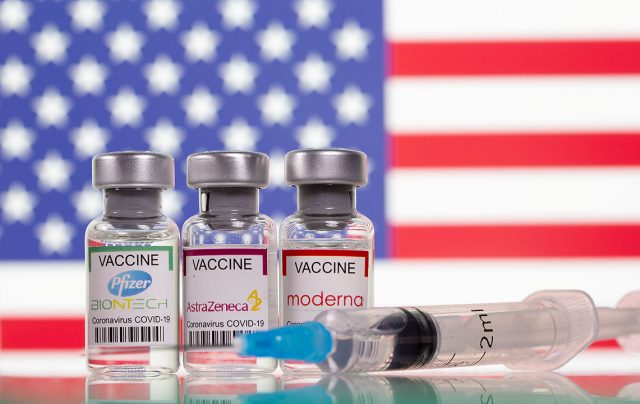
Boosters for all key to US hitting COVID-19 endemic level — Fauci

REUTERS

TOP US infectious disease official Dr. Anthony Fauci said on Tuesday it is possible for COVID-19 to be reduced to an endemic illness from the current health emergency next year if the country ramps up vaccination rates.

Booster doses of the COVID-19 vaccines are vital for reaching that point, Mr. Fauci said in an interview during the Reuters Total Health conference, which runs virtually from Nov. 15-18.

Experts believe COVID-19 (coronavirus disease 2019) cannot be eliminated and will likely become endemic, meaning it will always be present in the population to some degree, such as the flu or chickenpox. “To me, if you want to get to endemic, you have got to get the level of infection so low that it does not have an impact on society, on your life, on your economy,” Mr. Fauci said. “People will still get infected. People might still get hospitalized, but the level would be so low that we don’t think about it all the time and it doesn’t influence what we do.”

To get there, he said, would take a lot more people rolling up their sleeves for initial COVID-19 shots and boosters.

If the United States makes boosters available for everyone, it is possible the country can get control of the virus by spring of 2022, Mr. Fauci added.

Booster shots are currently available — at least six months after completing prior vaccination — to the immunocompromised, those 65 and older and other people at high risk of severe disease or frequent exposure to the virus through their jobs or living situations.

Some states and New York City have expanded booster availability ahead of federal recommendations.

“Look what other countries are doing now about adopting a booster campaign virtually for everybody. I think if we do that, and we do it in earnest, I think by the spring we can have pretty good control of this,” Mr. Fauci said.

There is a wide range of opinion as to what might be considered getting the virus under control, Mr. Fauci noted. “You could control it at 50,000 cases a day. To me, that’s not good control, and that’s not endemicity that I would accept.”

He disagrees with those who argue that it is time to start learning to live with the virus.

“I don’t want to sit back when we have 70,000 to 85,000 new infections a day and say, ‘Oh, well, we can’t do any better than that. Let’s live with that.’ Sorry, that’s not where we want to be,” he said.

That is why he keeps pushing to get as many people vaccinated as possible.

“For me, endemicity means a lot more people get vaccinated, a lot more people get boosted, and although you don’t eliminate or eradicate it, that infection is not dominating your life,” he said.

Mr. Fauci said it is clear that boosters can increase antibodies to a protective level. And while it is too soon to say whether those antibodies will eventually wane, there is a reasonably good chance that booster doses will result in “affinity maturation” — a process in which the booster fine tunes the immune response, increasing its power and durability.

“This is a brand new virus,” he said. “We can’t predict.” — Reuters

Great resignation to remain for while, says Mastercard CEO

A JOB SEEKER walks past a corridor of a commercial building in Tokyo, Aug. 28, 2014. — REUTERS

WORKERS who are looking for job changes to better their prospects is a phenomenon exacerbated by the pandemic that will remain for sometime, according to Mastercard, Inc. Chief Executive Officer Michael Miebach.

In industries that are in great demand, such as hospitality and health care, there is “a lot of competition for great people,” Mr. Miebach said at the Bloomberg New Economy Forum in Singapore Wednesday.

“In our industry, anybody who knows anything about AI, digital identity, cyber, hot skills, those are the people that are in demand and those are the people saying ‘I am feeling huge pressure everyday in what I do, can I do better, let me look elsewhere.’”

“There is a lot of competition going on and that has always been the case in these industries and is now pronounced because the pandemic put a lot of pressure on the system,” said Mr. Miebach. “That is the fundamental trend.”

The labor market reckoning that’s become known as the Great Resignation has shown millions are quiting their jobs. Policymakers are weighing the tight jobs market against upward pressure on prices, including wages, to position the economy for 2022.

“Fundamentally it’s competition for hot skills that are in demand,” Mr. Miebach said. “It’s going to be something we see for a period of time.” — Bloomberg

Indo-Pacific economic framework seen by 2022

SINGAPORE — US Commerce Secretary Gina Raimondo said on Wednesday that an Indo-Pacific economic framework could be launched at the start of next year, and her Asia visit was to lay the groundwork for potential partnerships.

“We are likely to launch a more formal process in the beginning of next year, which will culminate in a proper economic framework in the region,” Ms. Raimondo said at the Bloomberg New Economy Forum in Singapore.

When asked whether that would mean an actual agreement, she said: “yeah, exactly.”

President Joseph R. Biden said last month that Washington would start talks with partners in the Indo-Pacific about developing a regional economic framework.

Ms. Raimondo said she was in Tokyo before her trip to Singapore and would be visiting Malaysia next.

Critics of US strategy for the region point to its lack of an economic component after former President Donald Trump withdrew in 2017 from a US-inspired trade deal, now known as the Comprehensive and Progressive Agreement for Trans-Pacific Partnership.

China said in September that it had filed an application to join the CPTPP trade pact, which was signed by 11 countries including Australia, Canada, Chile, Japan and New Zealand in 2018.

“This isn’t about China. This is about developing robust commercial and economic relationships with our partners in the Indo Pacific where we have had a robust relationship for a long time, but for the past few years,” Ms. Raimondo said. — Reuters

Hong Kong Disneyland closes for one day as staff take COVID-19 tests

HONG KONG Hong Kong‘s Disneyland will close for a day on Wednesday for staff to take compulsory COVID19 tests after authorities found one person who visited the theme park over the weekend was infected with the coronavirus.

Disneyland, majority-owned by the city government with Walt Disney holding a minority stake, said in a statement the closure was out of “an abundance of caution” and advised visitors to reschedule.

Any person who visited the park, which had to close multiple times for prolonged periods since the start of the pandemic, on Nov. 14 between 11:00 a.m. and 6:00 p.m. would also have to get tested by Thursday, the government said separately.

Despite barely recording any local coronavirus cases in recent months, authorities in the global financial hub have tightened up quarantine and patient discharge rules.

Hong Kong is following Beijing’s lead in retaining strict travel curbs, in contrast to a global trend of opening up and living with the coronavirus. The city government hopes the tighter rules would convince China, its main source of economic growth, to gradually open its border with Hong Kong.

At Shanghai Disneyland last month, guests who were already inside were told to undergo tests at the exit related to COVID19 investigations linked to other Chinese provinces and cities.

International business lobby groups have warned Hong Kong could lose talent and investment, as well as competitive ground to rival finance hubs such as Singapore, unless it relaxes its restrictions on travel.

The president of the American Chamber of Commerce in Hong Kong said on Tuesday she is resigning as she cannot appeal to authorities to ease COVID19 restrictions at the same time as having to undergo quarantine herself.

JPMorgan Chase & Co Chief Executive Jamie Dimon, who was in Hong Kong on Monday and was exempt from quarantine under current rules for some executives, said the city’s COVID19 policy was making it tougher to retain staff. – Reuters

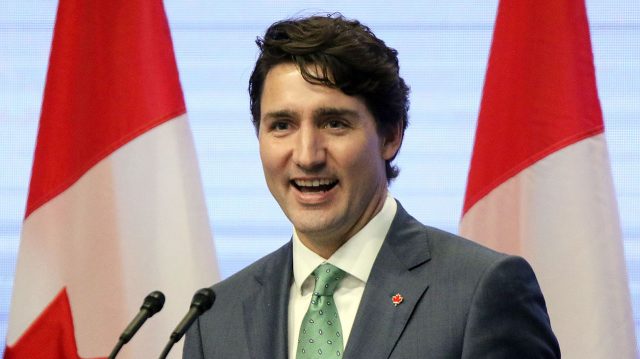
Canada’s Trudeau exploits rival’s split on vaccines as parliament reconvenes

PHILIPPINE STAR/KRIZ JOHN ROSALES

OTTAWA – Canada’s vaccine mandate for parliament is helping Liberal Prime Minister Justin Trudeau exploit divisions in the opposition Conservative Party, some of whose lawmakers will be shut out when the House of Commons reconvenes next week.

Conservative Party leader Erin O’Toole, whose party came in second in the Sept. 20 vote, has been unable to persuade a portion of his caucus to get inoculated, which means they will not be let into the House of Commons when it reopens on Nov. 22.

The party declines to say how many of its parliamentary members are unvaccinated. O’Toole encourages the use of vaccines and says his MPs will follow House of Commons’ rules, but some leading figures in his party want accommodations.

The party split is undermining O’Toole as he fights to ward off a leadership review. A Conservative senator on Monday launched a petition aimed at ousting O’Toole within six months, saying he was a poor and untrustworthy leader.

To appease the right wing of his party, O’Toole opposed vaccine mandates during the campaign and allowed his candidates not to be inoculated even though most Conservative voters embraced vaccines.

“The vaccination issue is sort of coming back and repeating on the (Conservative) party as its absolute worst liability,” said Shachi Kurl, executive director of the Angus Reid Institute, a research foundation.

O’Toole is “a leader who clearly does not feel he can push back in a strong way against that libertarian-minded, freedom-minded segment of the Conservative caucus,” she added.

The 49-year-old Trudeau narrowly won the September vote and ended up with a minority, enhancing the power of opposition parties and forcing him to depend on them to pass legislation.

But the two other main opposition parties side with the Liberals on vaccines, isolating the Conservatives in what a senior government source called a “dangerous and risky” position on COVID-19 as cases spike again across the country.

Speaking for the first time to his MPs since the election last week, Trudeau chided the Conservatives for “stepping up to stand against vaccination, to stand against science, to stand against being there for each other.”

Trudeau‘s tough stance on vaccine mandates is putting some 13,000 civil servants on unpaid leave because of their refusal to get inoculated, a move supported by 70% of Canadians, according to a recent EKOS Research poll.

Some 85% of eligible Canadians have been vaccinated.

In the U.S. Congress, CNN has reported that all Democrats are vaccinated, while some Republican members openly say they are not. There is a mask requirement in Congress, but no vaccine requirement. Canada also has a mask requirement while in parliament.

Conservative lawmaker Marilyn Gladu, who challenged O’Toole in a party leadership race last year, is forming a “civil liberties” working group of 15 to 30 members to stand up for privacy and for a “reasonable accommodation” for unvaccinated workers.

Leslyn Lewis, who also ran for party leadership last year, has tweeted her opposition to vaccine mandates, as have a handful of others.

Garry Keller, a former senior conservative staffer who is now vice president at public affairs consultancy Strategy Corp, said it is fine to quietly discuss the differences within the caucus.

“But generally speaking, this is a loser of an issue amongst the vast majority of Canadian voters, so why do you want to go down this road?” – Reuters

Indonesia’s batik-makers turn to mangroves as demand grows for eco-dyes

CILACAP, Indonesia – In a quiet mangrove forest in central Indonesia, a man moves gingerly across vegetation distinguished by its big, wooden stilt roots, searching for fallen mangrove fruits that rest on leaves or float on the water.

Gathering a handful of what looks like string beans, the man, a batik craftsman, heads home to make natural dye from them.

For the past four years, Sodikin, 48, and his group of batik makers have shifted from using chemical materials for colouring to mangrove-based products, cutting costs and helping the environment.

“We use natural materials so as to preserve the mangrove forest at the same time,” Sodikin, who uses only one name, told Reuters as he processed dried fruits before boiling them to extract colour. “We do not cut down the trees and we only take fruits or leaves that have fallen.”

Batik is a traditional Indonesian dying used in patterns and drawings, typically on fabric and finished textiles.

Mangroves play an important role for Indonesia’s natural environment, serving as barriers against tsunamis and providing important ecosystems for fish and crabs. They are also a more effective absorber of carbon dioxide emissions compared with rainforests or peatlands.

Despite being duller than synthetic dyes, natural dyes are more environmentally sustainable and have a greater market value because of their quality and durability, according to Erwin Ardli, a mangrove ecologist at Jenderal Soedirman University in Indonesia.

“We’ve seen the interest for natural dyes increasing, and especially for middle- to upper-class people, they seem to be proud to wear clothes using these natural dyes rather than synthetic dyes,” he said.

Batik gallery owner Iiting Budiarti agreed, saying items with natural dyes can fetch double or triple the synthetic ones. – Reuters

U.S. bishops’ advisory group says communion should not be partisan

STOCK PHOTO - Pixabay.com

BALTIMORE, Md. – An advisory group to U.S. bishops urged the Catholic leaders on Tuesday to avoid making communion “a tool for division” amid debate over whether President Joe Biden’s support for abortion rights should disqualify him from receiving the sacrament.

Gathered in a Baltimore hotel ballroom, the bishops’ conference on Tuesday was presented with a draft of a document about the meaning of Holy Communion, a sacrament central to the faith.

The bishops have been divided over how explicitly the document should define the eligibility of prominent Catholics like Biden to receive communion due to political stances that contradict church interpretation.

Biden, the first Catholic U.S. president since John F. Kennedy, has said he personally opposes abortion but supports a woman’s right to choose. He has vowed to protect abortion rights in the face of increasingly restrictive laws enacted by states. Last month, his administration called on the Supreme Court to block a Texas law that bans abortions after six weeks.

The bishops are expected to debate the communion document and take a vote on Wednesday. The document needs a “yes” vote from two-thirds of the conference to pass.

The U.S. Conference of Catholic Bishops’ National Advisory Council, a body made up of laypeople and clergy, reviewed the document draft. The council holds the position that the Eucharist should not be politicized, council chair Mark Sadd told the bishops on Tuesday.

“We are united in our conviction that the Eucharist cannot be a tool for division, the Eucharist cannot be ideological, the Eucharist cannot be partisan,” Sadd said.

The conference has not made the draft document public. A version of the draft published by the Catholic newsletter The Pillar does not mention Biden or any politician by name, but states that “people who exercise some form of public authority have a special responsibility to embody the church.” It says Catholics who live in a state of “mortal sin” without repentance should not receive communion, but does not say who should sit in judgment.

“It was never the intention to target any individual or group of individuals,” Bishop Michael Burbidge of Arlington, Virginia told reporters on Tuesday. “This is a document that is reaching out to all Catholics.”

Archbishop Jose Gomez, the conference president, said he felt the document was “absolutely necessary” and intended “to educate Catholics about the real presence of Jesus in the Eucharist.”

Some conservative bishops have argued the conference must rebuke politicians such as Biden who support abortion rights, given the church teaches that abortion is immoral. That contingent has called for the document to set explicit standards of eligibility for receiving the sacrament.

Others have cautioned against weaponizing the Eucharist and withholding it as a means of punishing specific political stances.

Some 55% of U.S. Catholics believe abortion should be legal in all or most cases, compared to 59% of the general population, according to a Pew Research survey conducted in April.

Sadd told bishops that some members of the advisory council expressed doubt that the document would serve to heal existing rifts in the church.

Nearly 20% of U.S. Catholics have left the church in the past two decades, according to a Gallup poll in March, as sexual abuse scandals involving predatory priests have emerged and members disagreed on social issues. – Reuters

Brand safety replaces ‘dollar in, dollar out’ digital advertising

PIXABAY

Beyond the performance metrics of acquisitions and clicks, brand safety is about aligning digital advertising spend on platforms with shared values, according to experts at a Nov. 16 event organized by social media platform Twitter.  

“Advertisers realize that measuring ROI [return on investment] is not good enough anymore,” said John Miskelly, Asia Pacific investment director of GroupM, a New York-based media investment company.  

Considering brand safety moves away from the genesis of digital advertising, which was “dollar in, dollar out,” added Mr. Miskelly. “It was highly countable – not necessarily accountable,” he said of those early days.  

Clients now want to know they are investing in digital advertising responsibly. “We want to factor in other measurements of quality… from an environmental, corporate, and social perspective,” he said.   

Conscious consumption habits are spilling over into media investing, said Caitlin Rush, global head of Twitter’s brand safety strategy.   

“It’s not enough to build tools that enable advertisers to avoid harmful content,” she said. “From a platform’s perspective, clients want to make sure we are doing what we can to get rid of these things from the platform altogether.”   

Twitter’s holistic approach to brand safety focuses on policies, products, and partnerships, Ms. Rush said. Recent developments include:   

Brand safety is not new, as brands were always conscious of the context of the environments they appear in, noted Ms. Rush.  

“These new platforms created new environments and came with new areas of risk,” she said. “We are ensuring that we are being a good partner and listening to brand feedback.” — Patricia B. Mirasol

Optimizing natural gas in a shift to renewed future

Beyond pioneering the source, First Gen Corporation taps natural gas as the first step to decarbonization


Climate change has become widespread, rapid, and intensifying, with some trends already deemed irreversible, as a United Nations Intergovernmental Panel on Climate Change (IPCC) report released last August stressed. The effects of climate change are increasingly felt across the globe, and the Philippines is not spared from these.

Back in 2019, a report by the think tank Institute for Economics and Peace points the Philippines as the country most vulnerable to climate change as it has the highest natural hazard risk score. More recently, the Global Climate Risk Index 2021 by Germanwatch ranked the Philippines as one of the most affected countries by extreme weather effects from 2000 to 2019, mainly recurring catastrophes such as tropical cyclones.

Moreover, according to a UNICEF report published last August, children in the Philippines are among those most at risk of the impacts of climate change, threatening their health, education, and protection.

A large part of this intensifying climate change is caused by greenhouse gases (GHGs) trapped in the atmosphere, many of which are a result of heavy dependence on traditional sources of energy, such as imported oil for transport systems and coal for power generation.

As addressing climate change now becomes more crucial than ever, decarbonization, or the process of reducing the carbon intensity of emissions, is a critical move that organizations and industries must take if they are going to sustainably recover in the new normal.

Decarbonization pushes for the increase of low-carbon power generation, along with the reduction of fossil fuel use. This, eventually, gives way for a widened and full use of renewable energy, which translates to a more livable future.

In responding to a crisis the IPCC considers a “code red for humanity,” decarbonizing power generation is a significant step that is now imminent to mitigate the worsening effects of climate change.

Transitioning to 100% renewable energy (RE) is no easy task. Using cleaner fuels like flexible natural gas, nevertheless, is a fitting way to start as it can complement renewables while the transition to RE is just beginning.

Natural gas emits up to 60% less carbon dioxide than coal, and it leaves behind no harmful pollutants such as ash and sludge, or other harmful by-products. This makes the source a cleaner alternative for our health and the environment, as well as a fitting means of paving the clear pathway to decarbonizing the country. Moreover, natural gas plants are able to generate power quickly to address any changes in demand or drop in supply. As such, aside from being clean, natural gas also provides valuable support for increased development of intermittent renewable energy.

Having seen the potential of natural gas long before the pressing call to a transition to RE, First Gen Corporation pioneered its use in the country. Anchored on its responsibility to the environment, the firm believes in the important role of natural gas in helping the country’s transition to 100% renewable energy.

“Our commitment to clean energy and the environment is what drives us to invest in natural gas and renewable energy,” First Gen Corporation said, adding that as the entry of more variable RE requires more flexible power sources, natural gas will continue to be a crucial fuel source alongside the transition to a renewable future.

“By using natural gas, the country is able to use reliable electricity, at GHG emission rates that are much lower than other fossil fuels like coal,” the company added.

The company owns and operates four natural gas-fired power plants at the First Gen Clean Energy Complex in Batangas. These are the Santa Rita, San Lorenzo, and San Gabriel combined-cycle power plants, and the Avion open-cycle power plant, which altogether carries a combined installed capacity of 2,017 megawatts (MW).

In 2020, First Gen Corporation’s natural gas power plants prevented 6.9 million tons of carbon dioxide from being emitted. That’s equivalent to removing 1.5 million cars from the road.

Natural gas plants are also reliable and are flexible. These plants can provide power in as fast as 15 minutes, which means they are able to adapt quickly to changes in power demand.

Such flexibility is crucial in supporting RE sources like solar and wind that, while sustainable and becoming increasingly more affordable, are intermittent. When there is not enough sunlight or sufficient wind speed, solar and wind power plants are unable to provide electricity.

Before the country can be mainly powered by renewable energy, natural gas is the most fitting energy source in the transition to a decarbonized future. The combined use of natural gas and RE is the beginning of the country’s transition to a decarbonized future, which includes an eventual phaseout of natural gas. Until RE sources can stand on their own, natural gas will be used as a back-up fuel to keep the lights on.

First Gen Corporation, with its diversified and flexible portfolio of power plants that use steam, water, wind, solar, and natural gas altogether, is well-positioned to address the need to balance the intermittency with RE sources as the world transitions to a decarbonized energy future. Learn more about First Gen’s services by visiting www.firstgen.com.ph.


Spotlight is BusinessWorld’s sponsored section that allows advertisers to amplify their brand and connect with BusinessWorld’s audience by enabling them to publish their stories directly on the BusinessWorld Web site. For more information, send an email to online@bworldonline.com.

Join us on Viber to get more updates from BusinessWorld: https://bit.ly/3hv6bLA.

Gov’t raises initial P113B via RTBs

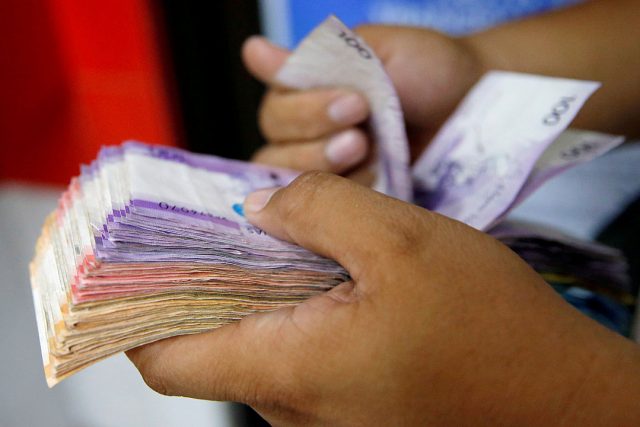
A MAN counts a wad of Philippine peso bills in Makati City, Metro Manila, Philippines, Sept. 19, 2018. — REUTERS/ELOISA LOPEZ

THE PHILIPPINE government on Tuesday raised an initial P113.545 billion in five-and-a-half-year retail Treasury bonds (RTBs), as it seeks more funds for its post-pandemic recovery measures.   

At the rate-setting auction, tenders reached P165.033 billion, more than five times the initial offer of P30 billion.

The retail Treasury bonds fetched a coupon rate of 4.625%. This is slightly lower than the 4.750% coupon rate for the recently re-issued Treasury bonds that are also set to fall due in 2027.

The RTBs’ coupon rate is within the range seen at the secondary market on Monday, in which five- and seven-year papers were quoted at 4.2135% and 4.6631%, respectively, based on the PHL Bloomberg Valuation Reference Rates published on the Philippine Dealing System’s website.

“RTB attracted strong demand with tucked-in premium over secondaries in consideration of larger volume and expectation of rates climbing up as era of loose monetary policies comes to a close starting with Fed taper announcement,” National Treasurer Rosalia V. de Leon said via Viber.

The US Federal Reserve recently announced the start of the reduction of its $120-billion monthly asset purchases at $15 billion per month.

The proceeds from the RTBs will fund the government budget, Ms. De Leon added.

The RTBs are targeted for small investors that want low-risk, higher-yielding savings instruments backed by the National Government.

The five-and-a-half-year bonds are being sold in denominations of at least P5,000, and in multiples of P5,000 thereafter.

The BTr also opened a bond exchange offer where holders of fixed-rate Treasury notes maturing in 2022 can swap their holdings for the new RTBs. The minimum exchange offer is P5,000.

The offer period is set to run until Nov. 26, unless the Bureau of the Treasury (BTr) closes the offer early. The papers will be issued on Dec. 2.

The RTBs’ maturity date is on June 2, 2027.

This is the government’s second RTB offering of the year. However, the BTr sold less on Tuesday compared with the three-year RTBs sold in February.

In February, the government accepted an initial P221.2 billion and ended up selling P463.3 billion at the end of the offer period, making it the second-biggest RTB sale after the record P516.3 billion sold in five-year bonds in 2020.

Issue managers for the latest RTBs include the Land Bank of the Philippines (LANDBANK), Development Bank of the Philippines (DBP), BDO Capital and Investment Corp., BPI Capital Corp., China Bank Capital Corp., First Metro Investment Corp. (FMIC), PNB Capital and Investment Corp., and UnionBank of the Philippines, Inc. (UnionBank).

Authorized selling agents for the bonds are BDO Unibank, Inc., Bank of Commerce, BDO Capital, BPI Capital, China Banking Corp., DBP, East West Banking Corp., FMIC, ING Bank, LANDBANK, Metropolitan Bank & Trust Co., Philippine Bank of Communications, Philippine National Bank, Rizal Commercial Banking Corp., Standard Chartered Bank, and UnionBank.

The government wants to borrow P3 trillion from local and external sources this year to help fund a budget deficit seen to hit 9.3% of gross domestic product. — Jenina P. Ibañez

Fintech firms may face more regulation, taxes

REUTERS
An illustrative image of a person holding a credit card while shopping online on a computer. — PHOTO BY ARTUR WIDAK/NURPHOTO VIA REUTERS

By Jenina P. Ibañez, Senior Reporter

GOVERNMENT AGENCIES plan to tighten taxation and regulation of financial technology (fintech) companies as their business activities surge amid the pandemic, the Department of Finance (DoF) said.

The Bureau of Internal Revenue (BIR) and the Securities and Exchange Commission (SEC) are working together to evaluate how digital business models should be regulated and taxed, DoF said in a press release on Tuesday.

Amid efforts to broaden the tax base, Finance Secretary Carlos G. Dominguez III in a recent meeting directed the BIR and SEC to make sure that they have “enough regulatory and collection muscle for these digital technology companies.”

“Operating in the digital space is just a platform. The type of activity doesn’t matter. It’s still taxable by the BIR and subject to the appropriate regulations of the SEC,” he said.

The BIR plans to gather information that would help the agency identify fintech firms not explicitly covered by existing regulations.

The agency will create a team to evaluate the companies’ tax obligations based on categories identified by the SEC and the central bank, BIR Deputy Commissioner Marissa O. Cabreros said.

The BIR will also check existing large taxpayers that are “engaging in activities that are variations of existing businesses and validate if correct taxes are being paid.”

“We would, however, like to ask the National Economic and Development Authority (NEDA) to update Philippine Standard Industry Classifications (PSIC), to ensure that emerging fintech activities or entities are properly classified as a type of financial service provider, and to also include all the other new industries in the digital economy,” Ms. Cabreros said.

The BIR has already been identifying companies that have not registered to guide them in complying with tax rules.

For its part, SEC plans to come up with fintech specific requirements for licensing and data security, SEC Chairman Emilio B. Aquino said.

Mr. Dominguez said the SEC should strengthen its new PhilFintech Innovation Office, where these firms apply for registration, by hiring young employees with digital skills. The SEC should add more to its budget for fintech-related programs, he added.

The SEC had launched the new office in July to create policies and provide regulatory guidance for fintech companies.

Sought for comment, PayMaya founder and Chief Executive Officer Orlando B. Vea said the company supports regulations that strengthen the fintech industry.

“Fintech is a powerful tool for the country’s inclusive growth and it can only flourish in an atmosphere of trust and progressive governance,” he said in an e-mailed statement.

Angelito M. Villanueva, chairman of Fintech Alliance.ph, said that the organization recognizes regulators’ mandate in evaluating tax obligations and requirements. More focused implementation of the rules can help make sure that fintech clients are protected from digital fraud, he added.

“The Alliance is more than willing to collaborate with our regulators on drawing up specific measures to safeguard our end-users. This is the very purpose of the establishment of the SEC’s PhilFintech Innovation office which the Alliance actively supports. With better capacity building and synergy, fintech players are also empowered to implement better fraud management systems,” he said in a Viber message.

“In the end, the least Alliance members can do is to protect consumers and clients, and to maintain the trust the public has invested in us.” Moody’s Investors Service in July said fintech companies in the Philippines could threaten the dominance of traditional banks, especially in remittances and lending. More Filipinos started using digital payment services amid mobility restrictions declared to curb the spread of the coronavirus disease 2019.