Home Blog Page 6861

Bulls end series skid, take down Lakers

DEMAR DeRozan scored a season-best 38 points on 15-of-23 shooting and Lonzo Ball also established a season high with 27 points as the visiting Chicago Bulls halted an eight-game losing streak against the Los Angeles Lakers with an easy 121-103 triumph on Monday night.

It was the second huge outing in two nights for DeRozan, a Los Angeles-area native playing at the Staples Center for the first two times since the death of his father earlier this year. DeRozan poured in 35 points on 12-of-16 shooting in Sunday’s 100-90 win over the Los Angeles Clippers.

Ball matched his season high of seven 3-pointers and was 10 of 13 from the field while also contributing eight assists and seven rebounds for the Bulls. Zach LaVine knocked down six 3-pointers while scoring 26 points and Derrick Jones Jr. scored 13 points on 6-of-7 shooting for Chicago, which beat the Lakers for the first time since registering a 118-110 road win on Nov. 20, 2016.

Talen Horton-Tucker scored a career-high 28 points and Russell Westbrook recorded 25 points, eight assists and six rebounds for the Lakers, who are just 8-7 despite opening the season with 12 of 15 at home. LeBron James (abdominal strain) sat out for the seventh consecutive game.

Anthony Davis had 20 points and six rebounds before drawing his second technical foul with 2:20 left in the third quarter to earn an ejection.

Chicago, which led by as many as 28 points, connected on 55.1 percent of its shots and was 15 of 34 from 3-point range.

Los Angeles shot 45.6 percent from the field and was a porous 6 of 32 from behind the arc.

The Lakers trailed by six less than two minutes into the third quarter before Chicago put the game away with a 33-14 explosion.

LaVine capped a 9-0 surge to start the run with a jumper to make it 68-53 with 8:45 left.

Davis made two free throws with 2:43 left for his final points of the night as Los Angeles trailed 83-66. The Bulls scored nine of the next 10 points with Tony Bradley’s layup pushing the lead to 92-67 with 1:14 remaining.

Chicago led 94-73 entering the final stanza and Ball’s seventh 3-pointer pushed the margin to 26 with 5:40 remaining as the Bulls ended their struggles against the Lakers in convincing fashion.

DeRozan scored 22 points in the first half and LaVine added 17 as the Bulls held a 57-48 half time lead. — Reuters

Sakkari wins Sabalenka slugfest to advance at WTA Finals

MARIA Sakkari won a rollercoaster match against Aryna Sabalenka (7-6(1), 6-7(6), 6-3) on Monday to advance to the semi-finals of the Women’s Tennis Association (WTA) Finals, where the in-form Greek will meet red-hot Estonian Anett Kontaveit.

In a battle between two of the game’s biggest hitters, Sakkari battled back from a break down and pounded three aces in the first set tie-breaker to take the early lead in the win-or-go-home group match.

Sabalenka came out on the winning side of a wild second set, unleashing a punishing backhand winner to convert her fourth set point and bring the Guadalajaran crowd to their feet.

Sakkari’s fitness proved the difference in the deciding set and she pumped her arms triumphantly when a worn down Sabalenka misfired on match point in the high-altitude Mexican city.

“It was a roller-coaster match from both of us,” said Sakkari, who had lost in her four previous meetings with the Belarusan.

“I was up a break, then she was up a break. It was just a matter of who took the chances. I think at the end, I just played with my heart and fought well, just turned things around.”

The demonstrative top-seeded Sabalenka lost her temper at times during the marathon match, typically after issuing one of her 19 double faults.

She threw her racket to the court and blasted a ball into the stands but, in a moment of levity, shot the chair umpire a wry grin when video replay overturned his call that her serve was out, leading to a loud ovation.

Earlier in the day, Poland’s Iga Świątek defeated birthday girl Paula Badosa (7-5, 6-4).

The stakes were low since the 24-year-old Badosa had already advanced to the semis, where she will meet fellow Spaniard Garbine Muguruza for the first time, and Świątek had already been eliminated following losses to both Sakkari and Sabalenka.

But 2020 French Open champion Świątek was still all smiles after she rifled a forehand return winner on match point to end Badosa’s eight-match winning streak.

“It was a really solid match from me,” the 20-year-old Świątek said.

“I’m pretty happy that I had a chance to show my tennis finally… I really enjoyed myself today on court.” — Reuters

49ers dominate time of possession, rout Rams

JIMMY Garoppolo threw two touchdown passes and the San Francisco 49ers played keep-away en route to a resounding 31-10 victory over the Los Angeles Rams on Monday night at Santa Clara, CA.

Deebo Samuel caught a touchdown pass and rushed for another score and George Kittle added a touchdown reception as San Francisco (4-5) held the ball for 39 minutes, three seconds. Jimmie Ward recorded two interceptions and returned one for a touchdown as the 49ers beat the NFC West-rival Rams for the fifth straight time.

Matthew Stafford completed 26 of 41 passes for 243 yards, one touchdown and two interceptions for Los Angeles (7-3), which dropped its second straight game. Tyler Higbee caught a touchdown pass for the Rams.

Odell Beckham, Jr. caught two passes for 18 yards while playing sparingly in his first game since joining the Rams. Cooper Kupp matched his season high of 11 catches, good for 122 yards.

Garoppolo completed 15 of 19 passes for 182 yards as San Francisco won at home for the first time in five attempts this season. Los Angeles dropped to 4-1 on the road.

The 49ers outgained the Rams 335 yards to 278 while winning for just the second time in their past seven games. Samuel had five receptions for 97 yards and rushed five times for 36 yards, and Elijah Mitchell gained 91 yards on 27 carries.

San Francisco set the tone quickly after Ward grabbed his first pick of Stafford just 2:03 into the game.

The 49ers possessed the ball for 11:03 while navigating 93 yards on 18 plays. San Francisco ran the ball 13 times and Garoppolo went 5-for-5 passing, including an 8-yard touchdown pass to Kittle with 1:54 left in the quarter.

Just 65 seconds later, the 49ers held a 14-0 lead. Higbee failed to catch Stafford’s short pass and the ball caromed to Ward, who returned the pick 27 yards for a touchdown.

Los Angeles got on the board with 13:16 left in the half when Stafford tossed a 10-yard scoring pass to Higbee. The 49ers answered with another marathon excursion, and Samuel scored on an 8-yard run to cap an 11-play, 91-yard drive that took 7:52.

San Francisco increased its lead to 24-7 on Robbie Gould’s 50-yard field goal with 4:38 remaining in the third quarter. The 49ers put the game away in the fourth quarter when Garoppolo teamed with Samuel on a 40-yard touchdown on fourth-and-6 to make it 31-7 with 11:07 left in the contest.

The Rams’ Matt Gay kicked a 37-yard field goal with 3:48 left. — Reuters

Best of the best

Kevin Durant was, by his own standards, simply being himself in leading the Nets to their 10th victory in 14 games to start their 2021-22 campaign the other day. In other words, he was nothing short of outstanding, logging 33, eight, and four en route to posting a whopping plus-30 net rating in his 34 minutes on the court against the hapless Thunder. That he hit nine of 17 shots within the flow of the match served only to underscore his otherworldly skill set. Even so, it bears noting that his stat line, for all its pluses, pales in comparison to his season norms; he’s leading the league in scoring at a shade under 30 per outing on ridiculous 58-42-84 shooting splits.

Considering Durant’s unmatched efficiency, it’s no wonder the Nets have survived both the absence of fellow All-Star Kyrie Irving and the inconsistent play of former Most Valuable Player awardee James Harden. And he’s doing it with a sore right shoulder that he said “didn’t get in the way too much” versus the Thunder — certainly an understatement. Not that he’s immune to injury; far from it, as Warriors fans still bitter about how the 2019 Playoffs ended for their threepeat-seeking favorites know only too well. On the other hand, his remarkable recovery from the Achilles tear that compelled him to then sit out an entire year underscores his strength and resolve.

Indeed, Durant is no “cupcake,” as those deriding him for one reason or another claim. And, his understated countenance notwithstanding, there can be no relegating him to the background. He was by and large the best player of the Thunder in the eight seasons he toiled with the mercurial Russell Westbrook, and of the Warriors in the next three alongside the amiable Stephen Curry. That said, it’s evident to all and sundry that he now has peace of mind — not coincidentally because it’s also evident to all and sundry that he’s first in the pecking order.

Today, the Nets will be hosting the league-leading Warriors, and there’s no doubt that Durant will be making nice with Curry — off the court, that is. On it, he will most definitely relish playing the silent assassin, if for no other reason than because he hates to lose. He’s not one to give up on anything, as his seemingly inane back and forth with unknown characters on Twitter show. And, yes, he will want to prove that he’s the best of the best. Under the circumstances, he’s not one to bet against, bum shoulder or no.


Anthony L. Cuaycong has been writing Courtside since BusinessWorld introduced a Sports section in 1994. He is a consultant on strategic planning, operations and Human Resources management, corporate communications, and business development.

Investing in the future through ICT talent

Huawei Philippines Seeds for the Future 2021 Opening Ceremony speakers: (clockwise from upper left) Jay Chen, Vice-President of Huawei Asia Pacific Region; Teodoro Locsin, Jr., Secretary of Foreign Affairs Department; Fidel Nemenzo, Chancellor of University of the Philippines; and Prospero De Vera III, Chairman of Commission on Higher Education

The advancement of information and communications technology (ICT) has created a world unrestricted by physical space, as proven by how it has curtailed the overall impact of COVID-19 on the global economy. As pointed out by the World Economic Forum, ICT made it “possible to create value — as seen in remote work, remote healthcare, and remote education — particularly from the perspective of inclusivity.”

New frontiers in value creation are propelling emerging economies to the spotlight, including that of the Philippines. For the past few years, the Philippine IT and business process outsourcing industry — the biggest and most reliant industry in the country on ICT — has been a major contributor to the country’s growth. In fact, the industry saw revenues climb to a total of $26.7 billion in 2020, even as the pandemic wreaked havoc on the national economy.

Clearly, there is opportunity for further growth through ICT as new technologies like 5G, AI, and IoT become more widely applied in the new world. Countries with good ICT foundation will be more resilient and can easily respond to disruption, while talent will drive industries to go digital.

This is the reason behind Huawei Philippines’ latest Seeds for the Future program, which aims to help students in the Philippines become better equipped to take advantage of the opportunities in digital technology and nurture the development of the country’s ICT ecosystem.

As an ICT leader, Huawei is committed to promoting ICT industry development in the Philippines. Seeds for the Future, Huawei’s flagship global CSR program, aims to develop skilled local ICT talent and to bridge communication between countries and cultures. In the past six years, more than 100 deserving students from the Philippines took the journey with Huawei Seeds for the Future program. As the pandemic continues, the selected talents will experience eight days of online training this year.

“Information and communications technologies have become crucial growth engines for many different industries. As an ICT leader, Huawei is committed to promoting ICT industry development in the countries it operates, and aims to drive long-term economic, social, and environmental sustainability. We also seek to close the gap between knowledge learned in the classroom and the skills required by the industry, and enhance knowledge transfer,” the company said.

“As the spread and impact of COVID-19 continues unfolding around the world, we need to be more alert, and more decisive than ever — responding constantly to changing conditions, while keeping an eye on the future, to ensure preparedness when better times return. However, learning and communication should never stop.”

Before 2019, Seeds for the Future is an onsite program, inviting talents to China to get to know the dynamic and innovative Chinese cultural and technology scenes. In 2020, in order to keep the continuity of the program despite the pandemic, Huawei launched the first online version and open to all academic background students.

Here in the Philippines, the program has been successfully implemented in partnerships with leading academic institutions nationwide, including the University of the Philippines. “Huawei Philippines Seeds for the Future Program are important and timely for they introduce to our students new technologies like 5G, AI and Cloud computing to help them enhance their knowledge, capabilities and skills,” Fidel Nemenzo, chancellor of UP Diliman stated in the opening ceremony this Monday.

“Huawei Philippines Seeds for the Future program became one of the most-awaited event by our aspiring ICT experts. The 2021 program will not just stimulate the minds of our students but more importantly will give them the chance to share their learnings with their peers, which in the long run can evolve in more immersive, inclusive and robust ICT ecosystem,” Dr. J. Prospero de Vera, chairman of Commission on Higher Education gave his remarks too.

“As the world becomes more digital, Huawei has seen it fit not only to be business for profit but also to make the building of a better future its business. In 2008, It took this commitment to another level by launching its flagship CSR Program — Huawei Seeds for the Future. Now this Digital Spark has spread exponentially to make a difference in the lives of almost 9,000 beneficiaries worldwide,” Secretary of Foreign Affairs Teodoro L. Locsin, Jr. said in his speech during the program’s launch.

“Seeds for the Future aptly named as such has been spreading and cultivating ICT expertise across the global expanse. Its beneficiaries are able to acquire ICT Knowledge firsthand while collectively building their network of ICT talents. I am glad that this program has reached the Philippines in 2015, more than 100 Filipinos have benefited from the program and are now making tangible contributions to our ICT industry. I extend my warmest congratulations to Huawei for the remarkable success of Seeds for the Future and to its new crop of talents. I have high hopes that this program will continue to soar higher to make a difference in the lives of many and to build a better future for us all,” Mr. Locsin added.

Jay Chen, vice-president of Huawei Asia Pacific Region, said that Huawei has announced to extend the digital talent cultivation initiatives even further. Over the next five years, Huawei has committed another US$50 million to develop 500 thousand ICT talents in Asia-Pacific, through several programs including Seeds for the Future.

Having established its presence in the Philippines for almost 20 years, Huawei aims to bring digital skills to more Filipinos towards building a sustainable world through Seeds for the Future.


Spotlight is BusinessWorld’s sponsored section that allows advertisers to amplify their brand and connect with BusinessWorld’s audience by enabling them to publish their stories directly on the BusinessWorld Web site. For more information, send an email to online@bworldonline.com.

Join us on Viber to get more updates from BusinessWorld: https://bit.ly/3hv6bLA.

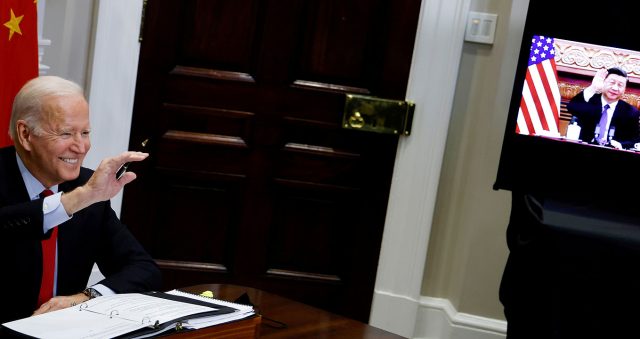
Biden, Xi seek cooperation in longer-than-expected summit

REUTERS

US PRESIDENT Joseph R. Biden and Chinese leader Xi Jinping spoke of the need for cooperation in their first face-to-face summit, which went on longer than expected even though they announced no major breakthroughs.

The video conference lasted for more than three hours, with the two leaders covering a range of topics including trade, the status of Taiwan and human rights. A White House official afterward described the tone as respectful and open, with the conversation focused on action to manage the long-term competition between the world’s biggest economies.

The US made clear ahead of the meeting that there would be no specific outcomes from the meeting, and that appeared to be the case. China’s official Xinhua News Agency said Mr. Xi’s government agreed to adopt an upgraded fast track for US executives to enter China, one of the only concrete deliverables announced after the talks.

In a statement after the summit, the White House said the leaders “discussed the complex nature of relations between our two countries and the importance of managing competition responsibly.” Mr. Biden raised issues including human rights in Hong Kong and Xinjiang, China’s “unfair trade and economic practices” and the US commitment to Taiwan.

The statement added that they “discussed ways for the two sides to continue discussions on a number of areas, with President Biden underscoring the importance of substantive and concrete conversations.”

Mr. Xi said he hoped Mr. Biden would “return US policy toward China back to a rational and pragmatic path,” Xinhua reported. CCTV reported that Mr. Xi said the earth is large enough to accommodate the development of both the US and China, adding that both countries should “not engage in winners and losers.”

‘BURN THEMSELVES’
Still, Mr. Xi also warned that China would safeguard its own sovereignty, security, and development interests and said that those playing with fire around the Taiwan issue “would inevitably burn themselves.”

“We are patient and we are willing to use our utmost sincerity and make the utmost effort to strive for the prospect of peaceful reunification,” Xinhua cited Mr. Xi as saying. “However, if ‘Taiwan independence’ separatist forces provoke and coerce, or even break through the red line, we will have to take drastic measures.”

At the start of the meeting, Mr. Biden told Mr. Xi they had a responsibility to ensure that competition between the countries doesn’t veer into conflict. “It seems to me we need to establish some commonsense guardrails, to be clear and honest where we disagree, and work together where our interests intersect, especially on vital global issues like climate change,” the US president said.

‘OLD FRIEND’
Mr. Xi started his remarks by calling Mr. Biden an “old friend” while saying the US and China “need to increase communication and cooperation.” The two nations should work to find effective responses to global challenges including climate change and the pandemic, Mr. Xi said.

“China and the United States should respect each other, co-exist in peace, and pursue win-win cooperation,” Mr. Xi said, adding that they should work “to build consensus, take active steps and move China-US relations forward in a positive direction.”

Investors were watching to see if the summit helps defuse tensions that have built up between the world’s two biggest economies over a wide range of issues, including tariffs, sanctions and human rights. As the summit got underway, the onshore yuan rose as much as 0.3% to approach the strongest level since 2018. The currency fluctuated within a tight range over the past month.

The White House had framed the discussion as Mr. Biden’s effort to set the terms of the relationship, with a particular focus on avoiding unintended conflict. Besides mentioning human rights and freedom of navigation in the South China Sea, the president also planned to raise China’s non-market economic practices, such as industrial subsidies, though trade issues won’t dominate the conversation, US officials said.

Mr. Xi came to the summit in a strong position politically, having cleared a major hurdle last week to securing a third term as Communist Party chief next year. The consolidation of power in China makes it only more pressing for Mr. Biden to engage Mr. Xi in a leader-to-leader conversation, White House Press Secretary Jen Psaki told reporters on Monday.

The Biden administration consulted allies and partners before the meeting and continued coordination is expected afterward as well, Ms. Psaki said.

The White House argues that Biden is also coming to the summit with a strong hand, having earlier Tuesday signed into law the $550 billion infrastructure bill that his administration says will boost America’s competitiveness with China. — Bloomberg

Asia’s hungry travel sector misses key ingredient — China

REUTERS

ASIAN countries anticipating a sharp tourism rebound may find that their much-awaited reopening won’t have the same boost without Chinese travelers.

China, the region’s largest source of foreign tourists pre-pandemic, requires returning residents to undergo mandatory quarantine of as long as three weeks. Alongside that and other travel hurdles, including piles of paperwork, testing and insurance requirements, any trip abroad in the new normal remains “an unattractive proposition,” said Wellian Wiranto, an economist at Oversea-Chinese Banking Corp.

Amid persistent virus outbreaks across the mainland, China will likely stick with this Covid Zero strategy and patrol its borders tightly until at least the Winter Olympics in Feb. 2022, according to Australia & New Zealand (ANZ) Banking Group economist Krystal Tan.

The world’s second-largest economy has doggedly pursued a zero-tolerance policy to the coronavirus, with increasingly harsh movement curbs that have locked down schools and amusement parks at the slightest threat of infection. Meanwhile, a steady decline in Covid-19 cases in Asia has allowed countries to welcome foreign travelers back to the beaches of Bali, Phuket and Langkawi after over a year.

A similar experiment in Europe has led to a tourism revival, but it may be difficult for Asia to replicate that success without high vaccination coverage, standardized health requirements and reciprocal reopening between neighbors, ANZ’s Tan said.

That has heavy repercussions for the region, which derives over a 10th of its gross domestic product from travel and tourism, especially for the likes of Thailand, New Zealand, Malaysia and Japan, where the sector is a major pillar of growth.

China accounted for nearly 40% of the 240 million tourist arrivals across Asia in 2019, according to HSBC Holdings Plc data. Stripping out the impact of Chinese visitors, Asia’s net tourism receipts would have been lower by 1 percentage point on average.

“Visitors from mainland China will likely remain absent as long as domestic quarantine requirements stay this strict,” said Frederic Neumann, co-head of HSBC’s Asian economic research. “Another growth engine will gradually spring back to life, but it won’t fire on all cylinders.”— Bloomberg

NASA unlikely to send crew to moon until 2026 or later — watchdog

WASHINGTON — A US government watchdog on Monday said NASA failed to accurately estimate the cost of returning astronauts to the moon and forecast the space agency would not likely complete the mission until “2026 at the earliest.”

Last week NASA extended its target date to 2025 at the earliest in its Artemis program, an initiative launched by former President Donald Trump’s administration with an initial goal of returning humans to the lunar surface by 2024.

NASA’s inspector general said it found NASA “lacks a comprehensive and accurate cost estimate that accounts for all Artemis program costs.” Artemis is meant as a stepping stone toward a greater objective of sending astronauts to Mars.

The report found NASA uses a rough estimate for the first three missions “that excludes $25 billion for key activities related to planned missions beyond Artemis III.”

It said NASA must identify ways to reduce costs. It said NASA was likely to spend $93 billion on the program through 2025 and faced a $4.1 billion cost-per-launch for at least its first four Artemis missions.

In a written response NASA said it had restructured its Human Exploration and Operations Mission Directorate organization to ensure effective management and that it agreed it should look for “measurable cost reduction targets” for its Exploration Systems Development.

NASA Administrator Bill Nelson cited delays from legal wrangling over a contract with Elon Musk’s SpaceX to build the Artemis lunar landing vehicle as a major reason for extending the target date.

A federal judge on Nov. 4 rejected a lawsuit by Jeff Bezos’ space company Blue Origin against the US government challenging NASA’s decision to award a $2.9-billion lunar lander contract to SpaceX.

As additional reasons for extending the target date, Mr. Nelson cited Congress for having approved too little money for the program and the Trump administration for having set a 2024 target that was not feasible. — Reuters

Human-centered approach to work

VECTORJUICE-FREEPIK

(Part 1)

In the ILO report on “The Future of Work in the Philippines,” it was clearly stated that an ILO Declaration issued a call to action for “a human-centered” approach for the future of work that focuses on increasing investment in people’s capabilities, strengthening the institutions of work, and promoting sustained, inclusive and sustainable economic growth, and full and productive employment and decent work for all.” The report focused on the effects of digital technologies, in particular the adoption of artificial intelligence in the workplace, as regards disruption and transformation on occupations and their implications for sectors and skills development approaches in the Philippines. It mapped and assessed existing national policy responses and initiatives related to Industry 4.0 in the Philippines and collected information on current upskilling policies and programs.

While reading the report, I got the impression that, despite the good intention of taking a human-centered approach, somewhere along the way the focus turned to technology, especially the innovations related to what is called Industry 4.0, such as Artificial Intelligence, Robotics, Internet of Things, and Data Analytics. It was assumed that the Philippines should strive to be at the same stage of Industry 4.0 as other more advanced economies which have gone much beyond the low-upper middle-income stage, which the Philippines is still struggling to leave behind, and which have reduced their poverty incidence to zero- or single-digit levels as compared to the almost 20% poverty incidence in the Philippines. Much importance was given to digitalization as becoming pervasive in all sectors and occupations of the economy. The idea is that digitalization could render tasks or occupations previously carried out by human workers obsolete — “destructive digitalization.” In the same vein, exposure to new technologies could transform existing occupations — “transformative digitalization.” This line of reasoning assumes that it should be the workers that necessarily have to adapt to technology rather than technology adapting to the types of workers the Philippines can reasonably turn out in the next 10 to 20 years.

I take the position that there is no need for the Philippines to fully be part of the existing “global value chain.” Only those countries that are heavily dependent on exports for economic growth have to be ready for the “emergence of new, more sophisticated and advanced technologies that are seen to trigger structural changes in global value chains (GVC) such as selective reshoring, nearshoring, more distributed value activity and greater competition for skills specific to certain GVC segments.” I maintain that the large domestic market of the Philippines, based on a population growing towards 150 million people in the next two decades, will be the main engine of growth of the economy. We have to export only to the extent of having to supplement the foreign exchange earnings that we receive from the Overseas Filipino Workers (OFWs), the BPO-IT (which is part of Industry 4.0) and the very promising tourism sector, which, despite digitalization, will continue to be labor-intensive. The warm smiles and soft skills of the Filipinos and Filipinas cannot be digitalized.

To refocus our attention towards the human person in planning the economy of the future, it would be useful to borrow some basic principles about the essence of human work from Catholic social doctrine. The one who wrote extensively on the philosophy and theology of work was St. John Paul II. In his encyclical letter entitled “Laborem Exercens” (On Human Work), St. John Paul II defines work as “any activity by man, whether manual or intellectual, whatever its nature or circumstances; it means any human activity that can and must be recognized as work, in the midst of all the many activities of which man is capable and to which he is predisposed by his very nature, by virtue of humanity itself. Man is made to be in the visible universe and image and likeness of God himself, and he is placed in it in order to subdue the earth. From the beginning therefore he is called to work. Work is one of the characteristics that distinguish man from the rest of creatures, whose activity for sustaining their lives cannot be called work.”

According to Christian social doctrine, work — in whatever form — is very much part of the reason for man’s existence on earth. God created man for him to work, to “subdue the earth.” In a homily that he delivered on May 1, 2020 (Feast of St. Joseph), Pope Francis said that “work is none other than the continuation of God’s work: human work is man’s vocation received from God at the end of the creation of the universe… Work makes the human person similar to God, because with work man is a creator, capable of creating many things; also of creating a family to raise. The human person is a creator, and creates through work. This is his vocation, and it says in the Bible that ‘God saw all He had made, and indeed it was very good’ (Gen 1:31). That is, work has goodness within itself and creates the harmony of things — beauty, goodness — and involves man in everything: in his thought, his actions, everything. Man is involved in work. It is man’s first vocation: to work. And this gives dignity to man. The dignity that makes him resemble God. The dignity of work.”

In his homily, he told the story of a businessman who telephoned him (at the height of the pandemic). This employer was asking for prayers from the Pope so that he would not be obliged to lay off any of his workers, saying “Because to lay off one of them is like firing myself.” The Pope praised employers like him who are good, who take care of their employees as if they were their own children. He asked his listeners to pray to St. Joseph that he might help all to fight for the dignity of work, so that there may be work for everyone, and that the work may be dignified, not slave labor.

In the last century, a towering figure in the Catholic church who taught most eloquently about the essence of human work was St. Josemaria Escriva, Founder of Opus Dei. In a homily he delivered, also on the feast of St. Joseph, entitled “In St. Joseph’s Workshop,” St. Josemaria made it very clear that “Work is part and parcel of man’s life on earth. It involves effort, weariness, exhaustion: signs of the suffering and struggle which accompany human existence and which point to the reality of sin and the need for redemption. But in itself work is not a penalty or a curse or a punishment: those who speak of it that way have not understood sacred Scripture properly… It is time for us Christians to shout from the rooftops that work is a gift from God and that it makes no sense to classify men differently, according to their occupation, as if some jobs were nobler than others. Work, all work, bears witness to the dignity of man, to his dominion over creation. It is an opportunity to develop one’s personality. It is a bond of union with others, the way to support one’s family, a means of aiding in the improvement of society in which we live and in the progress of humanity… And moreover, since Christ took it into his hands, work has become for us a redeemed and redemptive reality. Not only is it the background of man’s life, it is a means and path to holiness. It is something to be sanctified and something which sanctifies.”

To further elaborate on the relationship between the human person and technology, St. John Paul II, in the encyclical “On Human Work,” distinguishes between the objective and the subjective sense of work. At the objective level, there is reason to classify work according to the degree by which man “subdues the earth” through his higher spiritual faculties. As St. John Paul wrote: “Man dominates the earth by the very fact of domesticating animals, rearing them and obtaining from them the food and clothing he needs, and by the fact of being able to extract various natural resources from the earth. But man ‘subdues the earth’ much more when he begins to cultivate it and then to transform its products; adapting them to his own use. Thus agriculture constitutes through human work a primary field of economic activity and an indispensable factor of production. Industry in its turn will always consist in linking the earth’s riches — whether natures’ living resources or the products of agriculture, or the mineral or chemical resources — with man’s work, whether physical or intellectual. This is also in a sense true in the sphere of what are called service industries, and also in the sphere of research, pure or applied.”

Technology is what embodies the use of the higher faculties of man, not only his physical prowess as was the case before the First Industrial Revolution, which was the increasing use of machines that significantly increased the productivity of human work. As St. John Paul wrote: “The development of industry and of the various sectors connected with it, even the most modern electronics technology, especially in the fields of miniaturization, communications and telecommunications and so forth, shows how vast is the role of technology, that ally of work that human thought has produced, in the interaction between the subject and object of work. Understood as a whole set of instruments which man uses in his work, technology is undoubtedly man’s ally… It facilitates his work, perfects, accelerates and augments it. It leads to an increase in the quantity of things produced by work, and in many cases improves their quality.”

There is a downside, however, to technology. It can cease to be man’s ally and become almost his enemy, as when the mechanization of work “supplants” him, taking away all personal satisfaction and the incentive to creativity and responsibility, when it deprives many workers of their previous employment, or when, through exalting the machine, it reduces man to the status of its slave.

St. John Paul II rightly points out that the phrase “subdue the earth” in today’s digital world includes a relationship with technology, and in today’s terminology, both hardware (machines) and software. Some very important questions have to be raised. These questions are particularly charged with content and tension of an ethical and social character.

(To be continued.)


Bernardo M. Villegas has a Ph.D. in Economics from Harvard, is professor emeritus at the University of Asia and the Pacific, and a visiting professor at the IESE Business School in Barcelona, Spain. He was a member of the 1986 Constitutional Commission.

bernardo.villegas@uap.asia

Energy security for Philippine recovery and development

VECTORJUICE-FREEPIK

As the development of the energy sector was not at all part of the Duterte administration’s agenda or priorities, the looming energy crisis is giving goose-bumps to Filipino consumers, businesses, and the industry itself.

To bring the energy predicament to the national attention, the Stratbase ADR Institute, in partnership with CitizenWatch Philippines, hosted a virtual town hall discussion on “Ensuring Power Supply Security for a Sustainable Economic Recovery” on Nov. 11.

In welcoming the panelists and the hundreds in attendance, I specifically highlighted the interdependence between the following factors. Given a stable power supply and modern electricity supply system in the country, the business climate will improve while simultaneously attracting foreign investments. If business is good and more investments are here, more jobs will eventually be created. Altogether, these will redound to the speedy revival of the Philippine economy.

Echoing through the town hall discussion was of course the urgent question of improving the energy supply. Duly noted by Louie Montemar (Convenor of Bantay Konsyumer, Kalsada, at Kuryente or BK3), the top priority should be improving the supply, as this has been a problem immediately after EDSA, and has been since.

For Senator Sherwin Gatchalian, the exploration for new energy sources to improve supply necessitates financial muscle and technology. Risking a hefty investment of $20 million to make one drill, he rightly pointed out that contractors must have the financial and technical expertise.

The current contractors wanted to start drilling new wells and would naturally want an extension of their contracts, but for some reason, they were not given that opportunity, which many observers see as an alleged set-up.

Mr. Gatchalian argued for the need to diversify the energy supply, particularly maximizing renewable energy, and diversifying energy sources in oil and gas. According to him, “There is potentially 31,000 megawatts of power which can be drawn from renewable sources.”

Some speakers, however, aired the concern about the high prices involved in renewable resources. For instance, Victorio A. Dimagiba (President, Laban Konsyumer, Inc.) harped on either junking the feed-in tariff (FIT) policy or repealing the existing Renewable Energy Act 9513 or the RE law. Further, they have even initiated a petition to the Energy Regulatory Commission (ERC) to nullify the FIT increases for the consumers’ protection.

Still on improving the energy supply but in terms of making prices competitive, Romeo Bernardo, Vice-Chairman of the Foundation for Economic Freedom (FEF), stated that bringing down the price is based on the assurance of the supply side. This scenario is a pre-condition where competition will bring down the price. Unfortunately, according to him, “some of the interventions of government went on restricting supply.”

In connection with this, Ernesto Pantangco, Chairman of the Energy Committee of the Management Association of the Philippines (MAP), ventilated the need to have a long-term integrated power development plan that spans the next two to three decades. Having been involved in the power industry for the past four or five administrations, he gave due emphasis on the shifting priorities of every administration and emphatically expressed that there has been no consistency.

Another issue that impacts on both energy supply and prices is the importance of having a transmission facility in place. As argued by Mr. Bernardo, “if generators are discouraged from building because they cannot connect to the system, you will have a shortage in supply, then high prices. Our government regulators, DOE (Department of Energy) and ERC, have to do a better job in making sure that transmission facilities are built in a timely way.”

Mr. Montemar, on the issue of power generation, cited the live case of Meralco and the DoE regarding a reported “solar hybrid micro-grid” project in Cagbalete Island in the east coast of Luzon. The lesson, according to him, is that we already have a working model that uses solar power technology and battery storage supplemented by several diesel-powered generators for continuous electricity supply to the island. This can be further developed and replicated for unserved and underserved communities across the archipelago, he said.

With both technology and investments, we can diversify our energy sources and develop indigenous sources, and create more supply and cleaner energy in the process.

Another perspective floated in the discussions pertinent to energy security is the concept of energy mix. As global energy prices continue to rise, Mr. Pantangco opined that the impact could have somewhat been mitigated if we had a more balanced energy mix, together with renewable power plants. He also cited that adding nuclear power in the energy formula will add to diversification. On this point, Bienvenido “Nonoy” Oplas, Jr. (President, Minimal Government Thinkers) stated that the consumers are the ones who decide the energy mix, not the government, NGOs, UN, DoE, and ERC.

The immediate context where in the looming energy crisis may happen is that we are now in the electoral season. As Terry Ridon (Convenor, InfraWatch PH) reminded everyone, “we should not lose sight of the elections, and the most important thing is for us to elect better leaders at the highest levels.”

Energy is essential to our country’s inclusive recovery. The next government must put energy security among the top items of the development agenda. A shift from populist to a more developmental, sustainable, and strategic thinking.


Victor Andres “Dindo” C. Manhit is the president of the Stratbase ADR Institute.

The subtle power of FIRB

VECTORJUICE-FREEPIK

COVID-19 triggered economic losses since the first case was recorded in January 2020. The community quarantine measures imposed by the government severely disrupted business operations and commercial activities and led to a negative impact in our economic performance. For these reasons, the enactment of the Corporate Recovery and Tax Incentives for Enterprises (CREATE) law this year was a welcome development.

The CREATE law aims to provide relief to businesses adversely impacted by the pandemic, and reverse the effects of the COVID-19. Several government officials, business entrepreneurs, and stakeholders touted the measure as a well-crafted law.

The CREATE law offers a three-tier structure of incentives to attract high-value and labor-intensive investments in the country. The determination on which incentives an entity can enjoy and the period of availment will depend on its registered project/activity, location, and industry tier which will be defined in the Strategic Investment Priorities Plan (SIPP). Interestingly, the rule-making power rests upon the Fiscal Incentives Review Board (FIRB) to ensure success of this incentive scheme.

One of the salient features of the CREATE law is the expanded functions of the FIRB. Prior to CREATE, the FIRB’s function was limited to the administration and grant of subsidies to Government-Owned and -Controlled Corporations (GOCCs). With CREATE, the FIRB is now granted vast power which includes policy making and oversight function for the administration and grant of tax incentives; the approval and disapproval of the application for tax incentives or tax subsidies; the formulation of place-specific strategic investment plan; and the cancellation, suspension, and withdrawal of tax incentives and subsidies, among others. The most crucial of these powers are the formulation of the new SIPP which set out the countries’ list of priorities, industries, and the grant of the incentives.

Last June, the FIRB adopted the SIPP drafted by the Department of Trade and Industry — Board of Investment. As envisaged, the framework includes industries that are high-value and labor-intensive investments. Among the industries identified under the SIPP are electrical and electronics, chemical and pharmaceuticals, machinery and transport, agriculture and agribusiness, information technology-business process management, research and development, and artificial intelligence, automation, robotics, and digital technologies. As of date, the draft SIPP has yet to be approved by the President. The implementation of the SIPP is expected to begin in January 2022.

Pending the issuance of the new SIPP, FIRB issued Resolution 5-21 adopting the 2020 Investment Priorities Plan (IPP) as the transitional SIPP. Hence, the list of priority sectors under the 2020 IPP are still eligible for incentives. To streamline the process of registration and application for the availment of incentives, the FIRB introduced the online Fiscal Incentives Registration and Monitoring System (FIRMS). Through this online portal, investors or enterprises can submit and monitor their applications for incentives in any of the investment promotion agencies.

With all these policies in place, we will expect a boost in investments, and economic recovery in the years to come. It must be emphasized, however, that the success still lies with the FIRB. Under CREATE, the FIRB is given the authority to grant tax incentives to registered business enterprises. It may only delegate its authority to investment promotion agencies for registered projects or activities with investment capital of P1 billion and below.

It should be noted that the incentive scheme has its cost, that is, forgone revenue for the government. The Board should thus maximize the benefits from these tax incentives by granting the incentives to qualified target investors only. Otherwise, it will pose a burden to our economy.

To emphasize, the law was crafted not only to encourage investments but also to increase competitiveness of the country in the global market. The FIRB is tasked with the burden of streamlining an SIPP worthy of investors’ minimum investment capital of P5 million and more, which is required to enjoy the special corporate income tax (SCIT) of 5% over 10 years.

Presently, the board is composed of the Secretary of Finance, the Secretary of Trade and Industry, the Executive Secretary of the Office of the President, the Secretary of Budget and Management, and the Director General of the National Economic and Development Authority.

One notable aspect is that the board is composed of presidential appointees. We are uncertain if the present members of the FIRB will retain their posts after the 2022 election. For now, we can only hope that the next set of members of the FIRB won’t be a rubberstamp for the new administration. Notwithstanding, this is a call to the FIRB to stay true to its mandate, and that is, to preserve the legacy of CREATE as a fiscal relief and economic recovery measure.

The views and opinions expressed in this article are those of the author. This article is for general information and educational purposes, and not offered as, and does not constitute, legal advice or legal opinion.


Princess Rexille V. Liboon is an associate at the Tax Department of the Angara Abello Concepcion Regala & Cruz Law Offices.

(632) 8830-8000

pvliboon@accralaw.com

Push for civil registration set to hit key milestone in Asian and Pacific countries

YANALYA-FREEPIK

MOST COUNTRIES in the Asia-Pacific region are on track to reach universal birth registration by 2030: an incredible achievement and a significant milestone in realizing human rights and equality. However, as the COVID-19 pandemic has exposed, many weaknesses remain in official recording systems, creating gaps in knowledge about the population and affecting how authorities respond to crises and reach those in greatest need.

Civil registration and vital statistics (CRVS) systems record births and other key life events such as deaths and marriages. Birth registration is fundamental for accessing a wide range of social services, benefits, and rights. It provides an individual with a legal identity and a proof of age, which are often requirements to enroll in school, receive healthcare, apply for formal work, register to vote, inherit property, obtain a passport and social protection, or open a bank account. And often it is the hard-to-reach and marginalized populations that are least likely to receive official documentation, including those living in rural, remote, isolated or border areas; minorities; indigenous persons; migrants; non-citizens; asylum-seekers; refugees and people who are stateless or of undetermined nationality.

As regional leaders gather this week for the 2nd Ministerial Conference on Civil Registration and Vital Statistics in Asia and the Pacific, the focus will be on regional and country-level achievements, obstacles and challenges in realizing the shared commitment that all people in the region will benefit from universal and responsive CRVS systems by 2024. It marks the midpoint of the Asia-Pacific CRVS Decade (2015-2024) and is an important milestone in the pursuit of creating national CRVS systems that are universal and responsive to the needs of entire populations.

Since 2014, more than 70 million more children in the region have greater access to education, health and social protection because their birth has been officially recorded and recognized through the issuance of a birth certificate. This is a notable achievement and a testament to the resolve and commitment of governments to the shared goals made in 2014, the strength of regional cooperation, and the support of 13 development partners, including the United Nations Economic and Social Commission for Asia and the Pacific (ESCAP) and UNHCR, the UN Refugee Agency.

Still, there is work to do. Robust and universal marriage registration systems are needed to prevent girls from being coerced into early marriage, which often threatens their lives and health. The region also has an opportunity to reduce the risk of statelessness and human trafficking, as well as to promote solutions for refugees and asylum seekers by documenting links to the country of origin. UNHCR’s work with national governments to strengthen and broaden civil registration systems to formally register people considered stateless or of undetermined nationality has led to profound policy changes across Central Asia and the legal recognition of every birth, irrespective of parents’ status.

Furthermore, as we have witnessed during the global pandemic, when civil registration systems fail to reach everyone in the country and not everyone is counted, a public health crisis intensifies. Whereas robust CRVS systems enable governments and health authorities to track the pandemic and respond quickly and in an informed manner, a poorly functioning civil registration system masks the true impact of a crisis: deaths go uncounted — especially among the poorest and most vulnerable — and individuals are unable to access humanitarian relief or benefit from financial stimulus measures and, more recently, national vaccination programs.

Governments that are unable to account for the entire population face barriers to creating and implementing effective public policy and responding to a crisis in an equitable manner. A comprehensive approach to civil registration, with timely and accurate data that are put to the right use, has the power to benefit every individual and inform public policy simultaneously, including by reducing statelessness across the region.

Leaving no one behind through universal birth and death registration demands bold and ambitious outcomes from the upcoming ministerial conference. We have the knowledge, experience and technical ability to create registration systems that are responsive to the needs of the population and can guide us through current and future challenges.

(The 2nd Ministerial Conference on Civil Registration and Vital Statistics in Asia and the Pacific will take place from Nov.  16 to 19.)


Armida Salsiah Alisjahbana is executive secretary of ESCAP, while Gillian Triggs is assistant high commissioner for protection at the UNHCR.