Home Blog Page 6860

House ratifies microgrid bill bicameral conference report

THE HOUSE of Representatives ratified Wednesday the bicameral conference committee report on a bill seeking to promote the use of microgrid systems for total electrification. 

The measure is now set to be sent to Malacañang for President Rodrigo R. Duterte’s signature. The Senate ratified the measure on Nov. 9.

The harmonized version will set guidelines governing the competitive selection process for electrification to underserved and unserved areas. The guidelines establish a preference for systems that are least-cost, indigenous, renewable, and environment-friendly energy sources.

The selection process should be no longer than 90 calendar days after published requirements are completely submitted to regulators.

DUs (Distribution Utilities) and microgrid system providers (MGSP) are also given the opportunity to submit a superior offer within seven calendar days after the announcement of the winning firm.

MGSPs can also offer all-in price offers to the Department of Energy or the National Power Corp. to provide integrated power generation and distribution services in a DU-identified unserved area within 30 days from the publication of a list of these areas.

However, if DUs provide a lower offer or no MGSPs make an offer to serve a particular unserved area, the DU are required to electrify the area within 18 months from the expiration of the period to tender an offer.

The measure also grants DUs and MGSPs provisional authority to start collecting the rates specified in the award while awaiting the final decision of the Energy Regulatory Commission (ERC) on the respective rate-fixing applications.

The ERC is required to make a decision determining the final rate within 135 calendar days from receipt of a complete application from a DU or MGSP.

The National Electrification Administration (NEA) has said that the government’s 100% electrification target may be achieved as early as June given adequate funding.

Some 12,000 sitios still need to be connected to the grid, the NEA estimates, which will require some P18 billion. — Russell Louis C. Ku

Well-milled rice retail prices fall in four major trading centers 

PHILIPPINE STAR/ MICHAEL VARCAS

THE average retail price of well-milled rice fell in four major trading centers on Oct. 15-17, according to the Philippine Statistics Authority (PSA).

The PSA said in a report that the prices logged during the period known internally as the second phase of October had a comparative period of Oct. 1-5, which was the first phase.

The average retail price of well-milled rice fell in Butuan City by P1.52 to P38.18 per kilogram (/kg).

Also posting declines were prices in Legazpi City (down 94 centavos at P37.62), followed by the National Capital Region (NCR) (down 83 centavos at P42.02), and Kidapawan City (down 56 centavos at P39.43).

The average retail price of well-milled rice increased in Batangas City by P2.85 to P47.25/kg, followed by Tacloban City, where prices rose P1.06 to P44.58, and Digos City, where they rose 74 centavos to P42.95.

The PSA said the average retail price of bone-in pork declined in six trading centers.

Batangas City prices fell P26.50 to P286/kg, followed by Cabanatuan City (down P25 at P275), Cebu City (down P10.83 at P195), Butuan City (down P9.91 at P250), the NCR (down P5.56 at P264.29), and Digos City (down P5.10 at P275.51).

Prices rose in Calapan City (up P27.63 at P285.47), San Fernando City (up P20 at P320), and Cagayan de Oro City (up 50 centavos at P180).

The PSA said the average retail price of round scad (galunggong) increased in nine trading centers, led by Cabanatuan City (up P110 at P250/kg), followed by Iloilo City (up P12.47 at P174.55), Butuan City (up P12.11 at P195.95), Calapan City (up P11.11 at P244.44), Baguio City (up P9.71 at P179.71), Pagadian City (up P8.75 at P105), Batangas City (up P5.63 at P299.25), the NCR (up P3.89 at P230.64), and Kidapawan City (up P3.72 at P156.28).

Prices declined in San Fernando City (down P35 at P145/kg), Tuguegarao City (down P10 at P190), and Digos City (down P5 at P150).

The PSA said the average retail price of red onion rose in eight trading centers.

Legazpi City prices rose P19.53 to P173.02/kg), as did those in Iloilo City (up P11.79 at P121.79), the NCR (up P7.10 at P127.98), Cabanatuan City (up P5 at P125), Pagadian City (up P3.93 at P118.03), Baguio City (up P3.92 at P100), Kidapawan City (up P3.51 at P110.53), and Digos City (up P2.50 at P130).

Prices fell in Calapan City (down P30 at P125/kg), in Butuan City (down P14.83 at P130), and San Fernando City (down P10 at P120). — Revin Mikhael D. Ochave

Farm lobby calls for chicken import ban after bird flu outbreaks 

A FARMING industry association, the Samahang Industriya ng Agrikultura (SINAG), said the government needs to ban chicken and other poultry imports due to outbreaks of highly pathogenic avian influenza (HPAI), also known as bird flu, in Asia and Europe.

SINAG Chairman Rosendo O. So said a poultry import ban needs to be in place until the Department of Agriculture (DA) fully implements a system for first border inspection of all imported agricultural products.

“Will we wait for bird flu to enter the country and destroy the livelihood of families relying on the poultry industry? We should have learned our lessons from the African Swine Fever (ASF) and the coronavirus disease 2019 (COVID-19) pandemic,” Mr. So said in a statement Wednesday.

SINAG said bird flu outbreaks were reported in parts of Japan, Norway, and South Korea.

“South Korea reported an outbreak at a farm of around 770,000 poultry in Chungcheongbuk-do. Japan reported its first outbreak at a poultry farm in the northeast of the country. In Europe, Norway reported an H5N1 bird flu outbreak in the Rogaland region in a flock of 7,000 birds,” the group said.

SINAG said imports should not be allowed in the absence of a quarantine inspection system at the port of first entry.

“We are the only country that is not applying the global standard of quarantine inspection at the port of first entry of any imported food, food products and agricultural commodity to ensure food safety and public health security,” Mr. So said.

The DA is set to establish the first commodity examination facility for agriculture at the Subic Freeport Zone, which will subject all agricultural and food imports to 100% sampling and laboratory testing.

The DA’s original plan was to build such a facility at the Manila International Container Port, which has been delayed.

The DA recently implemented a ban on poultry imports from the Netherlands after it reported an outbreak of H5N1 HPAI. — Revin Mikhael D. Ochave  

Stay primed: Tax and inter-agency updates

Time flies fast. Counting down to 2022, with less than 60 days left, taxpayers and employers need to gear up for their year-end adjustments or tie up loose ends before the year closes. They should stay well-informed of the latest tax and inter-agency updates, a few of which are summarized below.

SUSPENDED HIKES ON MEMBER CONTRIBUTIONS
To manage the pandemic’s impact, PhilHealth suspended the proposed hike in members’ contributions early this year. In its official statement in January, the agency announced that premiums for 2021 will be collected using the contribution rate of 3% instead of 3.5%, with the ceiling of P60,000 on basic monthly salary remaining instead of the previously proposed P70,000 maximum.

The Home Development Mutual Fund or Pag-IBIG likewise postponed the increase in monthly contributions by its members. Consequently, the planned contribution increase of P150 from P100 for 2021 was deferred to January 2022.

While these postponements should alleviate the current financial apprehensions of members, the government may need to consider suspending the hikes further with the economic recovery still underway.

RELIEF FOR WORKING ALIENS AND NON-RESIDENT TAXPAYERS
With the lifting of travel restrictions, the Department of Labor and Employment issued Labor Advisory 16-2021 in August setting the guidelines for the issuance of Alien Employment Permits (AEP) or Certificates of Exemption/Exclusion (CoE) for foreign nationals intending to come to the Philippines for long-term employment. In annualizing income taxes, employers of 9(g) visa workers must note that foreign nationals remain taxable in the country even if they were unable to return to the Philippines during the lockdown, provided they remained on active secondment/employment in the Philippines. This is aligned with the special tax rules under RMC 83-2020.

Still, non-resident foreign income earners can avail of tax treaty benefits on all income derived from Philippine sources, provided they are entitled to relief from double taxation under relevant tax treaty provisions. The procedures for claiming treaty benefits have been updated by Revenue Memorandum Order 14-2021. To avoid the denial of treaty benefit claims, the Bureau of Internal Revenue (BIR) in Revenue Memorandum Circular (RMC) 77-2021 stressed the importance of submitting the required documents.

GUIDELINES FOR INDIVIDUAL TAXPAYERS
Generally, taxpayers must individually file an annual income tax return (ITR) unless exempted under existing rules (e.g., employees qualified under substituted filing).

Under RMC 4-2021, the filing of ITRs is either through electronic or manual mode. Since most taxpayers are required to file their ITRs electronically, they may use the eFPS or the eBIRForms software (latest version 7.9.2 under RMC 111-2021). Although the eFPS is a digital option for filing, certain taxpayers enumerated in the Circulars (e.g., those who are filing “No Payment Returns”) are explicitly required to use eBIRForms only.

Likewise, taxpayers may electronically pay for the corresponding taxes due through the following BIR accredited payment channels: (1) Development Bank of the Philippines (DBP) Tax Online; (2) Land Bank of the Philippines (LBP) Link.BizPortal; (3) Union Bank Online Web and Mobile Payment Facility; (4) Mobile Payment (GCash/PayMaya); or (5) I-Pay MYEG Philippines, Inc. (IPMP) Online Payment Facility.

As a word of caution, taxpayers who must file electronically but file and pay manually are liable for penalties for Wrong Venue filing; hence, strict adherence to regulations and issuances is critical to avoid penalties.

Furthermore, taxpayers covered by Section 116 of the Tax Code (e.g., persons whose sales or receipts are exempt from VAT) should take note of RMC 67-2021, which clarified the temporary reduction of percentage tax from 3% to 1% effective July 1, 2020 until June 30, 2023, consistent with the CREATE Act (RA No. 11534). As for filing, RMC 65-2021 prescribes the quarterly percentage tax returns filing deadline on or before Jan. 25, 2022 for the fourth quarter of the tax year 2021.

Finally, RMC 97-2021 reminds social media influencers of their tax obligations to avoid criminal liability for tax evasion and civil penalties.

DEVELOPMENTS IN TAXATION
With digitization, the Bureau is implementing convenient ways to address the needs of taxpayers, such as the following:

1. Online tax payments through various BIR-accredited electronic payment channels;

2. Submission of soft copies of BIR Form Nos. 2307 and 2316 in lieu of the hard copies through the selected modes or submission facilities of the BIR;

3. Permissible e-signature usage for certain BIR Forms;

4. Online TIN verification through the BIR Mobile TIN Verifier App;

5. Dissemination of tax awareness/educational videos;

6. Availability of Chatbot REVIE to assist taxpayers with their general inquiries; and

7. Online booking of Bureau appointments through the BIR’s eAppointment System.

Undeniably, the BIR’s digital platforms and electronic facilities still face technical difficulties. While taxpayers appreciate the advances, administrative feasibility remains a challenge. Thus, the government may need to assess the country’s overall infrastructure and endeavor to elevate its capabilities in managing the evolving market demand, especially now with limited movement and interactions. Consider, too, that an enhanced tax compliance process would boost tax revenue and ultimately revive economic growth.

A final bit of advice: taxpayers should strive to upgrade their tax knowledge and stay primed with tax updates to minimize mistakes. Considering the ever-changing tax rules, it is advisable to verify from time to time if there are newly released issuances, advisories, and regulations, which may supersede these updates. Moreover, to steer clear of potential issues with the BIR, taxpayers are urged to seek advice from the Bureau or tax consultants/specialists.

The views or opinions expressed in this article are solely those of the author and do not necessarily represent those of Isla Lipana & Co. The content is for general information purposes only, and should not be used as a substitute for specific advice.


Rorie Miyshiel L. Bonus is a senior consultant at the Tax Services Department of Isla Lipana & Co., the Philippine member firm of the PwC network.

+63 (2) 8845-2728

rorie.l.bonus@pwc.com

Mbappé and Benzema inspire France to 2-0 win against Finland

KARIM Benzema and Kylian Mbappé celebrate a goal during the FIFA World Cup 2022, Qualifiers Group D football match between Finland and France on Nov. 16 at Olympiastadion in Helsinki, Finland. — REUTERS

HELSINKI — Karim Benzema and Kylian Mbappé were on target again in a sharp second-half performance as France completed their World Cup qualifying campaign with a 2-0 away win against Finland on Tuesday.

The French attack stuttered until Benzema came on as a second-half substitute and Mbappé set him up for the opener.

Mbappé then scored France’s second as the world champions, who had already qualified for Qatar 2022 after Saturday’s 8-0 demolition of Kazakhstan, finished Group D with 18 points from eight games.

Finland, who was hoping to secure a playoff spot, ended up third on 11 points, one behind Ukraine who beat Bosnia 2-0 away to take second place.

“We wanted to finish on a high and we’re happy we did it. Now we’re looking forward to the World Cup. With the team we have, it’s natural to think about (winning) it,” said Benzema.

France has now scored in their last 18 games, matching a record that dates back to 1999-2000.

Finland was the last team to manage a clean sheet against Les Bleus and it seemed they may repeat the feat, but Benzema’s entrance in the 57th minute signaled the end of their hopes.

Didier Deschamps had made five changes to the team who hammered Kazakhstan, with Benzema and Kingsley Coman on the bench.

The duo’s absence was clearly felt as Les Bleus struggled to create chances against a compact Finland team.

Shortly before half time, Leo Dubois picked up a thigh injury and was replaced by Benjamin Pavard.

Finland started the second half with poise but the French defense stayed alert and the visitors stepped up a gear when Benzema replaced Moussa Diaby.

They were rewarded in the 66th with Benzema finding the back of the net with a deflected low shot after a neat one-two with Mbappé, who found the Real Madrid striker with a back heel.

Ten minutes later, Mbappé outsprinted three Finnish players on the left flank before finishing with a superb curled shot into the far corner of the net for his 24th international goal.

It was Mbappé’s fifth goal in two games after he bagged four against Kazakhstan.

“There was more at stake for Finland than for us tonight, but we did what we had to do,” said Deschamps. “It was a very positive year for France, except for those fatal 10 minutes (in the last 16 of the European championship against Switzerland).” — Reuters

Jazz obliterate slumping Sixers

BOJAN Bogdanović scored 27 points, Rudy Gobert logged his 11th double-double of the young season and the Utah Jazz snapped out of a mini-funk by dominating the Philadelphia 76ers in a 120-85 victory on Tuesday night in Salt Lake City.

Gobert took advantage of the Sixers being without Joel Embiid, who has missed five consecutive games — all losses — because of coronavirus disease 2019 (COVID-19) protocols.

The Jazz center scored 15 points, grabbed 17 rebounds and blocked four shots while helping Utah win for just the second time in six games. He spearheaded a Jazz defense that limited Philadelphia to 36.7% shooting.

Bogdanović hit 9 of 12 shots overall and 5 of 7 from 3-point range to lead a Utah offense that made 51.7% of its field-goal attempts and earned its largest margin of victory this season.

Four other Utah players reached double-digits: Jordan Clarkson (20 points with four 3-pointers), Mike Conley and Donovan Mitchell (13 apiece), and Hassan Whiteside (10).

Shake Milton scored 18 points and Tyrese Maxey added 16 points for the Sixers. — Reuters

Muguruza to face Kontaveit for WTA Finals championship

GARBIÑE Muguruza saw off fellow Spaniard Paula Badosa (6-3, 6-3) and Anett Kontaveit outlasted Maria Sakkari (6-1, 3-6, 6-3) to punch their tickets on Tuesday to the Women’s Tennis Association (WTA) Finals championship match in Guadalajara.

In their first career meeting, Muguruza’s superior firepower put Badosa on the back foot from the outset and she broke the Indian Wells champion for a second time with a forehand winner to take the first set.

Badosa’s frustration boiled over during the change over and she was unable to hold serve in the lengthy second game of the second set, giving the former world number one another early break on the sun-drenched court.

Muguruza fended off Badosa’s three break point chances in an 11-minute third game to take a 3-0 lead and rolled on from there, firing an ace to go up 5-2 and sealing the win when Badosa hit a backhand into the net on match point.

“I think it’s the best match that I played so far here in Guadalajara,” Muguruza said.

“It was a tough match facing another Spaniard in the semifinals… so it was tricky. But I’m very happy that I got the win.”

The loss ends a breakthrough year for Badosa, who will finish the season at a career-best world number eight.

“Today was a tough day,” Badosa said.

“I didn’t feel myself. I didn’t play the match that I was expecting.”

Muguruza will have her work cut out for her when she faces the red-hot Kontaveit, who played flawless tennis to take the first set off Sakkari in less than 30 minutes under the lights in the high-altitude Mexican city.

Sakkari, who emerged the victor of a draining match the night before against Aryna Sabalenka, finally broke the Estonian’s serve in the second set to force a decider, much to the delight of the fired up crowd.

The match ultimately hinged on a lengthy Sakkari service game with the Greek trailing 3-4 in third.

On break point, Sakkari pounced on a blocked service return but rifled her forehand into the net to give Kontaveit a 5-3 lead she would not relinquish.

Two-time Grand Slam champion Muguruza is making her fourth appearance at the season-ending finals and her first in the championship match, while the eighth-seeded Kontaveit will be playing in the biggest match of her career on Wednesday.

The season-ending WTA Finals was not held last year because of the coronavirus disease 2019 (COVID-19) pandemic and were originally scheduled to take place in Shen-zhen before being moved because of pandemic-related travel restrictions in China. — Reuters

The energy financing conundrum

PCH.VECTOR-FREEPIK

With economies reopening — some ever so slowly, some in a rage — energy players have been in the limelight. An industry that was one of the hardest hit during the COVID-19 lockdowns, with factory activities halted, leisure and commercial activities closed, travel, transportation all reducing or all together stopping their energy consumption — power generation projects were put on hold, and profits were hard hit. But as countries turn a corner towards growth, energy consumption has rebounded. In fact, here in the Philippines, there is even the concern of overwhelming the grid, a supply-side issue the country has faced for many years pre-pandemic. In an interview with the National Grid Corp. of the Philippines (NGCP), they told me that if it were not for the lockdowns which reduced the energy consumption so sharply, we would have actually had a truly difficult period of black-outs with a major lack of energy security by now. What a strange idea: buti nalang (it was fortunate that) consumption was low. So, how do we ensure that we can increase consumption and maintain or actually dramatically improve energy security?

I hosted and moderated the Conference of the Electricity Power Supply Industry (CEPSI), the Energy Digicon of Asia-Pacific organized by the Association of the Electricity Supply Industry of East Asia and the Western Pacific (AESIEAP) where the agenda to bring the key decision makers in Asia (as well as globally) was to drive sustainability and social inclusion through collaboration. The conference focused on smart power grids and innovative solutions in a post-pandemic world. With a panel including Gil Quiniones, former CEO of the New York Power Authority, as well as representatives from Singapore Power, Tokyo Electric, Sarawak Energy, Sinag Global Energy, Nokia Bell Labs, and Meralco, we discussed the energy transition, decentralization of energy sources, and, of course, how realistic it is to achieve net zero targets and shift (completely?) to renewable sources of energy.

Key takeaways in the presentations were the discrepancies in the energy security of different economies, with Singapore, for instance, already implementing artificial intelligence in data monitoring to have one of the most reliable electricity supplies in the world. Meralco’s CEO Ray Espinosa said it was not feasible nor practical to rely completely on the renewable sources of energy we have, that is, solar, geothermal, wind, and hydro here in the Philippines, that we would still need fossil fuels as a strong baseload to ensure energy security, but that perhaps the exploration of nuclear energy could solve that baseload problem. Momoko Nagasaki of TEPCO or Tokyo Electric, highlighted their plans to spend $27 billion in carbon neutral projects by 2040, an amount which, of course, we in the Philippines have no such level of commitment.

Decentralization of the generation was also important, to reduce the costs of transmission and consequently lower the energy costs to the end users. But to get to this point, technology of storage batteries would need to dramatically improve. Gil Quiniones, a veteran in the industry whose experience has mostly been in New York, explained their ambitious renewable energy targets but highlighted how customer empowerment is of utmost importance. To that end, they created a Sustainable University for their own employees but also for the clients they work with, and doubled investments in diversity, equity, and inclusion, with the idea that energy must be most affordable for the most vulnerable. He says that while the COVID-19 pandemic hit New York hard, it also provided an opportunity for green energy and the integration of real-time monitoring to rethink their energy strategies.

Still, time and again, the question has never been whether the energy transition is important for Mother Earth, but always mainly whether it makes economic sense. The push for carbon neutral won’t matter if consumers will need to bear the brunt for more expensive sources of energy in an already struggling economy, and investors will not finance sustainability if it does not provide them higher returns than they are currently used to. And while governments must play the biggest role in regulating the sources of energy, there is a bigger influence that private sector players can have. Dr. Kenneth Budka of Nokia Bell Labs says that there is economic value in the future energy economy. Imagine the possibilities of 4G and 5G technologies in controlling the flows of the grid and in extending the lifetime of the assets. He says that while it takes some technological innovations, it’s nothing too dramatic, instead: “we can do more with the same” … and make money in the process. Something energy financiers love to hear without getting berated for unsustainable practices.

Three things appear to be the low-hanging fruit in getting this conundrum solved: artificial intelligence, generation decentralization, and batteries. Finance those. Everything else will iterate.


Daniela “Danie” Luz Laurel is a business journalist and anchor-producer of BusinessWorld Live on One News, formerly Bloomberg TV Philippines. Prior to this, she was a permanent professor of Finance at IÉSEG School of Management in Paris and maintains teaching affiliations at IÉSEG and the Ateneo School of Government. She has also worked as an investment banker in The Netherlands. Ms. Laurel holds a Ph.D. in Management Engineering with concentrations in Finance and Accounting from the Politecnico di Milano in Italy and an MBA from the Universidad Carlos III de Madrid.

Digital tax

FULLVECTOR-FREEPIK

A report by Bloomberg published in this paper recently indicated that Southeast Asia’s “internet economy” is forecast to double in gross merchandise value to $363 billion by 2025. Citing research from Google, Temasek Holdings Pte, and Bain & Co., Bloomberg noted that e-commerce, travel, media, transport, and food were driving the region’s digital growth.

Online spending was reported to have risen 49% year on year in 2021 to $174 billion, as Southeast Asia was said to have added 60 million new internet users since the start of the pandemic in early 2020. New users came mostly from Thailand and the Philippines. Online shopping alone is seen to account for 64% of digital gross merchandise value by 2025.

“Continued shifts in consumer and merchant behavior, matched with strong investor confidence, have ushered Southeast Asia to its ‘digital decade’ — and the region is on its way towards $1-trillion GMV (gross merchandise value) by 2030,” Google and its partners said in the report. Indonesia is the region’s largest digital economy, where online spending is seen to double to $146 billion by 2025.

Of course, as the regional economy shifts to digital, tax men will not be far behind. And rightly so. Government policies and regulations should also adjust to the changing times, so governments can sustain revenue collection. Such a shift, however, should not rushed. Research and study should pave the way for a thorough understanding not only of how the digital economy works but also how it is seen to evolve.

According to the Department of Finance, government agencies led by the Bureau of Internal Revenue (BIR) and the Securities and Exchange Commission (SEC) were now working together to evaluate how digital business models should be regulated and taxed in the Philippines, in an effort to “broaden the tax base.”

In a statement, Finance Secretary Carlos G. Dominguez III said he wanted the BIR and SEC to have “enough regulatory and collection muscle” to tax digital companies. To his mind, “operating in the digital space is just a platform. The type of activity doesn’t matter. It’s still taxable by the BIR and subject to the appropriate regulations of the SEC.”

The BIR will evaluate “digital” companies’ tax obligations based on categories identified by SEC and the Bangko Sentral. The National Economic and Development Authority (NEDA), meantime, will update Philippine Standard Industry Classifications (PSIC) to possibly include “fintech” activities or entities as a type of financial service provider. The SEC also plans to come up with “fintech-specific” requirements for licensing and data security.

And then in Congress, there is the proposal to impose a 12% value-added tax or VAT on digital services. The intent is to tax sales by digital service providers of goods that are digital or electronic in nature, and services electronically rendered locally. The tax will cover resident as well as non-resident service providers, or those with subsidiaries, branches, or local office operating within Philippine territory.

As I mentioned in a previous column, considering the growing digital economy, I am inclined to support a Digital Services Tax as long as it hits mainly consumers from a higher income bracket. Moreover, as experts from the International Monetary Fund (IMF) noted, “new global reforms will change where tech giants pay taxes in Asia, and make the international tax system more robust.”

“More than half of all services trade in Asia is digitally delivered, making it hard to collect value-added taxes when these services cross borders. Cross-border e-commerce sales of goods have also been exempted from value-added taxes when shipped internationally in small parcels.

“Resolving these challenges pays off,” noted Era Dabla-Norris, division chief in the IMF’s Asia Pacific Department and mission chief for Vietnam; Ruud De Mooij, advisor in the IMF’s Fiscal Affairs Department; Andrew Hodge, economist in the IMF’s Western Hemisphere Department; and, Dinar Prihardini, an economist in the IMF’s Fiscal Affairs Department.

In a blog, the IMF experts noted that “requiring nonresident suppliers of digital services and e-commerce marketplaces to register with local tax authorities and remit value-added taxes on their sales could raise revenue between 0.04 and 0.11 percent of GDP in some countries in Asia, translating to an additional $166 million in Bangladesh, $4.8 billion in India, $1.1 billion in Indonesia, $365 million in the Philippines, and $264 million in Vietnam.

“As Asian consumers and businesses increase their online activity in the coming years, tech giants will expand further into Asian countries, making taxation in a digitalizing economy even more important. Countries in Asia, in particular, can invest in ways to harness digitalization for tax administration, helping to reduce tax evasion, boost revenue mobilization, and make tax collection more efficient,” they added.

In this line, I believe that the Finance department is taking steps in the right direction. Not only the Philippines but the rest of the world will also be looking into how to best tax the digital sale of goods and digital services. However, regulators should try to learn from each other’s efforts, and adopt global best practices in this regard.

I also believe local regulators should take careful and calculated steps, rather than rushed ones, backed by a thorough examination of the digital economy’s tax potential. The government should also adopt a multisectoral approach and give time and resources for wider consultation with the industry and technical experts, in determining the proper and most practical approaches to digital taxation. It should let data and analysis lead the way.


Marvin Tort is a former managing editor of BusinessWorld, and a former chairman of the Philippine Press Council

matort@yahoo.com

The chase for gold and Buffett’s advice: Don’t expect honesty from cheap people

MACROVECTOR-FREEPIK

The Paper Chase is a full-length Hollywood drama-comedy released in 1973, a few months after the declaration of Martial Law. The movie revolves around a first year Harvard law student, James Hart, played by Timothy Bottoms. Like all students of a course in a school of higher learning that prides itself as the leader internationally in the said discipline, in this case, law, Hart eagerly meets the challenge head on. After all, he is obsessed with getting a Harvard law degree and becoming one of the best in his chosen field.

The film depicts the struggles of law students in a very competitive and, perhaps, cutthroat environment that claims many victims of frustration and extreme behavior, including suicide. In Hart’s case, the Harvard experience becomes even more challenging as he confronts what all of us recognize as the “terror” professor. Such terrors have become almost obligatory features of top-rated schools. You are not top rated if you don’t have a terror as some kind of an institution within the university.

The terror professor is Charles W. Kingsfield (John Houseman), a commanding professor who seriously believes that he owns the classroom for the duration of the subject and the students whom he has given the privilege of using up the oxygen in his class. Hart believes that Kingsfield is determined to make life hard for him in the latter’s subject “Contracts.” In effect, Kingsfield has an entirely different concept of the ideal learner/student-faculty/teacher interaction or engagement.

Undaunted, Hart soldiers on and even finds time to court Kingsfield’s daughter, played by Lindsay Wagner. Incidentally, Houseman won the Academy Award (Oscar) and Golden Globe Award, both for Best Supporting Actor for his role as the dour law professor. Both accolades affirm Houseman’s talent and the picture’s worth as a quality film.

As we watched the movie, we were then reminded of our own ongoing paper chase as we entered our last year at the full-time MBM program at the Asian Institute of Management (AIM). The drama and conflicts one watched in The Paper Chase, reminded one of similar dramas and conflicts between student and faculty, student and classmate, student and family members who continue to adjust to the AIM student’s rigorous schedule. But then, the show must go on. The school, whether Harvard or AIM, will not wait for you to adjust to its ways, traditions and rituals. You enrolled in the school and you knew what you were getting into.

Reminiscing about The Paper Chase, the movie, reminds one of the recently concluded 2020 Tokyo Olympics which had thousands of athletes doing their own paper chase known as the gold medal chase. Like Hart’s chase, there are many — in fact too many — dramas and conflicts in chasing after that coveted gold medal. Ironically, according to author Jillian Olsen, that coveted laurel actually costs $810 or roughly P45,000. Olsen says, “that means, right now, your MacBook Pro, the cheapest Rolex, and a flight to Tokyo costs more than the top prize handed out at the Olympics.”

Olsen adds that “the medals at the Tokyo Olympics are also unique in the sense that they’re comprised of metals collected from small electronic devices.” This fact was not lost on Filipino Olympic boxing silver medalist, Carlos Paalam, who defeated the reigning world division champion on his way to the finals. When asked about his thoughts after receiving the silver medal, Paalam commented that “as a poor guy from the province who collected junk to earn a living, I will cherish this silver medal that came from recycled materials.” Aside however from the silver medal, valued definitely less than the top award, and bonuses Paalam got from the government and private sponsors like the MVP Sports Foundation for his feat, Paalam received $22,500 or a little more than a million pesos.

As should be obvious by now, the gold medal chase is very much associated with money, and for a reason. Most athletes are generally not financially stable. Many, especially those from emerging markets like the Philippines, live in very difficult circumstances as many athletes and national sports associations (NSA) officials will tell you. Things were less difficult in the 1970s when rules on amateurism were relaxed and athletes were allowed to receive some form of allowances. The result was what we call “open” tournaments where professionals and amateurs competed with each other. As result of this paradigm change, there are more athletes who are able to compete and get a crack at winning some kind of prize money as the number of tournaments increased and sponsors got more opportunities for creating awareness for brand.

We, of course, strongly support and have actually created more opportunities for athletes to have more chances for a decent life during their careers and after their athletic careers are over. But while their careers are being fully supported by the Philippine Sports Commission, active and credible NSAs, sponsors and benefactors, the athletes, NSAs, and benefactors and so-called philanthropists are expected — required — to, as a practical matter, agree on certain basic ground rules. If we are a rule-based society, as I understand we are, the foremost rule is adherence to codes of ethical conduct, our corporation laws, and the penal code, also called the criminal code.

As is often the case, the key principle is to maintain balance and to maintain basic honesty in our dealings. Tilting excessively towards temporary and transient material rewards, with little or no regard for the rights of others and laws, will not result in any closure of any dispute, especially if matters of conscience are involved. Not following the rules and laws could result in prison terms.

To adopt the framework that all pathways should be two-way streets will definitely go a long way in harmonizing relationships. Hyperbole, exaggeration, downright lies, and overstating and over dramatizing and overromanticizing one’s case will not help at all.

One’s basic honesty, goodness, values, and conscience will always be tested in the entire spectrum of human activity where performance is always measured and evaluated, sports included.

As Warren Buffett once said, “Honesty is a very expensive gift. Don’t expect it from cheap people.”


Philip Ella Juico’s areas of interest include the protection and promotion of democracy, free markets, sustainable development, social responsibility and sports as a tool for social development. He obtained his doctorate in business at De La Salle University. Dr. Juico served as secretary of Agrarian Reform during the Corazon C. Aquino administration.

Elation coverage 

VECTORJUICE-FREEPIK

Political commentaries sometimes caution believers to be a little less optimistic. Awesome turnouts in a pink motorcade? (Sure, these are the car-owners. What about those living in carts?) Rising survey standing? (It’s just temporary. Wait till the money rolls in.) Executive types sporting pink on Wednesdays? (Sure. What about the messengers, janitors, and clerks? What color are they wearing?) And these pronouncements come from supposed supporters. (Let’s not get too excited, folks.)

What is it with this failure of elation? Can’t we celebrate and embrace this growing winnability factor for the recently unwinnable choice?

Doomsday prophets are not the same as conspiracy theorists. The two groups may overlap in membership, but the latter deals with historical events like what happened to the Yamashita treasure or why the gated subdivisions are getting invaded by a particular country.

Wet blankets (those who douse the fire of enthusiasm with a “reality check”) are not true believers. They say — I really believe in her, but does she really have a chance? Then they come out with their charts on gray rhinos and black swans — can I share my screen?

What purpose do these doomsday scenarios serve? Here are some groups the wets are benefiting.

Pundits love wet-blanket scenarios as they give them more topics to write about on a slow news day. They love posting these meditations on social media, especially among the pink echo chambers.

Academics too, closely related to the above group, discourse on political dynamics and shoot down false hopes. They go through the demographics of the electorate and point to the Socio-Economic Classes, with the CDE dominating the electorate numbers (over 70%), as if this group is a separate country unaffected by what’s going on in the AB segment. They dismiss the youth vote in the demographics with the median age of the country at 25-26 years old. Aren’t the youth idealistic and starved for integrity in public service? (Sure, but do they go out and vote?)

Self-declared marketing experts treat the candidates like shampoo and talk about branding, target markets, and pain points. Is the pink brigade reaching the retail market? Too many messages like riding the bus to go home to the province is a bit passe. (What does that have to do with brand leadership?) There is a need to trim down the messages. Otherwise, you will end up with “buffet marketing.” These talking heads are favorites in the talk shows and claim to be mere observers, not involved in any campaign. (Are they applying?)

The last group to benefit from the defeatist attitude of the wet blankets are the other candidates. They’re still hopeful and see the trend as “pinking too early.” What have they got to lose when they throw their own soggy bedsheets into this pink fire?

Through all these cautionary calls and reality checks, the believers should shoulder on. They still wear pink on Wednesdays and go about their business and reserve the wet blanket scenarios for lunch with a few excitable characters rooting for another group. (It happened 50 years ago — let’s just move on.)

Still, it can be unsettling when these elation scenarios make it to corporate meetings, albeit under “other matters.” We salute those who cut down worst-case scenario talks with an abrupt — can we hear a motion to adjourn?

I still have T-shirts in blue, a bit faded now and so comfortable for sleeping, bought when the college team I was rooting for (and still do) had a string of bad years. The message was simple: “We believe.” This was right before the five-peat surge. Okay, that’s a limited group of fanatics.

Still, the optimist in us looks forward to inauguration day on June 30, 2022 at the big park. The incumbent and outgoing leader may do a Trump and not show up for the event. But his former second, consigned for almost the whole term to being an official with no portfolio and a limited budget is certain to show up. After all, she will be the one delivering her inaugural speech in which she calls for healing and the end to divisiveness.

In her first day of work, the new president will head for her new office by the river, and watch the sunset turn pink.


Tony Samson is chairman and CEO of TOUCH xda

ar.samson@yahoo.com

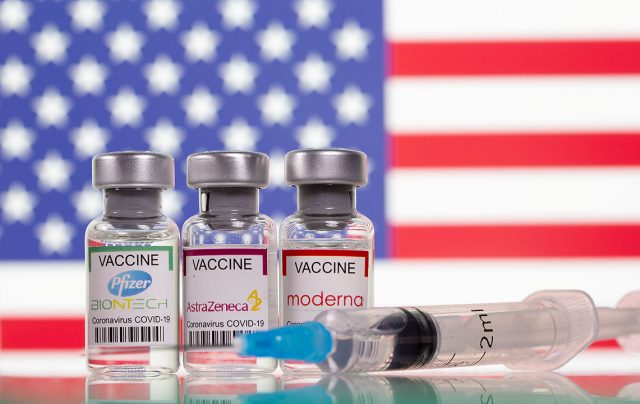
Boosters for all key to US hitting COVID-19 endemic level — Fauci

REUTERS

TOP US infectious disease official Dr. Anthony Fauci said on Tuesday it is possible for COVID-19 to be reduced to an endemic illness from the current health emergency next year if the country ramps up vaccination rates.

Booster doses of the COVID-19 vaccines are vital for reaching that point, Mr. Fauci said in an interview during the Reuters Total Health conference, which runs virtually from Nov. 15-18.

Experts believe COVID-19 (coronavirus disease 2019) cannot be eliminated and will likely become endemic, meaning it will always be present in the population to some degree, such as the flu or chickenpox. “To me, if you want to get to endemic, you have got to get the level of infection so low that it does not have an impact on society, on your life, on your economy,” Mr. Fauci said. “People will still get infected. People might still get hospitalized, but the level would be so low that we don’t think about it all the time and it doesn’t influence what we do.”

To get there, he said, would take a lot more people rolling up their sleeves for initial COVID-19 shots and boosters.

If the United States makes boosters available for everyone, it is possible the country can get control of the virus by spring of 2022, Mr. Fauci added.

Booster shots are currently available — at least six months after completing prior vaccination — to the immunocompromised, those 65 and older and other people at high risk of severe disease or frequent exposure to the virus through their jobs or living situations.

Some states and New York City have expanded booster availability ahead of federal recommendations.

“Look what other countries are doing now about adopting a booster campaign virtually for everybody. I think if we do that, and we do it in earnest, I think by the spring we can have pretty good control of this,” Mr. Fauci said.

There is a wide range of opinion as to what might be considered getting the virus under control, Mr. Fauci noted. “You could control it at 50,000 cases a day. To me, that’s not good control, and that’s not endemicity that I would accept.”

He disagrees with those who argue that it is time to start learning to live with the virus.

“I don’t want to sit back when we have 70,000 to 85,000 new infections a day and say, ‘Oh, well, we can’t do any better than that. Let’s live with that.’ Sorry, that’s not where we want to be,” he said.

That is why he keeps pushing to get as many people vaccinated as possible.

“For me, endemicity means a lot more people get vaccinated, a lot more people get boosted, and although you don’t eliminate or eradicate it, that infection is not dominating your life,” he said.

Mr. Fauci said it is clear that boosters can increase antibodies to a protective level. And while it is too soon to say whether those antibodies will eventually wane, there is a reasonably good chance that booster doses will result in “affinity maturation” — a process in which the booster fine tunes the immune response, increasing its power and durability.

“This is a brand new virus,” he said. “We can’t predict.” — Reuters