Home Blog Page 5395

Yet another BIR deadline in April

For taxpayers following the calendar year as their tax period, the start of the new year marks the countdown to the April income tax deadline. While this is the most pressing deadline for most taxpayers, we should not forget that there is also another BIR requirement due in April — the Request for Confirmation (RFC) to avail of tax treaty relief on certain income payments.

What should taxpayers be aware of regarding the RFC?

The RFC applies to taxpayers who transact with nonresidents and whose transactions are covered by a tax treaty between the Philippines and the nonresident’s country. Examples of these transactions include business profits, dividend income, or interest income.

The RFC must be filed with the Bureau of Internal Revenue’s (BIR) International Tax Affairs Division (ITAD), and the prescribed time for filing is not later than the last day of the fourth month following the close of the taxable year when the income is paid or becomes payable, or when the expense/asset is accrued or recorded in the books, whichever comes first. For capital gains, it is not later than the last day of the fourth month following the close of the taxable year when the income is paid or when the transaction is consummated.  Thus, for taxpayers following the calendar year, they have until the last day of April 2023 (allowing for weekends and holidays) for their 2022 transactions.

While the above deadline is still more than three months away, preparations to file the application should be done ahead of time in order to avoid penalties for late filing.

What are the usual hurdles in preparing the documents for the RFC?  Here are some examples:

1. Evaluation by the applicant-taxpayer as to the characterization of the income payment

Determining the particular nature of an income payment for purposes of RFC filing is sometimes confusing for taxpayers. The characterization of the nature is important as there are income payments that are subject to preferential tax rates, like royalties, dividends and interests, and there are those that are exempt from taxes like business profits and capital gains.

Sometimes, taxpayers find it hard to evaluate their contracts. Are software transactions booked as business profit? Royalty income? For transactions falling under business profit, there is another evaluation involved, having to do with whether the transaction party maintains a permanent establishment in the Philippines. These are just some of the preliminary evaluations that may take time for the taxpayer.

2. Completing the list of required documents

The BIR has issued a checklist of documentary requirements for each type of income. Aside from the application form for the RFC, included in the required attachments to the application form are the Tax Residency Certificate (TRC) issued by the nonresident’s country, bank documents evidencing the income payments, and the nonresident’s incorporation documents, among others.

Considering that multiple documents must be acquired from the nonresident, it may take some time to deliver these to the Philippines, so it is advisable to request the documents from the nonresident ahead of time.

3. Apostillation/consularization process

The documents to be secured from the nonresident’s country should be authentic. As proof of authenticity, the documents should be apostilled/consularized. Please note that the apostillation/consularization process varies per country, and such could take a few weeks to a few months to prepare.

Thus, the timing of apostillation/consularization should be determined at the onset in preparations to file the RFC.

Aside from these, other hurdles could emerge in preparing the RFC; hence, the preparations should not be taken lightly.

While a taxpayer is required to file the RFC for applicable transactions, taxpayers who were previously issued a CoE to the tax treaty benefit are generally no longer required to file an RFC, provided that there is an income of similar nature paid to the same nonresident. This is very helpful for those taxpayers who have similar transactions with their counterpart-nonresidents yearly.

As we know, planning and preparation are the foundations of accomplishing any goal. Let’s start our new year right by being prudent in preparing to meet our deadlines, which include the deadline for the RFC.  Otherwise, we might see ourselves cramming in April.

Let’s Talk Tax is a weekly newspaper column of P&A Grant Thornton that aims to keep the public informed of various developments in taxation. This article is not intended to be a substitute for competent professional advice.


Jan Lorenzo S. Fevidal is an associate from the Tax Advisory & Compliance division of P&A Grant Thornton, the Philippine member firm of Grant Thornton International Ltd.


pagrantthornton@ph.gt.com

Lack of transparency in Marcos trip to Davos scored by analysts

PRESIDENT Ferdinand R. Marcos Jr. arrived in Switzerland on Sunday for his inaugural participation in the World Economic Forum (WEF) in Davos. — OFFICE OF THE PRESS SECRETARY

By Kyle Aristophere T. Atienza, Reporter
and Beatriz Marie D. Cruz

POLITICAL analysts on Monday criticized Philippine President Ferdinand R. Marcos, Jr.’s alleged lack of transparency about his trip to Davos this week, which they said bodes ill for efforts to attract foreign investors.

His five-day visit to Switzerland for the World Economic Forum (WEF) raises more questions than answers, they said, after the presidential palace was accused of hiding the size of his delegation. News website VERA Files reported that at least 70 people accompanied him on his trip.

“By not being completely transparent about his activities including his trip to Davos, he is disrespecting the Constitution, the country’s laws and the public to whom he is accountable,” Maria Ela L. Atienza, who teaches political science at the University of the Philippines, said in a Facebook Messenger chat.

“No matter how the government tries to invite investors to the country, the lack of transparency, as well as the perceived state of politics, governance and corruption in the country does not invite confidence,” she added.

Carol Claudio, the executive assistant of Presidential Communications Office chief Cheloy Velicaria-Garafil, did not immediately reply to a Viber message seeking comment.

Junkets with a large delegation are not new, said Hansley A. Juliano, a political economy researcher, noting that many dictators in Africa have been attending global fora “at taxpayers’ expense, with the promise that the junket is supposed to result in trade deals for the country.”

“If they can’t demonstrate with good faith why 70 people need to be there, questions and criticisms of the costs of travel and personnel are warranted,” he said in a Facebook Messenger chat.

VERA Files on Jan. 13 reported that Philippine delegates had a hard time finding hotel rooms in Davos, prompting them to turn to the nearest city, Zurich, which is considered as the seventh most expensive place to live in Europe.

“The choices are the Hyatt hotels in town of which there are three: Park Hyatt Zurich (5-star, P39,040 standard rate per night), Hyatt Place Zurich Airport The Circle (4-star, P9,997 standard rate) and Hyatt Regency Zurich Airport The Circle (4-star, P11,182 standard rate),” according to the website. “For a huge delegation from a poverty-stricken nation, that is no peanuts.”

“Investors who prioritize careful or transparent investments are likely to see red flags in the Marcos delegation,” Mr. Juliano said.

However, investors who want to engage in “predatory” or nontransparent business practices would see this “as the kind of government that will protect them, at whatever economic cost to the Filipino taxpayer,” he added. “Like attracts like, after all.”

Leonardo A. Lanzona, who teaches economics at the Ateneo De Manila University, said the lack of transparency is “indicative of the absence of ideas” on the part of the Marcos leadership.

“I have not heard of any proposed global initiative from the president,” he said in a Messenger chat. “So why is he going there in the first place?”

Mr. Lanzona said the World Economic Forum’s main objective is to “address and discuss critical global issues, not to finalize and obtain investment pledges.” “The government seems to be more concerned about its own costly travel preferences than the needs of the country.”

On Sunday, Mr. Marcos said he would seek out potential partners for his agriculture and infrastructure push.

Critics have said his appearance at Davos needs to be viewed as a reputation-building exercise rather than a realistic play for investment.

In 2003, the Philippine Supreme Court ruled the Marcos family had illegally acquired P25 billion worth of assets, which were kept in various Swiss bank accounts.

Switzerland is the eighth country that Mr. Marcos visited since he took office in June. The others are Indonesia, Singapore, the United States, Cambodia, Thailand, Belgium and China.

“What makes sense to me at least is the fact that they will be coupling the World Economic Forum travel with visiting communities of overseas Filipino workers (OFW),” Mr. Juliano said. “Considering OFW communities have been a sizable constituency for the Duterte-Marcos alliance since 2016, it does make sense that Marcos is showing himself off there to reinforce the constituencies.”

“This may be once again not about actual economic policy but constituency-building for Marcos, consistent with the kind of politics he espouses,” he added.

More than 2,500 people had registered for the event as of Jan. 10, including state leaders, businessmen, royalty, media honchos and academics, according to a Jan. 15 report by Quartz. “There are hundreds more participating on the sidelines, whether organizing, catering or attending corporate events along the promenade that cuts through the center of Davos,” it said.

‘PECKING ORDER’
Scholars from Germany’s University of Gotinggen, University of California, the National University of Singapore and Kiel Institute for the World Economy in a 2019 report said WEF meetings in 2009 to 2018 had been “dominated by high-income countries.”

“While the number of attendees from low- and middle-income countries has increased from 454 in 2009 to 712 in 2018, the share of attendees from this country group is stagnating.”

“Consistent with previous reports, there’s not always much tangible economic incentive for developing economies’ participation in the WEF,” Mr. Juliano said. “More often than not, they only tend to reinforce their pecking order with global capital.

The global forum has also enabled global inequality because it has been used by high-income countries to pursue unequal trade relations, he added. “What usually happens is a developing country is the one adjusting to the economic demands of rich countries — not them providing equal footing trade agreements with smaller economies.”

George N. Manzano, an economist at the University of Asia and the Pacific, said the Davos forum is “an event for those who want to see and be seen with influential people.”

“President Marcos’ attendance could raise the profile of the Philippines and pitch the investment attractiveness of the country,” he said in a text message. “Given the changes in the Philippines’ investment rules, the president can pitch infrastructure projects as well as manufacturing for companies willing to divest from China.”

Members of the Board of Investments and Philippine Economic Zone Authority (PEZA) are part of the Marcos delegation.

In a statement, PEZA said the Philippine delegation had bilateral talks with the Swiss government on trade and investments.

The two sides exchanged views on their domestic economic situation, discussed bilateral relations and touched on the free trade agreement between the Philippines and European Union, the agency said.

There are 60 Swiss companies operating in the Philippines, 28 of which are registered with PEZA as export-oriented IT and manufacturing enterprises, PEZA said. These Swiss locators have generated P19.168 billion in cumulative investments and created more than 8,000 jobs, it added.

Also on Monday, congressmen defended Mr. Marcos from criticisms about his foreign trips, noting that the president is the “architect of foreign policy.”

“At this rate, I cannot say that this is excessive,” San Jose Del Monte Rep. Florida P. Robes told BusinessWorld in a Viber message.

“The Philippines cannot afford to isolate itself from the rest of the world,” she said. “What we need now is to strengthen our position and presence in the world stage so that we can attract the needed investments and foreign relations to secure our economy and patrimony.”

Albay Rep. Jose Ma. Clemente S. Salceda said the president’s big delegation to Davos was justified, calling his trip “multi-purpose.” “If he believes that the country is best served by a foreign policy that emphasizes face-to-face and personal relationships, let him,” he said in a text message.

But Party-list Rep. France L. Castro questioned the practicality of Mr. Marcos’s trips. “While I understand that these trips can be beneficial to our country in terms of economic and diplomatic relations, it is important to consider the cost-benefit analysis and ensure that the resources allocated for these trips are being used in the most efficient and effective way possible,” she said in a Viber message.

Ms. Castro called for transparency and accountability on the use of public funds in the president’s trips.

Metro Manila’s COVID positivity rate declining, says OCTA

PHILIPPINE STAR/MIGUEL DE GUZMAN

CORONAVIRUS infections in Manila and nearby cities have declined, according to the OCTA Research Group.

The seven-day positivity rate in Metro Manila, which accounted for 31.5% of the country’s economic output last year, had fallen to 3.7% from 5.8% as of Jan. 14, OCTA said in a report on Tuesday. Low positivity rates were also observed in 10 other areas in Luzon.

Bulacan province posted the lowest positivity rate at 2.3%, followed by Pampanga at 2.6%. Batangas and Cavite both came in third at 3.2% each.

Benguet’s positivity rate was 3.6%, while Pangasinan, Ilocos Norte and Cagayan provinces were at 3.9% each.

The positivity rate of Isabela province in northern Philippines hit a very high level at 50.2% from 35.1%, OCTA said.

The Philippines posted 2,934 coronavirus infections in the past week, with a daily average of 419, according to health authorities.

The daily average from Jan. 9 to 15 was 6% lower than the average daily cases a week earlier, the Department of Health (DoH) said in a bulletin on Monday. Of the new cases, one was severe and critical.

The agency said 116 new deaths were verified in the past week, 14 of which occurred on Jan. 2 to 15.

It said 402 of 2,340 intensive care unit (ICU) beds had been used as of Jan. 15, while 3,917 of 19,607 non-ICU beds were occupied. There were 567 severe and critical admissions, it added.

The Health department said 73.81 million Filipinos have been fully vaccinated against the coronavirus, 21.24 million of whom got booster shots. — Kyle Aristophere T. Atienza

Marcos: Manila not pursuing China ‘partnership’

PXHERE.COM

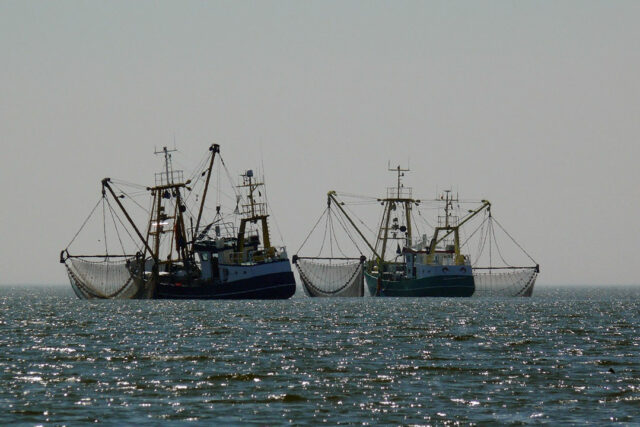
PRESIDENT Ferdinand “Bongbong” R. Marcos, Jr. on Monday said the Philippines is eyeing an agreement, not a partnership, with China to allow Filipino fishermen to fish in the South China Sea.

This after former National Security Adviser Clarita A. Carlos said on Friday the Philippines was studying a proposal by China for a “partnership between fishing villages.”

Mr. Marcos told a briefing on his way to Davos he did not know “how the word ‘partnership’ started to be used.” “It’s really an agreement that China will not stop our fishermen from fishing,” he said, based on a transcript from the presidential palace.

“That’s it, very simple,” he said. “[China] will allow our fishermen to fish in the fishing grounds that they have used for many generations.”

On Friday, Ms. Carlos told a news briefing China had proposed to have a “partnership between fishing villages, and we are looking at that.”

She said the Philippine leader’s state visit to China on Jan. 3 to 5 would facilitate the dialogue especially on their sea dispute.

“There are many more levels of cooperation that are not known to the public that are happening, for example, between the Philippine Coast Guard and Chinese Coast Guard,” she added.

Earlier, Mr. Marcos said he and Chinese President Xi Jinping had vowed to “find a compromise” to avoid tensions between Filipino fishermen and Chinese authorities in the disputed waterway.

The Philippine leader said they had discussed “what we can do to move forward” and avoid any possible mistakes “that could trigger a bigger problem than what we already have.”

Mr. Marcos also that he and his Chinese counterpart had discussed the resumption of oil and gas talks between the two countries.

Last week, the Supreme Court voided the Philippines 2005 energy exploration deal with China and Vietnam. — Kyle Aristophere T. Atienza

24 senior cops have yet to heed call to resign 

PHILIPPINE STAR/KRIZ JOHN ROSALES

TWENTY-FOUR third-level cops have yet to quit their jobs after about 97% of top-level police officers did so to cleanse their ranks of a “deep infection” of the illegal drug trade, the national police chief said on Monday.  

At a press briefing streamed live on Facebook, national police chief Rodolfo S. Azurin said he would leave it to Interior and Local Government Secretary Benjamin C. Abalos, Jr. if authorities would disclose the names of senior cops involved in illegal drugs.  

“To the 24 who have yet to submit their courtesy resignations, I hope they find discernment,” he said in mixed Filipino and English.  

“The 97% or the 929 resignations show how responsive our third-level officers are and how they want closure,” the police chief added, referring to allegations of their top brass being involved in the illegal drug trade.  

The Interior chief earlier urged all police colonels and generals to resign after a probe found many of them involved in illegal drug activities. A five-man committee will evaluate the records of each top police officer who resigned.  

On Sunday, Mr. Abalos said top cops may still face prosecution after retirement.   

The five-man committee and the National Police Commission would continue investigating retired senior cops involved in illegal drugs.  

“Even if a police official is allowed to retire for the time being, the monitoring and investigation must continue, to gather evidence that may lead to eventual criminal prosecution,Mr. Abalos said.  

Police had killed 46 drug suspects as of November during illegal drug operations under the new administration, said Mr.Azurin, who was appointed police chief in August.  

Mr. Abalos earlier said law enforcers seized about P10 billion worth of illegal drugs in 24,000 drug operations last year. About 30,000 drug suspects were arrested under the Marcos administration, which started in July.  

“We are expecting that they will maintain their impeccable character and integrity so that the result of all their evaluations will be acceptable for everyone,” Mr. Azurin said. “Similarly, we appeal that the process will be devoid of personal and political biases.” John Victor D. Ordoñez


New department aims to integrate water sector, but will it mean better access, reasonable rates? 

PHILIPPINE STAR/EDD GUMBAN

By Beatriz Marie D. Cruz 

A COMMUNITY in the small town of Danao in Bohol is among many countryside areas in the Philippines where there is water service up to the household level, but supply is limited to just a few hours per day under the best of circumstances.     

Resident Gonzala T. Bacotcot, whose own faucet had been broken, goes over to a neighbor to collect 10 buckets of water daily between 5 to 8 a.m. when the supply pipes are open.    

I pay our neighbors P100 monthly, she said. 

But when it rains, such as in recent weeks due to a low pressure area, Ms. Bacotcot said they had to wait for three days until clear and potable water from the river could be distributed.   

Improving access to such a most basic need in a sustainable manner is among the overarching objectives of a proposed law that will consolidate the country’s water resource management through the creation of a Department of Water Resources.   

The measure will be on the priority table when Congress resumes next week, with grueling discussions expected given the myriad of issues relating to water sourcing, distribution, sanitation, flood management, and irrigation, among others.  

Around 32 bills were filed at the House of Representatives to create a department that will provide oversight to all water-related issues. It is currently pending at the committee on government reorganization.  

Albay Rep. Jose Ma. Clemente S. Salceda, author of one of the bills, said the proposed measure will create an umbrella departmentthat integrates all stages of water resource management.  

There is currently no water regulatory system to speak of. Power and authority is scattered in some cases, (overlapping) in others, and is vague or even non-existent in other areas,Mr. Salceda said in a Viber message.  

Among the existing agencies involved in the water sector are: the Metropolitan Waterworks and Sewerage System and Local Water Utilities Administration as regulators; National Irrigation Administration; the Laguna Lake Development Authority; and several bureaus under the Department of Environment and Natural Resources, Department of Interior and Local Government, Department of Agriculture, and the Department of Public Works and Highways.   

Local governments are also involved in their respective water districts, which are effectively set up as cooperatives.   

Guillermo Q. Tabios III, professor emeritus of the University of the Philippines Institute of Civil Engineering, said the proposed water department is necessary as it would harmonize land and coastal resources, including the control of water-related hazards.  

The job of the (proposed) Department of Water Resources is to integrate and oversee among the various water sub-sectors to optimally plan, design and operate the natural or physical water resources recognizing the possible conflicting, competing or complementary uses of water,Mr. Tabios said via email.   

Campaign group Water for the People Network (WPN), however, cautioned that deliberations for establishing a water department should have a clear direction as to the future of the sector, particularly the provision of water services in remote areas.   

Reginald S. Vallejos, WPN spokesperson, said via Messenger chat, We wish the issue were as simple as whether decentralized or consolidated water supply management will be more effective.  

The objective must be clear first. Is it to ensure safe efficient accessible affordable water for the public or to ensure return on investment or profits for the private sector involved in the operations?he said.  

Terry L. Ridon, a public investment analyst and convenor of think tank Infrawatch PH, said several water districts across the country are already being privatized through joint venture arrangements.   

The actual privatization of water districts can in fact be made a provision in the proposed Department of Water, if this is the wisdom of Congress. However, any attempt at privatization should be reckoned with the actual track record of private water firms entering into joint ventures with water districts,Mr. Ridon told BusinessWorld via email.  

Mr. Ridon noted that with or without such a department, water tariff rates will always remain subject to market forces if public participation is limited only to consultations and regulatory approvals are typically assured.  

He said that if passed into law, the department must focus on conserving and developing water resources with a focus on environment protection and social acceptanceby its consumers in their respective areas.  

Mr. Ridon also pointed out potential policy conflicts in creating a new department while the administration is seeking to rightsize government.  

Mr. Salceda said a technical working group in Congress is tasked to consolidate the water department bills. 

In the meantime, Ms. Bacotcot and her family in Danao will just have to contend with the struggles of limited and unreliable water supply.

Farmers group slams Marcos’ importation plan 

BW FILE PHOTO

A FARMERS group denounced the governments importation plan for agricultural goods, saying the entry of onions, rice, and sugar from other countries to increase supply has not been effective in bringing down prices.    

Importation is a solution for the lazy,the Kilusang Mambubukid ng Pilipinas (KMP) said in Filipino in a statement on Monday as they, along with consumer and other advocacy groups, held a protest outside the Department of Agriculture head office in Quezon City.  

What we should strengthen is local food production, not importation,KMP said.  

The group cited that while onion prices have dropped to P340 to P550 per kilogram (/k), this is still higher than the P250/k retail price suggested by the government. Refined sugar prices range from P90-P100/k, while egg prices are at P8-P10 a piece. 

It seems that egg prices will end up costing P20 first than a kilogram of rice,the group said, citing a campaign promise made by President Ferdinand R. Marcos Jr. to bring the staples price to P20/k under his administration.  

On Jan. 6, Mr. Marcos approved the importation of over 22,000 metric tons of onions, supposedly to meet high demand and pull-down prices. The Bureau of Plant Industry said 12,417 metric tons of rice arrived in the country during the first week of 2023, while the Agriculture department talked of plans to import 64,050 metric tons of sugar.  

KMP said the country actually has enough onion supply, but smugglers and cartels are manipulating market supply and prices.  

Significant agricultural subsidies and other forms of support to onion growers like access to markets, free and public cold storage facilities, to name a few, could have mitigated the cartel abuse in onions,the group said. 

The Senate has started investigations on soaring onion prices while the House of Representatives will conduct its own probe next week. Beatriz Marie D. Cruz 

DMW plans to repatriate 300 Filipinos living in Kuwait temporary shelters 

THE DEPARTMENT of Migrant Workers (DMW) is planning to repatriate at least 300 Filipino workers currently staying in temporary Philippine government-run shelters in Kuwait, according to a department official.  

At an online press briefing on Monday, Migrant Workers Undersecretary Hans Leo J. Cacdac said he is in Kuwait with labor officials to arrange a speedy repatriation process for distressed overseas Filipino workers (OFWs).  

“We will try to look for a more permanent shelter for our Filipino workers in Kuwait,” he said. “We are looking at the possibility of repatriating more than half of the 400 OFWs in Kuwait, and we will accompany them home.”  

Mr. Cacdac, DMW Undersecretary Arnell A. Ignacio, and Social Welfare Attaché Bernard Bonino led a team of officials from the DMW and Overseas Welfare Administration to inspect the government shelters in Kuwait.  

Migrant Workers Secretary Maria Susana “Susan” V. Ople on Saturday said the DMW intends to relocate its shelters in Kuwait to provide larger and more comfortable facilities for OFWs.  

“It is important that our distressed OFWs across the globe have very human, dignified, comfortable and safe temporary residences,” she said.  

There were an estimated 1.83 million land and sea-based OFWs as of 2021, up 3% from the previous year, according to latest data from the Philippine Statistics Authority released in Dec.   

Of the 2021 total, 5.9% or about 108,000 were in Kuwait. John Victor D. Ordoñez 

MMDA returns P1.2-B unauthorized WiFi fund from DICT — solon 

THE METRO Manila Development Authority (MMDA) has returned a P1.2-billion fund it received from the Department of Information and Communications Technology (DICT) without the necessary approvals, a lawmaker said on Monday. 

Senior Deputy Minority Leader Paul R. Daza, who was one of the lawmakers present in the House investigation on the alleged illegal transfer of funds for the government’s free WiFi program in the capital region, said the amount has been remitted to the Bureau of the Treasury. 

National Treasurer Rosalia V. de Leon confirmed the statement on Monday.   

MMDA gave us two checks, P500 million and P600 million last DecemberCurrently recorded as trust per MMDA request,Ms. De Leon said in a Viber message.    

Mr. Daza said the return of the fund was another win for the Filipino taxpayers. 

The DICT was provided P12 billion for the Free WiFi for All Program, from which it allocated P3 billion to the MMDA without approval from Congress or the Department of Budget and Management (DBM).   

During a Dec. 6 joint committee hearing, former DICT acting secretary Emmanuel Rey R. Caintic admitted to signing a contract and checks worth P500 million and P600 million. The fund was for the MMDAs P1.1-billion project for Metro Manilas fiber optic backbone development.  

In that same meeting, DBM officials said they did not provide any written consent for the interagency fund transfer.  

Mr. Daza said the House and the DBM should monitor interagency fund transfers more closely.  

I am aware that it is being done every now and then. However, there should be clearer guidelines and accountability,he said.  

Mr. Daza also called on the DICT to fast-track the rollout of the free WiFi program, noting that it was provided an additional P2.5 billion in this years budget.  

The neediest communities in far-flung barangays are still waiting to be connected, especially through the free WiFi program,he said. Beatriz Marie D. Cruz

Cone credits record PBA crowd for Ginebra’s win over Bay Area

54, 589-STRONG Ginebra crowd at the Philippine Arena in Bocaue, Bulacan. — PHILIPPINE STAR FILE PHOTO

NEWLY-MINTED champion Barangay Ginebra raised a glass to the 54,589 faithful who put the wind in their hardcourt heroes’ sails in the fight for the PBA Commissioner’s Cup crown.

“Every person in that coliseum was important to this win and we can’t thank them enough for showing up,” multi-titled coach Tim Cone said after the Gin Kings finished off tough Bay Area, 114-99, to the delight of the record crowd at the Philippine Arena in Bocaue, Bulacan.

Mr. Cone, now a 25-time PBA champion, can’t overstate the value of Ginebra’s “Sixth Man” as they tackled the Dragons in a grueling war of attrition, most especially in the high-pressure decider.

“The energy from the crowd boosted us to levels I didn’t think we could get to against this team,” said Mr. Cone.

Riding such high energy, the crowd darlings turned what was anticipated as a tight rubbermatch into a runaway romp.

“We were totally surprised at how well we played and that we’re able to handle Bay Area. And the only explanation we can really give is that the crowd lifted us to that kind of performance,” he said.

“You know when you have that massive crowd behind you, you play better than you are. And we played better than we are (in Game 7).”

Ginebra Governor Al Chua said Bay Area was not ready for Ginebra’s vaunted weapon.

Mr. Cone said it is the team’s responsibility to reciprocate the rallying cries of the Ginebra diehards and make them reap the fruit of their effort.

“Everyday we come out here, we think about the fans. (Ginebra legend) Mark Caguioa taught us how to do that, how to understand how important we are and what our mission is,” said Mr. Cone. “Mark always talked about that — it’s always doing this for the fans. And 54,000 tonight, wow, that makes it so special.”

It was a sort of deja vu for the crowd darlings, who dealt with a similar situation before in the 2017 Governors’ Cup. The first time, they got the job done against Meralco in front of a then record 54,086 fans in the cavernous Bulacan arena, 101-96.

“I feel fortunate to be part of it, fortunate to win both games,” said Mr. Cone. — Olmin Leyba

Brownlee takes winning feeling to a new level

JUSTINE BROWNLEE NOY-PI — JBL32OFFICIAL

IT’S ALWAYS been great to win a PBA title as a ka-barangay. But winning it as a kabayan takes the winning feeling to a whole new level.

“Man, it makes it even more special,” said a beaming Justin Brownlee as Barangay Ginebra savors its ascension to the Season 47 PBA Commissioner’s Cup throne.

Mr. Brownlee —  “Justin Noy-pi” or “Kabayan JB” to the Ginebra faithful — led the Gin Kings past Hong Kong’s Bay Area in a seven-game, Philippines-versus-foreign invaders duel barely three days after being granted Filipino citizenship by the newly-enacted Republic Act 11937.

Fittingly, the three-time Best Import and his brothers-in-arms protected home turf and defended local pride via a 114-99 repelling of the Dragons in front of a record crowd of 54,589 at the Philippine Arena.

“We played with all Filipinos tonight, for the first time since I’ve been here. So, that was very special,” Mr. Brownlee said.

“All my teammates definitely congratulated me and they were telling me how proud they are of me becoming a Filipino. It was very special. And just to top it off with a win. This win is not only for Ginebra, this is for the whole country. We played an international team who came out and played tough,” he added.

With this triumph, Mr. Brownlee maintained his perfect batting average in the PBA finals. He previously hoisted the hardware in the 2016, 2017, 2019 and 2021 Governors’ Cup and 2018 Commissioner’s Cup.

The highly sentimental feat against the tough Dragons augurs well for Mr. Brownlee’s forthcoming debut for Gilas Pilipinas.

“The journey’s still ongoing for Justin (Brownlee),” said Ginebra coach Tim Cone, who is also working with the well-loved naturalized player in his role as assistant to Gilas coach Chot Reyes.

“This (Mr. Brownlee’s first title as a Filipino) isn’t the end for him. He’s going to go to a whole new level — play internationally, play for the national team. I know he’s excited about that,” he added. — Olmin Leyba

Tolentino says more athletes could qualify to Paris Games

THE more, the merrier.

Philippine Olympic Committee (POC) President Abraham Tolentino is optimistic the country could qualify more athletes to next year’s Paris Olympics than the 2021 Tokyo Games.

“We’ll try to surpass that 19 athletes from 11 sports from the Tokyo Olympics in Paris,” said the mayor from Tagaytay.

But the PhilCycling chief stressed it would depend on the collective effort that will be put up not just by the national athletes but also by all sectors including the POC and the government through the Philippine Sports Commission.

The country is pinning its hopes again on its bevy of world champions and record beaters headed by star lifter Hidilyn Diaz-Naranjo, who delivered the Filipinos’ historic Olympic gold in Tokyo.

Also expected to go for a Paris berth are the world-class boxers spearheaded by Tokyo silver medalists Nesthy Petecio and Carlo Paalam and bronze winner Eumir Marcial, world titlist gymnast Carlos “Caloy” Yulo and World Championship pole vault bronze medalist EJ Obiena.

There is also optimism that Ms. Diaz-Naranjo would not be the only lifter to make the Olympic cut but also more like Tokyo Olympian Elreen Ando and up-and-coming Vanessa Sarno and Kristel Macrohon.

Count Filipino athletes in swimming, track and field, archery, golf, rowing, cycling, skateboarding, surfing, taekwondo and shooting among others to make a run at a place in the sun.

Out of the 19-strong delegation in Tokyo, the country snared a gold, two silvers and a bronze and there is hope the more athletes that would qualify, the more chances the country will have in capturing medals. — Joey Villar