Home Blog Page 40

Haiti gangs keep up attacks in breadbasket region after massacre

PORT-AU-PRINCE — Armed men mounted further attacks in Haiti’s breadbasket Artibonite region on Tuesday, days after a gang’s weekend assault in the area of Jean-Denis left some 70 people dead, according to human rights groups and local residents.

National police said it was conducting operations in several parts of Artibonite on Tuesday.

Residents of Jean-Denis counted 70 bodies on Sunday morning after an attack by the Gran Grif gang, the National Network for the Defense of Human Rights (RNDDH) said in a report, matching the estimates of the Defense Plus rights group but far above official estimates, which put the death toll at around 16.

RNDDH said some 30 more people were wounded, and victims included infants, pregnant women, teenagers and an 80-year-old man.

Armed men withdrew from Jean-Denis on Monday, RNDDH said, but on Tuesday they repositioned themselves in nearby Pont Benoit and were attempting to launch another offensive in the town of Marchand Dessalines, some 19 kilometers (12 miles) north.

Videos shared on social media showed armed men reportedly belonging to the Kokorat San Ras gang, a close ally of the powerful Gran Grif, distributing cash to residents in Marchand Dessalines. Gran Grif has been designated a terrorist organization by the US and the neighboring Dominican Republic.

Residents told Reuters local self-defense brigades did not have the firepower to hold off the gangs, which would wait during the day when police were present but begin shooting and setting fire to buildings at night.

RNDDH, whose report followed interviews with local authorities, police and residents, said Gran Grif’s attack on Jean-Denis followed weeks of threats and residents did not flee because they believed the self-defense brigade would protect them.

The self-defense brigade however withdrew as they did not have the firepower to hold off the attack, RNDDH said.

The police response was limited, it noted, with armored vehicles that managed to reach the scene staying just a few hours before withdrawing and returning on Monday.

Local authorities told the rights group most of their armored vehicles were out of service, some because of battery issues that required help from mechanics based in Port-au-Prince, and that units belonging to the UN-backed security force had to await authorization from the capital before deploying.

Meanwhile on Tuesday, Prime Minister Alix Didier Fils-Aime received a UN delegation with whom he discussed the arrival of an expanded mission of a so far only partially deployed security force, which has suffered from lack of equipment, troops and funds. — Reuters

UN says initial findings show roadside blast killed Lebanon peacekeepers

United States Ambassador to the United Nations Mike Waltz addresses a Security Council meeting to discuss 'ongoing US aggression' against Venezuela at the UN headquarters in New York City, US, Dec. 23, 2025. — REUTERS

A ROADSIDE explosion appears to have struck the convoy of two Indonesian peacekeepers killed in southern Lebanon, the UN peacekeeping chief said on Tuesday, citing initial findings of an investigation.

The two peacekeepers with the UNIFIL force were killed on Monday near Bani Hayyan in south Lebanon and two other soldiers were wounded. Another Indonesian soldier was killed overnight Sunday into Monday when a projectile exploded near one of the group’s positions.

“UNIFIL is conducting investigations to determine the circumstances of these reprehensible developments,” Jean-Pierre Lacroix, the head of UN peacekeeping, told a UN Security Council meeting on Lebanon, where a new war between Israel and Lebanese armed group Hezbollah erupted on March 2.

The Israeli military said on Tuesday that its review of an incident involving UNIFL troops on Monday concluded that Israeli troops did not place an explosive device in the area and that no troops were present there.

It also called on the UNIFL to avoid a presence in combat zones where it has issued an evacuation warning for civilians.

Israel’s UN ambassador, Danny Danon, blamed the deaths of the three peacekeepers on Hezbollah. He charged that the group launches rockets from villages next to UN positions, “putting peacekeepers directly in the line of fire.”

Hezbollah did not immediately respond to a request for comment.

Asked about Mr. Danon’s statement, UNIFIL spokesperson Kandice Ardiel said: “We invite them to share their evidence with our investigative team.”

UN spokesperson Stephane Dujarric told a briefing a “roadside bomb, most likely an IED,” or improvised explosive device, was to blame for the Bani Hayyan incident.

UN Secretary-General Antonio Guterres strongly condemned the killing of the peacekeepers, saying that such attacks were “grave violations of international humanitarian law … and may amount to war crimes.”

“There will need to be accountability,” he added in a statement.

Indonesia’s foreign ministry on Tuesday condemned the attacks “in the strongest terms,” adding that they reflected the deteriorating security environment in the region. It said that ongoing Israeli military operations have placed UN peacekeepers in Lebanon at grave risk.

US envoy to the UN Mike Waltz told the Security Council meeting that since 1978, more than 300 UNIFIL peacekeepers had been killed, showing that the council “must think very carefully about the effectiveness of this effort.”

“We can help refocus international efforts on supporting Lebanese state institutions, reducing risk to peacekeepers, and pressing Hezbollah and Iran to cease their destabilizing activities,” he said.

In line with a Security Council decision, UNIFIL will cease operations at the end of 2026 and withdraw in 2027. As of March, UNIFIL had 7,505 peacekeepers from 47 nations. — Reuters

Trump says the US could end the Iran war in two to three weeks

Smoke rises following an explosion, amid the US-Israeli conflict with Iran, in Tehran, Iran, March 7, 2026. — REUTERS/WANA/NASER SAFARZADEH

WASHINGTON/JERUSALEM/CAIRO — US President Donald Trump said the United States could end its military attacks on Iran within two to three weeks and Tehran did not have to make a deal as a prerequisite for the conflict to wind down.

The remarks underscored the shifting and at times contradictory statements from Washington about how the war, now in its fifth week, might end.

“We’ll be leaving very soon,” Mr. Trump told reporters at the White House on Tuesday, saying the exit could take place “within two weeks, maybe two weeks, maybe three.”

Asked if successful diplomacy with Iran was a prerequisite for the US to conclude what it has dubbed “Operation Epic Fury”, Mr. Trump said it was not.

“Iran doesn’t have to make a deal, no,” he said. “No, they don’t have to make a deal with me.”

The White House later said Mr. Trump would address the nation “to provide an important update on Iran” at 9 p.m. EDT on Wednesday (0100 GMT on Thursday).

Washington previously threatened to intensify military operations if Tehran did not accept a 15-point US ceasefire framework that had among its core demands that Iran commit not to pursue nuclear weapons, halt all uranium enrichment and fully reopen the Strait of Hormuz.

Earlier on Tuesday, US Defense Secretary Pete Hegseth said Mr. Trump was willing to make a deal with Iran to end the war that has killed thousands, spread across the region, disrupted energy supplies, and threatened to send the global economy into a tailspin.

Talks were ongoing and gaining strength, Mr. Hegseth said, but the US was prepared to continue the war if Iran did not comply.

“We have more and more options, and they have less … in only one month we set the terms, the upcoming days will be decisive,” Mr. Hegseth said in Washington.

Iranian Foreign Minister Abbas Araqchi said he has been receiving direct messages from US special envoy Steve Witkoff but they do not constitute “negotiations”, Qatar’s Al Jazeera TV cited him as saying.

The messages include threats or exchanged views delivered through “friends,” he added.

Iran’s Revolutionary Guards on Tuesday hit back with a new threat against US companies in the region starting on Wednesday.

It listed 18 businesses including Microsoft, Google, Apple, Intel, IBM, Tesla, and Boeing that would be targeted from 8 p.m. Tehran time (1630 GMT).

When asked if he was concerned about threats to the companies, Mr. Trump said no. “They don’t have much left to threaten,” he said of Iran.

Mr. Trump earlier on Tuesday also criticized countries that have not helped the US war effort, such as Britain.

In a social media post, he said that in response to the global fuel shortage, these countries should buy energy from the US or find “some delayed courage, go to the strait and just TAKE IT”.

France and Italy have pushed back against some US-Israeli military operations, sources said, highlighting how divisions between NATO allies have been exposed by the war.

WAR CONTINUES TO RAGE
The war has also revived conflict between Israel and the Iran-backed Lebanese group Hezbollah.

At least seven people were killed and 24 wounded in two Israeli strikes in the Beirut area, the Lebanese health ministry said on Wednesday, in attacks that hit vehicles in Beirut’s southern outskirts and in an area just south of the capital.

Israel’s military said on Wednesday it carried out two separate strikes targeting a senior Hezbollah commander and another senior member of the Iran-aligned group in the Beirut area. It did not identify them or say whether they had been killed.

There was no immediate comment from Hezbollah on the strikes.

With the conflict in the Middle East showing no sign of easing, Pakistan is seeking to mediate in the war.

The foreign ministers of China and Pakistan on Tuesday called for an immediate ceasefire, urging peace talks to be held as soon as possible after they met in Beijing.

Iran has remained defiant despite heavy US and Israeli attacks for the past month, as neighbors have been pulled into the conflict.

Syrian state television reported that explosions heard in Damascus were the result of Israeli air defenses intercepting Iranian missiles.

A weather station’s radar and building in the Iranian port of Bushehr were put out of service on Tuesday after being hit twice in US-Israeli attacks, a regional official told state media.

The Mobarakeh steel plant in the central city of Isfahan was attacked for the second time in a week, according to the semi-official Tasnim news agency, and parts of the Sefiddasht Steel Complex in the city of Borujen were targeted, according to the Fars news agency.

Reuters could not immediately verify the battlefield reports.

Higher oil and fuel prices have started to weigh on US household finances and are a political headache for Mr. Trump and his Republican Party before the November midterm elections.

The US national average retail price of gasoline crossed $4 a gallon for the first time in over three years on Monday, data from price-tracking service GasBuddy showed.

Two-thirds of Americans believe the US should work to end its involvement in the Iran war quickly, even if that means not achieving the goals set out by the Trump administration, a Reuters/Ipsos poll found. — Reuters

Drive with confidence this Holy Week as Toyota PH offers free emergency roadside assistance

Promo runs from April 2 to 5, 2026

To provide motorists with peace of mind as they travel during the Holy Week, Toyota Motor Philippines (TMP) is offering FREE emergency roadside assistance to customers at select dealerships across the country.

From April 2 to 5, customers may avail of the Emergency Roadside Assistance at the following dealerships and areas:

Area Dealer Location Period Coverage
NCR T. Abad Santos Dealer Facility April 02, 04 & 05, 2026 / 0800H – 1700H


April 03, 2026 / 0800H – 1200H, (will be a half-day to give way to Good Friday)

T. Alabang
T. Marikina
North Luzon T. Baguio City
T. Bataan
T. Ilocos Sur
T. San Fernando, Pampanga
T. Nueva Ecija
South Luzon


T. Taytay Rizal
T. Calamba
T. Los Banos Service Center
T. Calapan
T. Camarines Sur
T. Dasmarinas
T. Lucena City
T. Batangas City
T. Silang Cavite
Visayas T. Mabolo
T. Talisay, Cebu Day 1, Dalaguete, Cebu April 02, 2026 / 0800H – 1700H
Day 2, Toledo, Cebu April 03, 2026 / 0800H – 1200H, (will be a half-day to give way to Good Friday)
Day 3, Moalboal, Cebu April 04, 2026 / 0800H – 1700H
Day 4, Cebu April 05, 2026 / 0800H – 1700H
T. Mandaue North Day 1, San Juan Nepomuceno Parish Church, San Remegio, Cebu April 02, 2026 / 0800H – 1700H
Day 2, Sto. Tomas de Villanueva Parish Church, Danao City, Cebu April 03, 2026 / 0800H – 1200H, (will be a half-day to give way to Good Friday)
Day 3, Our Lady of Manaoag Rosary Center, Carmen, Cebu April 04, 2026 / 0800H – 1700H
Day 4, San Guillermo Parish Church, Catmon, Cebu April 05, 2026 / 0800H – 1700H
T. Mandaue South Dealer Facility April 02, 04 & 05, 2026 / 0800H – 1700H

April 03, 2026 / 0800H – 1200H, (will be a half-day to give way to Good Friday)

T. Negros Occidental Service Center
Mindanao T. Davao City


Free labor services shall be provided for customers who will avail of the emergency roadside assistance. Any required replacement part/s shall be charged to the customer’s account.

For more information, contact any of the participating dealerships in the table above.

DTI Fair Trade Permit No. FTEB-252976 Series of 2026

Follow Toyota Motor Philippines on FacebookInstagram and X, and join the ToyotaPH community on Viber for regular updates on products and services, dealer operations, announcements, and events.

Download the myTOYOTA PH APP for Android and iOS for all your Toyota needs, from car selection to car care, maintenance, and upgrades.


Spotlight is BusinessWorld’s sponsored section that allows advertisers to amplify their brand and connect with BusinessWorld’s audience by publishing their stories on the BusinessWorld Web site. For more information, send an email to online@bworldonline.com.

Join us on Viber at https://bit.ly/3hv6bLA to get more updates and subscribe to BusinessWorld’s titles and get exclusive content through www.bworld-x.com.

BSP: Inflation likely rose to 3.1-3.9%

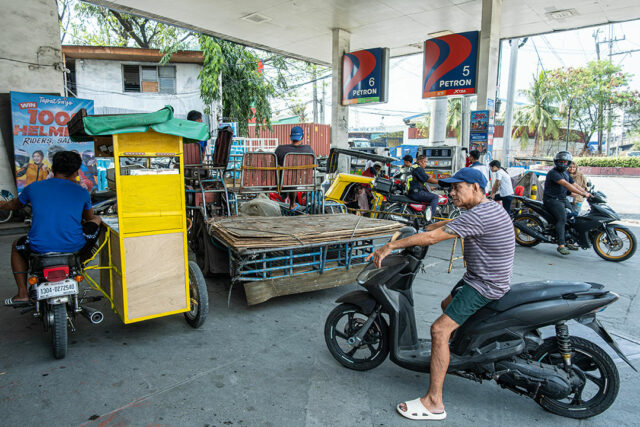
MOTORISTS queue at a gasoline station.

By Katherine K. Chan, Reporter

HIGHER FUEL, electricity, and rice prices, along with the peso’s weakness, likely pushed inflation to the fastest in around two years, the Bangko Sentral ng Pilipinas (BSP) said on Tuesday.

In its latest month-ahead inflation forecast, the BSP said inflation likely settled between 3.1% and 3.9% in March, faster than the 1.8% clip a year ago and 2.4% in February.   

At the upper end of the forecast, inflation may have accelerated to its fastest pace in over two years or since the 4.1% in November 2023. It would also match the headline inflation logged in May 2024.

Meanwhile, at the bottom end, inflation would be the fastest print in 19 months or since the 3.3% clip in August 2024.

The central bank said cheaper prices of vegetables, fish and meat likely tempered price pressures during the month, but rising costs of fuel, electricity and rice weighed on the headline print.

“Inflation risks have intensified with upward price pressures arising from the significant increase in domestic petroleum prices, higher rice prices, increased electricity charges in Meralco-serviced areas, and depreciation of the peso,” it said in a statement. 

Local pump prices have soared since the US and Israel launched attacks against Iran in late February.

In March, fuel retailers raised pump prices by up to P43.50 a liter for gasoline, P67.35 per liter for diesel and P70.90 per liter for kerosene.

Meanwhile, Manila Electric Co. (Meralco) hiked electricity rates by 64.27 centavos per kilowatt-hour (kWh) to P13.8161 per kWh last month from P13.1734 per kWh in February. This meant households consuming 200 kWh monthly paid about P129 more in their electricity bill for March.

Rice prices also continued to climb in March, with the average cost of local regular milled rice increasing by 5.8% to P48.69 a kilo in the second half of the month from P46.02 a year earlier.

The price of well-milled rice jumped by 8.02% year on year to P56.68 a kilo, while the price of special rice climbed by an annual 3.79% to P64.07 a kilo.

On the other hand, the local currency likewise took a hit from a strong dollar amid the Middle East war.

On Tuesday, the peso lost 5.8 centavos to close at a new all-time low of P60.748 against the greenback from its previous record finish of P60.69 on Monday, Bankers Association of the Philippines data showed.

Michael Wan, a senior currency analyst at MUFG Global Markets Research, sees the local unit underperforming amid pressures from looming oil shortages and spillovers to other sectors on top of price shocks.

“We think the next phase for Asian currencies may be a shift towards concerns around growth and with that greater risk aversion in markets if the Iran conflict prolongs,” he said in a note on Tuesday. “This will likely mean growth sensitive and current account deficit in emerging market currencies will likely show greater magnitude of underperformance moving forward, including the likes of INR (Indian rupee), PHP (Philippine peso), IDR (Indonesian rupiah), and KRW (Korean won).”

In a March 30 note, Metropolitan Bank & Trust Co. (Metrobank) also said inflation will likely continue to pick up in the coming months amid persisting oil risks from the ongoing Middle East war.

It likewise expects the peso to remain weak in the near term as uncertainties surrounding the war continue to attract safe-haven demand for the US dollar.

This may push the central bank to hike its policy rate before yearend to tame inflation, Metrobank added.

“Metrobank still sees continued upside oil risk, as the Strait of Hormuz, a critical transit point for global oil shipments, remains closed,” it said. “We also expect the Bangko Sentral ng Pilipinas to raise their policy rate this year to combat rising inflation.”

Last week, the BSP maintained its policy rate at 4.25% in an off-cycle meeting as it noted that emerging inflation pressures are supply-driven, in which policy adjustments have little impact.   

The BSP’s next policy review is on April 23.

However, BSP Governor Eli M. Remolona, Jr. hinted that future policy decisions will hinge on second-round price effects, adding that a worst-case scenario of $200-a-barrel oil price will force them to tighten.

Global oil prices have been hovering around $100 a barrel in recent weeks. Brent crude futures went up about 2% to $114.98 per barrel on Tuesday, bringing total gains for the month to its highest ever at around 59%, Reuters reported.   

The BSP said it will keep assessing the implications of the Middle East conflict on local inflation and economic activity.

NG gross borrowings surge to nearly P400B

BW FILE PHOTO

By Justine Irish D. Tabile, Senior Reporter

THE National Government’s (NG) gross borrowings ballooned to almost P400 billion in January as external debt more than tripled, the Bureau of the Treasury (BTr) said.

Data from the BTr showed that the total gross borrowings surged by 88.7% to P398.38 billion in the first month of 2026 from P211.07 billion a year prior.

Domestic debt accounted for 52.2% of the total gross borrowings for the month.

In January, gross domestic borrowings stood at P208 billion, up 36.9% from P151.88 billion in the same month in 2025.

This consisted of fixed-rate Treasury bonds amounting to P176.6 billion and Treasury bills worth P39.5 billion.

On the other hand, gross external debt surged by 221.7% to P190.38 billion in January from P59.18 billion in the same month last year.

The surge is due to the P161.29 billion raised from multi-tranche global bonds during the month.

The $2.75-billion triple-tranche dollar bond issuance was the Philippine government’s largest US dollar deal in over three years. The government raised $500 million from 5.5-year bonds, $1.5 billion from 10-year papers, and $750 million from 25-year papers.

Other sources of external debt included P26.39 billion in program loans and P4.46 billion in project loans.

Rizal Commercial Banking Corp. Chief Economist Michael L. Ricafort attributed the higher borrowings in January to “some frontloading of both foreign and local borrowings as well as the new record-high US dollar/peso that led to a higher peso equivalent of foreign debts.”

As of end-January, the peso depreciated by P0.07 to close at P58.86 from its P58.79 finish on Dec. 29.

This month, the local currency hit a new record low, weakening by 14 centavos to close at P60.69 on Tuesday from its P60.55 finish on Monday.

Philippine Institute for Development Studies Senior Research Fellow John Paolo R. Rivera said the government had frontloaded its borrowings amid global uncertainty.

In a Viber message, he said this was a strategy to “lock in financing before borrowing costs potentially rise further.”

He noted external borrowings may account for a bigger chunk of the borrowings “if the government sees favorable windows in global markets.”

However, Mr. Rivera said the Philippines is still likely to prioritize domestic borrowings “to limit foreign exchange rate risks and maintain debt sustainability.”

For 2026, the government set the financing program at P2.682 trillion, where 76.6% will come from local lenders and the rest will be sourced from foreign sources.

Mr. Ricafort said the National Government’s catch-up spending program may “lead to a wider budget deficit that, in turn, would require more NG borrowings.”

NPC seeks higher charge for missionary electrification

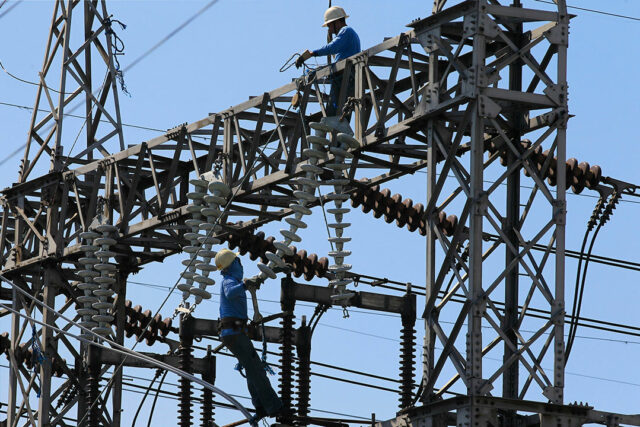
LINEMEN work on a transmission station of National Power Corp. in Navotas City in this file photo. — REUTERS

STATE-RUN National Power Corp. (NPC) is seeking to collect P44.2 billion from on-grid electricity end-users next year, as the current charge is insufficient to sustain operations for missionary electrification amid fuel price spikes.

In its filing before the Energy Regulatory Commission, NPC is proposing to collect a total of P44.2 billion as universal charge for missionary electrification (UCME).

The amount translates to an equivalent rate of P0.4405 per kilowatt-hour (kWh), a 65.5% increase from the current rate of P0.2662 per kWh for 2026.

“The aim is to further provide and guarantee sustainable economic development in the off-grid areas,” NPC said.

As authorized by the Electric Power Industry Reform Act or EPIRA, the UCME is a monthly charge collected from on-grid electricity end-users used to subsidize cost of power in off-grid areas.

NPC is mandated to provide electricity to remote and island areas not connected to the main grid through Small Power Utilities Group (SPUG) plants.

The corporation’s proposed budget for next year consists of the basic UCME subsidy for SPUG areas, as well as subsidy for new power providers, qualified third parties, and microgrid service providers.

A portion of the budget will be allocated to provide cash incentives to renewable energy developers operating in off-grid areas.

“The proposal, when approved, will allow NPC to deliver its commitment to provide a reliable and sufficient power supply and efficient operation of its plants and its associated power delivery systems consistent with the specific programs in the missionary areas that NPC is currently serving,” the company said.

NPC said the UCME subsidy will help maintain its facilities, which ensures “continued and uninterrupted supply of power” to the electricity consumers in off-grid areas.

“The provision of electricity to unelectrified, unserved and underserved off-grid areas will enable to perform its mandate and fulfill the government’s objective of total electrification,” NPC said.

The Philippine government has set a 100% electrification target by 2028.

The country’s island communities and off-grid areas usually rely on power plants operated by NPC. About 99% of the 79 NPC-SPUG power plants run on diesel.

However, diesel costs have surged due to the current global oil crunch — a challenge especially significant to the Philippines due to its heavy reliance on imported fuel.

A month since the onset of the US-Israel war on Iran, local pump prices have increased by double digits, with diesel prices reaching as high as P153 per liter.

In a statement in early March, transition and transaction advisory firm Climate Smart Ventures (CSV) warned that around 1.2 million households residing in off-grid areas face the risk of prolonged power outages as fuel prices rise.

“If oil prices continue to escalate and the conflict drags on, this can deplete the universal charge for missionary electrification fund used to subsidize fuel in off-grid areas,” CSV Head of Philippine Operations Matthew Carpio said.

To cushion the impact of oil price shocks from geopolitical conflicts, NPC is undertaking its Accelerated Hybridization Program, which aims to launch diesel-solar-battery hybrid plants this year. The initiative aims to reduce diesel consumption by at least 20% in the power plants. — Sheldeen Joy Talavera

Hotel101 eyes $300-M US offering for global rollout

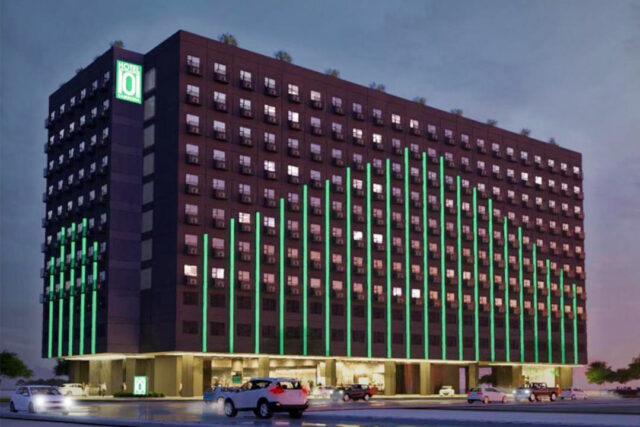
HOTEL101-SIHANOUKVILLE — HOTEL101 GLOBAL PTE. LTD.

HOTEL101 Global Holdings Corp., the Nasdaq-listed subsidiary of DoubleDragon Corp., is moving forward with a planned $300-million Series A perpetual preferred share offering in the United States to support its international expansion.

In a disclosure, the company said it has taken the next step for the offering, with proceeds expected to “fuel the company’s strategic expansion of Hotel101 projects worldwide” and support “advancing its innovative, prop-tech hospitality platform.”

The move is part of its shift toward an asset-light model, which it said is “accelerating its progression to pure asset-light hyper growth worldwide expansion.”

Hotel101 Global added that it continues to tap capital markets in both the Philippines and the United States to strengthen its balance sheet, with the goal of increasing its total equity base to P500 billion.

DoubleDragon expects to open its highest number of hotel rooms in a single year this year.

“A total of new additional 2,229 hotel rooms are slated to be operational this year 2026,” the company said, including 680 rooms in Madrid, Spain, which opened in March.

Additional openings include 519 rooms in Davao, 548 rooms in Cebu, and 482 rooms in Niseko, Hokkaido, Japan.

“The very first Hotel101 overseas that opened on March 10, 2026, has exceeded the company’s expectation in terms of its operating and occupancy performance,” the company said.

It added that Hotel101 Madrid is expected to reach above-industry occupancy levels ahead of the Formula 1 Grand Prix in Madrid in September 2026, where the property has been designated as an official hotel partner under a 10-year agreement with MATCH Hospitality.

These developments support Hotel101 Global’s plan to build and operate one million standardized Hotel101 rooms across 100 countries.

Hotel101 Global had a market capitalization of about $2.34 billion as of Jan. 16.

The company operates an asset-light property technology-driven hospitality platform using a standardized global condotel business model.

Shares in DoubleDragon rose by 0.11% to close at P9.13 each on Tuesday. — Alexandria Grace C. Magno

Makati RTC denies TRO vs SEC director term limit rule

SEC.GOV.PH

THE Makati Regional Trial Court (RTC) Branch 38 denied an application for a temporary restraining order (TRO) against a Securities and Exchange Commission (SEC) circular that imposes term limits on independent directors of publicly listed companies, the regulator said.

“The RTC denied GMA’s application for a TRO following revelations that the network failed to disclose a key board decision. While GMA’s petition, filed on March 26, claimed an urgent need for relief due to a looming May 2026 ASM, evidence presented by the SEC, through the OSG (Office of the Solicitor General), revealed that GMA’s board had already approved postponing the meeting to December 2026,” the SEC said in a statement on Tuesday.

“The RTC ruled that no ‘extreme urgency’ exists, as the network now has ample time to vet potential independent directors in compliance with SEC regulations,” it added.

SEC Memorandum Circular No. 7, Series of 2026 (MC 7), which took effect on Feb. 1, imposes a maximum cumulative term of nine years for an independent director in the same company, reckoned from 2012. After reaching the limit, the individual may no longer serve as an independent director of that company but may still be elected as a regular director.

On March 26, GMA filed a petition for certiorari seeking to nullify and set aside MC 7, and requested the immediate issuance of a TRO and/or a writ of preliminary injunction.

In its opposition, the SEC said GMA failed to meet the requisites for the issuance of a TRO, including showing that a clear and unmistakable right was being violated by the implementation of the circular.

Through the Office of the Solicitor General, the SEC said that when the petition was filed on March 26, GMA had already disclosed to the Philippine Stock Exchange on March 25 that it was rescheduling its ASM from May 20 to Dec. 9.

The SEC said MC 7 is consistent with the state’s policy to promote corporate governance reforms aimed at raising investor confidence, developing the capital market, and supporting economic growth.

It added that Section 22 of the Revised Corporation Code authorizes the SEC to prescribe the “qualifications, disqualifications, voting requirements, duration of term and term limit, maximum number of board membership and all other requirements” for independent directors to strengthen their independence and align with international best practices.

In response to the petition, SEC Chairperson Francis Ed. Lim earlier said public companies should avoid entrenched board positions. “Our people clamor against political dynasties — so our public companies must reject boardroom entrenchment. No double standards,” he said.

“We must raise our governance standards to restore investor confidence. Our stock market has been falling behind. The time to act is now-and we call on everyone to step up for the sake of our capital markets,” he added. — A.G.C. Magno

GT Capital buys 20% stake in FNG to align land development

FNG.PH

TY-LED conglomerate GT Capital Holdings, Inc. said it acquired a 20% stake in Federal Land NRE Global, Inc. (FNG) from Federal Land, Inc. for P9.16 billion to better coordinate its land bank development projects, particularly in Riverpark.

“The transaction reinforces GT Capital’s commitment to institutional synergy with FNG, for the enhancement of its projects,” GT Capital Treasurer and Chief Financial Officer Mr. George S. Uy-Tioco, Jr. said in a statement on Tuesday.

“With a direct stake in FNG, GT Capital will be able to better synchronize its own land bank development initiatives, particularly in Riverpark,” he added.

FNG is a joint venture between Federal Land, Inc. and Nomura Real Estate Development Co., Ltd. GT Capital Holdings, Inc. is the parent company of Federal Land.

FNG develops properties in Cavite, Pasay, Mandaluyong, and Cebu, with projects ranging from high-rise developments such as The Observatory to residential communities like Yume at Riverpark in General Trias.

In 2025, the company reported a full sell-out of the first tranche of Riverpark’s commercial lots, which are intended for office, retail, and mixed-use developments.

At Riverpark North, a UNIQLO logistics facility is scheduled to begin operations in the first half of 2026. The company said the facility will be the brand’s largest warehouse in Southeast Asia, spanning 3.5 hectares and expected to generate up to 400 jobs.

Shares in GT Capital rose by 2.77% to close at P520 each on Tuesday. — Alexandria Grace C. Magno

AirAsia PHL says it has enough fuel for continued operations

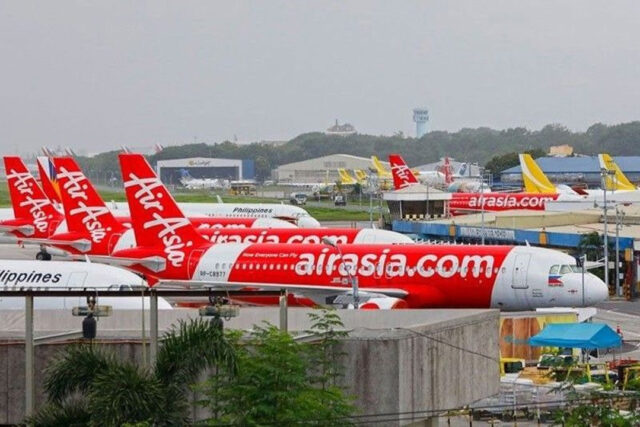
PHILIPPINES STAR/WALTER BOLLOZOS

LOW-COST CARRIER AirAsia Philippines said it has secured “adequate” jet fuel supply to sustain operations, as concerns over potential disruptions persist amid tightening global supply.

“As the airline acknowledges ongoing demand pressures in the global fuel landscape, AirAsia Philippines continues to proactively strengthen its sourcing planning & strategies leveraging on its regional network and Group resources to ensure operational stability,” AirAsia Philippines said in a statement on Tuesday.

The airline said it will continue to work with fuel suppliers, industry partners, and government stakeholders to minimize possible disruptions and ensure seamless travel.

President Ferdinand R. Marcos, Jr. has said aircraft grounding may be possible as jet fuel supplies remain tight, amid a global fuel situation linked to the ongoing US-Israel and Iran conflict.

According to the Department of Energy, the country’s average jet fuel demand stood at 6.32 million liters as of March 27, with available supply projected to last up to 62 days.

Data from the International Air Transport Association showed jet fuel prices fell 0.9% week on week to $195.19 per barrel as of March 27. On a yearly basis, jet fuel prices rose by 116.8%.

Philippine Airlines and Cebu Pacific have also said they have secured sufficient jet fuel supply to support their domestic and international operations. — Ashley Erika O. Jose

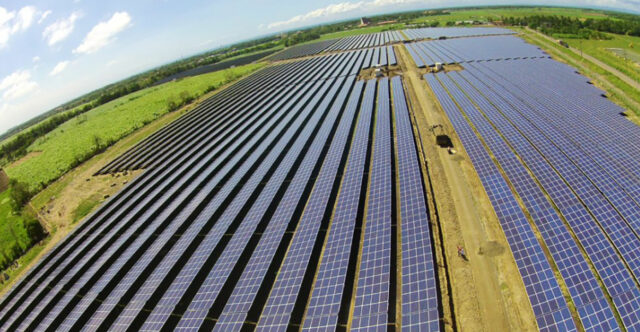
Citicore energizes 69-MW solar project in Negros Occidental

Citicore Solar Negros Occidental — CREIT.COM.PH

SAAVEDRA-LED Citicore Renewable Energy Corp. (CREC) has energized a 69-megawatt (MW) solar project in Negros Occidental, adding capacity to the Visayas grid ahead of the summer season.

The project spans 69 hectares in Silay City and is designed to support a potential expansion of up to 100 MW, the company said in a statement on Tuesday.

“Delivering this project ahead of the summer peak demonstrates our ability to deliver dependable capacity when the system needs it most,” said CREC President and Chief Executive Officer Oliver Tan.

“As one of our largest solar plants in Visayas to date, it demonstrates that our growth strategy extends beyond Luzon and anchored in strengthening energy security in the Visayas,” he added.

The new solar facility builds on CREC’s existing footprint in the province and complements its 25-MW solar power plant commissioned in 2016.

The project is the first in the company’s lineup for 2026, as it targets to energize six solar plants with a combined capacity of 484 MW this year.

CREC said it will also expand its AgroSolar Initiative, which uses land beneath solar panels to grow high-value crops while maintaining agricultural use.

“Negros Occidental has long been both an agricultural heartland and a renewable energy hub. By pairing solar generation with crop production, we demonstrate how energy infrastructure can co-exist with agriculture,” Mr. Tan said.

In 2025, CREC reported a 14% increase in net income to P1.15 billion, driven by higher revenues and cost management.

Consolidated revenues rose by 3% to P5.32 billion, supported by stronger electricity sales amounting to P1.81 billion.

CREC, directly and through its subsidiaries and joint ventures, manages a portfolio spanning renewable energy generation, project development, and retail electricity supply.

The company aims to scale up its renewable energy capacity to about 5 gigawatts by 2028.

To support this target, CREC has allocated around $2 billion this year to fund the rollout of more than one gigawatt of solar power projects. — Sheldeen Joy Talavera