Home Blog Page 4

Iran war fertilizer squeeze could spell trouble for next year’s grain harvests

Rice crop covered in dew drops in a field in Kaithal, in the northern state of Haryana, India, Aug. 16, 2025. — REUTERS/BHAWIKA CHHABRA

PARIS/SINGAPORE – Farmers around the world are facing the second surge in fertilizer prices in four years due to the Iran war. But with grain prices too low to cushion the blow from the deeper supply crunch this time around, many are rethinking planting plans, putting global food production at risk.

The Middle East is a leading fertilizer production hub, and much of the global fertilizer trade typically passes through the Strait of Hormuz, which has seen traffic brought to a standstill by the conflict.

Supplies of urea – a nitrogen-based fertilizer – from the world’s largest production facility in Qatar have been halted, and flows of sulphur and ammonia, common inputs for a range of fertilizers, have also been curbed.

With a resolution of the conflict proving elusive, analysts, traders, fertilizer producers and agronomists are looking back at the last supply crisis, Russia’s 2022 invasion of Ukraine, worried that this time things could get even worse.

“Back in 2022, a lot of the fertilizer was ultimately flowing through,” said Shawn Arita of the Agricultural Risk Policy Center at North Dakota State University.

“It’s a much steeper supply crunch that we’re seeing now.”

CASH-STRAPPED FARMERS GRAPPLE WITH PRICE SPIKE
As fertilizer prices have jumped since the onset of the war in late February, urea has seen the sharpest price spike, reflecting the loss of the roughly one-third of globally traded volumes typically exported from the Gulf.

Some are paying. India, the world’s largest rice producer and second-biggest wheat grower, has booked record volumes of urea in a single import tender, paying nearly twice as much as it did just two months ago.

But such price levels are beyond the reach of many, analysts say.

In 2022, high global grain prices helped farmers offset the steep increase in input costs caused by the Ukraine war. But ample harvests of grains and oilseeds in recent years have restrained crop prices.

Chicago wheat prices are roughly half what they were four years ago, for example. Soybeans were nearly 50% higher than now.

As a result, many growers today lack the revenue to absorb ballooning fertilizer bills.

Nitrogen-based fertilizers such as urea must be applied each season for many crops and directly influence annual yields as well as quality parameters, including protein content in wheat.

Farmers can cut back on other core nutrients, such as phosphate and potash, without immediate yield losses.

Even that option may be tested, however, if phosphate markets see a prolonged squeeze, as Chinese export restrictions coincide with war-related disruptions to sulphur and ammonia feedstocks.

In the end, some growers may just “roll the dice” and reduce fertilizer applications, putting yields at risk, said Andy Jung of U.S. fertilizer group Mosaic MOS.N.

At least 2 million metric tons of urea production – equivalent to some 3% of annual seaborne trade – have been lost since the conflict began, according to Sarah Marlow of commodity data provider Argus, as plants shut down in the Middle East as well as in India, Bangladesh and Russia.

Nearly 1 million tons already loaded on vessels, meanwhile, remain stuck in the Gulf.

Even if hostilities end soon and the Hormuz strait reopens, just clearing the queue will take weeks, said Mark Milam of commodity market intelligence firm ICIS.

And fertilizer availability will likely remain constrained for months due to damage to Gulf production facilities and competition for limited alternative supplies.

“It’s going to take a while to get back to normal,” said Stephen Nicholson, Rabobank’s head of North American grains and oilseeds.

GLOBAL FOOD PRODUCTION AT RISK
Many farms still have fertilizers on hand, while record harvests last year have boosted global grain stocks. So the immediate impact of the current crisis on global food supplies may be limited.

Agricultural bodies, including the International Grains Council, are already cutting their forecasts for the next harvests, however. And the United Nations, which is trying to negotiate shipping access for fertilizer through the Gulf, has sounded the alarm over food security in developing nations.

In 2022, high fertilizer costs contributed to exacerbated hunger in poor, import-dependent countries, and analysts say regions like East Africa are again vulnerable.

Australia may offer an early indication of the impact on production of global staples.

In the bread-basket state of Western Australia, one industry group now expects the wheat planting area to drop by 14% as growers shift away from the fertilizer-intensive, low-margin grain.

Farmers still growing wheat may simply cut fertilizer application rates.

“If we see a drop-off in application in Australia and we start seeing expected yields come down, it could be quite an ominous sign for what’s in store for everybody else,” said Matthew Biggin, senior commodities analyst at BMI.

In Brazil, the world’s biggest soybean exporter, analysts also expect farmers to use less fertilizer and potentially switch to cheaper, less effective products like ammonium sulphate.

Yields for Southeast Asian palm oil – the world’s most produced edible oil, already facing tight supply – could also fall, while Amit Guha, an independent Kuala Lumpur-based agronomist, warned that nutrient shortfalls posed longer-term risks to younger trees.

In Europe, spring planting decisions are shifting against input-intensive corn in countries including France, while reduced top-up nitrogen applications may trim protein content in this summer’s wheat harvest, analysts said.

The larger risk, however, will come during autumn planting, when cash-strapped European farmers could cut overall grain area.

“That’s why we’re starting to get a little worried about the 2027 harvest,” said Benoit Fayaud of Expana. — Reuters


ACT warns of ‘mass leave’ over pay hike

BW FILE PHOTO

The Alliance of Concerned Teachers (ACT) Philippines on Monday said teachers may resort to “mass leave” if the government continues to ignore calls for a salary increase in the education sector. 

“Teachers and personnel are always told ‘maybe later’ and ‘the government has no funds’ when it comes to salary increase and benefits,” ACT Philippines Chairperson Ruby Bernardo told BusinessWorld in Filipino on a Facebook message. 

“Us, teachers, are determined to fight for a decent and livable wage, and we will launch various forms of protests,” she added. “Whether through walkout, strike, picket, or even mass leave, to assert and win our demands.” 

According to a statement, the group is petitioning for a P50,000 entry-level salary for teachers, P36,000 for school personnel under Salary Grade (SG) 1, and a P1,200 national living wage for all workers nationwide. 

The current entry-level wage for public school teachers is about P30,000 under SG 11. Ms. Bernardo noted that despite the salary adjustment in 2024, which she described as “meager” and “loose change”, teachers remain financially challenged and in debt. 

“Because of the severity of the crisis brought by the Middle East war and a failing government, the value of our take-home pay continues to decrease,” she said in Filipino on a Facebook post yesterday. 

“We do not feel the impact of the meager and tight-fisted salary raise under the Executive Order (EO) 64 of the Marcos Jr. administration,” she added. 

Under EO 64, state workers, including public school teachers, are mandated to receive a four-tranche salary adjustment from 2024 to 2027. In January, the government began implementing the third tranche of salary hike. 

Ms. Bernardo also raised concerns about the salary increase among military and uniformed personnel (MUP). 

“Police and soldiers have it better. The previous administration has already doubled the salary of police and military,” she said in Filipino. 

“They were also able to double the daily subsistence allowance this year with just one Executive Order from the president,” she added. 

In the 2026 national budget, the government has allocated P21.7 billion for the first tranche of base pay increase among MUPs. Meanwhile, the subsistence allowance received a P71.1 billion allocation this year, bumping the daily subsistence allowance to P350. 

“The president’s priority lies with the uniformed men that holds guns and bullets,” Ms. Bernardo said. — Almira Louise S. Martinez

Renewables in vogue as Iran war drives up Europe power prices

STOCK PHOTO | Image from Freepik

VLORA, Albania/PARIS — As the Iran war disrupts global flows of oil and gas and energy prices skyrocket, the Drin River, which descends through the mountains of northern Albania, is acting as a kind of shield.

Swelled by winter rains and snowmelt, and dotted with hydroelectric dams built during communist times, the river’s power provides more than 90% of the Balkan country’s electricity output, helping to keep wholesale prices in check.

Albania is an example of how countries with a higher renewables output have been protected from steep rises in electricity prices since the United States and Israel attacked Iran on February 28, price comparisons from across Europe show. That could help households, businesses and growth in those countries as the price impact trickles down to ordinary consumers in the coming months, analysts said.

It could also bolster Europe’s green energy transition, which has been criticized for lacking urgency and has come under attack from the likes of US President Donald Trump.

Countries heavily reliant on oil and gas face steeper price rises, adding to inflationary pressure and increasing the chance of a global recession – a familiar worry for Europeans who weathered the energy crisis triggered by Russia’s invasion of Ukraine in 2022.

The crisis is raising the regional price floor for everyone, but the countries with the least flexibility and the greatest marginal dependence on imported fuels are seeing the strongest impact in volatility and peak pricing, said Satyam Singh, analyst at energy research firm Rystad.

POWER PRICE DIFFERENCES EMERGE ACROSS EUROPE
Across the Adriatic Sea from Albania, Italy, which generates more than 40% of its electricity from gas, has seen a more than 20% rise in its benchmark wholesale contract since the war began. In gas-hungry Germany, the benchmark has risen over 15%.

In contrast, the benchmark in France, which relies on nuclear energy for 70% of its electricity production, has risen by less than half of Italy’s over the same period. In Spain, which has rapidly increased renewable output to nearly 60% of total generation, prices have fallen. Albania also recorded lower average prices in March compared to last year, thanks to ample hydro capacity.

Gas-dependent countries like Italy, Germany, and Greece all have some level of solar power production, but over-reliance on solar causes what’s called the ‘duck curve’, where prices are low in the middle of the day but spike in the early morning and late afternoon.

“The goal for most of these countries like Italy and Germany is to build a huge stack (of renewables and long-term storage) that offsets gas. It’s going to be a big challenge,” said Alessandro Armenia, a power analyst at commodities data and analytics firm Kpler in Paris.

Meanwhile, coal-producing countries like Poland and Serbia have also fared well, analysts said. In Greece, which has strong solar generation, the power grid operator wants a lignite-fired plant earmarked for closure to stay open for at least another year amid the Iran conflict.

BUSINESSES, HOUSEHOLDS FEEL THE STRAIN
Power price shocks for households are expected to be more muted than the jumps in wholesale costs seen for oil and gas, analysts say, as it can take months for these increases to work through the system.

The European Commission has developed plans to cut electricity taxes as it seeks to cushion the fallout from the war, although officials and analysts warn that state costs could balloon as a result.

Consumers already struggling with a rise in oil-based fuel prices are worried about dearer electricity.

In Cyprus, where households pay some of the highest electricity prices in the EU, the country’s dominant power provider sees prices rising as much as 20% by August, in part because of its own duck curve.

When the Iran war erupted, fuel costs for Marios Georgiou, a machine operator at a printing works in Limassol, soared as much as 20%, forcing him to quit one of his jobs and find alternative work closer to home. Electricity bills already cost him 200 euros a month.

“I’ve got two jobs and I can barely break even. Everything is just going up,” the father of two said.

He’s not alone.

Nico Vanni, 47, runs the La Nave bakery in Castiglion Fiorentino, Italy. The company uses about 2,000 liters of diesel a month on deliveries, and its ovens run on natural gas. Suppliers have already announced increases in the cost of yeast, paper, and plastic – and that’s before any power price increases.

“We can hold out for a few months, but not for long: the real risk is that we will have to intervene on staffing,” he said.

OLD DAMS HELP ALBANIA, BUT FOR HOW LONG?
In Albania, residents near the towering Vau i Dejes hydroelectric dam joke that hydropower is the only positive legacy of the country’s decades of communist rule.

“Albania’s heavy reliance on renewable energy, particularly hydropower, has played a crucial role in cushioning the country from the worst effects of the crisis,” Albania’s energy ministry said in a statement, although it acknowledged that it wasn’t immune.

The country still imports power when demand peaks, and consumers are protected by government price subsidies.

“The Iran conflict has increased pressure behind the scenes, particularly on public finances,” the energy ministry said. “The system is holding steady on the surface, while the real strain is accumulating underneath.” — Reuters

Tsunami survivor battles wildfire to protect hometown in Japan’s northeast

REUTERS

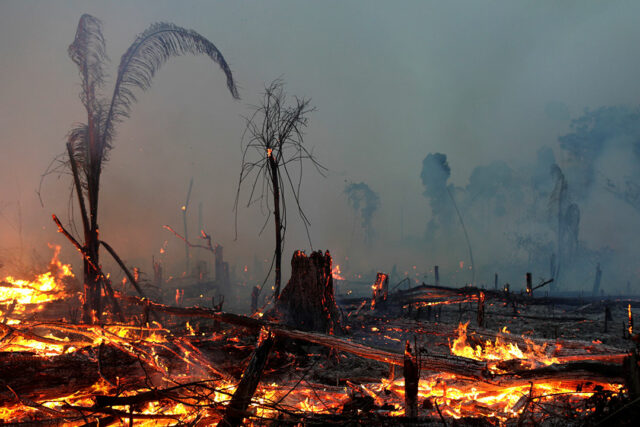
OTSUCHI, Japan — Ryota Haga was in high school when the biggest earthquake ever recorded in Japan triggered a deadly tsunami and swept away his family home in the quiet northeastern town of Otsuchi in March 2011.

Now 31 with a wife and toddler, the volunteer firefighter faces another natural disaster: this time a wildfire raging for a sixth day and threatening his community after burning through more than 1,600 hectares of forest as of Monday morning.

“It’s been 15 years since the (Great East Japan) Earthquake, and our lives were finally beginning to settle down,” Mr. Haga said at the end of another draining day battling the blaze on Sunday.

“We can’t let people lose what is precious to them all over again. The fire is spreading and our exhaustion is at a limit, but it’s our hometown. We will protect it at all costs, even if it feels like we’re running on empty.”

Otsuchi was among the hardest-hit coastal towns in 2011, when a tsunami estimated around 10 meters (33 ft) high swept through the small fishing town. Nearly 1,300 residents, or about a tenth of its population, perished, including its mayor.

The scale of the current fire is nothing that Mr. Haga has ever experienced, he said. Some 1,400 firefighters and dozens of Self-Defense Force personnel have been deployed so far, with no prospects yet of bringing the blaze under control despite some scattered rain forecast on Monday.

While Japan has experienced relatively few large-scale wildfires compared with other parts of the world, climate change has increased their frequency, especially as the early spring months before the humid rainy season have been hot, dry and with winds that can whip up flames. On Sunday, another wildfire started in Fukushima, also in Japan’s northeastern region.

For Mr. Haga, the increasing instances of wildfires have added to a longer-term concern over the acute shortage of firefighters as the population declines and ages. Already, the fire brigade he belongs to is below the staffing level set by authorities, he says.

“If a forest fire breaks out when I’m in my 50s or 60s, and I’m the one gasping for breath while trying to fight it, I don’t think we’ll be able to stop it,” he said.

Still, Mr. Haga grasps onto the hope that the firefighters’ single-minded determination to save the community will not be wasted.

“The next generation might be inspired to join the volunteer fire brigade.” — Reuters

US presses Taiwan parliament to pass ‘comprehensive’ defense budget

A soldier salutes Taiwan president Lai Ching-te in front of US-made M1A2T Abrams tanks after taking part in live-fire exercises in Hsinchu, Taiwan on July 10, 2025. — REUTERS/ANN WANG

TAIPEI — The top US diplomat in Taiwan on Monday pressed the island’s opposition-majority parliament to pass a “comprehensive” defense budget, saying integrated air and missile defense systems and drones are critically important and in high demand globally.

Taiwan President Lai Ching-te last year proposed $40 billion in supplemental defense spending, covering not only new US weapons but also homemade weapons like drones, saying Taipei needs to more effectively deter the threat from China, which views the island as its own territory.

Mr. Lai says only Taiwan’s people can decide the island’s future.

But talks in parliament to advance the proposal have stalled, with the main Kuomintang (KMT) opposition party saying while they support defense spending, they won’t sign “blank cheques” and want more details from the government.

In an interview with Taiwanese newspaper the China Times, Raymond Greene, the de facto US ambassador in Taipei, said it was vital for Taiwan to pass a “comprehensive budget package.”

“This would not only send a critical signal to the international community, but is also essential for ensuring Taiwan acquires the full range of defense capabilities it has requested,” he said.

While the US has already announced the sale of weapons including the Lockheed Martin-made HIMARS multiple launch rocket system, Taiwan’s special defense budget also seeks integrated air and missile defense systems and drones, among other things, Mr. Greene added.

“As evidenced on the battlefields of the Middle East and Ukraine, these systems are not only critically important but are also in extremely high demand worldwide,” said Mr. Greene, who is head of the American Institute in Taiwan, which handles the unofficial relations between Washington and Taipei.

Taiwan’s government has said delays to passing the budget could mean Taiwan risks losing its place in the production and delivery queue for US weapons.

THREAT IS NOT ‘RANDOM TALK’
Speaking at parliament on Monday, Defense Minister Wellington Koo said the threat Taiwan faced was not just “random talk,” pointing to Chinese warships spotted in recent days in waters to the southwest of Taiwan’s Penghu islands in the Taiwan Strait.

“This is a matter that bears on the very survival of our country,” he said, referring to the need to pass the defense spending legislation.

KMT Chairwoman Cheng Li-wun, who met Chinese President Xi Jinping in Beijing earlier this month on what she called a journey of peace, is planning to visit the US in June.

Taiwan should not have to choose between China and the US but the world is worried about the possibility of war between China and Taiwan, she told a local radio show on Monday.

The US is Taiwan’s most important international backer and arms supplier and in December it unveiled an $11 billion arms package, the largest ever for Taipei.

China has repeatedly demanded that the US stop selling weapons to Taiwan. — Reuters

Winning moments with American Standard

Grand Prize Winner EJ Reyes takes home a brand-new BYD Hybrid Electric Sedan, the ultimate highlight of the American Standard 150th Anniversary Raffle at Wilcon Depot, marking a thrilling culmination of the milestone celebration.

Well-loved brand American Standard celebrates 150 successful years of bringing joy in people’s homes with the grand awarding ceremony for its anniversary promo held in Wilcon Depot last April 15.

Only a few brands can claim a heritage spanning a century and a half while remaining highly relevant to their customers. As American Standard commemorates its 150th anniversary, the brand is not only looking back at its rich history but is also giving back to its Filipino homebuilders who have made it part of their households.

“American Standard has always strived to transform the way people experience everyday living. It’s our dream and our objective to bring the best experience for our customers here in the Philippines,” said Hermie Limbo, Country Leader of LIXIL Philippines.

Celebrating American Standard Customers

American Standard awarded the lucky winners of the three major prizes at the Wilcon Depot Balintawak branch. EJ Reyes of Naga City was the grand winner of the BYD Hybrid Electric Sedan, Henderson Digon of Iloilo Province was the winner of the Honda EM1 Electric Scooter, and Shiena Kozak of Zambales was the winner of the Xiaomi Mi Smart Electric Bike. They were happy to receive their prizes and shared their personal experiences as American Standard and Wilcon Depot customers.

Third-Prize Winner, Shiena Kozak, together with her family, proudly receives her Xiaomi Mi Smart Electric Bike during the awarding ceremony, joined by event host Karen Tee; Emily Rose Besavilla, Marketing & Retail Leader of LIXIL Philippines; Hermie Limbo, Country Leader of LIXIL Philippines; and Desiree Cuerdo, AVP for Sales & Operations at Wilcon Depot.

“Most of what we have purchased from American Standard have been shower toilets, basin faucets and showers. What we like about American Standard is that it offers a premium product and a much better price point than its competitors. They sell the same quality, if not better, at the best price. You can’t beat that,” shared Michael Kozak, Shiena’s husband who joined her in receiving their prize. The husband-and-wife team have extensive experience in building homes, sharing that given the amount they’ve spent on American Standard products, they’ve actually won several other prizes under this promotion in the past few months.

Second-Prize Winner, Henderson Digon, receives his Honda EM1 electric scooter, marking another exciting highlight of the promo event, joined by Priscilla Teodoro, Trade Marketing Leader of LIXIL Philippines; Emily Rose Besavilla, Marketing & Retail Leader of LIXIL Philippines; and Maria Cecilia Placia, Leader for American Standard at LIXIL Philippines.

Second-prize winner Henderson Digon, who came all the way from Iloilo City to receive his prize, shared that he likes American Standard because “they’re consistent and reliable.” He added, “When I’m working on projects, I don’t want to worry about whether the fixtures will last or perform well over time. It gives me peace of mind knowing the quality is trusted and proven. I also appreciate the design it’s clean, practical, and fits well with different kinds of spaces. Over time, I’ve come to trust the brand because it delivers what it promises.” Having won the Honda EM1 Electric Scooter, Mr. Digon happily said, “It feels really special and a bit surreal. There’s always that second of disbelief, and then it turns into happiness. It’s a nice reminder that unexpected good things can happen.”

That “second of disbelief” is something that Mr. Reyes, the lucky winner of the grand prize can relate to. “This is honestly the first time that I’ve ever won in a raffle so I was very happy when it was confirmed that I did win. We have been renovating our house that’s why we have been purchasing items from American Standard.”

Everyday Moments Made Better

The “Celebrate Everyday Moments” campaign highlights how American Standard transforms ordinary daily routines into more meaningful experiences through thoughtfully designed bathroom solutions that support comfort, hygiene, and convenience. In partnership with Wilcon Depot, the Philippines’ leading home improvement and construction supply retailer, American Standard has launched the “American Standard 150 Raffle Promotion” in September last year.

This nationwide campaign is a tribute to the brand’s enduring legacy and a big thank-you to the generations of Filipinos who trust American Standard to elevate their daily life. The prize pool consisted of items that are best suited for the modern Filipino lifestyle such as a BYD Hybrid Electric Sedan, Honda EM1 Electric Scooter and a Xiaomi Mi Smart Electric Bike, and 150 American Standard products, including the DuoSTiX Hygiene Spray, Smart Washer Manual Bidet, and the Neo Modern 3-Way Rain Shower.

Why Filipinos Choose American Standard

Since its inception in 1875, American Standard has been synonymous with reliability. For Filipino homebuilders and large-scale construction firms, the brand is more than just a provider of fixtures; it is a partner in creating spaces that balance Life, Love, and Home.

“American Standard is a brand that is customer-centric. We understand the pain points and everyday needs of our customers and address them through purposeful innovation and reliable technology. Our commitment is to deliver thoughtfully designed high-quality products that help reduce stress and bring greater convenience to our customers’ everyday lives. said Emily Rose Besavilla, Marketing & Retail Leader, LIXIL Philippines.

The brand’s popularity in the Philippines is rooted in its ability to solve real-world problems. From HygieneClean technologies that ensure a germ-free bathroom to the WizFlo Hand Shower designed specifically to boost water pressure in Asian households, American Standard delivers value that goes beyond aesthetics. It is this dedication to quality and “purposeful design” that has made it the top choice for developers and DIY renovators alike.

Building the Future Together

As the construction industry in the Philippines continues to evolve, American Standard remains at the forefront by integrating smart and sustainable solutions into every product. This raffle promotion at Wilcon Depot serves as an invitation for more Filipinos to experience the comfort and care that 150 years of expertise can provide.

Whether you are building your dream home from scratch or simply upgrading your sanctuary, American Standard ensures that your “everyday moments” are nothing short of winning moments.

For more details on American Standard visit www.americanstandard.ph or follow American Standard Philippines on Facebook and Instagram.

ABOUT AMERICAN STANDARD

American Standard makes life healthier, safer and more beautiful at home, at work and in our communities. For 150 years, the brand has innovated and created products that improve daily living in and around the bathroom and kitchen for residential and commercial customers. American Standard is part of LIXIL, a global leader in housing and building materials products and services. Learn more at americanstandard-apac.com and follow us on LinkedIn.

ABOUT LIXIL

LIXIL is a global leader in the housing and building industry. Our unique portfolio spans everything from technologies that revolutionize how we interact with water in our daily lives, to a full lineup of products and services for housing and major architectural projects. Delivering core strengths in water, kitchen, housing, and building technologies, our brands including LIXIL, American Standard, GROHE, DXV, INAX, and Permasteelisa are leaders in the industries and regions in which they operate. LIXIL operates in more than 150 countries and employs more than 70,000 people, bringing together function, quality, and design to make people’s lives better and more delightful wherever they are. Learn more at www.lixil.com and follow on LinkedIn.


Spotlight is BusinessWorld’s sponsored section that allows advertisers to amplify their brand and connect with BusinessWorld’s audience by publishing their stories on the BusinessWorld Web site. For more information, send an email to online@bworldonline.com.

Join us on Viber at https://bit.ly/3hv6bLA to get more updates and subscribe to BusinessWorld’s titles and get exclusive content through www.bworld-x.com.

Villa Escudero eyes resort, portfolio expansion

Villa Escudero Corporation (VESCO) launches its premier mixed-use commercial hub, The Central, in Tiaong, Quezon. — ALMIRA MARTINEZ

Villa Escudero Corporation (VESCO) said it aims to expand its business portfolio and resort facilities this year to offset declining guest bookings linked to rising fuel prices. 

“Villa Escudero’s main core business is the plantation and resort,” VESCO Business Development Strategist and Head of Commercial Leasing Daniel Placido A. Escudero told BusinessWorld in an interview.

“We are significantly affected by the increase in fuel prices. At the resort, we’ve noticed a negative trend when it comes to visitors, and we attribute it to the increase in fuel costs,” he added.

Before becoming a tourist spot in Southern Luzon, Villa Escudero was known for its sugarcane plantation, founded in the 1800s. In the 1990s, the children of Don Placido Escudero and Dona Claudia Marasigan shifted into coconut crops. 

In 1981, the family officially opened its 800-hectare estate to the public, including its resort, and it became a popular destination for locals and foreigners. 

After establishing itself as a key destination in Quezon province over the years, the resort has recently seen a 30% decline in guest numbers and cites the pump price hike as the main cause. 

“Our main clientele is from the Metro Manila area, coming here, their gas prices for fuel are really high. Our guest count really went down,” Mr. Escudero said. 

Despite the decline, Villa Escudero remains committed to adding more facilities to its campsite and resort cottages and maintains optimism that it can recover from the effects of the oil crisis. 

“We still have [expansion] plans because we anticipate that this fuel crisis is temporary,” Mr. Escudero said. “And even if it does stay for a longer time, the community will adapt to a new normal on how to operate beyond the increase in fuel prices and logistics.” 

Apart from resort expansion, VESCO aims to diversify its portfolio by venturing into retail operations.

“The pandemic has shown us that we cannot just rely on tourism as our main bread and butter,” Mr. Escudero said. 

“We are opening up to land development for commercial purposes to basically diversify our portfolio and invite new businesses to operate in our land assets,” he added. 

Last week, VESCO officially launched its nine-hectare premier mixed-use commercial hub, The Central. The hub is directly adjacent to the upcoming South Luzon Expressway Toll Road Phase 4 (SLEX TR-4) interchange, and aims to drive the province’s economy. 

“Tiaong was known as a very sleepy town, but now, there are a lot of industries and commercial establishments that are being built,” Mr. Escudero said. “With the development of the SLEX TR-4, we can see that the development is going southwards.” 

The Central will undergo nine construction phases, with the first phase scheduled to finish in Q3 of 2026 and overall project completion in 2028. — Almira Louise S. Martinez

DeepSeek’s new AI model does not wow markets in fast-changing industry

THE DeepSeek logo is seen in this illustration taken on Jan. 29, 2025. — REUTERS

BEIJING — Market reaction to DeepSeek’s preview of its long-awaited next-generation artificial intelligence model has so far been subdued compared with the Chinese startup’s outsized global breakthrough last year after the launch of its low-cost AI models.

The release and overseas reception of DeepSeek-V3 and R1, which the Hangzhou-based company said were trained with a fraction of the computing power used by US rivals, triggered a global tech share selloff as investors questioned the logic behind massive spending on AI infrastructure.

That moment was widely viewed by analysts as a “black swan” event that forced a sudden repricing of assumptions about cost, competition, and China’s ability to innovate under US chip restrictions.

But the muted reaction so far to DeepSeek-V4, launched on Friday, highlights how quickly those assumptions have shifted. Markets and industries have grown accustomed to low-cost, highly efficient models developed under computing constraints, reducing the element of surprise.

“This announcement followed a rather predictable path,” said Lian Jye Su, chief analyst at Omdia, noting that advances in model architectures and efficiency have since been widely explored across industry and academia.

Benchmark data support that view. According to Artificial Analysis, DeepSeek-V4 Pro shows significant improvement over previous versions but overall ranks among leading open-weight models rather than clearly surpassing rivals, with competitors such as Kimi and Qwen narrowing the gap.

That contrasts with last year, when DeepSeek appeared to leap ahead of domestic peers, driving rapid adoption in China and amplifying its global impact.

Analysts say the earlier shock was driven by a convergence of factors: lofty valuations of US tech firms, expectations of continued dominance by a handful of players, and the emergence of a relatively unknown Chinese startup delivering unexpectedly strong results.

Those conditions are no longer present.

“The expectation that new players will emerge is now baked into valuations,” Mr. Su said, adding that markets have become more realistic about both the capabilities and limits of AI.

At the same time, competition within China has intensified, with multiple firms releasing increasingly capable models, eroding DeepSeek’s relative lead.

On Monday, stock markets in South Korea and Taiwan hit new highs, buoyed by broad optimism for AI-related stocks.

Alfredo Montufar-Helu, managing director at Ankura China Advisors, said the significance of V4 lies less in market impact and more in the US-China race for tech supremacy.

He pointed to DeepSeek’s adaptation of V4 to run best on Huawei chips, as tightening US export controls are designed to cut off the Chinese market’s access to cutting-edge US chips that power AI model development.

“The ‘wow factor’ was last year – that’s already priced in,” he said. “What matters now is whether China can continue advancing on AI development, and potentially do so with its own chips – the geopolitical implications would be significant.” — Reuters

GCash Wais Tindera campaign boosts MSMEs through FinLit, digitalization

While micro, small, and medium enterprises (MSMEs) remain the backbone of the Philippine economy, many continue to face operational challenges due to reliance on cash-based systems and limited access to financial tools.

In response, GCash has launched the Wais Tindera Caravan, a financial literacy and digital inclusion campaign aimed at equipping entrepreneurs with practical business skills and accessible digital solutions. The program, rolled out in partnership with local government units including Muntinlupa Entrepreneurship Financing Division, promotes tools such as GCash Pera Outlet and digital payment systems to help MSMEs improve efficiency, expand income streams, and transition into the formal digital economy.


Spotlight is BusinessWorld’s sponsored section that allows advertisers to amplify their brand and connect with BusinessWorld’s audience by publishing their stories on the BusinessWorld Web site. For more information, send an email to online@bworldonline.com.

Join us on Viber at https://bit.ly/3hv6bLA to get more updates and subscribe to BusinessWorld’s titles and get exclusive content through www.bworld-x.com.

Motorcycle taxi riders urge government to protect livelihoods, enact motorcycle taxi bill

Motorcycle taxi riders are calling on regulators and legislators to ensure that the protection of rider livelihoods remains at the center of any regulation governing the motorcycle taxi industry.

In a statement, Motorcycle Taxi Community Philippines Chairman Romeo Maglunsod thanked the government for extending assistance to riders amid the continuing fuel crisis, saying the P5,000 aid provides meaningful relief for workers whose daily earnings are heavily affected by rising fuel costs.

“We are grateful for the assistance extended by the government to riders during the fuel crisis. For many riders, almost half of their daily income is already spent on fuel, and the P5,000 assistance is a big help,” Mr. Maglunsod said.

However, the group stressed that financial aid is only a temporary measure. It said long-term protection must come from policies that allow riders to earn decently, work with dignity, and continue supporting their families.

“At this time of crisis, no rider’s family should go hungry or suffer because of the lack of humane and stable livelihood,” Mr. Maglunsod said. “Any action from Congress must ensure the protection of the livelihoods of thousands of riders who work every day to provide for their families.”

The group said the passage of the motorcycle taxi bill is now urgent, noting that the government’s pilot study on motorcycle taxis has been running for almost a decade.

Mr. Maglunsod said any motorcycle taxi law must recognize the industry as part of the gig economy and must be anchored on the rights and interests of gig workers.

“What riders want is to remain the boss of their own livelihood. This means having the freedom to choose which platform to be active in, the ability to benefit from programs offered by different platforms, and the flexibility to strategize our own online hours,” he said.

The group also recommended that franchises or accreditation be granted directly to individual riders, similar to the model used for transport network vehicle service drivers, instead of placing riders under platform-held franchises.

Under this setup, Mr. Maglunsod said riders would have greater control over their own operations, while platforms would serve as tools that help them access passengers, incentives, and support programs.

“The rider should hold the power to decide how to earn a living. Platforms should be instruments that support riders, not structures that limit their freedom,” he said.

The group also underscored the public service role of motorcycle taxi riders, saying their continued presence on the road helps commuters get to work, school, hospitals, and other essential destinations.

“Every hour that riders are on the road means more Filipinos are able to travel, report to work, and reach the services they need,” Mr. Maglunsod said.

“Our call is clear: protect rider livelihoods, protect our freedom as gig workers, and pass the motorcycle taxi bill in a way that is fair, just, and humane,” he added.


Spotlight is BusinessWorld’s sponsored section that allows advertisers to amplify their brand and connect with BusinessWorld’s audience by publishing their stories on the BusinessWorld Web site. For more information, send an email to online@bworldonline.com.

Join us on Viber at https://bit.ly/3hv6bLA to get more updates and subscribe to BusinessWorld’s titles and get exclusive content through www.bworld-x.com.

Make the switch to the newest MacBook Neo and power through everyday tasks — starting at P44 a day with Home Credit

Home Credit introduces exclusive launch offers with as low as 0% interest and flexible payment terms of up to 24 months, making premium technology more accessible and giving more Filipinos the opportunity to own their first Mac

A dependable laptop is now part of how people manage everyday tasks — from schoolwork and creative projects to staying productive while traveling. As the MacBook Neo fits naturally into these routines, Home Credit Philippines introduced exclusive offers during its official launch last April 23, making it easier for more Filipinos to own their first Mac.

Held at Digimap at One Ayala and Power Mac Center at Greenbelt 3, Home Credit provides a more accessible way to own premium technology like the MacBook Neo, with as low as 0% interest and flexible payment terms of up to 24 months. This creates a timely opportunity for those considering a switch to macOS to experience it as part of their everyday routine.

Designed for everyday use, the MacBook Neo supports a range of needs across different users. Students — from middle school to college — can rely on it for research, presentations, and creative work, making it a practical tool for both learning and collaboration. For those who have been considering a switch to macOS, the MacBook Neo offers a straightforward way to experience Apple’s ecosystem as part of their daily workflow. It provides a familiar yet refined setup that supports productivity, creativity, and seamless use across tasks.

Travelers and casual users can also benefit from a lightweight and dependable laptop that keeps up with work and personal needs on the go. Whether it’s planning trips, managing tasks remotely, or staying connected throughout the day, the MacBook Neo fits into more flexible and mobile lifestyles.

Through Home Credit Philippines, owning the MacBook Neo becomes a more practical step through fast and easy installment options. Customers only need one valid ID, with approval possible in as fast as one minute, subject to eligibility — making it easier to bring home a first Mac and integrate it into everyday life.

“At Home Credit, we see how different people use technology in ways that match their everyday needs — from students to first-time Mac users and those who are always on the move,” said Puneet Suneja, Chief Sales Officer of Home Credit Philippines. “Our goal is to make these devices easier to own, so they can support how Filipinos live, learn, and work.”

Customers can choose from flexible installment plans as outlined below:

MacBook Neo Variants 

12 Months Installment 

24 Months Installment 

256GB

₱82 per day

₱44 per day

512GB

₱97 per day

₱51 per day

The MacBook Neo is available at Apple Authorized Resellers and Home Credit partner stores nationwide, including Abenson, Aerophone, Beyond the Box, Blue Box, Cell Boy, Digimap, Electroworld, Fone Style, Gadget Headz, Greentelcom, Guanzon, Inbox Stores PH, Laycom, Myer, Octagon, PC Express, Power Mac Center, Puerto Electronico, Silicon Valley, thinkingtools@mall, The Loop, Wiltelcom, and 8telcom.

Home Credit representatives are available in partner stores to assist customers through the application process. Customers can also download the Home Credit Appavailable on Google Play, the App Store, and Huawei AppGallery, to check their eligibility and get pre-approved before visiting partner stores.

For the latest updates from Home Credit Philippines, visit its official website, www.homecredit.phor follow its official Facebook,Instagram, and TikTok accounts.

Home Credit Philippines is a financing company duly licensed and supervised by the Securities and Exchange Commission (SEC) and the Bangko Sentral ng Pilipinas (BSP).


Spotlight is BusinessWorld’s sponsored section that allows advertisers to amplify their brand and connect with BusinessWorld’s audience by publishing their stories on the BusinessWorld Web site. For more information, send an email to online@bworldonline.com.

Join us on Viber at https://bit.ly/3hv6bLA to get more updates and subscribe to BusinessWorld’s titles and get exclusive content through www.bworld-x.com.

US grants extension to import Russian oil, says Philippines 

A worker prepares to fill an underground storage tank at a gas station in Quezon City, March 9, 2026. — REUTERS/LISA MARIE DAVID

MANILA — The United States has granted the Philippines’ request to extend a waiver to purchase Russian oil and petroleum products, the Philippine energy department said on Monday.

Energy Undersecretary Alessandro Sales said the waiver is effective from April 17 to May 16, 2026. Mr. Sales said the new one-month waiver is for everyone.

Philippine Energy Secretary Sharon S. Garin said the country still has 54 days of fuel reserves.

The United States granted a 30-day waiver in March to import Russian oil and petroleum products, which expired on April 11.

Ms. Garin also said that the country’s moratorium on new coal projects will remain in place despite calls from various business groups to lift the ban due to energy security risks linked to the Middle East conflict.

Ms. Garin said projects with permits secured by 2019 may still proceed or be completed. She said the energy department is also assessing coal-fired plants for possible retirement due to reliability issues and higher long-term costs for consumers. She said the Department of Energy (DOE) is reviewing previously approved projects that may still move forward, and those that may no longer proceed.

In 2020, the Philippines imposed a moratorium on new coal facilities to cut carbon emissions and encourage the country’s shift to clean energy. Philippine President Ferdinand R. Marcos Jr. has declared a state of national energy emergency in response to the Middle East conflict. — Reuters