Home Blog Page 388

DPWH orders widening of Mananga River

THE Department of Public Works and Highways (DPWH) has ordered the widening of the Mananga River and other waterways in Cebu to increase their capacity and reduce flood risk in the province.

“Let’s help the local government to fence downstream, and then go upstream. We can already recover the river, that is the key now. The priority is to recover the river because if we can widen the river and intervene, then we have more capacity,” Public Works Secretary Vivencio B. Dizon said in a statement on Tuesday.

This came after the agency ordered the no-build and fencing zone around Mananga River and other waterways in Cebu, it said, noting that the agency will also ramp up dredging and cleaning in all waterways to mitigate flooding in the province.

“One of the major priorities of the President is to fix the flood management situation in Cebu because we already saw the effects of the recent flooding and we cannot allow that to happen again,” he said.

The agency earlier formed a new task force to conduct clearing and cleaning efforts in all waterways in the country to help prevent flooding. — Ashley Erika O. Jose

DoE expands solar public program to Iloilo, Bacolod

REUTERS/SUSANA VERA

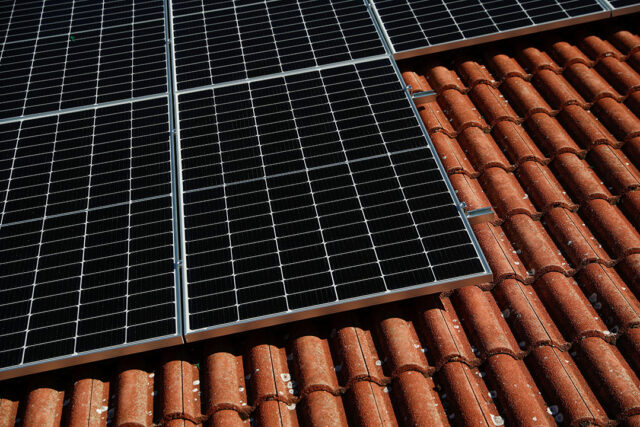
THE Department of Energy (DoE) has teamed up with the local government of Iloilo and Bacolod for the deployment of solar panels on top of public buildings as part of the government’s energy efficiency efforts.

In a statement on Tuesday, the DoE said it inked deals with the two local agencies to implement solar photovoltaics complemented by energy efficiency measures in public buildings under the Solar Solutions for Government: Energy Efficiency and Renewable Energy in Public Buildings program.

The initiative supports the Government Energy Management Program and contributes to the national target of achieving at least 10% energy savings in government operations.

“Through these agreements, we are demonstrating practical, measurable pathways for government facilities to cut electricity use, strengthen resiliency, and model responsible energy use for communities and the private sector alike,” Energy Secretary Sharon S. Garin said.

Under the partnerships, the DoE will provide technical assistance on the deployment of solar panels and energy-efficient equipment.

To date, the DoE has entered into partnership with 10 local government units, including Manila, Quezon City, Pasay, Pasig, Mandaluyong, Navotas, San Juan, Taguig, Valenzuela, and the province of Siquijor.

The DoE has also partnered with the Department of Health to advance energy efficiency, reliability, and sustainability in the Philippine healthcare sector, particularly in government hospitals. — Sheldeen Joy Talavera

Two soldiers wounded in Basilan gun attack

COTABATO CITY — Gunmen wounded two off-duty soldiers while at a roadside store in Tipo-Tipo town in Basilan on Monday.

Officials of the Basilan Provincial Police Office and the Police Regional Office-Bangsamoro Autonomous Region (PRO-BAR) identified the wounded soldiers as Pfc. Mark Antony D. Libo and Pfc. Jomare L. Sadjail of the Army’s 45th Infantry Battalion (IB), now both confined to a hospital.

Citing reports by police units in Basilan, Brig. Gen. Jaysen C. De Guzman, director of PRO-BAR, said on Monday that Mr. Libo and Mr. Sadjail were about to leave the store where they procured some provisions, when one of two men riding a motorcycle came close to shoot them repeatedly with a pistol. The duo immediately left amid the commotion.

The wounded Mr. Lido and Mr. Sadjail, both assigned to the nearby base of the Bravo Company of the 45th IB, were immediately brought by emergency responders to a hospital in Lamitan City for treatment.

Governor Mujiv S. Hataman, chairman of the multi-sector Basilan Provincial Peace and Order Council, has condemned the incident and ordered local executives to help investigators from the Tipo-Tipo Municipal Police Station and Army intelligence agents identify the perpetrators of the atrocity for prosecution.

Mr. De Guzman said barangay officials in Tipo-Tipo have assured to help the police put a closure to the incident. — John Felix M. Unson

P1.19-T National Tax Allotment released to local governments

PHILSTAR FILE PHOTO/ RELEASE JBROS CONSTRUCTION CORP.

THE National Tax Allotment (NTA) of P1.19 trillion has been released to local government units (LGUs), the Department of Budget and Management (DBM) said.

Acting Budget Secretary Rolando U. Toledo approved the NTA Special Allotment Release Order and the corresponding Notices of Cash Allocation on Jan. 26.

The funds represent the LGU share of taxes earned by the National Government three years earlier.

“The timely release of the FY 2026 National Tax Allotment ensures that local governments have the resources they need to deliver services without delay,” he said in a statement on Tuesday.

The NTA, which is directly credited to the authorized government service banks of LGUs, is intended to fund local services like healthcare, education support, disaster preparedness and response, and infrastructure upkeep, it said.

“By releasing the NTA in full and on time, we are enabling LGUs to act decisively, respond to local needs, and bring immediate benefits to their constituents,” Mr. Toledo said.

The DBM also urged the LGUs to comply with reporting requirements, consistent with transparency and accountability standards, and use the NTA strictly for “authorized purposes.”

Under the Local Government Code, LGUs are entitled to 40% of National Government tax revenue. — Aubrey Rose A. Inosante

EDCOM II proposes education spending of at least 5.5% of GDP

PHILSTAR FILE PHOTO

THE Second Congressional Commission on Education (EDCOM II) is pushing for a 10-year education development plan that will set minimum education spending at 5.5% of gross domestic product (GDP) by 2035.

In its final report, EDCOM II said the government needs to sustain the upward trajectory of education spending beyond current budget trends.

According to the Constitution, education receives the biggest budget allocation, which was set at P1.015 trillion in 2026, equivalent to 4.36% of GDP.

The report added that the 10-year National Education Plan (NatPlan) estimates an “indicative incremental cost… of P2.66 trillion over the plan period.”

It proposes that basic education make up 60% of incremental investment, including funding for classroom construction and repair, teacher deployment and training, instructional materials, and programs to address issues like mass promotion and achieving functional literacy.

About 30% was proposed for higher education, mainly in expanded scholarships.

The rest will go to early childhood care and development along with technical-vocation education training.

The 10-year plan also proposes a timetable for education spending increases of 4% of GDP in 2028, 5% in 2031, and 5.5% by 2035. The target years are aligned with national political cycles and local government election cycles.

“It is envisioned to be a shared roadmap that unites government, schools, local leaders, and communities around one goal: to rebuild trust in our education system and prepare every Filipino to learn, work, and thrive,” the commission said.

The report identified key priority areas that requires aggressive government action: early childhood development, functional literacy in early learners, critical thinking, digital skills, graduate readiness, and inclusive learning.

“This is intended to strengthen accountability, enable course corrections, and anchor reforms within realistic governance and budgeting windows,” it added.

The plan also recommends the full implementation of the government’s Academic Recovery and Accessible Learning Program, which provides free targeted interventions, tutorials, and resources for struggling learners. — Adrian H. Halili

Landfill inspections to be completed this quarter

THE FREEMAN/JOY TORREJOS

THE Department of Environment and Natural Resources (DENR) said it hopes to complete a comprehensive national review of landfill facilities by the end of the first quarter, following the recent collapse of a landfill in Cebu City.

At a briefing on Tuesday, Environment Secretary Raphael P.M. Lotilla said the DENR is concerned about the impact of recent calamities on the stability and safety of waste disposal facilities.

“Inspections are conducted regularly at the regional and provincial levels, but in light of the Cebu incident and recent earthquakes and typhoons, we need a comprehensive nationwide review of all solid waste facilities to ensure this does not happen again,” Mr. Lotilla said.

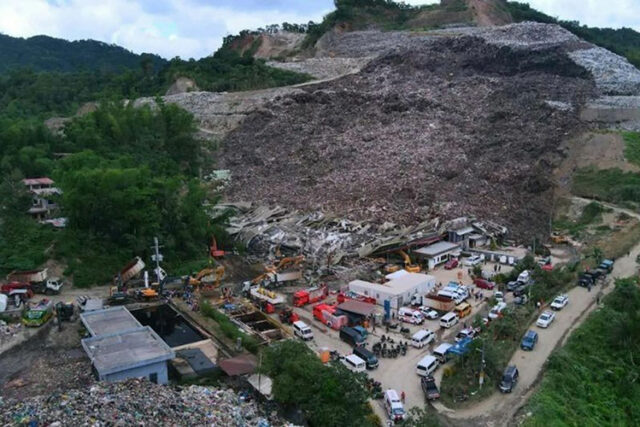
On Jan. 8, a garbage pile estimated by local officials to be as tall as a 20-storey building, collapsed in Binaliw, Cebu City, crushing a materials recovery facility and killing 36 workers.

The DENR has formed an investigative body to look into the Binaliw incident. It also directed regional offices to enforce safety protocols.

Assistant Secretary and Environmental Management Bureau Director Jacqueline A. Caancan said the review will be more in-depth and will involve the Mines and Geosciences Bureau (MGB).

“We will be involving the MGB because of the needed technical expertise. Previous geological assessments will be revisited, as site conditions may have changed due to heavy rains and seismic activities,” she said.

The DENR said the review is ongoing and is expected to be completed before the end of the first quarter.

Environmental groups have flagged insufficient monitoring of landfills, saying lax oversight has contributed to repeated safety and environmental risks.

Meanwhile, the DENR said it will also work closely with local government units (LGUs) to ensure compliance with Republic Act (RA) No. 9003, or the Ecological Solid Waste Management Act, which requires LGUs to submit 10-year solid waste management plans.

While the number of LGUs with approved plans has increased in recent years, the degree of implementation still varies, the DENR said.

“Out of 1,642 LGUs, there is a high level of compliance at 1,515. That means 92% of them submitted their solid waste management plans. But the challenge is in implementation. We also have around 13,734 materials recovery facilities at the local level, but that does not cover all barangays,” Mr. Lotilla said.

The DENR said it will assist LGUs in identifying landfill expansion areas, evaluating the suitability of new sites, and exploring options such as clustering facilities to improve waste management efficiency.

“The MGB will help the LGUs by examining the suitability of the geology of the area. The LGU is the one that identifies the area, and we examine it,” Mr. Lotilla said.

The DENR said it is also exploring alternative waste disposal methods, including waste-to-energy projects and technologies that recycle or repurpose plastic waste.

Undersecretary Juan Miguel T. Cuna also told reporters that Pampanga Rep. Gloria Macapagal-Arroyo plans to file an amendment to RA 9003, which she signed into law when she was president in 2001. Proposed changes could allow the use of waste-to-energy projects to help manage the disposal problem.

Mr. Lotilla said new incineration and waste-to-energy technologies developed since the law’s passage can now meet current environmental standards. — Vonn Andrei E. Villamiel

Funding for vetoed RACE program still under discussion — Trade department

SWS.CO.JP

THE Department of Trade and Industry (DTI) said it is still in discussions for funding a vetoed incentive program known as Revitalizing the Automotive Industry for Competitiveness Enhancement (RACE).

“We’re hoping for that, definitely. But I can’t really say when, we need to finish the discussion first,” Trade Secretary Ma. Cristina A. Roque told reporters on the sidelines of an event on Tuesday, when asked about the timetable for locking down the funding.

Nearly two weeks after the government restored funding for the Comprehensive Automotive Resurgence Strategy (CARS) program, its counterpart, funding for the RACE incentive scheme, remains unsettled.

Ms. Roque said CARS was given priority as the government still has obligations to enrolled investors, amounting to more than P4 billion.

The RACE program was designed to replicate CARS by providing fiscal support for capital expenditures on tooling and equipment, as well as for fixed investments.

Both incentive programs were to be funded by the unprogrammed appropriations vetoed by President Ferdinand R. Marcos, Jr. in the 2026 budget.

“We really have to continue giving the incentives to entice investors to the Philippines because they need to invest here,” she said.

The Philippine Parts Makers Association said only P125 million is needed to initiate and operationalize RACE. — Aubrey Rose A. Inosante

Power distributors’ deadline for tariff proposals extended

THE Energy Regulatory Commission (ERC) said private distribution utilities (PDUs) have been allowed more time to file their proposed electricity tariffs.

In a resolution approved on Jan. 14, the ERC directed all PDUs to file their actual weighted average tariff (AWAT) application by March 22. 

The deadline was extended from 60 calendar days to 120 days from the effectivity of ERC Resolution No. 23, Series of 2025.

The ERC said that the extension was granted following the commission’s review of its regulatory targets for the year and in consideration of requests from the industry. 

The extra time is also meant to ensure “orderly and efficient regulatory processing.”

Under the Electric Power Industry Reform Act, the ERC is responsible for establishing a method for setting transmission and distribution wheeling rates. The rates must be set in a way that allows the recovery of “just and reasonable costs and a reasonable return on rate base” to enable the entity to operate viably.

AWAT — the average distribution rates across customer classes — is calculated and approved during the rate reset process, a forward-looking exercise that requires the regulated entity to submit expenditure forecasts and proposed projects.

Last year, the ERC initiated a major regulatory overhaul to address a decade-long backlog in rate resets for PDUs under performance-based regulation by issuing the rationalized rules for setting distribution wheeling rates (RRDWR).

The RRDWR defines new entry groups for the PDUs and establishes the first regulatory period. 

In the same resolution, the ERC also adjusted the deadlines for the filing of rate reset applications, by shortening the timeframe from 12 months to nine months before the start of their regulatory period.

“These amendments are intended to improve regulatory sequencing, facilitate the efficient conduct of hearings, and ensure the timely issuance of regulatory decisions, while upholding transparency and regulatory discipline,” the ERC said. — Sheldeen Joy Talavera

BIR establishes dedicated service counters for RBEs

BW FILE PHOTO

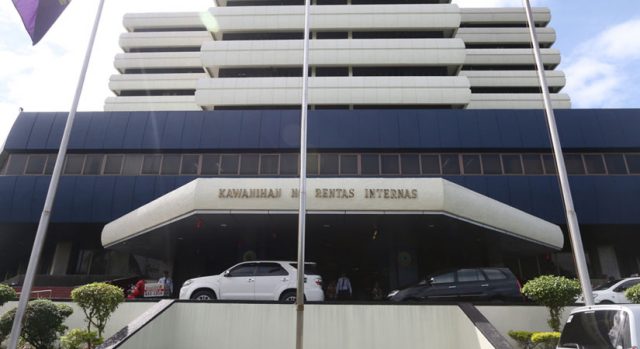
THE Bureau of Internal Revenue (BIR) said it established dedicated service counters to streamline tax filing and payment by registered business enterprises (RBEs).

“We are launching Special RBE Express Counters at 20 Revenue District Offices nationwide and at the Large Taxpayers Service,” BIR Commissioner Charlito Martin R. Mendoza said in a speech on Tuesday.

The Registered Business Enterprise Taxpayer Service (RBETS) will provide a centralized, consistent, and responsive approach to tax administration for RBEs, he said.

In preparation, the BIR trained personnel assigned to the new service counters, covering the RBE tax regime as outlined in the Corporate Recovery and Tax Incentives for Enterprises to Maximize Opportunities for Reinvigorating the Economy (CREATE MORE) Act.

“RBETS is not yet a full service as the necessary plantilla positions are still being finalized. But rather than wait, we move forward,” Mr. Mendoza said.

Finance Secretary Frederick D. Go said RBETS will ensure the government’s incentive system is implemented in a fair, efficient, and responsive manner.

“By providing a centralized end-to-end taxpayer service for Registered Business Enterprises, to ensure a single, consistent interpretation and application of incentive rules across the tax system,” he said.

Mr. Go said the program will improve monitoring, enhance data quality, and curb revenue leakage.

“This allows the government to safeguard revenue collection, correctly identify high-risk cases, and focus enforcement where it matters most, while easing the burden on compliant taxpayers,” he said.

Trade Secretary Ma. Cristina A. Roque said reforms that streamline compliance build trust within the business community and show the administration’s commitment to an investor-friendly Philippines.

“We are currently finalizing the rules for the enhanced deduction regime alongside the BIR and the FIRB,” she added, referring to the Fiscal Incentives Review Board.

The BIR also extended the deadline for the filing of tax returns and the payment of the corresponding value-added tax by nonresident digital service providers to Jan. 25. — Aubrey Rose A. Inosante

Hog, poultry production up in Q4; cattle down

REUTERS

LIVESTOCK production was mixed in the fourth quarter of 2025, with hog, chicken, and chicken egg output growing on a seasonally adjusted basis and cattle production declining, the Philippine Statistics Authority (PSA) said.

The PSA reported that the seasonally adjusted volume of hog production in the fourth quarter rose 2% to 419,549 metric tons (MT) on a liveweight basis. The total had been 411,133 MT in the previous quarter.

This is the biggest quarterly increase in the hog industry since the fourth quarter of 2023.

Seasonally adjusted volumes, which strip out the effect of factors like trader demand, disease outbreaks, and natural calamities, show the underlying trends in production, allowing for clearer comparisons across quarters.

Seasonally adjusted chicken production in the fourth quarter increased 0.5% to 585,260 MT (liveweight). The total had come in at 582,333 MT a quarter earlier.

The fourth-quarter increase in chicken production posted the slowest growth since the fourth quarter of 2024.

The PSA said seasonally adjusted chicken egg production in the fourth quarter was up 4% at 220,628 MT, after posting a total of 212,061 MT in the third quarter.

Meanwhile, cattle production declined on a seasonally adjusted basis, falling 2.5% to 56,852 MT (liveweight). The quarter-earlier total had been 58,308 MT. — Vonn Andrei E. Villamiel

FPI says steel industry also under pressure from imports

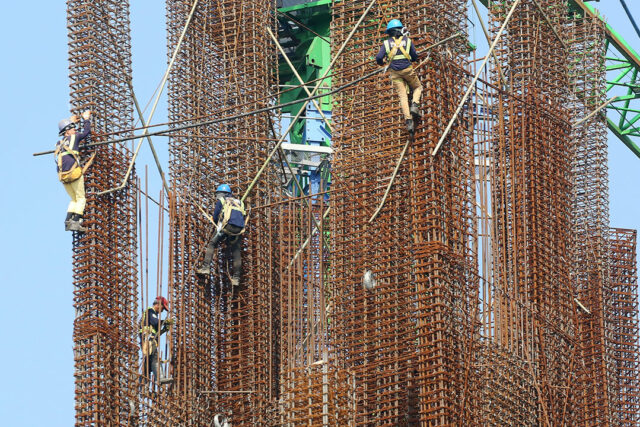
WORKERS are seen installing steel at a construction site in Santa Cruz, Manila, Oct. 26, 2023. — PHILIPPINE STAR/EDD GUMBAN

THE Federation of Philippine Industries (FPI) said key domestic producers are facing competitive pressures which merit government intervention, following the safeguard measures imposed on cement imports.

In particular, FPI Chairperson Elizabeth H. Lee said in a statement on Tuesday that “steel is a foundation industry. Without a viable domestic base, downstream manufacturing — from machinery parts to wires, springs, and bearings — cannot compete.”

“Bottom line: industry is united in calling for a trade remedy system that works at the speed of market injury,” she added.

The group said the recently imposed safeguard duties on cement imports are a means of stabilizing the market. The Tariff Commission had ruled that surging imports have done serious injury to domestic cement manufacturers.

“This safeguard is a critical step to stabilize the market, protect local producers, and ensure Philippine cement is not displaced in government infrastructure projects,” Ms. Lee added.

“International trade is vital to the Philippine economy, but when imports are dumped, subsidized, or arrive in disproportionate volumes that injure local producers, trade remedies are not only lawful — they are essential to safeguard industrial viability,” she said. 

“Safeguards are lifelines, not barriers. We welcome decisive action to protect Philippine industries and consumers,” she added.

She said fast, credible, and predictable trade remedy action will help prevent manufacturers from scaling down, laying off workers, and postponing or canceling investment.

“We need to ensure that the Philippine industry can compete on fair and sustainable terms and that trade remedy instruments are deployed judiciously and effectively,” she added.

The Department of Trade and Industry’s Bureau of Import Services tallied 14 trade remedy cases investigated between 2018 and 2025. — Justine Irish D. Tabile

Trump says he is raising tariffs on South Korean imports after trade deal delays

REUTERS/DADO RUVIC/ILLUSTRATION

WASHINGTON/SEOUL — President Donald J. Trump said on Monday he was raising tariffs on US imports of South Korean autos and other goods, blaming the legislature of an ally and a major trading partner for dragging its feet on enacting a deal agreed last year.

For South Korea, the decision, which officials in Seoul said caught them by surprise, is the latest setback as it tries to navigate the alliance and trade partnership amid potential challenges to its security and financial stability posed by Mr. Trump’s demands.

Mr. Trump and South Korean President Lee Jae Myung struck a deal in principle last July for Seoul to initiate investments in the US worth $350 billion in return for a US promise to cut tariffs on its exports.

“President Lee and I reached a Great Deal for both Countries on July 30, 2025 and we reaffirmed these terms while I was in Korea on October 29, 2025,” Mr. Trump wrote on social media.

Mr. Trump said South Korea’s legislature had not enacted the deal and as a result: “I am hereby increasing South Korean TARIFFS on Autos, Lumber, Pharma, and all other Reciprocal TARIFFS, from 15% to 25%.”

It was not immediately clear when the hike would take effect. A source familiar with internal discussions between the countries said Mr. Trump may have been prompted by recent South Korean regulatory actions against Coupang, a US-listed e-commerce company that has protested them as unfair and discriminatory.

The countries have been in talks to address Washington’s concerns about regulations on US tech firms as part of the trade deal.

Choi Seok-young, a former South Korean trade negotiator, said Mr. Trump’s message could be seen as “a political move in which the United States is exerting maximum pressure on South Korea in an effort to force concessions during the ongoing negotiations over non-tariff barriers.”

South Korea’s benchmark KOSPI index fell 1.19% before reversing early losses to trade 1.3% higher, while the won weakened 0.5% against the dollar.

The White House and the US Trade Representative’s office did not immediately respond to requests for comment.

South Korea’s presidential Blue House said the industry minister, currently in Canada, would visit the US soon and meet with Secretary of Commerce Howard Lutnick.

The Blue House said it had not been officially notified about the US tariff hikes, but South Korea’s presidential adviser would meet with related ministries to discuss measures.

A spokesperson for South Korea’s ruling Democratic Party had no immediate comment. The country’s parliament is due to begin a new session on Feb. 3, when bills are usually taken up for votes.

Mr. Trump has upended global trade by imposing tariffs on nearly every country since beginning his second term in office in 2025. In some cases, he has threatened tariff hikes and delayed them or not followed through.

EXPORTS TO US FALL IN 2025
South Korea’s exports hit a record $709.4 billion in 2025, up 3.8% from 2024, while US-bound shipments stood at $122.9 billion, down 3.8% but still making it the second-biggest market after China.

Auto exports to the US stood at $30.2 billion, accounting for 25% of the total US shipments, the biggest of any South Korean sector, but down 13.2% from 2024.

After last year’s agreement by their leaders, Washington and Seoul set tariffs on US imports of Korean autos and auto parts at 15%, down from 25%, putting them on par with their Japanese competitors. The 15% rate took effect on Nov. 1.

Higher tariffs would hit South Korean automaker Hyundai Motor and its affiliate Kia particularly hard, with their shares initially falling 4.8% and 6%, respectively, before recovering to trade 0.4% higher and 1.2% lower.

Hyundai did not immediately respond to a request for comment.

General Motors, which produces about 500,000 vehicles annually in South Korea and exports most of them to the US, also did not immediately comment.

CURRENCY CONCERNS
Under the deal struck last year, South Korea committed to invest $350 billion into US strategic sectors. Of that, $200 billion would be paid in cash in phased installments that would be capped at $20 billion a year in an effort to maintain won stability.

Earlier this month, South Korea’s Finance Minister Koo Yun-cheol told Reuters the government planned to implement the investment package as soon as possible, while noting that uncertainty over a US Supreme Court ruling on Mr. Trump’s tariffs expected soon could affect the process.

He said the planned investment of $350 billion was unlikely to kick off in the first half of 2026, given the weak won currency.

The prospect of large currency outflows has caused headaches for authorities in Seoul at a time when the won has slumped to trade at levels unseen since the global financial crisis from 2007 to 2009.

South Korea’s finance ministry said on Tuesday it would actively consult with parliament on the US investment bill. Mr. Koo was already planning to ask parliament for cooperation on the matter on Tuesday afternoon, the ministry said.

Josh Lipsky, chair of international economics at the Washington-based Atlantic Council, said Mr. Trump’s action reflected his impatience with the pace of Seoul’s enactment of the framework trade agreement, while underscoring ongoing uncertainty about tariff rates.

“It’s just another reminder that the markets were wrong to believe we were going to get into tariff stability in 2026,” Mr. Lipsky said. — Reuters