Home Blog Page 3843

Export growth tied to investments attracted by PHL, Trade dep’t says
PHILSTAR FILE PHOTO

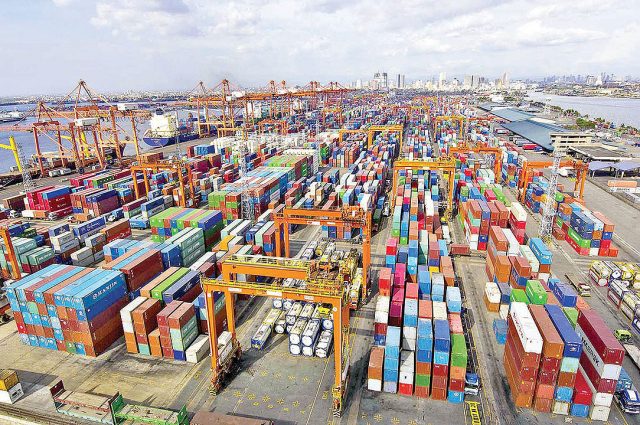
THE Department of Trade and Industry (DTI) said export targets to 2028 will depend greatly on the levels of investment attracted to the Philippines.

It added that such targets are set to be recalibrated this week.

“What is very critical in achieving our export targets are investment-driven exports,” DTI Export Marketing Bureau Director Bianca Pearl R. Sykimte told reporters.

“The Philippine Export Development Plan (PEDP) 2023-2028 recognizes that we cannot simply grow without foreign investment . We have also seen the experience of other countries,” she added.

She cited the example of Vietnam and Malaysia.

“In Vietnam, their exports of telephones or Samsung phones accounted for about $65 billion,” she said.

“Another example is Malaysia’s exports of integrated circuits, (which were worth) about $78 billion – roughly the total exports of the Philippines in 2022. So most of it, if not all, are investment-driven,” she added.

At the National Export Congress last week, Undersecretary for the Industry Development, Trade and Investment Promotion Group Ceferino S. Rodolfo said the Philippines has the potential to exceed the goals set out in the PEDP.

“In the PEDP, the target was to double our 2021 exports by the end of the President’s term … and I think that doubling the 2021 exports is (a modest goal),” Mr. Rodolfo said.

“With all of the collaboration, maybe we should work to achieve four times or maybe five times 2021 exports,” he added.

In 2021, total exports – which include services – amounted to $87.8 billion, while the PEDP target for 2028 is $240.5 billion.

Ms. Sykimte said that the department has yet to discuss how to achieve four to five times the level of 2021 exports by 2028.

“We will have a meeting internally with DTI to review the export targets so we will have to recalibrate,” she said.

The Philippine Statistics Authority (PSA) on Tuesday released a preliminary estimate for the value of merchandise exports, which contracted 17.5% to $6.36 billion in October, reversing the 20.1% growth from a year earlier.

The PSA said manufactured goods, which comprised 81.5% of total export receipts, declined 21.1% year-on-year to $5.19 billion in October. — Justine Irish DP Tabile


House gives 3rd reading approval to road tax measure tying funds to PUV modernization 

PHILSTAR FILE PHOTO

THE House of Representatives on Tuesday approved a bill tying the motor vehicle user charge (MVUC) proceeds to support the public utility vehicle (PUV) modernization program.

With 247 yes votes, four no votes, and one abstention, legislators passed House Bill No. 9647.

The bill seeks to amend Republic Act No. 8794 or the Motor Vehicle Users’ Charge law, which gives the President the authority to adjust MVUC rates.

For-hire vehicles will enjoy a 50% discount from fees, while motorcycles below 400 cubic centimeters and tricycles will be exempt.

The proposed law also allocates 45% of incremental revenue from the program to finance the PUV modernization program, while 5% will go to government road safety programs.

House ways and means committee chairman and Albay Rep. Jose Ma. Clemente S. Salceda called the measure “progressive,” as 52% of car-owning households belong to the “richest percentile.”

Party-list Rep. Arlene D. Brosas, who voted against the bill, said many small-vehicle owners will be affected.

“Instead, fixing the current public mass transport system will reduce dependence on imported vehicles,” she told the plenary.

Also on Tuesday, legislators approved on third and final reading a bill proposing to create a multi-year strategy that would help link domestic enterprises to global value chains.

During the plenary session, 251 legislators voted in favor of House Bill No. 8525 or the Tatak Pinoy bill. None voted against or abstained on the measure.

“At a time of a globally integrated development, this bill seeks to promote the Filipino brand to be recognized as a world-class brand that offers high quality products and services,” Marikina Rep. Stella Luz A. Quimbo, the principal author of the bill, said in its explanatory note.

The proposed law aims to establish the Tatak Pinoy strategy to improve and diversify local enterprises, linking them to global value chains.

It also seeks to expand the capacities of micro, small and medium enterprises to produce world-class products.

Ms. Quimbo said that the proposed law was drafted in response to Philippine participation in the Regional Comprehensive Economic Partnership (RCEP).

The RCEP is considered the world’s largest free trade agreement, involving Association of Southeast Asian Nations, Australia, China, Japan, New Zealand, and South Korea.

Citing the International Trade Center, Ms. Quimbo said the Philippines has an estimated $27.8 billion in unrealized export potential to RCEP partners over the next five years.

The five “pillars” of the Tatak Pinoy Strategy include manpower, infrastructure, technology and innovation, investment, and public fiscal management.

The measure also seeks to establish a supervisory council that would manage and propose improvements to the strategy, with the National Economic and Development Authority Secretary as chair and the Trade and Finance Secretaries as vice-chairs.

During the Tuesday plenary, 251 legislators voted in favor of amending the procurement law, with a measure granting preference to domestic suppliers and establishing a single portal for electronic procurement. Three legislators voted against the bill, while none abstained.

The measure aims to adopt a single electronic portal known as the Philippine Government Electronic Procurement System for all procurement activities from planning to implementation.

It also seeks to establish an electronic payment system through the Budget department and the central bank for procuring entities.

Meanwhile, the proposed blue economy bill was approved on third and final reading with 254 yes votes, three no votes, and zero abstentions.

House Bill No. 9662 seeks to establish a framework for the sustainable use of the Philippines’ marine resources through a National Marine Council and rename the National Coast Watch System to the National Maritime Monitoring System.

The blue economy is an economic model seeking the sustainable utilization of ocean resources through green infrastructure and technology. — Beatriz Marie D. Cruz

DFA: 130 diplomatic protests filed vs China under Marcos government

PHILIPPINE STAR/VIDEO GRAB FROM NEWS 5

THE GOVERNMENT of Philippine President Ferdinand R. Marcos, Jr. has filed 130 diplomatic protests against China, according to the Department of Foreign Affairs (DFA).

Sixty-three of these protests were filed this year, including one at the weekend after Chinese coast guard and militia ships fired water cannons at Philippine boats on a resupply mission at Second Thomas Shoal, Foreign Affairs spokesperson Ma. Teresita C. Daza told reporters in a WhatsApp message on Tuesday.

The Philippines on Monday accused China of “serious escalation” after it sprayed water on three Philippine vessels and ramming one that carried military chief Romeo S. Brawner, Jr.

Manila later summoned China’s ambassador in Manila over his country’s “aggressive” actions in the disputed waterway.

China on Monday said it had lodged “solemn representations” and a strong protest over the Philippines’ accusations over the incident.

Philippine vessels had ignored the Chinese Coast Guard’s warnings and rushed into waters near Second Thomas Shoal, Chinese Foreign Ministry spokesperson Mao Ning told a news briefing.

China urged the Philippines to halt its “maritime violations and provocations” and “groundless attacks and smears.”

Ms. Daza has said 14 countries including the United States had shown support for the Philippines’ claim over Scarborough Shoal and Second Thomas Shoal.

In a statement on Tuesday, the DFA said its Foreign Affairs Undersecretary Ma. Theresa P. Lazaro verbally delivered the protest to Chinese Ambassador Huang Xilian on Monday, reiterating that Second Thomas Shoal is within the country’s exclusive economic zone (EEZ).

The shoal is about 200 kilometers from the Philippine island of Palawan and more than 1,000 kilometers from China’s nearest major landmass, Hainan Island.

Ms. Lazaro told China’s envoy his country has no right to interfere in Philippine resupply missions, which are in line with domestic and international laws.

Tensions between the Philippines and China have worsened after the latter’s coast guard fired water cannons to block Manila’s resupply mission to a grounded ship at Second Thomas Shoal on Aug. 5.

The United States has called out China for interfering in Philippine maritime operations and undermining regional stability, urging Beijing to stop “its dangerous and destabilizing conduct” in the strategic waters.

In 2016, a United Nations-backed arbitration court based in the Hague said China’s claim to nearly the entire South China Sea has no legal basis.

China has largely ignored the ruling, calling it void. Aside from the Philippines and China, Brunei, Malaysia, Taiwan and Vietnam also have claims to parts of the waterway.

Mr. Marcos has said any foreign claim of sovereignty over Second Thomas Shoal is “baseless and absolutely contrary to international law.”

Meanwhile, Senate President Juan Miguel Zubiri said the 2024 national budget would ensure a reliable defense posture for Philippine operations in the South China Sea.

In a statement, he said the proposed P5.768-trillion budget includes a P6.17 billion hike in the Defense department’s budget, and P2.8 billion more for the Philippine Coast Guard.

“We hope this boost in funds for the purchase of additional patrol ships and defense equipment will also boost the morale of our brave Coast Guard and soldiers in protecting our EEZ,” the Senate chief said.

The Senate on Monday passed on third and final reading a bill seeking to boost the country’s defense program through investments in local defense equipment manufacturing amid rising tensions with China.

The program will get P1 billion in funding.

“As we have learned from the constant bullying and aggression of China against Filipino fishermen and our protectors in the West Philippine Sea and our exclusive economic zone, we badly need to upgrade our capabilities in patrolling our sea,” Mr. Zubiri said, referring to areas of the South China Sea within the country’s exclusive economic zone. — John Victor D. Ordoñez

House to start Charter change hearings in 2024

PHILIPPINE STAR/MICHAEL VARCAS

By Beatriz Marie D. Cruz, Reporter

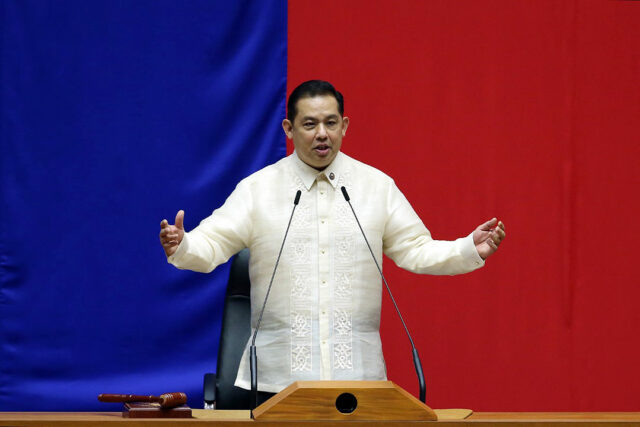
THE HOUSE of Representatives will start revisiting a proposal to amend the 1987 Philippine Constitution next year, Speaker Ferdinand Martin G. Romualdez said on Tuesday.

“I believe 2024 will allow us again to revisit the issue of [amending] the Constitution,” he told a news briefing.

The Speaker on Monday said the House is looking to amend the Charter to ease economic restrictions on foreign businesses.

He said the people would decide whether Congress should vote on constitutional changes jointly or separately.

“To make sure that the economic provisions are backed up, we would have to also have a sort of continuity in government,” he added.

Senior Deputy Speaker and Pampanga Rep. Aurelio D. Gonzales, Jr. told reporters a new resolution seeking to change the Constitution would be filed next year. Discussions are expected to start before the President’s state of the nation address in July.

“How will you work under a new Philippines if you’re working under an old Constitution?” Mr. Gonzales said in Filipino, referring to the Marcos government “New Philippines” tagline.

Mr. Gonzales will also renew his proposal to change presidential term limits to five years and two terms from a single six-year term.

He said congressmen would also deliberate on the mode of Charter change, whether through a constitutional convention, a constituent assembly or a people’s initiative.

The House in March passed a bill seeking to amend the 1987 Constitution through a constitutional convention. A similar measure in the Senate only reached the committee level.

Bayan Muna chairman and former congressman Neri J. Colmenares said changing the charter would not solve poverty and would only expand “foreign economic domination.”

“The Rice Tariffication Law crippled farmers and agriculture as it opened the country to cheap rice from China and Vietnam but did not substantially lower the price of rice for consumers,” he said in a statement.

He added that easing economic restrictions would allow foreign companies to take control of the Philippines’ public utilities, media, schools and lands.

Marcos: PUV consolidation deadline won’t be extended

PHILIPPINE STAR/ MIGUEL DE GUZMAN

By John Victor D. Ordoñez, Reporter

A YEAR-END deadline for the consolidation of Philippine public utility vehicle (PUV) operators won’t be extended, President Ferdinand R. Marcos, Jr. said on Tuesday.

In an X post, the President said he met with Transport officials, who agreed the modernization program should proceed as planned.

“We cannot let the minority cause further delays, affecting the majority of our operators, banks, financial institutions and the public at large,” he said. “Adhering to the current timeline ensures that everyone can reap the benefits of the full operationalization of our modernized public transport system.”

About 70% of PUV operators have committed to consolidate under the program, Mr. Marcos said.

Under the plan, vehicle operators must surrender their individual franchises, consolidating them under a cooperative serving a specific route, which the Land Transportation Franchising and Regulatory Board calls “one route, one franchise, one operator.”

In a separate statement, the Pinagkaisang Samahan ng mga Tsuper at Operators Nationwide (PISTON) said 60,000 jeepney drivers and 25,000 operators would be affected by the vehicle modernization program. More Filipinos would lose their jobs, it added.

The group said local governments are not ready for franchise consolidation in the absence of public transport route plans.

“The government does not have a basis for pushing through with this deadline,” it said in Filipino. “It is just making it harder for our countrymen.”

PISTON on Monday said it would go on a two-day strike starting Thursday to protest of the impending jeepney phaseout.

Transport groups have urged authorities to drop the move, which would phase out traditional jeepneys in favor of new-generation transport vehicles by Dec. 31.

“This scheme leads to a monopoly and corporate capture of public transport in the Philippines, as only large, financially viable cooperatives or corporations can comply with the costly modernization standards,” PISTON said on Monday.

Senator Mary Grace N. Poe-Llamanzares, who heads the Senate committee on public services, said the government should review the vehicle modernization program since it lacks safety nets for drivers affected by the move.

“You cannot blame the jeepney drivers who are scared to join a cooperative since it would need a lot of funds and there is currently no training from the Department of Transportation to manage these funds and PUV units,” she said in a statement in Filipino.

Speaker announces rice vouchers for 7 million Filipino families next year

House Speaker Ferdinand Martin G. Romualdez — PHILIPPINE STAR/KRIZ JOHN ROSALES

By Beatriz Marie D. Cruz, Reporter

HOUSE Speaker Ferdinand Martin G. Romualdez announced on Tuesday that the government is set to distribute rice discount vouchers next year to benefit 7 million Filipino families or approximately 28 million citizens nationwide.

In a statement, Mr. Romualdez highlighted the program’s goal of making affordable and good-quality rice accessible to more families.

“This is a recalibration of our Cash and Rice Distribution (CARD) Program, and we made it more sustainable by transforming it into a rice discount voucher program so that more families can enjoy buying affordable rice,” he said.

The initiative, known as Bagong Pilipinas Community Assistance and Rice Discount (CARD), will be implemented under the Department of Social Welfare and Development’s (DSWD) Assistance to Individuals in Crisis Situations (AICS) program under next year’s national budget.

Once operationalized, the program is expected to allow each family to buy 25 kilograms of affordable and good quality rice monthly, the Speaker said.

He stressed that the program is a response to President Ferdinand R. Marcos Jr.’s call to bring down rice prices for disadvantaged Filipino families.

At present, the price of local regular milled rice stands at P45.33 per kilo, while well-milled rice is at P50.73 per kilo, according to the Department of Agriculture’s (DA) price watch.

In October, the DA said that it does not expect a surge in rice prices during the holiday season.

The Philippine Rice Industry Stakeholders Movement expects that up to 500,000 metric tons of rice expected to arrive in the Philippines by March next year should lower rice prices.

The House of Representatives and the Senate agreed to fund the program during the Bicameral Committee conference hearings on the P5.768-trillion national budget for 2024.

The additional AICS funds will cover necessary budget allocations for the rice discount vouchers, addressing the immediate financial concerns of low-income families.

Mr. Romualdez also mentioned the program’s use of technology for efficient voucher distribution, tracking, and validation to prevent misuse.

“This program is to show all Filipinos that Congress and the administration of President Marcos Jr. are doing everything to bring down the price of rice for a more significant number of Filipino families,” he said partly in Filipino.

Senator seeks Quiboloy travel ban

PCOO

A SENATOR urged the Department of Justice (DoJ) on Tuesday to issue an immigration lookout bulletin order (ILBO) against Apollo C. Quiboloy, leader of the Kingdom of Jesus Christ (KOJC) religious sect, to prevent him from leaving the country amid investigations into his alleged involvement in human trafficking, among other crimes.

“I urge the Department of Justice to issue an immigration lookout bulletin order to prevent Quiboloy from leaving the country,” Senator Ana Theresia “Risa” N. Hontiveros-Baraquel said. “He must not escape accountability. Our children’s lives are at stake.”

As of press time yesterday afternoon, the DoJ said it has not yet received a formal request on the matter.

In a press briefing, the senator presented testimonies of former members of KOJC accusing their church leader of human trafficking, rape, and sexual and child abuse. The KOJC did not immediately respond to a request for comment.

One of them, using the alias “Jackson,” claimed that Mr. Quiboloy compelled them to beg for money for the church. He asserted that members faced physical abuse if they did not collect a sufficient amount. Recounting an experience 23 years ago, he stated: “The worst part was the beatings. I can’t forget it; more than 50 were beaten up in that gym.”

Another witness, under the alias “Arlene,” revealed that in 1991, they were coerced to feign muteness or deafness, posing as students begging for money on the streets of Metro Manila. She also disclosed instances of physical abuse from Mr. Quiboloy and his staff, who enforced fasting as punishment if they failed to meet their quota from selling rice cakes.

The senator also presented evidence to the media, showing that certain church members were recently compelled to beg for money and would face penalties if they attempted to escape from a “worker house,” where they were reportedly held captive.

“These are very real fears that they are living with, but I hope that through the filed resolution — and eventual investigation — they will be empowered to tell their truth and seek justice,” Ms. Hontiveros-Baraquel said. — Jomel R. Paguian

E-cigarette listing, taxing sought

PHILIPPINE STAR/EDD GUMBAN

ELECTRONIC cigarettes (e-cigarettes) must be classified as an industry of its own under the Philippine Statistics Authority (PSA) to ensure that its economic activities are monitored and appropriately taxed, a congressman said on Tuesday.

During the House Ways and Means Committee meeting, panel chair and Albay Representative Jose Ma. Clemente S. Salceda pointed out that e-cigarettes are not yet classified under the Philippine Standard Industrial Classification (PSIC) of the PSA and, as such, “could make monitoring of their activities more difficult.”

In light of the Bureau of Customs’ seizure of P1.43 billion worth of allegedly smuggled e-cigarettes at a warehouse in Valenzuela City last October, Mr. Salceda outlined a number of proposals to regulate the e-cigarette or vaping industry. 

First, he said the Bureau of Internal Revenue (BIR) must uphold a Revenue Office on Premise (ROOP) rule on manufacturers by having a designated ROOP at the place of business and come up with a clear regulatory framework and system of registration for e-cigarette companies.

Mr. Salceda said there must be a distinction between manufacturers, importers, wholesalers, and retailers in order to determine the extent of responsibility for ensuring excise tax payment.

Anticipating a market shift, he said tobacco excise tax revenues are likely to continue to decline with the e-cigarette sector taking a bigger share of the market. “We have an industry report that says by 2027, vapes will be one half of the size of the traditional cigarettes,” he said.

Exploring this new industry’s tax potential, the congressman is batting for a declaration of excisable products from port of departure in order to ensure regulatory control over e-cigarette shipments from the outset. — Beatriz Marie D. Cruz

Palace approves gov’t bonuses

PHILSTAR

MALACAñANG announced on Tuesday the granting of a P20,000 service recognition incentive (SRI) for government employees and a one-time gratuity pay of not more than P5,000 for job order employees this year.

Under Administrative Order No. 12 signed by Executive Secretary Lucas P. Bersamin, President Ferdinand R. Marcos, Jr. approved the cash incentives for civilian personnel under national government agencies, state universities and colleges, government-owned to controlled corporations (GOCCs), and military and uniformed personnel.

To qualify for the benefit, state employees must still be in service as of Nov. 30 and must have served at least four months of satisfactory service, a copy of the order stated.

The incentives would be given to employees not earlier than Dec. 15, the Presidential Communications Office said.

The President also signed Administrative Order No. 13 that approved a grant of a one-time gratuity pay of not more than P5,000 for contractual and job order employees in the government who have served for at least four months of satisfactory performance under their contracts. — John Victor D. Ordoñez

LTO set on busway crackdown

TRAFFIC enforcers stop a motorcycle rider caught using the restricted lane of EDSA devoted only to passenger buses on Monday. — PHILIPPINE STAR/ERNIE PEÑAREDONDO

TO BETTER enforce exclusive bus lane regulations along EDSA, the Land Transportation Office (LTO) is gearing up for the implementation of a “no-contact apprehension” system with the help of the Metropolitan Manila Development Authority (MMDA) next week.

In an interview with Cignal TV’s OneNewsPH on Tuesday, LTO Chief Vigor D. Mendoza, II, said the LTO is set to sign a memorandum of agreement (MOA) with the MMDA for initial implementation of the technology-assisted approach to apprehending traffic violators and training MMDA traffic enforcers.

“The program, utilizing advanced technologies, will enable law enforcement without physical presence, beginning next week,” said Mr. Mendoza.

He noted that the implementation of the program would initially cover bus lanes on EDSA, but that there are plans to extend its enforcement to tollways. 

Addressing legal concerns in implementing the no-contact apprehension scheme, Mr. Mendoza said: “We’re now coming up with a program that will not at all be in conflict with the Supreme Court case.”

In August, 2022, the SC issued a temporary restraining order (TRO), which suspended the MMDA’s no-contact apprehension policy based on petitions by the local governments of Manila, Valenzuela, Parañaque, Muntinlupa, and Quezon Cities.

“The critical areas will be discussed with the LGUs on how this will be implemented. But we’ll start it slow so that we can review the technology and make it more relevant to us,” the LTO chief assured.

Shifting focus, Mr. Mendoza announced the forthcoming release of operational guidelines for electric vehicles (EVs) for the early part of next year.

Citing concerns about minors operating EVs on major roads, Mr. Mendoza mentioned an inter-agency effort involving the LTO and the Departments of Transportation (DoTr) and of Energy (DoE) to address the influx of EVs on roads.

“There is now an inter-agency effort; rules for electric vehicles will change,” he said. — Nate C. Barretto

Padilla wants IP exclusion probed

BW FILE PHOTO

A SENATOR has filed a resolution seeking a probe on the alleged exclusion of an indigenous peoples (IP) representative from Palawan in the renewal process of the service contract of the Malampaya gas field located off the island province.

“The State shall ensure that the Indigenous Cultural Communities/Indigenous Peoples shall be given mandatory representation in policy-making bodies and other local legislative councils,” Senator Robin C. Padilla said in Senate Resolution No. 885, which he filed on Monday.

He cited complaints from the Cuyunon people based in northern and central Palawan, who said they did not participate in the renewal of the gas field’s operations, citing supposed irregularities in the selecting IP representatives.

Under the Republic Act No. 8371, which established the National Commission on Indigenous Peoples (NCIP), IPs must be given mandatory representation in policy-making bodies and local legislative councils.

Last May, President Ferdinand R. Marcos, Jr. renewed the Malampaya Service Contract 38, giving operators a 15-year extension until Feb. 22, 2039. Malampaya gas accounts for about 20% of Luzon’s electricity requirements.

“In view of the foregoing issues, there is a need to examine and review the IPRA as well as the mandate of the NCIP in the protection of the rights and welfare of the IPs with the end in view of improving the provisions of the Indigenous Peoples’ Rights Act of 1997,” Mr. Padilla said. — John Victor D. Ordoñez

House approves archipelagic sea lanes bill

PHILIPPINE STAR/ MICHAEL VARCAS

LAWMAKERS on Tuesday passed on third and final reading a measure seeking to establish archipelagic sea lanes in Philippine waters and air routes to ensure continuous and unobstructed passage in its territory.

All 258 lawmakers voted in favor of House Bill No. 9034, the proposed Philippine Archipelagic Sea Lanes Act.

Once enacted, the law mandates the President to designate the coordinates of the archipelagic sea lanes and air routes for the continuous passage of foreign ships and aircrafts over Philippine archipelagic waters and adjacent seas.

It also ensures the recognition of rights and privileges of foreign vessels and aircraft in Philippine archipelagic waters “under conditions of reciprocity and mutual respect.”

Under the measure, penalties will be imposed on foreign civilian ships and aircraft based on the proposed law, as well as existing fisheries, environmental, customs, fiscal, immigration, sanitary, and other laws.

It added that vessels and aircraft that do not abide by the 1982 United Nations Convention on the Law of the Sea (UNCLOS) “shall not be entitled to exercise the rights, nor be owed the obligations, relative to the regime of archipelagic waters and the right of archipelagic sea lanes passage under the UNCLOS. — Beatriz Marie D. Cruz