Home Blog Page 2648

Marcos expects StB GigaFactory battery plant in Clark to attract more RE investors

PRESIDENTIAL COMMUNICATIONS OFFICE FACEBOOK PAGE

PHILIPPINE President Ferdinand R. Marcos, Jr. on Monday said the StB GigaFactory, Inc.’s newly built battery manufacturing plant will pave the way for more investors in the renewable energy (RE) industry as the country tries to boost its share in the energy mix.

The facility could generate P5 billion in revenues for the government and 2,500 jobs when it hits full capacity in 2030, the President said at the inauguration of StB Gigafactory’s manufacturing plant for iron phosphate batteries in the Clark Special Economic Zone in Capas in Tarlac.

“The StB GigaFactory sets the stage for the Philippines to become a player in clean energy storage in our part of the world, in Southeast Asia, in our region,” Mr. Marcos said in his speech at the event, which was sent to reporters via e-mail.

“Your products could help entice more investors in renewable energy facilities in the country, the upstream and the downstream businesses that will come from this are just going to be tremendous.”

The Department of Energy last week said it has issued endorsements to eight RE projects and one battery energy storage system.

The Philippines aims to raise the share of RE in the energy mix to 25% by 2030 and to 50% by 2040 from the current 22%.

Mr. Marcos said the battery manufacturing plant is expected to produce two gigawatt-hours worth of batteries yearly, powering about 18,000 electric vehicles and nearly half a million home battery systems.

StB GigaFactory produces batteries for energy storage backup for solar photovoltaic for residential, commercial, and industrial use.

The company is the first locator in Filinvest Land, Inc.’s Filinvest Innovation Park in New Clark City in Capas, Tarlac. It hopes to export 70% of its output to Australia and Southeast Asia, with some of its output to be distributed within the Philippines.

The construction of the manufacturing plant was among the deals bagged during the ASEAN-Australia Special Summit in March, where Mr. Marcos secured about P86 billion worth of business deals.

The Maharlika Investment Fund is eyeing opportunities to invest in the renewable energy sector particularly in off-grid power and infrastructure, Maharlika Investment Corp. (MIC) Chief Executive Officer Rafael D. Consing, Jr. earlier said.

He has said the MIC plans to raise about $1 billion for energy projects on grid modernization, electricity distribution and new sources to “diversify supply and create price stability.”

Energy Undersecretary Sharon S. Garin has said battery technology is evolving fast enough for the Philippines to meet its RE targets. She said the agency was looking to attract more battery system companies to introduce these advanced systems for local energy projects.

“This facility runs in tandem with the Philippines’ renewable energy landscape, as we transition our country to renewable energy,” the President said.

“This certainly aligns with our plans to develop the country’s electric vehicle industry and produce locally made EVs and EV components, reducing our reliance on imported fuels.” — John Victor D. Ordoñez


Industry backs Senate bill on indigenous natural gas

REUTERS

By John Victor D. Ordoñez, Reporter

THE PHILIPPINE Petroleum Association (PPA) of the upstream oil and gas industry is pushing for the passage of a Senate bill that seeks to promote the production of indigenous natural gas and liquefied natural gas as the country explores new energy reserves ahead of the expected depletion of the Malampaya gas field.

PPA President Edgar Benedict C. Cutiongco said the industry supports Senate Bill No. 2793, “Philippine Natural Gas Industry Development Act,” as the measure prioritizes local natural gas sources over imported fuel.

“This aligns perfectly with our mandate to explore and produce indigenous natural gas,” he told BusinessWorld in a text message on Monday.

Under the Senate measure, the government is tasked to “hasten the exploration and development of indigenous natural gas and facilities and prioritize the use of indigenous natural gas over imported natural gas to help attain greater energy security.”

The measure is currently under plenary deliberation, while its counterpart measure, House Bill No. 8456 has been approved on third and final reading in August 2023.

Manila is under pressure to find new energy reserves as its only indigenous source, the Malampaya gas field, is set to run out of recoverable gas using current techniques by 2027. The field supplies at least a fifth of the country’s power requirements.

In May last year, President Ferdinand R. Marcos, Jr. extended the Malampaya Service Contract 38 to Feb. 22, 2039, giving operators a 15-year window to further exploit the field beyond the initial Feb. 22, 2024 expiration date.

The government is trying to boost renewable energy’s (RE) share in the country’s energy mix to 35% the 22% these account for. The country is also aiming for a 50% share of RE in the energy mix by 2040.

‘PROBLEMATIC’ PROVISIONS
In a statement on Sunday, Senate Ways and Means Committee Chairman Sherwin T. Gatchalian said consumers may be forced to pay higher prices of electricity under indigenous natural gas plants since power generated from these are generally more expensive.

“This is problematic because consumers will be forced to pay the higher price of electricity whenever ING (indigenous natural gas) is more expensive,” he said, citing the provision in the bill giving priority to ING over imported natural gas.

Section 21 of the bill provided that the procurement and utilization of indigenous natural gas will be prioritized over imported natural gas.   

“We need to ensure that every provision in this bill provides consumers with protection and would strengthen the whole energy sector and boost our economy.”

Mr. Gatchalian also referred to Section 6 of the proposed measure, which allows for the “full recovery of reasonable costs” incurred by power generators. He noted this is a “more lenient standard” compared to the “least cost” requirement outlined in the Electric Power Industry Reform Act.

To address this, the senator said the proposed measure should ensure that the Energy Regulatory Commission can protect consumers through the “least cost” standard when reviewing power supply agreements.

Senate POGO probe should focus on new Guo revelations — majority leader

DISMISSED Bamban, Tarlac mayor Alice Guo. — PHILIPPINE STAR/JESSE BUSTOS

THE SENATE should focus on getting more information from dismissed Bamban Mayor Alice L. Guo on the alleged international criminal syndicate linked to Philippine Offshore Gaming Operators (POGOs) in their expected closed-door meetings with the ex-chief executive, according to the Senate majority leader.

In a statement citing an Al Jazeera documentary accusing Ms. Guo of being a Chinese spy, Senate Majority Leader Francis N. Tolentino said the Senate can only use the claim as evidence if the source of the piece, who is detained in Thailand, is brought to the Philippines.

“I’ll ask [Ms. Guo’s] reaction to the video. But under the rules of admissibility in our courts, whatever was stated in the video cannot be authenticated because the person who was interviewed is in Thailand,” he said.

The documentary was shown last week at a House hearing looking into the ex-mayor’s links into POGO, with her denying the accusations of being a spy for the Chinese Communist Party (CCP).

She Zhijiang, a crime leader detained in Thailand and Al Jazeer’s source, shared files showing Guo Hua Ping, Ms. Guo’s alleged original Chinese name, and her address in Fujien province at a local supposed office of the CCP.

The dismissed official told congressmen that the accusations were unfair and denied allegations of asking the detained crime leader to fund her mayoral campaign in 2022.

Mr. Tolentino said the Senate could also seek a hearing at the Philippine Embassy in Bangkok with the convict and to uncover the basis of his accusations against Ms. Guo.

Senator Ana Theresia “Risa” N. Hontiveros-Baraquel said last week that the former Bamban mayor revealed a “crucial” personality linked to POGOs and illegal activities in a closed-door executive session.

She has been accused of coddling an illegal offshore gaming company in the town of Bamban, Tarlac where she ran and won for the first time as mayor in 2022. The illegal hub had been raided by Philippine law enforcement due to links to scamming operations in March.

Ms. Guo was arrested in Jakarta on Sept. 4 after fleeing the country via a yacht amid a Senate arrest order and human trafficking complaints against her. The former mayor has denied these allegations and insists that she is a Filipino citizen. — John Victor D. Ordoñez

PAGASA says Julian to intensify to a super typhoon

PAGASA.DOST.GOV.PH

THE state weather bureau on Monday said that Typhoon “Julian” (international name: Krathon) is expected to intensify into a super typhoon as it passes over northern Philippines.

In a 5 p.m. bulletin, Philippine Atmospheric, Geophysical and Astronomical Services Administration (PAGASA) said that the 95 kilometers west southwest of Itbayat, Batanes Province.

It was heading west northwestward at 15 kilometers per hour (kph) and packing maximum sustained winds of 175 kph and gustiness of up to 215 kph.

Under PAGASA’s classification, a super typhoon has maximum sustained winds of 185 kph or above.

The typhoon is forecasted to move towards Taiwan westward to northwestward and would recurve on Tuesday, then turn generally northeastward on Wednesday towards the southwestern coast of Taiwan. It is expected to leave the Philippine Area of Responsibility by early-Thursday.

Amid the expected intensity of winds, the state weather bureau had raised Tropical Wind Signal No. 4 over Batanes Province.

Those in the area are expected to experience wind speed of 118 to 184 kph, with winds posing a significant to severe threat to life and property.

“The peak of devastating typhoon-force winds will be felt over areas under Wind Signal No. 4 this afternoon until evening. Furthermore, the possibility of hoisting Wind Signal No. 5 is not ruled out,” PAGASA said.

Signal No. 3 was hoisted over the northern and western portions of Babuyan Islands.

Mainland Cagayan, Apayao, Abra, Kalinga, Ilocos Norte, and the northern and central portions of Ilocos Sur was placed under Signal No. 2

On the other hand, Signal No. 1 was hoisted over the rest of Ilocos Sur, La Union, Pangasinan, Ifugao, Mountain Province, Benguet, Isabela, Nueva Vizcaya, Quirino, the northern and central portions of Aurora, and the northern and eastern portions of Nueva Ecija.

Separately, President Ferdinand R. Marcos Jr. said that the government is ready to assist people in areas affected by Julian.

“Thousands of family food packs are now being prepared, healthcare centers are on high alert, and our farmers and fisherfolk are taking steps to safeguard their livelihoods,” Mr. Marcos said in a statement by the Presidential Communications Office.

Typhoon Julian is the Philippines’ sixth tropical cyclone during the month and the 10th tropical cyclone for 2024. — Adrian H. Halili 

Higher biodiesel blend takes effect

PHILSTAR FILE PHOTO

THE MANDATE for oil companies to increase the coco biodiesel blend is set to take effect, according to the Department of Energy (DoE).

Starting Oct. 1, all diesel fuel sold in the country should contain a biodiesel blend of 3%, from 2% previously.  The blend will further increase to 4% by Oct. 1, 2025, and to 5% by Oct. 1, 2026.

“This increase in the CME (coco methyl ester) blend is expected to benefit coconut farmers, biodiesel producers, and other stakeholders in the coconut industry with around 900 million additional coconut nuts to produce 100 to 120 million liters of CME requirements to satisfy a 1% mandatory increase in CME blend,” the DoE said.

The Biofuels Act of 2006 mandates that all liquid fuels for motors and engines contain locally sourced biofuel components.

Since February 2009, oil companies have been required to implement a 2% biodiesel blend by volume in all diesel fuel sold and distributed in the country.

The agency said that consumers are expected to benefit from the improvement in mileage from the average of 10 kilometers per liter of diesel to less than 11 kilometers. — Sheldeen Joy Talavera

Julian closes Cordillera roads

BAGUIO CITY — Access roads in Apayao province were closed down, as of 10:30 a.m., the 2nd District Engineering Office of Department of Public Works and Highways (DPWH) in Apayao said, as heavy rains pounded the province and the rest of the Cordillera region Monday.

Even the Apayao-Ilocos Norte road is closed as floodwaters engulfed major inter-provincial road systems, while waters have submerged the detour road at the ongoing Annaran Bridge Construction Project at the Madalagudug River at K0661+950 in Butao, Calanasan, Apayao.

Necessary equipment is on standby to fix the detour once the water level subsides, the DPWH-Apayao assured.

The Apayao-Ilocos Norte Road (Tertiary Road in Calanasan) is also closed due to high-water level along the detour road at the ongoing Tanglagan Bridge Construction Project at Apayao/Tanglagan River.

The Claveria-Calanasan-Kabugao Road (Tertiary Road), and Abra-Kalinga Road were also shut down due to soil collapse. The Abra-Ilocos Norte Road in Nagaparan, Danglas, Abra was also closed due to a landslide.

“Punch through operations are set to recommence today as soon as the weather improves and conditions are safe,” the DPWH-Apayao added. — Artemio A. Dumlao

SC asks DPWH to pay rehab project

PHOTO BY MIKE GONZALEZ

THE Philippine Supreme Court (SC) has ordered the Department of Public Works and Highways (DPWH) to pay a construction firm more than P5 million plus interest for rehabilitation work on the Abacan Project that was damaged by the eruption of Mt. Pinatubo in 1991.

In a 12-page ruling penned by Justice Antonio T. Kho, Jr., the high court agreed with rulings of the Regional Trial Court (RTC) of San Fernando City, Pampanga Branch 46, and the Court of Appeals in ordering DPWH to settle its P5.36 million debt to Gonzales Construction.

It also imposed a 6% interest rate per annum on the unpaid balance from the date of the RTC decision on July 17, 2014, until full payment is made.

“Gonzales Construction should be paid what is due to them; otherwise, this would amount to unjust enrichment to the State at the expense of Gonzales Construction, which this Court cannot countenance,” the top court said in a decision publicized on Sept. 27.

The construction firm finished the Abacan River Control Cut-Off Channel and Gumain-Porac Division Channel in Pampanga in the 1990s.

Despite the two projects’ completion, only over P1.18 million was paid representing partial payment for the Abacan Project, leaving an unpaid amount of over P9.7 million for the two projects.

The RTC in 2014 ruled in favor of Gonzales, finding that 90.61% of the Abacan Project had been completed and ordered DPWH to pay over PHP 5.36 million.

DPWH did not immediately respond to a Viber message seeking comment. — Chloe Mari A. Hufana

CoA flags Agusan del Norte LGU

PHILIPPINE STAR/ MICHAEL VARCAS

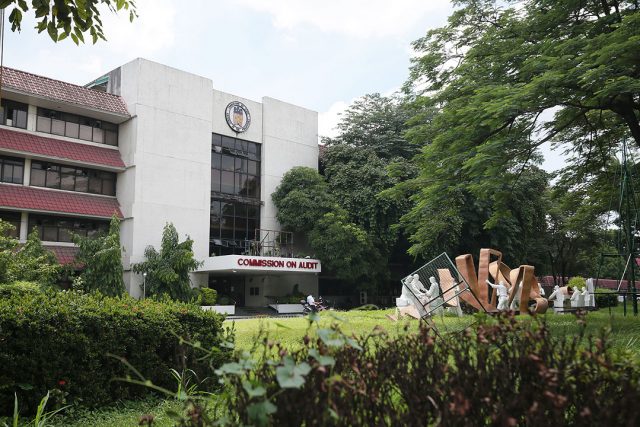
THE Commission on Audit (CoA) has flagged the provincial government of Agusan del Norte for failing to reclassify close to half-a-billion pesos worth of construction projects to its property accounts, resulting in misstatements that casts doubt on the accuracy of its books.

State auditors gave a qualified opinion on Agusan del Norte’s financial report as its provincial accountant failed to reclassify P463 million worth of completed construction projects to their respective proper accounts.

“Completed Infrastructure Projects amounting to P463,381,241 were not reclassified to their respective Property, Plant and Equipment (PPE) Accounts, understating the said accounts by the same amount, overstating the Construction in Progress accounts by P413,451,021.96 and understating the Accounts Payable account by P49,930,219,” the CoA report read in part.

The Provincial Government of Agusan del Norte did not immediately respond to an e-mail seeking comment.

The provincial accountant did not reclassify the completed construction projects as “final payments for the said projects not yet made,” according to the audit report. — Kenneth Christiane L. Basilio

Bomb wounds Basilan outpost cop

COTABATO CITY — A bomber lobbed a fragmentation grenade at one side of a roadside police detachment in Barangay Sunrise in Isabela City in Basilan late Sunday, hurting a policeman and causing tension among villagers in houses around.

In a report on Monday to the office of Brig. Gen. Prexy D. Tanggawohn, director of the Police Regional Office-Bangsamoro Autonomous Region, the Basilan Provincial Police Office stated that Patrolman Aldimar M. Salahuddin, then on duty, sustained shrapnel wounds in different parts of his body.

The governor of Basilan, Hadjiman H. Salliman, has condemned the bombing and offered an earnest reward for any information leading to the arrest of its perpetrators.

“That is something we will not take sitting down. We are helping the police resolve that grenade attack,” Mr. Salliman, chairman of the Basilan Provincial Peace and Order Council, said.

Talks are spreading around Isabela City, a port city in Basilan, stating that two men were behind the atrocity. One of them acted as a lookout, while the other threw the grenade beside the police checkpoint at an intersection in Barangay Sunrise. The duo escaped after a powerful explosion ripped through the surroundings.

Brig. Gen. Alvin V. Luzon, commander of the Army’s 101st Brigade in Basilan, told reporters on Monday that personnel of their intelligence unit are helping gather information that could help put closure to the incident. — John Felix M. Unson

PSEi drops on profit taking after 4 weeks of rally

REUTERS

By Revin Mikhael D. Ochave, Reporter

PHILIPPINE STOCKS closed lower on Monday as investors booked gains after a four-week rally.

The bellwether Philippine Stock Exchange index (PSEi) fell by 2.09% or 155.65 points to 7,272.65. The broader all-share index lost 1.3% or 51.75 points to 3,918.68.

“The local market plunged as investors continued with their profit-taking,” Japhet Louis O. Tantiangco, senior research analyst at Philstocks Financial, Inc., said in a Viber message. “Investors decided to book gains as the market has already been on a four-week rally.”

The market also took a cautious stance while waiting for September inflation data due this week, he added. Inflation data will be released on Friday.

Philippine inflation eased to a seven-month low of 3.3% in August from 4.4% in July and 5.3% a year earlier.

“Philippine shares fell due to profittaking ahead of September consumer price index data on Friday,” Luis A. Limlingan, head of sales at Regina Capital Development Corp., said in a Viber message.

He said the September S&P Manufacturing Purchasing Managers’ Index and August producer price index are also due this week.

In the US, key data releases include job openings and labor turnover survey report, ISM Manufacturing Index on Tuesday and the employment report on Friday, aside from speeches from US Federal Reserve Chairman Jerome H. Powell and other officials, he added.

Back home, all of the market’s sectoral indices closed lower, led by holding firms which dropped by 2.84% or 180.06 points to 6,150.15. The property index fell by 1.95% or 58.37 points to 2,930.63, while the financial index lost 1.78% or 41.76 points to 2,297.62.

Services declined by 1.32% or 29.95 points to 2,231.26, while mining and oil retreated by 1.31% or 115.75 points to 8,675.63. The industrial index fell by 1.09% or 107.01 points to 9,710.68.

Value turnover rose to P7.22 billion covering 1.1 billion shares from P6.97 billion involving 1.37 billion shares on Friday.

Decliners beat advancers 115 to 93, while 45 stocks were unchanged. Net foreign buying dropped to P87.71 million from P175.76 million.

Peso tracks dollar’s broad weakness

BW FILE PHOTO

THE PHILIPPINE PESO rose against the dollar on Monday, tracking the greenback’s broad weakness after US personal consumption expenditures for August came out cooler than expected.

It closed at P56.03 a dollar, 4.7 centavos stronger than its P56.077 close on Friday, Bankers Association of the Philippines data showed.

The peso opened at P56.03, appreciated to as much as P55.93 and weakened to as much as P56.075 against the greenback. Dollars exchanged went down to $1.29 billion from $1.47 billion on Friday.

The peso tracked the dollar’s broad dollar weakness at the weekend due to the cooler-than-expected US personal consumption data, a trader said by phone.

The personal consumption expenditures price index, the Fed’s favored inflation measure, rose by 0.1% in August after a 0.2% gain in July.

In the 12 months through August, the index rose 2.2% after rising 2.5% in July, Reuters reported on Friday.

The dollar index was weaker at 100.4, while most Asian currencies gained, led by the Malaysian ringgit and Thai baht, which were both up by 0.5%.

Investors were also cautious as the market awaited the US inflation data later this week, the trader said.

Lower global crude oil prices have also supported the peso, Michael L. Ricafort, chief economist at Rizal Commercial Banking Corp., said in a Viber message.

Brent crude futures for November delivery gained 1.56% or $1.12 to $73.10 a barrel as of 6:11 GMT. That contract was due to expire on Monday, and the more active contract for December delivery climbed by 1.45% or $1.04 to $72.58.

US West Texas Intermediate crude futures advanced 1.36% or 93 cents to $69.11 a barrel. Prices also rose on Friday, though for the week, Brent fell by 3% and WTI fell by 5%.

The trader expects the peso to trade at P55.80 to P56.20 a dollar on Tuesday, while Mr. Ricafort sees it at P55.90 to P56.10. — Aaron Michael C. Sy

PHL identified as priority site for infra investment within IPEF bloc

PHILSTAR FILE PHOTO

THE energy industry could unlock more financing as a result of Philippine membership in the Indo-Pacific Economic Framework (IPEF) after the country was singled out as a priority site for infrastructure investment by a coalition of global investors, according to the Department of Energy (DoE).

In a statement on Monday, the DoE said that the Coalition for Emerging Market Infrastructure Investment (CEMII) has picked the Philippines as its initial focus for infrastructure investment across the IPEF economies.

The Indo-Pacific Partnership for Prosperity (IP3), convenor of the coalition, called the Philippines an “ideal market” for the initiative given its “rapid growth in energy demand and ambitious renewables targets.”

IP3 is a collaboration of public, private, and non-profit organizations dedicated to mobilizing capital and expertise to advance economic growth, sustainability and inclusivity in the 14 IPEF countries.

The Philippines is targeting raising the share of renewable energy in its power generation mix to 35% by 2030 and to 50% by 2040.

The DoE said it welcomes the opportunity to collaborate with CEMII to develop a joint roadmap to accelerate investment in clean energy infrastructure.

“We look forward to working closely with the Coalition to realize our shared vision of a clean energy future for the Philippines and the broader Indo-Pacific region,” Energy Secretary Raphael P.M. Lotilla said.

Private developers will likely benefit from the initiative as they will have access to capital that is expected to be deployed quickly, the DoE said.

According to the DoE, the Philippines is estimated to require around $500 billion in investment between 2024 and 2050 to achieve a successful clean energy transition.

CEMII has announced that it will be launching country platforms dedicated to catalyzing infrastructure investment across IPEF emerging economies.

“In collaboration with the Commerce department and the government of the Philippines, the Coalition will engage in high-level meetings to identify mutual areas of interest and develop a joint roadmap to accelerate investment in clean energy infrastructure,” IP3 said in a separate statement.

CEMII was created to support IPEF economies “in achieving their economic development, human capital, and sustainability goals, through the identification, promotion and development of successful infrastructure projects throughout the region.” — Sheldeen Joy Talavera

ADVERTISEMENT
ADVERTISEMENT