Home Blog Page 2316

CHR backs barangay worker bill

PHILIPPINE STAR/ MICHAEL VARCAS

THE Commission on Human Rights (CHR) endorsed Senate Bill (SB) No. 2838, the Magna Carta of Barangay Health Workers (BHWs), highlighting its significance in recognizing the critical contributions of BHWs to primary healthcare across the Philippines.

“It is crucial to recognize that BHWs were frontline workers during the COVID-19 pandemic, helping to assist and monitor affected individuals within their communities,” it said in a statement. “This underscores their essential role in promoting health and wellness in their respective areas.”

The bill seeks to provide just compensation and benefits to BHWs to protect their welfare and well-being, it added.

It proposes incentives including monthly honoraria, transportation allowance, hazard allowance, insurance coverage, health emergency allowance during public health emergencies, and opportunities for further education and career advancement.

“The Commission views this bill positively as a key factor to further recognize the invaluable contributions made by BHWs.” — Chloe Mari A. Hufana

P9-M cannabis plantation torched

CRYSTALWEED CANNABIS-UNSPLASH

BAGUIO CITY — The Philippine Drug Enforcement Agency (PDEA) in Mountain Province, aided by local policemen and police commandos, swooped down on a 1,800-square meter marijuana plantation in Barangay Saclit, Sadanga town on Saturday.

This led to the seizure of 45,000 pieces of marijuana shrubs, pegged to reach P9 million.

Roselle Sarmiento, PDEA-Cordillera spokesperson said all the seized marijuana was planted in a single location.

No cultivators, however, were caught nor care takers immediately identified by authorities. — Artemio A. Dumlao

PPP eyed for Mindanao rail after China pullout

JOHANNES PLENIO-UNSPLASH

By Ashley Erika O. Jose, Reporter

THE Department of Transportation (DoTr) is considering enlisting the private sector for the Mindanao railway project as the government scrambles to put together funding after China bowed out of the project.

“We are also reviewing the feasibility study and the alignment of the rail line. We are talking to many (possible sources of funding) but we are not at liberty to divulge their identity yet. We need to do this project; that is why we are looking for other sources of funds. In fact, this project is also a possible PPP (Public-Private Partnership),” Transportation Secretary Jaime J. Bautista told reporters on the sidelines of the Transport Con 2024 last week.

Mr. Bautista said the government is still considering official development assistance (ODA) for the project, but it is now leaning towards a PPP arrangement.

“We are still open for ODA but if there’s PPP we will do that,” he said, noting the potential for private partners to move faster. He added that the DoTr is drafting the terms of reference for possible PPP.

The Philippines’ dropped China as funding source for the Mindanao Railway project and two more railway projects such as the South Long-Haul railway, and the Subic-Clark Railway project, due to lack of progress on a financing decision in Beijing.

Earlier this year, the Transportation department said that it is finalizing the feasibility study to overhaul the Mindanao Railway’s original study to make it more modern and environment-friendly.

“The feasibility study is ongoing now. We are not in a hurry, we need investor confidence. Investors need to know that their investments will be profitable and have a reasonable rate of return,” Mr. Bautista said.

“Government should be reminded that the Mindanao railway project is first and foremost a massive development undertaking, which seeks to improve regional economic outcomes and reduce poverty in the countryside,” Terry L. Ridon, a public investment analyst and convenor of think-tank InfraWatch PH, said in a Viber message.

Mr. Ridon said the objectives of the Mindanao railway project typically require ODA funding as the commercial case for these projects is not enticing to the private sector.

“In order for the government to have actual proponents, it should first make the commercial case as to why the private sector should take on the Mindanao railway project,” Mr. Ridon said.

Nigel Paul C. Villarete, senior adviser on PPP at the technical advisory group Libra Konsult, Inc., said the government needs to assess and understand the private sector’s appetite for PPPs. 

“Private proponents are after financial returns and they won’t enter into anything which is not profitable,” Mr. Villarete said.

The viability of adopting a PPP scheme for this project would depend on the project’s profitability and economic viability, he added.

Rene S. Santiago, former president of the Transportation Science Society of the Philippines, said PPP would be a solid option for railway projects, especially the operations and maintenance components.

“But it won’t address the fundamental deficiencies of the Mindanao railway: it is neither economically or financially viable. To be acceptable for PPP, huge subsidies in construction and operations are needed,” Mr. Santiago said. 

Libra Konsult’s Mr. Villarete said if the government is really leaning towards PPP for a project as massive as the Mindanao Railway, then the government should offer it as a solicited project.

“A railway requires right-of-way (RoW) over its entire length and stations will involve hundreds of small lots along its route,” he said.

“The possibility of delays due to RoW acquisition is much higher; these are responsibilities that can only be taken on by the government. Thus, it’s better that government to tender this in solicited mode, rather than wait for the private sector to submit proposals, which will entail substantial negotiation on RoW acquisition responsibilities later,” Mr. Villarete said.

The first phase of the Mindanao Railway project is valued at P83 billion. It will run from Tagum, Davao del Norte to Digos City, Davao del Sur. It is expected to carry 122,000 passengers per day and cut travel time between Tagum and Digos from three hours to one.

Constraints on PHL consumption growth seen loosened as inflation, rates recede

HOUSEHOLD consumption in the Philippines will rebound due to easing inflation and loosening monetary policy, Bank of America (BofA) Global Research said.

“Consumption growth in the Philippines has lagged overall growth in domestic product (GDP) due to elevated inflation, unemployment, and lagging wages,” it said in a report.

“However, these issues are slowly easing, and we think consumption growth has bottomed as inflation recedes, wages and employment catch up.”

The economy grew 5.2% in the third quarter, the weakest level in five quarters or since the 4.3% expansion in the second quarter of 2023.

However, household consumption rose 5.1%, improving from 4.7% in the second quarter. Consumption accounts for over 70% of the economy.

“Consumption is most sensitive to income, employment, consumer confidence, and remittances from overseas. Its growth has also been occasionally boosted by tax cuts (2023) and mandated wage adjustments (2022, 2023 and 2024),” the bank said.

BofA expects Philippine GDP to “stay shy” of 6% for this year and the next, below the government’s 6-7% and 6.5-7.5% targets, respectively.

However, it sees stronger private consumption at 5.5% for the fourth quarter. It estimates household spending to accelerate to 5.4% in 2025 from 5% this year.

“Some of the anticipated consumption growth drivers have already begun to take root in the third quarter, starting with a sharp slowdown in inflation.”

Headline inflation picked up to 2.3% in October, bringing the 10-month average to 3.3%. This was still within the central bank’s 2-4% target range.

The Bangko Sentral ng Pilipinas (BSP) expects inflation to settle at 3.1% this year, 3.2% in 2025 and 3.4% in 2026.

Inflation is also expected to ease further after an executive order slashed tariffs on rice imports to 15%, which took effect in July.

“The government also stepped in in the third quarter to cut tariffs on rice imports — the effects of which should be apparent on domestic rice prices by the first quarter of 2025, during which we expect inflation to bottom out.”

The Philippine Statistics Authority reported that the average price of regular-milled rice dropped to P50.22 per kilo in October from P50.47 in September, while well-milled rice declined to P55.28 per kilo from P55.51.

“The decline of inflation is also expected to be accompanied by easing monetary policy,” BofA said.

BofA expects the BSP to cut rates by a total of 75 basis points (bps) this year. This would bring the policy rate to 5.75% by year’s end.

This year so far, the central bank has reduced interest rates by a total of 50 bps since August, when the BSP kicked off its easing cycle.

The Monetary Board has scheduled its last rate-setting review for the year for Dec. 19.

BSP Governor Eli M. Remolona, Jr. has said it is possible to deliver a 25-bp rate cut at the meeting.

BofA also forecasts four 25 bps worth of cuts next year, “roughly at a quarterly pace.”

“Unclear if the rate path of the BSP will inflect should the election outcome in the US eventually result in a much stronger dollar as to ultimately alter the domestic inflation outlook,” it added.

In a separate report, BofA noted that the Philippine central bank will “ease policy rates in a gradual but consistent manner in the next few quarters, broadly following the Fed.”

It also noted that the inflation outlook gives the country “ample space” to continue lowering policy rates.

“For the Philippines, the focus is more exclusively on inflation, which will dictate pace and quantum of rate cuts, while keeping an eye on the exchange rate. BSP could complement rate cuts with RRR cuts,” it added.

The BSP reduced the reserve requirement ratio (RRR) for universal and commercial banks and nonbank financial institutions with quasi-banking functions by 250 bps to 7% from 9.5%, effective on Oct. 25.

Mr. Remolona has said the RRR could be brought down to as low as zero before his term ends in 2029. — Luisa Maria Jacinta C. Jocson

Sugar industry expects adequate supply despite import freeze until 2025

BOC - PUBLIC INFORMATION AND ASSISTANCE DIVISION (BOC-PIAD)

SUGAR producers said the supply of refined and raw sugar will be sufficient even after the government announced an import freeze until the middle of 2025.

“We do have sufficient supply of sugar — raw and refined — despite the drop in production,” United Sugar Producers Federation of the Philippines President Manuel R. Lamata said via Viber.

Last week, the Department of Agriculture and the Sugar Regulatory Administration (SRA) said they intend to postpone refined sugar imports.

The SRA has said that raw sugar production during the current crop year would decline by 7.2% from a year earlier due to crop damage sustained during the dry conditions brought about by El Niño.

Mr. Lamata added he sees the need to import sugar by October 2025.

The Sugar Council and the National Congress of Unions in the Sugar Industry of the Philippines have noted however that mill gate prices for raw sugar have declined.

“An apparent decrease in demand has consequently caused the steady drop in prices,” the groups said in a joint statement.

They added that a considerable amount of raw sugar is being withdrawn for refining, despite the stable supply of refined sugar.

“It makes no business sense for refineries to withdraw raw sugar. Hence, demand for it goes down and mill gate prices drop,” they added.

According to the SRA, raw sugar stocks hit 148,255 metric tons (MT), while those of refined sugar amounted to 323,923 MT as of Oct. 20.

The Sugar Council said that the drop in demand may have also been due to the increasing use of artificial sweeteners by the beverage industry.

Earlier, SRA said that it would look into the actual volumes of other sweeteners and, if warranted, require them to obtain clearances as well.

In September, the regulator had raised the clearance fee for High Fructose Corn Syrup to P30 per equivalent bag of sugar from P1.5 per bag.

Under tariff code 17.02 of the ASEAN Harmonized Tariff Nomenclature, only high fructose corn syrup is regulated. Artificial sweeteners are admitted at zero tariff under the ASEAN Trade in Goods Agreement. — Adrian H. Halili

Prices rise on 43% of Christmas-feast items

PHILIPPINE STAR/MICHAEL VARCAS

THE Department of Trade and Industry (DTI) said 43.2% of the items on its list of ingredients for the traditional Christmas feast, known as the Noche Buena, reflected increased prices.

The DTI’s 2024 Noche Buena Price Guide covered 236 stock keeping units (SKUs) from 22 manufacturers. Of these, prices for 102 SKUs rose, while those for 121 SKUs were unchanged and those for 13 SKUs declined.

According to the DTI, prices were stable for certain brands of ham, fruit cocktail, the domestic variety of Edam cheese known as queso de bola, sandwich spread, cheese, spaghetti sauce, tomato sauce, and all-purpose cream.

“Additionally, the 13 SKUs with price reductions include selected brands of mayonnaise, elbow macaroni, salad macaroni, and all-purpose cream,” it added.

All fruit cocktail SKUs showed higher prices, as did some brands of ham, cheese, all-purpose cream, elbow macaroni, salad macaroni, spaghetti sauce, and tomato sauce.

“This year’s Noche Buena Price Guide demonstrates the DTI’s commitment to empowering Filipino families to make informed choices,” Acting Trade Secretary Cristina A. Roque said.

“By publishing this price guide, the DTI urges consumers to compare prices and select products that best fit their budget and preferences for the holiday season,” she added.

The DTI said that the prices listed in the price guide will remain effective until Dec. 31.

The list gave a price range for ham of P170 to P928.50, queso de bola P210 to P445, fruit cocktail P61.76 to P302.5, cheese P56.50 to P310, mayonnaise P20.40 to P245.85, and sandwich spread P27 to P263.

The range given for all-purpose cream was P36.50 to P72, spaghetti P32 to P114, elbow macaroni P30.50 to P126.25, tomato sauce P16.50 to P92.85, salad macaroni P36.50 to P126.25, and spaghetti sauce P28.50 to P103. — Justine Irish D. Tabile

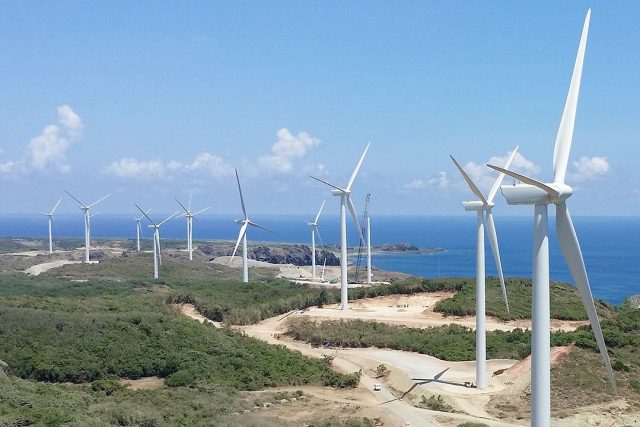
PHL renewables project pipeline leads region, but commitment to gas signals long transition — CEED

THE PHILIPPINES has the strongest renewable energy (RE) project pipeline in Southeast Asia, according to a report, though banks’ appetite for financing gas and coal-fired projects remains strong.

A report released by the Center for Energy, Ecology, and Development (CEED) on the region’s RE and coal financing said the Philippines and Vietnam led the region’s RE expansion, particularly in solar and wind, with a total planned capacity of 160.8 gigawatts (GW) and 131 GW, respectively.

But the Philippines, after Vietnam, also had the most gas-fired power plants in the pipeline, with the two countries accounting for 62% of the total planned capacity in the region.

The Philippines, which is grappling with the dwindling domestic supply of gas, has 7.7 GW of future capacity announced, 2.0 GW under construction, 14.0 GW dormant, and 18.7 GW in the pre-construction stage, according to the report.

Vietnam, which has the most planned gas power plants, has 23.0 GW announced, 3.1 GW under construction, 12.0 GW dormant, and 17.6 GW in pre-construction, it said.

The Verde Island Passage — a stretch of water between Batangas and Mindoro — has been the center of fossil gas expansion in the Philippines, hosting five existing fossil gas plants, 10 proposed gas and liquefied natural gas (LNG) power plants, and two operating LNG import terminals, with three more in the pipeline, according to the report.

The Philippines considers natural gas, which is not a renewable energy source as it comes from a non-replenishing source, as a transition fuel to meet its climate goals.

But CEED said the volume of planned gas projects suggests a long-term commitment to fossil gas that “extends well beyond any reasonable transition timeline,” noting that increasing reliance on natural gas runs counter to the Global Methane Pledge’s goal of 30% emissions reduction by 2030.

It said each power plant represents potential methane leakage points across the gas supply chain, from production and transportation to storage and combustion.

Gas commissioning hit its highest in 2016 at 7.3 GW and then in 2021 at 6.1 GW.

“Without reconsideration of these expansion plans, Southeast Asia’s gas infrastructure boom could undermine global efforts to curb methane emissions, one of the most potent contributors to near-term climate warming,” according to the report.

It said Southeast Asia’s gas import capacity has drastically risen since 2016 reaching 35.11 million metric tons this year, “with the Philippines emerging as the biggest developer of import terminals.”

Elsewhere in Southeast Asia, Thailand continued to lead the development of gas-fired power plants with 15.9 GW total capacity, up 2.2 GW since September 2023.

It was followed by Malaysia with 7.9 GW of commissioned gas power plants, and Indonesia with 7.1 GW. 

“The remaining countries make up the rest of the 2.3 GW. Although the rate of development of gas power plants post-Paris varies in gravity, it remains consistently increasing, especially in Thailand,” the report noted.

The report said the Philippine RE expansion is threatened by at least 105 contract terminations, due to proponents’ failure to obtain permits or conduct grid impact studies.

It said the grid’s inability to absorb RE capacity threatens the transition to a RE-based power system.

Philippine banks have been significant contributors in coal-fired expansion, according to the report, providing $6.3 billion in loans and underwriting to Philippine-based companies that have been expanding their coal generation portfolios.

“The Bank of the Philippine Islands and Banco de Oro are the top Philippine banks financing the coal industry and are ranked 11th and 13th in the region, respectively, with combined financing of $3.4 billion.”

The report said Indonesian banks have been the top source of coal financing among Southeast Asian banks, providing $8.9 billion since 2016.

Indonesian banks were also the top source of coal financing since the start of the decade, providing $4.2 billion or 33% of the financing channeled since 2020, “with partial 2024 numbers already surpassing the 2023 financing flows.”

Bank Mandiri was the biggest financial institution in Southeast Asia financing coal, followed by other state-owned banks — Bank Negara Indonesia and Bank Rakyat Indonesia, with their financing contribution exceeding $1 billion.

The report noted that state-owned companies are leading the coal capacity surge in Southeast Asia.

Asian firms are the biggest developers of coal plants commissioned from 2016 to 2024, it added.

It said countries whose power sector is primarily run by the government have state-owned companies pushing coal development, with Indonesia’s PT PLN, Vietnam Electricity, PetroVietnam Power, and Malaysia’s Tenaga Nasional Bhd being among the biggest developers in the region.

Japan’s financing institutions, meanwhile, accounted for 23% of the total coal financing in the region, primarily through the Japan Bank for International Cooperation.

Other Japanese banks that significantly bankrolled the region’s coal dependence include SMBC, Mitsubishi UFJ Financial, and Mizuho Financial — all among the biggest financiers of fossil fuels globally since 2016, according to the report.

Chinese banks account for about 11% of the coal financing in the region, through Bank of China, China Development Bank, China Eximbank, and China Construction Bank.

But since the pronouncement of President Xi Jinping of China, the Philippines’ largest trade partner, before COP26 of zeroing Chinese overseas coal projects in line with the country’s carbon neutrality target, Chinese banks who had been funneling sizeable money for Southeast Asia’s coal “ceased project financing by 2021, with small traces of corporate financing,” the report noted.

“Global North financial institutions are among the top shareholders and bondholders of local companies and financial institutions heavily involved in coal development,” the report said, adding that Western financial institutions have also historically provided significant support for Southeast Asia’s coal.

It said while US banks like Citigroup, HSBC, Standard Chartered, UBS, Deutsche Bank, and Barclays, have announced they will no longer finance coal, “their policies mainly only cover project financing, allowing them to continue supporting coal through underwriting services.”

The report said while Indonesian banks are among the top banks financing the coal industry in the region, their biggest shareholders include Western institutions like JPMorgan Chase, Citibank, Vanguard, and HSBC, “showing the sustained presence of the Global North in domestic financing.”

While international commitments have significantly reduced traditional financing sources, the region adapted through domestic market development, it added. “This evolution suggests both challenges and opportunities in managing the energy transition.”

“Still, coal financing flows in Southeast Asia expose misalignment between regional climate commitments and financial sector behavior,” according to CEED.

“Major international financial institutions continue to channel significant money flows into domestic developers and financial institutions through shares and bonds and raise capital to fund coal projects in the region, which perpetuate fossil lock-in, delayed climate action, high electricity prices, and regional air quality impacts,” it said.

“The continued financial support to the coal industry has created artificially sustained coal economics, undermining renewable energy competitiveness.”

The Philippines has been chosen to host the Board of the Loss and Damage Fund (LDF), a United Nations financing mechanism that will benefit countries vulnerable to climate change, including the host country itself.

The selection followed efforts by the Marcos administration to promote the Philippines as committed to the global green transition.

Mr. Marcos has positioned himself as a climate leader, citing the need for sustainable practices.

A 2024 Green Economy Report for Southeast Asia led by Bain & Co. said the Philippines saw a 57% increase in “green” investments to $1.46 billion in 2023, but still falls short of the over $16 billion in required capital investments needed for its green transition. — Kyle Aristophere T. Atienza


World Bank approves amendments to terms of NCR flood management loan

PHILIPPINE STAR/EDD GUMBAN

THE World Bank said it approved amendments to the loan agreement for the Metro Manila Flood Management Project, including the cancellation of $22.67 million due to adjusted costings.

In a document addressed to Finance Secretary Ralph G. Recto, the World Bank said the original cost estimate for the project was $207.60 million, which has been reduced to $184.94 million.

The loan now funds feasibility studies, the detailed design and construction of a centralized material recovery facility, and the rehabilitation and improvement of existing decentralized material recovery facilities.

The document also contained a new plan to “carry out neighborhood-level activities near the pumping stations and waterways and drainage channels as targeted in the first component.”

It also extended the project’s closing date to Nov. 30, 2026, from the same date in 2024.

“The Bank hereby cancels, as of Aug. 7, 2024, the amount of $22,665,607.25 from the amounts allocated to Categories (1) and (2) set forth in the withdrawal table in Section IV.A.1 of Schedule 2 to the Loan Agreement,” Zafer Mustafaoglu, country director for the Philippines, Malaysia, and Brunei, said. — Aubrey Rose A. Inosante

Harnessing the human element in cybersecurity

IN BRIEF:

• Recognizing employees as the cornerstone of cybersecurity, organizations must shift from tech-centric defenses to fostering a vigilant, security-aware culture.

• Comprehensive education and behavioral change strategies are essential to mitigate human-related security risks and reinforce a collective approach to cybersecurity.

• A balanced strategy that combines technological tools with human oversight and continuous cultural development is key to maintaining a resilient cybersecurity posture.

Cybersecurity threats are more sophisticated and pervasive than ever. While companies invest heavily in advanced technology and security protocols, the most critical line of defense consists of their own employees. Despite having robust security measures in place, organizations frequently find themselves vulnerable due to human error, negligence, or a lack of awareness. This reality underscores the urgent need for a shift in focus — from solely relying on technology to cultivating a culture where every employee actively contributes to cybersecurity.

THE CRITICAL ROLE OF HUMAN BEHAVIOR
The prevalence of cyberthreats in our interconnected world is undeniable, and the assumption that technology alone can safeguard information security and privacy is a misconception. A security-conscious culture within an organization is essential to effectively complement and enhance the technical safeguards already in place.

IT risk management, therefore, must be a holistic practice that not only includes technological solutions but also addresses the human factors that significantly influence the security landscape.

HUMAN ERROR AND SECURITY BREACHES
Human error continues to be a significant contributor to security breaches, with recent statistics from the 2024 Verizon Data Breach Investigations Report indicating that 68% of breaches involve some form of non-malicious human element. According to IBM, the financial repercussions are staggering, with the global average cost of each data breach in 2024 reaching $4.88 million — the highest total ever recorded. This figure reflects direct financial losses and encompasses the long-term reputational damage that organizations suffer following a breach.

Case studies from various industries have shown that breaches often stem from a lack of awareness or negligence, underscoring the importance of addressing human error as a critical component of cybersecurity strategies.

HUMAN BEHAVIOR IN CYBERSECURITY
Delving into the psychological and behavioral aspects of cybersecurity reveals that human actions are often the weakest link in security chains. Common risky behaviors such as password reuse, oversharing on social media, and susceptibility to phishing and social engineering attacks can significantly compromise an organization’s security. To effectively mitigate these risks, it is imperative to understand the underlying motivations and cognitive biases that drive such behaviors and to develop targeted strategies that promote secure practices.

To combat the risks associated with human behavior, organizations must implement comprehensive and continuous education programs that raise awareness about the dangers of insecure practices and actively engage employees in adopting and maintaining secure habits. These programs should be dynamic, incorporating real-life scenarios and practical exercises that resonate with employees and foster a sense of personal responsibility for cybersecurity.

SECURITY-CONSCIOUS CULTURE
Creating a security-conscious culture within an organization begins with the development of engaging and effective training programs. These programs should be designed to capture the attention of employees, providing them with the knowledge and skills necessary to recognize and respond to cybersecurity threats. Leadership commitment is crucial in reinforcing the importance of these programs, ensuring that security awareness is not just a one-time event but an ongoing priority.

A human-centered approach to designing security processes and IT risk management is essential. By considering the user experience and incorporating principles of secure-by-design and human-centered design, organizations can create systems and processes that naturally encourage secure behaviors. The promotion of security champions within teams can also further embed security awareness into the fabric of business operations.

The responsibility for maintaining a secure environment extends beyond the cybersecurity function or the Chief Information Security Officer (CISO). It is a collective responsibility that requires the engagement and participation of every employee. By instilling a culture where security is viewed as a shared obligation, organizations can create a more resilient and vigilant workforce capable of defending against cyberthreats.

TECHNOLOGY AND HUMAN OVERSIGHT
While technology plays a vital role in supporting good security habits through tools such as two-factor authentication and password managers, human oversight remains indispensable. Employees must be trained to understand the limitations of these tools and to remain vigilant in their daily activities, ensuring that security practices are consistently applied.

The balance between automating security processes and maintaining human oversight is particularly important in the context of Zero Trust models. These models, which integrate privacy, security, and cyber resilience, rely on a combination of technology and human insight to verify trustworthiness and manage access to sensitive resources.

Evaluating the effectiveness of security awareness programs is critical to ensuring that they are meeting their objectives. Organizations should employ strategies for continuous improvement, staying abreast of emerging threats and adapting their programs to address the evolving cybersecurity landscape.

SECURING THE FUTURE
Fostering a culture of security and privacy awareness is a collective endeavor that requires the active participation of every individual within an organization. By integrating the human element into IT risk management strategies, organizations can build a resilient defense against cyberthreats.

Continuous education and cultural evolution are imperative in promoting this balanced approach in risk management, ensuring that organizations remain vigilant and prepared to face the rapidly evolving cybersecurity challenges of the digital age.

This article is for general information only and is not a substitute for professional advice where the facts and circumstances warrant. The views and opinions expressed above are those of the authors and do not necessarily represent the views of SGV & Co.


Joseph Ian M. Canlas is a risk consulting partner and ASEAN core consulting quality leader, and Christiane Joymiel C. Say-Mendoza is a risk consulting partner, both of SGV & Co.

Sotto ‘good to go’ vs NZ after concussion

KAI SOTTO — FIBA

SEVEN-FOOT-THREE Kai Sotto has been cleared to play for Gilas Pilipinas, raising the prospect of a twin-tower combo with June Mar Fajardo which has coach Tim Cone excited.

Mr. Sotto, according to team manager Richard del Rosario, is “good to go” for the FIBA Asia Cup Qualifiers games against New Zealand on Thursday and Hong Kong on Sunday after clearing the concussion protocol.

The big man was placed on concussion watch by the Japan B.League after being hit in the head during the Koshigaya Alphas’ 80-72 win over Yokohama last week.

However, 6-foot-10 AJ Edu remains doubtful as he continues to undergo treatment for his right knee, which he hurt recently in the Nagasaki Velca’s 71-68 defeat to the Akita Northern Happinets.

Mr. Sotto’s presence is a big boost for Gilas as the Tall Blacks are coming in with a seven-footer and a couple of 6-foot-10 bigs in tow.

“They bring in a lot more size than they have in the past,” Mr. Cone said of New Zealand.

Mr. Cone, meanwhile, is thrilled to have both Mr. Fajardo and Mr. Sotto in the fold.

“The nice thing is that Kai and June Mar are developing a chemistry in which they can play together. And that’s really unusual to get two fives (centers) and allow them to play together,” he noted.

He credited this to Mr. Sotto’s versatility and willingness to sacrifice, describing his attitude as “I’m comfortable with the five but I will go play the four (power forward) and be uncomfortable so that June Mar can stay at the five.”

“It’s a really good rotation. We have the two of them that can play together. And then when June Mar rests, Kai can swing to the five. And when June Mar comes back, Kai can swing back to the four. And so we have a constant.

“And that was what was missing when we played (and lost to) Brazil in the semifinals of the OQT (Olympic Qualifying Tournament in Latvia) when Kai got injured. We didn’t have that ability to do that. It was a tough road for June Mar. Kai’s presence makes it a lot easier,” he added. — Olmin Leyba

Old Gilas foe to lead Tall Blacks vs PHL in Asia Cup qualifiers

THERE’S a bit of nostalgia for New Zealand skipper Corey Webster as the Tall Blacks face Gilas Pilipinas on Thursday at the SM Mall of Asia (MOA) Arena in the FIBA Asia Cup Qualifiers (ACQ).

Mr. Webster previously featured for the Tall Blacks when they played the Nationals and other NBA-bannered rivals back in 2016 in the FIBA World Olympic Qualifying Tournament.

And the 35-year-old shooting guard averaged 21.7 points a game in that past stint as New Zealand gave Tony Parker and France and Tristan Thompson and Canada a run for their money before absorbing close defeats in the group stage (59-66) and semifinals (72-78), respectively.

In their group game against the hosts then, Mr. Webster banged in 23 markers as the Kiwis defeated the Andre Blatche-led Filipinos before a 13,000-strong home crowd, 89-80.

Eight years later, Mr. Webster looks forward to playing the home squad in front of their passionate “sixth man” again.

“They turn out in their tens of thousands and pack their arenas and love their national team,” the seasoned 6-foot-2 gunner said on the website of Basketball New Zealand.

“Playing in Manila is something that not too many players get to experience. It is always amazing and to have a game over there in this window is a great experience for any player. I know it will be electric.”

Mr. Webster, who has won four championships in New Zealand, three in Australia and one in Africa, is among the biggest thorns Gilas is bracing for in the squad assembled by new coach Judd Flavell.

“He’s going to be a guy that we’re going to have to be attentive to,” said Philippine coach Tim Cone. “He can change a game. You know he gets hot, he gets rolling, he can really change the game.”

With Mr. Flavell and his crew on the first step of their journey, Mr. Cone expects the visiting team to play with high energy.

“I think this is their first game together, as a group. And I remember our first game when we played in Hong Kong (first window of the ACQ in February) and when we first got together. And there was a lot of excitement, a lot of energy, and we were raring to play. So we expect that from them as well,” said the Gilas mentor, who has been whipping the Nationals into fighting shape since Friday at their training camp in Laguna. — Olmin Leyba

Ateneo places 5th in Super League after beating Benilde in four sets

Game on Friday
(Rizal Memorial Coliseum)
6:30 p.m. – La Salle vs NU (championship)

ATENEO drubbed NCAA champion St. Benilde, 26-24, 25-16, 21-25, 25-23, to salvage fifth place in the Shakey’s Super League Collegiate Pre-season Championship over the weekend at the Rizal Memorial Coliseum.

Seasoned spiker Lyann de Guzman fired 20 points on 19 hits and an ace to lead the Blue Eagles, who are seeking redemption in UAAP Season 87 volleyball early next year.

She drew ample support from AC Miner and Geezel Tsunashima with 13 and nine points, respectively. Ms. Tsunashima scored two in the fourth set with back-to-back kills to fend off the Lady Blazers’ attempt to force a deciding fifth set.

Sabi ko sa kanila ‘wag masyadong relax kasi nakikita ko na hindi ito ‘yung laro namin kapag nagti-training kami. Sabi ko lang ilaban lang nila, nandito kami magtutulungan para sa isa’t isa,” said Ms. De Guzman.

Ateneo, which swept the University of the East (UE) in the first phase of the classification rounds, replicated its best finish in the SSL in the inaugural edition in 2022.

Clydel Catarig (14), Zamantha Nolasco (11) and Mary Grace Borromeo (10) showed the way for St. Benilde en route to a gallant sixth-place finish as the only NCAA team in the SSL playoffs.

Meanwhile, UE secured the seventh spot with a 25-20, 25-22, 26-24 win over the University of the Philippines behind the potent trio of Jelai Gajero, Casiey Dongallo and KC Cepada.

Ms. Gajero had 17 points while Mses. Dongallo and Cepada added 16 and 14 points, respectively, to best the Maroons, who placed eight, led by Niña Ytang with nine points as well as Kassandra Doering and Kyrzten Cabasac with eight points each.

With the rankings below already settled, all eyes will now be on fierce rivals National U, the back-to-back champion, and unbeaten La Salle in the best-of-three finals starting Friday. — John Bryan Ulanday