Home Blog Page 21

DLSU reclaims UAAP crown

FACEBOOK.COM/WEARETHEUAAP

FROM near elimination to rising as the UAAP champion once again.

Fourth-seeded De La Salle University (DLSU) essayed a sweet swan song to an epic run from a near exit, braving in a bloody climb to topple the mighty University of the Philippines (UP) in the sudden-death Game 3, 80-72, and reclaim the throne in the UAAP Season 88 men’s basketball finals before 24,339 fans on Thursday at the Smart Araneta Coliseum.

The DLSU Green Archers were disarmed by injuries, misfired multiple times, got hit and fell down to their knees bleeding for a Final Four seat in the homestretch but rose from the ashes against every adversity and regained accuracy of their bows and arrows when it mattered most behind a strong finishing kick in the last two minutes to get back at the UP Fighting Maroons in thrilling fashion once again.

It’s the second title in the last three seasons for La Salle for its 11th crown overall, becoming only the second No. 4 seed in history to rule the country’s premier collegiate league after the Troy Rosario-National University (NU) squad did it first in 2014 against Far Eastern University.

“It’s the hardest title to win for the past three years,” said coach Topex Robinson in tears as La Salle went up 2-1 in head-to-head title series against UP and master tactician Goldwin Monteverde in what is boiling as the UAAP’s new dynastic rivalry in the years to come.

“All glory to God. Our adversities really strengthened our faith. Sometimes, we ask ourselves if we deserve it but because of our faith, this journey is really worth remembering. We’re grateful and blessed to win another championship.”

Marching on at the frontlines of La Salle’s tough stand was team captain Mike Phillips, hauling down 25 points and 18 rebounds in his final game donning the green jersey as a UAAP champion once more. Mr. Phillips poured 18 of his output in the first half where La Salle set the pace, 32-23, before saving its best for last after UP’s uprising.

Unlike in the previous games though with Jacob Cortez carrying the majority of the scoring load, it took a village for the Green Archers this time around led by Vhoris Marasigan in a sweet vindication after his potential title-clinching trey in the last 3.8 seconds of Game 2 went in and out that dragged the series to a winner-take-all. Mason Amos added 11, Mr. Cortez and Earl Abadam had nine points each while Kean Baclaan chipped in eight points.

Mr. Marasigan scored 10 points, including a personal 5-0 spurt capped by an and-one layup to give La Salle a 71-67 lead in the last 2:15 mark, snatching the momentum from the Fighting Maroons after a booming triple of Rey Remogat for a 67-64 cushion to snap a back-and-forth duel marked by 16 lead changes.

And it became a coronation ride from there on — a far cry imagination a month ago when La Salle was on the brink of a disappointing elimination — as La Salle secured stops one after another while maximizing free throws before JC Macalalag put on the cherry on top with a fastbreak layup from a looseball scramble in the last 31 seconds, 76-69.

Not even a Reyland Torres’ last heave to push UP to within 72-76 in the last 28 seconds mattered as Mr. Amos took care of his freebies to seal the Green Archers’ glory from fighting for dear life way out of the Final Four.

La Salle’s steady finish, even at the jaws of a stinging 63-60 defeat in Game 2, proved as a testament to its character and resilience all season long — amid a 2-3 start, a costly three-game losing skid at the homestretch to stare and the injuries of  Mr. Baclaan and Mr. Amos.

That capped its sixth win in the last seven games, unpacking its bags from a near early vacation amid a 6-6 record at fifth place before sweeping the last two do-or-die elims games to catch the last semis bus — including a 78-72 triumph against long-time rival Ateneo in a virtual knockout showdown.

What followed was a rain of arrows on the top-ranked NU Bulldogs’ crib, erasing their twice-to-beat incentive before a 74-70 escape act over the Fighting Maroons in Game 1 of a trilogy that would reach the distance for the third straight year.

And when the smoke cleared in the war that drew over 60,000 fans in three battles, the UAAP title found itself back in Taft — after all and against every odds throughout one of the greatest runs in league history.

Mr. Remogat (21), Francis Nnoruka (16) and Reyland Torres (11) stood their ground but usual aces Gerry Abadiano and Harold Alarcon misfired for seven and six points, respectively, as UP — in five straight finals appearances — bled for a bridesmaid finish for the third time with two titles to show. UP’s first two finals were against the previous UAAP dynasty Ateneo before sharing the throne in the last three seasons with the re-emerging La Salle crew. — John Bryan Ulanday

EJ Obiena beats Thailand’s Patsapong in SEA Games pole vault event via countback

EJ OBIENA — FACEBOOK.COM/OLYMPICPHI

CHONBURI — For a change, pole vault star EJ Obiena was made to sweat.

It’s both good and bad as far as the Filipino Olympian is concerned.

“Too close for comfort,” Mr. Obiena said after beating Thai  Amsam-ang Patsapong via countback on his way to extending Southeast Asian (SEA) Games for a record fourth time.

Mr. Obiena and Mr. Patsapong both cleared 5.70 meters (m) — a new Games standard — then failed at three attempts to break it at 5.75 m. Owing to hitting the best mark on his first try compared to the Thai’s three, the gold went to a relieved Mr. Obiena, even made a friendly banter with Mr. Patsapong at the mat at the end of the contest in acknowledgement of the fight he put up.

“It’s really early in the season. I thought I’d win with 5.65, 5.60. I had blisters going in so it is what it is, I have a job to do. I was hoping he would not push me today but that’s competition,” he said.

“I had my fair share of competing at home and I know that pumps you up. It brings out the best in you if you can handle the pressure, which the guy did. Kudos to him, really, what a fighter! Enjoyed that in some way, hated that it was that close in some way,” he added.

It’s something new for Mr. Obiena, who in previous editions was like a runaway train who only made his last jumps for new personal highs.

Going in, Mr. Obiena said he wasn’t after the 5.65 m he previously set in his three-peat feat in Cambodia two years ago.

“Before the start, I was like, what would it mean for EJ Obiena to win the SEA Games. Looking for some fire, some motivation. There’s no pole vaulter in SEA Games history to win this four times. That was the goal, not the record,” he said.

“So I really was like holding my nerves when that guy was making his attempt (5.75). I’m very happy that I’m able to take home the gold,” he added.

Mr. Obiena is glad to share the stage with Eli Cole, who took the bronze at 5.20 m.

“Nice to see the Philippines back on the podium with two people,” he said.

The member of pole vault’s elite 6-meter club admitted the rising threat in the regional meet.

“The SEA Games is becoming tough in pole vault. I take pride to see that used to be, with 4.80 you win bronze now it’s 5.20 m, and to get second, you need to jump 5.70 m.  That’s tough. You win Division 1 in the NCAA with that. It’s a good, respectable mark for our region and I really take pride in that,” he said. — Olmin Leyba

Philippines battles for bronze with Malaysia in SEA Games men’s football

POC

CHONBURI — Though falling short of the ultimate prize, the Philippine U22 team is still in line for a piece of history when they vie for the bronze in the 33rd Southeast Asian (SEA) Games on Thursday with Malaysia at the Rajamangala Stadium in Bangkok.

The match is set at 3:30 p.m. (4:30 p.m. Manila time) in what the Pinoy booters envision as a great ending to a stellar campaign highlighted by a first semifinal appearance since 1991.

The U22s swept their two-game assignments in Group C to end early exits in the last 34 years. But Vietnam pulled the plug on their bid to contend for the gold with a 2-0 verdict last Dec. 15.

After a brief time feeling sad, the Filipinos got right back at it, ready to fight for the podium finish that’s never been done before in the country’s participation in the SEAG.

“My optimism comes from the relationship I’ve been able to build with players. I know the type of people they are, how they cared about the country and how much playing for the Philippines means to each of them,” said coach Garrath McPherson. “Knowing the character of the players, they’ll be ready to get back to work and bring home a medal.”

The country’s best performance ever in men’s football happened in the 1991 edition at home, where the legendary group led by Norman Fegidero finished fourth overall.

That was the only other time the Philippines reached the knockout stages. — Olmin Leyba

Farmers call for 35% rice tariff, demand Balisacan resignation

PHILIPPINE STAR/EDD GUMBAN

AN AGRICULTURAL coalition renewed calls for the restoration of the 35% rice import tariff and sought the resignation of Economy Secretary Arsenio M. Balisacan, claiming that his policies have “benefited no one.”

The Samahang Industriya ng Agrikultura (SINAG) said in a statement on Tuesday that the reduction of rice import tariffs from 35% to 15% under Executive Order No. 62 caused rice imports to increase, putting pressure on farmgate prices offered to farmers for domestically grown palay (unmilled rice).

At the same time, the low palay prices have not been accompanied by a corresponding decline in retail rice prices.

“Our farmers are losing out, their farmgate prices are below production cost, yet consumers still suffer high prices at the retail level. No one has benefited from the policies pushed by the DEPDev under the leadership of Secretary Balisacan,” SINAG Chairman Rosendo O. So was quoted as saying in a statement, referring to the government’s chief economic planner, who heads the Department of Economy, Planning, and Development (DEPDev). 

According to SINAG, government data and independent analyses show rice tariff cuts have not translated into sustained retail price relief, even as global rice costs stabilized.

SINAG also said record levels of rice imports have contributed to oversupply and further depressed farmgate prices.

The Philippine Statistics Authority reported that the national average palay price rose 16.6% month on month to P16.92 per kilo in November. It remained well below the P20.28 price from a year earlier.

“The government’s reliance on imports and tariff reductions has proven disastrous for the economy, undermining domestic food production while failing to lower prices for poor and vulnerable consumers,” SINAG said in the statement. — Vonn Andrei E. Villamiel

Phase 2 of fiber project granted green-lane status

PHILSTAR FILE PHOTO

PHILIPPINES Fiber Optic Cable Network Ltd., Inc. (PFOCN) was awarded a green-lane certificate by the Department of Trade and Industry for its P49.56-billion fiber optic cable infrastructure network project.

Awarded last week, the certificate grants the second phase of PFOCN’s nationwide fiber optic expansion project green-lane status as the government strives to fast-track strategic investments in digital connectivity.

“The project’s open-access, carrier-neutral model reflects the administration’s commitment to fast-tracking strategic investments that strengthen digital connectivity and broaden opportunities for Filipinos,” Trade Secretary Ma. Cristina A. Roque said in a social media post.

According to the One-Stop Action Center for Strategic Investments (OSACSI), it received the endorsement for the project on Nov. 10 and subsequently granted it green-lane status.

“This project represents a significant milestone in the Philippines’ digital transformation journey with a billion-peso-scale project and a construction timeline spanning five years from 2024 to 2029,” OSACSI said.

The company proposes to deploy a 20,000 route-kilometers metropolitan fiber-optic network.

“This phase focuses on strengthening urban connectivity, building on the national backbone established in Phase 1 while preparing for the access network to be rolled out in Phase 3,” it added.

The company ultimately hopes to develop around 60,000 route kilometers of fiber infrastructure across the archipelago. — Justine Irish D. Tabile

BCDA signs deal for use of facilities in New Clark City by national athletes

NEW Clark City is a fully master-planned development with the world-class sports complex as one of its components. — BCDA AND JUN MENDOZA

THE Bases Conversion and Development Authority (BCDA) said it agreed to help the Philippine Sports Commission (PSC) prepare Filipino national athletes by allowing the use of its New Clark City sports facilities.

“This partnership ensures that public investments directly support Filipino athletes and deliver measurable outcomes,” BCDA President and Chief Executive Officer Joshua M. Bingcang said in a statement on Wednesday.

“When facilities are fully utilized, athletes benefit, and the public sees clear returns,” he added.

Under the partnership, PSC and accredited national sports associations can have year-round access to competition-grade training venues in New Clark City, including the Athletics Stadium, Aquatics Center, and the Athletes’ Village.

“The arrangement directly strengthens athlete preparation for major international competitions while ensuring that government-built sports infrastructure delivers continuous public value,” the BCDA said in the statement.

“With regular access to competition-grade tracks, pools, and athlete housing, national teams can train with consistency, reduce logistical costs, and follow long-term, science-based training programs aligned with international standards,” it added.

While BCDA develops and manages the facilities, the PSC ensures that these are maximized for the training and development of national teams.

“The agreement integrates the New Clark City sports facilities into the national sports system, enabling continuous high-performance training operations,” BCDA said.

Earlier this year, the BCDA and PSC also formed a joint task force aimed at identifying BCDA-owned properties that can be developed into training and sports facilities.

“Priority sites include New Clark City, which is being advanced as a national training center, and Baguio City, identified for the development of a high-performance sports facility to support athlete preparation across different environments,” it said.

The two parties also created a technical working group aimed at managing scheduling, maintenance protocols, and facility standards. — Justine Irish D. Tabile

Nueva Ecija rice output under threat from irrigation fault; munggo eyed as stopgap

UPRIIS.NIA.GOV

THE Department of Agriculture (DA) said it is hoping to convert as much as 37,000 hectares of rice land in Nueva Ecija for planting to mung bean (munggo), as the National Irrigation Administration (NIA) races to repair damage to the Upper Pampanga River Integrated Irrigation System (UPRIIS).

The DA said in a statement that the disruption to irrigation threatens to slash the summer rice harvest in Nueva Ecija, the top rice producing province, leaving thousands of farmers without a major source of income for months.

Agriculture Secretary Francisco P. Tiu Laurel, Jr. was quoted as saying that the irrigation damage is expected to cut the rice crop by up to 120,000 metric tons (MT) next year.

Mr. Laurel said the DA and the NIA will support the expansion of mung bean production to provide income to affected farmers.

According to the DA, the Philippines imports nearly 50,000 MT of mung beans annually.

“Considering that munggo is a basic necessity, the local demand for processing, such as munggo  hopia, ready-to-eat munggo soup, lumpiang togue, shall also be addressed and serves as an opportunity for farmers to diversify their income from this cash crop, which is harvested in a shorter time than rice,“ Mr. Laurel said.

The DA said mung beans mature in about 60 days, roughly half the growing time of rice, allowing farmers to earn some income while irrigation repairs continue.

With mung bean having an average yield of roughly 0.7 MT per hectare in Nueva Ecija, farmers can earn about P22,600 per hectare at current selling prices of around P70 per kilo, according to the DA.

Mr. Laurel said the DA will manage the mung bean planting cycle and import controls to keep farmgate prices profitable. “Since 37,000 hectares in UPRIIS are down, planting munggo makes sense. When harvest season comes, we must time imports so our farmers profit,” he said.

The DA said its High-Value Crops Development Program and the NIA will work together to develop the mung bean industry, targeting an additional 21,000 hectares of land served by the NIA. — Vonn Andrei E. Villamiel

‘Minimally disruptive’ EDSA rehabilitation to start Dec. 24

PHILIPPINE STAR/MIGUEL DE GUZMAN

THE Department of Public Works and Highways (DPWH) said it will begin rehabilitating Epifanio de los Santos Avenue (EDSA) on Dec. 24.

“This new plan is entirely different from the original plan. We have worked to find a better way for the (EDSA rehabilitation) project. It is important to begin this project; we can assure the public that this will only cause minimal disruption,” Public Works Secretary Vivencio B. Dizon said at a briefing on Wednesday. 

The DPWH, together with the Metropolitan Manila Development Authority (MMDA), and the Department of Transportation (DoTr) presented the revised plan for the EDSA rebuild, featuring a project timetable of eight months from the original target of two years.

The revised plan is divided into two phases and is expected to be completed by May 31, 2026, Mr. Dizon said, adding that the project cost is now estimated at P6 billion from the earlier P17-billion quote. 

The first phase of the project covers all reblocking works and asphalt overlay of subway lanes both for northbound and southbound. This will be a round-the-clock construction work beginning Dec. 24 and ending on Jan. 5, 2026.

The construction work for the second phase will only be during 10 p.m. to 4 a.m. starting Jan. 5, 2026 until May 31, 2025, Mr. Dizon said.

During the second phase of the project, DPWH will carry out asphalt overlay lane by lane for both northbound and southbound sections during the working week, with Friday to Sunday devoted to asphalt overlay and reblocking of one lane per direction.

Mr. Dizon said the DPWH will use stone mastic asphalt, which he said is more durable and involves less maintenance than traditional asphalt.

“We will be using new asphalt technology. (In the original) plan, we were supposed to use traditional asphalt. I think this new technology has not been used on our national roads yet,” Mr. Dizon said.

The original EDSA rehabilitation plan had been scheduled to begin in June 2025, for completion by 2027. 

President Ferdinand R. Marcos, Jr. had rejected the original timeline as too disruptive, citing the outsized impact of the repairs on commuters, motorists, and the broader economy.

This rehabilitation will be the highway’s first major rehabilitation since 1980. Around 437,000 vehicles use EDSA every day.

“I am confident DPWH can do this well within their timeline. They have more than enough experience in scheduling these kinds of repair activities which should include all possible unforeseen kinks that might happen,” Nigel Paul C. Villarete, senior adviser on public-private partnerships at the technical advisory group Libra Konsult, Inc. said via Viber.

“There are days (in December) when there is no work or classes, which the DPWH can maximize especially the preliminary preparation works,” Mr. Villarete said, noting that such work can be undertaken gradually to ensure commuters are not presented with drastic changes to driving conditions.

“It is the abrupt shift which affects commuters; most traffic congestion usually eases out as it tries to redistribute over time and space,” he said.

MMDA Chairman Romando S. Artes said the agency will retain the current number coding scheme, abandoning an earlier plan to implement a 24‑hour odd-even scheme for private vehicles along EDSA.

Under the previous EDSA rehabilitation plan, the Department of Transportation had requested tollway operators to waive their tolls for some segments.

Transportation Acting Secretary Giovanni Z. Lopez said there is no need to seek a waiver of tolls, noting that roads will remain passable because no disruptions are expected during the EDSA rebuild.

“The good thing is we are expecting to deploy Dalian trains (on the MRT-3 commuter rail line) by December,” he said.

A 2018 Japan International Cooperation Agency study estimated the economic cost of road congestion in Metro Manila at around P3.5 billion a day.

Metro Manila roads were ranked the 14th most congested in the world, with an average travel time of 32 minutes for an average 10-kilometer distance, according to the latest edition of the TomTom Traffic Index.

Globalinks Securities and Stocks, Inc. Head of Sales Trading Toby Allan C. Arce said the EDSA rehabilitation is likely to have short-term disruptive impact on businesses along the avenue, particularly malls, restaurants, and entertainment venues that depend heavily on foot traffic and ease of access.

“Even if construction activity is scaled down during the holidays, the signaling effect alone — lane closures, rerouting, and traffic advisories — could deter casual shoppers and diners, especially those coming from outside immediate catchment areas,” Mr. Arce said via Viber.

The rehabilitation of EDSA is ultimately expected to be positive for EDSA-facing businesses, he said.

“If execution is disciplined and timelines are credible, improved road quality, smoother traffic flow, and safer pedestrian conditions would enhance accessibility and dwell time once works are completed,” Mr. Arce said.

Meanwhile, Mr. Dizon said the DPWH is also fine-tuning the plan for the Guadalupe bridge rehabilitation, which he said “will not happen until we have a detour bridge. The detour bridge will start early 2026; once it is completed, we can rehabilitate the Guadalupe bridge,” Mr. Dizon said. — Ashley Erika O. Jose

ARTA launches platform consolidating complaints against gov’t agencies

THE Anti-Red Tape Authority (ARTA) said it launched the Anti-Red Tape (ART) Dashboard, which it hopes will deter corruption and inefficiency in delivering government services.

“Our country is facing a serious challenge in terms of corruption … (The dashboard) is our way of contributing to addressing issues of transparency and accountability in government services,” ARTA Secretary and Director General Ernesto V. Perez said.

“In the fight against red tape and corruption, the most effective way, and we have proven this in the last six or seven years, is for government processes and services to be streamlined and digitalized,” he added.

The dashboard is a centralized data and analytics platform that consolidates, monitors, and evaluates the performance of all ARTA digital systems.

“By consolidating these systems under one platform, the ART Dashboard ensures interoperability, data accuracy, and real-time monitoring of government service efficiency nationwide,” he said.

Mr. Perez urged stakeholders not to be discouraged or diverted by the political turmoil roiling the government.

“At the end of the day, we must really work together to improve our image so that we can attract more investors and businessmen that will provide more livelihood opportunities for our people,” he said. 

“We have to continue to trust the system … Let the constitutional process take its course … Let’s leave it to them and contribute on our part wherever we are situated,” he added.

Among the systems that will be integrated in the dashboard are the Anti-Red Tape Electronic Management Information System, the Philippine Business Regulations Information System, the Electronic Complaints Management System (eCMS), the Report Card Survey, and the Competitiveness Dashboard.

The dashboard showed that 902 complaints were filed between July 30 and Dec. 17, of which 637 were tagged as closed and 265 active.

“These are the complaints that came in for a specific period only,” said ARTA Undersecretary Geneses R. Abot.

“Definitely by 2026, lahat ng complaints kailangan nandoon na sa eCMS para mas madali na siyang i-analyze (all complaints should be on the eCMS for ease of analysis),” he added.

He also said that ARTA is in the process of onboarding government agencies in using the eCMS.

Ang aming plan for next year, we will be targeting those na may mga complaints muna (We will start with the agencies that have outstanding complaints) and then later on shift to the other agencies,” he added.

The dashboard indicated that the Food and Drug Administration was the most complained-about agency, followed by Pag-IBIG or Home Development Mutual Fund, the Quezon City government, the Land Transportation Office, and the Bureau of Internal Revenue.

To support these programs, ARTA is hoping to receive proposed additional funding of P132 million next year. — Justine Irish D. Tabile

Rice retail price down, meat up in early December

PHILIPPINE STAR/EDD GUMBAN

THE retail price of rice declined year on year in early December, while meat and galunggong (round scad) prices increased, according to the Philippine Statistics Authority (PSA).

During the Dec. 1-5 period, which the PSA calls the first phase of December, the national average retail price of well-milled rice declined 10.6% from a year earlier to P48.91 per kilo. It rose from the P47.90 average during the second phase of November (Nov. 15-17) and P47.63 a month earlier.

The highest average retail price of well-milled rice in the first phase of December was recorded in the Davao Region at P55.45 per kilo, slightly lower than the P55.75 reported in the same period last year.

The lowest retail price of well-milled rice in early December was reported in the Cagayan Valley at P41.33 per kilo, falling from P51.16 a year earlier.

Meanwhile, the retail price of bone-in fresh pork averaged P314.41 per kilo in the first phase of December, up 4.66% from a year earlier. The national average is slightly lower than the P316.05 recorded in the second phase of November and P316.02 a month earlier.

The retail price of dressed chicken averaged P210.67 per kilo in the first phase of December, up 2.92% from a year earlier. The average retail price for the period is also higher than the P208.42 during the second phase of November and P208.44 a month earlier.

Galunggong prices rose 12.55% year on year to P244.90 per kilo in the first phase of December. The average price of the staple fish declined from P247.86 in the second phase of November and increased from P242.83 a month earlier. — Vonn Andrei E. Villamiel

Dec. power bills to reflect lower transmission rates

NGCP.PH

POWER CONSUMERS will be charged lower transmission rates in their December electricity bills, reflecting the decline in the cost of ancillary services, which are tapped when standby power needs to be fed into the system, the National Grid Corp. of the Philippines (NGCP) said.

In a briefing on Tuesday, NGCP head of revenue management Julius Ryan D. Datingaling said transmission rates for the November supply period declined 10.3% month on month to P1.3547 per kilowatt-hour (kWh).

Ancillary services (AS) declined 17.6% to P0.6217 per kWh.

Transmission wheeling rates, on the other hand, decreased 0.99% from a month earlier to P0.5894 per kWh. This reflects the cost of delivering electricity from power generators to the distribution system.

Meanwhile, the feed-in tariff allowance declined 10.8% to P0.1436 per kWh.

Rates dipped 15.27% in Luzon, rose 2.17% in the Visayas, and rose 3.21% in Mindanao.

NGCP Spokesperson Cynthia P. Alabanza said the company is pushing for the unbundling of AS rates to enhance transparency.

“Over the last year, nakita natin na ang movement talaga ang lakas ng palo doon sa ancillary services prices, which is a pass-through cost at hindi napupunta sa NGCP. Para lang malaman ng tao na kung meron man pagtaas ng presyo, hindi ’yan solely because of NGCP (We’ve seen how significant the impact is of ancillary services prices, which is a pass-through cost and does not go to NGCP. This is just so people understand that if there is any price increase, it is not solely because of NGCP) she said.

Ms. Alabanza added that the NGCP is expecting to complete several projects next year, including the P8.1-billion Tuy-Dasmariñas 500-kilovolt (kV) line and the P4.2-billion Nabas-Caticlan-Boracay 500-kV line.

Tuy-Dasmariñas involves the construction of a 49-kilometer double-circuit overhead transmission line, to be energized at the 230-kV voltage level initially.

It is expected to service the additional 5,215.55 megawatts of proposed generation capacity installed near Calaca, Batangas.

Meanwhile, the Nabas-Caticlan-Boracay transmission project will address the overloading issues in the existing Nabas-Caticlan 69-kV transmission line, Caticlan-Boracay transmission line, and Manoc-Manoc 69-kV load end substation.

The project is expected to enhance the reliability of power supply in islands off Panay.

“We have several substation upgrading projects in the Visayas also slated for completion next year,” Ms. Alabanza said.

In 2024, the NGCP completed three transmission projects, including the Mindanao-Visayas Interconnection, the Cebu-Negros-Panay 230-kV Interconnection, and the Mariveles-Hermosa-San Jose 500-kV line.

The NGCP officially started operations as a power transmission service provider in 2009. — Sheldeen Joy Talavera

Beyond routine: Strengthening year-end tax compliance

As the year draws to a close, many business owners and finance teams find themselves balancing wrapping up operations with the essential task of preparing for tax season. December sets the tone for the upcoming year’s regulatory requirements. A well-managed year-end close does more than satisfy administrative expectations — it prevents unnecessary penalties, simplifies audits, and strengthens the accuracy and transparency of financial reporting.

For taxpayers, year-end compliance extends beyond the filing of annual income tax returns. It includes reviewing books of account, preparing payroll reconciliations, completing information returns, and ensuring that both national and local tax obligations are addressed on time. These activities form the backbone of a smooth transition into the new year, allowing businesses to focus on growth rather than correcting past compliance lapses.

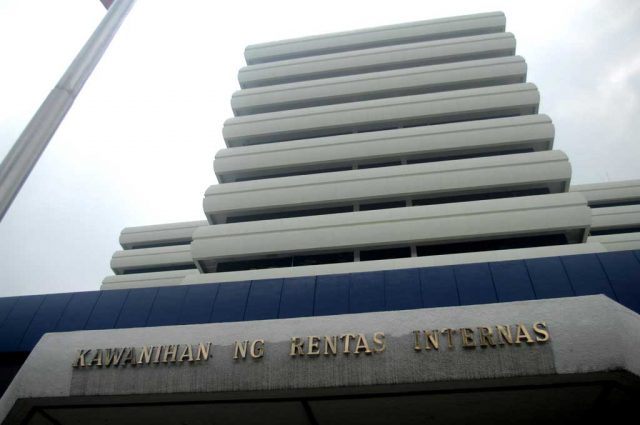
A central aspect of year-end preparation is ensuring that books of account are updated, accurate, and maintained in accordance with Bureau of Internal Revenue (BIR) requirements.

Taxpayers who use manual books must ensure that entries for the year are complete and that the books remain properly registered; partially used books may continue to be utilized in the succeeding year, but any new sets require registration before use. For those using loose-leaf books, the previous requirement to submit bound hard copies has been replaced by an online validation process through the BIR’s Online Registration and Update System (ORUS), where taxpayers generate a QR code to authenticate the use of loose-leaf formats. However, they still need to keep their records available for inspection when requested. Similarly, computerized books must be submitted to the BIR in digital form and accompanied by a QR code generated through ORUS as proof of authorization. Maintaining complete, accurate, and properly validated records ensures audit readiness and supports the integrity of the company’s financial statements.

Closely connected to bookkeeping obligations is the preparation of annual information returns and alphalists, which summarize taxes withheld during the year. These reports — covering compensation, expanded withholding taxes, and final withholding taxes — require careful reconciliation with accounting and payroll records for consistency. Inaccurate alphalists or mismatches between tax returns and internal books can trigger BIR inquiries, making early attention to these filings a valuable part of year-end compliance work.

Payroll itself becomes a focal point in December. Employers must ensure the proper release of the 13th month pay and determine whether any portion exceeds the allowable tax-exempt threshold. Beyond this, employers must do compensation annualization, a process that consolidates an employee’s earnings and tax withheld for the year to compute the final tax due. Any necessary adjustments are usually applied in the December payroll. Employers must also prepare BIR Forms 2316, documenting each employee’s compensation and taxes withheld, with distribution and submission deadlines falling early in the following year. Proper payroll reconciliation not only satisfies legal obligations but also ensures transparency and accuracy in employee tax reporting.

For businesses holding goods, materials, or real estate inventory, the preparation of the Annual Inventory List should not be overlooked. This list, reflecting inventory levels as of Dec. 31, must reconcile with accounting records and financial statements. Physical counts and verification activities conducted near the year-end ensure the reliability of this submission. Timely preparation of inventory information helps establish accuracy in cost of sales, gross income computations, and other tax-related disclosures.

In addition to national tax requirements, local government compliance plays a vital role in year-end readiness. Businesses must renew their mayor’s or business permits, file local business tax returns, and settle regulatory fees early in the new year. Figures declared to local government units must align with amounts reported to the BIR to avoid inconsistencies and scrutiny from the authorities. Neglecting local deadlines can result in penalties or administrative challenges that disrupt business operations.

Another dimension of year-end planning involves staying updated on regulatory changes and digital filing systems. Philippine tax administration continues to transition toward electronic platforms for registration, filing, and submission of attachments. Rules regarding allowable submission methods and system availability evolve over time, and taxpayers must stay informed to avoid following outdated procedures. Reviewing updates before year’s end ensures that your compliance checklist reflects current requirements and not former practices.

Ultimately, year-end tax compliance benefits greatly from structured planning and a clear internal timeline. For businesses, creating a tax calendar that outlines key deadlines for bookkeeping, payroll adjustments, inventory procedures, information returns, and permit renewals allows them to pace their work and helps teams anticipate challenges arising from system downtimes, approval cycles, or documentation issues.

Year-end tax compliance is not simply a series of obligations — it is an opportunity to assess the completeness and accuracy of your records, strengthen financial discipline, and enter the new year with clarity and confidence. Businesses that pay careful attention to their books, payroll, information returns, inventory, and local filings, lay the groundwork for a smoother tax season ahead.

The views or opinions expressed in this article are solely those of the author and do not necessarily represent those of Isla Lipana & Co. The content is for general information purposes only, and should not be used as a substitute for specific advice.


Christian D. Grimaldo is a senior manager at the Tax Services department of Isla Lipana & Co. the Philippine member firm of the PwC network.

+63 (2) 8845-2728

christian.d.grimaldo@pwc.com