Home Blog Page 1981

Pioneer anchors Platinum Year milestone to its enduring culture and values

Pioneer Insurance, a trusted insurance company, commemorates seven decades of being a pillar in the industry and reinforces its commitment to embody its culture and values in serving the Filipino.

As part of its Platinum Year activities, Pioneer Insurance Group Head Lorenzo Chan, Jr. proudly welcomed visitors to its refreshed Culture and Values Exhibit. “We take pride in the culture and values that have shaped our identity and drive us to create meaningful initiatives that uplift Filipinos amidst the unexpected,” Mr. Chan expressed.

Translating commitment into action

Founded in 1954 in Binondo, Manila, Pioneer Insurance started with just five employees working at the Quisumbing Building. Over time, a culture of collaboration and compassion was cultivated by its leaders, namely Lorenzo Chantoh, Robert Coyuito, Sr., Jose Halili Co, David Coyukiat, and Lorenzo Chan, Jr.

Today, the group of companies counts almost 1,700 employees across four Pioneer Houses and branch network nationwide, guided by its core values of integrity, excellence, and malasakit.

Apart from its commitment to people, Pioneer continues to reinforce its commitment to the planet through its eco-friendly buildings, including the LEED Platinum-certified Pioneer House Cagayan de Oro, LEED Gold-certified Pioneer House Manila, and LEED Gold and WELL Gold pre-certified Pioneer House BGC, targeting completion in 2026.

The company’s malasakit goes beyond business. Through the Pioneer Foundation, Inc. (PFI), the company has spearheaded a variety of impactful programs, including the TUPAD Program and PFI Scholarship Program, which offers educational scholarships to deserving students, and the Pioneer Gawad Kalinga Village in Pandi, Bulacan, a community built to provide homes and sustainable livelihoods for families in need.

Meanwhile, Pioneer continues to impart the relevance of insurance to the youth through its award-winning Youth Campaigns. Previous competitions have explored themes of hope, resilience, and nation-building through short films, visual design, music, and photography. Through the years, it has partnered with Samsung, FILSCAP, Team Manila, and Virgin Labfest, collecting over a thousand entries from students nationwide.

For 2024, it launched Real to Reel Short Film Competition that allows Gen Zs to capture their unique POV on how to achieve a better future and to inspire action on pressing social issues.

The refreshed exhibit features all these, allowing visitors to immerse themselves in the culture and values that allow Pioneer to be a trusted industry leader for 70 years and counting.

Pioneer Insurance is a leading Filipino insurance company that ranks No. 1 in Microinsurance, Aviation, Marine Hull, and Special Risks; No. 2 in Casualty and Fire; and No. 3 in Crime Insurance and Marine Cargo, according to the latest Insurance Commission report. Its efforts in growing microinsurance enrollments in the Philippines have garnered international acclaim and is regarded as the global standard in microinsurance.


Spotlight is BusinessWorld’s sponsored section that allows advertisers to amplify their brand and connect with BusinessWorld’s audience by publishing their stories on the BusinessWorld Web site. For more information, send an email to online@bworldonline.com.

Join us on Viber at https://bit.ly/3hv6bLA to get more updates and subscribe to BusinessWorld’s titles and get exclusive content through www.bworld-x.com.

Marcos says debate over impeachment of VP Sara Duterte a ‘storm in a teacup’

Philippine President Ferdinand Marcos Jr. -- Photo by KJ Rosales, The Philippine Star

MANILA – Philippine President Ferdinand Marcos Jr said on Friday that any impeachment complaint against his estranged vice president Sara Duterte, who over the weekend made threats against his life, would only tie down Congress and not help people.

Congresswoman France Castro was quoted by ABS-CBN News as saying on Friday that lawmakers in the lower house are set to file an impeachment complaint against Duterte for betrayal of public trust, bribery and other high crimes such as plunder.

“Why waste time on it?” Mr. Marcos told reporters. “None of this will help improve a single Filipino life. As far as I’m concerned, it’s a storm in a teacup.”

Ms. Duterte has been embroiled in a bitter row with Mr. Marcos and his cousin, House Speaker Martin Romualdez, since the collapse of a formidable alliance between their two powerful families that helped Marcos win the 2022 election by a huge margin.

Lawmakers are investigating Ms. Duterte’s alleged misuse of public funds during her tenure as education secretary. Ms. Duterte, who quit her Cabinet post in June, has denied wrongdoing.

On Saturday, Ms. Duterte said she had hired an assassin to kill the president, his wife and Mr. Romualdez, in the event that she herself were killed, prompting a strong rebuke from Marcos.

Law enforcement officials had summoned Ms. Duterte for questioning over the statement on Friday, but the vice president failed to appear and asked for a new schedule. Her lawyers said she had office matters requiring her urgent attention.

Asked if his relationship with the vice president is irreparable, Mr. Marcos replied: “Never say never.” — Reuters

GCash said to weigh record Philippine IPO of up to $1.5 billion

Globe Fintech, or Mynt, is the parent of GCash, the Philippines’ leading mobile payments service provider. — BLOOMBERG

GCash, the biggest fintech platform in the Philippines, has invited banks to pitch for an initial public offering in Manila to potentially raise $1 billion to $1.5 billion, according to people familiar with the matter.

The company intends to list in the second half of 2025, the people said, asking not to be identified because the information is private. An IPO of that size would likely make it the biggest ever in the Philippines.

Deliberations are ongoing and details of the offering such as size and timeline could still change, the people said.

A representative for GCash, which is controlled by Globe Fintech Innovations Inc., or Mynt, said the company had nothing to disclose at the moment.

Mynt Chairman Ernest Cu said in an interview in May that GCash planned to go public next year. “We want to do it sooner than later. Sometime in 2025 would be the best estimate I can give you,” he told Bloomberg News at the time.

A GCash IPO would be a boon for Southeast Asia’s equity capital markets after volumes dwindled in recent years amid high interest rates. The biggest IPO in the Philippines to date is food and beverage firm Monde Nissin Corp.’s in 2021, when it raised just over $1 billion.

Last month, Mitsubishi Corp. bought a 50% stake in AC Ventures Holdings Corp., which owns 13% of Globe Fintech. That followed Mitsubishi UFJ Financial Group Inc. acquiring an 8% stake in GCash in August, in a transaction that lifted the valuation of the company to $5 billion. Jack Ma’s Ant Group is another backer.

GCash’s app can be used for services such as paying bills and sending and receiving money throughout the Philippines, according to the company’s website, which says 94 million Filipinos have used GCash. — Bloomberg

UK’s Starmer pledges to reduce immigration with points-based reform

BRITAIN’S PRIME MINISTER KEIR STARMER — POOL VIA REUTERS

LONDON – Prime Minister Keir Starmer vowed on Thursday to reduce the number of migrants coming to Britain, saying he would produce a plan for reform of the points-based immigration system that would put the onus on businesses to train British workers.

Hours after official data showed net migration had reached a record of more than 900,000 in the year to June 2023, much higher than original estimates, Starmer called a news conference to spell out his determination to reduce the numbers, which he blamed on the policies of the former Conservative government.

High levels of immigration have become a hot-button issue in Britain. Voters worry that strained public services cannot cope with such large influxes of people, while sectors such as healthcare say they cannot function without foreign workers.

“A failure on this scale isn’t just bad luck… No, this is a different order of failure… Brexit was used for that purpose to turn Britain into a ‘one nation experiment’ in open borders,” Starmer told the press conference, referring to Britain’s 2016 decision to leave the European Union.

“Where we find clear evidence of sectors that are over- reliant on immigration, we will reform the Points Based System and make sure that applications for the relevant visa routes, whether it’s the skilled worker route or the shortage occupation list, will now come with new expectations on training people here in our country.”

If businesses do not “play ball”, he said, they will be banned from hiring overseas workers.

Introduced in 2021 by the Conservatives following Brexit, the points-based immigration system assigns points for specific skills and qualifications and only grant visas to those who have enough points.

SURGE IN NUMBERS

Earlier on Thursday, data from the Office for National Statistics (ONS) showed net migration of 906,000 for the year to the end of June 2023, revised up from a previous estimate of 740,000.

Numbers did fall 20% to 728,000 for the year to the end of June 2024, the ONS said, driven by declining numbers of dependents coming with those on study visas after the previous Conservative government changed the rules.

The big jump in the 2023 figure was attributed to more available data, more information on Ukraine visas and improvements to how it estimates migration, the ONS said.

High levels of legal migration in 2016 were one of the driving forces behind Britain’s vote to leave the EU.

While post-Brexit changes to visas saw a sharp drop in the number of European Union migrants to Britain, new work visa rules led to a surge in immigration from India, Nigeria and Pakistan, often to fill health and social care vacancies. — Reuters

Australia’s world-first social media ban for children under 16 draws mixed reaction

ARPAD CZAPP-UNSPLASH

SYDNEY – Australians reacted on Friday with a mixture of anger and relief to a social media ban on children under 16 that the government says is world-leading, but which tech giants like TikTok argue could push young people to “darker corners of the internet”.

Australia approved the social media ban for children late on Thursday after an emotive debate that has gripped the nation, setting a benchmark for jurisdictions around the world with one of the toughest regulations targeting Big Tech.

The law forces tech giants from Instagram and Facebook owner Meta Platforms to TikTok to stop minors from logging in or face fines of up to A$49.5 million ($32 million). A trial of enforcement methods will start in January, with the ban to take effect in a year.

“Platforms now have a social responsibility to ensure the safety of our kids is a priority for them,” Australian Prime Minister Anthony Albanese said on Friday
“We’re making sure that mums and dads can have that different conversation today and in future days.”

Announcing the details of the ban earlier this month, Albanese cited the risks to physical and mental health of children from excessive social media use, in particular the risks to girls from harmful depictions of body image, and misogynist content aimed at boys.

In Sydney on Friday, reaction to the ban was mixed.

“I think that’s a great idea, because I found that the social media for kids (is) not really appropriate, sometimes they can look at something they shouldn’t,” said Sydney resident Francesca Sambas.

Others were more scathing.

“I’m feeling very angry, I feel that this government has taken democracy and thrown it out the window,” said 58-year-old Shon Klose.

“How could they possibly make up these rules and these laws and push it upon the people?”
Children, meanwhile, said they would try to find a way around the ban.

“I feel like I still will use it, just secretly get in,” said 11-year-old Emma Wakefield.

WORLD FIRST

Countries including France and some U.S. states have passed laws to restrict access for minors without a parent’s permission, but the Australian ban is absolute. A full under-14s ban in Florida is being challenged in court on free speech grounds.

The legislation was fast-tracked through the country’s parliament in what is the last sitting week of the year, to criticism from social media firms and some lawmakers who say the bill has lacked proper scrutiny. It passed through the country’s lower house of parliament on Friday morning in a procedural hearing.

A spokesperson for TikTok, which is hugely popular with teen users, said on Friday the process had been rushed and risked putting children into greater danger.

“We’re disappointed the Australian government has ignored the advice of the many mental health, online safety, and youth advocacy experts who have strongly opposed the ban,” the spokesperson said.

“It’s entirely likely the ban could see young people pushed to darker corners of the internet where no community guidelines, safety tools, or protections exist.”

Albanese said on Friday passing the bill before the age verification trial has been completed was the correct approach.

“We are very clearly sending a message about our intentions here,” he said.

“The legislation is very clear. We don’t argue that its implementation will be perfect, just like the alcohol ban for under 18s doesn’t mean that someone under 18 never has access, but we know that it’s the right thing to do.”

The ban could strain Australia’s relationship with key ally the United States, where X owner Elon Musk, a central figure in the administration of president-elect Donald Trump, said in a post this month it seemed a “backdoor way to control access to the Internet by all Australians”.

It also builds on an existing mood of antagonism between Australia and mostly US-domiciled tech giants. Australia was the first country to make social media platforms pay media outlets royalties for sharing their content and now plans to threaten them with fines for failing to stamp out scams. — Reuters

Members of K-pop group NewJeans say they are leaving agency after dispute

RECORD giant HYBE auditing sub-label ADOR which represents, among other talents, the group NewJeans (photo) as it suspects it of planning to break away.

SEOUL – Members of NewJeans, one of the most popular K-pop groups, said on Thursday that they were leaving their agency ADOR, a subsidiary of powerhouse label HYBE.

ADOR said however the agreement between it and the band members “remains in full effect”.

“Therefore, we respectfully request that the group continue its collaboration with ADOR on upcoming activities, as has been the practice to date,” the firm said in a statement.

NewJeans has been caught up in infighting between executives of the parent HYBE and ADOR’s former chief executive who is the band’s creative director.

The latest controversy in the K-pop scene has gripped South Korea this year, with accusations, audits and an emotional press conference making headlines.

The five NewJeans members held a late-night press conference to announce their departure from the agency and said they would like to work with Min Hee-jin, ADOR’s former chief who left the agency this month.

“Once we leave ADOR, we’ll aim to proceed freely with the activities that we really desire,” said Danielle, one of the band members.

“We really wish to be able to release new music for Bunnies, next year, as soon as possible, whenever,” she said, referring to their fans. “We really hope that we have the opportunity to meet you guys from all around the world.”

The members said they might not be able to use the band’s name once they terminated the contract with ADOR. — Reuters

OPEC+ could delay output hike, sources say

MODELS of oil barrels and a pump jack are displayed in this illustration photo taken on Feb. 24, 2022. — REUTERS

OPEC+ is discussing postponing its oil output hike due to start in January for the first quarter of 2025, OPEC+ sources told Reuters on Thursday, and will hold further talks on this and other options ahead of its delayed policy meeting on Dec. 5.

Issues that need to be addressed include an output hike for the United Arab Emirates agreed in June this year that’s scheduled to start in January 2025, two of the sources said, declining to be identified.

OPEC+, which pumps about half the world’s oil, is gradually aiming to unwind output cuts through 2025. However, a slowdown in global demand and rising output outside the group pose hurdles to that plan and have weighed on prices.

Despite the group’s supply cuts, global oil benchmark Brent crude has mostly stayed in a $70-$80 per barrel range this year and on Thursday was trading around $73 a barrel, having hit a 2024 low below $69 in September.

Earlier on Thursday, OPEC+, which groups the Organization of the Petroleum Exporting Countries (OPEC) and allies such as Russia, postponed its next meeting on output policy to Dec. 5 from Dec. 1. OPEC said moving the date would avoid a clash with another event.

A summit of Gulf Arab countries is due to be held in Kuwait City on Dec. 1 which several OPEC+ ministers plan to attend, OPEC said in a statement.

“Sunday does not suit everyone,” a source told Reuters before the official announcement.

Top OPEC+ ministers have held talks ahead of the meeting. Saudi Energy Minister Prince Abdulaziz bin Salman, de facto head of OPEC, on Wednesday had a phone call with Russian Deputy Prime Minister Alexander Novak and Kazakh Energy Minister Almasadam Satkaliyev while in Kazakhstan on an official visit.

Iraq, Saudi Arabia and Russia held talks in Baghdad on Tuesday.

OPEC+ on Nov. 3 again postponed its first output hike, which had been set for December, by one month.

OPEC+ members are holding back 5.86 million barrels per day (bpd) of output, or about 5.7% of global demand.

Their planned first increase of about 180,000 bpd – a fraction of the total – is due to be made by the eight members involved in the group’s most recent cuts of 2.2 million bpd.

The UAE, which has been expanding its oil production capacity, also negotiated an oil output hike of 300,000 bpd during 2025 that’s scheduled to start in January. — Reuters

Chinese ships gather near island disputed with Philippines, satellite images show

REUTERS

HONG KONG/MANILA – Satellite images obtained by Reuters on Thursday show a build-up of Chinese civilian vessels near contested Thitu Island, Manila’s key outpost in the South China Sea, but a senior Philippine navy officer said they are “not a cause for concern”.

One of the images taken by Maxar Technologies on Monday and reviewed by Reuters shows about 60 vessels, some within 2 nautical miles of Thitu, a strategically important island from which Manila monitors Chinese vessels and aircraft in the busy waterway.

Vice Admiral Alfonso Torres, chief of the Philippines’ Western Command, said it was common for “maritime militia” ships to gather in the area. Manila, the Pentagon and foreign diplomats say such vessels work with the Chinese coast guard and navy to strengthen Beijing’s presence in disputed waters.

Rear Admiral Roy Trinidad, Philippines Navy spokesman for the South China Sea, also said maritime militia ships were regularly in the area, adding that Manila was aware of the vessels, which he called an “illegal presence”, but there was no need for alarm.

“It’s not a cause for concern,” Trinidad said. “We don’t have to read every action and react to that… What is important for us is to maintain our posture.”

Online ship trackers show that many of the vessels in the satellite photos are Chinese-registered fishing craft.

The Chinese defense ministry did not immediately respond to a Reuters request for comment. China has never confirmed it has a militia of civilian vessels.

The island, which the Philippines calls Pag-Asa, is Manila’s biggest and most strategically important in the disputed South China Sea, which is largely claimed by China and through which billions of dollars worth of goods pass each year. A 2016 ruling by the Permanent Court of Arbitration in the Hague found that Beijing’s expansive claims had no basis under international law.

The build-up comes after months of clashes and rammings between Chinese coast guard and fishing vessels and Philippines ships, particularly at the Scarborough and Second Thomas Shoals.

Thitu is close to a Chinese naval base and runway on Subi reef, which has sometimes served as a port for large numbers of Chinese maritime militia vessels, Trinidad said.

“When you go in there (to Subi), when you go out, you will pass through the territorial sea of Pag-Asa,” he said.

Regional diplomats and security analysts are watching developments closely, with some noting the Chinese vessels had their transponders on this week, allowing them to be tracked.

Singapore-based security scholar Collin Koh said Beijing could be testing Manila’s reactions at a moment of domestic political tension in the Philippines.

Embattled Philippine Vice President Sara Duterte on Wednesday accused President Ferdinand Marcos Jr of seeking to remove her from office, after the national police filed a formal complaint accusing her of assault and coercion.

“This needs to be watched in the days ahead,” said Koh, of Singapore’s S. Rajaratnam School of International Studies.

If the militia presence continues, Koh said, it could be that China is hoping to delay Philippine construction work on the island.

A new aircraft hangar is reportedly due for completion in the next few weeks, the latest in a several moves to buttress the Philippines’ presence on Thitu and improve monitoring capabilities. — Reuters

PSE sets P120-billion capital target

Increased stock market activity is seen in 2025 as financial conditions become relatively looser. — COSTFOTO/NURPHOTO VIA REUTERS CONNECT

By Revin Mikhael D. Ochave, Reporter

THE Philippine Stock Exchange (PSE) is aiming to raise P120 billion in capital next year as it anticipates increased market activity.

“This year, we have P79 billion in capital raising. Next year, I think we can do about P120 billion in capital raising, about a 50% increase. These include follow-on offering (FOO), stock rights offering, and private placements,” PSE President Ramon S. Monzon told reporters on the sidelines of a forum in Makati City on Thursday.

Last month, Mr. Monzon said the PSE expects to have six initial public offerings (IPO) and to raise up to P150 billion in capital for 2025.

The PSE only had three IPOs this year, missing the market’s operator target of six. These were mining company OceanaGold (Philippines), Inc. as well as renewable energy companies Citicore Renewable Energy Corp., and NexGen Energy Corp.

The market operator also fell short of its goal to raise P175 billion in capital this year.

“We only had three IPOs — small ones. But we had big preferred FOOs,” Mr. Monzon said.

The PSE was supposed to have its fourth IPO this year with the public listing of Cebu-based fuel retailer Topline Business Development Corp. (Topline).

However, Topline announced on Nov. 18 that it opted to move its offer period to the first quarter of 2025 to accommodate institutional investors.

Mr. Monzon said there is some uncertainty next year as US President-elect Donald J. Trump assumes office on Jan. 20. Mr. Trump had vowed to implement higher tariffs on imports, conduct mass deportation of illegal immigrants and focus on domestic manufacturing.

“There is uncertainty. We don’t know what’s going to happen. (Mr. Trump plans to) deport the illegal immigrants. I think there are a few Filipino immigrants. If he does a massive importation, then our (overseas) remittances will drop. It’s a very important stabilizing factor for an economy,” he said.

“He’s also trying to penalize companies that go outside. Our information technology and business process management industry (IT-BPM) employs about 1.9 million employees. Those are the uncertainties that we don’t know what will happen,” he added.

The Philippines is one of US firms’ top destinations for outsourcing services.

An earlier report by the Center for Strategic and International Studies (CSIS) showed 395 US firms have invested $22.4 billion in the Philippines between 2003 and 2021, of which $7.8 billion or 35% went to the IT-BPM sector.

China Bank Capital Corp. Managing Director Juan Paolo E. Colet said in a Viber message that the PSE’s capital-raising target for 2025 is attainable.

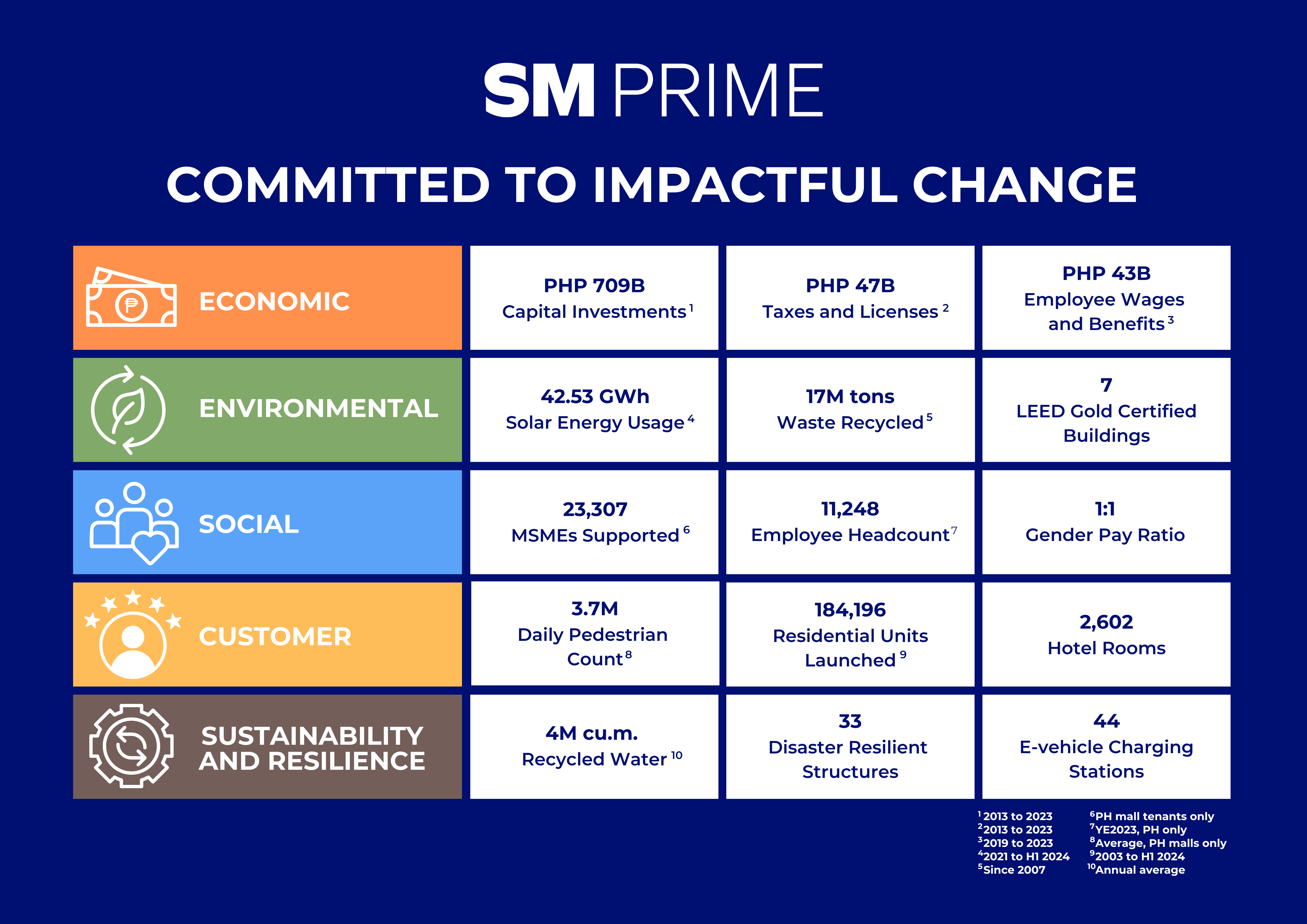
“The PSE’s target is doable assuming market conditions are bullish for equity fundraising next year. For example, if SM Prime Holdings, Inc.’s real estate investment trust (REIT) and GCash will do their IPOs in the Philippines next year, then those two deals alone could easily raise P120 billion,” he said.

“At this point, the outlook for our stock market is very fluid given the anticipated challenges and opportunities from Trump 2.0, so the target may still change,” he added.

Rizal Commercial Banking Corp. Chief Economist Michael L. Ricafort said in a Viber message that lower interest rates could help boost stock market activity.

“It is achievable amid better economic and market conditions, in view of possible further Federal Reserve rate cuts and local policy rate cuts that would reduce borrowing costs, increase demand for loans that would increase investments, create more jobs and more economic activities that would lead to more earnings of listed companies,” Mr. Ricafort said.

“If local stock market prices go up further in 2025, then that would make it more attractive for more share sales at the highest price possible, especially if those that deferred share sales would eventually push through,” he added.

Sy-led SM Prime’s REIT, Razon-led Prime Infrastructure Capital, Inc., Maynilad Water Services, Inc. and electronic wallet GCash are some of the big names said to be planning IPOs but with no definite timeline.

On Thursday, the bellwether PSE index dropped by 0.95% or 64.05 points to 6,638.54, while the broader all shares index retreated by 0.66% or 25.14 points to 3,734.94.

ACQUISITION
Meanwhile, Mr. Monzon said the PSE is hoping to finalize a move to acquire the Philippine Dealing System Holdings Corp. (PDS Group) before yearend.

“We’re still hoping. It’s just November. We still have a month to go. It is still a work in progress,” he said.

The PSE is looking to purchase up to 100% of the PDS, the operator of the Philippine Dealing & Exchange Corp., which caters to the fixed-income market by providing trading infrastructure.

Currently, the PSE has a 20.98% stake of the issued and outstanding capital stock of the PDS Group, while the Bankers Association of the Philippines members and institutions have a 21% stake.

Debt-to-GDP ratio unlikely to return to pre-pandemic level

REUTERS

THE PHILIPPINES’ debt-to-gross domestic product (GDP) ratio is unlikely to return to the pre-pandemic level as debt remains elevated in the medium term, the Bureau of the Treasury (BTr) said.

But the National Government’s (NG) medium-term fiscal consolidation plan will make sure it can continue to invest in its economic priorities while keeping debt obligations sustainable, the BTr added.

“It should also be said that an aggressive return to the pre-pandemic debt-to-GDP ratio of 39.6% is technically and politically infeasible,” BTr said in its annual report released on Nov. 27.

The Treasury said this would require a “more dramatic” fiscal adjustment where the government should have consistent budgetary surpluses.

But this approach would deprive the country of the needed public investments, it added.

The NG’s debt-to-GDP ratio stood at 61.3% at the end of September, higher than the year-earlier 60.2%.

This is still above the 60% threshold deemed by multilateral lenders as manageable for developing economies.

The government seeks to bring this down to 60.6% by the end of 2024, and below 60% by 2028.

Rizal Commercial Banking Corp. Chief Economist Michael L. Ricafort said the government incurs “relatively wider budget deficits” as it requires additional government borrowings that increase the outstanding debt.

“Faster GDP (gross domestic product) growth would also been an essential element to bring down the ratio below the 60% international threshold,” Mr. Ricafort said.

Mr. Ricafort said new tax and fiscal reform measures are needed to further narrow the budget deficit.

As of end-September, the deficit-to-GDP ratio stood at 5.14%, well below the 5.6% target for 2024.

“While debt-to-GDP will remain elevated compared with historical levels, the strong and sustained economic growth of 5.6%, coupled with steady reduction in budgetary deficits and a favorable negative real effective interest rate of 1.3% on the NG’s issuances will drive support for debt sustainability,” the Treasury said.

Foundation for Economic Freedom President Calixto V. Chikiamco said the government is “unlikely” to reduce the debt-to-GDP ratio since “the government has a spending plan to hit the GDP targets.”

“There are more uncertainties presently with Trump in office and launching a global trade war. Therefore, there are more uncertainties in the government reaching its debt-to-GDP ratio. However, if inflation is kept under control, more likely than not, the government can reach its GDP targets,” Mr. Chikiamco said.

Economic managers are targeting 6-7% GDP growth this year and 6.5-7.5% growth in 2025. — A.R.A.Inosante

Peso slide to 60 is possible — Remolona

The peso dropped this month as Donald Trump’s election victory sent the dollar higher, with investors worrying over potential tariffs and the impact on trade. — BLOOMBERG

PHILIPPINE CENTRAL BANK Governor Eli M. Remolona, Jr. isn’t ruling out the possibility of the peso hitting a fresh record low of 60 to a dollar, though monetary authorities will ensure that a fall to such a level won’t be abrupt.

“It could,” Mr. Remolona said late on Wednesday when asked about the prospects of the local currency hitting P60 per dollar. “But we want it to be orderly and not sudden. We don’t want a one-sided market.”

The exchange rate hitting a round number has a “psychological effect” and could spur a continuous move, Mr. Remolona said in an interview following an event in Manila. That also suggests the movement isn’t justified by fundamentals, he added.

The peso dropped this month as Donald J. Trump’s election victory sent the dollar higher, with investors worrying over potential tariffs and the impact on trade. The peso’s decline has been capped at the record-low P59 per dollar, a level that has acted as a key threshold in the past two years, as traders assess Bangko Sentral ng Pilipinas’ tolerance for a weak currency.

“The central bank does not want expectations of peso weakness to be self-fulfilling at these key levels, and especially during periods of low FX (foreign exchange) liquidity,” said Michael Wan, a currency strategist at MUFG Bank in Singapore. “But I don’t ultimately think any specific levels are sacrosanct by any means, including the 60 level.”

Mr. Remolona said he’s comfortable with the peso’s current level, adding the Bangko Sentral ng Pilipinas has intervened in the foreign exchange market in “small amounts” recently. The peso gained 0.1% to P58.64 on Thursday.

Mr. Remolona on Wednesday said the currency’s day-to-day movement “doesn’t figure into monetary policy.” The exchange rate could be considered if the swings are significant and happening over a few months, he said.

The BSP governor had said that policy makers will consider both a rate cut and a pause during their next meeting, with the central bank seeing 100 basis points (bps) in cumulative cuts next year.

Philippine monetary authorities are set to hold their next rate-setting meeting on Dec. 19. They reduced the benchmark interest rate last month by 25 bps for the second time this year to 6%. — Bloomberg

‘Business as usual’ for Cabinet amid political tensions, says Balisacan

The Philippine government is focused on upgrading infrastructure, boosting the country’s resiliency in the face of climate change, and diversifying its economy, the National Economic and Development Authority said. — PHILIPPINE STAR/MIGUEL DE GUZMAN

By Kyle Aristophere T. Atienza, Reporter

THE NATIONAL Economic and Development Authority (NEDA) on Thursday said rising political tensions in the Philippines will have minimal, if any, impact on the economy.

The Philippine government is focused on upgrading infrastructure, boosting the country’s resiliency in the face of climate change, and diversifying its economy amid geopolitical risks, NEDA added.

It’s “business as usual,” NEDA Secretary Arsenio M. Balisacan said at a Palace briefing after attending a Cabinet meeting that largely focused on the prospects for the 2025 national budget.

He said the business community is more concerned with the sustainability of the country’s economic agenda.

“As also seen in recent economic history, for so long the government stays in course within its development economic priorities and programs, this will continue to maintain their confidence in the economy,” he added.

“So, I think the impact of [political] noises such as what we have now, if there’s anything, will be quite minimal and the last 12 or so years bear on that.”

Due largely to the impacts of weather disturbances and slower government spending, the Philippine economy grew by 5.2% in the third quarter — the weakest in five quarters.

President Ferdinand R. Marcos, Jr. on Monday vowed to fight back and never to allow the country to be dragged into gutter-level politics. This after his erstwhile ally and Vice-President Sara Z. Duterte-Carpio claimed she hired an assassin to kill the President, his wife and  House Speaker Ferdinand Martin G. Romualdez.

Ms. Duterte on Wednesday said her broken ties with the President’s camp had reached a “point of no return.”

The country’s second-highest official has been grumbling amid congressional probes into confidential funds at the Office of the Vice-President and the Department of Education.

Mr. Balisacan claimed that since the late 1990s, the Philippine economy “continued to progress despite the political noises.”

“In this administration, we are so focused on ensuring that the goals and targets and strategies that we have outlined in the Philippine Development Plan will be achieved,” he said.

Mr. Balisacan said it is important for the public to know that economic momentum is sustained.

“We can do ‘business as usual’ amid conflicts between former political allies. Indeed, it may not translate to macroeconomic disturbances, but it would affect our image among global partners which could be potential sources of investment,” said Emy Ruth Gianan, who teaches economics at the Polytechnic University of the Philippines.

“More importantly, it adversely affects the morale of ordinary Filipinos. They would eventually choose to leave the country given petty political fights,” she said in a Facebook Messenger chat.

Leonardo A. Lanzona, who teaches economics at the Ateneo de Manila University, said amid all the dramas, the major issue remains the same — “that the root cause was the misuse of public funds, otherwise known as confidential funds.”

“Sure, the government is focused on the economy. But the key issue is trust,” he said via Messenger chat.

“The loss of P125 million of confidential money in 11 days should be already a cause of concern for the economic managers, and its consequences cannot be offset by future committed work especially if no one is being held accountable for it.”

Terry L. Ridon, a public investment analyst and convenor of InfraWatchPH, said rising political tensions can create an “atmosphere of instability” from the point of view of the international community.

“This may compel foreign investors to reconsider the Philippines as its next investment destination and rechannel their funds towards economies with a more stable political status quo,” he added.

“Nonetheless, Congress and the President should resolve this political instability in the soonest time, whether through impeachment proceedings or through legal proceedings being initiated by various government agencies.”

‘MORE STABLE’
Mr. Balisacan said the economic meeting with Mr. Marcos earlier in the day largely focused on the 2025 national budget and “the need to prioritize the funding of the high-priority projects.”

Mr. Romualdez and Senate President Francis Joseph “Chiz” G. Escudero were present at the meeting.

Mr. Balisacan said the Congress vowed to cooperate with the Executive branch in ensuring funding for its flagship projects for next year.

Asked whether this would mean new taxes, the NEDA chief said: “It’s the same. We haven’t changed the priorities with respect to new measures.”

He said the Legislative-Executive Development Advisory Council will convene in two weeks.

Mr. Balisacan said the President has instructed the economic team to “tighten our practices” in releasing rules and guidelines for infrastructure projects to ensure that they can withstand the floods and typhoons.

Aside from infrastructure, the economic team is also focused on the need to “diversify the economy and to strengthen its fundamentals,” the NEDA chief said, citing “threats of high tariffs and the possible responses of other countries to such tariffs.”

US President-elect Donald J. Trump seeks 60% or higher tariffs on all Chinese goods and a 10% universal tariff.

“I think that over the years, and I’m quite confident, that our economy now is more stable than any other time in the past, that it’s more diversified than actually in the past but we need to continue and improve working and developing other pillars of growth,” Mr. Balisacan said.

Also on Thursday, Mr. Balisacan said NEDA was set to submit its periodic review of the reduced tariff rate for rice on Friday.

“It basically presents the picture of the rice market at this time, providing an analysis of where we are, particularly with respect to production, to supply, to demand, to prices and what to expect in the coming four months and beyond,” he said.