Home Blog Page 1516

Arts & Culture (05/14/25)


9 living treasures awarded at GAMABA ceremony

FOR the first time in the history of the Gawad sa Manlilikha ng Bayan (GAMABA), nine awardees were honored in a single conferment this year, marking the highest number of recipients in a single year. The event was held at the Metropolitan Theater in Manila early in May. The nine awardees of the National Living Treasures award are: dallot ritual singer-poet Adelita Romualdo Bagcal from Banna, Ilocos Norte; T’boli chanter of epics Rosie Godwino Sula from Lake Sebu, South Cotabato; Manobo embroidery and beadwork artisan Abina Tawide Coguit from La Paz, Agusan del Sur; Sama master of traditional dance Sakinur-ain Mugong Delasas from Bongao, Tawi-Tawi; T’boli kemas brasscaster Bundos Bansil Fara from Lake Sebu, South Cotabato; Higaonon mat weaver Marife Ravidas Ganahon from Malaybalay, Bukidnon; Ga’dang embroiderer Amparo Balansi Mabanag from Paracelis, Mountain Province; Mandaya weaver of ikat textiles Samporonia Pagsac Madanlo from Caraga, Davao Oriental; and T’boli master weaver of t’nalak Barbra Kibed Ofong from Lake Sebu, South Cotabato.


Drag musical sequel to premiere in June

THE sequel to Maxie The Musical will be staged in time for Pride Month in June. Titled Dalaga na si Maxie Oliveros: A Drag Musical Extravaganza, the show will mark the return of a Filipino pop culture queer icon, running from June 13 to 22 at Illumination Studio, Makati City. Set five years after the first installment from 2013, it follows Maxie Oliveros as she navigates love, identity, and resilience in a world that’s still catching up to her radiance. Both musicals build on the legacy of Ang Pagdadalaga ni Maximo Oliveros, the 2005 award-winning film that first introduced Maxie to the world. Tickets are now on sale, priced at P2,500 each. An early bird discount of P200 is available only until May 18.


Two painters exhibited at ArtistSpace

THE exhibit The Nova Amorsolos presents works by two artists who are likened by some to Fernando Amorsolo. Alfred Galura and Rommel Tingzon, in their first two-man exhibition together. Their works are on view until May 21 at the ArtistSpace, located at Ground Level, Ayala Museum Annex, Makati Avenue corner De La Rosa Street, Makati City.


Group show at Imahica Art Gallery

ON display this month at the Imahica Art Gallery is Timeless Strokes, a group exhibition containing pieces from the 1970s onwards. It showcases early and influential works by some of the Philippines’ most respected contemporary artists, with the goal to give a rare glimpse into the evolution of the local art scene. Participating artists include Pandy Aviado, Imelda Cajipe Endaya, Fil Delacruz, Julie Lluch, Cid Reyes, Nestor Olarte Vinluan, Phyllis Zaballero, and many more. The exhibit runs until May 31 at the Imahica Art Gallery, Wack-Wack, Mandaluyong City.


The M talk on preserving Pitoy Moreno gowns

DESIGNER Rajo Laurel will be hosting an intimate conversation on reviving the iconic bridal gowns of Jose “Pitoy” Moreno for a new generation. Titled “Love Letters: Preserving and Repurposing J. Moreno Gowns, the session will offer a glimpse into the collaborative process behind the revival, featuring heartfelt stories from two brides, Ella Pangilinan-Miranda and Yanna Laurel-Sigueon Reyna, whose mothers’ cherished gowns were restored and reimagined by Laurel. The talk will take place on May 31, at 2 p.m., at the second-floor foyer of the Metropolitan Museum of Manila in Bonifacio Global City, Taguig.


The Manila Hotel holds May flower exhibit

THE Art Gallery of The Manila Hotel is presenting the exhibit Flowers of May this month, featuring the works of Manuel Baldemor. The exhibit pays homage to the Flores de Mayo festival, a celebration of beauty, devotion, and renewal. Coming from his previous, more solemn Kuwaresma series, the works in Flowers of May showcase Mr. Baldemor’s take on joyful floral expressions of spirit and color. It is on view at the hotel’s Art Gallery until May 31. Admission is free.


Ballet Manila stages Swan Lake with San Francisco superstars

BALLET MANILA is continuing the celebration of its 30th Anniversary with the restaging of the beloved classic, Swan Lake, featuring a roster of ballet stars from San Francisco Ballet. On May 30, 8 p.m., May 31, 5 p.m., and June 1, 5 p.m., the production will be led by San Francisco’s first soloist Katherine Barkman in the dual roles of Odette (White Swan) and Odile (Black Swan). She was a former mentee of Lisa Macuja Elizalde and principal dancer of Ballet Manila. Dancing alongside Barkman will be Esteban Hernandez, principal dancer of the San Francisco Ballet, taking on the character of Prince Siegfried. Meanwhile, the 1 p.m. shows on May 31 and June 1 will star Ballet Manila principal dancer Abigail Oliveiro and San Francisco Ballet soloist Nathaniel Remez. All performances will be staged at the Aliw Theater, CCP Complex, Pasay City. For tickets, visit www.ticketworld.com.ph.


Virgin Labfest unveils scripts for 20th year

THE Virgin Labfest (VLF) has unveiled the 12 new scripts for untried, untested, and unstaged one-act play festival, to be staged this year from June 11 to 29. The new plays to be staged in this year’s edition of the festival, titled VLFXX: HINOG, are: TBT: Takbo, Batang Tondo by Yoj; Ang Bata Kag Ang Nilaga by Liane Carlo Suelan; Polar Coordinates by Ade Valenzona; Minating ni Mariah Ang Manto ng Mommy ni Mama Mary by Eljay Castro; Unang Araw by Ivan Villacorta Gentolizo; Presidential Suite #2 by Siege Malvar; Mga Magindara sa Siyudad by Chris Joseph Junio; Ang Problema sa Trolley by Imuthis; The Late Mr. Real by Rolin Migyuel Obina; Anniversary by Nelsito Gomez; Mommy G by Jobert Grey Landeza; and Don’t Meow for Me, Catriona by Ryan Machado. The three plays from last year’s edition that will be brought back this year are Jhudiel Clare Sosa’s Identite, Joshua Lim So’s Pagkapit sa Hangin, and Elise Santos’ Sa Babaeng Lahat.


Buffett’s little Japan handbook, and other lessons

BLOOMBERG

By Gearoid Reidy

WARREN BUFFETT has finally answered a question that has long intrigued investors: What sparked his interest in five Japanese trading houses in 2020, a bet that is now worth more than $25 billion?

The answer was hiding in plain sight: “I was just going through a little handbook that probably had two or three thousand Japanese companies in it,” he told investors at the annual general meeting in Omaha, Nebraska, earlier this month, shortly before announcing his resignation as head of Berkshire Hathaway, Inc. “There were these five trading companies selling at ridiculously low prices. So I spent about a year acquiring them.”

It’s the same screening methodology the typical Japanese retail trader uses. The “little handbook” is the Kaisha Shikiho, the “bible of Japanese equities,” indispensable for the country’s stock-pickers. Released quarterly for ¥2,800 (around $20), the Shikiho is a thick, dictionary-sized guide listing facts and figures on every one of the country’s nearly 4,000 listed companies.

Buffett’s approval should have thousands of his acolytes flocking to the English version, known as the Japan Company Handbook and spotted on his desk as far back as 12 years ago. But in a remarkable fumble, the publisher last year discontinued the English version, just months before the world’s most famous investor endorsed it.

Perhaps that makes it harder to find stock gems, giving an advantage to the patient investor that he has long championed. Fortunately, it’s not the only lesson on investing in Japan he imparted. Until now, Buffett has largely let his money do the talking — but recent remarks reveal lessons on investing there that more should know.

REALIZE THE OPPORTUNITY
“Tim Cook would tell you that iPhone sales there are about as great as any country outside the United States. American Express would tell you that they sell their product very, very well in Japan. Coca-Cola, that we do business with, another big investment of ours, does extraordinarily well.”

While more people are paying attention to Japan these days, thanks to soft power and inbound tourism, it remains overlooked in everything from its approach to demographics or healthcare, to the investing opportunities that abound.

And as Buffett notes, it’s a colossal market not just for iPhones and Coke but the second largest for music, the third largest for movies. Something as obscure as the pachinko gambling business generates 10 times the revenue of all the casinos in Las Vegas combined. Yet some combination of cultural barriers, the slow pace of change, or the existence of faster-growing neighbors, means it gets less attention than it deserves.

Andrew McDermott of Mission Value Partners, a longtime investor in Japan who Buffett sought advice from, explains how the Oracle became “increasingly comfortable with Japanese companies and increasingly uncomfortable” with the then-in-vogue China. In 2012, Buffett “remarked that he’d rather invest in Japan than anywhere else in the world,” McDermott wrote in a blog post. And if that’s not enough, consider its position internationally: A strategically vital nation that advocates free trade and fair courts. These days, those are in short supply. Buffett suggested macro factors like another Bank of Japan rate hike wouldn’t dissuade him from investing further. Others should take note.

EMBRACE THE DIFFERENCE
“They have some different customs than we have. They drink Georgia coffee as their number one Coca-Cola product. I haven’t converted them to Cherry Coke, and they’re not going to convert me to Georgia coffee. But it’s a perfect relationship.”

Georgia is a brand of canned coffee served in vending machines and convenience stores across the country. Cherry Coke is very occasionally available as a novelty. As Buffett suggests, to each their own: He understands what many who’ve left the country frustrated do not: That Japan is its own place, and it’s these differences that make the country, and its firms, compelling.

The biggest stocks are successful not in spite of their idiosyncrasies, but because of them. Consider how Toyota Motor Corp. has defied investor pressure to shift to electric vehicles, becoming the top-selling automaker five years running by focusing on hybrids. Or Nintendo Co., which faced down calls insisting it must abandon its own hardware and shift to mobile games; a decade and $100 billion in Switch sales later, the stock trades just off an all-time high. These firms might not put shareholders above all else, but they build lasting brands that reward the long-term investor.

DON’T EXPECT OVERNIGHT CHANGE
“We don’t have any intention of trying to change what they’ve done because they do it very successfully. Our main activity is just to cheer and clap.”

A lengthy time window is crucial when it comes to Japan. While it doesn’t always need to be the decades Berkshire plans, expecting rapid change is a recipe for disappointment. To follow Buffett, the strategy is to find the good management teams and “cheer and clap,” rather than lecture.

While Japan is becoming more receptive to outside shareholders, investors who work with management long term, rather than against them in a short investment period, still seem most likely to succeed. Consider Third Point LLC’s Dan Loeb. Had he just retained the 7% stake in Sony Group Corp. he held in 2013, Loeb could have turned $1.1 billion into more than $10 billion today — without doing anything.

Foreign investors can help by attracting attention to opportunities and explaining them abroad, something Japanese boards struggle to do (consider how few paid much attention to the trading houses before Berkshire.)

Investing in Japan isn’t for the faint of heart. But ultimately it can reward those who — like Buffett — turn every page.

BLOOMBERG OPINION

DMCI says it will focus on cost control, synergies amid economic risks

SATORI RESIDENCES in Pasig City — DMCIHOMES.COM

DMCI HOLDINGS, Inc. remains cautiously optimistic about its short- and medium-term prospects, with expectations for growth in its water, power, and mining businesses despite economic headwinds.

“We are cautiously optimistic about the operating performance of the group in the short and medium term,” DMCI Holdings Chairman Isidro A. Consunji said during the company’s virtual annual stockholders’ meeting on Tuesday.

“Our priorities will remain focused on disciplined execution, cost control, and maximizing synergies within our ecosystem — especially with the recent addition of our cement business. At the same time, we are mindful of external risks, such as elevated interest rates, policy changes, and the slower-than-expected recovery in the construction and property sectors,” he added.

Mr. Consunji said the group’s operating performance in the short and medium term will be driven by better plant performance at its Calaca plants, as well as capacity expansions at DMCI Power Corp. and DMCI Mining Corp.

He added that DMCI Holdings is optimistic about the growing demand for electricity and water and expects revenue recognition from DMCI Homes’ post-pandemic sales recovery and progress in infrastructure projects, including the Metro Manila Subway and South Commuter Railway contract packages.

Among its business units, Mr. Consunji said he is most optimistic about Maynilad Water Services, Inc., DMCI Mining, and the power segment of Semirara Mining and Power Corp. (SMPC).

He said Maynilad, in which DMCI holds a 25% stake, is expected to perform well with rising water demand, tariff adjustments, and continued improvements in non-revenue water amid sustained infrastructure investments.

For DMCI Power, Mr. Consunji noted that the company is set to benefit from growing electricity demand in off-grid areas. He also mentioned that DMCI Mining is seeing potential upside from the recovery in nickel ore prices and the start of commercial operations at the Zambales Chromite Mining Co.

Regarding growth plans, Mr. Consunji said SMPC is revisiting plans for the 2×350-megawatt St. Raphael Power Generation project to help meet the country’s growing baseload energy needs in the medium term.

He added that DMCI Mining is advancing the exploration and permitting of its pipeline assets and exploring the feasibility of a value-added processing plant in partnership with Nickel Asia Corp. and potentially other nickel miners and investors.

DMCI Homes is also set to launch Moriyama Nature Park in Laguna later this year as part of expanding its leisure development portfolio. The real estate developer will also expand beyond its core Metro Manila and mid-income markets.

DMCI Power is eyeing a 26% increase in capacity this year, bringing its total installed capacity to over 200 megawatts. It is also exploring opportunities through competitive selection processes that align with government plans to broaden energy access in off-grid communities.

For 2024, DMCI Holdings recorded a 21% drop in net income to P19 billion after mixed results from its businesses.

DMCI Holdings shares dropped by 0.56%, or six centavos, to P10.64 apiece on Tuesday. — Revin Mikhael D. Ochave

AI literacy to help SMEs stay on top

FREEPIK

By Beatriz Marie D. Cruz, Reporter

SMALL and medium enterprises (SMEs) in the Philippines should focus on artificial intelligence (AI) literacy to stay ahead of the game, according to US-based software company Salesforce.

“If you’re going to learn a whole new way of doing things, that’s a bigger learning gap,” Mick Costigan, vice-president of the futures team at Salesforce, said in a video interview.

“I would always encourage people to think about literacy, experimentation and what they can learn from playing around with the tools,” he added.

Salesforce specializes in customer relationship management software by integrating companies’ marketing, sales and service functions.

Last year, the company launched Agentforce, which provides fully customizable and autonomous AI agents that allow personalized client interactions.

“It’s easy to buy a software-as-a-service product that works in isolation but having everything connected with AI so that you’re doing sales, service and marketing from the same platform is becoming much more valuable again,” Mr. Costigan said.

“Small and medium-sized companies that adopt the whole Salesforce platform are going to find themselves advantaged in the next few years,” he added.

Autonomous agents are seen to take over the next wave of AI, which could serve as an “extra pair of hands” despite limited resources, Kris Billmaier, Salesforce executive vice-president and general manager for sales cloud and self-service and growth products, said in the company’s small and medium business report released this year.

“Small and medium businesses embracing AI today are already seeing clear returns: increased productivity, personalized customer experiences and revenue growth,” he said.

However, many SMEs in the Philippines struggle with AI adoption due to minimal government support, limited funding and lack of awareness.

“Over the last few years, one of the things we’ve done, having been focusing on bigger companies as we grew, is we re-energized the product offering that we have for small and medium-sized enterprises,” Mr. Costigan said.

Salesforce is set to launch its operations in the Philippines this year, including plans to empower micro, small and medium enterprises by equipping them with advanced digital tools.

It also serves major players in the country’s power, telecommunications and banking industries.

Citing military threats, Taiwan’s Palace Museum says no China cooperation planned

THEME.NPM.EDU.TW

TAIPEI — Taiwan’s National Palace Museum, home to one of the world’s biggest collections of imperial Chinese treasures, does not plan any joint events with China for its 100th anniversary due to Beijing’s military threats, its director said last week.

The museum was re-established in Taiwan in 1965 after the Republic of China government lost a civil war with Mao Zedong’s communists and fled to the island in 1949, taking with them thousands of cases of antiques once owned by China’s emperors.

A competing institution remains in Beijing, the similarly named Palace Museum.

Speaking to reporters at the museum in the Taipei foothills, National Palace Museum Director Hsiao Tsung-huang said cooperation with Beijing’s museum needed both sides to be willing to work together.

“Whether it’s fighter jets, navy or civilian ships going up and down the Taiwan Strait, there is no opportunity like there was before for mutual friendliness or cooperation,” he said, referring to China’s almost daily military activities around Taiwan.

“We’d be happy to see it, but at the moment the other side hasn’t taken the initiative to talk, and we even more cannot take the initiative to talk to them,” Mr. Hsiao added.

The Palace Museum in Beijing did not immediately respond to a request for comment.

Instead, Taipei’s museum will send some of its collection to Prague and Paris this year, with the Qing dynasty Jadeite Cabbage, one its most famous pieces which rarely leaves Taiwan, going on display at the Czech Republic’s National Museum.

Next month, the National Palace Museum will also host an exhibition of French impressionist and modernist art from New York’s Metropolitan Museum of Art.

The National Palace Museum holds more than 690,000 items. More than 80% of them are from China’s last dynasty, the former Qing court, which was overthrown in 1911.

A second branch of the museum opened in the southern county of Chiayi in 2015, and is being expanded to enable the public to see even more of the collection’s artefacts. It will have a special focus on some of the museum’s rarest pieces which Taiwan terms “national treasures.” — Reuters

UnionBank upsizes peso bond program

BW FILE PHOTO

UNION BANK of the Philippines, Inc. (UnionBank) completed the upsizing of its bond program to P100 billion on May 9, with plans of multiple issuances.

It may sell the balance of unissued and non-outstanding unsecured and unsubordinated peso bonds in such form, amount, tenor, number of tranches and at a certain rate, it said in a statement on Tuesday.

The lender’s board approved the increase in the bond program on Feb. 28, when UnionBank also approved the issuance of $800 million in debt out of its euro medium-term note program and P30 billion in bonds from the expanded peso fundraising program.

The bond program started on April 26, 2019 at an initial amount of P39 billion. On Oct. 25, 2023, UnionBank increased it to P50 billion.

The bank last tapped the domestic bond market through the issuance of 1.5-year and three-year senior bonds in December 2023, when it raised P18.168 billion. This was higher than the combined issue size of at least P2 billion, or P1 billion for each tenor.

UnionBank raised P10.34 billion via the 1.5-year senior fixed-rate Series F bonds due in 2025 with an interest rate of 6.5625% per annum.

Meanwhile, the lender raised P7.8295 billion through the senior fixed-rate three-year Series G bonds due in 2026 with an annual yield of 6.68%. The notes are part of UnionBank’s then P50-billion bond program.

ING Bank N.V. Manila Branch and Standard Chartered Bank were the joint lead arrangers and bookrunners for the transaction. They were also the selling agents for the offer, along with UnionBank.

UnionBank shares closed at P34.50 apiece on Tuesday, up 7.48% or P2.40 from Friday. — Aaron Michael C. Sy

A revamped procedural framework for authority to employ foreign technical personnel

FREEPIK

On April 8, the Department of Justice (DoJ) issued Department Circular No. 009, which provides for the updated procedure in processing applications for an Authority to Employ Alien (AEA) in wholly or partially nationalized trades, businesses, industries, or undertakings. The Circular amends Ministry Order No. 210, issued by what was then called the Ministry of Justice on Dec. 1, 1980, which had governed such applications in the last four decades.

The basis for this legal framework is the 1987 Philippine Constitution, which restricts foreign equity and participation in identified industries, professions, and activities to protect national interest and preserve Filipino control over the economy. Republic Act No. 7042, or the Foreign Investments Act of 1991 (FIA), complements these restrictions by promoting foreign investment within allowable limits to support economic growth, competitiveness, and employment. Pursuant to the FIA, a Foreign Investments Negative List (FINL) is regularly issued to specify the industries and activities where foreign ownership or investment is limited or prohibited.

Enterprises covered by the FINL that intend to employ foreign technical personnel must secure an AEA from the DoJ as a precondition to their lawful employment following the Anti-Dummy Law. With the issuance of Department Circular No. 009, the DoJ introduced a revised and more streamlined process aligned with current labor and immigration policies, while continuing to uphold constitutional limitations on foreign equity and prioritizing Filipino interests in nationalized and partly nationalized industries.

The Circular introduced key changes in the AEA application process.

Among the new requirements is a formal request letter signed by the president or duly authorized representative of the covered entity, which must justify the need to employ the foreign technical personnel and outline specific details of the proposed employment such as the position and term of engagement. Further, the employer is now required to submit an understudy training program for Filipino understudies who are expected to acquire the technical skills for which the foreign national is desired. Supporting documents of the Filipino understudies, which include their valid government-issued identification cards and curriculum vitae showing their educational background and relevant work experience, must also be submitted. Previously, only a notarized undertaking by the employer to train at least two Filipino understudies was required for the AEA application.

These changes appear to be consistent with the new requirements of Department of Labor and Employment (DoLE) Department Order No. 248, series of 2025, which now requires employers which are granted fiscal incentives by the government, engaged in priority or strategic areas of investments or operating a public utility, to submit an understudy training program/skills development program in their foreign personnel’s Alien Employment Permit (AEP) application.

Another significant update in the Circular is the submission of apostilled documents in cases where the prospective foreign technical personnel has not yet arrived in the Philippines. This allows the employer to begin processing the AEA application prior to the foreign national’s arrival in the country. Notably, the Circular removed certain previously required documents, such as the foreign national’s AEP Card/Certificate of Exclusion or Exemption, or the relevant DoLE certification on the unavailability of Filipino workers for the intended position.

In conclusion, the new Circular is a timely administrative measure that streamlines the process for securing an AEA, while maintaining compliance with constitutionally mandated restrictions. Its effective implementation is essential to avoid causing undue burdens on employers and their foreign personnel, and to ensure that the updated process remains consistent with Philippine legal and policy standards on foreign participation.

This article is only for general informational and educational purposes and is not offered as and does not constitute legal advice or opinion.


Christianna Manami Y. Salud is an associate of the Immigration department of the Angara Abello Concepcion Regala & Cruz Law Offices (ACCRALAW).

cysalud@accralaw.com

(632) 8830-8000

Filinvest Land Q1 net profit rises 3% to P905 million

FILINVESTLAND.COM

GOTIANUN-LED Filinvest Land, Inc. (FLI) grew its first-quarter (Q1) attributable net income by 3% to P905 million, led by its residential and commercial portfolio.

Consolidated net income improved by 8% to P1 billion while consolidated revenue and other income climbed by 12% to P6.04 billion, FLI said in a stock exchange disclosure on Tuesday.

Residential real estate revenue rose by 9% to P3.7 billion led by activity in South Luzon, Visayas, and Mindanao.

Leasing revenue increased by 17% to P2.06 billion on steady leasing demand across the company’s office and retail portfolio. Retail leasing revenue went up by 8% to P638 million while office leasing revenue grew by 19% to P1.27 billion.

“Our focus on ready-for-occupancy sales is driving stronger residential revenues and better asset returns. For retail and office leasing, we’re combining targeted rent strategies with tighter cost control to boost occupancy and earnings before interest, taxes, depreciation, and amortization,” FLI President and Chief Executive Officer Tristaneil D. Las Marias said.

“We’re also fast-tracking the opening of our new malls in Activa Cubao and Mimosa Clark, both drawing strong tenant interest due to prime locations,” he added.

Meanwhile, FLI said it remains focused on sustaining its growth trajectory in the coming quarters.

“The solid performance of our residential projects in VisMin and Luzon outside NCR continues to fuel overall growth in 2025. With strong fundamentals and an agile approach, we are well-positioned to build on this momentum,” Mr. Las Marias said.

FLI shares fell by 6.25% or five centavos to 75 centavos apiece on Tuesday. — Revin Mikhael D. Ochave

Japanese space startup Axelspace eyes June IPO

AXELSPACE.COM

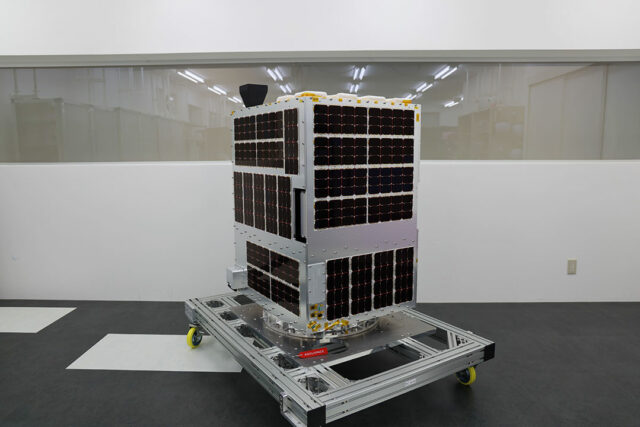
TOKYO — Tokyo-based satellite maker Axelspace plans to list its shares as early as June, two sources said, the latest in a steady stream of domestic space startups tapping the Japanese capital markets amid mixed investor views on the sector’s prospects.

Axelspace’s initial public offering (IPO) is expected to be approved by the Tokyo Stock Exchange later this month, the people who had knowledge of the matter said.

If successful, it would be the fifth such listing of a Japanese spacecraft venture over the last two years.

Japan’s private space industry, estimated at roughly 4 trillion yen ($27.8 billion), has traditionally been dominated by heavy industry conglomerates. Of the more than 100 space startups active, most are loss-making, and the handful that are listed have a mixed record in delivering stock market returns to investors.

What is, however, providing a tailwind to the private space ventures is the support from the Japanese government, which is in the midst of its biggest postwar defence buildup in the wake of China’s growing technological and military clout. Axelspace and other prospective IPO candidates in the sector are banking on that support to draw in investors.

Axelspace’s valuation in the IPO could be comparable to those of radar satellite makers Synspective and iQPS, one of the sources said. Synspective is valued at 121 billion yen, and iQPS at 72.5 billion yen.

Axelspace had considered going public but faced delays attributed to satellite malfunctions and applications for government subsidies, and may push it back again, the person said, adding SMBC Nikko Securities is the lead manager.

Axelspace did not respond to requests for comment on its listing plans when contacted by Reuters.

SMBC Nikko Securities and Tokyo Stock Exchange declined to comment.

Founded by University of Tokyo aerospace researcher Yuya Nakamura in 2008, Axelspace has launched five optical Earth observation satellites and built some small satellites for external clients including Weathernews. It plans seven more satellite launches next year to expand its in-house observation data business.

The company, in which trading house Mitsui & Co. and airliner ANA have invested, previously completed a Series D round in 2023. With that, it raised a cumulative 14.3 billion yen, according to its website.

The rise of space startups in Japan is “not a fleeting boom” but a result of decade-long government support through space law legislation and funding, said Masayasu Ishida, chief executive of commercial space conference organizer Spacetide.

The government, in the past two years, has set aside 600 billion yen for its newly established Space Strategy Fund to subsidize private rockets, satellites and other ventures, targeting to double the industry’s size to 8 trillion yen by the early 2030s.

Analysts said space IPOs in Japan have been relatively active compared even to the United States, where new public offerings have been slow after the SPAC listing boom in 2020-2021.

Japanese startups may have fewer fundraising alternatives. In the US, private funding rounds and M&A deals are more common for space ventures, including Elon Musk’s unlisted industry leader SpaceX.

Amid limited fundraising options in Japan, government aid is “quite effective” for nascent space ventures, said Motoyuki Arai, chief executive of Synspective. A listing enabled more financing options, including debt and potentially additional public offerings, he said. 

Going public could also increase recruitment and tie-up opportunities, said Norihide Kanehara, IPO project lead at Space BD, an eighth-year startup and Asia’s largest payload service provider for SpaceX launches. Mr. Kanehara, however, said Space BD plans a listing only “in a few years,” given the current murky market environment especially for Japanese small-cap firms.

While government support for private space ventures has energized these startups’ fundraising, investors are scrutinizing their growth potential.

“Japanese investors are becoming increasingly rigorous about feasibility,” KPMG Consulting ssociate partner Susumu Miyahara said, citing clients’ due diligence requests on how much money space ventures could make.

Shares of Synspective and iQPS are up roughly 50% and 75%, respectively, since their listings, but on-orbit servicing provider Astroscale is down about 40% since it started trading and ispace only recovered recently to its debut price ahead of a second moon landing attempt next month.

Few in the industry have achieved sizeable sales volumes or have a clear path to profitability, said Masahiro Honda, senior corporate analyst at Daiwa Securities’ private capital unit, adding that he did not see a rush of space sector IPOs in the near future.

“A second wave of space IPOs in Japan might take a while to emerge,” he said. — Reuters

Stars strive to dispel tariff gloom at Cannes Film Festival

CANNES, FRANCE — Movie legends from Tom Cruise to Denzel Washington will gather in Cannes this week for the 78th incarnation of its film festival, as the industry tries to shake off worries over dwindling audiences and threatened US tariffs.

Mr. Cruise will be launching what is touted as the last in his Mission: Impossible franchise and scores of others will be hoping to follow the path that last year’s top prize winner Anora took to Oscar glory.

Alongside them, Robert De Niro will be getting a lifetime achievement award, and star actors Scarlett Johansson, Kristen Stewart, and Harris Dickinson will all be trying their hands as directors with films competing in the smaller categories.

Just a week ago, US President Donald J. Trump shook the global film industry by announcing a 100% tariff on movies produced outside the country — a statement that left many studio executives alarmed and baffled about when such levies might be applied or how they might come into force.

In Cannes, those worries have dominated backroom conversations, but made no dent on the frontline announcements.

“Nobody wants to be talking about tariffs and Trump here,” said Scott Roxborough, European bureau chief for The Hollywood Reporter. “In the industry, everybody’s going to be talking about it.”

OSCAR GLORY
The festival kicks off on Tuesday evening. The decisions of its jury — chaired by France’s Juliette Binoche with Monster’s Ball star Halle Berry with her on the panel — will be closely watched.

Anora, the winner of Cannes’ top prize the Palme d’Or in 2024, went on to take home five Oscars. Cannes’ top film in 2023, Anatomy of a Fall, later won one Academy Award. Its pick in 2019, Parasite, memorably became the first non-English-language film to win the best picture Oscar.

This year, US director Wes Anderson will be launching his new movie The Phoenician Scheme, which will be competing against independent films including the likes of Joachim Trier’s Sentimental Value and Julia Ducournau’s Alpha.

Films screening outside the competition include the new Mission: Impossible – The Final Reckoning, as well as Spike Lee’s Highest 2 Lowest, starring Denzel Washington.

Hollywood’s travails might not be center stage, but world politics has made it into the program.

Three films about the war in Ukraine will be shown as part of a “Ukraine Day” event.

All screenings are sold out for Put Your Soul On Your Hand And Walk, which follows 25-year-old Palestinian photojournalist Fatma Hassona, who was killed in an Israeli airstrike in Gaza in April, one day after it was announced that the documentary had been chosen for the festival’s ACID program. — Reuters

PBCom Q1 profit falls as operating expenses increase

BW FILE PHOTO

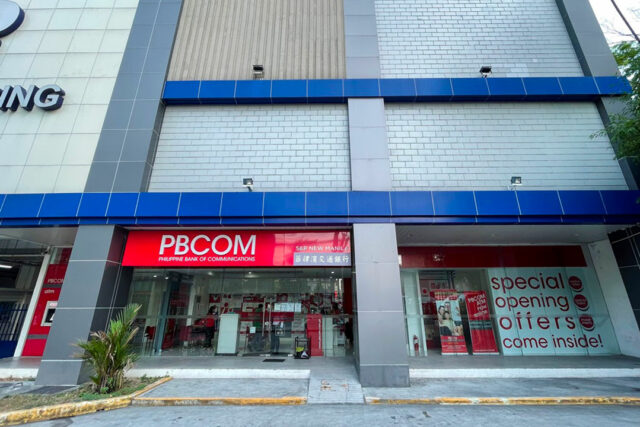
PHILIPPINE BANK of Communications’ (PBCom) net income fell 4.7% to P472.94 million in the first quarter from a year earlier due to higher operating expenses and declining trading performance.

“This is attributable to P123.6-million higher operating expense and the P106.4-million decline in the trading performance, partially offset by the P187-million improvement in net interest income,” it said in a stock exchange filing on Tuesday.

This translated to a return on average equity of 9.68% and a return on average assets of 1.19%, up from last year’s 11.13% and 1.36%.

PBCom’s net interest income rose 14.7% to 1.46 billion from a year earlier.

“To fund this growth, deposit volume increased, and the group issued bonds payable at the latter part of 2024, which resulted interest expense that was higher by P66 million,” it said.

Operating expenses rose 13.18% to P1.06 billion, mainly driven by provisions for impairment losses, volume-driven and manpower costs and depreciation and amortization, which all increased. Operating income stood rose 7.9% to P1.73 billion

Net interest margin inched up to 4.05% at end-March from 4.02% at end-2024 due to lower cost of funds.

Total loans and receivables dropped 1.8% to P99.48 billion from end-2024. The group’s gross bad loan ratio was 3.59%, 0.93 point  higher than the ratio at the end of 2024, PBCom said.

On the funding side, deposits fell 5.34% year on year to P8.43 billion, while assets rose 2.7% to P161.11 billion from end-December. Total equity rose 3.13% to P19.84 billion from a quarter earlier.

The bank’s capital adequacy ratio fell to 15.75% from 16.84%, “mainly due to higher total risk weighted assets, offset by higher total qualifying capital.” This was still above the 10% minimum threshold.

PBCom’s liquidity ratio rose to 22.91% from 18.54% at end-December.

The bank had 90 regular branches, four branch-lite units and 166 automated teller machines as of March 31. — Aubrey Rose A. Inosante

How the Philippines’ illicit trade environment compares with its peers

The Philippines placed 64th out of 87 countries and territories in the 2025 edition of the Illicit Trade Environment Index, developed by the Economist Impact. The index assesses the abilities of each country and territory to combat illicit trade but instead of the scale of illegal activity, it looks at four categories — governance and cooperation; surveillance and enforcement; customs and border management; and economic management and regulatory environment — to evaluate their capacity to disrupt illicit markets. On a scale of 0–100, where 100 means best performance, the Philippines scored 55.4, below the Asia and the Pacific average score of 59.5.

How the Philippines’ illicit trade environment compares with its peers