Home Blog Page 1393

PHL growth forecast maintained at 6.1% by ESCAP; chip boom seen continuing

PHILIPPINE STAR/WALTER BOLLOZOS

THE United Nations Economic and Social Commission for Asia and the Pacific (ESCAP) has maintained its Philippine economic growth forecast for this year, citing Southeast Asia’s sustained electronics boom.

Philippine gross domestic product (GDP) is expected to expand by 6.1% this year, ESCAP said in its Economic and Social Survey of Asia and the Pacific 2025 report, unchanged from its April report last year.

For 2026, the Philippines is expected to grow 6.3%, ESCAP said.

Both projections are within the government’s official 6%-8% target band for the 2025-2028 period.

ESCAP expects the Philippines to be the second-fastest growing economy in Southeast Asia this year, behind Vietnam (6.5%).

In 2026, the Philippines is expected to share the top spot for growth with Vietnam (6.3%).

Last year, growth was a weaker-than-expected 5.7%, as revised, exceeding the 5.5% in 2023. It fell short of the government’s revised 6-6.5% target.

“The (report) highlights how domestic and external pressures, including relatively high interest rates, persisting sovereign debt risks and rising trade tensions and fragmentation, are testing the economic resilience of the region,” Under-Secretary-General of the United Nations and ESCAP Executive Secretary Armida Salsiah Alisjahbana said in the report. 

ESCAP also maintained its 4.7% projection for the region in 2025, and 4.6% next year.

“The strong economic performance of Southeast Asia is expected to continue, benefiting from ongoing manufacturing value chain diversification, a boom in global demand for electronics and semiconductors, and robust domestic consumption,” ESCAP said. 

For the Asia-Pacific, ESCAP raised its forecast to 4.5% from 4.4% previously. It also expects the region to grow by 4.4% in 2026. 

“The macroeconomic outlook for 2025 and 2026 is cautiously optimistic. The region’s GDP growth is likely to remain largely stable at lower inflation rates despite growing external pressures and continuing internal structural challenges,” it said.

However, this projection did not account for the sweeping tariffs imposed by US President Donald J. Trump on April 2.

Philippine goods will be charged a 17% tariff on entering the US.

ASEAN economies were assigned some of the highest tariffs, which will take effect on April 9. Cambodia is facing a 49% tariff, followed by Laos (48%), Vietnam (46%), Myanmar (44%), Thailand (36%), Indonesia (32%), Malaysia (24%), and Brunei (24%).

“These are new projections which were completed a month ago, or more than that in fact, so the latest developments are not reflected here, simply because we simply don’t have the data at the moment to try and quantify the impact of latest developments, which are literally almost less than a week old only,” according to Hamza Malik, director of ESCAP’s Macroeconomic Policy and Financing for the Development Division.

In the report, ESCAP noted three risks to its baseline projections, including the intensification of the tariff hikes in the US and retaliation by other economies.

Other risks include the inflationary impact of trade policy shifts as well as rising economic uncertainty that “could keep global interest rates at a high level for a longer-than-expected period.”

In the same report, ESCAP also lowered its inflation forecast for the Philippines in 2025 to 3.3% from 3.8%. Its 2026 projection is 3.5%. — Aubrey Rose A. Inosante

Miners see no direct impact from US tariffs, more worried trade war will lead to slowdown

NICKELASIA.COM

GLOBAL DEMAND for minerals may slow if the US tariff regime leads to economic slowdowns, the Chamber of Mines of the Philippines (CoMP) said.

The 17% tariff imposed on Philippine exports to the US is “unlikely to have a direct significant impact” on the mining industry, which primarily exports mineral ore to Asian customers, CoMP Executive Director Ronald S. Recidoro said via Viber.

“However, indirect effects could occur if global trade tensions lead to economic slowdowns, affecting demand for minerals and metals,” he added.

A decline in mineral exports will in turn affect government revenue, he added.

Several minerals have been exempted from President Donald J. Trump’s fresh tariffs, including copper, zinc, rare earths, germanium, antimony, and uranium, according to S&P Global.

It said lithium, cobalt, tungsten, platinum group metals, and some forms of ferromanganese and coal are also exempt.

“The exemptions cover many refined and raw forms of the materials,” it said.

According to a White House fact sheet, reciprocal tariffs will not apply to semiconductors, pharmaceuticals, gold, and “certain minerals that are not available in the US.”

The Philippines is the biggest exporter of nickel ore concentrate, accounting for more than one-fourth of the global supply. Over 98% of Philippine exports go to China, with 1% shipped to Japan.

China has retaliated by placing several critical minerals on an export control list.

“We don’t see any impact at the moment, but it might at some point in the future if the commodity prices generally drop as a result of the tariffs,” Philippine Nickel Industry Association President Dante R. Bravo said in an e-mail.

Mr. Toledo of CoMP said for mining contractors, the impact may be minimal unless they rely heavily on imported equipment or materials subject to tariffs. 

“Foreign corporations operating in the Philippines might face challenges if global economic conditions deteriorate, but the Philippine mining sector is not a primary target of Mr. Trump’s tariffs,” he added. — Kyle Aristophere T. Atienza

Malaysia-accredited halal certifying body expected to start operating in PHL this year

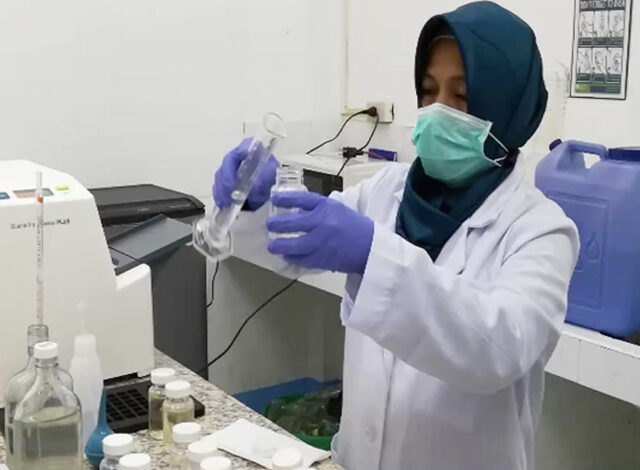
DOST

A HALAL-CERTIFYING organization accredited in Malaysia is expected to start operating in the Philippines this year, the Department of Trade and Industry (DTI) said.

The certifying organization is accredited with Jabatan Kemajuan Islam Malaysia (JAKIM).

“The certifying body will be an add-on to the list of halal certifying bodies and conform to global and international standards,” the DTI said in a statement on Tuesday.

The DTI and JAKIM representatives met on Monday.

“JAKIM, a leading authority in Halal certification, aims to collaborate with the Philippines to align with international standards and open new market opportunities for Filipino products in the global Halal industry,” the DTI said.

During the meeting, Trade Secretary Ma. Cristina A. Roque asked JAKIM to provide assistance in marketing Philippine products and to serve as a consolidator of such products.

“With public and private partnerships, we can expect to ensure the support needed for the halal sector to flourish,” she said.

“We take advantage of the support of President Ferdinand R. Marcos, Jr. for the halal industry. He has three years remaining (in his term), and we should take advantage of the support he is giving. That’s why this is a priority for us,” she added. — Justine Irish D. Tabile

PHL factory output down 2.4%, weakest in 3 months

RIO LECATOMPESSY-UNSPLASH

MANUFACTURING OUTPUT sank to a three-month low in February due to slowing markets and reduced consumer spending, the Philippine Statistics Authority (PSA) reported on Tuesday.

Citing preliminary results from the Monthly Integrated Survey of Selected Industries, the PSA said factory production in February, as measured by the volume of production index (VoPI), declined 2.4% year on year in February, reversing the revised 3.2% from a year earlier and the revised 2.3% reported in January.

The February reading was the weakest since the 4.2% contraction in November.

Month on month, the manufacturing VoPI fell 4.6%, from a reading of 0.7% growth in January. Stripping out seasonal factors, output contracted 3.5%.

In the first two months, factory output declined 0.1%, well behind the year-earlier 1.4% average expansion.

The Philippine S&P Global Manufacturing Purchasing Managers’ Index (PMI) eased further to 51 in February from 52.3 in January, the weakest since the 50.9 reading in March 2024.

PMIs are a gauge of the volume of raw material orders, which will be turned into manufactured goods later. A PMI reading below 50 points to a contraction in future manufacturing activity, while expansions are signaled by PMIs above 50.

Leonardo A. Lanzona, Jr., an economics professor at the Ateneo de Manila, said decreased factory output during February lines up with the slowing markets, contributing to the decline in inflation in the same period.

Headline inflation eased in February to 2.1% from 2.9% in January, the lowest level in five months, driven by a deceleration in food prices.

“As aggregate demand decreased due to low incomes and productivity, the overall level of prices also slowed down,” Mr. Lanzona said via Messenger.

“While unemployment seems to be decreasing, these are all low-quality types of jobs found in the service and informal sectors.”

Mr. Lanzona also said that the Philippines became dependent on imports, particularly food imports, and debt to push consumption.

“The Trump tariff threats constitute now an opportunity to restructure our industries.  We cannot rely anymore the existing global value chains since these will be restructured by US policies.”

US President Donald J. Trump announced baseline tariffs of 10% for all US trading partners last April 2. Starting April 9, Philippine goods will be subject to a 17% tariff.

The average capacity utilization rate was 75.9% in February, above the 74.4% from February 2024, but less than the revised January reading of 76%

Seventeen out of 22 industry categories posted average capacity utilization of at least 70%. — Pierce Oel A. Montalvo

PSALM disbursements to RE developers top P455M

THE Power Sector Assets and Liabilities Management Corp. (PSALM) said it disbursed P455.45 million in cash incentives to renewable energy (RE) developers operating in remote areas last year.

PSALM, as the administrator of the Universal Charge for Missionary Electrification (UCME), allots a portion of the collections to the Missionary Electrification-Renewable Energy Developers’ Cash Incentive (REDCI).

Since the Energy Regulatory Commission (ERC) set the rules on availing of the incentive in 2014, PSALM said it disbursed P1.51 billion to six qualified RE developers, PSALM said in a statement on Tuesday.

Under the Renewable Energy Act of 2008, RE developers are entitled to cash generation-based incentive per kilowatt-hour (kWh) generated, equivalent to 50% of the UC for power needed to service areas, to be chargeable against the UCME.

The UC ME-REDCI is billed and collected from all electricity-end users, which are intended to incentivize RE developers serving renewable energy solutions to missionary areas and contribute to rural electrification.

As of February, the UC ME-REDCI rate increased to P0.0044 per kWh from P0.0017 per kWh approved in 2014.

At the time the rate was approved, there were only three RE developers availing of the cash incentive.

“PSALM’s disbursement of cash incentives has had a significant impact on these RE developers, helping them cover operational expenses and ensure the financial viability of their projects,” the firm said.

Citing data provided by RE developers, PSALM said that the cash incentives have benefited approximately 325,000 households across the Philippines. — Sheldeen Joy Talavera

Trade center association sees expanded trade with France

REUTERS

THE World Trade Centers Association (WTCA) said it is expecting bilateral trade and investment to grow between the Philippines and France.

“(WTCA) sees opportunities for growing trade and investments between the Philippines and France through deeper economic cooperation, particularly with Mediterranean port cities such as Marseille,” it said in a statement on Tuesday.

WTCA Vice-President for Asia-Pacific Scott Wang said that the 4th Political Consultations last month between the two countries are “a step in the right direction.”

During the talks, “both countries committed to strengthening bilateral relations across several key sectors, such as trade and investment, energy, health, climate change, science and technology, defense, and people-to-people exchanges,” he added.

According to the WTCA, the two countries noted the opportunities presented by the resumption of direct flights between Manila and Paris.

“France also reaffirmed its support for the early conclusion of negotiations toward a comprehensive Philippines-European Union Free Trade Agreement,” it added.

Philippines-France trade grew to $1.8 billion in 2022.

“In terms of Philippine exports to France, the Mediterranean region is a strategic gateway for Philippine investors looking to strengthen their presence and expand trading opportunities in the Europe, Middle East, and Africa markets,” he said.

He added that the ongoing WTCA Global Business Forum taking place in Marseille serves as a platform for countries such as the Philippines to capitalize on trade opportunities while leveraging new technologies in port operations.

“Seaport expansion remains a focus for the Philippines, which is strategically positioned along key Asia-Pacific shipping routes, and technological shifts are needed to streamline trade flows into the region,” Mr. Wang said. — Justine Irish D. Tabile

PHL, Japan explore ways to deepen security ties, eye joint military drills

BRP MIGUEL MALVAR — EN.WIKIPEDIA.ORG

By Kenneth Christiane L. Basilio, Reporter

THE PHILIPPINES and Japan’s top military officials met on Monday to discuss defense cooperation and efforts to keep regional peace, including potential joint military drills.

Armed Forces of the Philippines (AFP) Vice Chief of Staff Jimmy D. Larida met with Japan Self-Defense Force Vice-Chief of Staff Matsunaga Koji during his courtesy visit to Camp Aguinaldo, the military’s headquarters in the Philippine capital, on April 7, according to an AFP statement late Monday.

Their meeting centered on ways to advance their security partnership, including future joint military exercises between Philippine and Japanese forces to improve interoperability and combat readiness.

“During the meeting, both leaders expressed appreciation for the significant progress in bilateral military ties,” the Philippine military said.

The Philippines is forging deeper security ties with western countries and regional allies like Japan and Australia amid tensions with China over disputed features in the South China Sea. Japan has been at odds with China over the uninhabited Senkaku Islands.

Philippine forces have repeatedly sparred with Chinese ships and aircraft in the South China Sea over competing claims on Spratly Islands and Scarborough Shoal, among other sea features. Beijing asserts sovereignty over almost the entire sea based on a 1940s nine-dash line map that overlaps with the maritime zones of the Philippines, Brunei, Malaysia, Taiwan and Vietnam.

A United Nations-backed arbitration court voided China’s expansive claim in 2016 for being illegal.

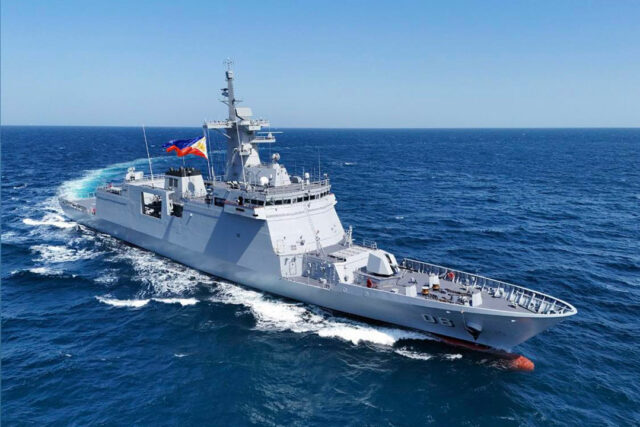
BRP MIGUEL MALVAR
Also on Tuesday, Defense Secretary Gilberto C. Teodoro, Jr. led the arrival ceremony for the Philippine Navy’s newest corvette from South Korea at the Philippine Naval Operating Base in Subic, Zambales province.

The 118-meter warship is armed with missiles and torpedo systems and is fitted with sonar, radar and electronic warfare capabilities. BRP Miguel Malvar, the namesake of its ship class, left South Korea in late March.

BRP Miguel Malvar is here today not only to serve as a deterrent and protector of our waters, but also as an important component in joint and combined operations as we work alongside allies and uphold the norms of international law,” Mr. Teodoro said in a statement.

The Philippine government in 2021 contracted Hyundai Heavy Industries Co. Ltd. to build two Miguel Malvar-class corvettes worth a total of P28 billion. It also awarded a P32-billion contract to the South Korean company in 2022 to build six offshore patrol vessels, set to be delivered by 2028.

Manila has turned to Seoul as its trusted supplier of warships. It bought two guided missile frigates worth P16 billion from the same South Korean shipbuilder back in 2016.

Mr. Teodoro said the arrival of BRP Miguel Malvar would help the Philippines develop its so-called blue economy, making the most out of its rich marine resources.

The Philippines’ exclusive economic zone is ecologically rich and a vital source of food for Filipinos, according to a 2019 report by think-tank Stratbase-ADR Institute.

MORE MILITARY HARDWARE
Meanwhile, Philippine Navy Rear Admiral Roy Vincent T. Trinidad said they are looking at boosting maritime domain awareness capabilities by pushing the purchase of land-based, air-based, ship-based and space-based sensors.

“This will support all comprehensive archipelagic defense operations,” he told a news briefing.

The military might buy more modern equipment to help elevate its capabilities against the backdrop of China’s military might in the region, eyeing additional missile systems from India and at least two submarines, AFP Chief of Staff Romeo S. Brawner, Jr. said in February.

Also on Tuesday, the presidential palace said President Ferdinand R. Marcos, Jr. is concerned about the near-collision between vessels of the Chinese Coast Guard and Philippine Coast Guard near Zambales province at the weekend.

“Of course, the President is concerned about these incidents,” Presidential Communications Office Undersecretary Clarissa A. Castro told a news briefing. “However, we continue to maintain a level of professionalism combined with a fearless spirit of patriotism.”

The Chinese Embassy in Manila did not immediately reply to a Viber message seeking comment.

In a statement on April 5, the Philippine Coast Guard (PCG) said it had issued a radio challenge to the Chinese ship to stop it from approaching the coast of Palauig, Zambales.

PCG spokesman Commodore Jay Tristan Tarriela told a news briefing on Monday that the presence of the Chinese vessel showed Beijing’s strategy of trying to normalize its presence in the South China Sea.

The incident happened on Sunday after the 44-meter BRP Cabra nearly collided with the 99-meter Chinese Coast Guard vessel 3302.

“Through the seamanship skills of the Philippine Coast Guard sailors, we were able to prevent such collision from happening,” Mr. Tarriela said.

At a House of Representatives hearing on Tuesday, Mr. Tarriela said they have seen an uptick in disinformation campaigns targeting the country’s claims in the South China Sea.

The PCG has compiled a report covering the past two years and came up with a three-tiered framework of how disinformation against the Philippines’ South China Sea claim spread, he told congressmen.

“We have seen a high number of fake news, disinformation and misinformation when it comes to the West Philippine Sea,” he said, referring to areas of the South China Sea within the Philippines’ exclusive economic zone.

The House launched an investigation in January into online disinformation campaigns, with lawmakers proposing measures to curb their spread, including the creation of a social media regulatory body.

China and the Philippines have been at loggerheads over disputed features in the South China Sea, with Manila accusing China’s coast guard of aggression and Beijing furious over what it calls repeated provocations and incursions.

More than $3 trillion worth of trade passes yearly through the South China Sea, which China claims almost in its entirety. A United Nations-backed tribunal in 2016 voided its claim for being illegal.

The Philippines is in the third phase of its modernization program called Horizons. It has earmarked $35 billion for the military buildup in the next decade as it seeks to counter China’s military might in the region. — with John Victor D. Ordoñez

Australia donates P34M worth of drones to PHL

PHILIPPINE Coast Guard Commandant Admiral Ronnie Gil L. Gavan and Australian Ambassador Hae Kyong Yu led the turnover of 20 drones from the Australian government in Mariveles, Bataan on April 8, 2025. — PHILIPPINE STAR/RYAN BALDEMOR

THE AUSTRALIAN government on Tuesday handed over P34 million worth of drones to the Philippine Coast Guard (PCG), equipment that could help bolster the Philippines’ maritime awareness capabilities amid growing tensions with China.

Canberra’s coast guard assistance package comprises 20 aerial drones and training for 30 PCG personnel to operate them, Australia’s Ambassador to the Philippines Hae Kyong Yu said during a livestreamed turnover ceremony in Bataan province in northern Philippines.

The drones consist of a mix of short, medium and long-range models.

Ms. Yu said the drones adhere to Australia’s security framework, ensuring minimal “foreign influence risk” in the drones provided to the Philippines.

“Australia is committed to working with our partners to enhance maritime security, uphold international law and manage marine resources,” she told PCG officials and personnel.

“This package will bolster PCG’s maritime domain awareness capabilities and assist in meeting [its] operational demands,” she added.

The PCG serves as the Philippines’ primary agency for asserting its sovereignty in the South China Sea, where it has repeatedly clashed with China over disputed maritime features.

China claims more than 80% of the South China Sea based on a 1940s map, which a United Nations-backed arbitration court voided in 2016 for being illegal.

Manila has been at the forefront of efforts to contest Beijing’s expansive sea claim, organizing joint sails into the South China Sea with western countries while broadening its security alliances with regional allies like Australia and Japan.

“This support further boosts our ability to pursue more precisely, appropriately and sustainably our complex rights and obligations from being both a maritime and archipelagic country,” PCG Commandant Ronnie Gil L. Gavan said at the event. — Kenneth Christiane L. Basilio

Kanlaon Volcano eruption resumes, spews ash column

PHILVOCS/X

By Adrian H. Halili, Reporter

KANLAON VOLCANO in central Philippines erupted on Tuesday morning, spewing an ash column reaching about 4,000 meters high, according to the local seismology agency.

In a bulletin, the Philippine Institute of Volcanology and Seismology (Phivolcs) said alert level 3 remained in effect over Mount Kanlaon, where it has been since December 2024 after an earlier explosive event.

Level 3, on a scale of 5, means there is an increased risk of lava flows and the potential for a hazardous eruption within weeks.

The “moderately explosive eruption” occurred at the summit of Kanlaon Volcano at 5:51 a.m., lasting 56 minutes.

“Pyroclastic density currents descended the slopes on the general southern edifice based on IP and thermal camera monitors,” PHIVOLCS said.

Mount Kanlaon, an active volcano straddling the Southeast Asian country’s central provinces of Negros Occidental and Negros Oriental, is one of two dozen active volcanoes in the Philippines.

Phivolcs Director Teresito Bacolcol told DWPM radio there is a possibility the alert level could either be raised or lowered in the coming days, depending on how quickly magma rises to the surface.

A faster ascent could trigger a more intense eruption, prompting an escalation to alert level 4, while a slowdown or pause in magma movement could lead to a downgrade to alert level 2, he said.

The agency called on residents within a six-kilometer radius of the volcano to immediately evacuate.

It also warned of possible hazards such as a sudden explosive eruption, lava flow, ash fall, rockfall, lahar flow during heavy rains and pyroclastic flow.

In separate advisory, the Civil Aviation Authority of the Philippines (CAAP) issued a notice to airmen prohibiting flights near Kanlaon.

CAAP said the notice restricts aircraft from operating within a vertical limit from the surface up to 22,000 feet. It will remain in effect from April 8 at 8:20 a.m. until April 9 at 5:51 a.m.

“Flight operators are advised to avoid flying near the volcano due to the potential hazards posed by volcanic ash,” it added.

In a separate Facebook post, the Office of Civil Defense called on local governments in Panay, Guimaras and coastal areas facing Negros Island to remain on high alert for potential ash fall.

“Please prepare face masks for immediate distribution to affected communities,” it said. “Residents are also advised to stay indoors as much as possible and take necessary precautions to protect themselves from ash inhalation.”

President Ferdinand R. Marcos, Jr. had ordered the National Government to continue providing aid to residents affected by the eruption, according to the Presidential Communications Office.

Palace spokesperson Claire A. Castro said the Department of Social Welfare and Development would closely coordinate with affected local government units.

“Field offices in Western and Central Visayas are closely coordinating with affected local government units and are continuously providing provisions such as family food packs and nonfood items to our affected countrymen,” she told a news briefing.

She said the government is studying whether additional funding for affected residents is needed. “If necessary, this will be carefully assessed, and assistance will be provided immediately.”

The Philippines lies in the so-called Pacific Ring of Fire, a belt of volcanoes around the Pacific Ocean where most of the world’s earthquakes strike. It also lies along the typhoon belt in the Pacific and experiences about 20 storms each year. — with Reuters

SC asked to hold hearings on habeas petition for Duterte release

PHILSTAR FILE PHOTO

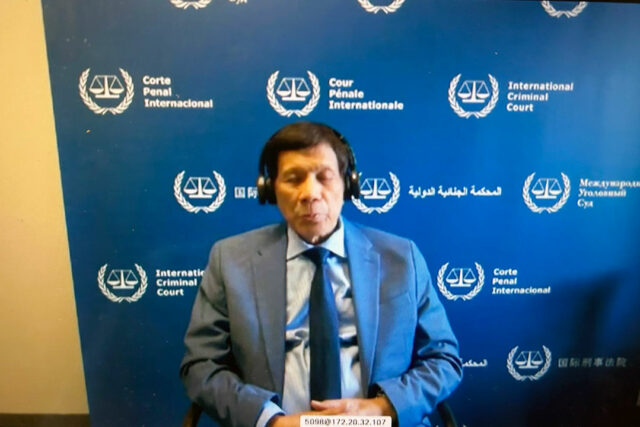
THE three children of former Philippine President Rodrigo R. Duterte asked the Supreme Court (SC) to set oral arguments on the consolidated petitions for habeas corpus, seeking the release of the patriarch currently detained at The Hague, in the Netherlands.

In a 14-page petition filed by Veronica A. Duterte through her lawyer, former Presidential Spokesman Salvador S. Panelo, the Duterte siblings said there are “compelling grounds” for the SC to conduct oral arguments, citing “exigent constitutional issues.”

This includes questions on whether Mr. Duterte’s constitutional rights were violated after he was arrested without a warrant issued by a Philippine court, as provided for by the 1987 Constitution.

The petition also noted the separation of powers may have been violated upon recognizing the jurisdiction of the International Criminal Court (ICC).

According to the youngest Duterte, oral arguments would enable the SC to directly question the parties on these constitutional questions, and “on the balance between the Executive’s discretion in foreign affairs and the Judiciary’s role in safeguarding constitutional rights and checks and balances.”

She said this could set a precedent for future cases, involving “individual liberties, the jurisdiction of foreign tribunals, and international cooperation.”

Following Mr. Duterte’s arrest on March 11, his children filed separate petitions for habeas corpus before the top court, challenging its legality and questioning ICC’s jurisdiction. They sought his immediate release, asserting his arrest violated constitutional rights and due process.

Moreover, Ms. Duterte questioned whether the Philippine government could bypass the SC’s authority to issue a writ of habeas corpus by merely relocating an individual to another country.

“Oral arguments would allow this Honorable Court to probe the jurisdictional limits of a writ of habeas corpus and the enforceability of its writ on respondents within this Honorable Court’s jurisdiction, even when their actions extend beyond our national borders,” she added.

The government earlier claimed the petitions were moot as it can no longer produce Mr. Duterte’s body because he is already in the Netherlands.

Ms. Duterte again cited ICC’s jurisdiction, challenging the legality of the Philippine President’s move to recognize or confer jurisdiction to the ICC, adding the oral arguments could address whether this could be tantamount to making the Rome statute effective without Senate concurrence or not.

Mr. Duterte was arrested at the request of the ICC for alleged crimes against humanity, linked to his controversial anti-drug campaign.

Government data showed the deadly drug war resulted in over 6,000 deaths, but human rights groups estimate the toll could be as high as 30,000.

The ICC’s warrant asserts that there are reasonable grounds to believe Mr. Duterte is responsible for murder as a crime against humanity, committed between Nov. 1, 2011, and March 16, 2019. This period encompasses his tenure as both Davao City mayor and President of the Philippines.

Following his arrest, Mr. Duterte was transferred to The Hague, where he remains in ICC custody awaiting trial.

The tough-talking leader has consistently denied the allegations, maintaining that his actions were aimed at protecting Filipinos and upholding national sovereignty.

He has questioned the ICC’s jurisdiction, citing the Philippines’ withdrawal from the Rome Statute in 2019, under his administration.

Meanwhile, the SC on Tuesday directed lawyer Raul Lambino to show cause within ten days after he falsely claimed the SC issued a temporary restraining order against the arrest of Mr. Duterte.

The SC noted Mr. Lambino’s false claim caused “public confusion and misled the people about the SC’s actions,” according to a press briefer.

EXPERTS NEEDED
Also on Tuesday, the Palace urged Senator Maria “Imee” Imelda R. Marcos to seek the help of more international law experts amidst the Senate’s continuing probe into the legality of the arrest of Mr. Duterte after the lawmaker questioned details provided by Cabinet members on the incident.

“It would be better — this is just a suggestion since it was asked, not an order — to invite more international law experts to shed light on the matter,” Presidential Communications Office Undersecretary Clarissa A. Castro told a news briefing.

“Perhaps, through the opinions of other international law experts and lawyers, she may not need other Cabinet members to draft laws.”

Senate President Francis G. Escudero on Sunday said officials and Cabinet officials would be attending the third Senate hearing on the arrest after some of them opted to skip the previous hearing.

Executive Secretary Lucas P. Bersamin earlier invoked executive privilege for the officials invited to the probe.

Reelectionist Senator Marcos has earlier withdrawn from administration-backed Alyansa Para sa Bagong Pilipinas, citing differences in the administration’s actions regarding the arrest of the tough-talking leader.

Ms. Castro had denied officials hid information about Mr. Duterte’s arrest before the Senate probe, adding that officials had providing the “necessary information.” — Chloe Mari A. Hufana and John Victor D. Ordoñez

DoTr told to tighten security ahead of Holy Week

PHILIPPINE STAR/EDD GUMBAN

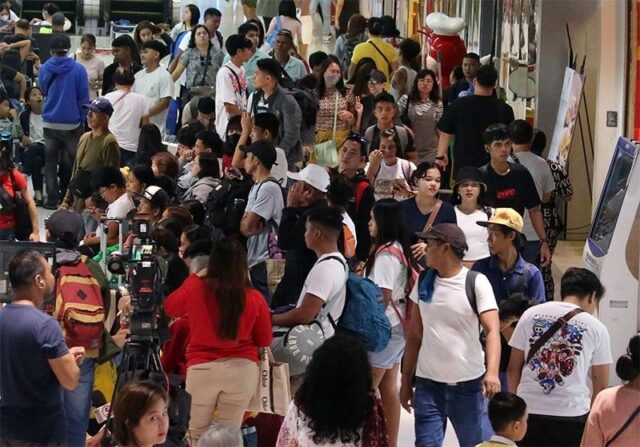
PHILIPPINE President Ferdinand R. Marcos, Jr. on Tuesday ordered the Department of Transportation (DoTr) and its attached agencies to carry out strict inspection of terminals, ports, and airports to cut delays in travel during the Holy Week break next week, according to the presidential palace.

“The President has ordered not only the DoTr but also its attached agencies to ensure the safety and convenience of all passengers traveling to their hometowns or going on vacations,” Presidential Communications Office (PCO) Undersecretary Clarissa A. Castro told a news briefing.

“There will also be strict inspections at terminals, ports, and airports to prevent delays in operations before Holy Week, as there may be more delays due to increased travel. The President is closely monitoring this through the concerned agencies.”

The President also ordered law enforcement agencies to tighten watch on crime during the holiday break, she added.

The Philippine National Police (PNP) said in a statement on April 3 that more than 40,000 cops will be deployed nationwide to maintain peace and order during Holy Week from April 13 to 20.

Police regional offices were also ordered to conduct regular inspections and to boost police presence in crowded places such as terminals, ports and transport hubs, the PNP said.

“Even during Holy Week or when most people are on vacation,” the palace official said. “The government should not take a break. Monitoring and assistance to our fellow Filipinos should continue.”

In a separate statement on Tuesday, the Philippine Ports Authority (PPA) said it is expecting to see increased passenger volume at the country’s seaports to 1.73 million for the Holy Week.

The PPA said its projected passenger volume for April 14-20 is 3.5% higher to 1.73 million from the 1.67 million passengers logged in the same period last year.

The port regulator said that for the first three weeks of March, it had already logged a passenger count of 3.03 million or an average of 1.01 million passengers per week.

For the Holy Week, PPA said it anticipated to reach near pre-pandemic numbers with an estimated 1.73 million travelers.

“We are prepared for the increased number of passengers this Holy Week 2025, especially as the Lenten Season coincides with summer, most of our local travelers are really taking advantage of this long days of day-off and for some tourists it is also a great time to explore our islands via sea travel”, PPA General Manager Jay Daniel R. Santiago said in a statement.

“PPA anticipates a substantial increase in passenger volume this year, compared to the same period last year, as more Filipinos take advantage of sea travel to visit their provinces, pilgrimage sites, and vacation destinations.”

PPA said the DoTr is preparing for the expected surge with the deployment of additional personnel.  For this year, PPA has set its 2025 passenger volume target at 85.41 million, exceeding by 9.5% the target set in 2024. — John Victor D. Ordoñez and Ashley Erika O. Jose

Congress asked about law vs dynasty

PHILIPPINE STAR/KJ ROSALES

THE Supreme Court (SC) on Tuesday ordered both houses of Congress to comment on a petition seeking the enactment of an anti-political dynasty law.

The SC en banc gave the Senate and the House of Representatives a non-extendible period of ten days from notice to comment on the petition filed by Kapatiran Party (Alliance for the Common Good) and others.

It consolidated the petition filed by 1Sambayan Coalition and others with the earlier petitions filed by Kapatiran Party and Wilfredo Trinidad on the same issue.

The Kapatiran Party argued that the failure of Congress to pass an enabling law for over three decades constitutes a grave abuse of discretion.

Citing Article II, Section 26 of the 1987 Constitution, the petition emphasizes that the provision is not merely aspirational but imposes a clear directive on the legislature to act.

The petitioners asked the SC to order both chambers of Congress to enact the necessary law and to recognize that the legislature’s long-standing inaction has effectively nullified a constitutional safeguard intended to promote equal access to public service and prevent the monopolization of political power.

Following this, the 1Sambayan Coalition filed a similar petition. Their plea aligns with Kapatiran’s in asserting that the continued failure of lawmakers to define and prohibit political dynasties represents a constitutional violation.

1Sambayan also highlighted the detrimental impact of dynastic politics on governance, accountability, and social mobility in the country. Their petition strengthens the argument for judicial intervention, stressing that the legislative gridlock can no longer be tolerated given its far-reaching consequences on democratic processes. — Chloe Mari A. Hufana