Home Blog Page 1142

P3.4-M drugs seized in Cotabato City

COTABATO CITY — Policemen confiscated P3.4 million worth of crystal meth (shabu) from a 38-year-old mother and her adolescent daughter who both fell in a sting in Barangay Poblacion 5 in this city on Friday.

The mother was immediately locked in police detention while her 16-year-old daughter is now under the joint custody of the Police Regional Office-Bangsamoro Autonomous Region (PRO-BAR) and the social welfare office of the Cotabato City local government.

Police Brig. Gen. Jaysen C. De Guzman, director of PRO-BAR, told reporters on Sunday morning that the successful entrapment operation was premised on reports by traditional Moro leaders and local officials, among them Mayor Bruce D. Matabalao, chairperson of the multi-sector Cotabato City Peace and Order Council, about the large-scale peddling of shabu and marijuana in Cotabato City and in nearby towns in Maguindanao del Norte.

Mr. De Guzman said the operation that resulted in the arrest was carried out by the Drug Enforcement Group-Special Operations Unit 15, which is under PRO-BAR’s operational control, and personnel of different units of the Cotabato City Police Office led by their director, Col. Jibin Bongcayao. — John Felix M. Unson

Experts urge prioritization of adolescent healthcare

PHILIPPINE STAR/WALTER BOLLOZOS

by Edg Adrian A. Eva, Reporter

Health experts on Thursday called for heightened prioritization and awareness concerning the healthcare of Filipino adolescents, saying that this age group remains neglected.

During the Uniting Voices for Adolescent Health forum, health experts, educators, and advocates emphasized the need to improve access to essential preventive healthcare for adolescents aged 10 to 19.

This includes expanding access to vaccines, mental health services, and teenage pregnancy prevention programs, as well as strengthening education on the risks of gateway drugs.

“The main message is to put adolescents at the forefront in terms of investing in their health, training for health personnel, and in programs and additional laws that will provide a safer environment for them,” Dr. Emma A. Llanto, member of society of adolescence medicine of the Philippines inc. told BusinessWorld at the sidelines of the forum.

Adolescents are often deprioritized in healthcare due to the perception that they are generally healthy, Ms. Llanto said, with most preventive care efforts focused on children under one year old.

She also cited the recent Lancet Commission report released in May, which said that low- and middle-income countries like the Philippines invested only around 2.4% of total development assistance for health in adolescents from 2016 to 2021, despite this age group making up 25.2% of the global population.

By investing in adolescents, countries can gain cost-effective and triple-fold benefits, with every dollar yielding a return of US$5.40 to $9.60, the report also said.


FREEPIK

Vaccination

Dr. Sally Jane G. Velasco-Aro, a pediatric infectious disease specialist, told BusinessWorld that the government should also prioritize vaccinating adolescents, as it is both cost- and health-effective in protecting them from some life-threatening diseases.

“We have to bring back the focus not just on children under one year old, but also on these vulnerable populations—(adolescents),” Ms. Aro said.

“Because there are newly introduced vaccines and new diseases that are known to be severe also in this particular age group, the focus now shifts to teens.”

She added that by achieving herd immunity through vaccination of adolescents, vulnerable people in the communities like the elderly will also be protected.

In October 2024, the education and health departments revived the school-based immunization program, dubbed Bakuna Eskwela, where school-aged children are vaccinated against measles, rubella, tetanus, diphtheria, and human papillomavirus (HPV).

The program aims to immunize at least 3.8 million public school students in Grades 1 and 7 and an additional 973,930 female Grade 4 students in selected public schools with HPV.

Experts in the forum also called for comprehensive data on the number of vaccinated adolescents in the Philippines. They likewise urged a multi-sectoral effort, especially from parents, to allow their children to get vaccinated.

Filipino-made engine nozzle developed to help PUV drivers cut fuel costs, emissions

PHILIPPINE STAR/RYAN BALDEMOR
Source: https://www.greentechecobooster.com/

Philippine Public Utility Vehicle (PUV) drivers can now take part in reducing the country’s greenhouse gas emissions while saving on fuel costs by using a patented fuel engine nozzle developed by a local startup. 

The Greentech Ecobooster, a fuel and greenhouse-efficient engine nozzle developed by the startup Greentech Ecobooster PH, can be easily installed in any gasoline-powered engine, including commonly used PUVs like tricycles and jeepneys. 

The nozzle is the brainchild of Rommel Bernardo, an inventor who aims to create innovative solutions to support those at the grassroots level. 

By simply replacing the regular nozzle of a gasoline-powered engine with Greentech Ecobooster, the air and fuel can now mix more evenly and efficiently due to its precisely engineered aerodynamic unidirectional ‘turbulators.’ 

Pagdaan ng gasolina doon, nadidisperse siya—na-atomize siya automatically. And then, pagka-atomize niya, para siyang na-agitate; nagiging very mobile, so ang nangyayari, nagagamit na lahat ng fuel [As the fuel passes through, it gets dispersed and automatically atomized. Once it’s atomized, it’s like it becomes agitated—it turns very mobile, allowing all the fuel to be fully utilized],” Rowena Bernardo, Greentech Ecobooster PH’s systems and communications officer and the inventor’s sister, said in a Zoom interview. 

Greentech’s Ecobooster significantly reduces the release of harmful greenhouse gases, Ms. Bernardo said, resulting in 98% less black smoke (carbon monoxide), 92% fewer fumes (hydrocarbons) due to a more balanced air-to-fuel ratio. 

A 2021 report from the National Emissions Inventory said that vehicle sources like cars, motorcycles, trucks, and buses, were responsible for 56% of the country’s air pollutant emissions 

These vehicle emissions are said to contribute to overall greenhouse gas emissions, which are one of the leading causes of the increasing global temperature. 

The country has committed to reducing its greenhouse gas emissions by 70% by the year 2030. 

Apart from lowering emissions, Greentech Ecobooster can also improve engine fuel economy by nearly 32%, Ms. Bernardo said, potentially increasing PUV drivers’ daily take-home pay by about P50 to P120. 

Raymund Acedera, CEO of Greentech Ecobooster PH, explained that owning the nozzle is a more cost-effective choice, especially with fluctuating fuel prices that disproportionately impact PUV drivers.

“Everybody’s like, ‘Yeah, clean air is important.’ But I can’t feed my family with clean air. So what are my options?,” Mr. Acedera said in a mix of Filipino and English in the same Zoom call.   

Meron silang [they have] motivation to do something because there is something in it for them. And by so doing, we accelerate—or we are now able to do something that has traction,” he added. 

Greentech Ecobooster is priced at only P1,900 as a complete plug-and-play package, with drivers able to recover the cost in just one month, Mr. Acedera said.  

The startup aims to pilot the novel nozzle among 700 customers, mainly tricycle drivers. 

It also eyes partnerships with financial institutions to help public utility groups like the Tricycle Operators and Drivers’ Association (TODA) gain access to the technology through flexible payments.  

Mr. Acedera also said that Greentech Ecobooster PH is considering talks with motorcycle manufacturers so the device can be pre-installed. He also calls for government support for its widespread adoption. 

GreenTech Ecobooster PH has also made it as one of the top three finalists in this year’s Shell LiveWIRE, a flagship enterprise development program of Shell Philippines.Edg Adrian A. Eva

European leaders stress need to protect Ukrainian interests

Army soldier figurines are displayed in front of the Ukrainian and Russian flag colors background in this illustration taken, Feb. 13, 2022. — REUTERS/DADO RUVIC/ILLUSTRATION

KYIV/LONDON — European leaders welcomed on Saturday US President Donald J. Trump’s plans to meet with Russian President Vladimir Putin on ending the war in Ukraine, while stressing the need to keep pressure on Moscow and protect Ukrainian and European security interests.

Mr. Trump plans to meet Mr. Putin in Alaska on Aug. 15, saying the parties, including Ukrainian President Volodymyr Zelensky, were close to a deal that could resolve the three-and-a-half-year conflict.

The US president is open to a trilateral summit with Mr. Putin and Mr. Zelensky, but for now the White House is planning a bilateral meeting as requested by Mr. Putin, a White House official said. Russian and Ukrainian officials could not immediately be reached for comment on the prospects of a trilateral meeting.

Details of the potential deal have yet to be announced, but Mr. Trump said it would involve “some swapping of territories to the betterment of both.” It could require Ukraine to surrender significant parts of its territory, an outcome Mr. Zelensky and his European allies say would only encourage Russian aggression.

US Vice-President JD Vance met British Foreign Secretary David Lammy, and representatives of Ukraine and European allies on Saturday at Chevening House, a country mansion southeast of London, to discuss Mr. Trump’s push for peace.

A joint statement from the French, Italian, German, Polish, British and Finnish leaders and the President of the European Commission welcomed Mr. Trump’s efforts, while stressing the need to maintain support for Ukraine and pressure on Russia.

“We share the conviction that a diplomatic solution must protect Ukraine’s and Europe’s vital security interests,” they said.

“We agree that these vital interests include the need for robust and credible security guarantees that enable Ukraine to effectively defend its sovereignty and territorial integrity,” the statement said, while adding: “The path to peace in Ukraine cannot be decided without Ukraine.”

The leaders also said “they remain committed to the principle that international borders must not be changed by force,” and added: “The current line of contact should be the starting point of negotiations.”

They said negotiations could only take place in the context of a ceasefire or reduction of hostilities.

Mr. Zelensky’s chief of staff, Andriy Yermak, who took part in the talks with European leaders and US officials, said Ukraine was grateful for their constructive approach.

“A ceasefire is necessary — but the front line is not a border,” Mr. Yermak said on X, reiterating Kyiv’s position that it will reject any territorial concessions to Russia.

Mr. Yermak also thanked Mr. Vance for “respecting all points of views” and his efforts toward a “reliable peace.”

A European official confirmed a counterproposal was put forward by European representatives at the Chevening meeting but declined to provide details.

The Wall Street Journal said European officials had presented a counterproposal that included demands that a ceasefire must take place before any other steps are taken and that any territory exchange must be reciprocal, with firm security guarantees.

“You can’t start a process by ceding territory in the middle of fighting,” it quoted one European negotiator as saying.

A US official said hours-long meetings at Chevening “produced significant progress toward President Trump’s goal of bringing an end to the war in Ukraine, ahead of President Trump and President Putin’s upcoming meeting in Alaska.”

The White House did not immediately respond when asked about the European counterproposals.

British Prime Minister Keir Starmer and French President Emmanuel Macron spoke and pledged to find a “just and lasting peace” in Ukraine and “unwavering support” for Mr. Zelensky while welcoming Mr. Trump’s efforts to end the fighting, a Downing Street spokesperson said.

It was not clear what, if anything, had been agreed at Chevening, but Mr. Zelensky earlier called the meeting constructive.

“The path to peace for Ukraine should be determined together and only together with Ukraine, this is key principle,” he said in his evening address to Ukrainians.

NBC News cited an unnamed US official as saying that the Trump administration was considering inviting Mr. Zelensky to join the US and Russian presidents at their Alaska meeting.

A Trump spokesperson did not immediately respond to a request for comment on this, and Russian and Ukrainian officials could not immediately be reached for comment.

Mr. Macron stressed the need for Ukraine to play a role in any negotiations.

“Ukraine’s future cannot be decided without the Ukrainians, who have been fighting for their freedom and security for over three years now,” he wrote on X after what he said were calls with Mr. Zelensky, German Chancellor Friedrich Merz and Mr. Starmer. “Europeans will also necessarily be part of the solution, as their own security is at stake.”

‘CLEAR STEPS NEEDED’
Mr. Zelensky has made a flurry of calls with Ukraine’s allies since Mr. Trump’s envoy Steve Witkoff’s visit to Moscow on Wednesday which Mr. Trump described as having achieved “great progress.”

Ukraine and the European Union have pushed back on proposals that they view as ceding too much to Mr. Putin, whose troops invaded Ukraine in February 2022, citing what Moscow called threats to Russia’s security from a Ukrainian pivot towards the West.

Kyiv and its Western allies say the invasion is an imperial-style land grab.

Moscow has previously claimed four Ukrainian regions — Luhansk, Donetsk, Zaporizhzhia and Kherson — as well as the Black Sea peninsula of Crimea, which was annexed in 2014.

Russian forces do not fully control all the territory in the four regions and Russia has demanded that Ukraine pull out its troops from the parts that they still control.

Ukraine says its troops still have a small foothold in Russia’s Kursk region a year after they crossed the border to try to gain leverage in any negotiations. Russia said it had expelled Ukrainian troops from Kursk in April.

Tatiana Stanovaya, a senior fellow at the Carnegie Russia Eurasia Center, said the current peace push was the first “more or less realistic” attempt to stop the war but she remained skeptical about the agreements being implemented.

“There is virtually no doubt that the new commitments could be devastating for Ukraine,” she said.

Fierce fighting is raging along the more than 1,000-kilometer (620-mile) front line in eastern and southern Ukraine, where Russian forces hold around a fifth of the country’s territory.

Russian troops are slowly advancing in Ukraine’s east, but their summer offensive has so far failed to achieve a major breakthrough, Ukrainian military analysts say.

Ukrainians remain defiant.

“Not a single serviceman will agree to cede territory, to pull out troops from Ukrainian territories,” Olesia Petritska, 51, told Reuters as she gestured to hundreds of small Ukrainian flags in the Kyiv central square commemorating fallen soldiers. — Reuters

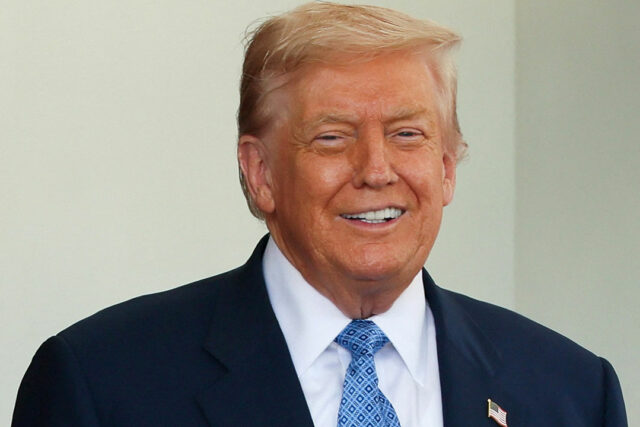
Weigh in on Sydney Sweeney or run the world? Trump, for better or worse, attempts it all

US PRESIDENT Donald J. Trump outside the White House in Washington, DC, US, Aug. 8, 2025. — REUTERS/JESSICA KOSCIELNIAK

FROM firing people to promoting jeans, calling for peace deals or the renaming of a sports team, President Donald J. Trump keeps a lot on his proverbial to-do list. Much of it is unrelated to running the country.

More than six months into his second term as US commander-in-chief, Mr. Trump, a former New York businessman and reality television host, has applied a hands-on management style and producer-like attitude toward governing, relying largely on his own instincts for decisions large and small.

Using the tools of social media and a propensity for bullying, Mr. Trump personally wades into issues inside and outside the federal government to get his way. He harangues company executives to invest in America and uses trade deals as leverage over foreign leaders to end conflicts.

Last week he fired the head of the Bureau of Labor Statistics over unproven allegations she falsified figures that he didn’t like. This week he called for the head of Intel to step down over ties with China, and the company’s stock fell.

In recent months he has pressed the Washington Commanders football team to change its name back to the Redskins, forced universities to pay huge amounts to the federal government, boosted retailer American Eagle Outfitters’ shares with a compliment about a controversial jeans commercial featuring actor Sydney Sweeney and attempted to shore up Republican power by pushing for political redistricting in Texas.

Mr. Trump’s style, which can confound both his friends and his foes, is dramatically different from his more traditional predecessors. It has earned him condemnation for being caustic and praise for being effective at getting what he wants.

“While he delves into topics that are certainly distractions relative to the big business of leading the world’s greatest nation, it can also be said that past presidents have excessively deferred to the bureaucracy and failed to deliver the change their voters expected,” said Carlos Curbelo, a Republican former congressman from Florida.

Trump views himself more as the CEO (chief executive officer) of the USA. than as president,” Mr. Curbelo added. “It’s good for decision making and challenging for the constitutional order which made our country the world’s greatest economic and military force.”

Mr. Trump has taken on academia, the legal world, media companies, athletics, the federal bureaucracy and more, all while retooling the world economy with tariffs, cracking down on immigration flows, upending relations with allies and putting his stamp on American culture.

Though he has a team of advisers, the President frequently follows his own counsel, making policy decisions and then announcing them himself, ramifications aside.

“I think what a lot of people miss about Trump is he’s the marketer-in-chief,” said Ford O’Connell, a Republican strategist with ties to the White House. “Not only is he his own best press secretary, he’s also his own best chief-of-staff.”

A POTUS WHO ‘CAN’T FOCUS’
Critics question why Mr. Trump gets bogged down in issues that are secondary to his goals of strengthening the US economy, for example, or achieving a peace deal between Russian President Vladimir Putin and Ukrainian President Volodymyr Zelensky.

“He’s commenting one moment on… Putin and tariffs and all that’s happening in the world and the next moment he’s talking about, oh, Sydney Sweeney, and all these other issues that are completely unrelated to being President of the United States,” said Charlie Dent, a Republican former congressman from Pennsylvania. “He simply can’t focus.”

The White House said Mr. Trump is using his skills to deliver on policy priorities. “President Trump’s leadership style can be summed up plainly as decisive and commanding,” said White House spokesman Harrison Fields.

Mr. Trump also employs a talent to distract when facing difficulty. Though that super power has largely eluded him with the controversy over sexual offender Jeffrey Epstein and the Department of Justice’s refusal to release files related to the disgraced financier’s case, Mr. Trump’s broad ability to change the subject and dominate the news cycle has stupefied his opponents for years.

“His leadership style is much closer to that of an executive producer, and the executive producer who has a really big picture understanding of the audience,” said Republican strategist Kevin Madden, a senior adviser to former Massachusetts Governor Mitt Romney’s 2008 and 2012 presidential campaigns.

“I think he trusts his instincts about the audience over anybody else, and that’s why you see him oftentimes, you know, managing his own policy portfolio.”

Mr. Trump, though not a stickler for detail on all things policy-related, does get into the weeds on things he cares about, both cultural and political, including redecorating the Oval Office with gold, paving over the Rose Garden and building a new ballroom on the White House grounds.

On Tuesday, reporters bantered with the President while he walked on the roof of the White House press room, surveying the grounds for what he said were more ways to spend his money. The White House said Mr. Trump and other donors plan to pay for the $200-million ballroom project, which is slated to be finished before his second term concludes.

“I think narcissists do get bogged down in details because they think that everything is a reflection of them,” said Republican strategist Rina Shah. “When he decides to focus on the minutia, he’s forgetting about the bigger picture. And that’s kind of a disservice to the office.”

Where critics see such disservice, the White House sees results.

On the eve of presiding over a US-brokered peace framework between Azerbaijan and Armenia this week, Mr. Trump took to social media to tout his involvement: “Many Leaders have tried to end the War, with no success, until now, thanks to ‘TRUMP.’” — Reuters

World Bank’s IFC approves Oman polysilicon project loan over US objection

REUTERS

THE World Bank’s International Finance Corporation (IFC) on Friday approved a loan and investment worth up to $250 million in a polysilicon manufacturing project in Oman for solar power applications, over the objections of the IFC’s US executive director, the US Treasury department said.

Three other executive directors on the IFC board abstained from the vote on the United Solar Polysilicon project, including those representing Germany, the Netherlands and Nordic countries, two sources familiar with the vote said.

United Solar plans to build a $1.6-billion plant to produce 100,000 metric tons of polysilicon a year in Oman’s Sohar Port Freezone. The company has some links to China, partly through its chairman and founder, Zhang Longgen, a US citizen who was previously chief executive officer of Chinese polysilicon maker Daqo New Energy Corp.

A Daqo New Energy subsidiary, Xinjiang Daqo New Energy Co Ltd, is listed on the US Department of Homeland Security’s Uighur Forced Labor Protection Act Entity List, which bans its products from importation into the US.

“The United States voted against this project and will continue to use its voice and vote at the World Bank Group, as well as at all other multilateral institutions, to pursue America First principles,” a US Treasury spokesperson said in an e-mailed statement. The department manages the dominant US shareholding in the World Bank Group.

A key United Solar shareholder, Chinese private equity investor IDG Capital, spent much of last year on a US Defense department list of companies with links to China’s military before its removal in December. Other shareholders include Zhang and Oman’s sovereign wealth fund.

The World Bank and IFC — its private-sector financing arm — did not respond to requests for comment.

IFC intends to provide a loan of up to $200 million and a preferred equity investment of $50 million, according to its disclosure sheet on the project.

At full capacity, the United Solar plant in Oman would produce enough polysilicon annually to supply solar panels producing 40 gigawatts of power.

China dominates the global production of polysilicon, a key ingredient in solar panels, and in its higher-purity form, a raw material for semiconductor production.

The sector is already suffering from massive excess capacity. Reuters reported last week that Chinese polysilicon producers are in talks to spend 50 billion yuan ($7 billion) to acquire and shut down roughly a third of their production capacity and restructure part of the loss-making sector.

One of the sources said the US and the abstaining countries viewed the project effectively as a new Chinese enterprise, supplied largely by Chinese state firms, and adding to excess capacity in the sector.

The Trump administration, in both of its terms, has pressed the World Bank to stop lending to China. Treasury Secretary Scott Bessent has also called upon the bank and the International Monetary Fund to concentrate on their core development and financial stability missions and pull back from climate finance and gender projects.

The US last year approved a $325-million federal grant to Michigan-based Hemlock Semiconductor for a major expansion to produce semiconductor-grade polysilicon to support reshoring of the chip supply chain. — Reuters

Marcos administration’s health commitments face scrutiny amid PhilHealth budget cuts

PHILSTAR FILE PHOTO

While advocates commended President Ferdinand R. Marcos Jr.’s health-related initiatives in his fourth State of the Nation (SONA), others pointed out the “contradiction” of these initiatives with the defunding of the national health insurer, Philippine Health Insurance Corp. (PhilHealth). 

The initiatives mentioned in the SONA are “expected to significantly enhance access to essential health services, spanning the full continuum of care from prevention and early diagnosis to treatment and recovery,” said Teodoro B. Padilla, executive director of Pharmaceutical and Healthcare Association of the Philippines (PHAP), which represents the biopharmaceutical research industry in the country.   

These reforms represent a significant step forward in the country’s journey toward universal health coverage,” he said in an August 1 email.

“The PHAP recognizes that the government’s increasing investment in health is essential to ensuring that every Filipino receives timely and equitable care.” 

The President outlined healthcare-related pronouncements on his July 28 address at the Batasang Pambansa Complex, including the following:    

  • funding for human papillomavirus (HPV) vaccines, and P1.7 billion for medicines for cancers not covered by PhilHealth 
  • free kidney dialysis sessions for the entire year, including the necessary medications, courtesy of PhilHealth; free coverage also for heart attacks, open-heart surgery, and heart valve repair or replacement 
  • the ongoing Walang Gutom Program that supports 600,000 nutritionally at-risk households this year 
  • P1 billion allocation for barangay child development and bulilit centers 
  • the 53 Bagong Urgent Care and Ambulatory Services (BUCAS) centers across 32 provinces that offer free check-ups, x-rays, and lab tests 

“We are happy he was able to soft launch PhilHealth’s YAKAP program (Yaman ng Kalusugan Program),” said Dr. Lydia Ann Labro, medical specialist III of PhilHealth-PRO NCR South. 

“Leaps and bounds yung increases ng benefits sa PhilHealth,” she said on the sidelines of a July 30 event. 

We cannot celebrate coverage while ignoring the cost of silence, however, according to Dr. Anthony C. Leachon. 

A “staggering” P60 billion was transferred from PhilHealth, which also has a zero-government subsidy in the proposed 2025 budget, the health reform advocate and past president of the Philippine College of Physicians said. 

“This decision severely compromises the very backbone of our universal health care strategy,” he sent in a July 29 Viber message. “These decisions were made without public consultation, and in defiance of the Universal Health Care Act, which mandates that health funds serve only one purpose: healing.” 

Republic Act Number 11223, known as the Universal Health Care Act, aims to provide equitable access to quality and affordable health-care services, with financial risk protection for all. 

Dr. Leachon filed a petition on February 25 challenging the constitutionality of some provisions of the 2025 General Appropriations Act due to its zero allocation for PhilHealth subsidies. 

“The promise of reducing out-of-pocket costs and healthcare premiums remains unmet, and families continue to shoulder the burden,” he told BusinessWorld. 

“A resilient healthcare system isn’t built on seasonal programs—it demands strategic investment, long-term planning, and accountability,” he added. 

“It’s time we move beyond optics and commit to genuine reform,” he said. 

The Department of Health was sought for comment on this article. – Patricia B. Mirasol with contributions from Almira Louise S. Martinez 

Factory output slows to 3-month low in June

Workers are seen inside a manufacturing facility in Sto. Tomas, Batangas in this file photo taken on March 1, 2023 — PHILIPPINE STAR/KJ ROSALES

Manufacturing output eased to a three-month low in June dragged by contractions in the production of basic metals as well as coke and refined petroleum products, the Philippine Statistics Authority (PSA) said in a report.

Preliminary results of the PSA’s latest Monthly Integrated Survey of Selected Industries (MISSI) showed factory output, as measured by the volume of production index, slowed by 2.2% year on year in June.

The June reading was slower than the revised 3.4% in May and the 3.8% in June last year. It was also the slowest growth in three months or since the 0.8% dip in March.

In the first semester, factory output growth averaged 1.4%, slower than the 2% average in the same period last year.

On a monthly basis, June’s output contracted by 4.7%, a reversal from the 2.6% in May. Stripping out seasonality factors, it slipped by 2.5%.

According to the PSA, slowdown in factory output in June was due to the sharp annual declines in basic metals (-23.2% in June from -12.5% in May), coke and refined petroleum products (-12% from -6.1%), and chemicals and chemical products (-14.7% from -9.9%).

Five other divisions logged declines while the remaining 14 saw expansion.

The top three industry divisions that contributed to the overall year-on-year growth in the VoPI were food products (26.3% from 15.5%), transport equipment (13% from 14.8%), and computer, electronic and optical products (4.8% from 5%), the PSA said.

In comparison, the Philippines in S&P Global Manufacturing Purchasing Managers’ Index (PMI) expanded 50.7 in June from 50.1 in May, the strongest pace in two months.

PMIs are a leading indicator for factory activity, reflecting the volume of materials purchased in advance of manufacturing operations weeks or months down the line. A reading above 50 separates expansion from contraction.

Growth in factory output, particularly the deceleration in three industries, can be traced to more expensive imported production due to global trade uncertainties and a weaker peso, Cid L. Terosa, senior economist at the University of Asia and the Pacific, said.

“Although muted and slower than previous months, demand for locally manufactured goods appears to have been sustained amidst lower inflation,” Mr. Terosa said in an e-mail.

Philippine Chamber of Commerce and Industry Chairman Sergio R. Ortiz-Luis, Jr. said that “many exporters and manufacturers, slightly slowed down from May to June before they announced the (tariff) because they were afraid for it to expand.”

“Year on year we increased to a certain degree, but it was affected by the tariff of Trump,” he said in a phone interview in a mix of Filipino and English.

In April, US President Donald J. Trump announced a 17% reciprocal tariff rate for goods from the Philippines, but the implementation was suspended until July.

But earlier in July, he raised this levy to 20%. Following his meeting with Philippine President Ferdinand R. Marcos, Jr., Mr. Trump set a new 19% tariff on Philippine goods, which took effect on Aug. 7.

“Tariffs can lead to a decline in manufactured exports. Electronics and semiconductor exports, which comprise more than 50% of our exports to the US market, may not be affected much because electronics are covered by WTO (World Trade Organization) Information Technology agreements,” Mr. Terosa said.

For Nicholas Antonio T. Mapa, chief economist at Metropolitan Bank & Trust Co., manufacturing faces headwinds with Trump tariff of 19% imposed on the country.

“An additional challenge was the recently announced potential 100% tariff on electronics entering the US, which may dampen demand for electronic exports from the Philippines,” he said in a Viber message.

Marites M. Tiongco, dean at De La Salle University School of Economics, said that the country must diversify export destinations to “reduce US market concentration risk.”

Moving forward, Mr. Terosa flagged the effects of US reciprocal tariffs, weaker peso, and ongoing geopolitical tensions as emerging risks that could dampen the country’s manufacturing sector.

Manufacturing accounts for nearly 20% of the country’s gross domestic product. — Heather Caitlin P. Mañago

Filipino farmers find stability through partnership with major food group

The onion farmers of Kalasag Multipurpose Cooperative have been providing onions to the Jollibee Food Group since 2009. The partnership, through the Jollibee Food Foundation, has provided both regular market access and agro-entrepreneurship training to these Nueva Ecija-based farmers.

Arnold V. Dizon, chairman of Kalasag Multipurpose Cooperative, said that mutual trust – plus a shared sense of responsibility among its members – has been instrumental to the farmer group’s success.

“Itinuturo po nila sa amin ang pagne-negosyo at paano magbenta sa malalaking kumpanya (They teach us how to do business, as well as how to sell to big companies),” also shared Mary Jing G. Contawe, a board member of the cooperative, in a separate interview with BusinessWorld.

“Mula nung naging member ako ng Kalasag, itinuro po sa amin ang food safety (I learned about food safety through my membership at Kalasag),” she added. “Sila na rin nagbibigay kung anong fertilizer ang puwede gamitin (They also provide which fertilizers can be used).”

Interview by Patricia Mirasol
Video editing by Jayson Mariñas

#FilipinoFarmers
#AgroEntrepreneurship
#PhilippineAgriculture
#FarmingCooperatives
#BusinessWorldPH

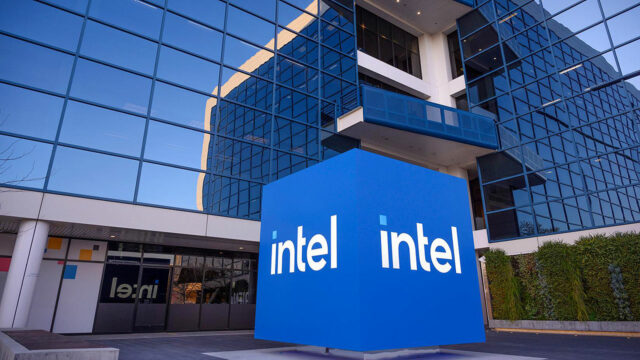
Trump demands ‘highly conflicted’ Intel CEO resign over China ties

INTEL Corporation’s global headquarters is in Santa Clara, California. — INTEL CORPORATION

U.S. President Donald Trump on Thursday demanded the immediate resignation of new Intel CEO Lip-Bu Tan, calling him “highly conflicted” due to his ties to Chinese firms and raising doubts about plans to turn around the struggling American chip icon.

Reuters reported exclusively in April that Mr. Tan invested at least $200 million in hundreds of Chinese advanced manufacturing and chip firms, some of which were linked to the Chinese military.

Mr. Trump’s comments came a day after Reuters was first to report that Republican Senator Tom Cotton had sent a letter to Intel’s board chair with questions about Tan’s ties to Chinese firms and a recent criminal case involving his former firm Cadence Design.

“The CEO of INTEL is highly CONFLICTED and must resign, immediately. There is no other solution to this problem,” Mr. Trump said in a post on his Truth Social platform.

Intel shares closed down 3% on Thursday.

A leadership change could pile pressure on Intel, which is a pillar of U.S. efforts to boost domestic chipmaking. Last year, it secured $8 billion in subsidies, the largest outlay under the 2022 CHIPS Act, to build new factories in Ohio and other states.

Mr. Tan said he shared the president’s commitment to advancing U.S. national and economic security.

Intel’s board was “fully supportive” of the company’s work to transform its business and ramp up advanced chip manufacturing later this year, Tan added in a statement posted on the company’s website.

“My reputation has been built on trust – on doing what I say I’ll do, and doing it the right way… this is the same way I am leading Intel,” he said. “We are engaging with the Administration to address the matters that have been raised and ensure they have the facts.”

Mr. Trump’s intervention marked a rare instance of a U.S. president publicly calling for a CEO’s ouster and sparked debate among investors.

“It would be setting a very unfortunate precedent. You don’t want American presidents dictating who runs companies, but certainly his opinion has merit and weight,” said Phil Blancato, CEO of Ladenburg Thalmann Asset Management.

David Wagner, head of equity and portfolio manager at Intel shareholder Aptus Capital Advisors, said while “many investors likely believe that President Trump has his hand in too many cookie jars, it’s just another signal that he’s very serious about trying to bring business back to the U.S.”

Intel said it was making significant investments aligned with Trump’s America First agenda.

“We look forward to our continued engagement with the Administration,” the company said in a statement on Thursday.

Reuters reported in April that Tan himself, and through venture funds he has founded or operates, invested in Chinese firms including contractors and suppliers for the People’s Liberation Army between March 2012 and December 2024.

The reporting was based on a review of Chinese corporate databases cross-referenced with U.S. and analyst lists of firms with connections to the Chinese military.

A source familiar with the matter had at the time told Reuters that Tan had divested his positions in entities in China, without providing further details.

Chinese databases reviewed by Reuters at the time had listed many of his investments as current, and Reuters was at the time unable to establish the extent of his divestitures.

Mr. Tan, a Malaysian-born Chinese American business executive, was also the CEO of Cadence Design from 2008 through December 2021 during which the chip design software maker sold products to a Chinese military university believed to be involved in simulating nuclear explosions.

Cadence last month agreed to plead guilty and pay more than $140 million to resolve the U.S. charges over the sales, which Reuters first reported.

“We don’t believe Lip-Bu is ‘conflicted,’ though given the nature of this administration the China ties are seemingly creating an increasingly bad look,” Bernstein analyst Stacy Rasgon said.

“And unfortunately, unlike other tech CEOs Lip-Bu does not appear to have cultivated the kind of personal relationship with Trump that would help to assuage his ire.”

A White House official said, “President Trump remains fully committed to safeguarding our country’s national and economic security. This includes ensuring iconic American companies in cutting-edge sectors are led by men and women who Americans can trust.”


BUSINESS TURMOIL

Once the bedrock of Silicon Valley’s global dominance in chips, Intel in recent years lost its manufacturing edge to Taiwanese rival TSMC.

It also has virtually no presence in the booming market for artificial intelligence chips dominated by Nvidia and has been losing market share in data centers and personal computers – long its stronghold – to rival AMD.

Late last year, the company fired its then CEO Pat Gelsinger well before the completion of his four-year roadmap to restore Intel’s lead in making the fastest and smallest computer chips.

The ousting followed a Reuters special report in October that Intel had failed to live up to the lofty ambitions he had set for manufacturing and AI capabilities.

To revive Intel’s fortunes, the board named former board member Tan as CEO, betting on his deep roots in the chip industry and track record as a longtime investor in promising tech startups.

Tan has largely abandoned his predecessor’s strategy, aggressively shrinking the company’s workforce and putting on hold planned manufacturing plants globally.

The production process that Intel hoped would pave the way to winning manufacturing deals and restore its edge in churning out high-end, high-margin chips is also facing a big hurdle on quality as it puts newer technologies to the test, Reuters reported earlier this month.

Intel has also further slowed the pace of construction of a factory in Ohio, now expected to be completed around 2030 or 2031. – Reuters

Russia’s struggle to build commercial jets reflects deeper industrial malaise

UNSPLASH

Russian aircraft makers have delivered only one of 15 planned commercial jets this year, data from Swiss aviation intelligence provider ch-aviation shows, as sanctions on foreign components stall production and high interest rates crimp investment.

Since Russia’s February 2022 invasion of Ukraine, Western sanctions have cut off access to foreign-made aircraft and spare parts. With a fleet of more than 700 planes dominated by Airbus AIR.PA and Boeing BA.N jets, Russian airlines now rely on complex, indirect import routes to source critical components.

“There is no component base, no technology, no production facilities, no engineers,” said one Russian aviation industry source, who declined to be named due to the sensitivity of the matter. “To create all this from scratch takes years, if not decades.”

Given Russia’s geographical challenges as the world’s largest country, it depends on commercial aircraft for domestic freight and passenger transport across its 11 time zones.

Recent major incidents highlight an urgent need to prevent the fleet degrading. In late July, a Soviet-era Antonov An-24, built in 1976, crashed in the country’s far east, killing all 48 people on board. Days later, flag carrier Aeroflot AFLT.MM grounded dozens of flights following a crippling cyberattack.

The aviation sector’s struggles to become self-sufficient are part of a broader industrial slowdown. Russia’s factory output contracted at its fastest pace since March 2022 in July, according to Purchasing Managers’ Index data, and industrial growth continues to decelerate.

High interest rates have played a part in dwindling car production, coal sector bankruptciesslowing export volumes of commodities like metals and oil products, as well as the missed plane-building targets, officials and businesses have said, contributing to slowing economic growth.

“Industry is being hit faster and harder by tight monetary policy,” said Dmitry Polevoy, head of investment at Astra Asset Management, warning that the industrial sector was on the brink of recession.


PRODUCTION DELAYS AND NEW TARGETS

In 2021, Russia added 52 new commercial aircraft to its fleet — including 27 from Airbus, three from Boeing, and 22 Sukhoi Superjets built with imported parts – for airlines including Aeroflot, S7, Red Wings, Rossiya, and Ural Airlines, data from ch-aviation shows.

Since then, only 13 new planes have been added: 12 Superjets used by several Russian airlines and one Tupolev Tu-214, a twin-engine, narrow-bodied jet designed for medium-haul flights, the data showed.

The Tu-214 is being used by First Deputy Prime Minister Denis Manturov, according to a person familiar with the matter, FlightRadar24 data, and Russian media reports.

The government has repeatedly revised its production goals. In mid-2024, it cut the 2024–2025 delivery target to 21 from 171 aircraft. Last month, officials said targets would be revised again, citing high interest rates, which have made financing more expensive and slowed production.

State conglomerate Rostec, which oversees production of the Superjet-100s, Tupolev Tu-214s, Ilyushin passenger planes and the new Yakovlev MC-21 jet, has struggled to meet deadlines.

Rostec CEO Sergei Chemezov told Reuters last year that Russia would produce its own passenger planes, but delivery dates have repeatedly slipped.

The MC-21 aircraft, built entirely with Russian-made parts, was much heavier than the version built with imported parts, reducing range and fuel efficiency – so airlines have been reluctant to adopt it, according to the Russian aviation source.

On Tuesday, Chemezov told Prime Minister Mikhail Mishustin that serial production of the MC-21, SJ-100, and IL-114 jets would begin in 2026, two years later than originally planned.

United Aircraft Corporation, the Rostec subsidiary that manages all the conglomerate’s aircraft production, did not respond to a request for comment.


SANCTIONS AND SUPPLY CHAIN

Despite efforts to localize production, Russia continues to rely on foreign suppliers.

Customs data seen by Reuters shows that parts worth at least $300,000 were imported in 2024 via intermediaries in Turkey, China, Kyrgyzstan, and the UAE. These included components from France’s Safran, U.S. Honeywell, and Britain’s Rolls-Royce. There is no evidence of these companies having violated sanctions.

Russia has developed a system of parallel imports, allowing goods to enter the country through third parties without the manufacturer’s knowledge or consent.

Safran and Rolls-Royce did not immediately respond to requests for comment.

Honeywell said it is not providing any equipment, parts, or products to any company in Russia and is “actively working to identify and interrupt any possible diversion of our products into Russia via third parties.”

Russia is trying to solve a unique and “hypercomplex” problem, Industry and Trade Minister Anton Alikhanov said last month.

“No other country in the world produces fully import-substituted planes,” Mr. Alikhanov said.

Reduced aircraft supply while demand remains high is pushing up prices for consumers, with ticket prices rising steadily throughout 2023 and 2024, Rosstat data shows.

Meanwhile, Moscow has been forced to get creative, asking airlines from Central Asian countries like Kazakhstan and Uzbekistan to run domestic Russian routes. – Reuters

Simulated Chinese blockade of Taiwan reveals Singapore as lifeline

A NAVY miniature is seen in front of displayed Chinese and Taiwanese flags in this illustration taken April 11, 2023. — REUTERS

HONG KONG/TAIPEI – The exercise presented a fraught scenario: China’s military had blockaded Taiwan by air and sea, and Southeast Asian countries were grappling with how to evacuate as many as 1 million of their nationals trapped on the besieged island.

Over two days in April at a Singapore hotel, some 40 participants and observers in the war game, including serving and retired Asia-Pacific officials and military officers, as well as security scholars, simulated their responses to the unfolding crisis, according to four people familiar with the discussions.

Hours ticked by as some players weighed unified action through the Association of Southeast Asian Nations, while others reached out to the mock U.S., Chinese and Japanese delegates to negotiate special air and sea corridors to extract foreign nationals. Eventually, the people said, a stark conclusion emerged: The Southeast Asian states needed a Singaporean airlift to have a chance of evacuating their people.

“Nothing was moving until the Singaporeans stepped in at the 11th hour,” said one participant in the event at the Jen Singapore Tanglin hotel. “They had found a way of getting their own people out, and offered to get others out, too.”

Reflecting its discreet and decades-old security presence inside Taiwan, where its forces train, Singapore was able to leverage access to airfields and aircraft, the person said. But the exercise ended before any detailed discussion of how Singapore had reached a deal with China to secure an evacuation route through the blockade, or how precisely it would work, three of the people told Reuters.

The previously unreported exercise comes amid an escalating battle between the U.S. and China for dominance in the Asia-Pacific region. It offers a rare window into contingency planning over Taiwan, which some Asian and Western military attaches and security analysts say is becoming increasingly necessary because an assault on the island by Beijing could draw in the U.S. and imperil other countries.

While the scenario didn’t reflect official policies, participants playing the roles of foreign and defense ministers worked from the known positions of at least nine governments depicted in the simulation, said the four people, who like some others spoke on the condition of anonymity to discuss a sensitive matter. Besides Singapore, China, Taiwan and the U.S., the rest included Indonesia, Vietnam and the Philippines, they said.

Southeast Asians account for about 94% of the almost 1 million foreign nationals resident in Taiwan, according to Taiwan’s National Immigration Agency. Indonesians, Vietnamese and Filipinos make up the vast majority of those foreigners, with comparatively small numbers of Japanese and Americans.

Singapore’s defense ministry said it wasn’t involved in the “workshop” and none of its officials attended in any capacity. Neither the defense nor foreign ministries addressed Reuters questions about Singapore’s military presence in Taiwan and planning for Taiwan conflict scenarios, including evacuations.

China’s foreign ministry said it had “always resolutely opposed countries with whom it has diplomatic relations having any form of official relations with the Taiwan region, including military dialogue and cooperation,” adding that it wasn’t aware of the circumstances of the exercise.

The London-based International Institute for Strategic Studies (IISS), which organized the exercise, told Reuters in a statement that participants had attended in their private capacities, and that it could not comment on “discussions, attendees, or any other elements.”

Taiwan’s defense ministry and the ASEAN Secretariat in Jakarta didn’t respond to questions.

A Pentagon official said they were not aware of any official participation in the event by the U.S. Defense Department. “We routinely engage with allies and partners to ensure readiness for a range of contingencies, but it would be inappropriate to discuss operational planning or hypothetical evacuation scenarios,” the official said.

Weeks after the exercise, U.S. Defense Secretary Pete Hegseth told a security conference in Singapore that the threat of China using force to take Taiwan was “imminent” amid intensifying air and naval operations around the island by the Chinese military, the People’s Liberation Army.

Chinese officials have said Hegseth and other Trump administration officials are playing up “the so-called China threat”, with the Chinese embassy in Singapore saying his speech was “steeped in provocations and instigation”.

China claims Taiwan as its territory and has never renounced the use of force to seize it. Taiwan’s President Lai Ching-te and his government strongly object to China’s sovereignty claims, saying it is up to the island’s people to decide their future.

Drew Thompson, a Singapore-based security scholar, said it was vital for Southeast Asian countries to move beyond war games and contingency discussions to build meaningful, unofficial ties with Taiwan, particularly its military. These countries have diplomatic ties with Beijing and don’t officially recognize Taipei.

“The big takeaway here is that a plan is one thing but you need the access and the relationships to put it into play,” said Thompson, of the S. Rajaratnam School of International Studies, who wasn’t involved in the exercise.

“Singapore has long had these ties, the Philippines is building them, but it remains an open question whether the other countries in Southeast Asia have the unofficial networks in place to meaningfully engage with Taiwan in a conflict.”

The Philippines foreign ministry told Reuters the government has contingency plans for a Taiwan emergency, without offering specifics. It added that Manila has “legitimate interest in Taiwan due to geographic proximity and the presence of Filipino nationals there”.

The foreign ministries of Indonesia and Vietnam didn’t respond to requests for comment. Japan’s defense ministry declined to comment.

‘USEFUL PERCH’
Given recent drills in which Chinese vessels encircled Taiwan, some military attaches and analysts say any attempt by Beijing to seize the island could start with a blockade, which would be considered an act of war under international law.

The risks are felt acutely in Singapore, a financial and shipping hub that hosts U.S. Navy ships and surveillance aircraft yet maintains strong cultural, diplomatic and economic ties with China.

Singaporean forces have conducted military training in Taiwan since 1975, under an arrangement known as Project Starlight. The presence is seldom publicly acknowledged by officials in Singapore, which does not have formal diplomatic relations with Taiwan. But it remains important to Singapore’s defense forces, according to seven diplomats and security scholars familiar with the matter.

Singapore rotates up to 3,000 infantry troops and commandos annually through three training camps in southern Taiwan, according to five of the seven people, where the mountains and jungles replicate conditions found on the Malay Peninsula.

“It gives Singapore a useful perch from which to watch both the Taiwan Strait and the top part of the South China Sea,” said one Western security official.

China has long objected to the arrangement. But Singapore has held fast, in part because a withdrawal would represent a change to the delicate strategic and diplomatic balance around Taiwan, three of the scholars told Reuters.

Singapore’s forces also train regularly in Australia, France, Brunei and the U.S. The city-state has the best-equipped military in Southeast Asia, according to an annual survey of the world’s armed forces produced by the IISS.

Yet an outbreak of war in Taiwan could trap Singapore’s forces there or render them bargaining chips that could give China military and diplomatic leverage over Singapore, according to some analysts and military attaches.

In a conflict, Southeast Asian governments would face an arduous task in evacuating their nationals from Taiwan, Ngeow Chow Bing, a Malaysia-based security scholar, wrote in a study published last year by the Carnegie Endowment for International Peace.

But, Ngeow wrote, Beijing has clear incentives to ensure that most, if not all, ASEAN members remain neutral.

“If Beijing cares how it is perceived in Southeast Asia during a Taiwan crisis, it follows that Beijing would view the evacuation of Southeast Asian citizens as crucial for its own diplomatic posture,” he added. — Reuters