Home Blog Page 104

US opens unfair-trade probes to rebuild Trump’s tariff pressure
REUTERS

WASHINGTON — US President Donald J. Trump’s administration on Wednesday said it was launching two new trade investigations into excess industrial capacity in 16 major trading partners and into forced labor, to rebuild tariff pressure after the US Supreme Court tore down much of Mr. Trump’s tariff program last month.

US Trade Representative (USTR) Jamieson Greer said that the “Section 301” unfair trade practices investigation could lead to new tariffs imposed against China, the European Union (EU), India, Japan, South Korea and Mexico by this summer.

Other trading partners subject to the excess capacity probe include Taiwan, Vietnam, Thailand, Malaysia, Cambodia, Singapore, Indonesia, Bangladesh, Switzerland and Norway. Canada, the second-largest US trading partner, was not mentioned as a target of the probe.

“So, these investigations will focus on economies that we have evidence appear to exhibit structural excess capacity and production in various manufacturing sectors, such as through larger persistent trade surpluses or underutilized or unused capacity,” Mr. Greer told reporters on a conference call.

USTR’s official notice for the excess capacity probe cited the automotive sector in China and in Japan, and said a growing number of companies were unprofitable or unable to meet interest payments from operations.

It said that despite China’s electric vehicle (EV) capacity outstripping national demand, the country’s top EV maker, BYD, was “aggressively expanding” its overseas manufacturing footprint, with factories in Uzbekistan, Thailand, Brazil, Hungary and Turkey and was expected to expand capacity in Europe, where existing automotive plants are operating at only 55% of capacity.

USTR cited large US trade surpluses in Germany and Ireland as evidence of EU excess capacity. Singapore had excess global capacity in semiconductors despite a trade deficit with the US and Norway had excess capacity by evidence of large fuels and seafood exports, it added.

FORCED LABOR PROBE
Mr. Greer also said that on Thursday he would initiate another probe under Section 301 of the Trade Act of 1974 to ban US imports of goods produced with forced labor. That investigation covers more than 60 countries.

The US has already cracked down on solar panel imports and other goods from China’s Xinjiang region under the Uyghur Forced Labor Protection Act signed into law by former President Joseph R. Biden, and the probe could expand such actions to other countries.

Mr. Greer said he wanted other countries to enforce bans on goods produced with forced labor similar to those enshrined in a nearly century-old trade law.

The US alleges that Chinese authorities have established labor camps for ethnic Uyghur and other Muslim groups in the western region, though Beijing denies allegations of abuse.

Mr. Greer said that he hoped to conclude the Section 301 investigations, including proposed remedies, before new temporary tariffs imposed by Mr. Trump in late February expire in July. After the Supreme Court struck down Mr. Trump’s global tariffs as illegal under a national emergencies law on Feb. 20, he imposed a 10% tariff for 150 days under Section 122 of the Trade Act of 1974.

He laid out a swift timeline for the excess capacity probe, with public comments accepted through April 15, and a public hearing slated for about May 5.

The probes offer the Trump administration an avenue to rebuild a credible tariff threat against trading partners to keep them negotiating and implement trade deals that were cut to reduce his higher tariff rates under the International Emergency Economic Powers Act.

Mr. Greer said the new probes, long telegraphed by administration officials, should come as no surprise to trading partners, and they should stick to their deals, although he stopped short of saying that this would make them immune to all new Section 301 tariffs.

He said that Mr. Trump was determined to pursue tariffs and “will find a way to deal with unfair trading practices. He’ll find a way to get our trade deficit down. He’ll find a way to protect US manufacturing. We have a lot of tools to do it,” Mr. Greer said.

The probes come as Trump officials led by US Treasury Secretary Scott Bessent prepare this week to meet with Chinese counterparts in Paris to set the stage for Mr. Trump to meet Chinese President Xi Jinping in Beijing at the end of March.

Mr. Trump’s tariffs on Chinese goods were effectively cut by 10 percentage points by the Supreme Court decision and subsequent temporary tariffs, reducing US leverage on China trade and export controls.

Mr. Trump during his first term used a Section 301 probe to back his tariffs on many Chinese imports of about 25% and the law is widely viewed as legally robust, having withstood prior court challenges.

The excess capacity probe targets an area of concern raised with China by successive administrations from Mr. Trump’s first term through the Biden administration, growing state-supported manufacturing output that is flooding the world with cheap goods.

Mr. Greer said this includes production “untethered” to market demand and that the problem has spread to other countries. He said the probe will focus on evidence including large global current account surpluses, government subsidies, suppressed domestic wages, noncommercial activities of state-owned enterprises, inadequate environmental and labor standards, subsidized lending and currency practices. Reuters

Sustainable spaces for summer

In a tropical country like the Philippines, summer has always meant brighter skies, longer days, and plenty of sunshine. But lately, it’s also come with stronger heat waves and rising humidity — clear signs of how climate change is affecting our everyday lives. These days, summer doesn’t just feel warm; it feels intense, and our homes feel it too.

When the temperature climbs, our fans run longer and our air conditioners work overtime. We all know how that story ends — electric bills slowly creeping up month after month. Staying cool isn’t really a choice anymore; it’s a necessity. And unfortunately, comfort often seems to come with a higher price tag.

That’s why many people think getting ready for summer automatically means spending more. But it doesn’t have to be that way. The key is learning to spend smarter. With energy-efficient, durable, and low-maintenance home solutions, even small upgrades can make a big difference — keeping homes cooler, bills lighter, and summer days a lot more comfortable.

Creating a cooler experience can begin with something as simple as furniture. The Navagio collection from Heim is designed in light blue hues that instantly delivers an airy, refreshing look. Its soft, cushiony material combined with highly durable olefin rope accents allows better airflow and prevents that sticky, heat-trapping feel common during afternoons. The 3-Seater Sofa and 1-Seater Sofa provide comfortable seating without overwhelming the outdoor space, while the Center Table, with its distinct W-shaped foundation and glass on top, keeps the area open and uncluttered – allowing light and air to circulate more freely.

Managing sunlight is another powerful yet often overlooked strategy. Curtains and shades play a critical role in controlling indoor heat. The Double Layer Curtain Shade allows you to filter natural light while minimizing harsh glare, while the Black Out Curtain significantly reduces direct heat exposure, helping room stays cooler throughout the day.

Even decorative pieces like the Farsk Framed Canvas, featuring calming leaf artwork, reinforce a fresh, nature-inspired ambiance that complements the season. Meanwhile, the Tam Outdoor Storage Box keeps outdoor items protected from heat and moisture, reducing wear and preventing unnecessary replacement.

Ventilation is important most especially during summer. Cooling solutions from Kaze offer practical, energy-conscious options such as rechargeable or solar-powered floor and stand fans, reducing reliance on constant electricity use. A ceiling fan with built-in light provides steady air distribution while serving dual functions in one fixture.

For long-term energy and structural efficiency, the P.Tech Stone Coated Metal Roof Tile is engineered to resist heat, minimizing heat absorption from above and helping maintain lower indoor temperatures.

Beyond furniture and ventilation, summer essentials also contribute to smarter living. The Digital Water Dispenser with Ice Maker ensures immediate access to cold hydration without overworking the freezer with its versatility, while Pro 4-Stage Water Filter provides clean, safe, and refreshing drinking water through advanced filtration technology — a great way of reducing reliance on bottled water and supporting sustainability!

For outdoor moments, a Rubbermaid Cooler Ice Chest keeps food and beverages fresh longer, the Outdoor Patio Umbrella provides reliable shade protection, and the Charcoal BBQ Grill allows you to cook outside, preventing additional heat buildup.

With summers getting hotter, even the smallest upgrades at home can make a big difference. Choosing energy-efficient, durable, and low-maintenance products helps keep spaces cooler while saving on electricity and reducing the need for constant repairs. It’s a simple way to make your home work smarter — so you can relax and enjoy the season.


The great thing is that these finds from Wilcon Depot aren’t just for one summer. They’re smart, long-lasting choices that help keep homes comfortable and efficient year after year.

Because being summer-ready today isn’t just about escaping the heat — it’s about creating a home where you can chill, unwind, and enjoy sunny days without worrying about rising costs. With the right choices, every season can feel a little cooler, brighter, and a lot more enjoyable.

For more information about Wilcon, visit www.wilcon.com.ph or follow their social media accounts on Facebook, Instagram, and TikTok, or subscribe and connect with them on Viber Community, LinkedIn, and YouTube. Or you may contact the Wilcon Depot Hotline at 88-WILCON (88-945266) for inquiries.


Spotlight is BusinessWorld’s sponsored section that allows advertisers to amplify their brand and connect with BusinessWorld’s audience by publishing their stories on the BusinessWorld Web site. For more information, send an email to online@bworldonline.com.

Join us on Viber at https://bit.ly/3hv6bLA to get more updates and subscribe to BusinessWorld’s titles and get exclusive content through www.bworld-x.com.

Indian source says Iran to allow India-flagged tankers to pass through Strait of Hormuz

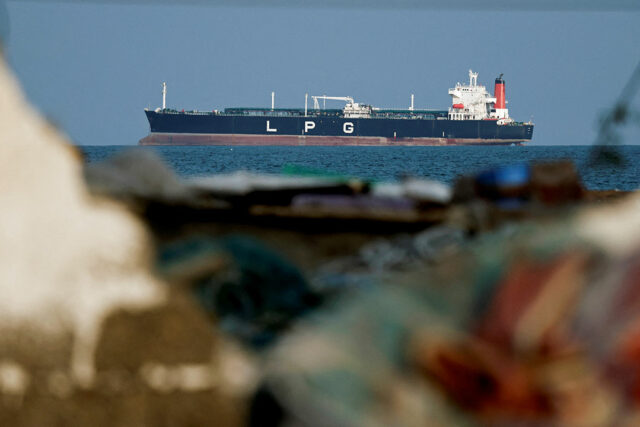
An LPG gas tanker at anchor as traffic is down in the Strait of Hormuz, amid the US-Israeli conflict with Iran, in Shinas, Oman, March 11, 2026. — REUTERS

NEW DELHI — Iran will allow India-flagged tankers to transit the Strait of Hormuz, a conduit for 40% of the South Asian nation’s crude imports, an Indian government source said on Thursday, but an Iranian source outside the country denied any such deal was reached.

India’s foreign ministry and Iran’s embassy in New Delhi did not immediately respond to requests for comment.

The Indian source, who was briefed on the matter, declined to be identified, citing a lack of authorization to speak to media, while the Iranian source said the matter was a sensitive one.

The Indian source said two foreign-flagged tankers believed to be bound for India had recently transited the Strait, and that Iran had given assurances of safe passage for Indian-flagged vessels after the foreign ministers of both countries spoke by telephone late on Tuesday.

The source said the situation remained fluid, with limited clarity on how instructions were being relayed across different layers of Iran’s administration.

In a statement after the talks between India’s S. Jaishankar and his counterpart, Seyed Abbas Araghchi, Iran’s foreign ministry said the United States should be held accountable for the “insecure situation and problems arising for shipping in the Persian Gulf”.

Neither side mentioned any agreement on allowing safe passage for Indian vessels.

On Wednesday, India said 28 Indian-flagged vessels were operating west and east of the Strait with 778 Indian sailors aboard.

“Authorities, ship managers and recruitment agencies are coordinating closely with Indian embassies and local authorities to ensure safety and provide assistance to Indian seafarers,” the Indian petroleum ministry said in a statement.

INDIA SHELTERING IRANIAN SAILORS
India has given safe harbor to 183 Iranian sailors from a vessel that docked after the war broke out between Iran and the United States and Israel.

New Delhi had allowed three Iranian ships that departed following a naval exercise in the Bay of Bengal to dock, but one was later sunk by a US submarine in international waters, and another sought assistance from Sri Lanka.

Iran has attacked at least 16 ships in the Strait since the war began in late February. Tehran has warned that oil prices could nearly double to $200 a barrel as it retaliates.

A Thai vessel bound for India’s western port of Kandla was attacked in the Strait on Wednesday, prompting criticism from New Delhi.

“India deplores the fact that commercial shipping is being made a target of military attacks in the ongoing conflict,” the foreign ministry said on Wednesday, adding that its citizens had also died.

The near-closure of the Strait of Hormuz has compelled India, the world’s No.3 oil consumer, to scramble for alternatives, such as buying more from Russia. — Reuters

Shift into maximum savings: Toyota brings race-season deals this March

Start your engines for Toyota’s best offers this March! With the kickoff of the 2026 TGR Philippine Cup Season, Toyota Motor Philippines is bringing the excitement of competition from the track to the showroom! From March 11 to 31, 2026, exciting offers on select models make it easier than ever to find the vehicle that fits your lifestyle — whether it’s a sleek daily drive, a spacious family upgrade, or a step into hybrid efficiency. To help customers stay in the driver’s seat of their finances, Toyota offers three flexible payment options tailored to different priorities and purchasing.

Pay Low offers an all-in package with as low as 15% down payment for participating models. This option includes 60-month financing terms, free 1-year comprehensive insurance, free 3-year LTO registration, and no chattel mortgage under select finance lease arrangements. Pay Low makes it easier for customers to secure a brand-new Toyota while enjoying bundled ownership benefits.

The ATIV 1.5 HEV CVT in two-tone combines hybrid efficiency with everyday comfort, making it a smart choice for city driving — available with the Pay Low option starting from P179,700.

Pay Light is designed for customers who prefer more manageable monthly payments. With low monthly amortization plans spread across a 60-month term, this option allows buyers to balance their budgets while still choosing the vehicle that suits their needs. It’s an ideal setup for those who prioritize predictable and lighter monthly expenses.

The Toyota Yaris Cross 1.5 S HEV CVT in two-tone delivers hybrid performance and crossover versatility, available with Pay Light plans from P15,504 per month.

For those ready to purchase outright, Straight Cash savings provides significant cash discounts on select variants. Discount amounts vary depending on the model and variant, giving customers the opportunity to enjoy immediate savings when paying in full.

Searching for increased power, space, visibility, and hybrid capability? The Toyota RAV4 2.5 LTD HEV is the perfect vehicle, with straight cash savings of up to P300,000.

Additionally, other HEV models are also on exclusive deals and promos for this month!

– Corolla Cross 1.8 GR-S CVT 2T, Available with Pay light from P18,225 per month, or save up to P140,000 when paid in straight cash

– Zenix 2.0 Q HEV CVT, Available with Pay Light from P19,336 per month or save up to P100,000 when paid in straight cash

*These three flexible payment options are available on select Toyota vehicles within the promo period, subject to terms, credit approval where applicable, and model availability.

Aside from these flexible payment options on selected Toyota models, Toyota aims to create a better ownership experience through these offers this month:

  • FREE Periodic Maintenance Service (PMS) for selected Toyota models
  • Exclusive Service Discount Vouchers for selected Toyota models
  • Trade-in rebates of up to P30,000, redeemable as a cash discount or for Toyota Genuine Accessories
  • Free One-Year Comprehensive Insurance for select models.
  • Toyota 5-year warranty for all brand-new vehicles

Check out the full mechanics, offers, and participating models here: https://toyota.com.ph/promos/MaximumSavingsMarch

DTI Fair Trade Permit No. FTEB-251410 Series of 2026.

Don’t miss out on seeing some of these xEV vehicles right up close during the first race weekend of the 2026 TOYOTA GAZOO Racing Philippine Cup on March 13-15!

  • All-new RAV4 (Launching soon!)
  • All-new Urban Cruiser (Launching soon!)
  • bZ4X
  • ATIV
  • Yaris Cross

Register now through this link to enter the first race weekend of the season! https://tgrphcup.com

Follow Toyota Motor Philippines onFacebook,InstagramandX, and join the ToyotaPH community onViberto get the latest updates on products, services, and promos.


Spotlight is BusinessWorld’s sponsored section that allows advertisers to amplify their brand and connect with BusinessWorld’s audience by publishing their stories on the BusinessWorld Web site. For more information, send an email to online@bworldonline.com.

Join us on Viber at https://bit.ly/3hv6bLA to get more updates and subscribe to BusinessWorld’s titles and get exclusive content through www.bworld-x.com.

Taiwan parties agree government can sign stalled agreements on US arms deals

A soldier salutes Taiwan president Lai Ching-te in front of US-made M1A2T Abrams tanks after taking part in live-fire exercises in Hsinchu, Taiwan on July 10, 2025. — REUTERS/ANN WANG

TAIPEI — Taiwan’s three main political parties agreed on Thursday to authorize its government to sign US agreements for four arms sales packages, after officials warned that Taipei would go to the back of the line if it missed the deadline.

The back and forth on Taiwan’s defense spending has provoked concern in the United States, as it is the most important international backer and arms supplier of the Chinese-claimed island, despite a lack of formal diplomatic ties.

President Lai Ching-te’s government has tried to get parliament to pass $40 billion in extra defense spending but the opposition, which controls the most seats, says the proposals are unclear, and it cannot be expected to pass “blank cheques” despite supporting defense.

Both opposition parties have come up with their own, less expensive proposals, but the defense ministry has said the letters of offer and acceptance for the weapons with the United States have to be signed or Taiwan would lose its place in the production and delivery queue.

Lawmakers from both sides agreed during a meeting of parliament’s foreign affairs and defense committee that the government can still sign the agreements in advance, even if the reviews of the spending proposals are not approved in time.

The weapons to be signed for include TOW anti-tank missiles, M109A7 self-propelled howitzers, Lockheed Martin-made Javelin missiles and the HIMARS multiple launch rocket system.

On Tuesday, Defense Minister Wellington Koo told reporters the HIMARS letter expired on March 26, for 82 systems the US announced as part of an $11-billion arms sale package for Taiwan.

Sunday is the deadline to sign for the other weapons systems, the ministry says.

Last month, a bipartisan group of 37 US lawmakers voiced concern to senior Taiwan lawmakers about the stalled plans.

The Trump administration has pressed allies to increase defense spending, a plank Mr. Lai and his government have enthusiastically embraced. — Reuters

First train to Pyongyang in six years set to leave Beijing as neighbors revive link

METRO SUBWAY, Pyongyang, North Korea — RANDOM INSTITUTE-UNSPLASH

BEIJING — The first passenger train service between Beijing and Pyongyang is set to leave China’s capital on Thursday, ending a six-year gap, as China moves to shore up cross-border infrastructure and rebuild ties with its neighbor.

Train K27 will arrive in the North Korean capital at 6:07 p.m. (0907 GMT) on Friday, after a journey of 24 hours and 41 minutes skirting north of the Bohai Sea with a stopover in the border city of Dandong, China’s railway authority said.

China and North Korea are “friendly neighbors” and a cross-border passenger train service facilitates people-to-people exchanges, a foreign ministry spokesperson told reporters on Thursday.

China also backs stronger communication between both sides to ease such exchanges, the spokesperson added.

The service was suspended when the COVID-19 pandemic broke out in 2020.

North Korea is largely closed to foreign tourism, with few exceptions, largely ⁠for Russian tour groups under restricted arrangements, say travel agencies organizing trips to the country.

RESTRICTED TICKETS
The service linking the capitals will operate four days a week in both directions, running on Mondays, Wednesdays, Thursdays, and Saturdays, China’s railways said in a notice.

Tickets, restricted to business visa holders, were sold out for Thursday’s trip, but those for March 18 were still available, a Beijing travel agency said.

The shorter Dandong-Pyongyang link will operate daily in both directions, with the first service leaving China’s northeastern city of Dandong at 10 am on Thursday to arrive in Pyongyang at 6:07 pm, the official news agency Xinhua said.

Cross-border flights were also halted during the pandemic.

North Korea’s state carrier Air Koryo resumed flights to China in 2023 and now offers services between the capitals twice weekly on Tuesdays and Saturdays, its website booking service showed. — Reuters

BFAR to build P534.7-million fishing hub in Lake Lanao to boost aquaculture industry, support Marawi recovery

The Bureau of Fisheries and Aquatic Resources (BFAR) has commenced work to develop an Integrated Cold Hub Complex in Marawi City, aiming to harness the riches of Lake Lanao and boost the livelihood of local fishers.

The three-year project, expected to finish by 2029, was designed to create an aquaculture industry for communities around Lake Lanao, a vital water resource that has remained underutilized due to the lack of infrastructure and local know-how on the fisheries business.

“Our goal is to support the continued recovery of Marawi City by turning Lake Lanao into a source of strength. This is an investment in the future of the Maranao people. Through this fishing hub, we are anchoring the peace we have built with the weight of economic opportunity and sustainable food security,” said BFAR National Director Elizer Salilig.

Under the project, the government aims to enhance the fisheries value chain in Marawi City and other lakeshore towns by establishing end-to-end support, from harvest and storage facilities to logistics systems and upskilling of local fishers.

BFAR will deploy fish cages and build solar-powered floating caretaker houses in 10 pilot areas, undertake wharf rehabilitation in 11 sites, and procure a fleet of reefer vans, harvest boats and speed boats for transport.

The agency will also build an ice plant, fish health laboratory, and a processing plant at the Marawi Port to prevent fish stock spoilage.

Beyond infrastructure, the program includes comprehensive training for fisherfolk cooperatives in aquaculture techniques, business planning, and post-harvest handling.

Through the project, BFAR hopes to stimulate the local economy, with the fishing hub seen to provide jobs to locals directly engaged in production and logistics, and indirectly benefit hundreds more from an enhanced aquaculture industry, including vendors and transport operators.

To roll out the project, BFAR is working with the Mindanao State University as a technical partner, the Bangsamoro Autonomous Region in Muslim Mindanao for regional policy alignment, the Office of the Presidential Adviser on Marawi Rehabilitation and Development to ensure alignment with broader recovery goals, and local government units of Marawi City and lakeside municipalities for policy and infrastructure support.

Procurement for essential equipment, including fish cages and service vehicles, started in February this year, with the aquaculture ecosystem expected to be fully operational in the third year of the project.


Spotlight is BusinessWorld’s sponsored section that allows advertisers to amplify their brand and connect with BusinessWorld’s audience by publishing their stories on the BusinessWorld Web site. For more information, send an email to online@bworldonline.com.

Join us on Viber at https://bit.ly/3hv6bLA to get more updates and subscribe to BusinessWorld’s titles and get exclusive content through www.bworld-x.com.

US to release 172 million barrels of oil from strategic petroleum reserve

— REUTERS/DADO RUVIC/ILLUSTRATION

WASHINGTON — The US will release 172 million barrels of oil from its strategic petroleum reserve in a bid to reduce oil prices that have soared due to supply shocks from the US-Israeli war on Iran, US Energy Secretary Chris Wright said on Wednesday.

Mr. Wright said the release is part of a broader release of 400 million barrels of oil agreed to by the 32-nation International Energy Agency earlier in the day.

Mr. Wright said the release will begin next week and will take about 120 days to deliver.

The US and Israel began attacks on Iran on February 28. Iran has responded with its own strikes on Israel ‌and Gulf ⁠countries with US bases.

Raising the stakes for the global economy, Iran’s Islamic Revolutionary Guard Corps said it would block oil shipments from the Gulf unless the US and Israeli attacks cease. The war has shaken markets around the world.

When asked earlier on Wednesday whether he was looking at the threshold for the strategic petroleum reserve, President Donald ​Trump said Washington will “reduce it a little bit.”

“The United States has arranged to more than replace these strategic reserves with approximately 200 million barrels within the next year,” the US energy secretary said in a statement. — Reuters

New study highlights ROI gaps in advertising, points to sufficiency-based media planning

From left: Rain Balares, Market and Product Lead / Client Leadership and Practice Development Lead, Goat APAC, WPP Media; Padmanabhan Ramaswamy, Managing Director SEA, Analytic Edge; Nicole Villarojo, Chief Marketing Officer, PepsiCo Philippines Beverages; Angel Guerrero, Founder, President, and Editor-in-Chief of adobo Magazine; Ashwin Sukumaran, Vice President - Client Consulting SEA, Analytic Edge

Senior marketers, agency leaders, and industry analysts recently gathered for a closed-door industry discussion examining how Philippine advertisers are reassessing media investment decisions amid tightening budgets, declining television consumption, and rising pressure to demonstrate measurable return on investment.

With the theme “Every Peso Counts: Media that Works for Consumer Brands in the Philippines”, the event conducted by adobo Magazine presented the study on how brands and marketers can ensure that every peso invested in media truly works in a marketing environment where budgets are under increasing scrutiny and performance accountability is paramount.

The study, done by leading global analytics firm Analytic Edge, a C5i group company, was anchored on the concept of media sufficiency, defined as investing at the level required for a channel to perform optimally, rather than spreading budgets thinly across multiple touchpoints. The firm noted that as audience attention fragments and traditional reach-based planning becomes less reliable, determining sufficiency has emerged as a critical discipline for effective media planning.

What Data Reveals About Media Performance

During the session, industry leaders emphasized that marketing effectiveness hinges on sufficiency-based investment decisions informed by robust analytics.

Insights shared during the session were drawn from fresh Marketing Mix Modeling (MMM) insights across 11 FMCG brands in the country that analyzed how different media channels contribute to actual sales performance.

According to the study, TV consumption in the Philippines continues to decline, even as it still commands a dominant share of media investment. At the same time, the share of media spend for short-form video platforms like TikTok has grown rapidly, rising from 1% to 17% in just five years, signaling its emergence as a core channel. This rapid growth reflects shifting consumer attention patterns toward mobile-first and short-form video environments.

Analyzing how different media channels contribute to actual sales performance, the analysis found that while digital video platforms now account for a growing share of consumer attention, advertiser investment has not always kept pace with their performance contribution.

Across the modeled brands, TikTok led ROI performance in approximately 70% of the models, delivering returns of around 2.2x on average — outperforming both digital and traditional media in the aggregated dataset. Specifically, in Consumer Packaged Goods (CPG) category, TikTok recorded relative ROI levels of 2.42x and up to 4.7 times that of other media in certain comparisons. In F&B, TikTok ROI was approximately 1.7 times that of total media.

Despite this, the study indicated that TikTok accounts for only five to six percent of total FMCG media spend, suggesting potential under-allocation relative to its modeled contribution.

The analysis further demonstrated that many brands are operating below sufficiency levels, particularly in high-impact, full-funnel digital channels. For TikTok, optimal performance was observed when investment levels reached between 86% and 160% of current spend, indicating substantial headroom before diminishing returns set in. According to the study, underinvestment, rather than channel inefficiency, is increasingly a key driver of lost ROI.

The study also examined how much new audience exposure is added when TikTok is used alongside TV. It found that audience overlap between TikTok and linear TV is about 48-49%, meaning that more than half of the people reached on TikTok are not fully duplicated by television.

In practical terms, this suggests TikTok is not simply repeating the same viewers, but extending reach to additional audiences. When both channels were used together, the modeling showed an incremental awareness lift of approximately +24.6%, indicating that the combination delivers stronger total impact than TV alone. This reinforces the idea that diversified sufficiency-led media investment can enhance overall media effectiveness, not just overlapping results, when integrated thoughtfully into the broader mix.

From Platform Results to Smarter Planning

Padmanabhan Ramaswamy, Managing Director, South-East Asia at Analytic Edge, emphasized that the real challenge for brands is not simply identifying high-ROI channels, but aligning budget allocations with modeled marginal return. In many cases, traditional budget habits may no longer match how people actually consume media today or which channels are truly driving additional sales.

“What this study highlights is not simply which platform performs well, but whether budgets are aligned with modeled sales contribution. Media sufficiency is about investing at the right scale so that channels can deliver their full potential, rather than being underfunded and misunderstood,” said Padmanabhan.

The study highlighted that certain channels perform most effectively only when funded at the right scale. This finding challenges conservative allocation practices and underscores the importance of data-led planning in an increasingly complex media environment.

Overall, the session reflected a growing consensus among industry leaders: as marketing effectiveness comes under greater scrutiny, success will depend less on experimentation and more on sufficiency-based investment decisions grounded in robust analytics. The insights from the discussion are expected to inform ongoing conversations as advertisers and agencies refine their media strategies for the year ahead.


Spotlight is BusinessWorld’s sponsored section that allows advertisers to amplify their brand and connect with BusinessWorld’s audience by publishing their stories on the BusinessWorld Web site. For more information, send an email to online@bworldonline.com.

Join us on Viber at https://bit.ly/3hv6bLA to get more updates and subscribe to BusinessWorld’s titles and get exclusive content through www.bworld-x.com.

FBI bulletin warned of possible Iran retaliation on California targets

A VIEW shows the seal of the Federal Bureau of Investigation (FBI) outside of the FBI’s Cincinnati Field Office in Cincinnati, Ohio, US, Aug. 11, 2022. — REUTERS

WASHINGTON — The FBI warned law enforcement agencies last month of the possibility that Tehran might try to retaliate for any US strikes on Iran by launching surprise drone attacks in California, according to a security bulletin seen by Reuters.

The confidential alert, issued by the FBI through the multi-agency Los Angeles Joint Regional Intelligence Center, surfaced publicly on Wednesday as the war that began on February 28 with massive US and Israeli bombardments of Iran stretched into its 12th day.

Iran, whose supreme leader and other top officials were killed in air strikes, has fought back with missile and drone aircraft attacks against Israel and several Gulf states that host US military installations.

Several US soldiers were killed on the second day of the war in an attack on a base in Kuwait.

Speaking to reporters at the White House before ABC News first broke word of the FBI security bulletin, President Donald Trump shrugged off the notion of Iran-backed attacks on the US homeland.

California Governor Gavin Newsom said he was not aware of any “imminent threats” to the state.

An unclassified copy of the security bulletin obtained by Reuters was undated. But the prospective wording of the text makes clear it was issued before the outbreak of hostilities, and that the potential for Iranian revenge attacks on the US homeland was already contemplated.

It cited FBI information that as of early February, Iran “allegedly aspired to conduct a surprise attack using unmanned aerial vehicles” launched from a sea vessel against targets in California “in the event that the US conducted strikes against Iran.”

“We have no additional information on the timing, method, target, or perpetrators” of any such attack, the bulletin added.

The Federal Bureau of Investigation declined to comment on the bulletin.

CALIFORNIA GOVERNOR NOT AWARE OF ANY IMMINENT THREATS

The US and Israeli strikes on Iran quickly widened into a broader regional conflict with broad consequences for worldwide energy and stock markets.

Iran’s Islamic Revolutionary Guard Corps has sought to block vital oil shipping lanes through the Strait of Hormuz, driving up global fossil fuel prices. The war also has spilled over into Lebanon, with Israel’s military exchanging strikes with Iran-backed Hezbollah forces in and around Beirut.

Asked on Wednesday if he were worried that Iran may ramp up its retaliation to include strikes on US soil, Mr. Trump told reporters, “No, I’m not.”

The governor’s office said the bulletin was one of many security updates the state received from federal partners daily. California, it said, had elevated its security posture since the start of the conflict.

In a message posted on X, Mr. Newsom said he was “in constant coordination with security and intelligence officials” to monitor “potential threats to California — including those tied to the conflict in the Middle East.”

“While we are not aware of any imminent threats at this time, we remain prepared for any emergency in our state,” he said.

Mayor Karen Bass of Los Angeles, California’s most populous city, said her office and the Los Angeles Police Department were “coordinating closely with state and federal partners to keep Angelenos safe.”

She added, “At this time, there is no specific or credible threat to Los Angeles.”

Reuters reported earlier this month that Iran and its proxies could target the US with attacks.

A threat assessment produced by the US Department of Homeland Security said Iran ​and its proxies “probably” pose a threat of targeted attacks on the United States, although a large-scale ​physical strike was unlikely. — Reuters

US intelligence says Iran government is not at risk of collapse, say sources

Iran’s new supreme leader, Mojtaba Khamenei, the second son of late Iran's Supreme Leader Ayatollah Ali Khamenei, attends a rally in Tehran, Iran, May 31, 2019. — via REUTERS/HAMID FOROOTAN

NEW YORK/WASHINGTON — US intelligence indicates that Iran’s leadership is still largely intact and is not at risk of collapse any time soon after nearly two weeks of relentless US and Israeli bombardment, according to three sources familiar with the matter.

A “multitude” of intelligence reports provide “consistent analysis that the regime is not in danger” of collapse and “retains control of the Iranian public,” said one of the sources, all of whom were granted anonymity to discuss US intelligence findings.

The latest report was completed within the last few days, the source said.

With political pressure building over soaring oil costs, President Donald Trump has suggested he will end the biggest US military operation since 2003 “soon.” But finding an acceptable end to the war could be difficult if Iran’s hardline leaders remain firmly entrenched.

The intelligence reporting underscores the cohesion of Iran’s clerical leadership despite the killing of Supreme Leader Ayatollah Ali Khamenei on February 28, the first day of the US and Israeli strikes.

Israeli officials in closed discussions also have acknowledged there is no certainty the war will lead to the clerical government’s collapse, a senior Israeli official told Reuters.

The sources stressed that the situation on the ground is fluid and that the dynamics inside Iran could change.

The Office of the Director of National Intelligence and the Central Intelligence Agency declined to comment.

The White House did not immediately respond to a request for comment.

SHIFTING OBJECTIVES

Since launching their war, the US and Israel have struck a range of Iranian targets, including air defenses, nuclear sites, and members of the senior leadership.

The Trump administration has given varying reasons for the war. In announcing the beginning of the US operation, Mr. Trump urged Iranians to “take over your government,” but top aides have since denied that the objective was to oust Iran’s leadership.

In addition to Mr. Khamenei, the strikes have killed dozens of senior officials and some of the highest-ranking commanders in the Islamic Revolutionary Guard Corps (IRGC), an elite paramilitary force that controls large parts of the economy.

Still, the US intelligence reports indicate that the IRGC and the interim leaders who assumed power after Mr. Khamenei’s death retain control of the country.

The Assembly of Experts, a group of senior Shiite clerics, earlier this week declared Mr. Khamenei’s son, Mojtaba, the new supreme leader.

Israel has no intention of allowing any remnants of the former government to stay intact, said a fourth source familiar with the matter.

It is unclear how the current US-Israeli military campaign would topple the government.

It would likely require a ground offensive that would allow people inside Iran to safely protest in the streets, said the source.

The Trump administration has not ruled out sending US troops into Iran.

INTELLIGENCE SUGGESTS KURDS LACK FIREPOWER TO FIGHT IRAN

Reuters reported last week that Iranian Kurdish militias based in neighboring Iraq consulted with the US about how and whether to attack Iran’s security forces in the western part of the country.

Such an incursion could put pressure on Iranian security services there, allowing Iranians to rise up against the government.

Abdullah Mohtadi, the head of the Komala Party of Iranian Kurdistan, part of a six-party coalition of Iranian Kurdish parties, said in an interview on Wednesday that the parties are highly organized inside Iran and that “tens of thousands of young people are ready to take up arms” against the government if they receive US support.

Mr. Mohtadi said he has received reports from inside Iranian Kurdistan that IRGC units and other security forces have abandoned bases and barracks out of fear of US and Israeli strikes.

“We have been witnessing tangible signs of weakness in Kurdish areas,” he said.

But recent US intelligence reports have cast doubt on the ability of the Iranian Kurdish groups to sustain a fight against Iranian security services, according to two sources familiar with those assessments.

The intelligence indicates that the groups lack the firepower and numbers, they said.

The Kurdish Regional Government, which governs the autonomous region of Iraqi Kurdistan where the Iranian Kurdish groups are based, did not immediately respond to a request for comment.

The Iranian Kurdish groups have in recent days asked senior officials in Washington and US lawmakers for the US to provide them with weapons and armored vehicles, another person familiar with the matter said.

But Mr. Trump said on Saturday that he had ruled out having the Iranian Kurdish groups go into Iran. — Reuters

FDI net inflows slump to five-year low in 2025

US DOLLAR and euro banknotes are seen in this illustration taken on July 17, 2022. — REUTERS/DADO RUVIC/ILLUSTRATION

By Katherine K. Chan, Reporter

NET INFLOWS of foreign direct investments (FDIs) into the Philippines plummeted to $7.791 billion in 2025, its lowest level in five years, preliminary Bangko Sentral ng Pilipinas (BSP) data showed.

This was the lowest yearly FDI level since 2020 or when net inflows slumped to $6.822 billion. Excluding the pandemic period, this was the lowest since the $5.639-billion FDI net inflows in 2015.

The end-2025 tally was also 17.1% lower than the $9.398 billion in 2024 but exceeded the BSP’s $7-billion estimate for the year.

“For the full year of 2025, equity capital placements were sourced primarily from Japan, the United States, Singapore, and South Korea, and were channeled largely into the manufacturing, wholesale and retail trade, and financial and insurance industries,” the central bank said in a statement released late on Tuesday. 

The full-year level was dragged down by the 27% year-on-year decline in net investments in debt instruments to $5.269 billion from $7.221 billion in 2024.

These include mainly intercompany borrowing or lending between foreign direct investors and their subsidiaries or affiliates in the Philippines, according to the BSP. The rest are investments made by nonresident subsidiaries or associates in their resident direct investors or known as reverse investment.

Meanwhile, investments in equity and investment fund shares jumped by 15.9% to $2.523 billion in 2025 from $2.177 billion in the prior year.

Nonresidents’ net investments in equity capital, other than the reinvestment of earnings, rose by 31.4% to $1.324 billion in 2025 from $1.008 billion a year earlier.

This came even as equity placements slid by 23.1% to $1.984 billion last year from $2.58 billion in 2024. On the other hand, withdrawals plunged by 58% annually to $660 million from $1.572 billion.

On the other hand, reinvestment of earnings inched up by 2.5% to $1.198 billion in 2025 from $1.17 billion in the previous year.

John Paolo R. Rivera, a senior research fellow at the Philippine Institute for Development Studies, said local and global uncertainties as well as tighter competition in the Association of Southeast Asian Nations (ASEAN) region may have softened FDI net inflows last year.

“FDI fell due to tighter global financial conditions, geopolitical uncertainty, and domestic constraints such as slower growth, infrastructure delays, and investment climate concerns, alongside stronger competition from other ASEAN economies,” Mr. Rivera said via Viber.

THREE-MONTH LOW IN DECEMBER
In December, FDI net inflows stood at a three-month low of $560 million but was up 31.2% from the $427-million inflows seen in the same month in 2024.

This was the lowest monthly tally since $316 million in September.

Month on month, inflows fell by 37.4% from $894 million in November.

“Japan was the leading source of FDIs, with most inflows directed to the financial and insurance activities during the month,” the BSP said.

Year-end seasonality and postponed investment decisions likely led to the three-month low level in December, SM Investments Corp. Group Economist Robert Dan J. Roces said.

Meanwhile, Mr. Rivera said investors’ cautious stance amid global shocks may have dampened flows toward the end of the year.

“December’s dip likely reflects year-end timing effects, profit repatriation, and cautious investor sentiment amid peso volatility and global uncertainty,” he said.

BSP data showed that investments in equity and investment fund shares more than doubled (165.3%) to $260 million from $98 million a year earlier.

Net investments in equity capital other than the reinvestment of earnings also soared by over ninefold (802.8%) to $180 million in December from $20 million in the previous year.

Broken down, equity placements jumped by 29.3% to $243 million in December from $188 million a year ago, while withdrawals slumped by 61.9% to $64 million from $168 million.

Meanwhile, reinvestment of earnings reached $80 million, rising by 2.7% from $78 million in the same month in 2024.

However, net investments in debt instruments were only $300 million in December, falling by 8.7% from $329 million in the comparable year-ago period.

For 2026, FDI net inflows may still rebound despite potential drags from the ongoing Middle East crisis, Mr. Roces said.

“While the Iran conflict adds uncertainty through higher oil prices and market volatility, we still expect FDI to gradually recover in 2026, particularly in manufacturing, renewable energy, and logistics, as global financial conditions ease and supply-chain diversification continues,” he said.

For 2026, the central bank sees FDI net inflows reaching $7.5 billion by yearend.

FDIs account for foreign investors’ investments in local businesses where they hold at least a 10% equity capital, as well as investments by a nonresident subsidiary or associate in its resident direct investor. It can be in the form of equity capital, reinvestment of earnings or borrowings.

The BSP’s FDI data cover actual investment flows, compared to the Philippine Statistics Authority’s foreign investments data which include investment commitments that may not be fully realized in a given period.