Home Blog Page 1035

Gonzales, Acabo, Velos and Cabaral rule UTP Elite Eight Playoffs

CIELO MAY GONZALES, AJ Acabo, Juvels Velos and Ariel Cabaral emerged the top finishers in the premier girls and boys divisions of the recently concluded Unified Tennis Philippines (UTP) Elite Eight Playoffs in San Carlos City, Negros Occidental.

Mmss. Gonzales and Acabo topped the girls’ 18-and-under-section while Messrs, Velos and Cabaral ruled the boys’ side of the same age bracket of this event run and organized by Jean Henri Lhuillier of Cebuana Lhuillier.

Other winners were Shaner Gabaldonand Etha Nadine Seno (12-under), Mitchellen Cruispero and Kathlyn Bugna (14-under) and Cadee Jan Dagoon ad Khalilah Kate Imalay (16-under) in the girls’ section and Everett Pete Niere and Sherwin Brylle Gom-os (12-under), Everett Gil Niere and Claudwin Seven Tonaco (14-under) and Josh Benedict Lim and Matthew Morris (16-under) in the boys’ category.

Eilythia Comia and Everette Ezo Niere were atop the 10-and-under unisex division.

The 18 emerged out of the 72 — 36 from Luzon and the National Capital Region and 36 from the Visayas and Mindanao — that saw action in the prestigious age group event.

They will all represent the country in an international tournament in Malaysia this November.

“We believe in the power of sports to change lives. Supporting platforms like the UTP Elite Eight Playoffs allows us to help young athletes develop their skills, build their confidence, and represent the Philippines with pride on the global stage,” said Mr. Lhuillier.

San Carlos City has served as host for the UTP Elite Eight Playoffs for three consecutive years, thanks to Mayor Rene Gustilo, Vice-Mayor Criston Carmona, Congressman Gerardo Valmayor Jr., and Congressman Jules Ledesma.

The tournament is made possible through the support of Cebuana Lhuillier, alongside UNILAB, Alternatives Food Corp., NAVEGAR, STI, Dunlop, Madison Galeries, and Mr. Freeze, and is officially sanctioned by the Philippine Tennis Association. — Joey Villar

Fever marches on

The Fever were most definitely ecstatic following their win over the Sun the other day. It didn’t matter that they were heavily favored to prevail heading into their match against the WNBA cellar dwellers. As far as they were concerned, the victory served as validation of their place among the league’s established elite. And who could disabuse them of the notion? After all, their second straight triumph and fourth of five outings in the Commissioner’s Cup secured for them a spot in the Final early next month.

For a while there, the Fever looked to have their hands full against the Sun. They were locked in battle for the better part of the first half, with their first double-digit lead coming only near the break. Once they got their bearings, however, the superiority of their roster became evident — so much so that the fourth quarter became academic. And, needless to say, highly heralded sophomore Caitlin Clark led the charge; when the battlesmoke cleared, she wound up with a game-high 20 markers on 50% shooting from the field (67% from beyond the arc) along with six dimes and two swipes in 29 minutes of action.

Considering Clark’s importance to the cause, it’s no wonder that the Fever floundered in her absence. She was out for 19 days due to a left quadriceps strain, during which time they went a middling 2-3. When she returned over the weekend, however, she hit the ground running to put up 32, eight, and nine in helping upend the league-leading Liberty. The Sun were next, and they managed to take care of business with relative ease the other day — to the delight of the 16,284 fans at the Gainbridge Fieldhouse.

Interestingly, Clark was nothing if not diplomatic in her post-mortem. Even as she was involved in an altercation with the Sun’s Jacy Sheldon that netted her a technical foul late in the third quarter, she saw fit to remind all and sundry that basketball needed to be foremost in everyone’s minds. That said, Fever head coach Stephanie White was right to note the increasingly physical nature of competition, and the ensuing need for referees to keep tight rein over contests. In any case, the red, blue, and gold march on.


Anthony L. Cuaycong has been writing Courtside since BusinessWorld introduced a Sports section in 1994. He is a consultant on strategic planning, operations and human resources management, corporate communications, and business development.

Trump faces uproar from MAGA base over possible Iran strike

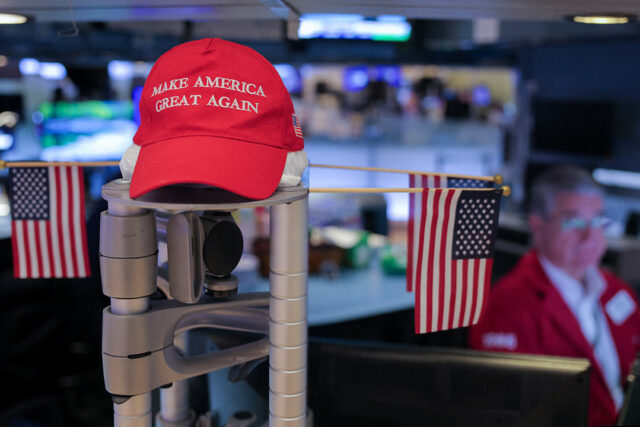
A “Make America Great Again” hat is seen on display on the trading floor at The New York Stock Exchange. — REUTERS

WASHINGTON — The prospect of a US strike against Iran has exposed divisions in the coalition of supporters that brought President Donald J. Trump to power, with some of his base urging him not to get the country involved in a new Middle East war.

Some of Mr. Trump’s most prominent Republican allies, including top lieutenant Steve Bannon, have found themselves in the unusual position of being at odds with a president who largely shares their isolationist tendencies.

Mr. Bannon, one of many influential voices from Mr. Trump’s “America First” coalition, on Wednesday urged caution about the US military joining Israel in trying to destroy Iran’s nuclear program in the absence of a diplomatic deal.

“We can’t do this again,” Mr. Bannon told reporters at an event sponsored by the Christian Science Monitor in Washington. “We’ll tear the country apart. We can’t have another Iraq.”

The anti-interventionist part of the Republican Party is watching with alarm as Mr. Trump has moved swiftly from seeking a peaceful diplomatic settlement with Iran to possibly having the United States support Israel’s military campaign, including the use of a 30,000-pound “bunker buster” bomb.

The criticism shows the opposition Mr. Trump could face from his right-leaning “Make America Great Again” (MAGA) flank should he join the fight, a step that Iran has warned would have big consequences for Americans without specifying what that might be.

A decision by Mr. Trump to enter the conflict would be a sharp departure from his usual caution about foreign entanglements. It could impact his campaign to foster good relations in the Gulf and could be a distraction from his efforts to negotiate an end to the war in Ukraine and make tariff deals with countries around the world.

The MAGA coalition propelled Mr. Trump into office in the 2016 and 2024 elections and remains critically important to him even though he is prevented by the US Constitution from running for a third term.

Upsetting that base could erode Mr. Trump’s popularity and factor into whether Republicans hang on to control of Congress in the 2026 midterm elections.

‘IRAN CANNOT HAVE A NUCLEAR WEAPON’
Asked about the rift on Wednesday, Mr. Trump appeared unconcerned that some in his base could be turning its back on him, at least on this issue.

“My supporters are more in love with me today, and I’m in love with them more than they were even at election time,” Mr. Trump told reporters at the White House. “I only want one thing: Iran cannot have a nuclear weapon.”

He said some of his supporters “are a little bit unhappy now” but that others agree with him that Iran cannot become a nuclear power.

“I’m not looking to fight. But if it’s a choice between them fighting or having a nuclear weapon, you have to do what you have to do,” Mr. Trump said.

Marc Short, an ally of former Vice-President Mike Pence who served as Mr. Trump’s legislative director during his first term, called the division over Iran within Mr. Trump’s party a “pretty large rift.” He said he thought Mr. Trump’s base would stay with him despite the differences, however.

“The divisions are obviously coming out in the open in this moment, but ultimately I think that most of the president’s followers are loyal to him more so than any worldview,” he said.

Mr. Short said standing with Israel could help Mr. Trump politically, too. Traditionally conservative voters favor standing by Israel. In a Reuters/Ipsos poll conducted in March, 48% of Republicans agreed with a statement that the US should use its military power to defend Israel from threats no matter where the threats come from, compared to 28% who disagreed. Among Democrats, 25% agreed and 52% disagreed.

International experts believe Iran has been intent on developing a nuclear weapon, despite Tehran’s denials, and Israel believes it would be at risk as a result. US officials believe if Iran possessed an atomic weapon it would trigger an nuclear arms race in the Middle East.

ISRAELIS NEED TO GET JOB DONE
Mr. Bannon, host of the popular “War Room” podcast, said “the Israelis need to finish what they started” and that Mr. Trump should slow down deliberations over US involvement and explain his decision-making.

“This is one of the most ancient civilizations in the world, okay, with 92 million people. This is not something you play around with. You have to think this through at this level, and the American people have to be on board. You can’t just dump this on them,” he said.

Other influential MAGA voices with similar messages of worry include former Fox News Channel host Tucker Carlson and US Representative Marjorie Taylor Greene, a Georgia Republican and long-time Trump ally.

“Anyone slobbering for the US to become fully involved in the Israel/Iran war is not America First/MAGA,” Ms. Greene said in a social media post on Sunday. “We are sick and tired of foreign wars. All of them.”

But another Trump ally, Republican Senator Lindsey Graham of South Carolina, said on Fox News on Tuesday that he hopes Mr. Trump will help Israel “finish the job” because Iran represents “an existential threat to our friends in Israel.”

The rift was on full display when Mr. Carlson, on his streaming program, clashed with Republican Senator Ted Cruz of Texas late on Tuesday.

A clip from Mr. Carlson’s interview with Mr. Cruz went viral with Mr. Carlson strongly criticizing the senator for seeking regime change in Iran, and Mr. Cruz expressing support for the president.

“You don’t know anything about Iran!” Mr. Carlson told Mr. Cruz.

“I am not the Tucker Carlson expert on Iran,” Mr. Cruz fired back.

“You’re a senator who’s calling for the overthrow of the government,” Mr. Carlson retorted.

Vice-President JD Vance tried to tamp down talk of a rift on Monday with a social media post defending the president.

“People are right to be worried about foreign entanglement after the last 25 years of idiotic foreign policy. But I believe the president has earned some trust on this issue,” he said.

Now allies and opponents are waiting on Mr. Trump’s decision-making process. The president said on Wednesday afternoon he had some ideas on how to proceed but had not made a final decision. — Reuters


Investors see quick stock market drop if US joins Israel-Iran conflict

REUTERS

FINANCIAL MARKETS may be in for a “knee-jerk” selloff if the US military attacks Iran, with economists warning that a dramatic rise in oil prices could damage a global economy already strained by President Donald J. Trump’s tariffs.

Oil prices fell nearly 2% on Wednesday as investors weighed the chance of supply disruptions from the Israel-Iran conflict and potential direct US involvement. The price of crude remains up almost 9% since Israel launched attacks against Iran last Friday in a bid to cripple its ability to produce nuclear weapons.

With major US stock indexes trading near record highs despite uncertainty about Mr. Trump’s trade policy, some investors worry that equities may be particularly vulnerable to sources of additional global uncertainty.

Chuck Carlson, chief executive officer at Horizon Investment Services, said US stocks might initially sell off should Mr. Trump order the US military to become more heavily involved in the Israel-Iran conflict, but that a faster escalation might also bring the situation to an end sooner.

“I could see the initial knee-jerk would be, ‘this is bad,’” Mr. Carlson said. “I think it will bring things to a head quicker.”

Wednesday’s dip in crude, along with a modest 0.3% increase in the S&P 500, came after Mr. Trump declined to answer reporters’ questions about whether the US was planning to strike Iran but said Iran had proposed to come for talks at the White House. Adding to uncertainty, Iranian Supreme Leader Ayatollah Ali Khamenei rejected Mr. Trump’s demand for unconditional surrender.

US Treasury yields fell as concerns over the war in Iran boosted safe haven demand for the debt.

The US military is also bolstering its presence in the region, Reuters reported, further stirring speculation about US intervention that investors fear could widen the conflict in an area with critical energy resources, supply chains and infrastructure.

With investors viewing the dollar as a safe haven, it has gained around 1% against both the Japanese yen and Swiss franc since last Thursday. On Wednesday, the US currency took a breather, edging fractionally lower against the yen and the franc.

“I don’t think personally that we are going to join this war. I think Trump is going to do everything possible to avoid it. But if it can’t be avoided, then initially that’s going to be negative for the markets,” said Peter Cardillo, chief market economist at Spartan Capital Securities in New York. “Gold would shoot up. Yields would probably come down lower and the dollar would probably rally.”

Barclays warned that crude prices could rise to $85 per barrel if Iranian exports are reduced by half, and that prices could rise about $100 in the “worst case” scenario of a wider conflagration. Brent crude was last at about $76.

Citigroup economists warned in a note on Wednesday that materially higher oil prices “would be a negative supply shock for the global economy, lowering growth and boosting inflation — creating further challenges for central banks that are already trying to navigate the risks from tariffs.”

Mr. Trump taking a “heavier hand” would not be a surprise to the market, mitigating any negative asset price reaction, Mr. Carlson said, while adding that he was still not convinced that the US would take a heavier role.

Trades on the Polymarket betting website point to a 63% expectation of “US military action against Iran before July,” down from as much as an 82% likelihood on Tuesday, but still above a 35% chance before the conflict began last Friday.

The S&P 500 energy sector index has rallied over 2% in the past four sessions, lifted by a 3.8% gain in Exxon Mobil and 5% rally in Valero Energy. That compares to a 0.7% drop in the S&P 500 over the same period, reflecting investor concerns about the impact of higher oil prices on the economy, and about growing global uncertainty generated by the conflict.

Turmoil in the Middle East comes as investors are already fretting about the effect of Mr. Trump’s tariffs on the global economy.

The World Bank last week slashed its global growth forecast for 2025 by four-tenths of a percentage point to 2.3%, saying that higher tariffs and heightened uncertainty posed a “significant headwind” for nearly all economies.

Defense stocks, already lifted by Russia’s conflict with Ukraine, have made modest gains since Israel launched its attacks. The S&P 500 Aerospace and Defense index hit record highs early last week in the culmination of a rebound of over 30% from losses in the wake of Mr. Trump’s April 2 “Liberation Day” tariff announcements.

Even after the latest geopolitical uncertainty, the S&P 500 remains just 2% below its February record high close.

“Investors want to be able to look past this, and until we see reasons to believe that this is going to be a much larger regional conflict with the US perhaps getting involved and a high chance of escalating, you’re going to see the market want to shrug this off as much as it can,” Osman Ali, global co-head of Quantitative Investment Strategies, said at an investor conference on Wednesday. — Reuters

Visitors rush to see South Korea’s Blue House before presidential return

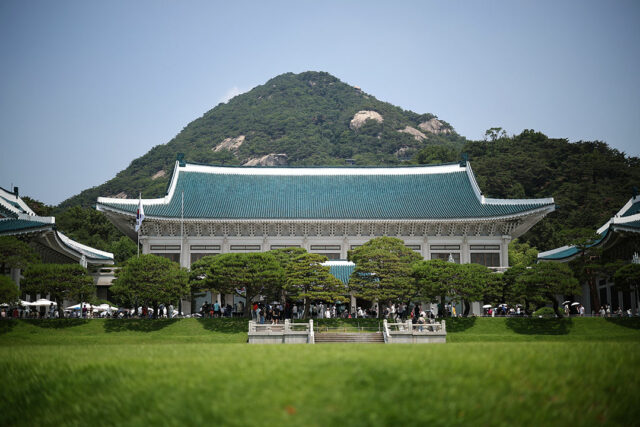
PEOPLE wait in line to get into the Blue House’s main building in Seoul, South Korea, June 18, 2025. — REUTERS/KIM HONG-JI

SEOUL — Hundreds of thousands of South Koreans have thronged the Blue House in central Seoul in recent months to get their last glimpse of the historic compound before it is returned to official use as the home and office of the country’s president.

Lee Jae Myung, who won a snap election on June 3, plans to move into the Blue House soon and access to some buildings will be restricted from mid-July, the presidential office announced last week.

Former leader Yoon Suk Yeol, who was removed from office in April after briefly declaring martial law, broke with decades of tradition by shifting his office and residence out of the compound and opening it to the public.

“I heard this place will likely be closed soon. So I wanted to come at least once before that happened,” said An Hyun, 62, an office worker from Wonju in northeastern Gangwon Province who was visiting the Blue House this week.

“Now that I’ve seen it, it’s really neat and tidy. I don’t understand why they moved out of here,” said An.

Soon after taking office in 2022, Mr. Yoon moved the presidential office to a cluster of former defense ministry buildings in another area of central Seoul.

The move whipped up a fierce debate among experts on feng shui, a practice that originated in ancient China to ensure harmony between people and their environment, after some political rivals accused Mr. Yoon of being influenced by those who said the Blue House location was inauspicious.

The Blue House, or “Cheong Wa Dae” in Korean, is named after the blue tiles that cover the top of the main building and is nestled in a scenic spot in front of the Bugaksan mountain.

The Blue House Foundation that organizes visits said tours to see the ornate state rooms and manicured lawns were fully booked until mid-July.

More than 8 million people had taken the chance to visit the Blue House by mid-June, data from the foundation showed.

After an initial surge of interest when the complex first opened to the public in 2022, the number of monthly visitors had drifted down to average about 160,000 last year, but after Mr. Yoon’s impeachment visitor numbers hit 260,000 in April and 430,000 in May.

Another visitor this week, Jin Kyung-soo, a 35-year-old middle-school teacher, had also made a reservation to visit after hearing that the new administration planned to move in again.

“We waited in line for about an hour, but it was truly exciting and joyful. I looked around with great hope for what the Lee Jae Myung government will do going forward,” said Jin. — Reuters

Australia’s teen social media ban faces a new wildcard: teenagers

A person using a smartphone is seen in front of displayed social media logos in this illustration taken on May 25, 2021. — REUTERS

SYDNEY — When 13-year-old Jasmine Elkin tried out the age-checking software Australia might use to ban children and teenagers from social media, she was surprised some products could identify a person’s age to the month — but she still doubts it will work.

“People are always going to find a way to get past it,” said the Perth schoolgirl who trialed five photo-based age estimation products with about 30 other students in May. “They can get their brother or sister to take a photo. There’s nothing really that you can do about it.”

Ms. Elkin’s view echoes one of the main concerns of child protection advocates, tech firms and even the trial organizers about the technology Australia hopes will enable the world’s first national social media ban for under-16s: the software works, they say, but young people will find a way around it.

From December, social media companies like Meta’s Facebook and Instagram, Snapchat and TikTok will face a fine of as much as A$49.5 million ($32.17 million) if they fail to take what the law calls “reasonable steps” to block younger users in an effort to protect their mental and physical health.

The platforms say users need to be at least 13 years old to sign up for an account.

How well the ban works could reverberate across some of the world’s largest companies and the governments seeking to contain them: already Britain, France and Singapore are making efforts to keep children and teens off social media, while US states including Florida are challenging free speech laws by pushing for a ban.

Even the law’s opponents are likely to be watching closely: X owner Elon Musk, who has been advising US President Donald J. Trump and is a vocal opponent of platform moderation and regulation, has criticized the measure and called the regulator overseeing it a “censorship commissar.”

“Everybody is looking at Australia,” said Colm Gannon, chief executive officer of the International Centre for Missing and Exploited Children Australia, a member of the trial’s stakeholder adviser group. “Australia should be really focusing on robust technology, robust testing and making sure the scope of the actual project is in line with the needs that they’re trying to address.”

The organizers of the trial, which ended this month, say it was designed to determine whether the software worked as promised, and that nearly 60 products were pitched.

But it also underlined the teenagers’ tech skills — testers were so fast completing their assignments, organizers doubled the number of products they tested and halved session times as the project progressed.

“It hasn’t been our intention to pull apart the software, rip the guts out and work out every different way that you could circumvent it,” said Andrew Hammond, general manager at tech contractor KJR, which ran the trial.

They will present an overview of the findings on June 20 and deliver a detailed report to the government by the end of next month.

That will inform the eSafety Commissioner’s advice to the government, which cited risks from cyberbullying, harmful depictions of body image and misogynist content in pushing forward with the legislation.

“We know that social media age restrictions will not be the end-all be-all solution for harms experienced by young people online, but it’s a step in the right direction to keep our kids safer,” said a spokesperson for Communications Minister Anika Wells.

WHAT ABOUT THE TEENS?
For some of the young Australians who participated, the trial was a glimpse into a world six months in the future where, according to the law, they will no longer be allowed to use a platform they have come to rely on for daily communication.

“I use it a lot, but I can still live without it,” said Canberra school student Charlie Price, 14, who trialed four software options in a room with about 60 peers and had his age guessed accurately (someone in his testing group was wrongly assessed at over 20).

“I know people that will get really shocked and upset,” added Price, who uses Snapchat, Instagram and messaging platform Discord and plans to collect phone numbers of his online associates before December. Like Elkin, he said he thought some teenagers might try to get around the block.

Emanuel Casa, 15, who was in the same group, said the test subjects tried to check the products for ease and accuracy, but “no one tried to challenge it necessarily, like no one tried to trick it.”

Mr. Hammond said software that revolved around a user submitting a selfie — sometimes with different facial expressions — proved the fastest and most accurate way to identify teenagers.

Products involving credit card details proved impractical since few young teens had their own cards, while those that required a person to hold up their hand in various positions gave too broad an age estimate for people near the 16 cutoff, he added.

No further trials have been scheduled, but Mr. Hammond said the government would need to decide on the level of software reliability it was prepared to accept. Most of the young testers had their ages guessed correctly most of the time, but a peer of Elkin, the 13-year-old, was placed at 42 by one product, she said.

“There is no measure at the moment as to what ‘good’ is. Do they need to be 70% effective or 80% effective or 100% effective?” said Mr. Hammond. “The government so far hasn’t indicated that they’re going to mandate a particular solution.”

Nathanael Edwards, principal of Radiant Life College, a Queensland high school where 35 students along with a few parents and teachers participated, said his group tested a basic age-gating product where a person typed in their birthday.

Some did as asked, while others faked a birthday to age themselves up — although not always successfully.

“I think the mathematics caught a couple of kids out,” he said. — Reuters

HIV prevention 101: Strategies for staying safe

“Newly diagnosed human immunodeficiency virus (HIV) cases in the Philippines increased by 2.3 times over the past decade – from 21 per day in 2014 to 48 in 2024. There were 56 cases per day from January to April 2025, 44% higher than the same period last year.

In this Explainer, Dr. Joselito R. Feliciano, executive director of the Philippine National AIDS Council, shares HIV prevention tips.

Interview by Edg Adrian Eva
Video editing by Jayson Mariñas

Southeast Asia’s budget airlines bet on travel demand, despite competition woes

FREEPIK

 – Southeast Asia’s biggest budget airlines are pursuing a bruising capacity expansion race despite rising cost pressures that are squeezing profitability and led Qantas Airways to shut down Singapore-based offshoot Jetstar Asia.

Low-cost carriers have proliferated in Asia in the past two decades as disposable incomes rise, supported by robust travel demand from Chinese tourists.

Demand for air travel in Asia is expected to grow faster than other regions in the next few decades and carriers like Vietnam’s VietJet Aviation and Malaysia-headquartered AirAsia are to buy more planes to add to their already large orderbooks as they seek to gain market share.

But margins are thinner than in other regions. The International Air Transport Association (IATA), an airline industry body, this year expects Asia-Pacific airlines to make a net profit margin of 1.9%, compared with a global average of 3.7%.

Airlines across Asia have largely restored capacity since the pandemic, which has intensified competition, especially for price-sensitive budget travelers, and pulled airfares down from recent high levels.

International airfares in Asia dropped 12% in 2024 from 2023, ForwardKeys data shows. AirAsia, the region’s largest budget carrier, reported a 9% decline in average airfares in the first quarter as it added capacity and passed savings from lower fuel prices onto its customers.

Adding to challenges for airlines, costs such as labor and airport charges are also rising, while a shortage of new planes is driving up leasing and maintenance fees.

This shifting landscape prompted Australia’s Qantas to announce last week that its loss-making low-cost intra-Asia subsidiary Jetstar Asia would shut down by the end of July after two decades of operations.

Jetstar Asia said it had seen “really high cost increases” at its Singapore base, including double-digit rises in fuel, airport fees, ground handling and security charges.

“It is a very thin buffer, and with margins this low, any cost increase can impact an airline’s viability,” said IATA Asia-Pacific Vice President Sheldon Hee, adding that operating costs were escalating in the region.

Aviation data firm OAG in a February white paper said Asia-Pacific was the world’s most competitive aviation market, with airfares driven down by rapid capacity expansion “perhaps to a point where profits are compromised”.

“Balancing supply to demand and costs to revenue have never been more critical,” the report said of the region’s airlines.


‘GO BIG OR GO HOME’

Southeast Asia has an unusually high concentration of international budget flights. Around two-thirds of international seats within Southeast Asia so far this year were on budget carriers, compared to about one-third of international seats globally, CAPA Centre for Aviation data shows.

Qantas took the option to move Jetstar Asia’s aircraft to more cost-efficient operations in Australia and New Zealand rather than continue to lose money, analysts say.

Budget operators in Southeast Asia were struggling for profits amid fierce competition even before the pandemic and now there is the added factor of higher costs, said Asia-based independent aviation analyst Brendan Sobie.

Low-cost carriers offer bargain fares by driving operating costs as low as possible. Large fleets of one aircraft type drive efficiencies of scale.

Jetstar Asia was much smaller than local rivals, with only 13 aircraft. As of March 31, Singapore Airlines’ budget offshoot Scoot had 53 planes, AirAsia had 225 and VietJet had 117, including its Thai arm. Low-cost Philippine carrier Cebu Pacific had 99.

All four are adding more planes to their fleets this year and further into the future.

VietJet on Tuesday signed a provisional deal to buy up to another 150 single-aisle Airbus AIR.PA planes at the Paris Airshow, in a move it said was just the beginning as the airline pursues ambitious growth.

The deal comes weeks after it ordered 20 A330neo wide-body planes, alongside an outstanding order for 200 Boeing 737 MAX jets.

AirAsia, which has an existing orderbook of at least 350 planes, is also in talks to buy 50 to 70 long-range single-aisle jetliners, and 100 regional jets that could allow it to expand to more destinations, its CEO Tony Fernandes said on Wednesday.

“At the end of the day, it is go big or go home,” said Subhas Menon, director general of the Association of Asia Pacific Airlines. – Reuters

Trump administration tightens social media vetting for foreign students

FACEBOOK, TikTok, Twitter, YouTube and Instagram apps are seen on a smartphone in this illustration taken, July 13, 2021. — REUTERS

 – President Donald Trump’s administration on Wednesday ordered the resumption of student visa appointments but will significantly tighten its social media vetting in a bid to identify any applicants who may be hostile towards the United States, according to an internal State Department cable reviewed by Reuters.

U.S. consular officers are now required to conduct a “comprehensive and thorough vetting” of all student and exchange visitor applicants to identify those who “bear hostile attitudes toward our citizens, culture, government, institutions, or founding principles,” said the cable, which was dated June 18 and sent to U.S. missions on Wednesday.

On May 27, the Trump administration ordered its missions abroad to stop scheduling new appointments for student and exchange visitor visa applicants, saying the State Department was set to expand social media vetting of foreign students.

U.S. Secretary of State Marco Rubio had said updated guidance would be released once a review was completed.

The June 18 dated cable, which was sent by Mr. Rubio and sent to all U.S. diplomatic missions, directed officers to look for “applicants who demonstrate a history of political activism, especially when it is associated with violence or with the views and activities described above, you must consider the likelihood they would continue such activity in the United States.”

The cable, which was first reported by Free Press, also authorized the consular officers to ask the applicants to make all of their social media accounts public.

“Remind the applicant that limited access to….online presence could be construed as an effort to evade or hide certain activity,” the cable said.

The move follows the administration’s enhanced vetting measures last month for visa applicants looking to travel to Harvard University for any purpose, in what a separate State Department cable said would serve as a pilot program for wider expanded screening.


ONLINE PRESENCE

The new vetting process should include a review of the applicant’s entire online presence and not just social media activity, the cable said, urging the officers to use any “appropriate search engines or other online resources.”

During the vetting, the directive asks officers to look for any potentially derogatory information about the applicant.

“For example, during an online presence search, you might discover on social media that an applicant endorsed Hamas or its activities,” the cable says, adding that may be a reason for ineligibility.

Mr. Rubio, Mr. Trump’s top diplomat and national security adviser, has said he has revoked the visas of hundreds, perhaps thousands of people, including students, because they got involved in activities that he said went against U.S. foreign policy priorities.

Those activities include support for Palestinians and criticism of Israel’s conduct in the war in Gaza.

A Tufts University student from Turkey was held for over six weeks in an immigration detention center in Louisiana after co-writing an opinion piece criticizing her school’s response to Israel’s war in Gaza. She was released from custody after a federal judge granted her bail.

Mr. Trump’s critics have said the administration’s actions are an attack on free speech rights under the First Amendment of the U.S. Constitution.


FEWER APPOINTMENTS?

While the new directive allows posts to resume scheduling for student and exchange visa applicants, it is warning the officers that there may have to be fewer appointments due to the demands of more extensive vetting.

“Posts should consider overall scheduling volume and the resource demands of appropriate vetting; posts might need to schedule fewer FMJ cases than they did previously,” the cable said, referring to the relevant visa types.

The directive has also asked posts to prioritize among expedited visa appointments of foreign-born physicians participating in a medical program through exchange visas, as well as student applicants looking to study in a U.S. university where international students constitute less than 15% of the total.

At Harvard, the oldest and wealthiest U.S. university on which the administration has launched a multifront attack by freezing its billions of dollars of grants and other funding, foreign students last year made up about 27% of the total student population.

The cable is asking the overseas posts to implement these vetting procedures within five business days. – Reuters

Apple eyes using AI to design its chips, technology executive says

STOCK PHOTO | Image by matcuz from Pixabay

 – Apple is interested in tapping generative artificial intelligence to help speed up the design of the custom chips at the heart of its devices, its top hardware technology executive said in private remarks last month.

Johny Srouji, Apple’s senior vice president of hardware technologies, made the remarks in a speech in Belgium, where he was receiving an award from Imec, an independent semiconductor research and development group that works closely with most of the world’s biggest chipmakers.

In the speech, a recording of which was reviewed by Reuters, Srouji outlined Apple’s development of custom chips from the first A4 chip in an iPhone in 2010 to the most recent chips that power Mac desktop computers and the Vision Pro headset.

He said one of the key lessons Apple learned was that it needed to use the most cutting-edge tools available to design its chips, including the latest chip design software from electronic design automation (EDA) firms.

The two biggest players in that industry – Cadence Design Systems CDNS.O and Synopsys SNPS.O – have been racing to add artificial intelligence to their offerings.

“EDA companies are super critical in supporting our chip design complexities,” Srouji said in his remarks. “Generative AI techniques have a high potential in getting more design work in less time, and it can be a huge productivity boost.”

Srouji said another key lesson Apple learned in designing its own chips was to make big bets and not look back.

When Apple transitioned its Mac computers – its oldest active product line – from Intel’s chips to its own chips in 2020, it made no contingency plans in case the switch did not work.

“Moving the Mac to Apple Silicon was a huge bet for us. There was no backup plan, no split-the lineup plan, so we went all in, including a monumental software effort,” Srouji said. – Reuters

US FDA approves Gilead’s twice-yearly injection for HIV prevention

RAGHAVENDRA V KONKATHI-UNSPLASH

The U.S. Food and Drug Administration on Wednesday approved Gilead Sciences GILD.O lenacapavir, a twice-yearly injection, for preventing HIV infection in adults and adolescents at high risk of contracting the deadly virus.

Investors and AIDS activists had been eagerly awaiting the regulatory decision for the drug seen as convenient enough to help end the 44-year-old HIV epidemic.

It will be sold under the brand name Yeztugo in the U.S. at a list price of $28,218 a year.

Lenacapavir, part of a class of drugs known as capsid inhibitors, proved nearly 100% effective at preventing HIV in large trials last year, raising new hope of interrupting transmission of the virus that infects 1.3 million people a year.

Yeztugo “will only be as effective as it is accessible and affordable,” Kevin Robert Frost, CEO of the Foundation for AIDS Research, said in a statement, calling on Gilead and the U.S. government to make sure people who want lenacapavir can get it.

Gilead said it is working to secure health insurer coverage. It said it will provide co-pay assistance for eligible insured people, and the drug may be available free of charge for some under its program for the uninsured.

Medications to prevent HIV, known as pre-exposure prophylaxis, or PrEP, are widely available. But most are daily pills, including low-cost generic versions of Gilead’s older drug Truvada, that require strict adherence to be effective. Gilead said Yeztugo is priced in line with other branded drugs.

“This is a milestone moment,” said Gilead Chief Executive Daniel O’Day of the approval.

“We believe that lenacapavir is the most important tool we have yet to bend the arc of the epidemic and move this epidemic into the history books,” O’Day said.

Availability of a twice-yearly HIV prevention tool is “a huge advance,” that could help change the course of the epidemic, Dr. Raphael Landovitz, director of the UCLA Center for Clinical AIDS Research & Education, said in an email. But he said the product’s high launch price “is almost certainly going to complicate payor coverage and access.”

Gilead has plans for a rapid launch in the United States as well as a wider rollout of the drug in collaboration with global partners.

Gilead’s chief commercial officer, Johanna Mercier, said the company’s “end game” is to normalize PrEP usage, both in the United States and other countries, including low-income African nations where the virus is most prevalent.

Citi Research analyst Geoff Meacham said he expects Yeztugo’s launch to be slow and steady, reaching annual sales of $2.8 billion by 2030.

Mercier said she expects around 75% of U.S. insurers, including government health plans, will cover lenacapavir for PrEP within about six months, with the number rising to 90% within 12 months of launch.

The drug is currently sold as a treatment in the U.S. under the brand name Sunlenca for patients with advanced disease that has become resistant to other drugs.


PEPFAR CUTS

In December, the President’s Emergency Plan for AIDS Relief (PEPFAR) under then-President Joe Biden signed an agreement with the Global Fund to Fight AIDS, Tuberculosis and Malaria to provide the treatment to as many as 2 million people for three years if it won U.S. regulatory approval for prevention.

That would allow for unprecedented early access to a state-of-the-art treatment, as six generic drugmakers that have licensed the product from Gilead gear up for production of low-cost versions in 120 resource-limited countries.

AIDS activists have viewed the drug as a way to significantly slow the epidemic, but cuts to PEPFAR by the Trump administration have raised concerns about the U.S. government’s commitment to the rollout.

O’Day acknowledged that the changes have been “challenging,” but said the company has continued to have discussions with both the Global Fund and PEPFAR.

“I believe that there will be sources of funding for this, and that these organizations will prioritize this type of prevention,” he said. – Reuters

US judge invalidates Biden rule protecting privacy for abortions

RACOOL_STUDIO-FREEPIK

A federal judge on Wednesday struck down a rule adopted by the administration of former President Joe Biden that strengthened privacy protections for women seeking abortions and patients who receive gender transition treatments.

U.S. District Judge Matthew Kacsmaryk in Amarillo, Texas, said the U.S. Department of Health and Human Services exceeded its powers and unlawfully limited states’ ability to enforce their public health laws when it adopted the rule last year.

The rule prohibits healthcare providers and insurers from giving information about a legal abortion to state law enforcement authorities who are seeking to punish someone in connection with that abortion.

“HHS lacked clear delegated authority to fashion special protections for medical information produced by politically favored medical procedures,” wrote Mr. Kacsmaryk, who was appointed by President Donald Trump, a Republican, during his first term.

Mr. Kacsmaryk in December had blocked HHS from enforcing the rule against a Texas doctor who had brought the lawsuit, Carmen Purl, pending the outcome of the case. Wednesday’s decision blocks the rule nationwide.

HHS and Alliance Defending Freedom, a conservative Christian legal group that represents Purl, did not immediately respond to requests for comment.

The Biden administration issued the rule as part of its pledge to support access to reproductive healthcare after the conservative-majority U.S. Supreme Court in 2022 overturned the 1973 Roe v. Wade ruling that made access to abortion a constitutional right nationwide.

It came in response to efforts by authorities in some Republican-led states that ban abortion, including Texas, to restrict out-of-state travel for abortion.

Texas has filed a separate lawsuit challenging the rule, which is pending in federal court in Lubbock, Texas. HHS in a court filing last month said agency leadership appointed by Trump is evaluating its position in this case.

Mr. Biden, a Democrat, said in announcing the rule that no one should have their medical records “used against them, their doctor, or their loved one just because they sought or received lawful reproductive health care.” – Reuters