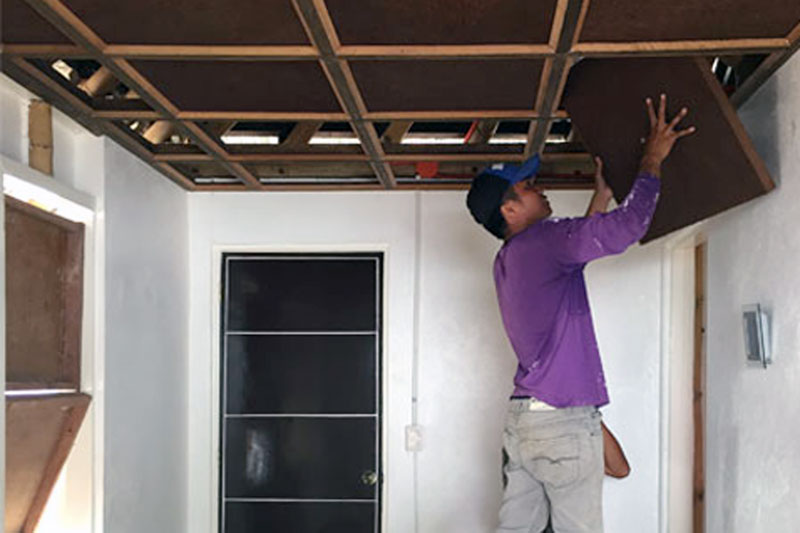
THE PHILIPPINES started imposing an anti-dumping measure against gypsum board imports on Feb. 27 that will run for five years, the Bureau of Customs (BoC) said.
In a memo issued last week, the BoC said the measure was implemented in the Electronic-to-Mobile System on Friday.
The measure covers imports of standard gypsum board, those faced or reinforced with paper, or paperboard only.
According to the Department of Trade and Industry’s (DTI) Bureau of Import Services (BIS), the measure will be in place for five years from Feb. 27, 2026.
The DTI had recommended a dumping margin of 8.52%, calculated based on the export price, on products from Thailand’s Gypman Tech Co. Ltd.
Meanwhile, a dumping margin of 9.18% was imposed on products from Thai Gypsum Products PCL and other Thai exporters.
Anti-dumping investigators found that the volume of imports of standard gypsum board at dumped prices accounted for 71% of total Philippine imports of standard gypsum board between 2019 and September 2024.
The dumped imports, the DTI said, accounted for almost 40% of consumption during the period.
As of March 2, the BIS said the BoC has released the memorandum circulars required to impose anti-safeguard and dumping measures.
From 2018 to 2025, the government investigated 18 trade remedy cases, which include safeguard or anti-dumping measures for cement, ceramic tiles, float glass, liquefied petroleum gas, and corrugating medium.
Collections from trade remedy measures are part of BoC collections.
In the first two months, the BoC collected P154.75 billion, up 2.5% from P151.02 billion a year earlier.
Last month, the BoC collected P73.8 billion, up 1.7% from a year earlier.
“The entire bureau delivered more than the expected financial target for February. This is contrary to the expectation that, during the month of the Chinese New Year, bababa ’yung collection natin (collections will fall),” Customs Commissioner Ariel F. Nepomuceno said in a statement on Monday.
“We were able to prove, with the efforts of everyone, especially our port collectors, that it can be done — with the proper assessment, with the stricter implementation of enforcement rules, and with the due diligence of our deputy commissioners,” he added. — Justine Irish D. Tabile