Philippines urged to keep stance as int’l law defender amid UNSC bid
By Chloe Mari A. Hufana, Reporter
THE Philippines must maintain consistent messaging as a defender of international law if it wants to strengthen its bid for a seat at the United Nations Security Council (UNSC) and assert its rights in the South China Sea, analysts said after the Senate protected a senator wanted by the International Criminal Court (ICC) for alleged crimes against humanity.
Ederson DT. Tapia, a political science professor at the University of Makati, said any controversy involving accountability, rule of law or human rights risks complicating that narrative.
“The bigger issue is consistency of messaging,” he said via Facebook Messenger. “The Philippines has positioned itself internationally as a defender of international law in the West Philippine Sea.”
The challenge comes as President Ferdinand R. Marcos, Jr. intensifies efforts to rally international support against China’s expansive claims in the South China Sea, using the Philippines’ 2016 arbitral victory as a cornerstone of its diplomacy.
Manila has increasingly cast itself as a rules-based actor, arguing that smaller states must rely on international law and multilateral institutions in confronting coercion at sea.
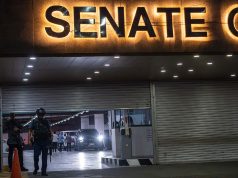
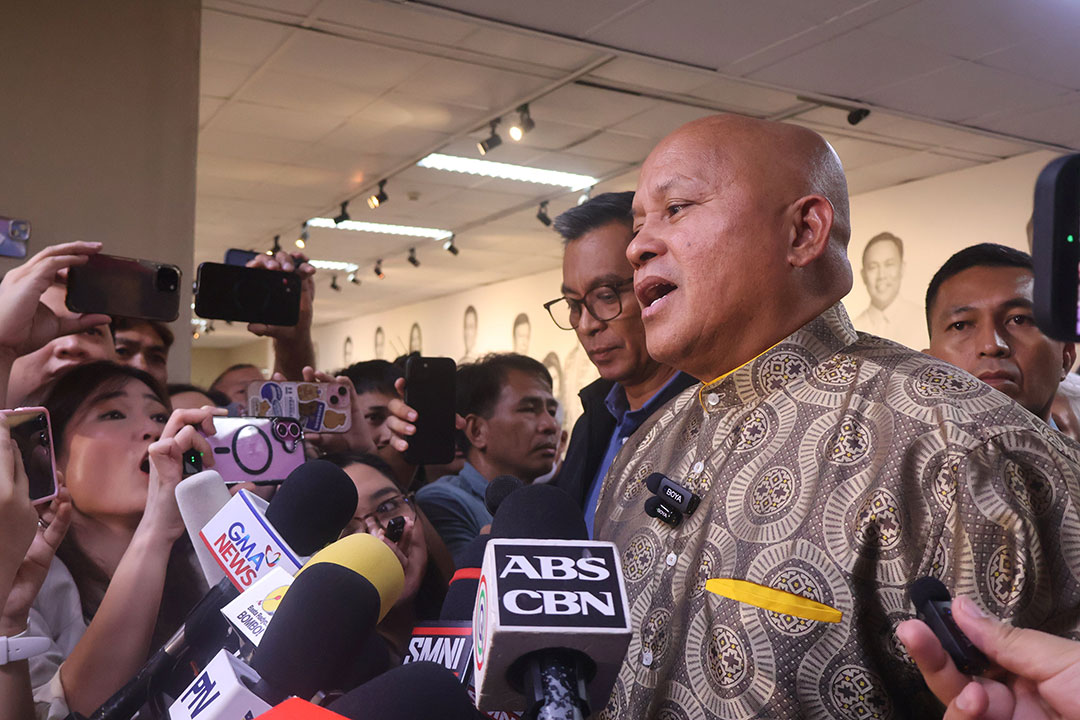
Last week, however, Filipino senators barred the enforcement of an ICC arrest warrant against Senator Ronald “Bato” M. dela Rosa by providing him protection in the chamber, raising questions about Manila’s commitment to accountability and the rule of law.
The Senate, led by newly installed Senate President Alan Peter S. Cayetano, protected Mr. dela Rosa, chief enforcer of the former President Rodrigo R. Duterte’s bloody drug war, sparking an intense standoff.
Gary G. Ador Dionisio, dean of the De La Salle-College of St. Benilde School of Diplomacy and Governance, said the fiasco at the Senate may only have little impact on Manila’s campaign for a UNSC seat.
“An effect is little, but we can view it [from] three perspectives: perception on institutional credibility, challenges on international rules-based order and diplomatic signaling or weakening,” he said via Facebook Messenger.
Mr. Tapia echoed the sentiment, saying UNSC campaigns are shaped by long-term diplomacy, regional alliances, and a country’s broader international credibility.
“Still, domestic political developments do affect how stable and institutionally credible a state appears abroad,” he added.
He said democracies are not judged by the absence of controversy but how institutions respond to it.
“The key question internationally is whether constitutional processes, accountability mechanisms, and institutional stability continue to function despite political tensions,” he added.
Mr. dela Rosa is wanted by the ICC for alleged crimes against humanity under Mr. Duterte’s leadership as Davao City mayor and President. He served as the country’s police chief from 2016 to 2018 before becoming a lawmaker.
He has denied the charges, which he dismissed as being based on “fabricated” evidence.
Mr. dela Rosa’s camp and political allies, including Vice-President Sara Duterte-Carpio, insist the tribunal has no jurisdiction in the Philippines following its withdrawal from the Rome Statute.
The Philippines withdrew from the ICC in 2018 under Mr. Cayetano’s time as foreign affairs secretary of Mr. Duterte. It took effect a year later.