Oil-shock vulnerability blamed on deregulation
By Sheldeen Joy Talavera, Reporter
THE deregulation of the Philippine fuel market made it vulnerable to the latest oil supply shock, leaving the economy at the mercy of disruptions in the Persian Gulf crude supply, analysts said.
“The Philippines was among the hardest hit precisely because it has the most deregulated oil market in Southeast Asia,” Noel M. Baga, co-convenor of think tank Center for Energy Research and Policy, told BusinessWorld.
“With no price controls, no strategic petroleum reserve, and near-total dependence on imported petroleum, every global price shock lands directly on Filipino consumers with no buffer,” he added.
Mr. Baga said state-run Philippine National Oil Co. (PNOC) must establish a strategic petroleum reserve — a government-held physical stockpile that can be deployed during future crises.
“The Philippines currently has none, which is the single most glaring structural gap exposed by this crisis,” he said.
The Philippines relies on commercial oil stockpiles held by private companies and imposes inadequate inventory requirements of 30 days of crude oil and 15 days of finished petroleum products.
As of March 20, the Philippine petroleum supply was equivalent to about 45 days.
This is higher than what is required but well below the recommended minimum by the International Energy Agency of 90 days, according to Jun Hao Ng, assistant economist for Asia Macro at global economic advisory firm Oxford Economics.
To ensure reliable fuel supply, Mr. Ng said the Philippines must expand its reserve infrastructure.
“The country could also consider diversifying import routes away from the Strait of Hormuz, potentially sourcing from exporters outside the Middle East, such as the US. But, this would increase costs and require adjustments for different crude oil grades,” he told BusinessWorld via e-mail.
The Philippines has been scrambling to find alternative suppliers of fuel as the conflict in the Middle East has disrupted exports from key oil-producing countries.
Aside from existing suppliers, Energy Secretary Sharon S. Garin has said the country is also seeing to arrange shipments from Malaysia, Brunei, and India. It is also considering sourcing from the US, Canada, Russia, or South America
Ms. Garin has said that oil companies are not being required to accumulate one year of inventory, which she said was “very expensive,” with available storage also limited.
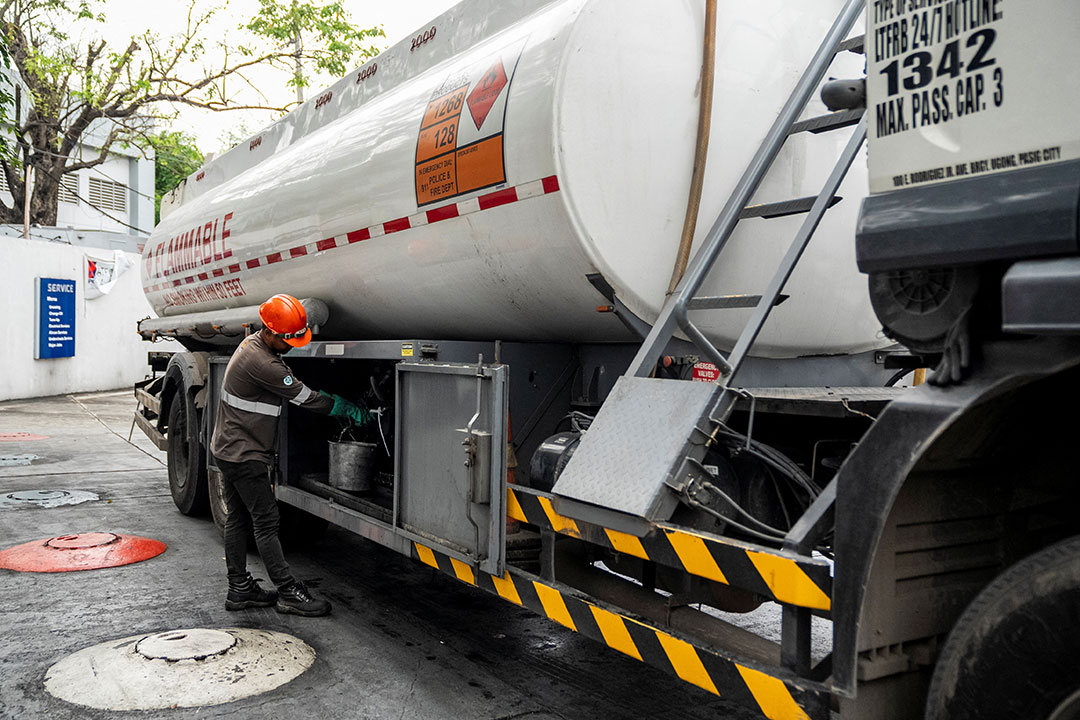
On Friday, the Department of Energy (DoE) announced the arrival of the first shipment carrying 142,00 barrels of diesel, part of the 1.04 million barrels of diesel the government is seeking to import.
The DoE tasked the oil and gas exploration arm of PNOC to procure around two million barrels of fuel to boost reserves, giving it a budget of P20 billion.
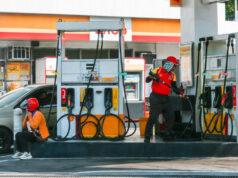
A month into the Persian Gulf crisis, pump prices have hit historic levels, with diesel being priced as high as P140 per liter.
“While the Philippines’ initial response to the energy crisis has been swift, including cash handouts for the transport sector, the measures appear to be fiscally cautious and limited in scope,” Mr. Ng said.
Thailand, which similarly relies heavily on imported oil, has implemented a general fuel price cap that cushions citizens from rising prices, he said.
Mr. Ng said that suspending excise tax and value-added tax on fuel could help mitigate inflationary pressure.
However, both measures would reduce government revenue, effectively shifting the fiscal burden to the Philippine government, he said.
“The suspension of the fuel excise tax and the declaration of the national energy emergency are good first steps to further alleviate hardship but they hardly address the heart of the problem with our reliance on imported oil,” Gerry Arances, executive director of the Center for Energy, Ecology, and Development, told BusinessWorld.
He said the law which liberalized the downstream oil industry must be revisited, “with the long-term objective of eliminating fossil fuel reliance and ending the vulnerability of consumers to price shocks.”
Signed in 1998, Republic Act No. 8479, or the Downstream Oil Industry Deregulation Act, allows oil companies to set and adjust pump prices based on global oil price benchmarks and other market factors, instead of awaiting government approval.
Mr. Baga said the President can classify fuel as a prime commodity and impose the sort of price ceilings authorized by the Price Act.
Ms. Garin has said that the government is focused on addressing profiteering instead of imposing price caps on petroleum products.
“Ang ayaw natin ay abusado ang kita. Kaya ‘yun ang binabantayan namin at ginagawan namin ng guidelines para ma-kontrol ‘yan (What we don’t want is unreasonable profits. That’s what we are monitoring and putting guidelines in place to control it),” she said in a radio interview last week.