Banks’ loans to MSMEs rise as of Sept.
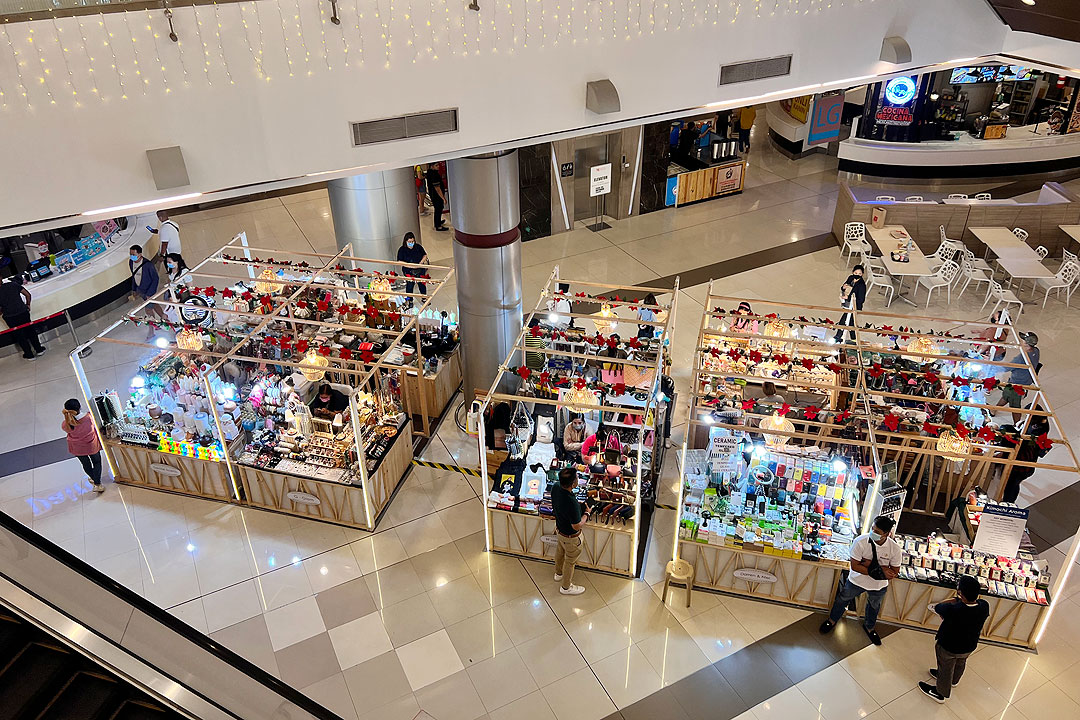
PHILIPPINE BANKS extended more loans to micro, small and medium enterprises (MSMEs) at end-September.
Banks’ loans to MSMEs amounted to P536.51 billion at end-September, up 7.13% from the P500.809 billion disbursed in the same period last year, based on data from the Bangko Sentral ng Pilipinas (BSP). However, this was lower than the P540.92 billion in loans posted at end-June.
This made up 4.45% of the banking system’s P12.049-trillion loan book in the period.
Under Republic Act No. 9501 or the Magna Carta for MSMEs, banks must allocate 8% of their loan portfolio to micro and small enterprises (MSEs), and 2% to medium-sized businesses.
The mandated credit allocation lapsed in June 2018, or 10 years after the law was passed. However, the BSP continues to monitor banks’ lending to MSMEs as part of its supervisory oversight and policy development.
Central bank data showed that loans to micro and small enterprises amounted to P225.17 billion at end-September, rising by 9.9% from P204.886 billion a year earlier. This accounted for 1.87% of banks’ portfolio.
Meanwhile, banks lent P311.34 billion to medium enterprises at end-September, making up 2.58% of their loan book. This was 5.21% more than the P295.923 billion disbursed a year ago.
Broken down, universal and commercial banks extended P158.57 billion in loans to micro and small enterprises as of September, which accounted for 1.44% of their P10.98-trillion loan portfolio. They also lent P253.35 billion to medium enterprises or 2.31% of the total.
Thrift banks’ lending to MSEs reached P31.64 billion or 3.68% of their P859.55-billion loan portfolio, while loans to medium enterprises stood at P37.23 billion or 4.33% of the total.
Rural and cooperative banks extended P34.31 billion in credit to micro and small enterprises as of September or 20.35% of their P168.62-billion loan book. They also lent P20.69 billion to medium enterprises or 12.27% of the total.
The BSP had allowed Philippine banks to count MSME loans as alternative reserve compliance with the reserve requirements to help support the sector during the pandemic until June 2023. This relief measure was extended only for thrift banks and rural and cooperative banks until Dec. 31, 2025.
Lastly, digital banks disbursed P66 million in loans to the micro and small enterprise sector, equivalent to 1.61% of their P40.93 billion total loan book. Loans granted to medium enterprises accounted for 0.17% of their portfolio at P7 million.
The BSP said it continues to promote MSME lending by improving credit risk assessment, simplifying loan applications, supporting digital finance, and creating frameworks.
John Paolo R. Rivera, a senior research fellow at the Philippine Institute for Development Studies, said in a Viber message that the year-on-year increase in banks’ lending to small businesses “reflects recovering demand, improved mobility, and the continued expansion of MSMEs in food services, retail, and logistics.”
“Banks also maintained lending momentum because MSMEs remain a key driver of domestic consumption, and some lenders have expanded credit programs supported by guarantees and government-backed facilities,” he said.
However, the decline from the end-June level may have been due to corruption concerns that could have caused businesses to put their expansion plans on hold, resulting in slower borrowing.
“Higher operating costs and soft consumer sentiment also led many MSMEs to postpone inventory buildup and investment plans, reducing credit demand in the third quarter,” Mr. Rivera said.
He added that increased economic activity during the holiday season could boost MSME lending towards the end of the year.
“MSME lending may see a modest bump in the fourth quarter due to holiday demand, but growth will likely remain subdued overall. Borrowing appetite will depend on how quickly confidence recovers, how stable the peso becomes, and whether government disbursements normalize,” he said.
“Until clarity on governance and fiscal spending improves, MSME loan growth is expected to stay steady but not strong.” — Katherine K. Chan